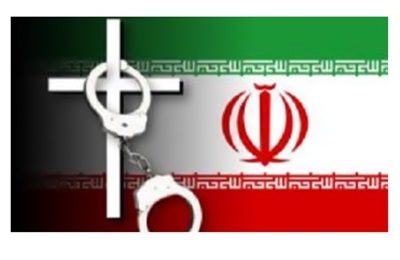
With the Iranian regime recently arresting 100 Christians in Iran for supposedly proselyting Muslims into Christianity, I had the chance to sit down and chat with Frank Nikabkht, an Iranian American Jewish activist on the status of Christians and other religious minorities still living in Iran. Nikabkht, who heads the L.A.-based Committee for Minority Rights in Iran, discussed the war the Iranian regime’s radical leadership has been undertaking against new converts to Christianity in recent years — as the popularity for the faith has grown among people who are disillusioned with radical Shiite Islam sanctioned by the state.
My 2016 interview with Nikbakht shed light on how the Iranian regime at that time had launched a successful campaign of severely restricting the celebration of Christmas and arrested those operating underground churches. This year he elaborated on how Christian Iranians who were born Christian and did not convert are facing growing persecution at the hands of the Iranian regime.
Jewish Journal: I understand 100 Christians were recently arrested in Iran, what is the current status of Christians in Iran?
Frank Nikabkht: As you may know, Iranian Islamic laws consider Christianity as a tolerated religion and recognize its followers as third class citizens, after Shiite and Sunni Muslims, with limited rights. However, what some may not know is that even this “privilege” is limited to certain ethnic Iranians who happen to be Christians such as Armenians and Assyrians, who have lived in Iran for thousands of years and whose populations have dwindled to about 20 percent since the establishment of the Islamic Republic and its constant pressures and discrimination against minorities. Christianity itself however, as a faith or belief is not accepted from any other Iranian. If a Muslim converts to Christianity, the official punishment — following the Islamic Shari’ah — is death due to apostasy. Dozens of Christian converts or missionaries were assassinated and executed in the early years of the Islamic revolution, while hundreds have been imprisoned and thousands threatened into exile ever since. Executions and assassinations have been rare, in order to protect the “compassionate image” of the Islamic regime.
JJ: The Iranian regime in recent years has been cracking down on underground churches in Iran where former Muslims have converted to Christianity. How has the regime been able to do this effectively?
FN: According to a recent Iranian Revolutionary Guard affiliated paper, the Iranian authorities have been successful in “penetrating” and demolishing Christian evangelist gatherings by planting undercover agents within them, leading to their imprisonment and disbanding their activities, as if in espionage rings or criminal networks. My research in the past decades had shown that even the few legal Churches available to non-ethnic Christians — mainly attended by Jews and other minorities to Christianity — were forced to have a list of members which would be checked against the people entering those churches by Islamic intelligence ministry agents at the door. Non-ethnic Christians are also intimidated and investigated when going to government offices, to make sure they aren’t Muslim converts to Christianity.
JJ: Why has there been such a strong attraction by younger Muslims to embrace Christianity?
FN: Christians in Iran claim that their numbers have increased to huge numbers. These claims are believable, since millions of young Muslims in Iran have been trying to find alternative beliefs to their harsh imposed Islamist ideology of the ruling Iranian regime. Life has been made difficult for people originally born Christian in Iran. Even the legal and operating Christian cemetery in Eastern Tehran has been shut down for several years, and Christians have reported that they had to go into the adjacent Jewish cemetery and throw their flower bouquets over the walls, just to commemorate their deceased on the other side. Burials are therefore a major problem for non-ethnic Christians.
JJ: Why does the Iranian regime see Christianity and the underground evangelical churches as such a threat to them?
Historically, the gradual elimination of all other religions in lands conquered by Islam, has been a goal. Converting Muslims to another religion is a crime punishable by death according to the existing Iranian laws. At this time, because of mass dissatisfaction with the extremist Muslim clergy in power in Iran, conversion to other religions such as Christianity, Bahaiism and Zoroastrianism, as well as to Sufi sects within Islam, has become common and is turning into a serious matter threatening the monopoly of the Mullahs over people’s deepest convictions.
JJ: Why don’t the major European or Russian leaders who forged the 2015 Iran Deal, and are doing tremendous business with the Iran regime, speak out about the regime’s crack down on Christianity and new Christian converts?
FN: Obviously, human rights violations are not a concern of the European powers, while submission to Islamic laws is a trend even in their own countries. I personally remember however, that during the Clinton presidency, the U.S. State Department, while defending other Iranian minorities, excluded evangelical Christians whom they considered as trouble makers in Islamic countries, from American protection.
JJ: What kind of campaign of awareness would you like to see from the American evangelical community to support the plight of Christians and new Christian converts in Iran?
FN: Spreading the news of Christian persecution is of primary importance. Comparing this inhuman behavior to Western countries’ tolerance of other religions is also very important because the younger generations here might not know about the prevalence of brutal suppression of alternative thinking in Islamic countries.