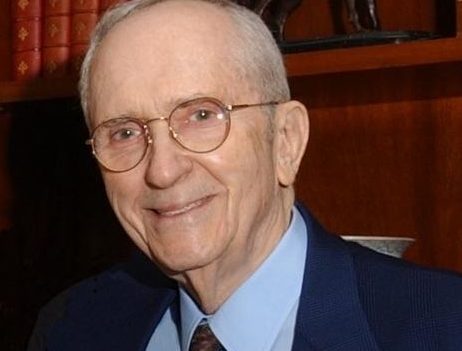
Lawrence (Larry) Jay Weinberg, the former founder and first owner of the Portland Trailblazers and a major contributor to the founding of the American Israel Public Affairs Committee (AIPAC) passed away on Jan. 1. He was 92.
His family sent a message to the Journal stating, “It is with sadness that the family and friends of Larry and Barbi Weinberg mourn the passing of their beloved “Larry,” affectionately known to his loved ones as “Gamu.” After a valiant years-long battle with bone marrow cancer, Larry succumbed to his illness at Cedars-Sinai Medical Center, surrounded by his adoring family.”
Weinberg was a successful nationwide homebuilder and leader of the Jewish community. He was the founder and president of the Larwin Group Companies, former President and CEO of the Portland Trail Blazers NBA franchise, and past chairman of AIPAC.
Following his passing, AIPAC issued a statement mourning his passing and saying, he “was a deeply respected leader in the pro-Israel community. Larry and his wife, Barbi, were critical in forging the movement to strengthen the relationship between the U.S. and the Jewish state. Their dedicated efforts over many years educated scores of political and community leaders about the importance of our bipartisan alliance with our democratic ally. Perhaps most importantly, Larry’s example inspired his family to join him in pro-Israel activism.”
Weinberg was also a recipient of the Purple Heart, Combat Infantry Badge, and the Bronze Star for meritorious service in WWII.
He is survived by his wife of 71 years, Barbi Weinberg, his children Jeff and Susan Weinberg, Jan and Phil Zakowski, Jimmy and Leslie Weinberg, Julie and Rand Fishbein, and multiple grandchildren and great grandchildren.
Comedian Bob Einstein, best known for the stuntman character Super Dave Osborne, and as recurring character Marty Funkhouser on ‘Curb Your Enthusiasm,’ died on Jan. 2 following a recent diagnosis with cancer. He was 76.
Einstein got his big break on “The Smothers Brothers Comedy Hour” in the 1960s as a writer—for which he won an Emmy Award—and a performer, portraying Officer Judy. In the 1970s, he added to his Emmy collection, winning for producing Dick Van Dyke’s “Van Dyke and Company.” Also in the ‘70s, he created Super Dave Osborne, making many television appearances as the character over the years and starring in the movie “The Extreme Adventures of Super Dave” in 2000. He appeared in 22 episodes of “Curb Your Enthusiasm” over a 13-year period.
Born Stewart Robert Einstein on Nov. 29, 1942, Einstein was the son of comedian Harry “Parkyakarkus” Einstein and actress Thelma Leeds. He was the older brother of actor, writer and director Albert Brooks, who joined many in the entertainment business in posting tributes on social media.
“R.I.P. My dear brother Bob Einstein,” Brooks wrote. “A great brother, father and husband. A brilliantly funny man. You will be missed forever.”
R.I.P. My dear brother Bob Einstein. A great brother, father and husband. A brilliantly funny man. You will be missed forever.
Members of the “Curb” family also weighed in, including its creator and star Larry David. “Never have I seen an actor enjoy a role the way Bob did playing Marty Funkhouser on ‘Curb’” David said in a statement. “It was an amazing, unforgettable experience knowing and working with him. There was no one like him, as he told us again and again. We’re all in a state of shock.”
“His long career is hard to match. His role on #curbyourenthusiasm was excruciatingly brilliant! Our cast and crew will be devastated,” tweeted Richard Lewis.
I’m in shock. I knew him forever. ♥️to his loved ones. His long career is hard to match. His role on #curbyourenthusiasm was excruciatingly brilliant! Our cast and crew will be devastated. He was so loved. He told me how much he loved LD and Curb. RIP buddy. @HBO pic.twitter.com/G8f5PoffuF
Longtime friend David Steinberg tweeted, “#Bob Einstein “What a mind! What a great friend. Brilliantly funny always. We started together on the ‘Smothers Brothers’. Loved every moment working with him on ‘Curb’. He was one of a kind. Great loss to the comedy world. We will all miss him so. #RIP”
The Women’s March in New Orleans has been canceled, according to organizers of the march.
The National Organization for Women (NOW) Baton Rouge chapter announced on their Facebook page that they were canceling the march “due to several issues.”
“Many of the sister marches have asked the leaders of Women’s March, Inc. to resign but as of today, they have yet to do so,” the post read. “The controversy is dampening efforts of sister marches to fundraise, enlist involvement, find sponsors and attendee numbers have drastically declined this year. New Orleans is no exception.”
The statement added that they would be conducting community service efforts instead on the day of the Women’s March; they will also be providing refunds for donations and T-shirts.
The New Orleans Women’s March is the latest to be canceled, as the Chicago Women’s March organizers have said that their march was canceled as a result of costs; the Women’s March in Humboldt County in Northern California, is being canceled because “the participants have been overwhelmingly white.”
Women’s March leaders Linda Sarsour, Tamika Mallory and Carmen Perez have faced criticism over their ties to anti-Semite Louis Farrakhan; that criticism has intensified after a recent Tablet report stated that Perez and Mallory pushed an anti-Semitic talking point from the Nation of Islam and berated an early leader of the movement due to her Jewish faith.
Women’s March founder Teresa Shook called on the Women’s March leaders to step down for allowing “anti-Semitism, anti-LBGTQIA sentiment and hateful, racist rhetoric to become a part of the platform by their refusal to separate themselves from groups that espouse these racist, hateful beliefs.”
The city of Beverly Hills agreed to a $2.3 million settlement on Nov. 30 in response to a settlement alleging anti-Semitic comments from the Beverly Hills police chief.
The police chief, Sandra Spagnoli, was accused by at least 21 current and former employees of racist and anti-Semitic remarks, including allegedly referring to kippahs as “funny hats” and asked if she had to “dress Mexican” when she was invited to a Latino employee’s house. Capt. Mark Rosen, who filed the lawsuit, alleged that Spagnoli prevented him from obtaining promotions due to his Jewish faith.
The lawsuit also alleges that Spagnoli engaged in sexual intercourse with her employees and gave them promotions as a result.
Spagnoli has dismissed the allegations as nothing more than smears from aggrieved employees.
“When you implement change, you create some waves within an organization, which is what has happened here,” Spagnoli told the Los Angeles Times.
Beverly Hills Mayor Julian Gold is standing with Spagnoli, stating that he thought that the complaints were a matter of simply taking Spagnoli’s comments the wrong way.
“We have 11 elected officials — five on the school board, five on the City Council and the city treasurer,” Gold told the Los Angeles Times. “They are all Jewish. The notion she made anti-Semitic comments in that sort of environment does not make any sense.”
However, attorney Brad Gage, who represents numerous people behind the allegations in the lawsuit, argued to the Times that the fact that the city’s insurance company advised them to pay the hefty settlement shows that the lawsuit has merit.
Rosen, who retired the day the settlement was announced, told reporters that while he was happy about the settlement, he’s worried about “the officers and civilians alike who continue to be victimized” under Spagnoli.
Spagnoli had previously served as the police chief of San Leandro and Benicia.
Sephardic Shabbat Through music, prayer, story and food, Shomrei Torah Synagogue celebrates the heritage of Sephardic Jews around the world with a Sephardic Shabbat. Cantor Jackie Rafii, guitarist Daniel Raijman and percussionist Jamie Papish perform seldom-heard and contemporary sounds from Sephardic communities in America and other countries. Dinner menu includes Israeli salad, chicken tagine and Moroccan pastries. 6 p.m. services. 7:15 p.m. dinner. $26 adult members, $13 child members. General admission: $32 adults, $16 children. Shomrei Torah Synagogue, 7353 Valley Circle Blvd., West Hills. (818) 854-7650.
Friday Night Unplugged Rabbi Mendel Simons and Acapella Group lead Friday Night Unplugged, a mindful, meditative and musical Kabbalat Shabbat experience for young professionals sponsored by The Young Jewish Professionals of Los Angeles. A scotch and sushi cocktail hour kicks off the evening. Evening attire requested. 5–7 p.m. $15. 9261 Alden Drive, Beverly Hills.
Zubin Mehta
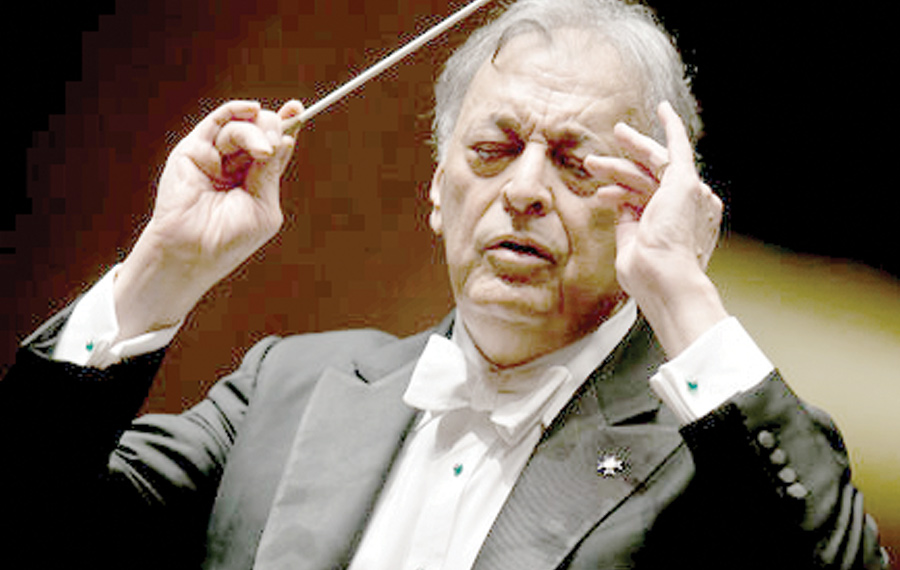
Zubin Mehta Israel Philharmonic Orchestra director Zubin Mehta leads the Los Angeles Philharmonic in a concert featuring the music of Brahms at the Walt Disney Concert Hall. Accompanying Mehta is Israeli-American violinist Pinchas Zukerman. The weekend includes performances of Brahams’ Symphony No. 4 and Concerto for Violin and Cello. A pre-concert talk features conductor and music history and theory lecturer Thomas Neenan providing historical and cultural context. Through Jan. 6. 8 p.m. Jan. 4–5; 2 p.m. Jan. 6. $66-$207. Walt Disney Concert Hall, 111 S. Grand Ave., Los Angeles. (323) 850-2000.
“The Laws of Women” Jewish perspectives on love, marriage, divorce, sex, adultery, rape, abortion and women’s rights are explored during “Women’s Torah Study: The Laws of Women,” the Women’s Torah Study series at Wilshire Boulevard Temple. Bring your own lunch. Drinks and desserts provided. Newcomers and friends welcome. 12:30 p.m. every other Friday. Free. Wilshire Boulevard Temple, Irmas Campus, 11661 Olympic Blvd., Los Angeles. (424) 208-8932 or hgole@wbtla.org.
Nashuva Gospel Shabbat The Nashuva community holds a gospel Shabbat service at the Brentwood Presbyterian Church. United Voices of Peace also participates in the service. 6:45–8:30 p.m. Free. Brentwood Presbyterian Church, 12000 San Vicente Blvd., Los Angeles.
SAT JAN 5
Lev Eisha Shabbat Designed by women and for women, Lev Eisha provides an elevated spiritual experience. Rabbi Toba August, Cindy Paley and Joy Krauthamer lead the Shabbat morning service and program, which emphasizes joy, relevancy and togetherness. A Kiddush follows. 9:30 a.m.–noon. Free. Beth Shir Shalom, 1827 California Ave., Santa Monica. (310) 575-0985.
SUN JAN 6
Movses Pogossian
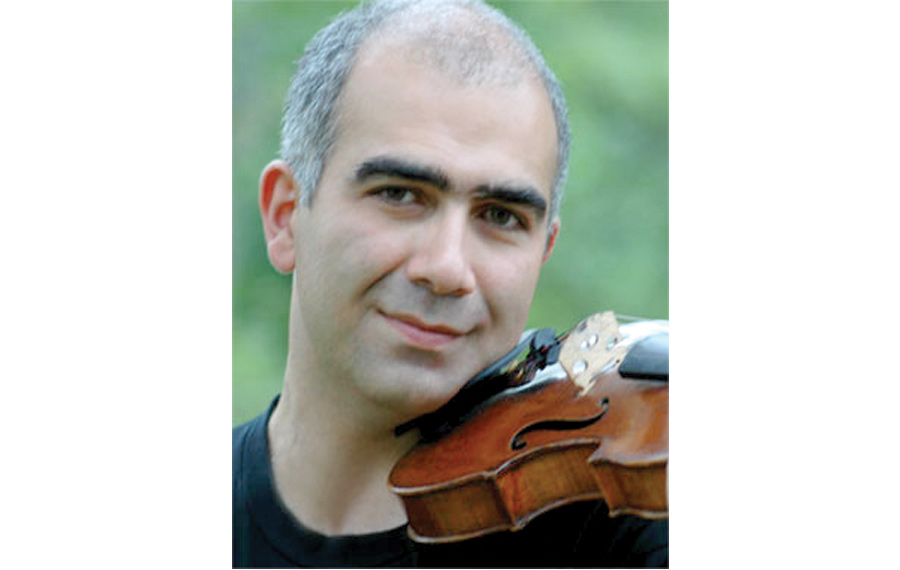
Engel Chamber Concert Three classical music works created by three legendary composers and interpreted by three musicians highlight Adat Ari El’s 25th annual Engel Chamber Music Concert. Violinist Movses Pogossian, cellist Clive Greensmith and pianist Steven Vanhauwaert perform compositions by Beethoven, Rachmaninoff and Dvorak. 2 p.m. Free. Reservations requested. Adat Ari El, David Familian Chapel, 12020 Burbank Blvd., Valley Village. (818) 766-9426.
Jewish L.A. Walking Tour Shmuel Gonzalez, also known as the Barrio Boychik, retraces the migration of Jewish families from the barrio of Boyle Heights in East Los Angeles to the Fairfax District starting in the 1930s. The nostalgic walking tour focuses on the restaurants, shops and institutions that relocated, as well as the Jewish murals and organizations that have helped the Fairfax District retain its Jewish character. A quick pass by the Los Angeles Museum of the Holocaust at Pan Pacific Park is also on the agenda. Stick around and grab a corned beef sandwich at Canter’s restaurant with Gonzalez. 11:45 a.m. $20 adults, free for children 13 and younger. Group limited to 20 people. Meet at Canter’s, 419 N. Fairfax Ave., Los Angeles.
“Simcha Series: A Celebration of Jewish Arts” Musician Benny Lipson, guitarist Mat Gurman and stand-up comedian, multi-instrumentalist and vocalist David Zasloff begin a monthly series at Temple Ner Simcha in Westlake Village, performing works by some of the greatest Jewish artists of the 21st century. 7–8:30 p.m. Free. Temple Ner Simcha, 880 Hampshire Road, Westlake Village. (818) 851-0030.
MON JAN 7
“Of Two Minds”
“Emotional Struggles” Documentary filmmaker Lisa Klein’s “Of Two Minds,” which explores the lives of three people living with bipolar disorder, and Rabbi Sara Berman, who has written about struggles with clinical depression, highlight this event at Kol Tikvah in the San Fernando Valley featuring a screening of Klein’s film and a discussion about the stigmatized disorder. Part of a series on mental health, with subsequent events on March 11 and May 6 focused on depression and suicide, respectively. 6:30–8:30 p.m. Free. Kol Tikvah, 20400 Ventura Blvd., Woodland Hills. (818) 348-0670.
TUE JAN 8
Israel’s ‘Tribes’ Temple Emanuel of Beverly Hills Rabbi Educator Adam Lutz offers an in-depth look at the religious, ideological, national and geographic “tribes” that make up the State of Israel in a presentation titled “All the ‘Tribes’ of Israel Are Responsible for One Another.” Additional events on Jan. 15 and 29. 7 p.m. Free. Temple Emanuel of Beverly Hills, Davidson-Sheffer Hall, 8844 Burton Way, Beverly Hills. (310) 288-3737.
Jason Greenblatt Jason Greenblatt, who along with President Donald Trump’s son-in-law, Jared Kushner, has been spearheading the effort toward a peace deal for the Israelis and the Palestinians, discusses Trump’s so-called “Deal of the Century” with Sinai Temple Senior Rabbi David Wolpe. Greenblatt is an assistant to Trump and a special representative for international negotiations. His leadership and guidance have helped changed the tenor of conversations with leaders throughout the Middle East. 7:30 p.m. Free for members, $18 non-members. Sinai Temple, 10400 Wilshire Blvd., Los Angeles. (310) 474-1518.
WED JAN 9
“The God We Meet in Jewish Mysticism”
Professor Daniel Matt of the Graduate Theological Union in Berkeley leads a discussion addressing the difference God makes in human life. He appears as part of “Conservations With God,” an ongoing series at Valley Beth Shalom. Attendees convene every Wednesday evening through Feb. 20. 7–9 p.m. Free. Valley Beth Shalom, 15739 Ventura Blvd., Encino. (818) 788-6000.
THU JAN 10
“Sammy Davis Jr.: I’ve Gotta Be Me”
“Sammy Davis Jr: I’ve Gotta Be Me” Emmy-winning director Sam Pollard’s documentary follows the life and career of the iconic black, Jewish and Puerto Rican performer, Sammy Davis Jr., as told through interviews with the stars who knew him. Neil Friedman, founder of Menemsha Films, speaks after the screening. Complimentary popcorn and dessert. 6:45 p.m. seating, 7 p.m. screening. Free. Kehillat Israel, 16019 W. Sunset Blvd., Pacific Palisades. (310) 459-2328.
Have an event coming up? Send your information two weeks prior to the event to ryant@jewishjournal.com for consideration. For groups staging an event that requires an RSVP, please submit details about the event the week before the RSVP deadline.
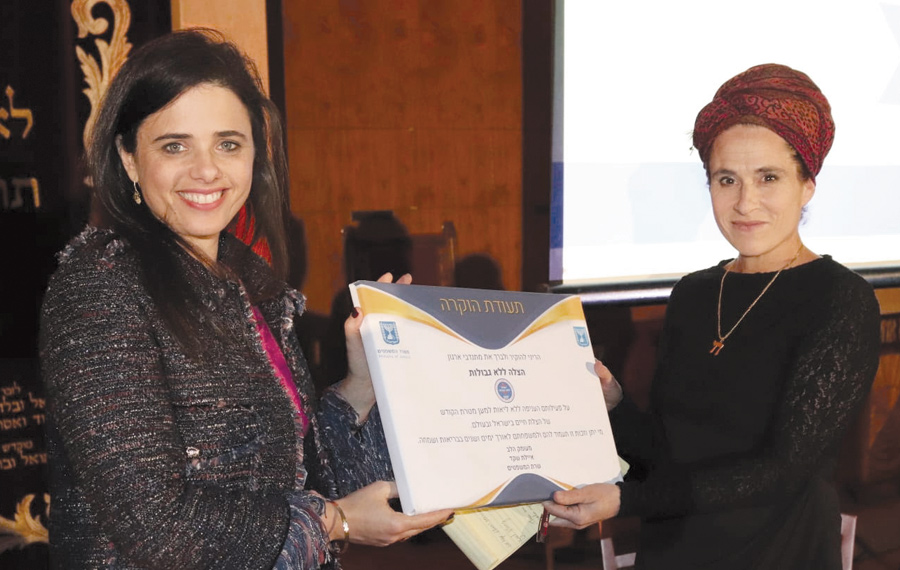
Representatives of Rescuers Without Borders (RWB – (formerly Hatzalah Yehuda and Shomron), an Israeli organization that provides emergency response and first aid to the communities of Judea and Samaria, joined Knesset Member Ayelet Shaked for a community gathering at Beth Jacob Congregation in Beverly Hills on Nov. 29.
Attending the event were RWB Development Director Natalie Levy Sopinsky, Beth Jacob President Jess Dolgin, Beth Jacob Senior Rabbi Kalman Topp, Arutz Sheva’s Yoni Kempinski, and Beverly Hills Mayor Julian Gold, who was honored at the event for the efforts of the Beverly Hills City Council to counter the boycott, divestment and sanctions (BDS) movement.
“It is precisely thanks to strong moral leaders like Mayor Gold that we have been winning in our struggle against BDS,” Shaked said.
Shaked presented Sopinsky, who grew up in Delaware but now lives in Susya in Hebron, with an award for excellence in recognition of RWB’s work as emergency responders.
Addressing the audience of more than 800 people, Sopinsky said, “You come and visit your children, and when something happens, we are the ones who come to your aid.”
During her visit to Los Angeles, Sopinsky visited with members of Kehillat Israel in Pacific Palisades, the Jewish Community Foundation of Los Angeles and the women’s division of the Jewish Federation of Greater Los Angeles.
RWB has more than 800 volunteer first-responders trained by Magen David Adom, the Israeli Red Cross, to be on the scene and render aid within minutes. Some RWB members also have accompanied Magen David Adom staff to help victims of disasters in other countries.
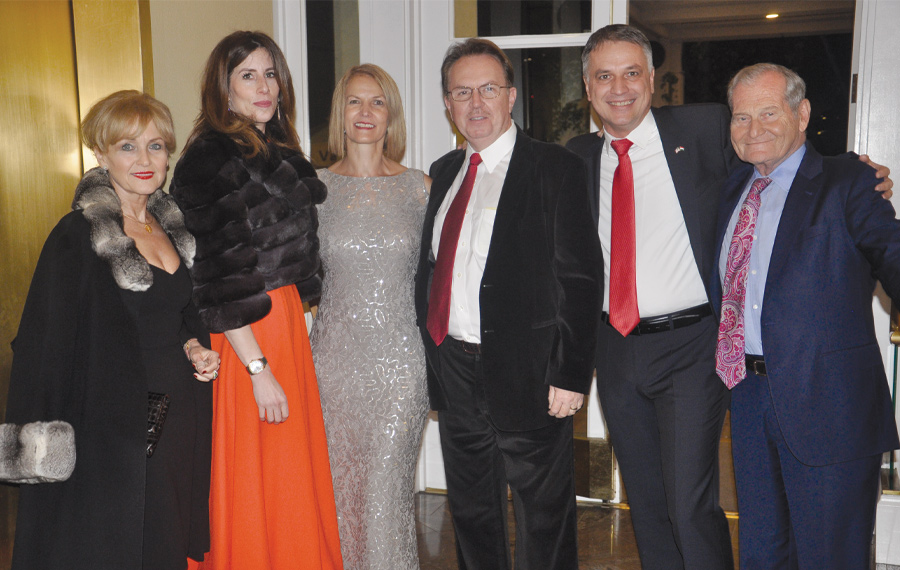
From left: Susan Pekarovics, Chanie Friedman, Ildiko Nagy, Attila Beres, Hungarian Consul General Támas Széles and Bais Naftoli President Andrew Friedman enjoy at Chanukah party at Bel Air Crest Clubhouse. Photo courtesy of Andrew Friedman
Consul General of Hungary in Los Angeles Tamás Széles and Los Angeles attorney and Congregation Bais Naftoli President Andrew Friedman held a Hanukkah party at Bel Air Crest Clubhouse on Dec. 8.
The festivities included a menorah lighting by Cantor Jance Weberman.
The program also included renditions of holiday songs by singer Rosalie von Wendt and the Los Angeles Jewish Community Children’s Choir.
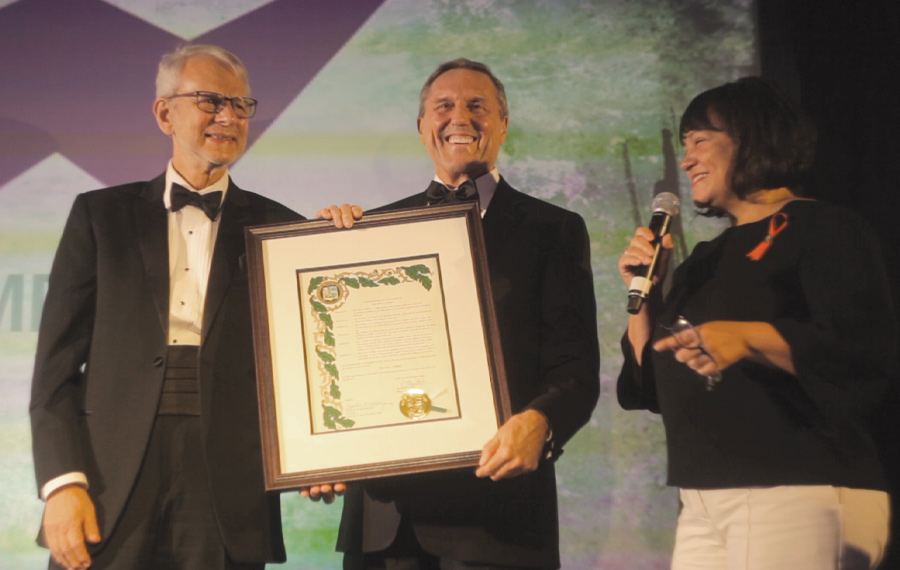
From left: Dr. Paul Finkel and Thousand Oaks City Council members Al Adam and Claudia Bill-de la Pena presenting a commendation from the city to Dr. Finkel at a gala. Photo courtesy of Ross Goldberg
Dr. Paul Finkel was honored at the New West Symphony League’s Dec. 7 gala at the Hyatt Regency Westlake for his longtime philanthropic support and two-term chairmanship of the symphony’s board of directors.
As an internist and nephrology subspecialist, Finkel served with the U.S. Air Force in the Vietnam War, was a faculty member of UCLA Medical School and practiced medicine at Los Robles Regional Medical Center in Thousand Oaks and in private practice before retiring in 2014.
From left: AMIT Children L.A. Council Vice Chair Evan Roklen, AMIT Western Region Vice President Sandra Roklen, AMIT L.A. Council Chair Evan Green, three AMIT students and L.A. Council Member Joel Levine raising awareness about the work of AMIT. Photo courtesy of AMIT Children
The Los Angeles Leadership Council of education organization AMIT Children held a gathering on Nov. 20 featuring AMIT students from Israel that drew more than 30 community members to the home of Shari and Jeff Fishman.
“You could tell that everyone in the room was touched and inspired by the work AMIT is doing to create the future leaders of Israel,” said Evan Green, chair of the AMIT L.A. Leadership Council.
With an innovative approach, the Israel-based AMIT seeks to revolutionize the way Israeli youth are being educated to ensure their successful integration into society.
During the event, the Israeli students shared their stories and highlighted their experiences at AMIT schools, particularly the impact the organization’s staff, students and curriculum have had on their lives.
From left: StandWithUs (SWU) CEO Roz Rothstein; Bruce and Ellie Lederman; Frank Luntz; Justin Feldman and Sarah Tagger; aviator Elgen Long; SWU honorees Helen and Haim Dayan; philanthropists Debbie and Naty Saidoff; SWU co-founder Esther Renzer and comedian Elon Gold attended the SWU Festival of Lights gala. Photo by Jonah Light Photography
The pro-Israel education and advocacy organization StandWithUs celebrated its 17th year during its annual Festival of Lights gala on Dec. 9 at the Beverly Hilton Hotel.
The event raised nearly $4 million, which will go toward the organization’s $12 million budget for 2019. Naty and Debbie Saidoff and Bruce and Ellie Lederman supported the gala so that all the monies raised went into programming.
The gala honored board members and philanthropists Helen and Haim Dayan, “whose humble and quiet leadership continues to build and sustain important Jewish organizations and schools,” the StandWithUs website says.
Pollster and political consultant Frank Luntz was the keynote speaker.
“Leaders of Tomorrow” recipients Justin Feldman and Sarah Tagger explained how they utilized StandWithUs resources to confront boycott, divestment and sanctions (BDS) efforts on their campuses.
The gala also recognized aviator Elgen Long, 91, the last surviving member of Alaska Airlines’ clandestine seven-day mission that brought nearly 2,000 Jews from Yemen to Israel in 1949. Their daring flights were the precursor to Operation Magic Carpet, which rescued approximately 45,000 Yemenite Jews.
Four students told how the StandWithUs curriculum for middle schools helped them form a love for Israel.
Film producer Robert Lantos, who shot the only movie filmed at Treblinka, spoke of the deception of the BDS campaign and the importance of Holocaust remembrance.
Los Angeles acting Consul General of Israel in Los Angeles Eitan Weiss opened the gala. Comedian Elon Gold performed. Alon Miller and Rabbi Cantor Alison Wissot sang the Israeli and American national anthems. Israeli singer Hagit Yaso sang “Jerusalem of Gold.” David Kates’ orchestra performed.
Want to be in Movers & Shakers? Send us your highlights, events, honors and simchas. Email ryant@jewishjournal.com.
If your New Year commitments need buttressing, mantras can help. So says fitness expert, coach and TV host Erin Stutland.
A former professional dancer and actress who appeared in “Sex and the City,” “Mad Men” and “The Sopranos,” Stutland is releasing her first book, “Mantras in Motion: Manifesting What You Want Through Mindful Movement,” just in time for the new year.
The book is the culmination of 15 years of study and teaching. Her online and live programs, “Soul Stroll” and “Shrink Sessions,” incorporate positive affirmations into workouts to not only help clients reach their goals, but they’ve also helped Stutland reach 100,000 people in more than 155 countries.
Jewish Journal: What is the magic of mantras? How do they work?
Erin Stutland: The Pauli Exclusion Principle states no two things can occupy the same thing at the same time. If you are moving while repeating positive statements aloud, there is no space for negative statements to exist. You can’t think, “Oh, this is so hard!” and also, “I am a magnet for success.” It’s either one or the other. The more you repeat mantras in conjunction with movement, the deeper these thoughts move into your subconscious. They become a part of you. You’ll walk around during the day and these mantras will just pop up into your mind when you least expect it. That is the magic.
JJ: How do you create an effective mantra?
ES: Write down what you are afraid of or what your negative beliefs may be. Then flip it. For example, “I am not talented enough” can flip to “I am connected to my innate talents. I have everything I need to create whatever I want.” You may not believe it right away, but this is where using movement with these words can help.
JJ: What is one of your favorite mantras?
ES: “I am a magnet for success. I attract the very best.”
JJ: Your book aims to help readers achieve their best selves by unearthing “desires, releasing resistance and taking inspired action.” What is inspired action and why is that important?
ES: Inspired action is action you feel called to take. Something inside of you says, “Yes, this is what I must do.” It doesn’t mean you won’t be afraid. And fear may try to stop you but when you are taking inspired action, you are in a state of flow and it feels exciting and good.
JJ: How do suggest transforming negative beliefs, releasing resistance and telling yourself a new story?
ES: We start by recognizing which of our current beliefs are not in alignment with what we want most. Once we uncover these conscious and subconscious beliefs, we can begin to transform them. Moving your body while saying positive mantras aloud helps us do this quickly so new beliefs infuse every single cell in your body. This is how you begin to create a new story.
JJ: How does telling yourself a new story create movement in your life?
ES: We all struggle with self doubt and insecurity. And we all strive to want more for ourselves and our families. If your old story is, “I’m not good enough to get that job” or “I don’t deserve happiness,” you may never take action. Or it may feel like pushing a boulder up a hill. If you create a new story about who you are and what you deserve, you will feel inspired to take action. And it will require less effort.
I love the inherent sense in Judaism that we question things, investigate them and not take anything at face value. We are a people of thinkers and philosophers. This is what manifesting is all about.
JJ: You grew up in a Conservative synagogue and attended Hebrew school outside of Chicago. How do you and your husband share Jewish traditions with your daughter? And how do Judaism and manifesting mash up?
ES: Jewish prayers are a part of my being, a way I slow down and connect to myself. We try to observe Shabbat in our own ways by sitting down for dinner as a family on Friday nights and being off our phones. Shabbat is a way to clear the slate and call my soul back to me. It’s the groundwork for a beautiful life.
I love the inherent sense in Judaism that we question things, investigate them and not take anything at face value. We are a people of thinkers and philosophers. This is what manifesting is all about. You have to question your beliefs about why you are where you are today. You have to do the introspective work.
JJ: How does flow feed into manifesting?
ES: To me, flow means you lose track of time and feel a sense of ease and forward movement. When I am doing my best work, I am in the flow. I talk about the importance of getting into flow as often as possible in “Mantras in Motion.” I usually feel most in flow writing or coaching.
JJ: How does celebrating milestones support further growth?
ES: We are so future oriented. We take little time to celebrate our accomplishments. We do one thing and we are already on to the next. But a series of things likely needed to happen in order for you to accomplish a goal. Perhaps you developed a new skill. Maybe you had to take some really hard actions.
The person you have become as a result of accomplishing something deserves to be celebrated. The good feelings generated from celebration are what propel you forward to accomplish even more.
“I went to my very first European Christmas markets and tasted my first Gluhwein. I highly recommend the Budapest Christmas market as well as the Central market of Pest. On our morning Vienna bus tour, we saw the sights of the city and a few of the sixteen Christmas markets. We walked around the historic city, St. Stephen’s Church and explored the largest Christmas market.”
Stayed: “I sailed on the Danube River to see dozens of Christmas markets with Viking Cruises. My home for the voyage was the Viking Atla from Budapest to Nurenberg. I absolutely loved that the floors of the bathroom were heated! It felt amazing on chilly mornings!”
Favorite Activity: “My favorite thing on the ship was learning to make Apple Strudel and then getting to taste it warm with vanilla ice cream. One day, we went to an incredible gingerbread shop. There were so many holiday tastes and so many ornaments to buy! I loved sailing during the holidays.”
Christmas is coming! Which means now is your chance to escape the winter or embrace the snow. If you’re ready to leave behind Christmas in the burbs this year and head out somewhere really special, Erin Holmes of Explore With Erin has you covered. Having celebrated Christmases all over the world, here are her picks for the best Christmas destinations.
I love Christmas. I love presents and family and friends and all the food. But sometimes Christmas can be overwhelming. Sometimes there is just so much to do and so much to plan that somewhere along the way Christmas lost a little bit of its magic.
So one year the kids and I up and left. We jumped on board a Christmas cruise and spent Christmas day in the middle of the ocean in the South Pacific somewhere. It was magical.
With the Iranian regime recently arresting 100 Christians in Iran for supposedly proselyting Muslims into Christianity, I had the chance to sit down and chat with Frank Nikabkht, an Iranian American Jewish activist on the status of Christians and other religious minorities still living in Iran. Nikabkht, who heads the L.A.-based Committee for Minority Rights in Iran, discussed the war the Iranian regime’s radical leadership has been undertaking against new converts to Christianity in recent years — as the popularity for the faith has grown among people who are disillusioned with radical Shiite Islam sanctioned by the state.
My 2016 interview with Nikbakht shed light on how the Iranian regime at that time had launched a successful campaign of severely restricting the celebration of Christmas and arrested those operating underground churches. This year he elaborated on how Christian Iranians who were born Christian and did not convert are facing growing persecution at the hands of the Iranian regime.
Jewish Journal: I understand 100 Christians were recently arrested in Iran, what is the current status of Christians in Iran?
Frank Nikabkht: As you may know, Iranian Islamic laws consider Christianity as a tolerated religion and recognize its followers as third class citizens, after Shiite and Sunni Muslims, with limited rights. However, what some may not know is that even this “privilege” is limited to certain ethnic Iranians who happen to be Christians such as Armenians and Assyrians, who have lived in Iran for thousands of years and whose populations have dwindled to about 20 percent since the establishment of the Islamic Republic and its constant pressures and discrimination against minorities. Christianity itself however, as a faith or belief is not accepted from any other Iranian. If a Muslim converts to Christianity, the official punishment — following the Islamic Shari’ah — is death due to apostasy. Dozens of Christian converts or missionaries were assassinated and executed in the early years of the Islamic revolution, while hundreds have been imprisoned and thousands threatened into exile ever since. Executions and assassinations have been rare, in order to protect the “compassionate image” of the Islamic regime.
JJ: The Iranian regime in recent years has been cracking down on underground churches in Iran where former Muslims have converted to Christianity. How has the regime been able to do this effectively?
FN: According to a recent Iranian Revolutionary Guard affiliated paper, the Iranian authorities have been successful in “penetrating” and demolishing Christian evangelist gatherings by planting undercover agents within them, leading to their imprisonment and disbanding their activities, as if in espionage rings or criminal networks. My research in the past decades had shown that even the few legal Churches available to non-ethnic Christians — mainly attended by Jews and other minorities to Christianity — were forced to have a list of members which would be checked against the people entering those churches by Islamic intelligence ministry agents at the door. Non-ethnic Christians are also intimidated and investigated when going to government offices, to make sure they aren’t Muslim converts to Christianity.
JJ: Why has there been such a strong attraction by younger Muslims to embrace Christianity?
FN: Christians in Iran claim that their numbers have increased to huge numbers. These claims are believable, since millions of young Muslims in Iran have been trying to find alternative beliefs to their harsh imposed Islamist ideology of the ruling Iranian regime. Life has been made difficult for people originally born Christian in Iran. Even the legal and operating Christian cemetery in Eastern Tehran has been shut down for several years, and Christians have reported that they had to go into the adjacent Jewish cemetery and throw their flower bouquets over the walls, just to commemorate their deceased on the other side. Burials are therefore a major problem for non-ethnic Christians.
JJ: Why does the Iranian regime see Christianity and the underground evangelical churches as such a threat to them?
Historically, the gradual elimination of all other religions in lands conquered by Islam, has been a goal. Converting Muslims to another religion is a crime punishable by death according to the existing Iranian laws. At this time, because of mass dissatisfaction with the extremist Muslim clergy in power in Iran, conversion to other religions such as Christianity, Bahaiism and Zoroastrianism, as well as to Sufi sects within Islam, has become common and is turning into a serious matter threatening the monopoly of the Mullahs over people’s deepest convictions.
JJ: Why don’t the major European or Russian leaders who forged the 2015 Iran Deal, and are doing tremendous business with the Iran regime, speak out about the regime’s crack down on Christianity and new Christian converts?
FN: Obviously, human rights violations are not a concern of the European powers, while submission to Islamic laws is a trend even in their own countries. I personally remember however, that during the Clinton presidency, the U.S. State Department, while defending other Iranian minorities, excluded evangelical Christians whom they considered as trouble makers in Islamic countries, from American protection.
JJ: What kind of campaign of awareness would you like to see from the American evangelical community to support the plight of Christians and new Christian converts in Iran?
FN: Spreading the news of Christian persecution is of primary importance. Comparing this inhuman behavior to Western countries’ tolerance of other religions is also very important because the younger generations here might not know about the prevalence of brutal suppression of alternative thinking in Islamic countries.
Breakdown of the Palestinian Refugee Problem in 20 seconds: The year is 1947 and the UN announces its Partition Plan for Palestine, also known as resolution 181. Promptly, the Arabs residing in the region open fire on Jews. Eventually a war breaks out and the exodus of 700,000 Palestinians ensues.
This has turned into one of the most controversial debates in modern history. What caused the Palestinian exodus in the years 1947-1949? There’s the mainstream Zionist narrative, more or less that Arab leaders urged the Arab population to leave. There’s the mainstream Arab narrative, basically Zionist ethnic cleansing. And then, there’s Professor Benny Morris. Now buckle in because this is slightly more nuanced than the stuff you might be used to hearing.
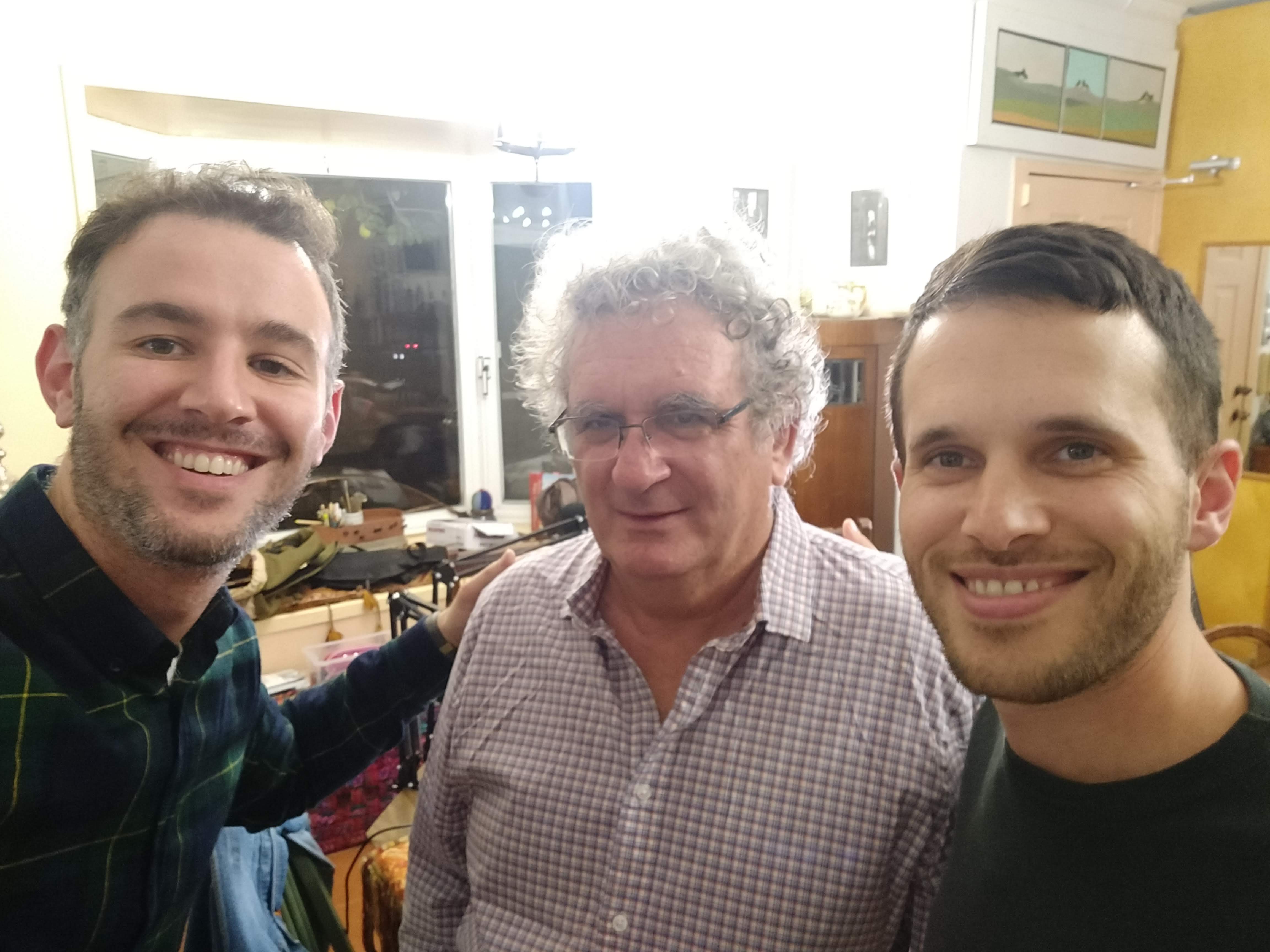
Professor Benny Morris is the professor of history in the Middle East Studies department of Ben Gurion University. He is the author of several works including “The Birth of the Palestinian Refugee Problem,” 1947–1949. And, he’s a pretty cool dude. So we are thrilled to join him in his home this evening to talk some history!