Much of our attention today is understandably focused on protecting our community from those who are hostile toward the Jewish people and threaten us from the outside. Indeed, we must fight antisemitism, advocate for Israel and hold our elected officials accountable for protecting our safety and welfare. Yet even as we confront the threats from without, equally urgent, if not more so, is the need to fortify ourselves from within.
At a time of enormous challenge for Jews in Israel and throughout the world, our people are painfully divided. To be sure, there are real and consequential issues, particularly in Israel, that directly affect people’s lives and the future of the country. The problem is not that we disagree, even passionately. It is the way we disagree and what too often happens as a result of those disagreements. Political and religious differences become personal. We label the other, dismiss one another and sometimes question the legitimacy or sincerity of Jews who see things differently or have a different lifestyle or level of observance. At precisely the time when we need to be unified, there is far too much judgment and not nearly enough caring.
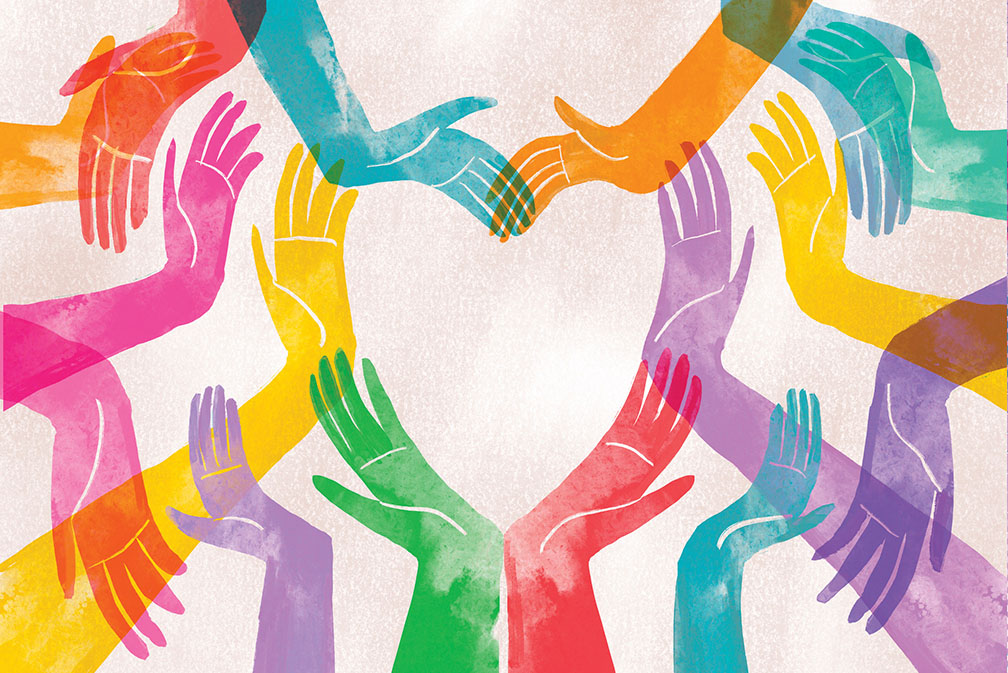
At this critical moment, we need to strengthen our sense that we are one Jewish family and create communities where every individual is valued, respected and welcomed. Sukkot has something important to teach us about how to do that.
A friend once visited Rabbi Chaim Ozer Grodzinski, one of the great Torah leaders of prewar Europe, during Sukkot. Rav Chaim Ozer invited him to eat in the sukkah, but because the Rav was feeling unwell from the cold, he ate inside. After finishing his meal, Rav Chaim Ozer returned to the sukkah to spend time with his guest. The guest was surprised. If Rav Chaim Ozer was exempt from sitting in the sukkah because he was a mitzta’er, someone experiencing significant discomfort, why had he come back outside?
Rav Chaim Ozer explained: “A mitzta’er is exempt from the mitzvah of sukkah. But that doesn’t make me exempt from the mitzvah of hachnasat orchim, welcoming a guest and keeping you company.”
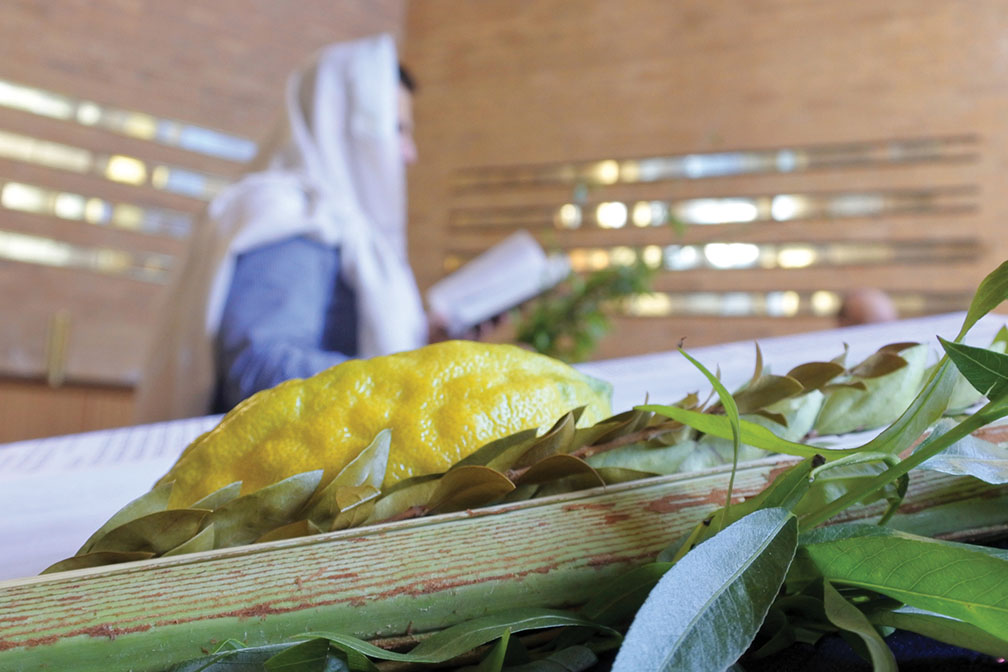
This ideal of welcoming others is embedded in the spirit of Sukkot. The holiday has two central mitzvot: taking the daled minim, the four species (etrog, lulav, hadasim and aravot) and dwelling in the sukkah. Regarding the etrog, the Torah explicitly introduces the concept of beauty: “U’lekachtem lachem bayom harishon pri etz hadar,” “Take for yourselves on the first day the fruit of a beautiful tree.” The Torah calls attention to hadar, beauty. We carefully examine an etrog to make sure it is free of blemishes and imperfections. We search for one that is especially beautiful.
There is no comparable requirement of hadar regarding the sukkah. There is, to be sure, a general idea of hiddur mitzvah, beautifying mitzvot, and we creatively decorate our sukkot. But the sukkah itself can be an inherently imperfect structure. It can have three walls. There can be gaps in the bamboo roof. There are all sorts of halachic principles that allow us to work with incomplete walls and imperfect boundaries.
Why the difference between the etrog and the sukkah?
Perhaps the answer can be found in another distinction between these two mitzvot. When speaking about the etrog and all four species, the Torah says “ulekachtem lachem”, “take for yourselves.” It is a personal obligation and at least for the Biblical mitzvah on the first day, one must legally own the lulav and etrog to fulfill the mitzvah. (This year, with the first day of Sukkot falling on Shabbat, we will not take the four species that day.)
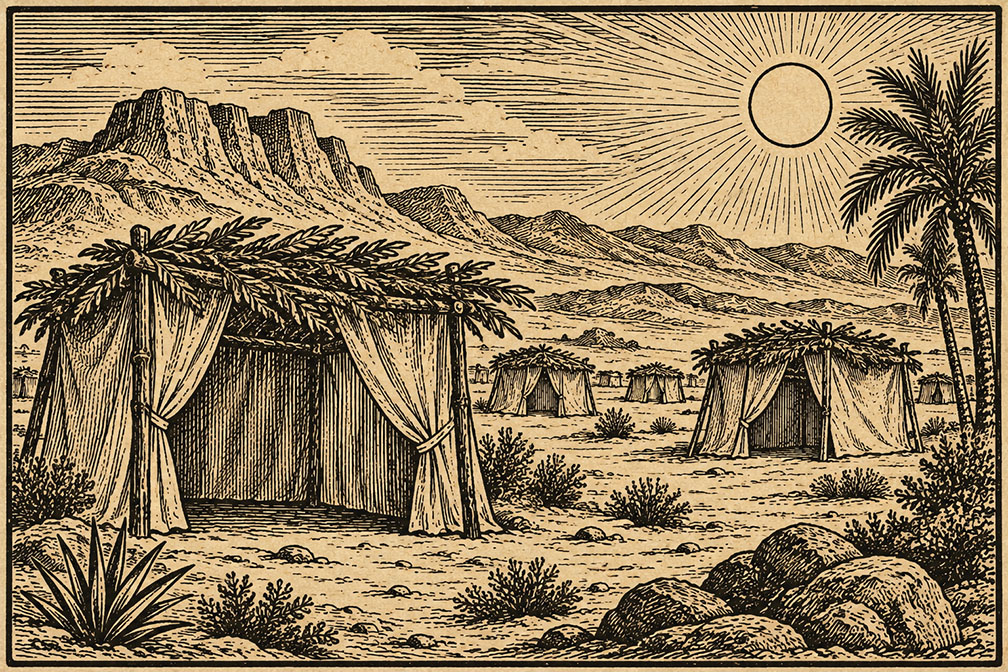
The sukkah stands in stark contrast. Unlike the four species, you can fulfill the mitzvah in someone else’s sukkah. Moreover, the Torah says, “Kol ha’ezrach b’Yisrael yeshvu basukkot,” all of Israel shall dwell in sukkot. The Talmud derives from these words the striking idea that “kol Yisrael re’uyim leishev b’sukkah achat”, all of Israel can dwell together in a single sukkah, at least in theory. Thus, while the etrog symbolizes the individual, the sukkah represents the collective.
Perhaps that explains the different requirements. When it comes to looking inward at ourselves, we should strive for hadar (beauty). We are encouraged to engage in introspection, honestly notice the blemishes and ask ourselves how we can become better Jews and human beings. If someone wants to push himself or herself to a higher religious level, that is beautiful, and striving for personal growth is indeed a core Jewish value.
But when we look at another Jew, the sukkah teaches us to have a different mindset. The sukkah, which reflects the collective, says: make room and welcome people in. When it comes to community, we need to be more flexible and less particular about imperfections. After all, we know far less than we may think about another person’s spiritual life: their background, their struggles, the effort they are making or the direction in which they are growing.
A Hasidic master once asked his students to imagine two people climbing a ladder. One is standing on the eighth rung and the other on the second. He asked them, “Which one is higher?” While the obvious answer would seem to be the former, the Rabbi explained that it all depends on which direction each person is heading. Perhaps the person on the eighth rung began on the ninth, while the person on the second rung began on the ground floor and is climbing upward. From this perspective, the one on the second rung may actually be “higher.”
We don’t know the whole story. There are differences in background and education, challenges and opportunities, character, effort and potential. We don’t even know who is more observant or more righteous. All of this is for God to judge. Our task is not to rank another Jew’s spiritual standing, but to recognize the complexity of a journey we cannot fully see.
This does not mean Judaism has no ideals or standards. Of course it does. Nor does it mean there is never a place for sensitive tochacha, guidance or gentle critique, depending on the situation and your relationship.
But there is a profound difference between having standards for ourselves and using those standards as a measuring stick with which to diminish someone else. Many people have it backwards. We are forgiving of ourselves while being demanding of others. Sukkot asks us to reverse the equation. When looking inward at oneself (and one’s children), “examine the etrog,” engage in introspection, seek to improve when necessary, ask difficult questions and strive for excellence. When looking outward at others, however, think of the sukkah. Open the door and welcome people in. Be less exacting about perceived flaws and instead see the good in others.
That message feels especially urgent right now. Too often disagreement becomes disdain, and ideological difference becomes personal animosity. We are quick to decide who is right, who is wrong, who belongs and who does not. But our differences should never obscure our shared identity, our responsibility for one another and our commitment to Ahavat Yisrael, love for our fellow Jews.
There is a growing hunger among many Jews today for community, meaning and purpose and a deeper connection to their heritage. We should welcome them because they are family. We need to create warm, accessible and nonjudgmental spaces where Jews of every background can gather, celebrate, learn, ask questions, build friendships and experience the beauty and relevance of Jewish life.
The goal of connecting with another Jew should not be to make that person more religious, but rather to embrace that person as a member of our family. Because while we may be a small nation, we are the world’s biggest family. And family does not give up on one another. Family wants everyone around the table, because we care about each other.
Kol Yisrael areivim zeh bazeh, we all are responsible for one another. The word areiv can also mean sweet (as in the morning blessing over Torah study, “veharev nah”). The responsibility we need to emphasize today is to see the sweetness, goodness and value in another Jew. Before Torah can transform someone’s life, that person first must know that he or she is wanted, that they belong, that they matter.
The Baal Shem Tov once used a powerful image to illustrate how deeply we depend on one another. A king wanted a beautiful bird that was perched high in a tree. His servants formed a human ladder, one standing on the shoulders of another, so someone at the top could reach it. But those near the bottom grew impatient and walked away. The entire structure collapsed.
That is the meaning of community. We are part of a human ladder where every person is supporting someone else. Remove one person from the structure and all of us become weaker. As the sukkah teaches us, we are all interconnected.
Our enemies have often understood this better than we do. They don’t ask what synagogue we attend, what denomination we identify with or precisely how observant we are before they attack us. We should not need antisemitism to remind us that we are one people.
As we enter our sukkot this year, perhaps we can take that message with us. Let the etrog remind us to look critically at ourselves and let the sukkah remind us to look generously at one another.
There is room in the sukkah for the Jew who looks like us and the Jew who doesn’t, the one whose observance resembles ours and the one whose journey has taken an entirely different path. We do not know who is on a higher rung. We do know that we are climbing the same ladder.
At a time when our people face so many threats from the outside, we cannot afford to be divided from within. The more we strengthen the bonds between us, make room for one another and deepen our sense of shared responsibility, the stronger we will be in confronting whatever comes our way.
This Sukkot, let us work to build communities with less judgment and more caring, less labeling and more listening, less sinah (hatred) and more ahava (love). Let us be more concerned with our own spiritual imperfections and more generous in how we see the person standing next to us.
There should be a place for every Jew in our sukkah. And there should be a place for every Jew in our story.
Rabbi Kalman Topp was the senior rabbi of Beth Jacob Congregation for 17 years.