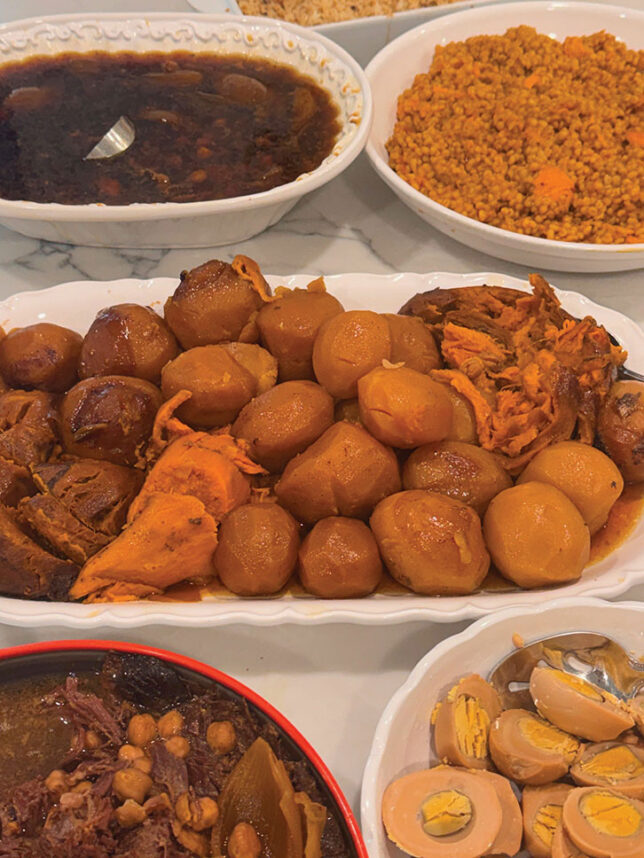
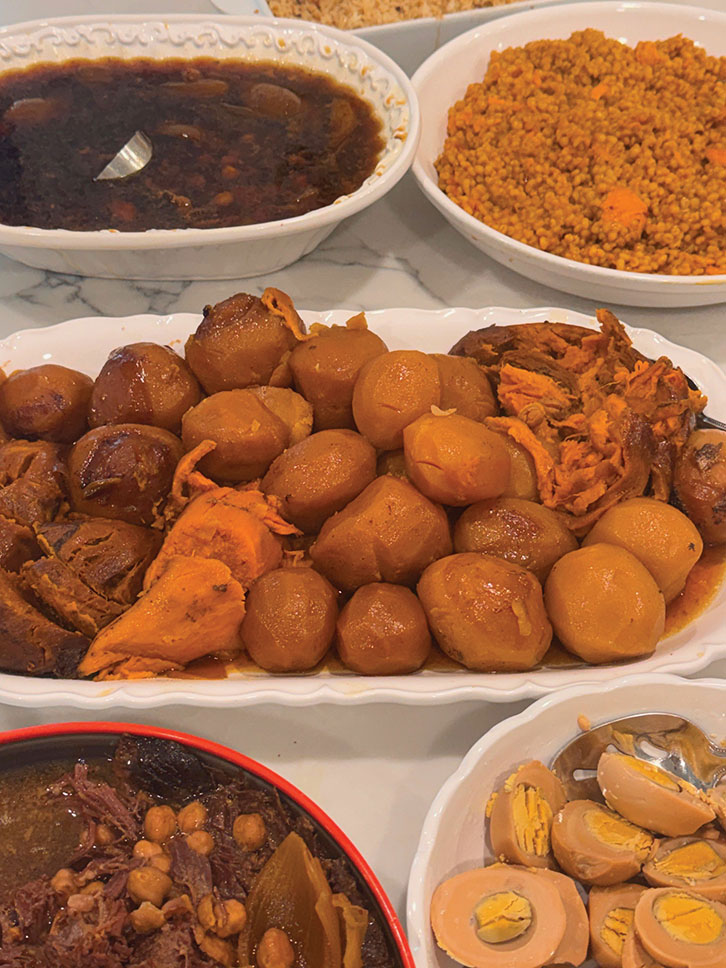
This past Shabbat, I made dafina and my home was filled with the unmistakable aroma of this special home-cooked hamin.
This past Shabbat was my mother’s hazkara (annual commemoration), the fourth anniversary of the day my beloved maman passed away.
I did what I know my mother would want me to do. I invited my brothers and my cousins to my home for Shabbat lunch. Honestly, I didn’t expect everyone to come. It’s August and walking any distance in this summer heat is not easy. They came. And some of their children came with their little babies. Before long, three generations filled my home with conversation and laughter, all enjoying delicious dafina.
My heart was full.
Since my mother passed away, making her recipes and keeping family traditions alive has become both a challenge and a priority. I find myself recreating the foods she made, trying to remember exactly how she prepared the recipes and how they tasted. Some recipes I know by heart, while others I have to piece together from memory.
I think of it as one way of holding on to my parents. Food has a remarkable ability to awaken memories. One whiff of a dish my mother or my aunt made for Shabbat transports me back decades. Suddenly, I am sitting at their table again, surrounded by the people and sounds of my childhood. Dafina does that for me, my brothers and my cousins.
Dafina is the traditional Shabbat stew of the Moroccan Jews, similar to Ashkenazi cholent. Prepared before Shabbat and cooked slowly overnight, dafina is the perfect way to have hot food for the midday meal. It is part of the Sephardic tradition of hamin, the slow-cooked Shabbat dishes found throughout North Africa and the Middle East.
While there’s no single recipe, dafina became distinctly Moroccan, with ingredients such as beef, chickpeas, potatoes, sweet potatoes, eggs and grains. Every family has their own way of making it, and often, you can identify a Moroccan family by the style of dafina they make.
My mother often told us the story, that before there were ovens in the homes of Morocco, everyone sent their dafina to the big public ovens. Sometimes the pots got mixed up and the dafina would be delivered to the wrong house. If you were lucky, you got a better tasting one!
My mother had definitely mastered the art of dafina, making it throughout our childhood. Even as adults, it was one of those dishes that captured the essence of Shabbat. To this day, it is a treasured taste of Casablanca.
For generations, Moroccan Jewish mothers and grandmothers prepared their dafina on Friday, knowing that it would sustain their families on Saturday.
There is comfort in knowing that my mother made it, her mother made it and her mother before her. And now I am doing the same.
Dafina is a major production, so I don’t make it every week. It’s the special recipe that I make for big family gatherings and special occasions.
This Shabbat was special and it was extra special having three generations gathered around my table to eat a dish that connects all of us to the generations before us.
There is something incredibly sacred about that continuity.
I want to keep these recipes and traditions alive, not only because the food is delicious, but because it tells us where we come from. I want my children and grandchildren, nieces and nephews to know the foods their grandparents and great-grandparents grew up eating. I want them to taste the same flavors and understand that a recipe can carry family history from one generation to the next.
That afternoon, looking around my table at a house full of family, I realized that maybe this is how we keep the people we love alive.
We cook what they cooked.
We gather the people they loved.
We tell their stories and we stay connected.
– Rachel
DAFINA
1 16oz bag garbanzo beans, soaked overnight
3 pounds beef cheek meat or chuck roast
6-8 small marrow bones
1 whole head of garlic, unpeeled with top cut off
1 large onion, peeled and halved
12 small red potatoes, peeled
2 or 3 large sweet potatoes, peeled and halved
2 pitted dates
2 Tbsp honey
1 ½ Tbsp kosher salt
2 tsp ground pepper
Olive oil
Water
1 dozen pasteurized eggs, rinsed
Assemble:
• Place the garbanzos, meat, marrow bones, garlic, onion, potatoes, sweet potato, dates and honey in a large pot or crock pot. Season well with salt, pepper and a drizzle of olive oil.
• Add enough water to cover the ingredients and to the top of the pot. Cook on medium high heat for two hours.
Cover the pot with a piece of wet parchment paper and carefully place eggs on top. Cover and set on low heat for 12 hours or more.
To serve:
Remove the eggs, then peel and cut in half. Arrange on a plate and sprinkle with a dash of salt.
Carefully remove the sweet potatoes and potatoes and place on a large platter, then drizzle with the juices from the pot.
Ladle the meat and garbanzos and a generous amount of the broth into a large serving bowl.
Sharon Gomperts and Rachel Emquies Sheff have been friends since high school. Their cooking and storytelling project has grown into a devoted following on Instagram @sephardicspicegirls and on Facebook at Sephardic Spice SEC Food. Website sephardicspicegirls.com/full-recipes.
Register to join them at their Sweet & Salty Simanim cooking demo for @yesh_tikva.org, September 1, 2026 7pm-9pm