fbpx

August 12, 2026

Rabbis of LA | A Tale of Two Cities … and Two Rabbis

Unlike most rabbis, when Daniel Burg, the new senior rabbi of Hamakom, comes home, Miriam, his spouse, is also a rabbi. Asked if he and his wife speak business at home, he laughed heartily. “Yes, we will definitely talk shop,” he said. “She reads a lot of my sermons and gives me feedback. We bounce ideas off of each other.” Are there intellectual exchanges? “Oh, definitely,” he said. The Burgs are normal Jews. “We also talk about who is going to go to the grocery store and who’s going to take out the trash.”

They’ve learned how to accommodate their differences. Rabbi Burg recalled that “the biggest fight we ever had was whether to have fleishig dishes in our house because she is a vegetarian, and I really wanted to have meat. I won that battle. But it was a pyrrhic victory because we registered for meat dishes. She does most of the cooking so I use the top dish in my stack of dishes.”

Then there is their religious distinction. “When it comes to our Reform and Conservative backgrounds, I would say that we have similar practices – and different ideological reasons for doing what we do.” But they long ago agreed to live with their differences – just as they agreed on a kosher home. “We believe in Jewish pluralism,” said the male Rabbi Burg, “and we want people to be able to be comfortable by us.” Both Burgs are “passionate” about keeping a kosher home, he said, adding “she actually is a little more strict about certain things than I am. …I feel commanded by God to keep kosher,” he said, “and for her it probably is a little less specific. … She feels it is important for anybody to be able to eat in our home even if their observances are a little more strict than ours, including her cousin who is an Orthodox rabbi in Los Angeles, Rabbi Yosef Kanefsky. They are very close.” (He is the longtime leader of B’nai David-Judea Congregation in Pico-Robertson.)

What is the best part of marrying a rabbi? His response was immediate: “A shared appreciation for Jewish leadership and Jewish education. We love what we do, and we believe in the Jewish people.”

In Baltimore, Rabbi Burg led the Conservative (and historic) congregation of Beth Am (located in a Black majority neighborhood) for 16 years. When he signed a three-year deal in 2023, he told shul leaders it was his final contract.  Was there anything that prompted the decision? “No,” he said. “It just felt like it was time. The things I was excited to do in the coming years were not entirely in line with the leadership. It felt like it was time to part ways.”

For those three years, he was looking for possibilities, the 50-year-old rabbi said. “I looked at pulpit, nonpulpit jobs, foundations. … I was recruited and had a couple of interviews to be chancellor of the Jewish Theological Seminary. I looked at other synagogues as well.”

He realized then that “I am very committed to synagogue life. I really love being a pulpit rabbi.” The best part is the people, he said and then quickly ticked off the reasons. “Having community. Getting to interact. Getting to work with people one-on-one, with family groups through a range of Jewish experiences.”

And there’s another element. “I enjoy fundraising. I don’t mind doing it. But,” he quickly added, “I wouldn’t want it to be the entirety of my job.” He thrives on being able to “teach classes, do pastoral work, visit people in hospitals, lifecycle events, counseling newly marrying couples, working with children toward smichot. I enjoy writing and doing some thought leadership. I get to flex a lot of different muscles as a pulpit rabbi.”

If he had gone in another direction, what would he miss most about synagogue life? He thought for a moment. “There’s a teaching in the Mishnah,” he began, “that when two people study the Torah together, the Shechinah descends and dwells between them. There’s a sense that when Jewish people are building a vibrant community together, we bring the Divine into the world. For me, I experience God between and among other human beings, between and among other Jews. I would feel isolated if I were away from Jewish life for too long.”

Rabbi Burg was eager to talk about his new home. “We started talking about the possibility of this job with a few different people here, I would say late last year.”  What appealed most about West Hills? “This is an exciting place,” he said. “It’s really a dynamic, bold, forward-thinking community. They are interested in innovation, trying new things. There’s a vibrance in the Early Childhood. They touch lives at different stages. … It’s also bigger than the synagogue I am coming from. The opportunity to lead a larger place was very exciting to me with its program, Religious School and classes for older adults.”

West Hills is also very different from Beth Am’s location in Baltimore’s Reservoir Hill, a once-thriving Jewish area now home to a majority Black community. “Living in that Baltimore neighborhood helped me understand the truth about urban violence and also the truth of inner city life,” he said. “It was a warm and welcoming neighborhood, the kind of place where people shovel each other’s sidewalks, borrow a cup of sugar from a neighbor. We loved it. Remember, we weren’t building a shul. We were just doubling down on the Jewish presence in a Jewish neighborhood. We were not interested in doing that in a way that would alienate our neighbors. We wanted to invite our neighbors into our building.

“We had a good relationship with our neighbors because we were intentional about that relationship.”

For the Burgs, what was the best part of being in Baltimore? “The Jewish community mostly was not in the neighborhood where I lived,” he said. “Most of it is in Pikesville and Park Heights, suburban, northwestern enclaves. We were in the old Jewish neighborhood, in central West Baltimore. We had a lot of contact with the Jewish community because it is relatively small town. My kids went to day school. We were in the county to buy kosher food and educate our children.”

Beth Am’s Jewish community was unique because many of its members were transplants. “We had a number of legacy Baltimore families, but we also had people who had come to Baltimore for educational positions who were involved in civil society in Baltimore.” Rabbi Burg characterized Beth Am as a hub for those who were devoted to Baltimore city. “We had a lot of members who were upper level professionals,” he said, “leaders in society or industry who were really connected with the life blood of Baltimore city. This was not necessarily the case for the entirety of the Jewish community of Baltimore.”

Rabbis of LA | A Tale of Two Cities … and Two Rabbis Read More »

Elie Wiesel Film Premiere, JNF-USA Golf Tournament, AJC Los Angeles Names Director

The world premiere of “The Survivor in a Tuxedo” – a new documentary about Nobel Peace Prize laureate Elie Wiesel – took place last month during the Jerusalem Film Festival.

The 71-minute film, directed by veteran documentary filmmaker David Fisher, combines interviews, animation and archival footage as it explores Wiesel’s evolution from Holocaust survivor to one of the world’s leading moral voices.

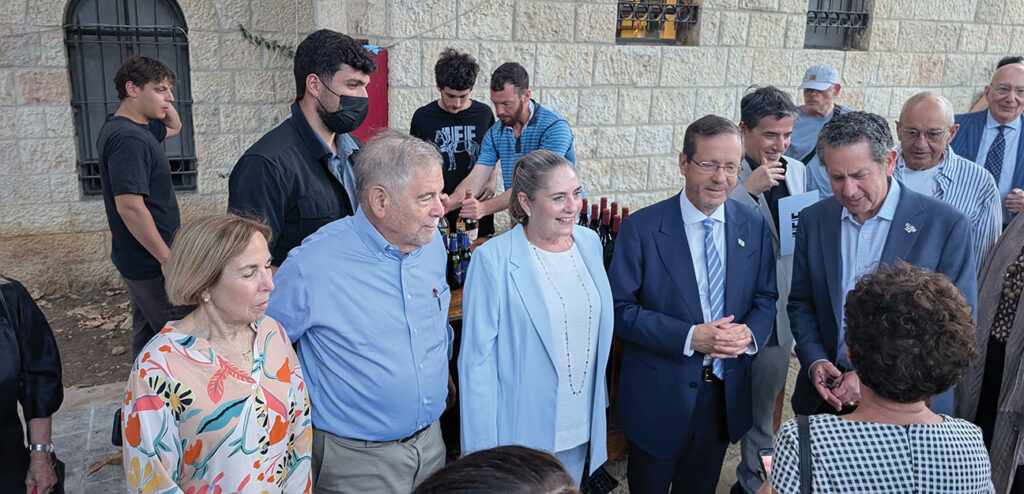
Israel’s President Isaac Herzog was among those in attendance at the film’s Jerusalem debut. He called the film, one of 200 films from 60 countries screened at the festival, “moving and compelling.”

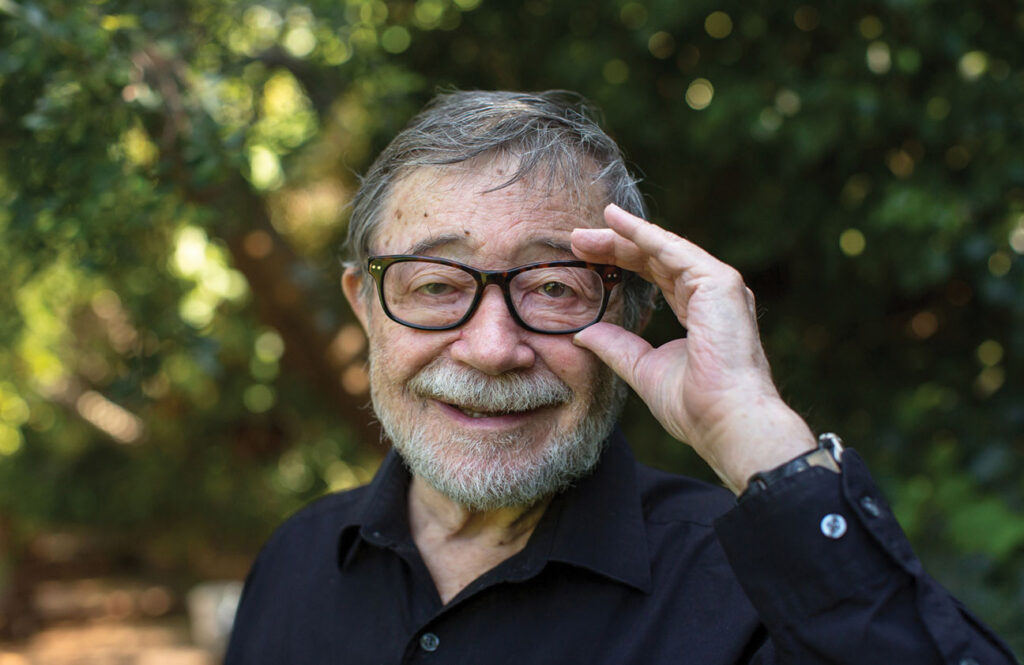
The premiere drew prominent members of Israel’s cultural and Jewish communal leadership, including Herzog and his wife, First Lady of Israel Michal Herzog; Michael Berenbaum, director of the Sigi Ziering Institute at American Jewish University and an executive producer on the project; and Jewish National Fund-USA National Campaign Director Rick Hirschhaut.

Berenbaum, a renowned Holocaust scholar, also appears as an interviewee in the film. Few, in fact, were better positioned to help shape the documentary than Berenbaum, who worked closely with Wiesel in establishing the United States Holocaust Memorial Museum.

Following the screening, Berenbaum participated in a discussion about Wiesel’s legacy and the making of the film. “Having devoted much of my career to studying the Holocaust, it was a tremendous honor to work on this film about Elie Wiesel,” Berenbaum said. “He helped shape the moral conscience of generations. I hope audiences around the world will experience this film and come away with a deeper appreciation for the complexity, courage and enduring legacy of his life.”


JNF-USA Golf Tournament Champions Ryan Kennedy, Eric Mertlbauer, Michael Thom and T.J. Vogel. Photo by Gordon Glattenberg

Los Angeles philanthropists and professionals recently teed off at the Riviera Country Club in Pacific Palisades for Jewish National Fund-USA’s annual David Frank Memorial Golf Classic, raising funds to secure the land and people of Israel’s future.

Chaired by Brett Bossuk and Joe Rosen, the golf classic – played on an iconic course that’s a mainstay of the PGA tour and will notably host the 2028 Olympics’ golf competition –  brought together the organization’s longtime donors and first-time participants for a day of golf, networking and philanthropy, driving support for communities throughout Israel’s north and south. The tournament’s champions were Ryan Kennedy, Eric Mertlbauer, Michael Thom and T.J. Vogel. The day’s spirit of generosity will continue later this year, when many tournament participants and hundreds of others are expected to reunite at Jewish National Fund-USA’s annual Breakfast for Israel on “Giving Tuesday,” Dec. 1, in Beverly Hills.


Kimberley Plotnik

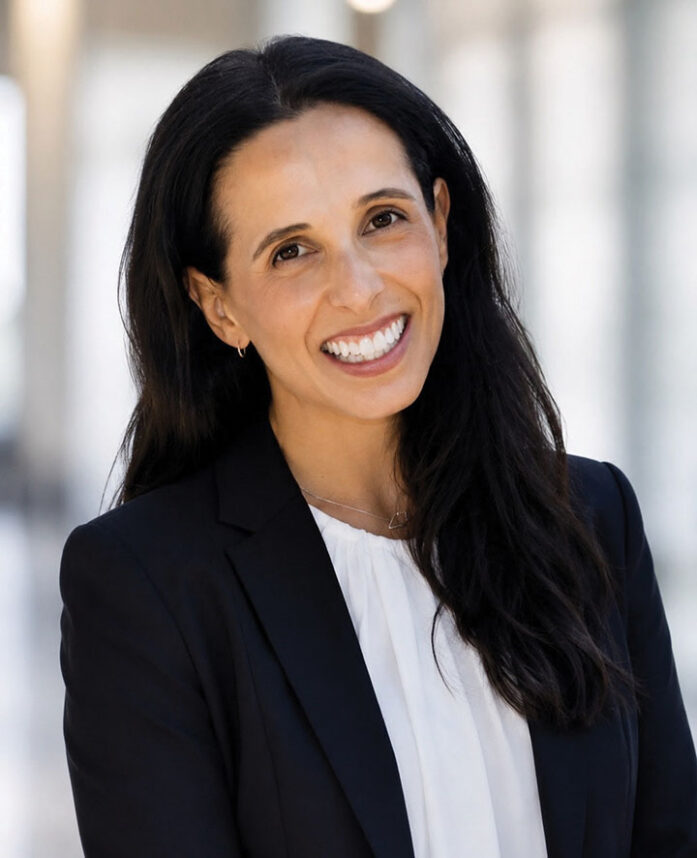
American Jewish Committee (AJC) has named Kimberley Plotnik as director of its Los Angeles regional office.

“Kimberley’s deep community relationships and record of exceptional leadership will enable her to advance AJC’s mission in Southern California and throughout the West,” AJC CEO Ted Deutch said. “At a time when Jewish communities are navigating significant new challenges, Kimberley’s experience will undoubtedly strengthen AJC’s impact throughout the region.”

In her new role, Plotnik oversees AJC activities and advocacy in Los Angeles, Orange, Ventura and San Bernardino counties as well as in Arizona, Colorado, Hawaii, Nevada and New Mexico. “AJC has a proud history of championing the Jewish community in Los Angeles and Southern California,” Plotnik said. “I look forward to fostering deeper connections within the Jewish community and expanding partnerships across our region’s diverse communities and among local leaders to help build a future in which our community is not only safe but truly thriving.”

Plotnik most recently worked as program director for Esperanza Immigrant Rights Project at Catholic Charities of Los Angeles, a public interest legal organization that provided pro bono legal services to more than 8,000 immigrants annually. She previously worked as a civil rights area counsel at ADL in Los Angeles, focusing on complaints tied to antisemitism and issues of discrimination and civil rights. Plotnik was also a volunteer attorney for the Immigrants’ Rights Project at Public Counsel, a nonprofit public-interest law firm in Los Angeles, and for UNHCR, the U.N. refugee program, in Kampala, Uganda.

A resident of Los Angeles, Plotnik is a graduate of Monash University in Melbourne, Australia, and the UCLA School of Law.

Elie Wiesel Film Premiere, JNF-USA Golf Tournament, AJC Los Angeles Names Director Read More »

Dafina, the Shabbat Dish That Brings Us Home

This past Shabbat, I made dafina and my home was filled with the unmistakable aroma of this special home-cooked hamin.

This past Shabbat was my mother’s hazkara (annual commemoration), the fourth anniversary of the day my beloved maman passed away.

I did what I know my mother would want me to do. I invited my brothers and my cousins to my home for Shabbat lunch. Honestly, I didn’t expect everyone to come. It’s August and walking any distance in this summer heat is not easy. They came. And some of their children came with their little babies. Before long, three generations filled my home with conversation and laughter, all enjoying delicious dafina.

My heart was full.

Since my mother passed away, making her recipes and keeping family traditions alive has become both a challenge and a priority. I find myself recreating the foods she made, trying to remember exactly how she prepared the recipes and how they tasted. Some recipes I know by heart, while others I have to piece together from memory.

I think of it as one way of holding on to my parents. Food has a remarkable ability to awaken memories. One whiff of a dish my mother or my aunt made for Shabbat transports me back decades. Suddenly, I am sitting at their table again, surrounded by the people and sounds of my childhood. Dafina does that for me, my brothers and my cousins.

Dafina is the traditional Shabbat stew of the Moroccan Jews, similar to Ashkenazi cholent. Prepared before Shabbat and cooked slowly overnight, dafina is the perfect way to have hot food for the midday meal. It is part of the Sephardic tradition of hamin, the slow-cooked Shabbat dishes found throughout North Africa and the Middle East.

While there’s no single recipe, dafina became distinctly Moroccan, with ingredients such as beef, chickpeas, potatoes, sweet potatoes, eggs and grains. Every family has their own way of making it, and often, you can identify a Moroccan family by the style of dafina they make.

My mother often told us the story, that before there were ovens in the homes of Morocco, everyone sent their dafina to the big public ovens. Sometimes the pots got mixed up and the dafina would be delivered to the wrong house. If you were lucky, you got a better tasting one!

My mother had definitely mastered the art of dafina, making it throughout our childhood. Even as adults, it was one of those dishes that captured the essence of Shabbat. To this day, it is a treasured taste of Casablanca.

For generations, Moroccan Jewish mothers and grandmothers prepared their dafina on Friday, knowing that it would sustain their families on Saturday.

There is comfort in knowing that my mother made it, her mother made it and her mother before her. And now I am doing the same.

Dafina is a major production, so I don’t make it every week. It’s the special recipe that I make for big family gatherings and special occasions.

This Shabbat was special and it was extra special having three generations gathered around my table to eat a dish that connects all of us to the generations before us.

There is something incredibly sacred about that continuity.

I want to keep these recipes and traditions alive, not only because the food is delicious, but because it tells us where we come from. I want my children and grandchildren, nieces and nephews to know the foods their grandparents and great-grandparents grew up eating. I want them to taste the same flavors and understand that a recipe can carry family history from one generation to the next.

That afternoon, looking around my table at a house full of family, I realized that maybe this is how we keep the people we love alive.

We cook what they cooked.

We gather the people they loved.

We tell their stories and we stay connected.

– Rachel

DAFINA

1 16oz bag garbanzo beans, soaked overnight

3 pounds beef cheek meat or chuck roast

6-8 small marrow bones

1 whole head of garlic, unpeeled with top cut off            

1 large onion, peeled and halved

12 small red potatoes, peeled

2 or 3 large sweet potatoes, peeled and halved          

2 pitted dates

2 Tbsp honey

1 ½ Tbsp kosher salt                                                                                                

2 tsp ground pepper

Olive oil

Water

1 dozen pasteurized eggs, rinsed

Assemble:

• Place the garbanzos,  meat, marrow bones, garlic, onion, potatoes, sweet potato, dates and honey in a large pot or crock pot. Season well with salt, pepper and a drizzle of olive oil.

• Add enough water to cover the ingredients and to the top of the pot. Cook on medium high heat for two hours.

Cover the pot with a piece of wet parchment paper and carefully place eggs on top. Cover and set on low heat for 12 hours or more.

To serve:

Remove the eggs, then peel and cut in half. Arrange on a plate and sprinkle with a dash of salt.

Carefully remove the sweet potatoes and potatoes and place on a large platter, then drizzle with the juices from the pot.

Ladle the meat and garbanzos and a generous amount of the broth into a large serving bowl.


Sharon Gomperts and Rachel Emquies Sheff have been friends since high school. Their cooking and storytelling project has grown into a devoted following on Instagram @sephardicspicegirls and on Facebook at Sephardic Spice SEC Food. Website sephardicspicegirls.com/full-recipes.

Register to join them at their Sweet & Salty Simanim cooking demo for @yesh_tikva.org, September 1, 2026 7pm-9pm


Dafina, the Shabbat Dish That Brings Us Home Read More »

Table for Five: Shoftim

One verse, five voices. Edited by Nina Litvak and Salvador Litvak, the Accidental Talmudist

Justice, justice shall you pursue, that you may live and possess the land the Lord, your God, is giving you.

– Deuteronomy 16:20


Dr. Sheila Tuller Keiter

Shalhevet Teacher, Bnai David Judea Scholar

Although I am a recovered lawyer, I cannot help but wax jurisprudential. From the U.S. Constitution – to “establish Justice” – to Superman’s “truth, justice and the American way,” we treasure justice. Our verse mandates justice so affirmatively, it invokes “justice” twice.

Ah, but here’s the rub. Perfect societal justice is impossible. Laws that protect one class of citizens may come at the expense of another. Consider sentencing laws that must balance protecting society from criminal predation with the potential for offender rehabilitation. Societies must choose laws that will best serve justice, knowing that no law will assure universal fairness. As such, the verse does not command we establish justice, only that we “pursue” it. Perfect justice can never be attained, only pursued.

But fret not. The previous two verses explain how to pursue justice: through an accessible and impartial justice system. The Torah instructs Israel to institute local courts open to the needs of all. It further instructs judges not to pervert justice via favoritism and bribery. Justice is not about predetermined outcomes but about accessibility and fairness of the process.

Perhaps our verse’s most instructive words are “that you may live.” The pursuit of justice must make life livable. We cannot possibly correct every instance of perceived harm, but we can make life more tenable by providing a justice system that allows people to settle their differences civilly, without violence and with clear expectations of procedural fairness. Let us fight for justice, justice and the Torah way.


Rabbi Eva Robbins

Co-Rabbi Nvay Shalom, Faculty AJRCA

Why does the word Tzedek appear twice and what does it have to do with living and possessing the land? The Parsha opens referring to judges, who will judge with “Mishpat Tzedek,” righteousness. These two words are co-mingled, yet they mean different things. A judge applies the “letter of the law,” to bring justice to the world where a guilty person pays a price for a hurtful deed. But applying righteousness calls for the application of the “spirit of the law,” grace and compassion, the human element that Judaism so values. It is emphasized by these words appearing twice.

In our tradition Joseph is called the “righteous one,” the Tzadik, for he had an opportunity to punish his brothers, rightfully, for the evil they did to him when he was exiled from his family, thrown into the darkness, alone, to suffer degradation. Yet, when facing them, his grace rose and he forgave them. He understood the extenuating circumstances. “G-d meant it for good!” For the people to live and hold on to the land, they too must live a life of tzedek, righteous behavior; in their personal life, tzedek, and in their business dealings, tzedek. When we add the letter “hay,” it becomes tz’dakah, gifts and care for those in need. As we watch the destruction of justice and righteousness in our own country, Torah is here to remind us of its early roots as the foundation G-d gave us to live and flourish in the land.


Rabbi Chaim Tureff

Rav Beit Sefer at Pressman Academy and Author of “Recovery in the Torah”

If you look at many Jewish organizations that deal with helping other people, they love to use the beginning of this pasuk, Tzedek, Tzedek, Tirdof. It’s an elixir to all the world’s issues. A sort of blanket statement for everything from civil rights to poverty and everything in between. But looking at the commentators, it’s much deeper than a generalization to search for what we perceive is right. Many people and organizations use righteous indignation as a way to prove their morality and justness. Righteous indignation is a reactive feeling of moral outrage and anger triggered by a perceived unfairness, injustice or wicked act. R’ Simcha Bunim of Peshischa understands the pasuk in a way that maybe should shift our perspective as a society. “With justice, you shall pursue justice. Even the pursuit of justice must employ only just means, and not falsehood.” Unfortunately, we live in a society that has one right, whatever that right is. If you are not in complete agreement, then you are wrong and called some sort of ism that litters our society. If we are able to advocate for Justice while seeing that the person across from us is probably doing the same thing, we can understand where each person comes from and have a true understanding of what Hashem wants: a just society where everyone is created in God’s image and we don’t just haphazardly see others who don’t agree with us as Crooked Hillarys or deplorables.


Lori Shapiro

Rabbi, Open Temple

With the backdrop of “The Odyssey” upon us, this year’s reading of Shoftim is dedicated to the High Priest Hilkiah who, we are told, presented the “lost book” of Deuteronomy to King Josiah in the 7th century BCE, concurrent to the time “The Odyssey” was written. In that ancient world, Justice was determined by the “Gods” (as verse, 21 reminds us, referencing “Asherot” or “Tree Gods”).

How radical is it to imagine that beyond the waters of the Aegean Sea, and past the divine punishment of Zeus’ blinding of Cyclops as direct acts of cosmic justice, an innovation of Torah emerged so distinctly different in its act of justice that it needed to be stated twice?

Stated once, Justice is the word of the philosophers, the existential question of the ancients like an echo that is never answered: “What is justice?” asked Socrates, Plato, Aristotle. But “Justice Justice” is Torah’s question. The repetition is an emphasis reminding us of this world (and our moral turpitude), as the second justice appears extending beyond our human blindness, revealing a path to our moral rectitude. Justice is found not in the human realm, but in the realm of the Eternal.

Hilkiah and Josiah were known for an ancient reformation of Judaism. Just as they brought us the ancient innovations and persistence of Torah so we “may thrive and occupy the land,” we again find ourselves in a time to hearken the echoes of these words. Will we follow false Gods and suffer from our own blindness? Or will we hearken the voice whispering to us Justice … Justice?


Rabbi Avraham Greenstein

AJRCA Professor of Hebrew

This verse contains several subversions of conventional expectations. Whereas the Hebrew verb for pursuit (redof) is most often employed to describe pursuit with violent intent, here it is used to express the imperative of seeking peace through justice. The people of Israel are taught that their true right to the land is not seized through the pursuit of adversaries but earned through the pursuit of righteousness. Accordingly, it is noteworthy in this verse that the land is given by God rather than taken by Man.

What follows is that we don’t possess the land except in our responsibility of promoting justice within it, of tending to its society and people. Our sages understand this verse to mean that we must go out of our way to find expert judges to appoint, even if that means traveling long distances to track down worthy and wise candidates. The pursuit of justice is not abstract or aspirational. It is practical and foundational. It requires taking literal steps as well as figurative ones. To live in the land, we must put in place systems that guarantee justice in that land. We have to follow the teachers of justice and the teachings of justice to become people of justice.

A Midrashic reading of Isaiah 1:21 equates the absence of justice to the absence of the divine presence. When we behave justly, we reinvite the divine into our lives, and we truly live. We dwell in peace and divine peace dwells in us.

Table for Five: Shoftim Read More »

Education for Jewish Endurance

When I ask Jewish grandparents to describe their hopes for their grandchildren, they often say, “I just want them to be Jewish.” When I ask parents about their hopes for those same children, they say some version of “I just want them to be happy” and “I want them to be good people.” More Orthodox or observant families might express a similar hope as “I want them to be religious.” They want their tradition to continue. Both responses usually follow up with some version of wanting those children to grow up to be successful, too.

These hopes are genuine. But in the face of historic headwinds of antisemitism, disinformation, algorithmic media and extremism, “be Jewish,” “be happy” and “be successful” need an upgrade: despite today’s challenges – indeed, to endure today’s challenges – the Jewish community can hope for more and we can achieve more.

For 25 years, I have served as a leader and professor in the Jewish education landscape, observing and intervening, sizing up and strategizing, consulting and creating.  I have watched the organized Jewish community and its funders treat deep Jewish education as a “nice to have,” while complaining of the expense, making bets on the most efficient, scalable measures to achieve the greatest numbers of new participants who feel like they belong. How many of those participants in engagement projects are armed with the wisdom to endure the challenges of today and create the Judaism of tomorrow?

Look at the crises we are living through. We have to stop sprinting toward a quick return that does not last. Jewish history is a series of tests of endurance, and the turbulent 2020s is one of those tests. There is no shortcut to achieve endurance. We Jews have been playing an infinite game for thousands of years and we are still here.

What’s our secret? There is a ma’ayan mitgaber, an ever-flowing well of Jewish wisdom to guide us and inform who we are. We need to hand many more Jews the map to find and drink from that well. How we design and deliver Jewish education is our most important strategy for Jewish endurance.

On a strategic and practical level, as we face sea changes in geopolitics, technology, culture and education, where do we need to course-correct as a community, to achieve our collective hopes and dreams? With humility, knowing that readers may have their own worthy ideas, I offer five issues that I believe demand our attention, to ensure that Jewish education can be an effective tool for Jewish endurance:

1. We debated funding knowledge vs. belonging, and we sacrificed neshama.

When being Jewish was easier, we took Jewish education for granted and didn’t insist it serve a higher purpose. Jewish education does more than instill familiarity with Judaism – it’s about knowing who you are, and being able to tell the story of why. Basic, rote knowledge won’t serve the spiritual and political needs of today’s Jews. Belonging requires a values system that binds people together and makes them feel like their participation matters.   

Day schools have benefited from investment in fits and starts. The organized Jewish community has often opted for easier to scale “engagement” initiatives, which replaced true education as a priority in Jewish life. Success was measured in numbers – how many people show up – instead of measuring learning and growth over time.

Welcoming and belonging are important for building community, but they are not educational outcomes. We need to help people navigate the deep waters of Judaism and teach people to swim, even when the water is too hot or too cold. It’s helpful for humans to get comfortable in the water when they’re young, so they can stay afloat as they get older.

In the tumultuous 2020s, Jewish education has to take responsibility for the resilience of the collective neshama of the Jewish people. We have to hold ourselves to a higher standard. Insisting on weaving spiritual lessons into our curriculum is essential. There are so many examples of Judaism’s best ideas embedded in the praise of Tehillim (the Book of Psalms), the resilience narratives of Genesis, the Jewish poems from the Golden Age of Spain, the personal stories of grandparents; the list is endless. These texts all contain life lessons that help Jews access what is extraordinary about their tradition and ancestors. “In a place where there is no humanity,” Mishna Avot 2:5 teaches, “strive to be the human you should be.” We have to teach spiritual resistance if we want spiritual resilience.

Wise educators can create “low barriers of entry” without reducing Jewish learning to an intellectually or spiritually lowest common denominator. We don’t need to dumb down or hide the learning to get people to come. We need to offer deeper, delicious bites of Judaism to help Jews learn – and lead authentic Jewish lives.

2. Jewish creativity and curiosity need to be strengthened, not undermined, by the AI revolution.

Jewish history is a story of Jewish creative preservation, adaptation and transformation. Over millennia, when we have faced existential challenges, even when we have suffered monumental tragedies and losses, an endurance “x factor” kicked in. The kind of creativity that enabled Jews to survive forced migrations and renew Jewish culture in multiple host societies is a key Jewish sensibility that we have forgotten to teach. Instead, the culture of contemporary schooling, emphasizing specific outcomes and standardized test metrics of success, disincentivize creative thinking.

Liberal education, no longer true to its liberalism, turned “questioning” into critique instead of curiosity and genuine wonder. Look at today’s college campuses, and you’ll see how “critical thinking,” a mantra of progressive education, became “critique” without “thinking.” Our Jewish schools need to double-down on curiosity and be places where kids learn to think and are inspired to be thoughtful, curious and creative – an important design principle as AI becomes a tool for efficiency.

We need to get back to our tradition of the Passover seder’s four questions and the dialogue around them; the Talmudic debates that quote textual evidence to support arguments; the interpretive imagination of midrash to fill in where the story leaves off. We live in a society where education has become about “doing school” and just trying to get by. But true Jewish education relishes conversation, ideation and wonder.

We are living in extraordinary times. We have to break the mold and offer extraordinary education. What would this look like? Kids need to learn to use AI as a tool for charting a new universe instead of cheating their way through the one they live in. They need to be readers and interpreters of texts, discerners of truth.

But being a motivated discerner of truth is now countercultural. When learners use AI to find information and the first answer offered to them is wrong, a recent study showed that high school kids tend to just give up and lose interest. In a recent study published by the Digital Inquiry Group, Dr. Sam Wineburg, scholar of teaching historical thinking and author of “Verified: How to Think Straight, Get Duped Less and Make Better Decisions about What to Believe Online,” noted that in a study of high school students who were presented with a factually incorrect claim about the Gold Rush by ChatGPT, only 22% of the learners rejected the response. 28% of students believed it was correct and 50% weren’t sure. Not one of 72% of learners who distrusted the response bothered to push back, ask for citations or search elsewhere.

Students need to care enough to correct the machine, to look for the answer, to not accept mediocrity. They also need to care enough to come up with their own interpretation – otherwise we will never generate new knowledge. That care has to be modeled as an expectation in Jewish classrooms. We need to strive for emet, to seek insight and pathways to light and truth. Jews may not endure in a world that shrugs its shoulders at lies and hallucinations; eventually those libels penetrate the social psyche. Jewish education has to be countercultural in the face of apathy. Builders of Jewish Education’s (BJE) team is consulting with several key development efforts in Jewish AI adoption, both in tools to enhance Judaic and Hebrew studies and in teaching students ethical use, discernment of truth and jumpstarting creativity without short-circuiting it. We plan to introduce these efforts to LA schools that want to explore the options with us.

3. We failed to resist a culture that undervalues educators.

Judaism professes in the daily Shema prayer, “you shall teach your children.” “Acquire for yourself a teacher” is the mantra of Pirkei Avot, Ethics of the Fathers 1:6. The list of references to the importance of teachers in Jewish tradition is long. Why then, how then, have we failed to prioritize educators as pillars of Jewish civilization? Why are teachers expected to engage in “mesirat nefesh,” essentially, donating their souls for the sake of the community?

The Jewish community is not alone in facing a crisis in the talent pipeline. The executive director of a major association of private schools recently told me that the crisis in leadership, characterized by not enough talent to fill open position coupled with high rates of burnout and departures, has been particularly challenging since COVID and is the primary matter on his agenda to solve.

An additional exacerbating factor in the talent pipeline is parent anxiety and how it is expressed to school leaders and teachers. At BJE’s Retreat for LA day school leaders this past January, and at an evening workshop for parents, preeminent child psychologist Dr. Michael Thompson explained that parents fears and hopes have heavily impacted the workload of educators; managing parents has become a major strain on educators.

Educators need to be supported emotionally and financially. They need incentives to join and stay in the profession. The sea change we are experiencing in the turbulent 2020s is taking a toll and further reducing hopes of finding and elevating new talent in Jewish teaching and leadership.

That’s why BJE launched the LEV Institute for Teaching and Leadership: a premier hub for world-class professional development that cultivates bold, soulful and skillful teaching and educational leadership across our community. Lev means “heart,” reflecting the belief that the heart of Jewish Los Angeles beats through our educators and school leaders. LEV also stands for Learning, Excellence and Values: the principles that guide our work and our investment in those who shape the next generation.

The LEV Institute is built on the belief that the strongest professional learning happens in community. Through partnerships with local schools, educational leaders and nationally recognized experts, LEV brings educators and leaders together to learn from one another while connecting Jewish Los Angeles with world-class ideas, practical strategies, and innovative thinking. Reinforcing the connection between Shema and V’Ahavta – educators are the beating heart of Jewish education and are critical for the kind of relational teaching required to inspire a students’ relationship with Judaism.

Educators are an essential driver of extraordinary education. If we don’t invest in talent, the enterprise of Jewish education will fail.

4. We made an end-run around parents and left them behind.

Educators are not the only adults who need our investment and attention. Jewish schooling is as much about parents as it is about kids. We failed generations of parents by making Jewish education a pediatric enterprise centered only on kids, a consumer good for parents to buy for their children. We set schools up to compete with other schools and activities competing for our kids’ time and attention.

By not addressing parents’ existential needs, we failed them. Jewish parents are unprepared to manage the stress of the stormy 2020s. They are searching on Instagram for answers instead of in books or from rabbis and educators. BJE is partnering with schools on parent-facing seminars and resources because our parents are seekers.

Jewish education isn’t just for kids – we need to include parents and grandparents on the journey. BJE’s new Jewish Family and Teen Learning Institute is designed to address this void in Jewish life, create multi-generational programming that enriches what happens in day schools and religious schools and recenter Judaism in homes across LA. We have launched parent leadership circles for Parent Association presidents in Jewish early childhood centers and elementary schools. JKidLA provides concierge guidance to parents on how to choose a preschool, a day school, camps and various other learning programs and pathways.

In LA, we have many vibrant grandparents who are hip, active, involved and, most of all, beloved. We plan to activate and support them to teach their families and communities, a modern version of the trusted village elders. BJE is launching grandparent salons to guide them to be storytellers, truthtellers and inspiration-weavers.

Parent and grandparent engagement cannot be reduced to outreach, marketing or asking for money. We have to refocus on empowering parents with the tools to live meaningful Jewish lives and contribute constructively to building their Jewish villages. At BJE, we are taking a lesson from Disney. Disney is investing more in their cruises now rather than their theme parks. Why? Because vacations are where memories are made. Jewish vacations are where families connect, talk to one another, slow down and enjoy life. We can send them Jewish travel games and playlists, conversation guides, trivia and scavenger hunts. Jewish education is so much more than school. Participation by parents and grandparents is critical for the success of the Jewish learning enterprise.

5. We underinvested and made Jewish education too expensive.

We have backed ourselves into a Catch-22. Affordability is a major barrier for growing enrollment in Jewish education. But we cannot sacrifice quality – indeed, everyone is crying out for better Jewish education — nor do we want to devalue Jewish education by making it cheaper. In this maze of dead-ends to sustainability that we have created for ourselves, how do we choose which way out to try first?

Birthright modeled a belief in big bets. But one big idea or big bet is not enough. We need lots of them. Strategists and scholars who have studied the history of brokenness in public schools have noted for decades that there is no “one best system” in public education, nor is there a one-size-fits all solution in Jewish education. The Jewish community needs to invest in a variety of educational assets: community schools and niche schools, part-time programs and full-time programs, camp and early childhood. Above all, we need strong villages where these schools, programs and camps are nested – with vibrant multi-generational cultures and family education resources infusing the ecosystem with wisdom.

We need to design and polish the entire educational mosaic in order for the mural of Jewish life to retain its value and timeless beauty. Pitting sectors of the field or individual schools against each other only undermines the ultimate goal, which is to educate as many Jews as possible. One family may have multiple academic, health or social emotional needs not met by a single institution.

BJE’s new Institute for Sustainable Excellence is developing a multipronged strategy which includes encouraging philanthropic investment, accessing government funding, and building new systems to coordinate collaboration across schools to reduce costs. Jewish endurance will require transformative investment in Jewish education, especially the expensive, full-time, dual curricular Jewish private education. We need major investment in the infrastructure of individual schools that demonstrate their value to the community, and we also need a financial invitation to families to participate.

The Birthright generation – the beneficiaries of the original Jewish continuity big bet – are grown up and have children. Their children’s generation needs an invitation to participate and access the wisdom their parents got a taste of on their trip to Israel. The headwinds of antisemitism and decline of Jewish affiliation, coupled with a window of opportunity in the surge in Jewish interest among adults, spells a need for a new Birthright for Babies: savings accounts for every Jewish child to use to try out a Jewish school. Instead of a one-time, first-timer discount like One Happy Camper does for Jewish camp, I propose that every Jewish child receive a savings account that can grow over time and be used to fund their Jewish education.

Building a Lab for Extraordinary Jewish Education in LA

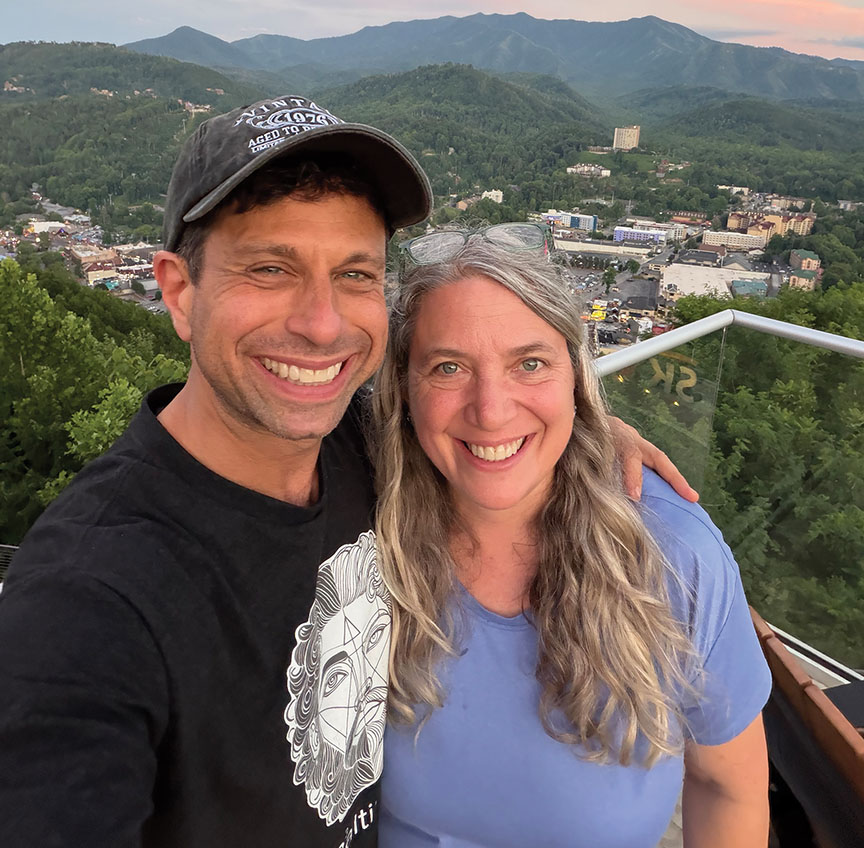
I want to conclude with a love letter to LA. I am a Jewish parent whose life passion and profession is Jewish education. My job – it’s personal. I will always be a rabbi’s daughter from Jersey with at a least chamber of my heart beating in Jerusalem. But after three years at Stanford and two-and-a-half decades in LA (a world that I grew up thinking was just Hollywood and “90210”) and now taking the reins at the independent communal agency responsible for optimizing Jewish education in Los Angeles, I have embraced being an honorary Jewish Angelena.  I fully believe that LA has the creativity, capacity and talent to do anything it wants to do.

I love that LA is alive all year long. We are a vibrant, multigenerational, multilingual, ethnically and religiously diverse Jewish community that is immune to seasonal affective disorder. There is so much possibility in the hills, valleys, flats and beaches.

My husband Jon and I have raised three children in LA. We are fortunate to live in a Jewish village where they are loved and know who they are as Jews; they are surrounded by adults – actual family, friends who are like family, educators, coaches and clergy, who would do anything for them; where the Jewish calendar gives them a hug 365 days and 52 weeks a year; where Jewish food and Shabbat tables nourish them with identity and memories; where their schools have taught them skills, sources, soulful connection, faith and self-awareness; where home is filled with stories, rituals, the mundane routines of life and a place to talk through hopes and fears.

“Dayenu,” the anthem of Passover, doesn’t mean to suggest we can stop after a step or two. It means we feel gratitude for every step when life is a game of endurance. Jewish schools need to resist the 21st-century culture that bubble-wraps kids and tries to make their lives easier; Dayenu is a Jewish spiritual tool for pausing after every step of an arduous journey and saying, “Thank you, Hashem. We did it.” Jewish education has to habituate Jews in a lifestyle of Jewish practice, perspective, interpretation and knowing why each step matters. We take a breath, close our eyes, feel gratitude. Then we reopen them, ready to chart the next step in uncharted territory.

In the nonstop upheaval that continues to characterize life since March 2020, we have learned, each day, to say “Dayenu,” and yet, to keep striving for more. To never give up. Because we are a people who endure. Every single day and minute of my children’s education has not been excellent. (But I’m not convinced that every day at local secular private schools or the best public schools are excellent every day and minute, either. Because life itself is not excellent every day and minute, and we shouldn’t expect schools to be.) My husband and I made choices – to take a mix of extraordinary and ordinary over the constant fruitless pursuit of someone else’s definition of excellence. And overall, there have been enough extraordinary moments and life lessons – created by educators and the school cultures they strive to build every day — that I can say, “Dayenu.” And we keep striving.

If the community commits to investing in our schools, programs and educators, LA can be the laboratory for extraordinary Jewish education. The extraordinary will be defined by a structured, intentionally planned pattern of lessons, experiences and relationships that shape identities, stories, interpretive frames, musical anthems, languages, roots and social networks. Our children will be known for the self-knowledge, commitment, wisdom, courage and care. We have to be willing to aim the extraordinary and for endurance, and nothing less.


Miriam Heller Stern is CEO of BJE: Builders of Jewish Education, the Los Angeles-based independent community agency dedicated to optimizing Jewish education for learners and their families.

Education for Jewish Endurance Read More »

Let Go & Let G-d ft. Elizabeth Sutton

Libby and Marla share some updates about their summer and then get right into it with their guest, Elizabeth Sutton, an entrepreneur, mom, and proud Jewish powerhouse.

Elizabeth kicks things off with a relationship update, opening up about getting back into the dating world after a difficult breakup, meeting someone new on Hinge, and why she’s learned that connection, shared values, and emotional compatibility matter way more than looks, money, or status. She also gets real about dating as a divorced mom of two and why she now has very specific standards for who makes it into her dating pool.

The conversation turns to Elizabeth’s Jewish upbringing and her evolving relationship with faith. She shares what it was like growing up Modern Orthodox, how being pushed toward religion ultimately made her question it, and how she eventually developed her own personal relationship with God. She also talks about how her faith has helped her navigate some of the hardest moments of her life.

Elizabeth tells the unexpected story of how she became an artist after painting something for her son’s nursery because she couldn’t afford the art she originally wanted. What started as a way to make some money eventually became a full-blown career, and she explains how art has become both a business and a way to process trauma and bring the visions in her head to life. She also talks about opening her first Manhattan store and her goal of building a business that can eventually make money without requiring her to be everywhere at once.

Back to dating: Elizabeth gets refreshingly honest about heartbreak, betrayal, dating after divorce, and why she believes people need time to actually heal before jumping into another relationship. She also opens up about becoming more intentional with intimacy, the importance of feeling emotionally safe, and why a man’s ability to respect your boundaries can tell you everything you need to know.

As someone with a large online following, Elizabeth also shares how she decides what parts of her personal life to put online—and what stays completely private. She explains why she’s comfortable sharing lessons from her experiences without exposing the people involved, and why she believes your love life should be protected from everyone’s opinions, intentions, and, of course, the evil eye.

Plus: Elizabeth answers our rapid-fire questions and shares the best advice she’s ever received. And, naturally, she gives us her definition of a Schmuckboy: an insecure man who projects his insecurities onto you—plus narcissists, liars, men with big egos, and anyone lacking basic manners. Open the door. Send the Uber. Pay the bill. Don’t be a Schmuckboy.

You can find Elizabeth on Instagram @ elizabethsuttoncollection or on her website elizabethsuttonhome.com.

Let Go & Let G-d ft. Elizabeth Sutton Read More »

Taking the Gloves Off: New Initiative Says ‘Enough’ to the Boycott of Israeli Academics

Everyone has a breaking point.

For UCLA Professor Judea Pearl, that breaking point came when a new report revealed an alarming rise in the boycott of Israeli academics across Europe and other Western countries, including the United States.

Among the most egregious examples, BDS activists are pushing to sever ties between the European Union and Israeli academic institutions, something Pearl finds anathema to academic culture.

Pearl has joined forces with two Israeli partners– David Harel, President of Israel’s Academy of Science, and Moshe Vardi, Distinguished Professor of Computer Science at Rice University– and the team decided it was time to take the gloves off.

They have already recruited 65 members of three National Academies (NAS, NAE and NAM), among them 10 Nobel Laureates, to issue a statement that essentially says, (as Pearl wrote in an email): “If your Institution boycotts our colleagues in Israel, count us out, we will decline any invitation to speak on your campus.”

The public statement asserts that “academic boycotts, in all their manifestations, [are] fundamentally antithetical to the essence of scientific exploration, carrying harmful consequences to the global scientific community, to the junior scholars whose careers are derailed, to the boycotting institutions themselves, and to society at large.”

It’s a sign of how far the anti-Israel animus has gone that they had to add this obvious point: “The boycott issue is quite separate from whatever views one has regarding Israel’s government and its actions.”

We may be able to tolerate an irrational mob that goes after anything associated with Israel, but academics whose lives revolve around the search for truth and knowledge?

It’s no surprise, then, that Pearl and his partners are standing with their academic brethren and are ready to take the hits:

“In solidarity with our Israeli peers, we declare our unwavering professional and academic alignment with Israel’s scientific community, and state our wish to be treated in the exact same manner as all our colleagues residing in Israel – subject to the very same restrictions, institutional barriers, and consequences that such discriminatory practices entail.”

In other words, if you’re not boycotting us here in America, then you have no right to boycott academics in Israel. And if you do, you will bear the consequences.

“While we remain committed to constructive engagement with the academic and scientific community worldwide,” the statement concludes, “we will decline invitations from any institution that imposes restrictions, whether implicit or explicit, on Israel’s academic and scientific community.”

The movement to boycott the world’s only Jewish state has a long and shameful history. Never mind the hypocrisy of singling out one country while ignoring brutal, murderous regimes that make Israel look like a summer camp. And never mind the stupidity of boycotting a country that is at the forefront of scientific innovation and excellence.

No, the singling out of Israel for special punishment was always inherently discriminatory and unjust. It just became so ubiquitous many of us simply got used to it.

Now, prominent academics who believe in justice are saying “enough” and giving the boycotters a taste of their own medicine.

We can only hope that the medicine will help Israel boycotters see the light of reason so they too can reach their breaking point.


To see the declaration, please visit: https://www.change.org/p/against-academic-boycotts

Taking the Gloves Off: New Initiative Says ‘Enough’ to the Boycott of Israeli Academics Read More »