
Rabbi Jonathan Omer-Man, who died this month at 89, was a Renaissance man who walked many paths and deeply influenced all who knew him. His nobility, humility, keen intellect and wisdom will always be remembered.
Born in England, Omer-Man made Aliyah, and lived and worked the land in Kibbutz Amiad. In his early 20s, he contracted polio. He moved to Jerusalem and began a search for the meaning of life as a Jew and a seeker of Truth. He studyied with Neturei Karta, a hidden ultra-Orthodox sect of Judaism, then worked with well-known figures Adin Steinsaltz and Gershom Scholem, and interpreted the work of Rabbi Nachman of Breslov.
During that time, he earned a distinguished reputation as a scholar, editor and publisher, and was tapped as revision editor of Encyclopedia Judaica. In 1981, the B’nai B’rith Hillel Foundation hired Jonathan to come to Los Angeles and investigate why so many Jews were drawn to practices such as Zen, Buddhism, Gurdjieff and others. Jonathan concluded that “there was nothing wrong with those Jews; there was something wrong with the way Judaism was taught.”
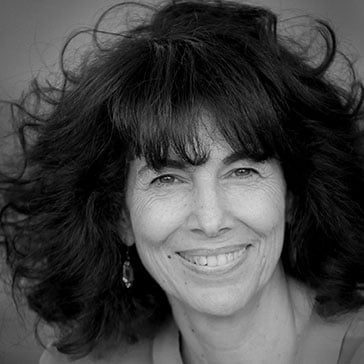
This led him to establish Metivta, a center for contemplative Judaism. Many remember how they first got to know Jonathan — over coffee at McDonald’s. “I never met anyone,” he said to me, “who knows so much and didn’t apply it to her life.” It was the beginning of his becoming my teacher and mentor.
With his gentle charisma, Omer-Man explained that rabbinical Judaism is only a fraction of the Jewish tradition as a whole. Judaism, Da’at/higher knowledge, is not Dat/religion. He created space for people like us in Jewish life. He taught us that meditation does not belong only to the East. He introduced us to Kabbalah, Hasidism and mystical Jewish books we never knew existed. We discovered what Jewish mysticism has to say about the repair of the soul, tikkun hanefesh, as much as the repair of the world, tikkun olam. We discovered the esoteric circle within the exoteric one.
When asked when Jews would stop fighting with each other, Omer-Man answered: “The best fruits in Jewish life are the result of conflicts and disagreements.” In such times, he suggested we raise the level of the conflict, rather than try to resolve it at the level it was created. Space would be created for opposing forces to complement each other and reconcile.
Jonathan valued questions and sought ways to deepen them rather than focus on the answers. “What is the question that your life is the answer for?” he’d ask. When someone once said, “I don’t want to hurt your feelings, but I disagree with you,” Omer-Man answered, “You cannot hurt my feelings.” True feelings, he believed, cannot be hurt. He also believed that whatever non-Jewish spiritual work we had done was a preparation for returning home to Judaism. “So far, you sat on a three-legged stool. Now you can sit on a chair with four legs.”
Omer-Man contributed to Jewish Renewal, meant to bring Jews back to their authentic roots. Rabbi Zalman Schachter, founder of Jewish Renewal, ordained him as a rabbi. Rabbi Omer-Man also started The Institute for Jewish Spirituality, which educates rabbis. He attracted the attention of the Dalai Lama, who invited him to India to teach Tibetan Buddhists how to live in the Diaspora. As a result, a delegation of Jewish leaders traveled to Dharamsala, documented in the book “The Jew in the Lotus” by Rodger Kamenetz.
Heartbroken over our loss, we feel deep gratitude for the gifts Jonathan Omer-Man gave us, gifts for life.
“May we, each one of us, open to the Divine Presence, which is shimmering within each encounter, situation, nature, a person, music, poetry, etc. Every moment is an opportunity to experience this Presence if we but open to it and be available to it.”—Rabbi Jonathan Omer-Man
































