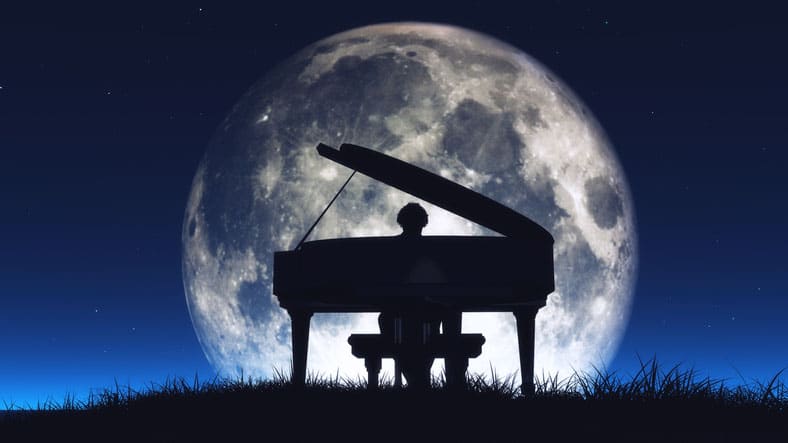
Seventy-eight years before Thomas Edison gave the world the light bulb, Ludwig van Beethoven composed “Moonlight Sonata,” one of the most popular compositions in classical music.
I read somewhere that a blind woman asked Beethoven to write music that would help her “see” the moon, and “Moonlight Sonata” was born. The more one listens to it, the more one believes that story.
As I was listening to the piece recently, it struck me that human genius is utterly independent of time. In 1801, when Beethoven wrote the notes that would astonish us with their beauty 220 years later, people read by candlelight. Radio was still a century away. If your vehicle had four horsepower, that was meant literally.
But there was music, there was human genius, and there was time. That was enough to create beauty for eternity.
I imagine that in those days, companies didn’t announce upgrades every few months—you didn’t hear about quill pens 2.0 or paper 2.0 or candle 2.0. The tools stood still, while the creative spirit wrestled with possibilities.
Beethoven didn’t need a Mac Air or an Instagram account or even a light bulb to create his art, and neither do we.
It’s easy to lose sight of this creative spirit during an era when the tools themselves dominate—when technology advances to such a dizzying degree that the tools have come to define our lives. But Beethoven didn’t need a Mac Air or an Instagram account or even a light bulb to create his art, and neither do we.
The ancient Jewish ritual of Shabbat, by disconnecting us from technology, gives us a weekly taste of Beethoven’s era. Liberated from the tools that control our lives, we return to simplicity, to our humanity, to our power to think and imagine.
Shabbat makes time raw. It reminds us that the ultimate tool to nourish our creativity is simply that—a little precious time, whether for creating a light bulb or music to see the moon.
Shabbat shalom.