fbpx

January 14, 2022

Amazon Removes 26 Nazi Films

Amazon removed 26 Nazi films following the publication of a report showing more than 30 Nazi films were available on the platform.

In a January 14 press release, the Americans Against Antisemitism (AAA) watchdog noted that 23 such DVDs cannot be found on the platform and neither can three on Amazon Prime. AAA, which initially released the report about the films, stated that “a handful of cited films were deemed not problematic since the subject matter isn’t directly related to WWII and the Holocaust” and that “the very worst Nazi films” were removed.

“We’re truly pleased that Amazon ultimately took the sweeping and broad action that was necessary to ensure Prime Cinemas didn’t become Nazi Cinemas,” AAA head Dov Hikind, a former New York Democratic Assemblyman said in a statement. “Removing 26 films entirely from their website is no small feat, so it’s reassuring to see we’re on the same page in terms of the types of hateful contents that clearly have no place on any mainstream platform. A great relief.”

He added: “Clearly, Amazon heard our collective calls and read our organization’s report, item by item, and despite the horror of discovering such a problem on a platform that plays such an outsized roles in our lives. It’s 2022 and lots of weird things have been happening in the past few years but, thankfully, normalizing and mainstreaming Nazi propaganda films isn’t one of them.”

Associate Dean and Director of Global Social Action Agenda of the Simon Wiesenthal Center Rabbi Abraham Cooper similarly said in a statement, “In 2022, as we commemorate International Holocaust Remembrance Day, the 80th anniversary of the Wannsee Conference that sealed the fate of six million Jews, and as violent anti-Semitism continues to rage, we have the obligation to demand accountability. This week, we protested to Amazon, and they did the right thing. With your help, we will continue to demand accountability wherever Jew-hatred threatens.” The Wiesenthal Center had sent their own letter to Amazon about the matter.

The AAA press release concluded by noting that “one highly problematic film” remains on Amazon: “Forces Occultes” (Hidden Forces). The product description for the film on its Amazon page states that it’s “one of the most extreme anti-semitic, anti-masonic propaganda films ever made.” A spokesperson for Amazon told the Journal that “Forces Occultes” has since been removed. Additionally, the propaganda film “Triumph of the Will” that was removed from Amazon still remains on Apple TV and Vudu. “Next week we’ll resume our mission and we will not stop until these last problematic Nazi films… are removed,” the press release stated.

After the press release was published, a spokesperson from Vudu told the Journal that “Triumph of the Will” is no longer available on their platform.

Amazon Removes 26 Nazi Films Read More »

Tu Bishvat, Martin Luther King Day, and Shmittah: Radically Letting Go

What is the opportunity that is afforded to us this year by the coincidence that Martin Luther King Day and Tu Bishvat fall on the same day? Might this luni-solar coincidence light some path to follow this year?

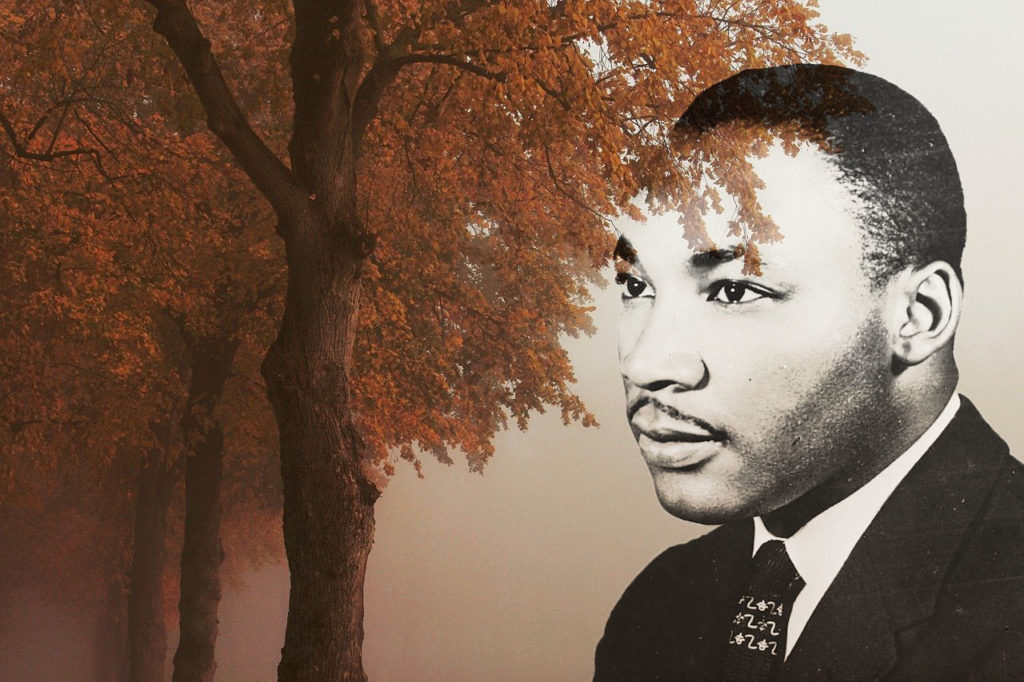
Over the past many years MLK Day has become a day of service, as if the legacy of Martin Luther King was merely that, in the end, we just need to be nice to each other; we just need to help each other out. King’s nonviolence was a revolutionary nonviolence, built on direct action whose aim was to interrupt and disrupt the racist institutions that upheld white supremacy. While it was nonviolent, it was never intended to be passive. It was designed to provoke. Its aim was to show the violent reactions of the forces of anti-Blackness. When the white establishment of one sort or another pronounces that a certain type of protest or uprising which unleashed or led to police violence dishonors the legacy of King, it is almost definite that what the speaker means is: Why are you doing something?

In the face of an egregious wrong, in what world would King (the person who said that “a riot is the language of the unheard”) have stood aside and let the authorities investigate, police, and then find themselves innocent?

This year, the King family has stepped forward to remind the country that the nonviolent movement for civil rights was focused on, and grounded in the right to vote. The peaceful revolution would happen at the ballot boxes—while events both sixty years ago and last year prove that the ballot box is not at all a peaceful place.

The impetus behind the demand is to register Blacks to vote, and for the Black community the motivation to vote must have been the same as that which animated Langston Hughes’ stunningly beautiful and awful poem:

O, yes,
I say it plain,
America never was America to me,
And yet I swear this oath—
America will be!

Commanding a crowd, as he always did, this one at Riverside Memorial Church in April of 1967, King schooled America in the evils that it was perpetrating in the world and also how Americans could rewrite their future. Yet they did not listen. We did not listen. The speech could have been spoken yesterday, and the spirit of Hughes could have been, and was, calling out state violence, police violence, racist killing.

Sure, call me any ugly name you choose—
The steel of freedom does not stain.
From those who live like leeches on the people’s lives,
We must take back our land again,
America!

King looked out at his audience and outlined the path back from the brink, a path that was stark in its revolutionary demands, and whose demands remain unfilled fifty years after an assassin’s bullet bathed in American racism killed him.

“I am convinced that if we are to get on the right side of the world revolution, we as a nation must undergo a radical revolution of values. … A true revolution of values will soon look uneasily on the glaring contrast of poverty and wealth. … A true revolution of values will lay hand on the world order and say of war, ‘This way of settling differences is not just.’ … A nation that continues year after year to spend more money on military defense than on programs of social uplift is approaching spiritual death.”

This year, Tu Bishvat is also part of the shmittah year, the seventh year of a counting that started more than two thousand years ago in the Land of Israel, commanded in the Torah. The shmittah year is a year of letting go, of debt forgiveness and letting the land lie fallow. The root of the Hebrew word shmittah, sh-m-t, means literally letting drop or releasing.

While Tu Bishvat is often mistaken for a Jewish Arbor Day, a day to plant trees and eat fruits of the season, and identify with the Zionist movement, or more recently raise environmental concerns, perhaps this luni-solar confluence can put us in a more radical mindset.

In another famous speech, King named the “three evils of society” or the “triple prong sickness” of “racism, excessive materialism and militarism.” The root of these evils is in the deep-rooted understanding on which America was founded: that Americans have a Divine right to everything. The American dream is rooted in both abundant material goods and manifest destiny. At the root of both of those is racism and white supremacy, the twin beliefs that a Black underclass is necessary for the fulfillment of the American dream. What began in the plantation continues with plantation capitalism. American foreign policy is rooted in the belief that the greatest good is keeping Americans safe even at the cost of so many others.

The demand to “let go!” is a beginning to a possible solution.

On Tu Bishbat this year, perhaps, we should step back from planting and recycling and lobbying for clean energy, and take a moment to recognize that in the United States the brunt of ecological devastation falls on Black and Brown and poor communities. Climate change is killing people, but not equally. For example, according to an NPR study of 108 urban areas nationwide, “the formerly redlined neighborhoods in nearly every city studied were hotter than those not subjected to redlining. The temperature difference in some areas was nearly 13 degrees.” The story of how Flint, Michigan poisoned its residents through its water supply is another story of racist choices leading to racist outcomes. In 2014, to save money, the city changed its water source to the Flint river, but failed to treat the new supply adequately, exposing the city’s 100,000 majority-black inhabitants to dangerous levels of lead from aging pipes and other contaminants such as E.coli. There are many more examples.

Corporations are fined less for polluting in Black and Brown neighborhoods. The toxic dump, the oil drill, are located near or in poorer neighborhoods. The incidence of heart conditions and respiratory problems is up in these places.

Maybe this year as we “let go” and resolve to live lighter on the planet, we should actually think of reparations along with our resolutions. Moving forward, we should demand that corporations, city and state governments, account for the disparate harms that Black and Brown communities suffered when they right the wrongs of the past. Black and Brown and poor communities need more green spaces, less concrete, more investment in clean technology.

Real shmittah, a real letting go this year, will mean that going forward we who have benefitted from practices that led to ecological devastation should be willing to let go of those parts of our lifestyles that come at the expense not only of the planet but also of other inhabitants of this planet.


Aryeh Cohen is professor of rabbinic literature at American Jewish University, the rabbi-in-residence at Bend the Arc: Jewish Action, Kogod Research Fellow of the Shalom Hartman Institute and immediate past co-chair of the Board of Clergy & Laity United for Economic Justice. His latest book is “Justice in the City: An Argument From the Sources of Rabbinic Judaism.”

Tu Bishvat, Martin Luther King Day, and Shmittah: Radically Letting Go Read More »

In Israel, Pharma-Food Tech Collab Looks to Corner Cultured Meat Market

A unique new partnership between two Israeli companies aims to beef up the alternative protein industry as soon as next year.

This week, Israeli biotechnology firm Pluristem Therapeutics and Israel’s largest food producer Tnuva Group announced an innovative collaboration to develop, manufacture, and commercialize cultured cell-based meat products for the food industry. The new venture will be funded by $7.5 million from Tnuva with the option to invest an additional $7.5 million over a 12-month period following the closing, according to a press release.

The newly formed company will receive exclusive rights to Pluristem’s proprietary cell production technology while Tnuva—which was founded 96 years ago—will have priority in marketing the products in Israel, the announcement said. The company plans to present a technology proof of concept in 2022, and launch its first raw cultured meat product in 2023.

“Just as Tnuva made the field of alternative proteins accessible to every Israeli home, we intend to make cultured food products available to all,” said Eyal Malis, CEO of the Tnuva Group, in an official statement. “The collaboration between two pioneers in their fields, each of which with proven experience and tremendous abilities, can create a better future for the food industry.”

Pluristem CEO and President Yaky Yanay said the company spent the past year bolstering its technology through other strategic partnerships.

“We believe that Tnuva’s and Pluristem’s vast experience will support fast and effective development of large-scale cultured meat products, relying on our existing infrastructures and talented teams,” he said. “This collaboration is the first showcase of Pluristem’s intention to expand its business to verticals that need superior cell expansion proprietary technologies.”

The execution of such a project will rely on Pluristem’s “industry-leading capacity to design, develop, and manufacture cells for commercial use,” according to the release. The Haifa-based pharma company has also developed a proprietary 3D platform that can, in a cost-effective manner, produce high-quality cells that are consistent batch after batch.

“We chose to collaborate with Pluristem because we believe it owns one of the most advanced cell production technologies in the world,” said Haim Gavrieli, Chairman of Tnuva Group. “We expect the collaboration between the companies to revolutionize the cultured food industry and develop the next generation of alternative proteins.”

According to analysts from Barclays, the market for alternative meat is growing rapidly and is estimated to become a $140 billion market by 2030. This economic opportunity, however, hasn’t curbed debate in Israel around whether or not lab-grown meat is kosher.

Traditionally, meat is considered kosher only if it meets a set of guidelines, such as the type of animal and if it’s slaughtered in accordance with strict traditional regulations. Meanwhile, cultured meat represents a bit of a gray area in the realm of religious dietary laws—though no slaughtering is involved, cultured protein is grown from animal cells and is structurally identical to meat from livestock.

Without any precedent in this area, rabbis have yet to arrive at a consensus on the issue of lab-grown meat.

Without any precedent in this area, rabbis have yet to arrive at a consensus on the issue of lab-grown meat. Jewish authorities have expressed qualms over the use of fetal bovine serum (FBS), taken from cow fetuses, to create animal cells. Companies like Future Meat Technologies, which is located in Rehovot, Israel, are aiming to address these concerns by using only cells from ritually slaughtered animals.

Yet another positive sign for these new developments came in 2018 when the Orthodox Union, the largest Kosher certification and supervision agency in the world, touted the benefits of “clean meat” such as significantly lowering the cost of kosher meat and reducing carbon emissions that result from cattle farming.

“If [companies] produce meat synthetically, so to speak, we’d accept 100% of the meat as kosher,” said Rabbi Menachem Genack, CEO of the Orthodox Union Kosher Division, at the time.

Muslim authorities too have divergent views on the matter. Last September, Indonesia’s largest Muslim organization, Nahdlatul Ulama, drew a definitive line on the issue with a statement that labeled cultured meat as not halal. Meanwhile, leaders like Muhammad Taqi Usmani, an Islamic law expert in Pakistan, said lab-grown meat could be permissible if the cells used to create it come from animals slaughted in line with Sharia standards.

As part of the recent Pluristem-Tnuva collaboration, the companies may also establish separate ventures with the goal of creating cultured dairy and cultured fish products.

In Israel, Pharma-Food Tech Collab Looks to Corner Cultured Meat Market Read More »

USC President Announces Measures to Combat Antisemitism on Campus

USC President Carol Folt announced a series of measures on January 13 to combat antisemitism on campus in light of recent controversies.

In a letter to the campus Jewish community, Folt acknowledged that “recent antisemitic and anti-Zionist posts on social media” have “challenged USC’s reputation as a supportive and welcoming environment for our Jewish community, and highlighted the need for us to bolster the ways in which we support Jewish life on campus.” The posts are an apparent reference to Yasmeen Mashayekh, a Diversity, Equity and Inclusion (DEI) Student Senator at the USC Viterbi School of Engineering’s Viterbi Graduate Student Association. The posts included Mashayekh tweeting that she wanted to “kill every motherf—ing Zionist.”

The measures included the establishment of the Advisory Committee for Jewish Life at USC to review proposals for ameliorating antisemitism, including a campus climate survey and identifying “a university-wide position that demonstrates our commitment to fighting antisemitism in all its forms.” Additionally, the university will ensure “Jewish representation and inclusion in our university-wide Diversity, Equity, and Inclusion efforts, and supplementing our bias and harassment training protocol for all students, faculty, and staff to include antisemitism.”

“Through these efforts, we are continuing to strengthen USC’s commitment to our Jewish students,” Folt later wrote.

Various Jewish groups weighed in.

“USC Hillel welcomes and celebrates this concrete display of support from our university leadership,” Dave Cohn, the Hillel’s executive director, wrote in a letter to community members. “At USC we are privileged to engage in ongoing collaboration with numerous university partners around these issues. We feel heartened that USC continues to support a Jewish community that is bursting with energy and enjoys a network of resources to rival any campus worldwide.”

Anti-Defamation League (ADL) Los Angeles Deputy Regional Director Ariella Loewenstein, who will be a part of the committee, said in a statement, “We at ADL believe it is so important to both call out antisemitism when it rears its ugly head, but also to act proactively and take the difficult discussions with university administration and community leaders to prevent incidents from occurring again. As a USC graduate program alumnus, this role is particularly close to home. I am proud of my education, and I continue to be proud of my alma mater as it tackles antisemitism and bigotry in all its forms to create a safer and more inclusive campus.”

American Jewish Committee (AJC) Los Angeles Regional Director Richard S. Hirschhaut said in a statement to the Journal that the measures are “a long-awaited and welcome development. Given the global stature of USC, it is not an exaggeration to say that the world was watching, and awaiting, this blueprint for action. In both depth and scope, it acknowledges the many faces of antisemitism and that the effort to confront this scourge must engage all members of the campus community, be ongoing, and demonstrate imagination, courage, and resolve. Both current and prospective students and their families should be reassured by USC’s commitment to ensuring a safe, respectful, and welcoming climate for Jewish students. President Folt’s leadership sets an example to be emulated on campuses across the country.”

StandWithUs Co-Founder and CEO Roz Rothstein also applauded the new USC measures in a statement to the Journal. “These efforts to ensure that Jewish and Zionist students feel safe and supported on campus are necessary for any school with a commitment to diversity, equity, and inclusion, and we call on other universities to follow suit,” Rothstein said. “Although the adoption of these steps took longer than we had hoped, these actions are a step in the right direction, and we applaud all the faculty, students, and community organizations who took a stand against anti-Jewish bigotry. We expect that the actions proposed by USC’s new Advisory Committee on Jewish Life and the student-focused campus pledge will reflect additional steps requested by the Jewish and Zionist community, including the adoption of the consensus-driven IHRA Working Definition of Antisemitism, to create a campus environment free from all forms of antisemitism.”

An End Jew Hatred spokesperson said in a statement, “USC, to its credit, announced a creative solution aimed at improving life for Jews on campus. As Jews, we much prefer to build up rather than tear down. We will closely monitor the implementation of the reforms and hope they lead to a more inclusive campus that respects the rights of the Jewish community as a minority.”

Judea Pearl, Chancellor Professor of Computer Science at UCLA, National Academy of Sciences member and Daniel Pearl Foundation President, tweeted that the new measures are a monumental “achievement of 65 USC professors who, unlike the established campus leadership, did not try to hush-hush this Zionophobic incident.” The professors signed a letter on December 1 urging university leadership to “publicly and explicitly rebuke” Mashayekh’s tweets and let “Jewish, Zionist, and Israeli students” know they’re welcome on campus.

“However, the professors’ key question: ‘Are Zionists welcome on this campus?’ is not answered in Folt’s Letter,” Pearl added. “Moreover, past ‘Advisory Committees’ have served as cover-ups for inaction. Their effectiveness depends on whether Folt staffs them with professors from the 65, or with the usual hush-hushers. Ditto Jewish representation on DEI Board, usually reserved for hush-hushers.”

Others were more critical.

“What is the bloody point of having these inclusion requirements, seminars, and statements of condemnation if you’re not going to properly punish those that are espousing this hatred against Jews?!” Stop Antisemitism tweeted, calling for Mashayekh to be expelled.

Social Lite Creative CEO and Founder Emily Schrader, a USC alumnus, also tweeted sarcastically, “I’m sure the Jews will feel really safe in the DEI efforts at @USC with Yasmeen Mashayekh around who wants to kill all of them…”

Mashayekh has claimed that her tweets should be viewed in the context that under international law, “Palestinians have a right to resist occupation of their land” and that the “smear campaigns have subjected me to FBI visits, unlawful punishment by the university by stripping me of my position as a freshman academy coach, unwarranted media attention, and mental and emotional abuse.”

Gerard Filitti, senior counsel for The Lawfare Project, also said in a statement: “Jew-hatred does not occur in a vacuum, and it does not grow without being fueled. USC has received over $67 million from countries in the Middle East – countries like Qatar, which maintains strong relationships with terrorist groups like Hamas, the Taliban, and the Muslim Brotherhood, and promotes antisemitism and anti-Americanism. Because USC has not been transparent about how this money is being used, we don’t know the extent to which this foreign funding has been influencing the policies and actions of the university.”


USC President Announces Measures to Combat Antisemitism on Campus Read More »

Beethoven, Moonlight Sonata and Shabbat

Seventy-eight years before Thomas Edison gave the world the light bulb, Ludwig van Beethoven composed “Moonlight Sonata,” one of the most popular compositions in classical music.

I read somewhere that a blind woman asked Beethoven to write music that would help her “see” the moon, and “Moonlight Sonata” was born. The more one listens to it, the more one believes that story.

As I was listening to the piece recently, it struck me that human genius is utterly independent of time. In 1801, when Beethoven wrote the notes that would astonish us with their beauty 220 years later, people read by candlelight. Radio was still a century away. If your vehicle had four horsepower, that was meant literally.

But there was music, there was human genius, and there was time. That was enough to create beauty for eternity.

I imagine that in those days, companies didn’t announce upgrades every few months—you didn’t hear about quill pens 2.0 or paper 2.0 or candle 2.0. The tools stood still, while the creative spirit wrestled with possibilities.

Beethoven didn’t need a Mac Air or an Instagram account or even a light bulb to create his art, and neither do we.

It’s easy to lose sight of this creative spirit during an era when the tools themselves dominate—when technology advances to such a dizzying degree that the tools have come to define our lives. But Beethoven didn’t need a Mac Air or an Instagram account or even a light bulb to create his art, and neither do we.

The ancient Jewish ritual of Shabbat, by disconnecting us from technology, gives us a weekly taste of Beethoven’s era. Liberated from the tools that control our lives, we return to simplicity, to our humanity, to our power to think and imagine.

Shabbat makes time raw. It reminds us that the ultimate tool to nourish our creativity is simply that—a little precious time, whether for creating a light bulb or music to see the moon.

Shabbat shalom.

Beethoven, Moonlight Sonata and Shabbat Read More »

Croft House Employee in Hancock Park Stabbed to Death

A Croft House furniture store employee was stabbed to death in the Hancock Park area of Los Angeles on January 13.

The victim has been identified as Brianna Kupfer, according to various local media reports. The Los Angeles Police Department (LAPD) say that she was alone in the store when the suspect attacked her. A customer later found Kupfer and called 911.

Video footage shows that the suspect is a male wearing a white N95 mask and a black hoodie and jeans and was last seen walking out of the back alley of the store. It is not yet known what the motivation was for the attack or if the suspect and Kupfer knew each other. 

During a January 13 segment, CBS Los Angeles reporter Rick Montanez said that he talked to various people in the neighborhood who expressed outrage over the stabbing and “shared their frustrations over the crime but did not want to be interviewed.”

According to Capitol Weekly, murders in Los Angeles increased by 16% over the past year.

Croft House Employee in Hancock Park Stabbed to Death Read More »

Amalek and the Problem of Human Cruelty

On August 29 of 2021, an American drone strike in Afghanistan killed ten civilians, including seven children. This made headlines around the world; an investigation by the Pentagon found that this was a tragic mistake. (Undoubtedly, a similar event involving the IDF would have received far more media attention.) Even in the heat of battle, we expect our soldiers to follow careful ethical guidelines. The calculus of war is to achieve maximum strategic benefit by killing the enemy. Yet even that must be regulated; not everything is considered to be fair game in war. Wars must be just, and cannot be launched without due cause, and military operations must be conducted in a way that minimizes civilian loss of life as much as possible.

Michael Walzer, in his book “Just and Unjust Wars,” notes that there were “realists” who disagreed. Some realists saw life as a constant battle of the strong against the weak, with violence being part of man’s natural state. Others argue that “war is hell,” and must be fought by the most effective means possible, even if that requires the targeting of civilians. But despite these dissenters, just war theory is now part of international law and contemporary ethics.

So how can one explain the commandment to destroy Amalek? It appears immoral for two reasons. First, it requires the eradication of the entire nation of Amalek, including women and children. Second, it is a designation that continues from generation to generation, years after those involved in the attack against the Israelites in the desert have passed on. George P. Fletcher of Columbia Law School argues that this law is no different than the blood curse ascribed to the Jews for the death of Jesus, and that “holding the Jews liable as a corporate body is no different from the way Jews hold Amalek guilty across the generations.” The commandment to destroy Amalek is extremely disturbing.

For this reason, Amalek is a Rorschach test, inspiring extremists on both ends of the spectrum. Radical Jews who conduct acts of terror against Palestinian civilians, do so because they believe in collective punishment. They rationalize their behavior with one word: Amalek. On the other end of the spectrum, those who want to slander Jewish character and denigrate the Bible, refer often to the commandment to destroy Amalek. Radical opponents of Israel claim that it is a genocidal country, inspired by the commandment to destroy Amalek.

For mainstream interpreters, Amalek is seen as an anomaly, and a commandment that requires reinterpretation. Maimonides explains that descendants of Amalek who live a moral lifestyle would not be included in this commandment. His son Abraham, in his commentary to the Torah, says that Amalek no longer exists and the commandment is no longer operative. In terms of collective punishment, Rav Kook argues in a letter that one must see the biblical era through a different lens, because “when all of Israel’s neighbors were wolves of the night, it would be impossible for Israel alone not to go to war, because then the neighbors would gather together and, God forbid, destroy the remnant of Israel. On the contrary, it was extremely necessary to instill fear into their lawless neighbors, even by cruel methods.” Rav Kook explains that the cruelty of these commandments was a necessity of that period of time; but these commandments would have been applied very differently by the Sanhedrins of later generations.

For mainstream interpreters, Amalek is seen as an anomaly, and a commandment that requires reinterpretation.

Many modern interpreters offer similar understandings of commandment to destroy Amalek.  Some focus on Amalek’s actions, and see it as a metaphor, a lesson about opposing human cruelty. Rabbi Samson Rafael Hirsch interprets the phrase “the memory of Amalek,” as referring to a specific type of remembrance; when a society honors infamous strongmen who build their reputation through acts of violence, they are perpetuating the “memory of Amalek.” The world must stop glorifying savagery as heroic, and when that happens Amalek will disappear.

In a sermon written during the years of World War I, Rabbi Moshe Avigdor Amiel offers an ethical reinterpretation. He focuses on the verse: “Inscribe this in a book as a reminder, and read it aloud to Joshua: I will utterly blot out the memory of Amalek from under heaven!” Rav Amiel explains that a “book,” a product of intellect and thought, represents rationality and morality. There are two contrasting ways of life: living by the book and living by the sword. The only way to uproot militarism, he explains, is through learning and teaching the ways of goodness. One cannot fight violence with a violence; one must uproot it by transforming the general culture. By “inscribing in a book,” one moves society in the direction of non-violence. In this reading, Amalek is now purely theoretical; and Rav Amiel’s interpretation, and others of this kind, allow contemporary readers to harmonize the Biblical text with their moral intuitions regarding just war.

These reinterpretations might seem improbable, the apologetics of the embarrassed. But there is a substantive amount of biblical evidence pointing to the importance of treating enemies with respect. The Torah commands Israel to offer a peace treaty before pursuing a war. A besieging army may not destroy the neighboring trees, and must allow refugees to escape the city. King David is admonished for shedding too much blood in combat. When Ben-Hadad, the King of Damascus, is hiding from the King of Israel, his ministers say to him that he should not worry about surrendering, because “we have heard that the kings of the House of Israel are kind kings.” Contemporary re-readings of Amalek have roots that go back to the Tanakh; this commandment must be seen in context. One passage in the Jewish tradition must not serve as the rationalization of cruelty.

These reinterpretations might seem improbable, the apologetics of the embarrassed. But there is a substantive amount of biblical evidence pointing to the importance of treating enemies with respect.

Even with these new interpretations, the law about destroying Amalek is jarring. And perhaps that’s the point. Its purpose is to serve as a reminder not to be naive. The foundation of any good society is reciprocity. The assumption is that if I’m good to others, others will be good in return. There are those who believe that treating totalitarian states with generosity can help transform them. But this is a lack of imagination, one to which good people in particular are prone. When Neville Chamberlain negotiated the Munich agreement with Hitler, he assumed negotiations would work; a realistic assumption in almost any other instance, because negotiations are how reasonable people arrive at a compromise. But this commandment is a reminder that one cannot negotiate with an Amalek. The appeasement policy of Chamberlain came about due to desperation to avoid another war. But it was also due to the fact that many in Chamberlain’s circle were charmed by the Nazis. When Chamberlain’s foreign minister, Lord Halifax, went to visit Germany in 1937, he was particularly taken with Herman Goering, who he wrote seemed “Altogether a very picturesque and arresting figure, completed by green hat and large chamois tuft!” And “like a great schoolboy, full of life and pride in all he was doing, showing off his forest and animals.” Lord Halifax could not imagine that Goering could truly be evil. Even after the war, Lord Halifax wrote an affidavit for the Nuremberg Trials, stating that Goering would have kept Germany out of war had he been able to.

Kristallnacht occurred just forty days after the Munich agreement.

But some people understood that a government built on hatred would be dangerous for the entire world. Winston Churchill sharply opposed the Munich agreement, and had been an implacable foe of the Nazis from the beginning. Why was he so certain that Hitler could not be trusted?

In his recent biography of Churchill, entitled “Walking With Destiny,” Andrew Roberts wrote regarding Churchill: “His respect for the Jewish people … helped Churchill in the 1930s, giving him the ability—denied to many anti-Semites across the political spectrum—to spot very clearly and early what kind of man Adolf Hitler was.” Churchill saw Hitler’s antisemitism for what it was: a perverted belief that murdering Jews would redeem the world. No appeasement can quiet that type of hatred.

Human cruelty presents a particular problem to those who live lives of goodness; they cannot imagine the mindset of absolute hatred. But the love of goodness should not lead to the inability to recognize evil; the pursuit of peace should not lead to gullible mistakes. One must always remember to be moral without being naive.


Rabbi Chaim Steinmetz is the Senior Rabbi of Congregation Kehilath Jeshurun in New York.

Amalek and the Problem of Human Cruelty Read More »

StandWithUs Starts Campaign Against Anti-Israel UNHRC Commission Inquiry

StandWithUs announced on January 11 that they are launching a campaign against the United Nations Human Rights Council’s (UNHRC) Commission of Inquiry against Israel.

The inquiry, which was launched on May 27 in response to the Israel-Hamas conflict that month, was created to investigate the “root causes” of the Israeli-Palestinian conflict. StandWithUs noted that the panelists heading the inquiry all have records of anti-Israel bias; as evidence, the pro-Israel educational organization pointed to a Jerusalem Post article from July that delved into the three panelists. One of the panelists, international jurist Navi Pillay, headed the UNHRC from 2008-2014, where “she appointed four fact-finding missions targeting Israel, more than any other country” and “convened the Durban II conference against racism, which gave antisemitic former Iranian president Mahmoud Ahmadinejad a platform,” according to the Post. The other panelists consist of Miloon Kothari, who accused Israel of “ethnically cleansing” the Palestinians during the Second Intifada and called Palestinian terrorism “resistance,” and Chris Sidoti, who has collaborated “with Palestinian NGOs for more than 15 years,” the Post reported.

StandWithUs also noted that “the proposed budget and staff” of the inquiry is “ twice the size of a similar commission focusing on the Syrian Civil War. While the Israeli-Palestinian conflict is a tragedy that must end, the UN’s own estimates show that at least 120 times fewer people have been killed on both sides since 2011 (4,133), compared to the Syrian Civil War in that same time period (over 500,000).”

“The UNHRC’s systemic discrimination against Israel has been condemned by multiple UN Secretaries-General, but this ‘inquiry’ shows it is only getting worse,” StandWithUs Co-Founder and CEO Roz Rothstein said in a statement. “The goal is to put the world’s only Jewish state on trial, as part of the global campaign to eliminate Israel and strip away Jewish rights to self-determination and self-defense. This abuse of power will do nothing to advance the cause of human rights, justice, or peace between Israelis and Palestinians.”

Others have also voiced concern over the UNHRC Commission Inquiry. UN Watch Executive Director Hillel Neuer told Jewish News Syndicate (JNS) that the inquiry is open-ended and will also investigate “systemic discrimination” in Israel. “It’s quite clear that it’s going to accuse Israel of apartheid,” he said, adding that “today, in 2022, anti-racism is the highest virtue, and so it’s not accidental that Israel is accused … of being intrinsically racist.”

Institute for National Security Studies (INSS) Senior Research Associate Pnina Shavrit Baruch also told JNS that the inquiry is part of a broader effort within the U.N. to legitimize the allegation that Israel is an apartheid state. “I think that’s very bad for Israel,” she said.

StandWithUs Starts Campaign Against Anti-Israel UNHRC Commission Inquiry Read More »

Newsom Declines Parole for RFK Killer

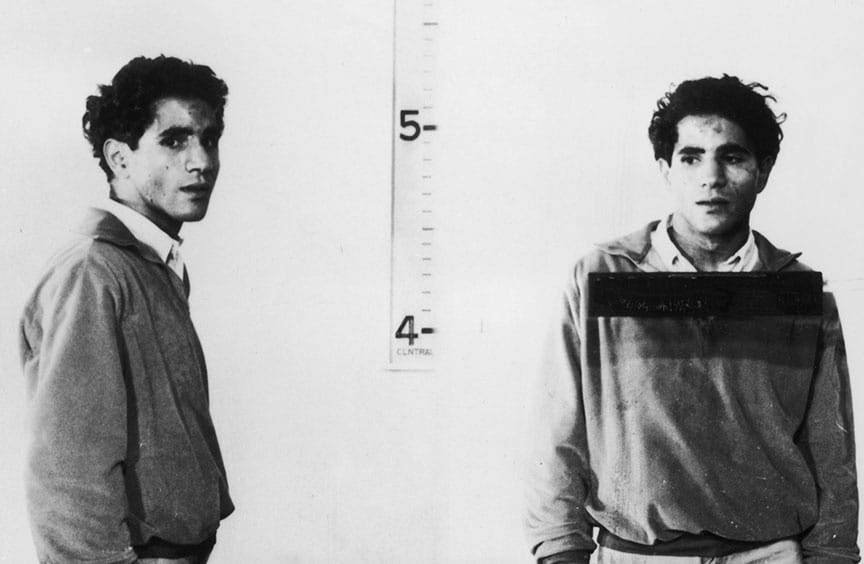
California Governor Gavin Newsom, a Democrat, announced in a January 13 Los Angeles Times op-ed that he will not be granting parole to Sirhan Sirhan, the killer of Robert F. Kennedy, Jr.

California’s Board of Parole Hearings recommended parole for Sirhan, 77, in August after Sirhan argued that he can now contain his anger better. Newsom concluded, however, “that Sirhan has not developed the accountability and insight required to support his safe release into the community.” He cited Sirhan’s “shifting narrative about his assassination of Kennedy, and his current refusal to accept responsibility for it.”

Newsom noted that Sirhan recorded himself saying that “Kennedy must be assassinated” and that he admitted to committing the assassination at the time. “Incredibly, in the 1990s, Sirhan began dodging responsibility,” Newsom wrote. “He claimed he could not remember the crime, then stated he was innocent. In 2016, Sirhan said he believed he did not kill Kennedy based on what he had read in his attorney’s legal briefs. As recently as last year, Sirhan portrayed himself as the victim, claiming he ‘was in the wrong spot at the wrong time.’”

He added that Sirhan “remains a potent symbol of political violence.” “In the past, terrorists took hostages—and ultimately killed some of them—in Sirhan’s name,” Newsom wrote. “Despite inciting violence in the past, recently Sirhan laughingly dismissed the current relevance of his status as an ideological lightning rod. He does not understand, let alone have the skills to manage, the complex risks of his self-created notoriety. He cannot be safely released from prison because he has not mitigated his risk of fomenting further political violence.”

Newsom concluded with a quote from Kennedy that stated: “Surely we can begin to work a little harder to bind up the wounds among us and to become in our own hearts brothers and countrymen once again” and urged Sirhan “to start taking Kennedy’s words to heart.”

Angela Berry, Sirhan’s attorney, told the New York Post that Newsom’s decision will be appealed to a judge and that they “fully expect” it to be overturned. She also stated that “Sirhan has consistently been found by prison psychologists and psychiatrists to not pose an unreasonable risk of danger to the public” and hailed his “extensive impressive record of rehabilitation.” Sirhan will have another parole hearing by February 2023 at the latest.

Sirhan, a Palestinian Christian with Jordanian citizenship, admitted at the time of shooting that he did it because of Kennedy’s vocal support for Israel. During the recent parole hearing, Sirhan said that he’s in tears over the suffering of Palestinian refugees, but pledged to remain neutral on the matter going forward. Two of Kennedy’s sons argued in favor of releasing Sirhan, but other Kennedy family members and members of law enforcement argued otherwise.

Newsom Declines Parole for RFK Killer Read More »