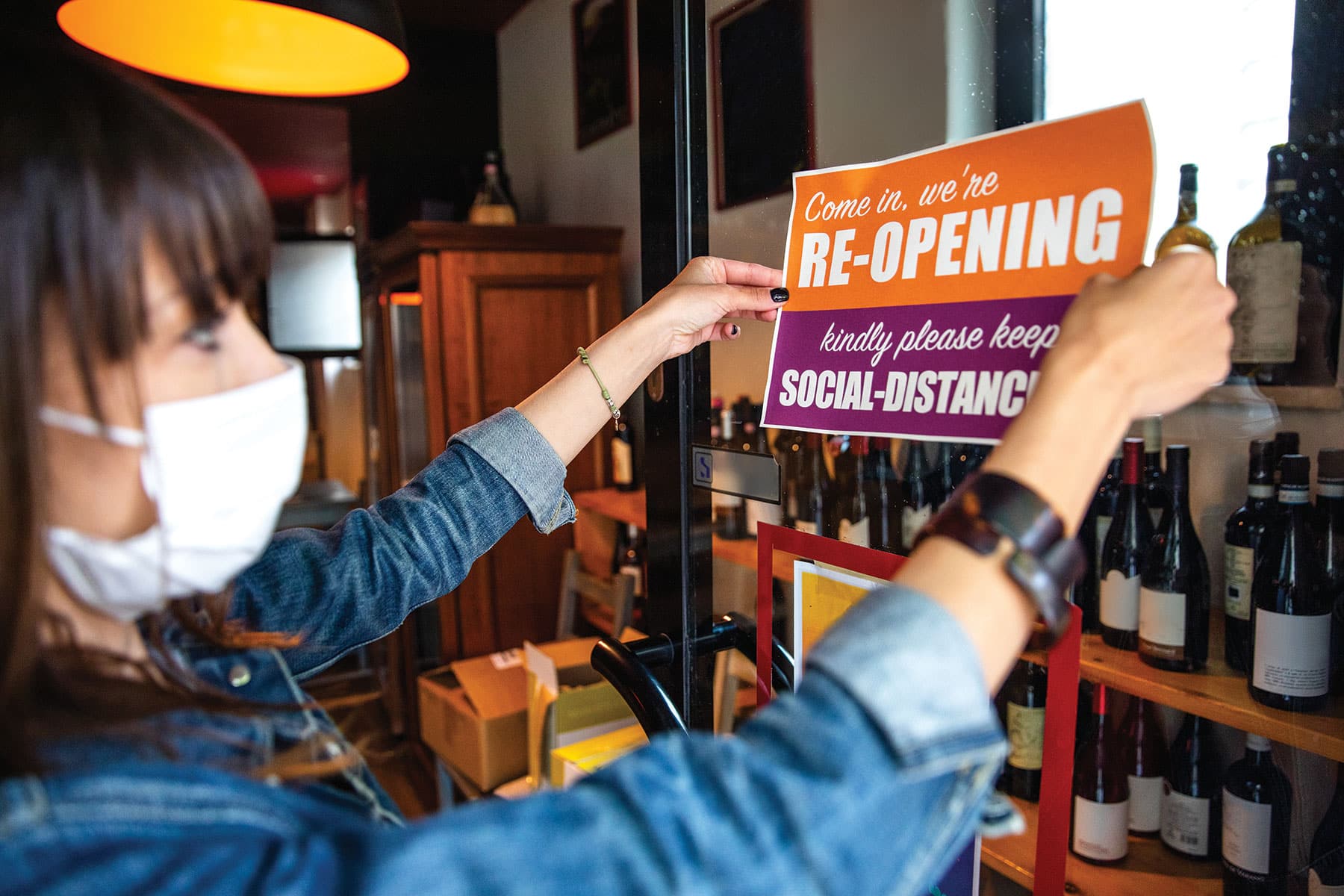
We are going through a strange moment. After months of hibernation, we’re taking baby steps to reclaiming our lives. Even if we have to wear masks, it’s pleasant to see people sitting in cafes and strolling on boulevards. It gives us a taste of our pre-corona lives.
But just a taste. Deep down, we know it’s not the real thing.
As much as I enjoyed sitting at Urth Caffe & Kava Bar last Sunday drinking, I saw signs everywhere of the pandemic that has claimed more than 120,000 lives and devastated our economy. Tables were few and scattered. Everyone was wearing a mask. One person asked for plastic utensils. Even the mood, normally festive, was more like sober.
As I strolled down Beverly Drive, I saw more signs of our new normal. Some cafes and stores were open, but several others were closed — permanently. It’s one thing to read about a crumbling economy, it’s another to actually see a sign that says a business is closed.
Call me sentimental, but it was sad to see that Peet’s Coffee and Coffee Bean & Tea Leaf will no longer be part of the scenery on that stretch of Beverly Drive. Maybe I just hate saying goodbye.
The shuttered businesses are a reminder that the economic devastation continues; the ubiquitous masks are a reminder that the deadly COVID-19 virus is still haunting us.
Compounding our anxiety this summer is a protest movement that has unleashed a volcano of emotions and captured our nation’s attention unlike any other.
We want to help, we want to do the right thing, we want to go beyond statements and words. My daughter has been a regular participant at protest rallies. She feels the need to do something. Protesting is her thing. What’s our thing?
It’s ironic that the protests, by showing us millions of people marching, might have accelerated the re-opening of our lives. As much as the demonstrations busted open our complacency about racism and police violence, they busted open our fears about leaving our quarantines.
The one thread running through everything is uncertainty. We’re not sure how much real progress will be made in the fight against racism; we’re not sure how the protests themselves will evolve; we’re not sure if we have the leaders who can take us to a better place.
The one thread running through everything is uncertainty …. According to neuroscience, facing uncertainty is scarier than facing physical pain.
We’re nervous about reports that COVID-19 may strike again in the fall with even greater force. Will it mean another prolonged lockdown? Will the “new normal” keep shifting on us?
Who knows?
Our own lives feel up in the air. We’re not sure about our livelihoods, our family events, our school plans, our physical health, our synagogue services, pretty much everything.
After years of learning the value of planning ahead, we’ve hit a spot where no one really knows what will happen next.
So many of us have tried to construct lives that minimize stress and unpredictability. We figured there’s already more than enough stress we can’t control; let’s at least do something about what we can control. “The best surprise is no surprise,” as a friend of mine likes to say.
Well, this year we’ve been forced to deal with one surprise after another, very few of which we can control.
According to neuroscience, facing uncertainty is scarier than facing physical pain. A 2016 study quoted in Inc. magazine found that, “Volunteers who knew they would definitely receive a painful electric shock felt calmer and were measurably less agitated than those who were told they only had a 50 percent chance of getting the electric shock.”
This anxiety of knowing a shock may hit us at any time now defines our lives. But there’s an upside to all this uncertainty: Since so much is now out of our control, we can focus on things that really matter — our behavior, our ethics, our relationships, our spiritual bonds, our attitude.
There’s an upside to all this uncertainty: Since so much is now out of our control, we can focus on things that really matter.
And yes, even our optimism.
According to the 2016 study, “If you find it difficult to tolerate uncertainty you may be biased toward expecting ‘one’ outcome during uncertainty — a negative one. This drags your brain from a fluid state into a configuration that is set up for failure.”
The conclusion? “Increasing your optimism bias may improve how much uncertainty you’re able to tolerate.”
How’s that for a paradox: Because we’ve never had more reasons to be pessimistic, we must find reasons to be optimistic.
As we continue to slowly re-open our lives, that optimism may turn out to be the toughest, but most important thing we will have to re-open.