fbpx

June 23, 2020

Gamal J. Palmer Uses His Black, Jewish and Gay Identities to Fight for Change

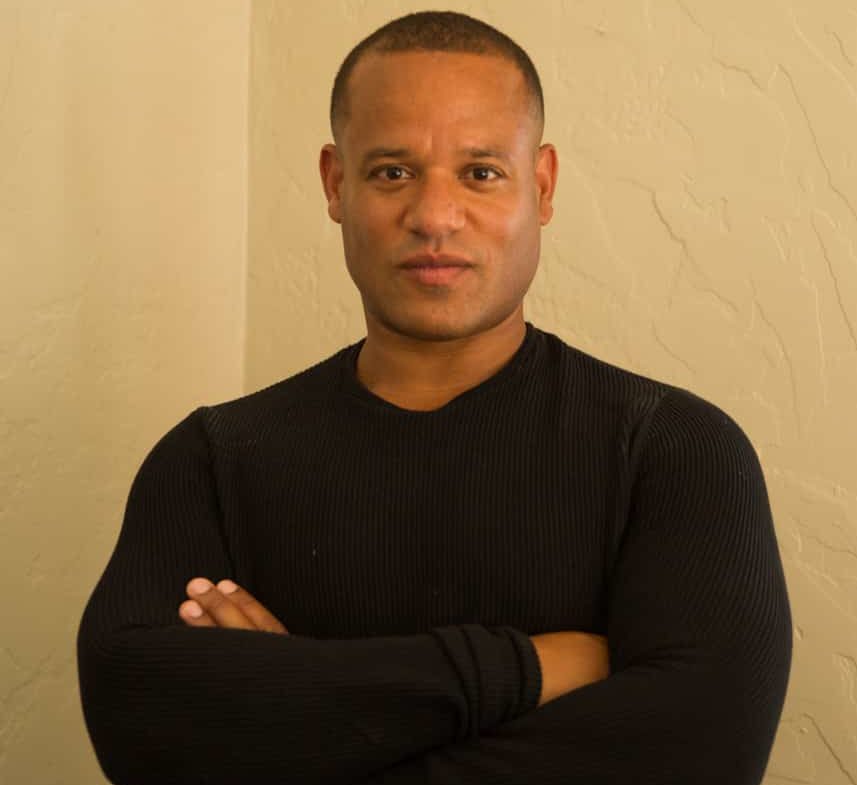
Gamal J. Palmer is an actor, storyteller, activist, TedX speaker, lecturer and the current senior vice president at The Jewish Federation of Greater Los Angeles. He is also Black, Jewish and gay. While all of these intersections form his identity, he told the Journal no one part is more important than another.

Palmer said that while he was growing up, he was tokenized as “really the only Black Jew” in his Philadelphia neighborhood. Even though he was born Jewish and had a bar mitzvah,  he still was constantly questioned when entering Jewish spaces. He said white Jews are never asked, “How are you Jewish?” 

“On the surface, I think it seemed fine but internally, it was really hard to always answer questions, having your presence always being questioned,” Palmer said.  “You get to a point where you’re like, ‘Am I even Jewish? Am I supposed to be here?’ Then you try really hard to prove that you belong somewhere. To be a Black person in America, in general, you actually have to prove that you have a right to be there.”

Palmer turned to theater as a way to discuss and address racism and other “complicated challenges” taking place around the world. His first acting gig was in the eighth grade when he taught theater exercises to prison inmates. 

“Theater is such powerful work to be doing at such a young age,” he said. “[Inmates] learned problem solving to either talk about stresses and challenges surviving prison or to think about how they want to be when they get out of prison.” 

Theater also became a vessel for Palmer to fight for social justice. After graduating from the University of Miami with a bachelor’s degree in liberal arts and leadership development, he attended the Yale School of Drama, earned his Master of Fine Arts in acting and business organization and entertainment producing, and created programs around the world that focused on discussing religion and race. 

“You get to a point where you’re like, ‘Am I even Jewish? Am I supposed to be here?’ ” — Gamal J. Palmer

He said the coronavirus and quarantine have given him an opportunity to reflect on his relationship with his identities as “a gay Jewish man of color” facing racism and discrimination. “It’s really deep. I have learned a lot. I have been tested and pushed to be better to elevate my standard of excellence,” he said. “I have noticed that I have had to swallow a lot more than I was aware [of], in terms of being questioned [and] being diminished in certain ways .… people of color are walking around with a distinct experience that needs to not only be acknowledged but needs to be handled.” 

He added that racism hasn’t just followed him in the Jewish community, but also in the LGBTQ+ community. It’s unfortunate, he said, that many queer folks neglect the work of Black trans women who fought for gay rights during the Stonewall riots, which is where the gay rights movement originated. 

“I often have felt weird about claiming [to be] gay because doing so often signifies that I’m part of mainstream gay culture. And I’m not,” Palmer said. “That culture is dominated by a Eurocentric and Caucasian mentality and approach. While I grew up in gay culture, I’ve never felt 100% comfortable. And there is a lot of racism and colorism within mainstream gay culture. I get so sad when gay men complain about the movement that’s happening now. It’s as if they have no idea that they have their rights because people marched in the streets, broke windows, stopped traffic [and] later in the movement, flooded the New York stock exchange at that same time to fight for gay rights.”

Palmer is thankful for groups such as JQ International, Svara and Keshet that make diverse Jewish LGBTQ voices feel safe and welcome. In addition, he said, they put themselves on the map for making the Jewish community confront LGBTQ biases.

He added these organizations and resources are important because they allow LGBTQ people to feel comfortable, including when they come out. When Palmer came out at 14, his mother said, “I thought this would happen. I just didn’t think it’d be so soon.” “It was really hard,” Palmer said. “It was hard for my mom to accept it for a very long time …. It’s not that she was ever homophobic. I think it’s just one of those things like many parents of her generation. You can have gay friends, gay colleagues or students or mentees but when it shows up in your own house, you’re really forced to grapple with it.”

While admitting that society still needs to tackle anti-Semitism, racism and homophobia, Palmer said he uses his intersectionality to provide insight in whatever room he is in. Over the past few weeks, he has held reflection sessions for people.

“Because I can share certain stories that are authentically mine that are even contradictory to each other, that is a particular position that I can create and  facilitate with authority,” he said. “I think people are craving that in this moment.”

However, he added that he doesn’t welcome potential allies complaining about the hard work ahead in any field of social justice. “Let’s do the work that it takes so that it’s not hard anymore,” he said. “My concern is that people don’t realize this is not something short term …. In [Robin DiAngelo’s 2018] book ‘White Fragility’ … being an ally is a title that is earned. It’s not something that you label yourself. I like that because it’s aspirational …. I don’t get to decide I’m an ally. I have to work hard to be accepted by that group. When I am an ally, it’s an ongoing job.”

Gamal J. Palmer Uses His Black, Jewish and Gay Identities to Fight for Change Read More »

UCSD Student Government Removes BDS From Resolution Calling for Defunding University Police

The Associated Students of UC San Diego (ASUCSD) removed a portion from a resolution calling for defunding university police that called for divesting from companies that conduct business in Israel.

The Triton, a student-run newspaper, reported that during the June 17 ASUCSD meeting, the resolution would have called for ASUSCD President Kimberly Giangtran to sign a petition calling on the University of California (UC) to abolish its police department and divest from Israel.

“We know the Minneapolis police were also trained by Israeli counter-terrorism officers,” the petition stated. “The knee-to-neck choke-hold that [Derek] Chauvin used to murder George Floyd has been used and perfected to torture Palestinians by Israeli occupation forces through 72 years of ethnic cleansing and dispossession.”

The majority of ASUCSD senators felt the divestment portion of the petition was too divisive and not germane to the issues facing the Black community on campus; instead, the ASUCSD passed on the resolution calling for UCSD to defund its police department and for the university to urge the UC police department to be abolished. The resolution also calls for the ASUCSD to work with the Black Student Union and Office of Diversity, Equity and Inclusion on issues of racism, and for the ASUCSD Office of External Affairs Minority Representation Caucus to document instances of racism and police brutality that occur at the university, according to The Triton.

The resolution passed with 28 votes in favor and one against.

AMCHA Initiative director Tammi Rossman-Benjamin said in a statement to the Journal, “It is truly sad that at a time when we should be coming together and uniting against hate and bigotry, some are exploiting the momentum around recent tragedies and using it as a vehicle to promote anti-Israel divisiveness and hate. Sadly, this happens on campus all too often. It is a deliberate effort directed by the Palestinian Campaign for the Academic and Cultural Boycott of Israel to have anti-Israel student and faculty activists use every opportunity to align themselves with meaningful causes while ostracizing and suppressing Jewish students and pro-Israel voices.”

She added, “Ultimately, these resolutions often result in increased anti-Semitism on campus, specifically the harassment and targeting of Jewish students. BDS [boycott, divestment and sanctions] is about bigotry, plain and simple.”

The petition initially launched on June 1, and various student groups signed it, including Students for Justice in Palestine and College Democrats chapters.

On June 9, Israeli national police spokesperson Micky Rosenfeld tweeted that Israel does not utilize the knee-to-neck technique and has never taught it in its training programs with senior law enforcement officers from other countries.

UC President Janet Napolitano said in a June 12 interview with KQED that the UC system will not consider defunding its police department and will instead, aim to make its police more accountable.

“We want to make sure that our police are well-trained and are using best practices in terms of de-escalation and that complaints — when made — are handled properly, that there’s reporting and accountability, and that we have a system-wide use-of-force policy,” Napolitano said.

UCSD Student Government Removes BDS From Resolution Calling for Defunding University Police Read More »

New York Times Hires Opinion Editor From the Intercept, a News Site That’s Harshly Critical of Israel

(JTA) — Weeks after The New York Times drew a barrage of criticism after publishing an op-ed calling for the military to be deployed in American cities, the newspaper has hired the editor of a progressive news site that is harshly critical of Israel to help lead its opinion efforts.

Charlotte Greensit has been the managing editor of The Intercept, a site launched and co-edited by the prominent journalist Glenn Greenwald, since 2015. Before that she worked for more than a decade at Time magazine.

Starting July 6, she will be managing opinion editor and associate editorial page editor at The Times, the newspaper announced Monday. She is one of three hires following a shakeup after the resignation of editorial chief James Bennet earlier this month.

Some of the Intercept’s critics raised questions about Greensit’s appointment at The Times, pointing to articles critical of Israel that she shared on Twitter.

Greenwald, The Intercept founder, has openly criticized Israel and its political leadership, while the publication’s reporters have frequently scrutinized Israel’s right-wing government, along with AIPAC, the pro-Israel lobby. Its political reporting team, led by Ryan Grim, has published multiple stories about Democratic candidates who receive funds from pro-Israel groups. A podcast last year was dedicated to “The case against AIPAC,” the American Israel Public Affairs Committee.

On Tuesday afternoon, Greensit said on Twitter that she had tweeted her colleagues’ stories but not edited them — something she said was not her role at The Intercept.

Founded in 2014, The Intercept made its name by publishing scoops on government surveillance and leaks from Edward Snowden, who is close with Greenwald. But it has since become more focused on Washington politics. Last year, Politico called the site “the loudest voice attacking Democrats from the left.”

New York Times Hires Opinion Editor From the Intercept, a News Site That’s Harshly Critical of Israel Read More »

Is Fighting Violent Anti-Semitism and Saving Lives a Losing Proposition?

Each Passover, we sing, “Ve’hi she’amda la’avotainu ve’lanu to remind us that in every generation our detractors physically try to destroy us and HaShem is there to save us from their hands.

So, what exactly is our role in preventing the violence inflicted on us, our families and our communities? Does God want us to sit back and let Jew haters eradicate us? Does he want us to try to defend ourselves with armed guards and security walls? Or does God want us to go on the offense and try to prevent some of the violence and save lives? 

If the answer is that we must act, which Jewish groups and communities should take active roles in fighting this plague? What action plans are effective in doing so? And if racism and discrimination against Jews isn’t just our problem but a threat to all Americans, how do we get the American people to join us in the fight?

Being traditionally risk averse, many Jewish leaders are calling on us to stand up, united and strong, to combat anti-Semitism with love, pride and courage. Yet, are these qualities alone sufficient to protect those we love? 

While observant Jews are the easiest targets within the Jewish community today because they’re the most visible, too often they’re reluctant to join this fight. It’s not just being risk averse; many of them believe, but don’t publicly acknowledge, that fighting anti-Semitism is a losing proposition; we have almost nothing to gain but a lot to lose.

One of their most common explanations for the hesitation to actively fight back is Rabbi Shimon bar Yochai’s argument that “Halachah: beyadua she’Esav soneh leYa´akov.” Those raising this argument state the descendants of Esau (non-Jews) hate the descendants of Jacob (Jews), and there is nothing we can do about it. There will always be anti-Semites, and they will always hate Jews no matter what we do. They don’t wish to engage in a fight they are doomed to lose. 

To substantiate this logic, they argue that Jews compromise only 0.2% of the world’s population and, thus, cannot possibly overcome the anti-Semitism of millions who have sought us out for centuries. They believe that although anti-Semitism is a painful disease, we can live with it.

Another common explanation used by my observant friends is that a strong Israel is our best defense against anti-Semitism. Thus, supporting Israel is equivalent to fighting anti-Semitism. They believe that if anti-Semitic violence grows out of control in the United States, we can make aliyah and find refuge in the State of Israel. In my opinion, they fail to recognize that today’s anti-Semitism is eroding American values and diminishing Americans’ support for Israel. Without a strong America, the future of the Jewish state is less secure.

But the most popular explanation, by far, is that their plate is full and they already are  supporting numerous charities. They say philanthropic resources dedicated to studying Torah and giving to the poor and the sick are higher priorities than combating anti-Semitic violence. 

Furthermore, some of them say, God warned us he will bring enemies upon us to wake us up. Anti-Semitism, they argue, occurs when the Jewish people don’t follow the commandments. To substantiate this, they allude to the fact that the greatest occurrences of physical violence against Jews have taken place throughout history in countries where Jews were most assimilated, such as Egypt, Spain and Germany.

All Jews are unequivocally instructed by God to protect and save Jewish lives even if it means breaching mitzvot. God made no mistake in prioritizing life.

These claims are easily rebutted by God’s commandment of pikuach nefesh (preservation of life). Not being prepared to combat violent anti-Semitism leaves Jewish lives vulnerable and in danger. All Jews are unequivocally instructed by God to protect and save Jewish lives even if it means breaching mitzvot. God made no mistake in prioritizing life. 

Moreover, the Talmud teaches us the law concerning rodef, or the pursuer: “if someone comes to kill you, rise up and kill him first” (Sanhedrin 72a). According to Jewish teachings, both the people who are being persecuted and those around them are not only permitted but ordered to stop the attackers. Those who promote violence against Jews are our persecutors — our rodefim. 

Unfortunately, Diaspora Jews — observant and secular — believe that the best use of our resources is to find someone else to protect us and fight against violent anti-Semitism. They are risk-averse, often afraid to stand up for our own communities. 

Throughout the centuries, we have witnessed Jews acquiring physical security and placing their trust in non-Jewish leaders. Today is no different. Unfortunately, this strategy alone never protected us against violence in the long run. It failed us in the past and it is likely to disappoint us again in the future. 

All we need to substantiate this is to look at our fellow Jews, particularly observant ones, who live in fear in France, the United Kingdom and throughout the European Union. The same anti-Semitism now occurring in Europe steadily has been creeping its way into the United States, mainly in metropolitan areas where approximately 91% of American Jews reside. Similarly, the COVID-19 crisis and some of the riots after George Floyd’s death while in police custody, have amplified global anti-Semitic conspiracy theories blaming Israel and Jews for spreading and profiting from diseases and racial inequality. 

Right now, radical movements are exploiting America’s vulnerabilities to destroy and divide us. The Jews are a clear target as Jewish businesses and institutions are under violent attack. Yet, in the face of this vile hatred, some members of our community keep dismissing the underlying danger to Jews and failing to recognize that anti-Semitism will only get worse. 

There is no more time for excuses not to take action.

Time and time again, we see that when Jews have the courage to fight for themselves, they prevail. From biblical heroes such as Moses, Nachshon ben Aminadav, the Maccabees, Mordecai and Esther, to the partisans and ghetto freedom fighters, to the Israeli Defense Forces, this truth is never disproved. More importantly, in each case, it was not God alone who saved us from evil. We, too, played an integral part in fighting back. 

Even if fighting violent anti-Semitism was assumed to be futile and counterproductive in the past, today it is an opportunity. Unlike our ancestors of blessed memory, nowadays American Jewry is strong and has the means to defend itself. God willed us the courage to fight our enemies and blessed us with three great unique advantages.

First, the State of Israel. It is the most dynamic and powerful shield that the Jewish people have ever known. It is dedicated to safeguarding the Jewish people, wherever they are in the world. The Jewish state is also America’s greatest ally because we share democratic Judeo-Christian values and face common enemies. We need to champion the U.S.-Israel alliance and combat anti-Semitism in the U.S. to keep the bilateral relationship strong. 

Second, the American-Jewish community is the most successful immigrant community in the history of the U.S. Unfortunately, many of our members are hesitant to use their resources to fight anti-Semitism. We must transform our mindset from risk-averse to going on the offensive. 

Third, we must expose the fact that Jew-hatred is not just a Jewish problem. It is first and foremost an American problem. Hatred, racism and bigotry threaten America’s greatest values: life, liberty and the pursuit of happiness.  

After we understand our enemies, we can effectively combat them. We must use this knowledge to implement out-of-the-box strategies that go on the offensive against hatred and put violent bigots on the defensive. 

“Im ein ani li mi li?” If I am not for myself, then who will be for me? And if I am just for myself, then what am “I”? And if not now, when? 

For those who want to be proactive, the time is now. We cannot let this bigotry destroy our way of life, in America, or anywhere else in the world.


Adam Milstein is an Israeli-American philantropreneur. He can be reached at adam@milsteinff.org, on Twitter @AdamMilstein, and on Facebook. A version of this story appeared on Jpost. Reprinted with permission.

Is Fighting Violent Anti-Semitism and Saving Lives a Losing Proposition? Read More »

Becoming an Honorary Les Baux Resident

One funny thing about how much I adore Les Baux, is that the Provencal are not actually known for being very warm to outsiders.

As my British neighbor here said,  “Unless your family has got three generations in the local cemetery, you will never really be one of them.”

When I arrived here in late March I was wide-eyed and white knuckled and the virus was new and freshly terrifying.

So I brazenly went about introducing myself to as many of the neighbors as I could.

Usually, introducing myself cold to strangers makes me cringe. But this time, it seemed necessary for survival. In case I got sick, and needed their help. In case they got sick, and needed my help.

At first, when I said to them “ Je suis Sara.” a lot of them just blinked and looked uncomfortable. They did not offer their names back.

Normally, I’d let that deflate me. I’d back way, way off and go hide in my cave. Like I hid in Berlin.

But in Covid times in a tiny French agricultural town, I could simply not do some things alone.

When the engine of my car wouldn’t start under lockdown, I had to knock and ask for jumper cables.

And when no nursery was open, I had to knock and ask whether they had any old planters.

And they helped.
I brought Francoise and Bertrand and Marie-Claude cake and pastries and strawberries as a thank you, and maybe some of that sugar wore them down, and then Ruth and I sang songs to the full moon one night, and they all came out of their houses to join us, and one of them wept, and then we did Ave Maria at the chapel and invited them to come listen, and more of them wept, and then we all drank a socially-distanced glass of rosee together outside my front stoop.

So when the one café in Les Baux, had its official re-opening last night, of course I went. Cause this is my neighborhood now.

“We are going down at around 6:30” Georgette, texted. “Come join us.”

When I arrived she and her husband were there, plus several neighbors I know, Berthilde, who own Whiskey, the other Jack Russel terrier in the village, then the charming young Olivieri brothers, who run the gardening business, then Guillaume, the silver-haired, friendly owner of the café, then Claire and Tia and Vanessa, Jacques family.

“Salut Sara!” they all said. “Come, pull up a chair.”

“ My you know everyone here!” said Georgette.
And I beamed.

And, oh, the café at that moment was such a happy tableaux of the French countryside!

The sun was setting in that buttery way over the green grape vines, and the clouds were smoky and purple and pink, with light bursting from behind, a thin perfect line of silver, like the clouds were a lady expertly applied her eyeliner.

The wait staff was in the best of spirits, greeting everyone by name.

Young parents laughing, pattering about, trying to wrangle their toddlers. Older, wizened folks smoking, and laughing uproariously in their gravelly smokers voices.  A couple of young teens bouncing a ball, and skulking around, eyeing each other with faux-indifference.

And there I was with my big hair and big glasses, somehow a part of it, somehow at home amidst the clank of glasses, the sipping of punch through paper straws, the sound of knife and fork eating pizza, and toddlers squealing and French being spoken with that southern Provencal twang where demain sounds like demang and matin sounds like matang.

“Can I pay with card?” I asked Guillaume, the owner.

“Mais non, just come pay another time he said.” Waving me away.

This: the sweetness of a small time. Shop owners knowing where to find you.

Pay another day. They know you’re good for it.

When I went home, I thought of my years in Berlin. Of how badly I wanted to reach out to the neighbors in my Kreuzberg building, but instead let myself be intimidated by what I thought I read as coldness, indifference. I thought they might laugh at me if I brought them treats, or invited them over. Or think I was a freak. Maybe neighbors didn’t do that in Kreuzberg.

I let that inform me, rather then choosing to be the leader with my own warmth.

And maybe if COVID-19 has taught me anything, it’s exactly that: the importance of being the leader with your own warmth.

Becoming an Honorary Les Baux Resident Read More »

Seth Rogen, Billy Eichner Slam Mel Gibson over “Oven Dodger” Comments

Mel Gibson is facing backlash over accusations that he called Jewish actress Winona Ryder an “oven dodger,” referencing crematoriums during the Holocaust, and Jewish celebrities are weighing in.

“I’m only surprised by Mel Gibson’s ‘oven dodger’ comment because it acknowledges the Holocaust actually happened,” Seth Rogen tweeted.

In a recent interview about anti-Semitism in Hollywood with the U.K.-based Sunday Times, Ryder claimed that in 1995 Gibson made anti-Semitic comments to her at a Hollywood industry soiree. She said when Judaism came up, Gibson asked her, “You’re not an oven dodger, are you?” She had previously made the allegation in a 2010 profile with GQ.

Gibson has denied the claims. “This is 100% untrue,” his representatives said in an emailed statement to the New York Post.

In the wake of the allegations, Gibson has been let go from the upcoming remake of “Chicken Run,” reports The Wrap. Gibson was the voice of the lead, Rocky, in the 2000 animated film.

Comedian Billy Eichner weighed in on Gibson’s axing from the movie, tweeting, “Quite a headline. It took a few years but the real world has merged with Difficult People.”

Ryder has pushed back against Gibson’s claims that the allegations she made against him are false.

“I believe in redemption and forgiveness and hope that Mr. Gibson has found a healthy way to deal with his demons, but I am not one of them,” Ryder told the Journal in a statement. “Around 1996, my friend Kevyn Aucoin and I were on the receiving end of his hateful words. It is a painful and vivid memory for me.”

Seth Rogen, Billy Eichner Slam Mel Gibson over “Oven Dodger” Comments Read More »

The Worst Words an Educated Woman Can Say

I found my way to the kitchen, sat on an old gel mat I’d bought for my tired feet and looked up at the counter covered with old bills, sticky frying pans and stickier toys. Crying hysterically, I nevertheless felt a pleasant tingle. If I was going to have a debilitating panic attack 115 days into quarantine, I was grateful to have some cushioning beneath my rear end. Being on the verge of a nervous breakdown helps a person find a spark of light in the little things.

Seeking food therapy, I’d gone to the kitchen late that night intent on making and then eating a whole box of Wacky Mac. As I tore open the package, I thought about being a writer unable to write anything for days on end as I struggled in my new role as housekeeper, chef, mediator, babysitter and clown for our two little boys.

I’d hoped the Wacky Mac (and a little Netflix) would offer some respite from my unfulfillment; I’d become basically a 1950s housewife. I know I’m blessed to have a husband with steady, full-time work who helps with housework as much as he can. I also am blessed to have healthy children but, seemingly overnight, I felt as if I’d lost my entire support system of schools and daycares, close relatives who visited often, a housekeeper who came once a week, an amazing rotation of Shabbat lunch guests and the daily rewards, however challenging, of building a writing career for a few hours a day before having to pick up the kids.

These days, I’m lucky if I can send one email a day, given that our children fight every 3 1/2 minutes. When the screaming starts, I run to the rescue. I also miss spending time alone in the bathroom. 

I’ve wrestled with anxiety for decades but because of worrying about loved ones during this pandemic — including my father, who can’t stay away from Persian markets, and my mother,  who is immunocompromised —  I’ve joined the ranks of nearly 7 million Americans diagnosed with generalized anxiety disorder. My commemorative plaque should arrive in the mail any day now.

Hours before my panic attack, a neighbor mentioned how a friend who works at the Centers for Disease Control and Prevention (CDC) told her there will be a second wave of COVID-19 in the winter. My heart sank. I’ve spent almost four months riddled with dark thoughts about losing loved ones. The thought of living with this anxiety until 2021 or beyond was too much.

Standing amid kitchen clutter, I realized that if I made Wacky Mac, I’d have to wash a big pot, a lid, a sieve, a measuring cup and a stirring spoon, and that prospect nearly caused me to  hyperventilate. It’s truly a blessing to have a roof over your head and pots in which to cook bountiful food, but I was a woman repulsed — domestic repulsion. Having cooked at least 270 meals since early March, the thought of washing one more pot felt like a punch in the stomach. So, I finally cracked.

I hated our apartment. I hated the dishes. I hated my neighbor’s friend at the CDC. And I hated myself. Between sobs and gasps for air, I not only begged God to forgive me for my ingratitude, but for being an “unresilient loser.” Who else except me is so fragile and privileged as to have a panic attack on the kitchen floor over mac and cheese?

I’ve spent almost four months riddled with dark thoughts about losing loved ones.

My husband woke up and ran to me, and I remembered how one of the first times he saw me was at a microphone addressing 500 people in my former role as executive director of 30 Years After — the Iranian American Jewish civic action organization. Seven years later, I was sitting on the floor in front of him rocking back and forth.

I thought about how, in Iran, our mothers had only two jobs: keep a home and care for children. They seldom complained. And no one gave them options. I thought about my grandmother, a force of nature who was born before penicillin was discovered, married at 17 and raised seven children. She nagged a lot but never complained.

And then, without really believing my own words, I said to my husband, “I wish I’d never known what it’s like to work or have a meaningful job. I wish I’d never gone to college or gotten a master’s [degree].”

In that moment, I was shamelessly spoiled; a feminist’s nightmare and a disgrace to every woman who’s ever wanted more. But I felt duped. Life in America had given me glorious choices and, as important and beautiful as being a homemaker can be, I had never chosen to be one.

Did I mean that shortsighted comment? No. But uttering it was part of my verbal time capsule of this pandemic. As a person who escaped Iran and views every opportunity with a sense of awe, I should have done better. But 270 meals, doom-and-gloom news reports and fewer support systems take their toll.

“Don’t ever forget we lived through a war in Iran,” my mother said the next day. “You’ll get through this.”

“I know,” I responded. “I also know you would have been able to handle social distancing and home duties far better than I can.”

“What?” she snorted. “If there’d been a pandemic and I hadn’t had your grandmother and your aunts and cousins in the house all day, plus our backyard, I would have lost my mind!”

It was as if a 100-pound pot had been lifted off my shoulders. Here was a woman who wasn’t given the option of professional fulfillment but who still admitted that having her kids at home probably would have driven over the edge. I felt like I’d been assigned a roommate in the cuckoo’s nest.

I’m anticipating another 300 meals (and hundreds of tantrums) in the next three months. Maybe one day, after I’m done with the dishes, my daydreams about becoming a world-renowned writer will manifest, and maybe I’ll earn the title “humorist.” If so, I’ll owe some of that success to my Wacky Mac panic attack.


Tabby Refael is a Los Angeles-based writer and speaker. 

The Worst Words an Educated Woman Can Say Read More »

Could ‘Saturday Night Seder’ Win an Emmy?

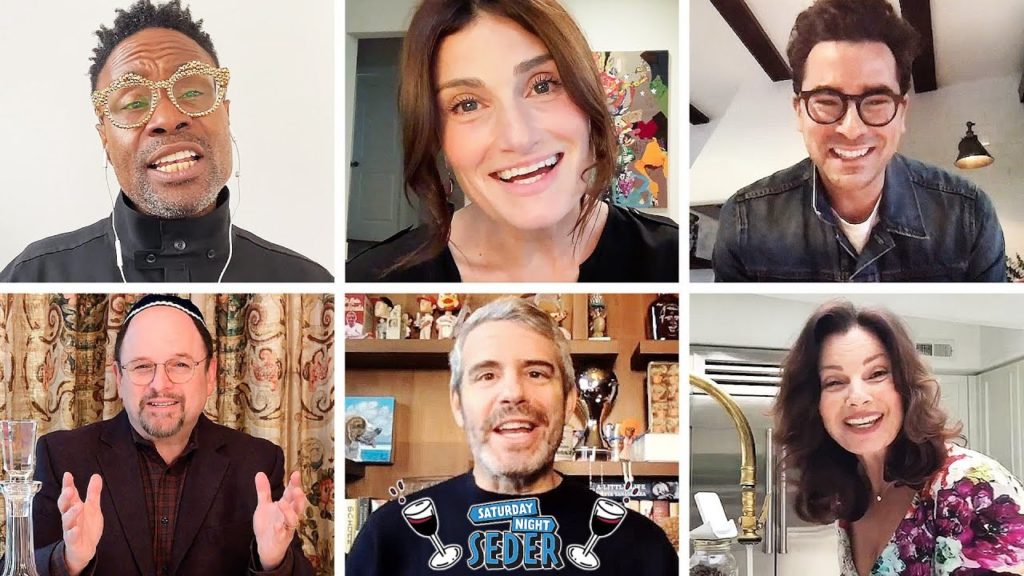
“Saturday Night Seder,” the Passover celebrity charity fundraiser that ran April 11 on YouTube, is making a bid for the Outstanding Variety Special Emmy Award. Featuring appearances and performances by a host of Jewish celebrities including Ben Platt, Idina Menzel, Fran Drescher, Jason Alexander, Henry Winkler, Beanie Feldstein, Bette Midler, Dan Levy, Pamela Adlon, Finn Wolfhard, Alan Menken, Ilana Glazer, Nick Kroll, Judith Light, Julie Klausner, Mayim Bialik, Judy Gold, Michael Zegen, Harvey Fierstein, Skylar Astin and more, the special has raised $3.5 million for the CDC Coronavirus Emergency Response Fund.

Writer-producer Benj Pasek thinks the Zoom-created program is worthy of Emmy consideration, and spoke to Variety about its significance.

“For a lot of Jewish people and people who are not even in the Jewish community, Passover is a really special holiday because it’s the one that most people celebrate with their families,” he said. “That week people were trying to do virtual Passovers, which is so depressing. The holiday is so special to me because it’s one of the tenets of why Judaism is a really progressive community. Passover, itself, sort of mirrors so much of what we were going through in COVID. It’s this holiday about going from oppression to freedom, from confinement to space, from winter to spring. We decided very early on that we wanted to do something that would have impact and benefit the fight against the epidemic that was happening in real time.”

The DIY indie project was made “with love and duct tape,” Pasek said, talking about putting it together on no budget and remotely. With exception of editors hired at the end, “Everybody donated their time and their labor. The submissions that people sent were very personal to them.”

Nominations for the Emmy Awards will be announced July 28, and ABC will broadcast the award ceremony on Sept. 20

Could ‘Saturday Night Seder’ Win an Emmy? Read More »

Jewish Progressive Mike Feuer Runs for Los Angeles Mayor Amid Civil Unrest

In March, days before the pandemic hit, Los Angeles City Attorney Mike Feuer announced he planned to run for mayor in 2022 when Mayor Eric Garcetti will be termed out. 

A former L.A. city councilmember and California district assemblyman, the 62-year-old Jewish, progressive Democrat told the Journal in a phone interview, “The city needs experienced, tested, proven leadership going forward, and I want to be an architect of building a city that doesn’t just get back to normal, but is more equitable and more sustainable and more livable and more resilient and works for everybody. I want to be a unifying leader, and I think that those aspirations meet the moment right now.”

In an effort to show he is attempting to unify the city, Feuer chose not to prosecute the more than 2,500 peaceful protestors arrested for violating curfew in the days after the protests in the wake of George Floyd’s death. However, he said those arrested for looting would face charges. “It is deplorable people would act that way,” he said. “But … do I think it is indicative of the majority of people who protested? No. Not at all.”

To that end, Feuer said he hoped to facilitate dialogue among the peaceful protesters and law enforcement, and foster improved relationships in a city currently divided over a plethora of issues, including discussions over defunding the police. “No one is saying there should be no police anywhere,” Feuer said. “Some aspects the city is contemplating now is to separate violent incidents when police are necessary from nonviolent ones.”

Also at the top of his potential mayoral agenda are health care, jobs and education. “When communities have those elements, they are safer,” he said. Other ideas he has percolating include creating a team of leaders to address concerns specific to local communities.

“What residents want is sustainable living in a city that works for them, and one of the tenets of my campaign is I want to have neighborhood mayors in my office who are actively in touch with the priorities people have on their block.” — Mike Feuer

“What residents want is sustainable living in a city that works for them, and one of the tenets of my campaign is I want to have neighborhood mayors in my office who are actively in touch with the priorities people have on their block,” he said.

Feuer, who was raised in San Bernardino County, said it was his late father, Mel, who instilled in him the importance of pursuing a meaningful career. A veteran who fought in World War II as a ball-turret gunner, after his plane went down over France, he was captured. He eventually went on to become a public school administrator. “The lesson [from my father] was I had to find the most important work in the world,” Feuer said.

In that vein, in his role as city attorney since 2013, Feuer has been an outspoken voice against gun violence; achieved a financial settlement from Wells Fargo after the bank opened unauthorized accounts for its customers; and launched the Neighborhood Justice Program, allowing first-time offenders of petty crimes to have their records expunged if they work with a panel of neighborhood volunteers on a set of agreed-upon obligations.

Feuer also cited his strong Jewish background as part of his commitment to tikkun olam. At age 28, he was appointed the executive director of Bet Tzedek; he’s a longtime member of Temple Emanuel of Beverly Hills; and a volunteer with Jewish Family Services Los Angeles.

He also believes the work he currently is doing will stand him in good stead should he become mayor. During the pandemic, his office has used social media to connect with the public, warning them about scammers posing as contact tracers in an attempt to get their personal information, and about retailers hawking ineffective and dangerous coronavirus treatments.

Also among his COVID-19-related worries has been the long-term economic impact of the lockdown for small businesses, something he believes will still need to be addressed in 2022. “We need to do everything we can to enable small business to thrive here,” he said. “I anticipate heavily emphasizing that in my [mayoral] administration. It could be — at least for a time — there needs to be a city department focused on small-business recovery, along with access to capital, job capital, regulatory reform, an array of things. I am open to that conversation.”

Feuer said he envisions creating “L.A. 2.0, [an] equitable, inclusive place where we show how much we need each other. With all the enormous challenges the pandemic has posed for us comes an opportunity to think again about what L.A. should be moving forward.”

Citing a graduation speech he once gave, Feuer said, “As you gain more experience in life, what matters to you most will be the way you have grown your family. Have you created a loving close environment there? What have you done for other people? For me, I know enough about myself to know my sense of purpose is deeply tied to making the world better. Forgive me,” he said, “I am sounding kind of corny. I am kind of corny, but I own up to that.”

Jewish Progressive Mike Feuer Runs for Los Angeles Mayor Amid Civil Unrest Read More »

Elon Gold’s New Talk Show Reels in A-list Guests, Tackles Important Topics

Not everyone stays up to watch Late Night talk shows, and that’s okay, because comedian Elon Gold has a new talk show that airs at 6:13PM PST nightly. And yes, the specificity of that start time is a deliberate correlation to the number of mitzvahs in the Torah. This sets the tone for a very uniquely Jewish entertainment experience for the duration of his 18-minute show.

Even better, you don’t need a television to watch. Gold’s new show, ‘My Funny Quarantine’ airs on Instagram Live, and brings in some of Hollywood’s most sought-after guests. Among them—Bob Saget, Tiffany Haddish, Judd Apatow, Jay Leno, Howie Mandel, Jeff Garlin, Nikki Glaser, Scooter Braun, Michael Cera, Iliza Sleschinger, Josh Malina, Amanda Peet, and more every day…

Every night Monday to Thursday, Gold has two special guests, and more often than not, they are other comedians. “Imagine if you could watch two comedians Facetiming. That’s what the guest segment is like,” says Gold, who jokes that his show is “the 2nd hottest show on phones.” Gold himself awards his good friend and frequent guest, Jeff Ross’s ‘InstaRoast’ as the “#1 hottest show on phones.”

“I’m a guy who doesn’t have a network behind him, but I still get A-listers on,” says Gold.

After 30 years in show business developing and cultivating relationships, the chemistry between Gold and his guests becomes apparent. You can feel the mutual love and admiration. But the best part, he believes, is when they start “riffing, kibitzing and kvetching.”

The show, which is based on the classic song “My Funny Valentine” was bred during the infancy of the Coronavirus lockdown.

“The comedy clubs closed and there were no more fundraisers,” says Gold. “But a pandemic can’t stop a comedian from hitting a stage.” He just hadn’t figured out that the stage would be a social media platform.

“My first thought when this happened was—yay I finally get to binge watch—I haven’t seen Breaking Bad. I don’t even know what Game of Thrones looks like. By day 2, I was like I want to tell jokes.”

Gold began releasing old comedy clips from his special, and people started messaging him with sentiments like “I needed this.”

When he realized he was going to run out of bits, he knew he couldn’t just wait for a phone call from NBC. “If a network isn’t giving me a show, I’ll just give myself one!”

Gold has one simple goal with his new show: “I want every Jew around the world to get to sit down for 18 minutes and laugh at our shared experiences.”

While he may not have reached his goal just yet, he’s certainly giving much of the Jewish world a lot of great, Jewish, funny content. His clips are being shared on platforms like Facebook and WhatsApp in countries from Canada to Israel where many of the routines and interviews from the show have gone viral.

Like the time Howie Mandel told a very personal story about saying kaddish for his father while on a concert tour. “You’re not gonna see Howie talk about trying to find a minyan in Iowa and pushing his show time until after his 3rd Kaddish at 9:30pm on any of the Jimmy’s shows,” Gold tells the Journal.

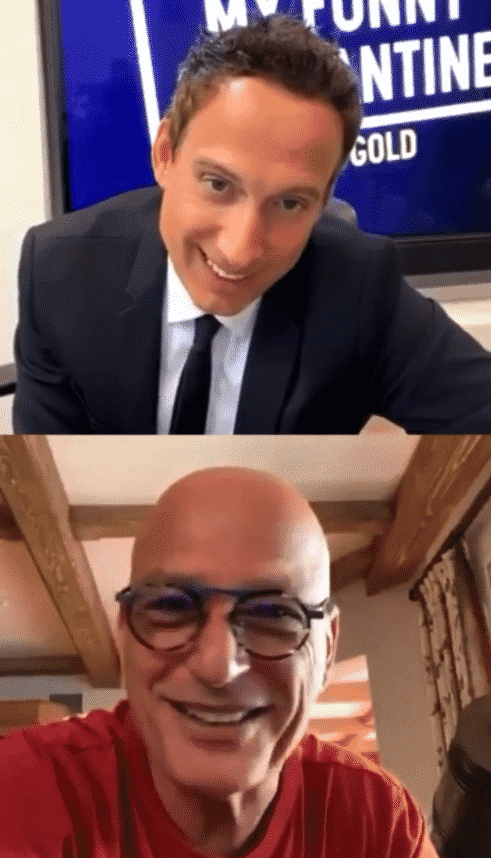
Elon Gold and Howie Mandel on ‘My Funny Quarantine’

In every episode, Gold introduces a Yiddish word of the day as taught by his 82-year-old father, Sid. For his Passover episode he had an entire monologue devoted to the holiday. “I was supposed to be in Mexico at a Pesach program. I feel more like I’m in a pogrom. I’m hiding in my house having zoom Seders! There’s nothing like a zoom Seder, where you not only break the matzah, you break yontif,” he quips.

“This is the only show you will hear jokes about our holidays…I’ll do T’shabav jokes. I learned after years of doing stand up, to embrace my heritage and never be scared of alienating non-Jewish people in the audience,” he says.

Gold says he used to shy away from jokes that were “too Jewish” and reserve them for Jewish audiences only—until he saw Jon Stewart perform at Radio City Music Hall as a guest of Dave Chappelle. “Stewart did a bit on Seder plates. I watched a room full of mostly black people cracking up… and that’s when it hit me: I will never be afraid to go too deep into my customs, rituals and heritage.”

Gold is a devout Jew. He puts on Tefillin every day and has no problem talking about that in his act, or on his show where he asked actor Josh Malina ‘how many days of the week do you put on tefillin?’ during a segment he plays with guests called, “Jew-ish OR Jew-ey.” Malina and Gold also shared a mutual reaction of disgust towards Louis Farrakhan and were both perplexed at why Chelsea Handler would post a video of such a hateful person.

Gold is not afraid to talk about anti-Semitism or racism. When Black Lives Matter started trending, Gold devoted his shows to elevating Black voices. He had on comedian friends Tony Rock, Alonzo Boden, Chris Spenser and others to share their experiences with racism in America while Elon told them his purpose with these shows is to ‘shut up and listen.’

While the show is apolitical, Trump impersonator Bob DiBuono joins Gold for the last few minutes of every episode to do a ‘Brief Briefing’—a parody of the President’s 2-hour long Television briefings. Gold says he makes sure to book end the show with comedy. Every show opens with a monologue laden with riffs, like having “Almond Privilege” (he says he doesn’t consider himself a ‘white guy.’)

“I’m a white guy the way almond milk is milk. It’s the right color, but it ain’t milk!” he says.

Gold ends the show with what he considers “The best Trump impression on the planet, and also the most hilarious stuff you will ever hear coming out of Trump’s mouth and that’s including his actual insane tweets!” Still, Gold is hyper-sensitive of his Jewish audience and the divide between Trump lovers/haters and so he keeps the comedy non-partisan and light-hearted.

Before other comedians and celebrities took to Instagram Live, Gold had already began producing My Funny Quarantine.

“This was before the late-night shows ceased production and did their at-home versions,” he noted. “And they have a team of writers, a research staff and a talent booking department. This show is just me and my ‘producers’ who happen to be my 19-year-old son and brother-in-law,” says Gold.

Gold’s brother-in came to LA with his wife and two kids to celebrate the Bar Mitzvah of Gold’s other son, Darren. Because of the pandemic, they have lived together for 100+ days. Gold’s family of 6 doubled to a household of 12, including his parents. Does he mind? “It gives me so much fodder for the show, I don’t want them to go home!”

Gold also says he loves that the pandemic has given him the time to spend time with his family that he wouldn’t have otherwise had—“other than the arguments with the wife, which have been exacerbated thanks to quarantine.”

And so he added a segment to his show where he invites his audience to play, “What are you fighting with your spouse about today?”

His main objective?

To give people a “break from the Meshugas.” And that’s why people tune in.

“It affects people so positively,” Gold says. “But I can’t say this is an entirely selfless endeavor. It’s helped me keep my sanity. It gives me something to focus on. It gives me ambition and allows me to work out my comedy muscles when there’s not too many venues to do that.” Gold said that while his touring and gigging has stopped dead in its tracks, he’s doing tons of Zoom comedy shows for corporations, organizations, and even private parties. “No matter what is going on in the world, people will always crave comedy. We just need it, so I’m not worried that my live gigs have ended for now, because there are other ways to deliver laughs to people. Now I’m delivering directly to their homes. Like Amazon, without the piled up cardboard boxes.”

“I also love knowing that my core base of fans are my people, and that I’m connecting with them much more deeply than I would at a comedy club or on a TV show,” he says.

“Just yesterday I got a DM from a fan that said, ‘Watching your show made my day….I’m sure it made G-d’s too!’ And after reading that I realized, what started as a goofy, experimental Instagram live show, has allowed me to fulfill my purpose. Not to mention, how many people out there get to make G-d’s day???”

Elon Gold’s New Talk Show Reels in A-list Guests, Tackles Important Topics Read More »