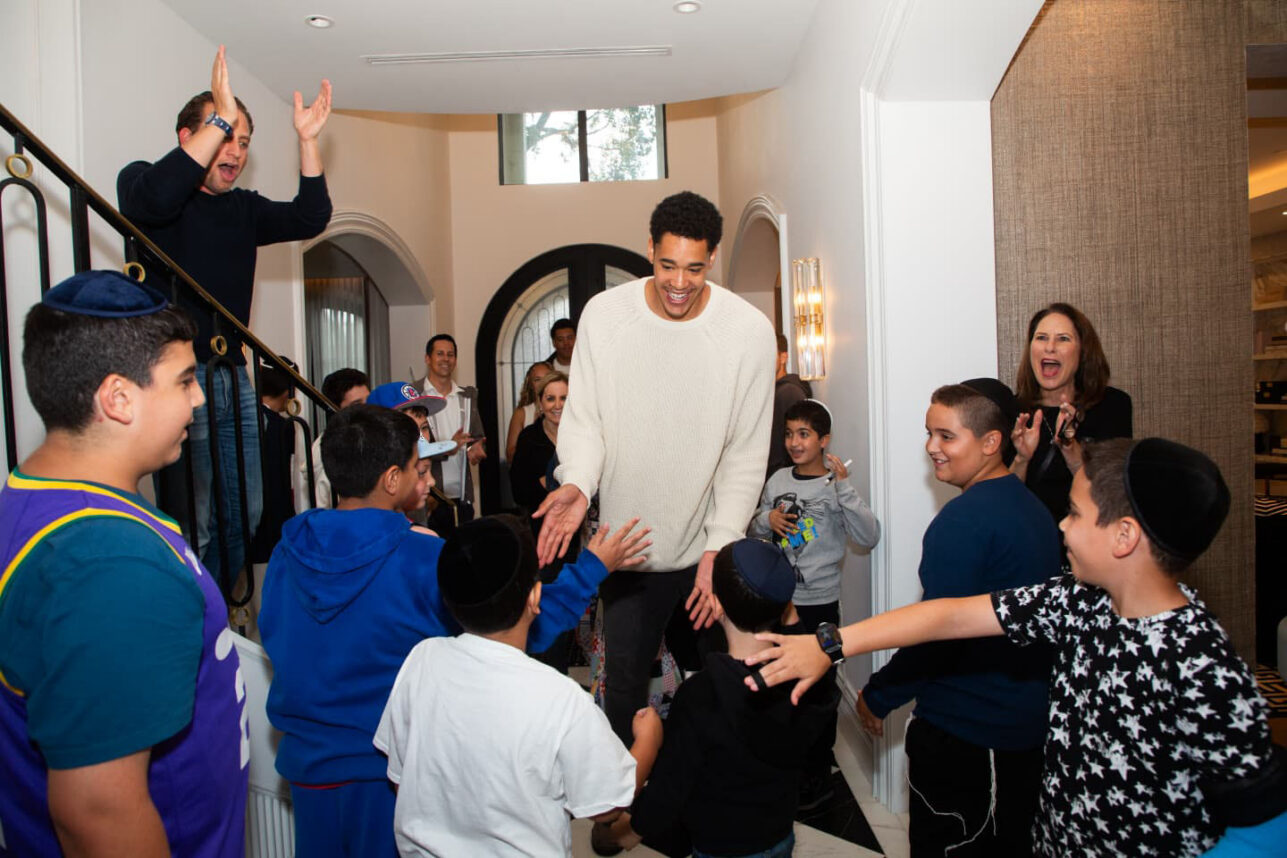
Directors at three of California’s Jewish sleep-over camps describe them as nurturing environments where every child is made to feel safe and part of a caring community. Campers, they say, generally meet the high expectations for mensch-like behavior.
But despite everyone’s best intentions, camps occasionally see aggressive or exclusionary behavior, and each camp has a policy to firmly and fairly discourage bullying.
“Our mission is to create a community of living Judaism within a holistic vision of physical, spiritual and emotional safety for all,” said Ruben Arquilevich, executive director of the Union of American Hebrew Congregations’ (UAHC) Institutes for Living Judaism, which runs Camp Swig in Saratoga and Camp Newman in Santa Rosa.
“Our culture fosters shalom bayit [peace in the home],” he added. However, Arquilevich as well as directors of Camp Tawonga near Yosemite National Park and Camp Ramah in Ojai said they are prepared to deal with unacceptable behavior, too. “We acknowledge that certain behaviors appear in a group setting, and there are always a handful of cases every summer,” Arquilevich said.
“Although we don’t believe in the concept of a ‘camp bully,’ at some time we all exhibit bullying behavior. We see it as an opportunity at camp to identify, respond and give the bully and the other kids a lesson in how to be the best person they can be, a life lesson in conflict management that they can take home.”
Ken Kramarz, executive director of Camp Tawonga, described his camp as “a place of peace.”
Tawonga is a group-centered camp, where each cabin has its own identity and strong group ethic. Kramarz said each cabin has a personalized set of “10 commandments” and a cabin schedule that accommodates every camper’s individual needs.
“The entire culture is about getting along. The counselors are with the kids continuously and focused on the children’s interacting with each other,” Kramarz said.
Nevertheless, “the children bring with them the templates of behavior extrinsic to the camp environment,” he said, and in the rare case where a child becomes disruptive or mean, the director will sit with him or her and create a personalized written behavior contract. The parents will be notified that the child is “on contract” and may be sent home.
“But the kids really want to be here, and when the consequence is that they are not going to be here, the behavior is likely to improve,” Kramarz said.
Camp directors say expectations run high that campers will treat each other with respect, cooperation and inclusion.
Before youngsters head off to camp, parents receive handbooks that outline the rules of appropriate camper behavior. “The parents are asked in advance to engage their children in a conversation about the tone and culture the camp strives for, and they sign off that they will contribute to the environment in a positive way,” Arquilevich said.
He said that inappropriate behavior might first be noticed by a counselor or might be reported to a counselor by a camper. The counselors are trained to facilitate the kids working out the issue among themselves within their own cabin group.
“We are careful in judging and getting the broad story. The kid in the most pain is the one exhibiting the inappropriate behavior,” Arquilevich said, adding that the first step might be to ask what precipitated the behavior, followed by encouraging the cabin group to talk about it. Once they understand each other, they can work toward something positive.
In the rare case where hurtful behavior continues or even escalates, consequences ensue. Parents might be notified, and an agreement of understanding might be written up. If such a behavior contract is broken, the child could be dismissed from the group or the camp; however, such serious measures are necessary only about once every two years, Arquilevich said.
Brian Greene, executive director of Camp Ramah, said his counselors are taught to watch for inappropriately aggressive children and channel the aggression in a positive direction.
“What we really want to do is get to the bully and find out what’s behind the lack of self esteem. The child wants to feel powerful and important, but can fulfill that need in better ways than pushing other kids around,” Greene said. “We won’t let anyone ruin anyone else’s time and won’t tolerate a child hurting another child.”
Greene added that he believes bullying is a bigger problem at schools than at summer camps.
“When camp is at its best, a united feeling takes over and becomes dominant. Everybody counts.”