At a time when the world shunned them, an estimated 20,000 Jewish refugees from Russia, Germany, Austria and elsewhere made their way to Shanghai before World War II. Jews in this forgotten corner of the world survived on donations from the Joint Distribution Committee, whose financial support paid for three meals a day, then two and then one.
As difficult as life was for Shanghai’s Jews, it was certainly better than the alternative, said Michael Berenbaum, director of the University of Judaism’s Sigi Ziering Institute, which explores the religious and ethical implications of the Holocaust. The Jews in China "didn’t know the language and were impoverished," he said. "But comparatively speaking, they were free. The people they left behind died."
By the late 1940s, Shanghai’s Jews had largely immigrated to the United States and Israel, closing a little-known chapter in Jewish history. Most of them have since succumbed to old age and illness, taking their memories to the grave.
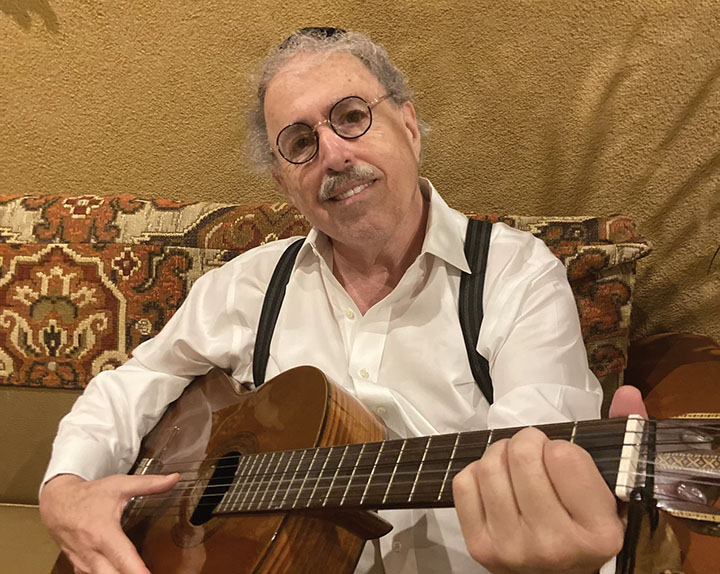
In San Juan Capistrano though, 80-year-old Kurt Wunderlich remembers. The spirited, retired music shop owner — "I like the Beatles and Stones, but most of the stuff today is crap" — recently described his wartime experiences to a visitor at his modest but comfortable Orange County home.
Wunderlich, a diminutive man with a strong, direct gaze, escaped from Germany in 1939 with his lawyer father, Felix. They fled soon after the Nazis sent his father to the Sachsenhausen concentration camp near Berlin for one week for the crime of being Jewish. The elder Wunderlich was released only after promising to leave Germany within six months.
But where to go? Almost no countries, including the United States, wanted Jewish refugees. China was an exception. So Wunderlich and his father were among the 459 Jews who chartered a ship built for 200 and sailed on an arduous, nine-week journey to Shanghai. The Nazis permitted each passenger to leave with only one suitcase and $4.
Wunderlich’s mother, Margarete, had planned to meet up with her son and husband within months. She never made it. Through a German friend, Wunderlich later heard that she had died in the death camps or poisoned herself before boarding a train bound for them. No one is really sure.
In Shanghai, the bewildered 14-year-old and his father settled in one of the city’s worst neighborhoods, teeming with 5,000 other refugees. They lived in abandoned schoolhouses, 120 to a room. Wunderlich said he endured those grim conditions for nine years.
Shanghai’s Jews, as best they could, though, tried to recreate the rich cultural lives they had left behind.
"Jews opened operas, nightclubs, restaurants," Wunderlich said. "There were clubs. There was soccer. We found things to do."
But life was by no means carefree. Violence and danger lurked.
Wunderlich remembers a young friend who used to bicycle around Shanghai. A truckload of Japanese soldiers grabbed the boy and his bike; he was never seen alive again. Another time, a Japanese soldier put a gun to Wunderlich’s head for violating the prohibition against gambling. Instead of killing him, the drunken soldier punched him in the back.
In 1943, American bombs destroyed a Japanese radio station in Wunderlich’s neighborhood, killing 17 Jews and wounding 53 others. He remembers pulling limp bodies from the rubble. Around the same time, Wunderlich said he contracted dysentery and nearly died after losing 20 pounds from his already skinny 100-pound frame.
A couple years later, chaos descended on Shanghai, when the Japanese evacuated the city after the United States dropped two atomic bombs on Japan that ended World War II. For three days, Chinese looters ravaged the city, stealing everything they could, Wunderlich said.
"Nobody wanted to stay there one day longer than necessary," he said.
But stay he did. In 1948, Wunderlich and his father finally emigrated and arrived in San Francisco, where the younger Wunderlich met his future wife, Jane. The couple, who married in 1950, later moved to Houston and then Mexico City, before making their way to Southern California. The Wunderlichs had three children. His wife did in 1994.
Today, Wunderlich lives a relatively quiet life. He remarried in 2001, wedding Nenita, a Filipina he met on the Internet, who is in her 40s. He lives on dividends from mutual funds, a monthly Social Security check of $836 and reparations from the German government.
Looking back, he finds it difficult to believe that he survived when so many others perished.
"I’m not a religious person, but I think God has looked out for me," he said.