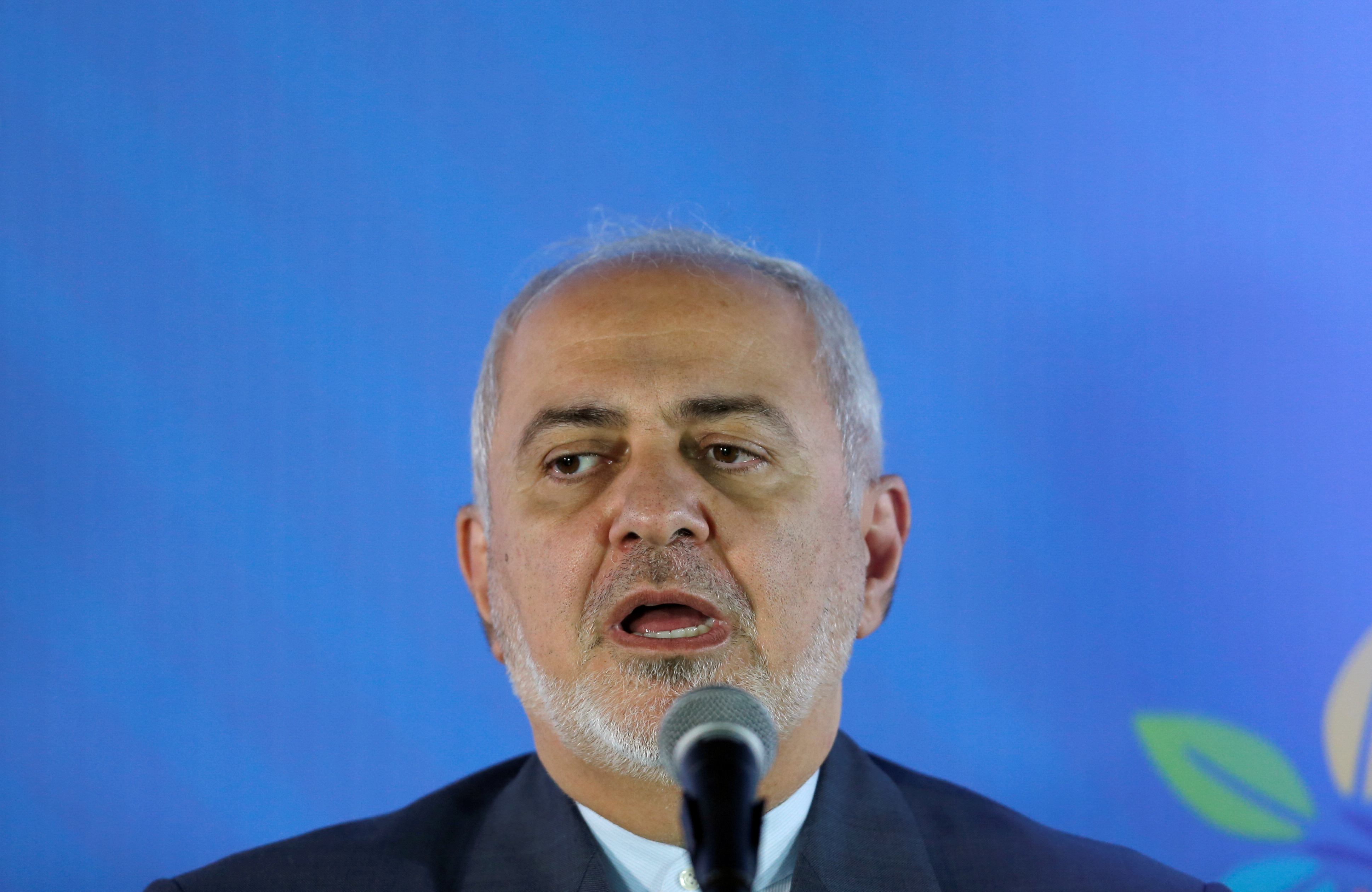
The Trump administration sanctioned Iranian Foreign Minister Mohammad Javad Zarif on July 31, according to a statement from the Treasury Department.
Treasury Secretary Mnuchin said in the statement, “Javad Zarif implements the reckless agenda of Iran’s Supreme Leader, and is the regime’s primary spokesperson around the world. The United States is sending a clear message to the Iranian regime that its recent behavior is completely unacceptable.”
Secretary of State Mike Pompeo issued a similar statement:
Recently, President @realDonaldTrump sanctioned Iran’s Supreme Leader, who enriched himself at the expense of the Iranian people. Today, the U.S. designated his chief apologist @JZarif. He’s just as complicit in the regime’s outlaw behavior as the rest of @khamenei_ir’s mafia. pic.twitter.com/XhDdqR6rik
— Secretary Pompeo (@SecPompeo) July 31, 2019
Axios reports that a senior official for the administration told reporters that Zarif “has been indulged as the reasonable and credible face of Iran and today President [Donald] Trump decided enough is enough.”
In June, when the Trump administration was considering sanctioning Zarif, Foundation for Defense of Democracies Chief Executive Mark Dubowitz tweeted, “If administration does sanction Zarif, they should make it clear that he’s responsible & accountable for decisions made by regime to conduct malign & destructive activities. No more mendaciously denying responsibility. He is part of regime in Iran & core regime decision-making.”
If administration does sanction Zarif, they should make it clear that he’s responsible & accountable for decisions made by regime to conduct malign & destructive activities. No more mendaciously denying responsibility. He is part of regime in Iran & core regime decision-making.
— Mark Dubowitz (@mdubowitz) June 24, 2019
Zarif sits on Iran’s Supreme National Security Council & is therefore “acting on or behalf of” the supreme leader and the office of the supreme leader per the new executive order. He is a party to the key foreign policy & national security decisions of the regime.
— Mark Dubowitz (@mdubowitz) June 24, 2019
He should be sanctioned for his role in the regime’s malign conflict. He’s part of the system. He is loyal. He didn’t go to Mugniyah’s funeral because he wanted to see the Cedars. He whitewashes murder and terrorism all the time. He is Khamenei’s man.
— Mark Dubowitz (@mdubowitz) June 24, 2019
According to Bloomberg, Zarif told The New York Times in July that any U.S. sanctions would have little effect since he doesn’t “have a bank account outside Iran.”
Earlier in July, Israeli Prime Minister Benjamin Netanyahu tweeted a thank-you to Trump “for his intention to increase sanctions against Iran.” Netanyahu and Zarif exchanged barbs in June, as Netanyahu called Zarif a liar for saying that Israel was aiming to destroy Iran.
“Iran is the one openly threatening destruction,” Netanyahu said at the time. “The regime’s officials threaten the destruction of Israel on a daily basis.”
Zarif was Iran’s lead negotiator in forging the 2015 Iran nuclear deal. He was also educated in the United States, graduating from San Francisco State University (SFSU) in 1981 and earning his master’s and doctorate at the University of Denver in 1984 and 1988, respectively. During his time in SFSU, Zarif was among the students who overtook the Iranian consulate in San Francisco during the 1979 Iranian revolution.