When he woke up from a six-month coma, Al Sabo (photo) found his life unraveled. His wife had attempted suicide, and his three children were in foster care. He had lost his job as the managing editor of a trade publication. He couldn’t walk.
After several months of rehabilitation, Sabo ended up on the streets of downtown Los Angeles. He was almost 60 years old, white, and had spent his life avoiding places like Skid Row.
On his first night without shelter, he lay on the cold concrete in the dark, terrified of what a group of young, predominantly black drug addicts might do to him if he fell asleep. As it turned out, what they did was help him survive.
“They watched over me. It was totally amazing,” he said. “They went out and hustled up food for me. They took care of me. It gave me a whole different perspective of who people here really are, and a new understanding of the problems they’re facing.”
Sabo slept on the street for two months. He learned how to create a makeshift shelter with cardboard and tarp. He learned that, in the most precarious of situations, people with very little are willing to give a lot.
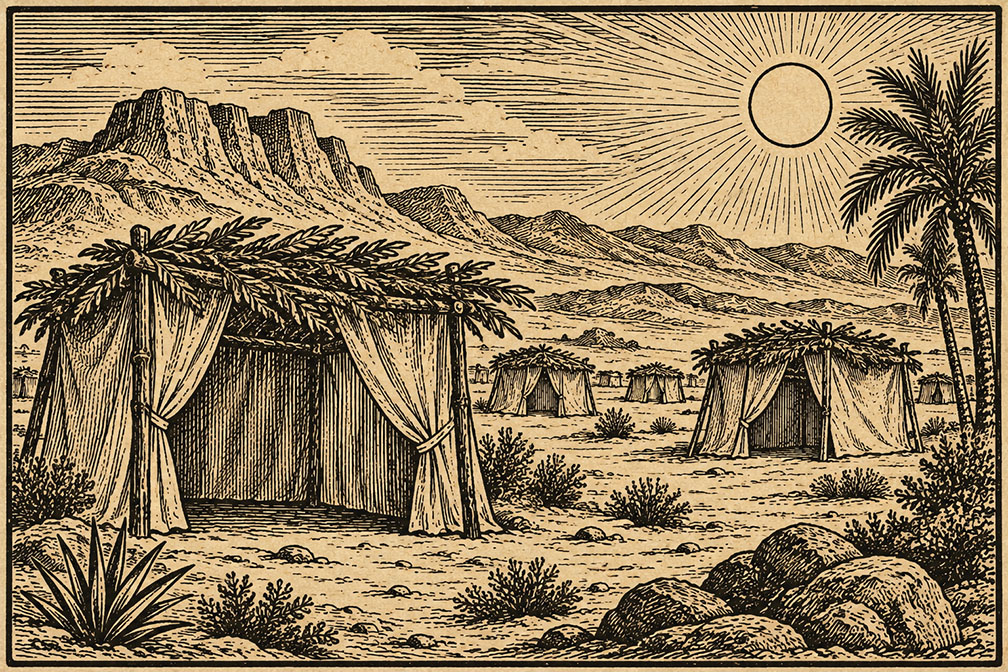
Every night on Skid Row, 5,000 people pile onto shelter cots or erect their flimsy huts in the concrete desert of the city. Another 9,000 go to bed in the area’s residency hotels, hoping to still have a roof over their heads the next day. In the face of seemingly insurmountable odds, year-round they share their sukkot with each other and remind us that we have failed to do the same for them.
When Sabo’s disability check came, he was able to afford a room at the Frontier Hotel. The Frontier is less than one block away from where I live, in a loft on Main Street. But Sabo and I are separated by much more than the physical space between us.
I am part of the new downtown, a much-touted “revitalization” of L.A.’s urban core. When I tell people in other parts of the city where I live, they say things like, “I hear they’re really cleaning up the area.”
Sabo is part of the old downtown. He’s poor, disabled and doesn’t have anywhere else to go. When others talk about “cleaning up the area,” they are talking about getting rid of people like him.
 In the last few years, gentrification has swept downtown Los Angeles. Developers set their sights on the area’s residency hotels, and city officials, eager to preside over the rejuvenation of a long-neglected city center, failed to protect those who for decades have called these hotels home. Countless residents have already been displaced. Thousands more, like Sabo, are trying to hang on.
Just three months after Sabo moved into the Frontier — a slum property by city standards — the building’s owner began converting the hotel’s 450 rooms into market-rate apartments.
Sabo, like most of his neighbors, had been paying $400 a month for a 150-square-foot room at the Frontier. He said he had problems with roaches and rats and didn’t have any heat in the winter. It was no bargain, but it was the cheapest rent in town.
Now the owner was ridding the hotel of tenants like Sabo, one floor at a time.
“They were not only converting the top floors into lofts, they built a separate entrance on Main Street because they didn’t want these people associating with the residents that were already there,” Sabo said. “They certainly didn’t want people that had been there for years to mix with the young yuppies that were coming into the lofts and paying a lot more money.”
The newer, wealthier residents entered the building through a grand, recently refurbished lobby with its own set of elevators. The old residents, most of them black and many disabled, entered from another side of the building, through a bleak, concrete chamber.
The Frontier was a microcosm of what was happening downtown. Block after city block featured advertisements for the new urban life. Old buildings were festooned with images of young white couples in modern interiors, a reminder to longtime residents that the new downtown would not include them.
These low-income residents felt they had been doubly neglected by the city: Before gentrification turned these blighted properties into valuable real estate, they said, the city departments in charge of enforcing fire codes and habitability laws turned a blind eye. When the evictions began, they said city officials failed to enforce state and local rent- control laws that would keep them from joining the ranks of the homeless.
Housing rights advocates and community members used to fight the city and downtown landlords to improve slum conditions. Now they were fighting just to keep people inside.
The Bristol Hotel, just a few blocks away from the Frontier and a stone’s throw from City Hall, was emptied in three days. Many of the tenants said they were evicted at gunpoint.
The Alexandria Hotel was purchased, with substantial help from the city, by a developer who evicted 100 tenants in the first year. Activists said some mentally disabled residents were simply locked out, and remaining tenants, many of them elderly, were stranded on top floors for days without working elevators or running water. The city officials who subsidized the renovation ignored countless pleas from tenants complaining of rampant abuses.