Almost 73 years ago, on March 21, 1942, Stefan Prager wrote a postcard from Sweden to his parents, who had been deported from their native Berlin to the Lodz Ghetto in Poland.
He wrote about his recently celebrated 18th birthday, adding, “I’m feeling healthy and the winter passed well. How are you doing?”
Prager never got a response or heard from his parents.
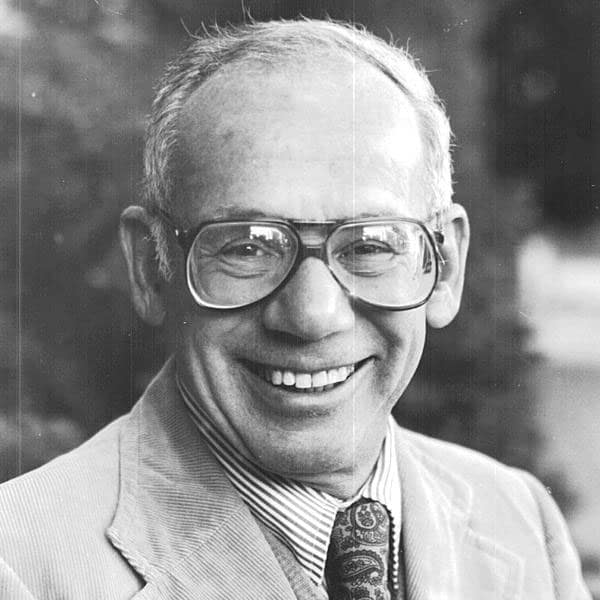
Now, as Prager approaches his 91st birthday, the postcard has resurfaced within the extensive digitized archives of the Los Angeles Museum of the Holocaust (LAMOTH). The postcard’s discovery has led, in turn, to new inquiries and some answers about his parents’ fate.
Stefan Prager was born in Berlin, the son of Ruth Prager and her husband, Ernst Wolfgang Prager, who was wounded three times fighting in the German army during World War I.
The boy attended a Jewish school in Berlin for four years, and in March 1939, the parents sent their 15-year-old son and 11-year-old daughter on a Kindertransport (children’s transport) to Sweden.
Stefan, a big-city boy, spent the war years with a farmer in a remote forest area, living in a house without electricity, a toilet or running water, feeding the livestock and chopping down large trees in the icy winter. He kept writing to his parents in Berlin until they were deported in October 1941.
This was the time of Hitler’s greatest victories, and as the German armies came closer and closer to Sweden, Stefan wondered, “Where would I go to hide?” he told the Journal in a recent interview.
“In the [Swedish] village where my sister lived, there were several known Nazis who would tell [the Germans that she was Jewish].”
Thus the story — like those of millions of other Holocaust victims — might have ended, but for the resilience of this postcard, which eluded destruction through all the upheavals.
In late 2011, Edward Victor, a retired Los Angeles lawyer, donated to LAMOTH an unusual collection of Nazi-era mementos that he had acquired and organized during a 30-year period. It consisted of some 2,000 stamps, letters, identification cards, visas, school records and currency receipts, which frequently traced the fate of a given Jewish family from the beginning of the Nazi era in 1933 to its bloody end in 1945.
At LAMOTH, Vladimir Melamed, director of Archives, Library and Collections, integrated the material in the Archon Platform-LAMOTH, the museum’s online archive, which now holds close to a million document pages (lamoth.info).
In December, Melamed received an email from Stefan Prager, who was living in Stockholm as a retired manager at SGS, a company that provides inspection, testing and certification services, primarily for international shipping.
“A relative of mine found a postcard at your museum which I sent to my parents from Sweden to the Lodz Ghetto in 1942. … I never heard from them,” Prager wrote.
Melamed and his staff went to work and tracked down the postcard in one of his digitized files labeled “Correspondence to and from Lodz Ghetto.”
No one knows how the card survived, but Prager speculates that “it was found at the Jewish administration office [in Lodz] among lots of similar stuff following the total evacuation of the ghetto to Auschwitz.”
With the recovered postcard as a lead, Melamed contacted the State Archive in Lodz for details on Prager’s parents’ fate. Last month, he received copies of handwritten entries by a Nazi official to the effect that Ernst and Ruth Prager were deported from Berlin Oct. 27-29, 1941, to the Litzmannstadt Ghetto (German for Lodz).
The next paper is an “Announcement” from the ghetto’s “Eldest of the Jews,” dated May 22, 1942, that Ruth Prager, now widowed, was being moved from the one room where she lived with her husband to another room shared with three other persons.
The last notice, dated Oct. 13, 1942, simply stated that Ruth Prager had vacated her room the previous day. Under “Reason for the Move,” an official entered “Death.”
LAMOTH president E. Randol Schoenberg noted that “the recovery of the Prager postcard reinforces the point that even 70 years after the end of the Holocaust, there are still undiscovered documents, still descendants of families searching for the fates of Nazi victims and still large gaps in our knowledge of concentration camps.
“For instance, who has heard of the Maly Trostenets extermination camp near Minsk? Yet, 65,000 Jews were murdered there.
“We owe it to the generosity of collectors like Edward Victor and the dedication of archivists like Dr. Melamed and his staff that large parts of the still unknown history of the Holocaust are coming to light.”