
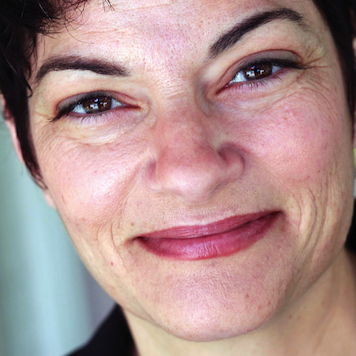
My name is Avivah and I am addicted to sugar.
When I am free to eat sweets, I do so with abandon. I may eat entire packages of cookies, one slice of every cake being served, whole pints of ice cream.
I don’t actually like these things. The sugar craving says sweets will make me happy, but eating them never does. Once I start, there’s no stopping me until I feel glutted and sick.
I didn’t realize this was an addiction until I attended a training program for rabbis at Beit T’Shuvah, the Jewish residential treatment center. My sugar craving seemed silly compared with alcoholism, drugs, gambling and such. But it was no less real. I was following a voice that was not acting in my best interest. I was not being my best self.
I am able to speak of my sugar problem now because I made a break and stopped eating sweetened foods this summer. The only sweetness I eat now is fresh fruit. It’s incredibly difficult. I had to go through everything in my house, throw away sweetened foods, and buy new ones without sugar. “Unsweetened” isn’t a category that restaurants are set up to offer, unlike gluten-free or vegetarian, so I have to call ahead and walk through the ingredient list with the staff, or see if it’s posted online.
Otherwise, I have to eat at home, pack my own meals or just go hungry. Being without the convenience of America’s sticky-sweet food industry, I’m on my own.
I share this with you because in this week’s parsha, Nitzavim-Vayelech, we are reminded by Moses of the covenant that God struck with the Jewish people for all time, and how covenants give us fortitude.
Atem nitzavim hayom kulchem lifnei Hashem Eloheichem — All of you stand today before God … to enter into the covenant … that He may establish you this day as His people, and be your God (Deuteronomy 29:9-12).
Rabbi Shneur Zalman of Liadi, the founder of Chabad Chassidism and author of “The Tanya,” taught that the covenant struck by the Jewish people with God was made in a time of great joy, when the miracles that brought freedom from slavery were still fresh in their minds. Like lovers who commit to marriage, we made this covenant with God when the passion for it was strong, and the reasons self-evident.
But that’s not when a covenant is needed. Lovers need their wedding contract later, when the love they felt becomes strained by the vicissitudes of daily life. Then, the mutual commitment they had made could give them strength in a way the memory of new love might not. It’s the same for us and God.
This is the mighty power that religion can have in life: to turn self-improvement efforts into something bigger than ourselves, a commitment not just to betterment, but to Hashem.
Deciding to make a major life change for the good is the easy part, but it’s only Step One. After that comes Step Two. For me, that meant rethinking everything I ate and everything I thought about eating, and sustaining it for 10 weeks, the length of time needed to establish a new pattern.
Now, my initial commitment has passed, I’ve lost some weight, I’m thinking more clearly, my palate has adjusted to find the subtle richness in savory foods, and I don’t want sweets. That leaves me with one thing to be done, and it’s the hardest part of all — Step Three: vigilance. I need to be proactive so I’m never in a position where I feel desperate — out on the road, extremely hungry, and without a plan for what or where to eat. I need to think ahead about my meals, or just plan to end up back home.
I’m reminded of the thinking behind tzit-zit, the fringes on our prayer shawls. As part of the Shema prayers, we take the tzitzit in hand, kiss them, and say that they are a helpful reminder not to allow our hearts to stray off the path that God sets for us.
This is the mighty power that religion can have in life: to turn self-improvement efforts into something bigger than ourselves, a commitment not just to betterment, but to Hashem.
So I may feel “on my own” on the American food landscape, but I’m not without support. I have my friends and family with me, encouraging me to be strong. My bulwark against that insidious, lying voice of sugar consumption is love. I love my life and my health, and I love the Holy One, blessed be God, who has brought me to this season.
L’Shanah tovah!
RABBI AVIVAH W. ERLICK is a board-certified health-care chaplain in private practice. She owns a referral agency for Jewish clergy (CommunityRabbis.com) and a private chevrah kaddishah (Sacred-Waters.com), is a spiritual counselor for hospice and serves as a chaplain in the Los Angeles County jails.