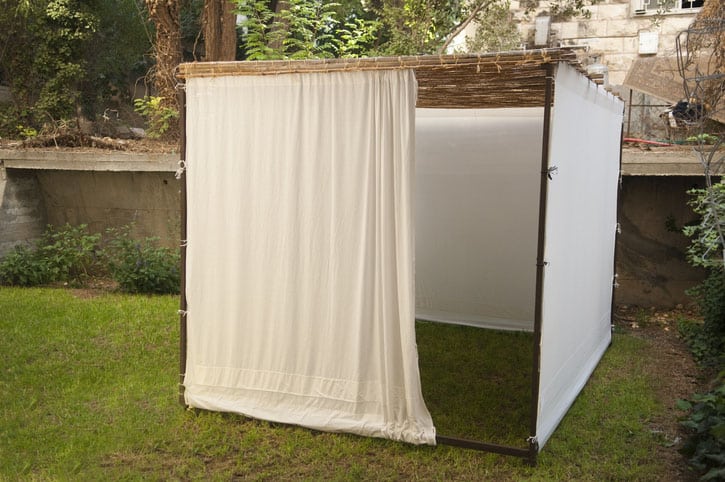
I have a hypothesis as to the physical and symbolic challenge during Sukkot. Each year I hear the following: the poles aren’t fitting the way they used to. Those that build a sukkah know what I mean: due to weather or deterioration over time, the poles sometimes need a little shaping, hammering, and stretching to fit the sukkah you’re trying to build this year.
I love this idea. Perhaps the essence of the holiday is learning how to stretch the sukkah, to stretch it in a way to invite those in our lives that this year, are meant to be included.
There is a story about Rabbi Pinhas of Koretz and Sukkot. The rabbi was known for his wisdom and because so many people used to see him, he didn’t have time to study. One day, he decided to no longer see any disciples and instead devote himself only to prayer. This seclusion went on for weeks and months.
Sukkot came and the rabbi invited several people to join him in his sukkah. They all said no. His students were still dismayed by his off-putting behavior. So, on the first night of Sukkot, Rabbi Pinchas invited the ushpizin, the mystical biblical guests to join him. He figured those guests were bound to say yes. But no luck. Instead, Rabbi Pinchas had a vision of Abraham refusing to enter the sukkah. Rabbi Pinchas asked Abraham, “Why won’t you join me in my sukkah?” And Abraham replied, “I will not enter a place where there are no guests.” From that moment onward, Rabbi Pinchas began to see his students.
The story isn’t really about Rabbi Pinchas not inviting people over. I think the story is a warning. On Yom Kippur, we retreat into ourselves. But we aren’t meant to stay in seclusion. Rather, on Sukkot, we are forced to look up and look around to remember who it is that helps us feel held, embraced, and rooted.
Like sukkah poles that haven’t been used in a year, it takes work to restrengthen and reclaim dusty relationships. It’s the stretching of the heart that allows for the stretching of the sukkah.
May your sukkah and heart stretch far and wide to include those that will hold you up, and hold you close.
Shabbat Shalom and Chag Sameach
Rabbi Nicole Guzik is a rabbi at Sinai Temple. She can be reached at her Facebook page at Rabbi Nicole Guzik or on Instagram @rabbiguzik. For more writings, visit Rabbi Guzik’s blog section from Sinai Temple’s website.