Readers long have been challenged by the blatant contradictions between the first two chapters of Genesis. In chapter 1, the creation of animals precedes people; in chapter 2, the order is reversed. In chapter 1, a single, androgynous Adam came into being; in chapter 2, Adam and Eve.
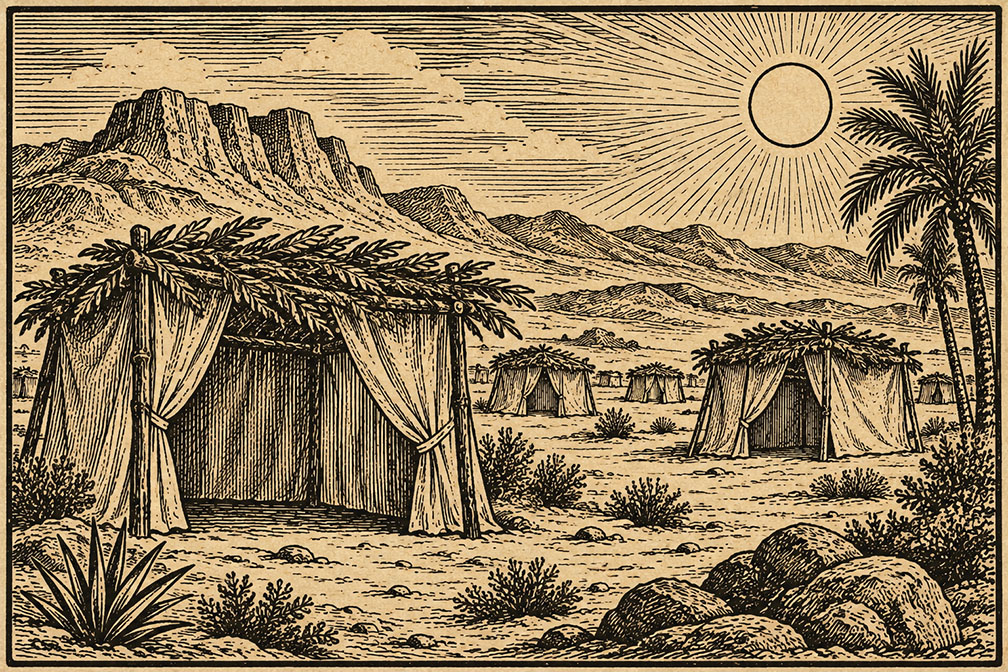
More interesting is that the two chapters show different concerns about the human condition, which modern biblical scholars attribute to different schools of (human) authorship. Chapter 2 is from J, the Yahwist writers. It begins, “When the Lord God made earth and heaven — no shrub of the field being yet in the earth and no grains having yet sprouted, because the Lord God had not sent rain upon the earth and there was no man to till the soil” (Genesis 2:4-5, JPS translation). J explores the origins of farming! The older of the two chapters, J’s account of creation reflects the agricultural vocation of most Israelites in the early days of the nation, and the outstanding, existential problem of the time: avoiding starvation.
Adam in chapter 2 is concerned primarily with his relationships — with God, the land and the creatures. God is the loving parent, and when Adam’s need for companionship cannot be met by the animals, Eve is created. His mission as a farmer is “to work and to protect” the land on which he depends (Genesis 2:15).
Written later (during the Israelite monarchy), chapter 1 reflects the concerns and values of the Priests. The P writers were men of learning whose lives intertwined with the urban, merchant class. Fluent in the languages and traditions of the surrounding nations, their concern is nothing less than the place of Israel in the cosmos, and they begin with the creation of the world. Their narrative reshapes a well-known myth of the ancient Near East into a revolutionary account that reinforces Israelite distinctiveness by recognizing the one God as Creator rather than created.
P’s narrative is philosophical in style, making order out of chaos through ever-finer distinctions. Unlike chapter 2, it is hierarchal. Just as the priests serve as intermediaries below God and above the other Israelites, human beings are the intermediaries between God and the rest of creation. Humanity is charged to “fill the earth and master it, and rule…” (Genesis 1:28, JPS translation).
For me, the most perceptive commentator of these differences is the late leader of American Orthodoxy, Rabbi Joseph Soloveitchik, who did not need the notion of human authorship to account for the differences mentioned here. The Adam of the first chapter he calls Adam 1. This is the noble human being, who strives for knowledge and beauty. Adam 1 is the portrait of human initiative. He asserts control against the forces of nature and builds civilization, making order from chaos, so that people can grow and prosper. This is the human who can cure polio and land on the moon. This is the Adam of human dignity.
Adam 2, the Adam described in the second chapter, needs love and lives in community. He can work and protect the land, but can never control its fertility or bring the life-giving rains. This Adam, writes Soloveitchik in “The Lonely Man of Faith,” is vulnerable and dependent, relating to God as a parent rather than a king. This is the Adam of redemption, whose life is redeemed through communal responsibility, right relationship and love.
These descriptions of humanity are brief; they can be easily caricaturized. I hate it, but the thought immediately arises: Adam 1 is a Ryan Republican and Adam 2 is an Obama Democrat. The Torah, one might argue, is presenting us with two different and sometimes conflicting visions of our role in the world, and if this column were appearing on Fox News or MSNBC, one view would be the correct one.
Fortunately, one can suggest a Jewish Journal approach. Are not both chapters true? This is Soloveitchik’s point. In navigating the world, we humans take control as best we can, but we are still vulnerable and dependent. We need individual initiative and depend on technology, but we must care for our community and the planet that enables it. To do less is to belie our potential and fail our Covenant with God.
The challenge, then, is not to choose between Adam 1 and Adam 2, but to recognize that we humans are both. Wisdom is not in favoring one over the other, but in knowing the proper balance between them, and knowing when and how much to emphasize one over the other. In today’s ideological environment, the commentators are clever and the sound bites are compelling, but terribly misleading. Long before us, the ancient Israelites knew that our complex world reflects multiple viewpoints and conflicting yet valid truths. But they need not be viewed as the source of conflict. On the contrary, in diversity and contradiction lies the fruitful tension of human life. In the paradox, we learn from the opening chapters of the Torah, lies wholeness.
As long as we turn off cable news.
Rabbi Mike Comins is the founder of the TorahTrek Center for Jewish Wilderness Spirituality (torahtrek.org) and the author of “A Wild Faith: Jewish Ways Into Wilderness, Wilderness Ways Into Judaism” and “Making Prayer Real: Leading Jewish Spiritual Voices on Why Prayer Is Difficult and What to Do About It” (Jewish Lights Publishing, makingprayerreal.com).