fbpx
[additional-authors]
August 2, 2016

In less than one week, the planet will be looking to Rio de Janeiro as athletes struggle at the-the 31st Olympic Games.

Even a cursory review of the Jewish Olympic greats is moving.

“The persistence and indomitable spirit displayed by Jews in the history of the Olympics is inspirational,” said Arkady Bukh, a noted NYC attorney and Jewish community activist. 

Mark Mietkiewicz, writing for the Canadian Jewish News lists several Jews who had parts to play in the Olympic story. 

Germany — 1896

And early standout of the inaugural contemporary games was Alfred Flatow. Flatow, of German, took home three gold medals and silver for gymnastics in 1896. He won two of those medals with his relative, Gustav Flatow. Notwithstanding their faith, the cousins were honored 40 years later at the Berlin Olympic Games.

Olympic glory was not enough to save them. In 1933, as Nazi influence developed, Alfred was shut out of his sports training club — where he had been active for 46 years. Eventually banished to Theresienstadt, where he died in 1942, his cousin, Gustav died there in 1945.

Both were honored byGerman sporting in 1996 when the German Gymnastics Association established the “Flatow Medal” in memory of the massacre of Jews in the German Federation of Gymnasts between the years 1933 and 1945.

Amsterdam — 1928

The initial Olympics to admit female contestants, Dutch gymnasts won gold in team exercises. Sadly all but one of the Dutch Jewish athletes died in the Holocaust.

Lake Placid — 1932

The third Winter Olympics saw the first Jewish competitor to win a gold medal. Irving Jaffee, a speed skater from the Bronx, won two Gold medals — one in the 5000-meter race and another in the 10,000 meter.

Munich — 1972 

Mark Spitz, from America, was the first competitor to win seven golds in a single Olympic Games. Spitz’s wins occurred after the melodrama when Palestinian terrorists butchered 11 Israeli Olympic teammates.

This, clearly, is just a partial listing. The medal won by each Jewish Olympian from Athens to 1896 to London in 2012 is listed here.


Did you enjoy this article?
You'll love our roundtable.

Editor's Picks

Latest Articles

The Beat Goes On

While so much of the world seems obsessed with and consumed by its hatred of Israel and Jews, Israelis continue to build, create, work, celebrate, argue, raise families, and plan for the future.

Viral AI Video Targets Jewish Comedian

“The biggest concern is that people now have a pathway to shut down Jewish voices through complete falsities that people will believe. … For the future of Jewish entertainment, it’s very scary.”

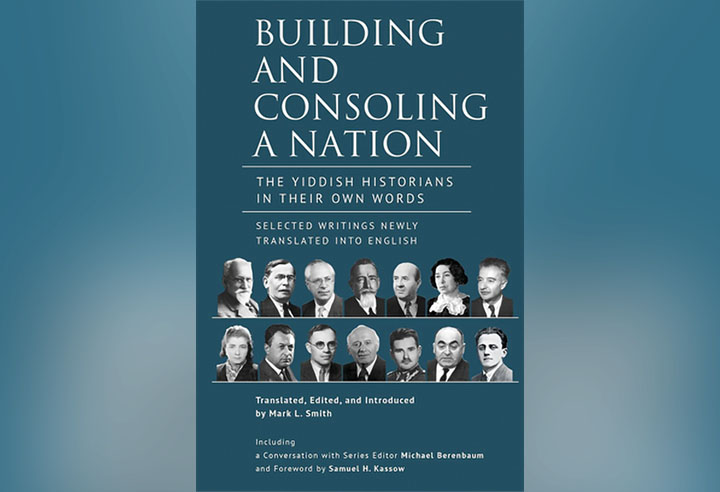
Yiddish Historians: Writing in Their Own Language for Their Own People

Mark Smith has compiled an important anthology of Jewish history using 49 works by Yiddish historians to recreate or at least open the door to a world of Jewish thought that was once almost mainstream, but which no longer exists, except in the minds of too few specialists.

The Everlasting Melody

Most Jews who have sung “Eitz Chaim” over the past half-century probably never knew Portnoy. They did not know when he wrote the melody or how young he was when he composed it. They simply knew the song.

Who’s Really the Victim?

Those who would revel in Israel’s demise are claiming victimhood on every front and denying attacks on us in the same breath.

Biblical Deterrence

After Oct. 7, the sentiment in Israel toward the Iranian leadership was unequivocal: You went medieval — so we will go biblical.

How Sukkot Makes Us Whole

This year, I bless us that we open our eyes to truly see the beauty and the holiness of the world, and of the person before us at each and every moment, and to see the godliness of their aspirations and their fears.

The New Ushpizot

Ushpizin invite us to “welcome in our ancestral constellation and dwell amongst them.” This year, it’s Ushpizot, for the women. It’s the year of the Feminist Visitation.

Macklemore, Or Less

In between his songs, he proclaimed, “Free Palestine,” which is fine, asserted that opposing Israeli military actions is not antisemitic, which is accurate, and accused Israel of apartheid and genocide, which is offensive, untrue and hateful.

The Rokeach’s Remarkable Sukkah

To Rabbi Eleazar ben Judah of Worms (1176-1238), the medieval German pietist known as the Rokeach, the sukkah symbolized Jewish military might.

The Sukkah and the Power of Endurance

They can destroy our Temples, demonize us in social media, shower us with hate, but they can’t destroy a spirit that never stops building. That enduring spirit is the power of the sukkah.

NY Mag’s Habibi City

A satirical response to Zaina Arafat’s erasure of Jews in her New York Magazine article “Habibi City,” written as Zaina Arafat.

More news and opinions than at a Shabbat dinner, right in your inbox.