Political pundits long have debated who is the real Benjamin Netanyahu.
Is he a pragmatist handcuffed by his right-wing support base and, until his father’s recent death, fealty to his father’s nationalist vision?
Or is he a true right-wing ideologue whose apparent concessions, like a 2009 speech at Bar-Ilan University in which he accepted the principle of a two-state solution to the Israeli-Palestinian conflict, are but feints?
Or is he merely a political survivor willing to do whatever it takes to stay in office, ideology be damned?
This week’s surprise announcement that Netanyahu’s Likud Party and Avigdor Liberman’s nationalist Yisrael Beiteinu party would merge their candidate slates in the upcoming election — under the name HaLikud Beiteinu — offers some signs that the smart money is on the right-wingers.
The move dealt a potential knockout blow to Netanyahu’s left-wing rivals and makes it more likely than ever that the prime minister will win a third term.
It also make it more likely that Liberman’s nationalist agenda will gain further traction in the next government, not less. The agenda has included legislation requiring loyalty oaths for new non-Jewish Israeli citizens and a ban on settlement boycotts — moves that many Israeli and American Jewish critics have slammed as undemocratic.
“The real government reform starts now,” Liberman said at a news conference Thursday night. “We advance to finish the work.”
Critics worry that with the merger, Netanyahu has unambiguously embraced Liberman’s hard-line domestic agenda.
“The prime minister is essentially signaling that he has chosen the extremist, pro-settlement right, that he has chosen to walk in place, not to make progress in the diplomatic process,” Zehava Gal-On, head of the liberal Meretz party, told Israel's Army Radio, according to Reuters.
Not that the Orthodox parties will be happy with the deal.
Liberman, a secular immigrant from the former Soviet republic of Moldova, is one of Israel’s most prominent anti-haredi politicians. He wants Israel to allow civil marriage in addition to religious marriage, and he has railed against government privileges granted to the haredi Orthodox. The current coalition’s tensest moments came this summer when Liberman and the haredi Orthodox parties battled over whether to require army service for haredi Orthodox youths, who previously had received exemptions to study Torah.
In that battle, Netanyahu sided with the haredim, breaking up the committee assigned to draft a new military service law.
The HaLikud Beiteinu merger represents a real triumph for Liberman. He founded Yisrael Beiteinu in 1999 as a right-wing party for Russian constituents, then quickly broadened its appeal. In 2009, when Israel last held elections, Yisrael Beiteinu won 15 of the Knesset’s 120 seats, becoming the nation’s third-largest party. Liberman was awarded the coveted post of foreign minister.
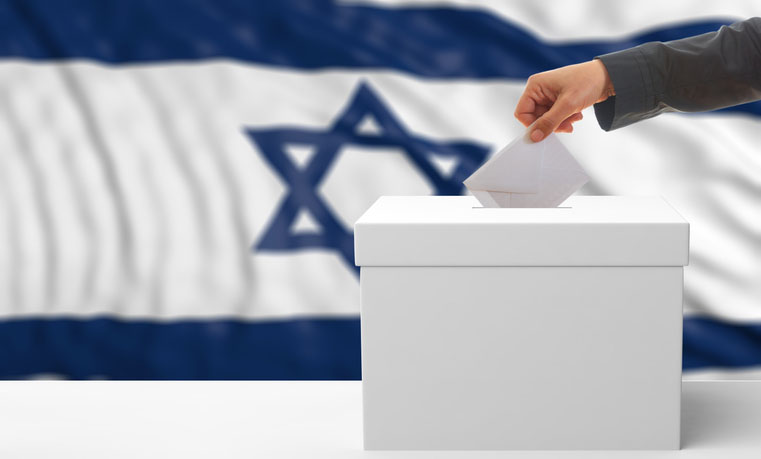
In the elections scheduled for Jan. 22, Netanyahu’s party was expected to win a plurality of votes, but there has been talk among Israel’s left and center-left parties of creating an alliance to challenge Likud. Since the elections were announced, rumors have swirled about former Prime Minister Ehud Olmert or former opposition leader Tzipi Livni, both of the Kadima Party, returning to politics and uniting the Knesset’s centrist and left-wing factions. A recent poll by Haaretz showed such a party potentially edging Likud.
HaLikud Beiteinu, however, is expected to win more votes than any center-left alliance. Polls before the merger showed Likud winning 29 seats and Yisrael Beiteinu winning close to its current 15 seats. If those numbers hold, the united party could win more Knesset seats than any since Labor won 44 seats in 1992 under Yitzhak Rabin.
“The time has come to unite for the State of Israel,” Netanyahu said in Thursday’s news conference announcing the merger. “We ask for a mandate to lead Israel with strength.”
He said the beefed-up party would allow him to more effectively combat Iran’s suspected nuclear weapons program, fight terrorism, and make domestic social and economic changes. Netanyahu said reducing the cost of living in Israel is one of his top priorities.