fbpx

May 1, 2025

Doctor’s New Book Explores How Tanya Can Transform Your Life

Dr. Afshine Emrani, a Los Angeles-based cardiologist and internist, went viral during the pandemic for his insights on COVID-19. He has since built up his online following, offering insight into what’s going on in society and spreading Jewish pride. 

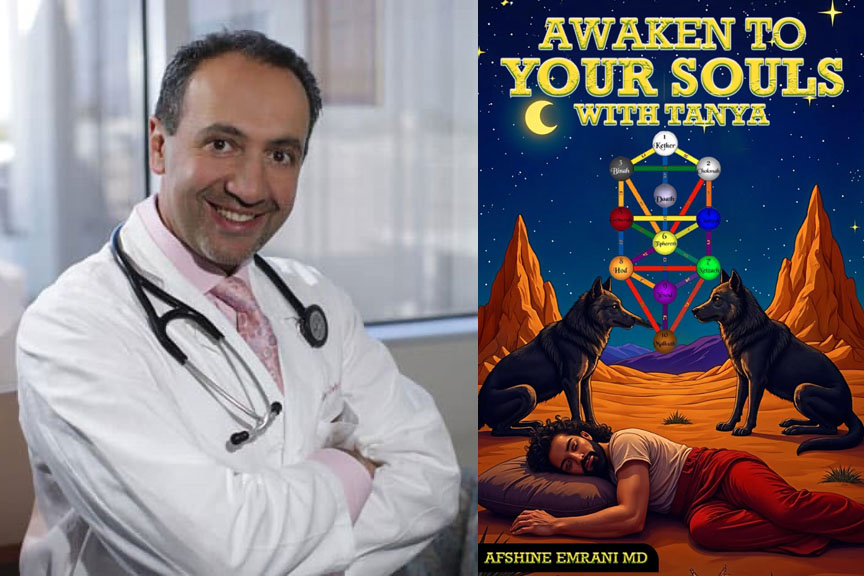
Now, the popular doctor has released “AWAKEN TO YOUR SOULS With Tanya,” a spiritual self-help book that dives into the mystical teachings of the Jewish text and how they can transform your life.

The book follows four characters, Noah, Maya, David, Rivka and Ezra, as they confront difficulties in their lives and face hard choices. For instance, should they expose fraud at their company, or stay silent and enrich themselves? Should they do the artwork they want, or stick to what the buyers request? Should they go to law school or pursue religious study in Israel instead? After some meetings with a mysterious man – who turns out to be Eliyahu Hanavi – they have to decide what path to take. 

As a doctor, Emrani has helped people through illness, anxiety, grief and depression.

“I’ve seen how many of us feel disconnected, from ourselves, from God and from anything deeper than the day-to-day grind,” he said. “I’ve also felt that way myself. This book came out of that pain, and from the search that followed. I wanted to write something that could speak to both the mind and the soul. Something that takes the deep spiritual wisdom of Judaism — especially from the Tanya — and makes it feel real, accessible and personal. Not abstract theory, but something you can actually live by when life gets hard.”

Emrani, an Iranian immigrant, grew up with faith, but then he lost it. 

“Between fleeing Iran during the revolution, and later battling depression during medical school, I started to feel very far from God,” he said. “I turned to science, psychology and philosophy, trying to make sense of things. But nothing fully answered the questions I was really asking: Why are we here? Why do we suffer? What’s the point of all this?”

“AWAKEN TO YOUR SOULS With Tanya” begins with the doctor’s personal story. He writes, “In the sterile halls of the hospital, where I was supposed to be learning to heal others, I found myself wounded by questions that no medical textbook could answer: Who am I, really, beneath all these roles and expectations? Why do we suffer? Is there a G-d watching all this pain, and if so, how can we understand His silence? Why does it feel like I’m constantly at war with myself, with different voices pulling me in opposite directions?”

Then, he figured out that the feeling of being broken was not the end. It was, in fact, the beginning. 

“Sometimes what feels like breaking is really the first sign of light entering through new spaces,” Emrani writes. “Sometimes what seems like a loss of certainty is really an invitation to discover a deeper kind of knowing.”

Eventually, after going through a deep depression, he found his way back to Judaism – but not the kind he knew as a child. He found something much deeper.

Eventually, after going through a deep depression, he found his way back to Judaism – but not the kind he knew as a child. He found something much deeper.

“That happened through Kabbalah and the Tanya,” he said. “These weren’t just spiritual ideas. They were frameworks for understanding the human experience. They helped me see my pain differently. They gave me a path forward. Judaism didn’t become perfect. But it became real.”

The book’s characters face relatable, everyday challenges that the readers have surely gone through as well. It inspires them to listen to the voice within like Emrani did and figure out their spiritual mission they need to pursue – not only to improve themselves, but also the world around them. For anyone struggling, the book offers an uplifting and encouraging message: Don’t be pressured by the forces around you. Instead, listen to your soul to find your way forward. 

“If you’ve ever felt like Judaism was about guilt, pressure or performance, or if you’ve turned to mindfulness or yoga or Eastern wisdom to find inner peace, I want to tell you: there’s something in your own tradition that can meet you where you are and take you even deeper,” he said. “We have this treasure, Tanya, Chassidut and Kabbalah, that most Jews have never been taught. That’s heartbreaking. And it’s also hopeful, because once people discover it, they realize, ‘I’ve been looking outside, but the truth was here all along.’ This book is an invitation to come home – not just to Judaism, but to your own soul.”

“AWAKEN TO YOUR SOULS With Tanya” is available on Amazon  

Doctor’s New Book Explores How Tanya Can Transform Your Life Read More »

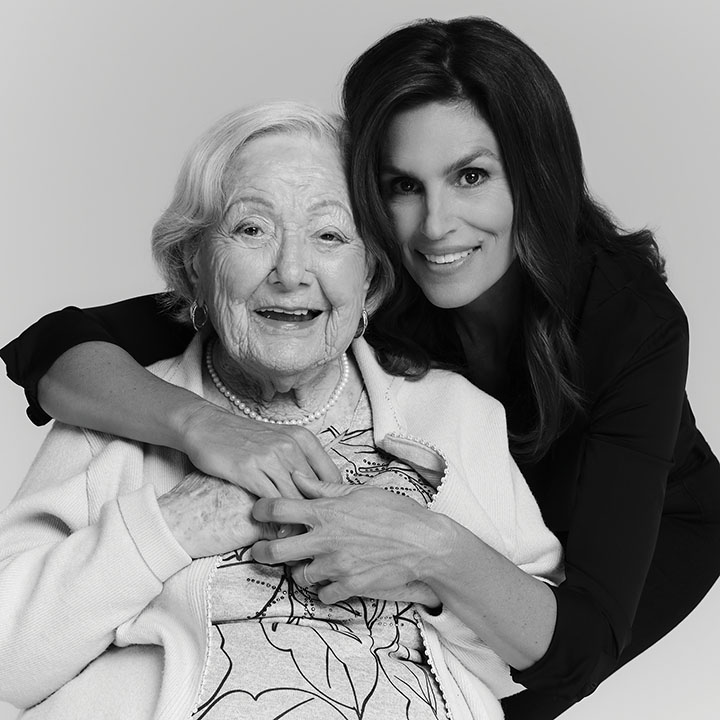
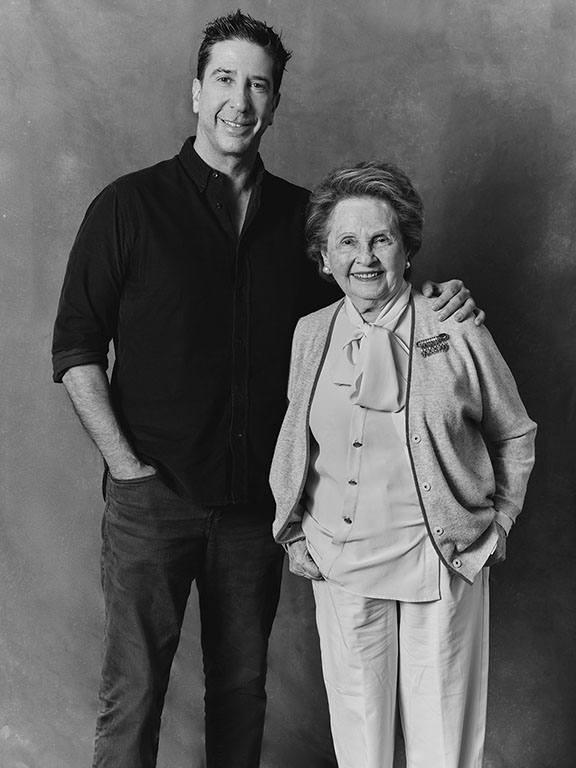
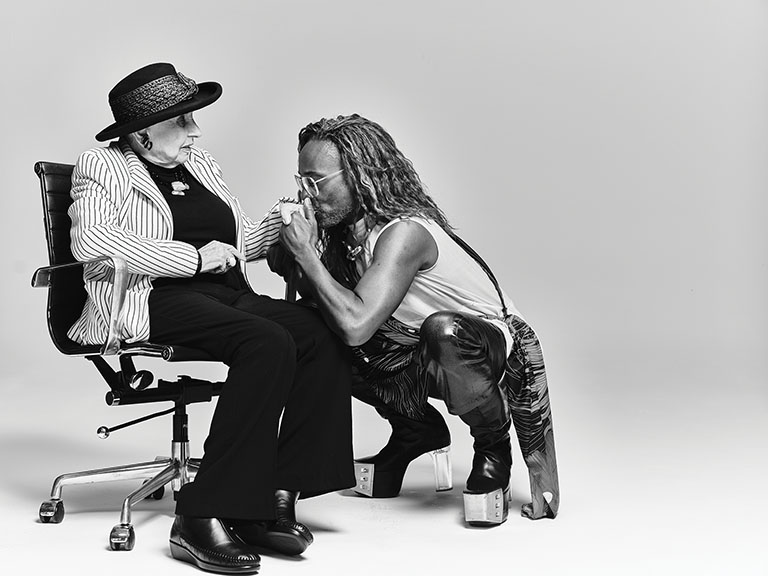
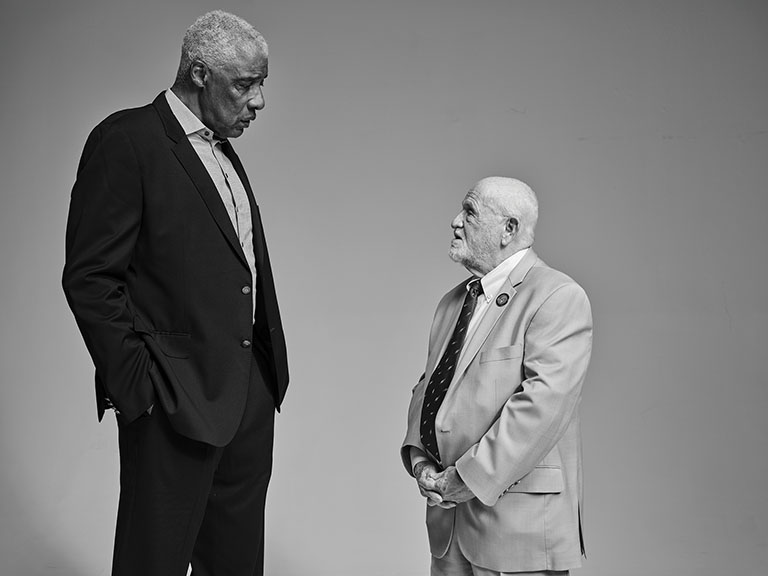
Borrowed Spotlight: Celebrities Share Their Spotlights With Holocaust Survivors

“Hate is survivable; indifference is not,” said acclaimed fashion photographer Bryce Thompson. “These Holocaust survivors stand as living testaments, urging us never to forget that empathy and action are often the difference between life and oblivion.”

Thompson, who was born in South Africa, initiated a project titled “Borrowed Spotlight,” featuring intimate portraits of 18 Holocaust survivors alongside celebrities. The basic idea: the celebrities are “lending” their spotlights to the last living generation of Holocaust survivors, with the goal of sharing their stories beyond our usual echo chambers. The project culminated into an elegant 320-page coffee table book, which can be ordered at borrowed-spotlight.com.

The three-year project was initially fueled by the antisemitism that Thomson, who is not Jewish, saw his friends and mother, who converted to Judaism, have faced in recent years. The project assumed greater relevance after Oct. 7. Coinciding with Yom HaShoah, the exhibit launched at the Detour Gallery in NYC on April 22. 

Thompson is known for his ability to capture intimate moments that highlight resilience and hope. His portraits showcase not only the unwavering strength of all the survivors but also his commitment to using art to spark change.

“Holocaust survivors are few and far between. Special people with special stories, and I really felt like they need to be told,” Thompson said at the opening. “Firsthand was really important to me. Hearing a story from someone who has told a story is not the same as sitting in a room with someone who lived through something.”

With a Foreword by Cindy Crawford, the book features David Schwimmer, Jennifer Garner, Chelsea Handler, Daniela Braga, Julius Erving, Barbara Corcoran, Wolf Blitzer, Sheryl Sandberg, and Kat Graham, among others. 

Cindy Crawford & Ella Mandel

“When I was asked to participate in this book, it was an instant yes. I’ve always believed in being part of the solution, not the problem,” Crawford writes in the foreword. “The opportunity to meet and converse with a Holocaust survivor felt deeply meaningful.” Crawford’s husband is Jewish, and their kids are being raised with an appreciation for both Christianity and Judaism.

One section of the book showcases notes written by some survivors about life, hope, and reflection. “I am writing this to urge the world to bring only positive thoughts to one another and let love flow,” writes Risa Igelfeld, 107.

The Holocaust survivors in the series include natives of Poland, Czechoslovakia, Hungary, Belgium, Romania and one man who was born in a Budapest ghetto basement during a bombing raid in 1944. The photographs feature survivors of the Warsaw Ghetto, Auschwitz and Bergen-Belsen concentration camps, and one person who survived 12 concentration camps. The photo series also highlights a survivor of the Farhud pogrom that targeted Jews in Baghdad, Iraq.

David Schwimmer & Elizabeth Wilf

“In these pairings, recognition is redirected, and the attention so often given to fame is instead used to illuminate history,” read a wall text at the exhibit. “The result is a series of intimate portraits and conversations where past and present collide, where silence is broken, and where remembrance becomes an act of defiance against forgetting.”

Jewish actress Kat Graham is photographed in the portrait series with Holocaust survivor Yetta Kane. At the exhibit opening, Graham said Thompson’s portraits capture “truth, resilience, and humanity.” Graham’s maternal grandmother fled Europe during the Holocaust. The photographs “build a bridge between generations; a conversation between memory and legacy.”

“This project is about remembrance but it’s also about responsibility,” she told the crowd. “We are the torchbearers now. It is up to us to keep these stories alive and to ensure that history is never forgotten. That the voices of survivors are not only heard, but felt. I invite you to see, to feel, and to carry these faces with you, long after you leave.”

“My grandmother, a Bergen-Belsen survivor, died earlier this year, so this project is especially close to my heart,” project producer Daniella Greenbaum told The Journal.

Billy Porter & Bella Rosenberg

There are currently more than 200,000 Holocaust survivors worldwide. According to a new report by the Conference on Jewish Material Claims Against Germany, nearly half of all Holocaust survivors will die within the next six years, while 70% will no longer be alive within 10 years. There are estimated to be more than 1,400 alive today who are over 100 years old.

And yet: 20% of people globally have never heard of the Holocaust; less than half recognize its historical accuracy; and more than 60% don’t know that 6 million Jews were murdered. In a world of fake “influencers,” this project is indeed a good use of fame.

Proceeds from the book sales will support Holocaust education. Proceeds from a private auction of select prints will benefit Selfhelp Community Services, which provides services and assistance to Holocaust survivors in New York and the United States Holocaust Memorial Museum.

Sadly, nothing is sacred in NYC anymore. The day after the opening, posters showing the portraits were ripped down, just like the hostage posters. Whatever moral clarity that was gained after the Holocaust and 9/11 is now gone. 

Julius Erving & Hershel Greenblatt

Still, nothing can diminish the profound elegance of the photos, the testimonies of the survivors, and the beautiful soul of the photographer. Thompson understands the historical and moral necessity of documenting the lives and testimonies of survivors — as well as the necessity in this superficial world of compiling them into an exquisite book. Memes can be deleted; videos erased; posters torn down. But this book remains: a project of respect, resilience, and hope.


Karen Lehrman Bloch is editor in chief of White Rose Magazine.

Borrowed Spotlight: Celebrities Share Their Spotlights With Holocaust Survivors Read More »

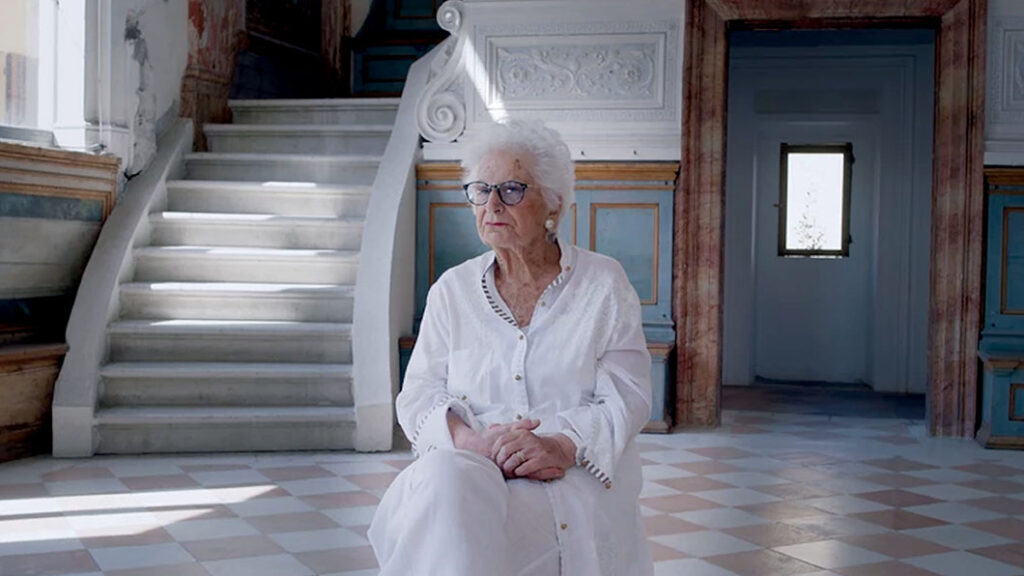
‘Liliana’ Documentary Tells the Story of Italy’s Only Holocaust Survivor Appointed ‘Senator for Life’

In Italy, the title “Senator for Life” is a rare honor, reserved for citizens whose contributions to the country are seen as extraordinary acts of public service. A new documentary gives audiences a totally different perspective on the term “Senator” from that in the United States, where the 100 Senators on Capitol Hill are often the source of cynicism, posturing, and squabbling.

This distinction is the focus of the new documentary “Liliana,” directed by Italian Ruggero Gabbaí. The film introduces audiences beyond Italy to why Holocaust survivor Liliana Segre’s voice carries such weight today.

“Segre is so famous in Italy because the [incumbent] President of the Country, Sergio Mattarella, decided to appoint her as a ‘Senator for Life,’ and after that, she became even more popular,” Gabbaí told The Journal after a screening of the documentary in Los Angeles. Segre was very well known for her testimony about the Holocaust but was not widely known to the general public as a political figure.

“Liliana” opens with a excerpt from the commanding speech Segre gave while accepting the Senator for Life honor in 2018: “So I’m particularly excited, considering the role on this day fate has in store for me. It is impossible for me not to feel a sort of dizziness —remembering that that same child on a day like this in 1938, dejected and lost, was forced by the racial laws to leave her primary school desk and that same person today finds herself by a strange fate at the most prestigious desk in the Senate,” Segre said.

Even before this year, Segre had been living under 24-hour security due to receiving hundreds of antisemitic threats each day and endless online vitriol. In June 2024, Segre publicly warned that the shifting political climate in Italy was emboldening extremists to openly express antisemitic views. “Will I have to be kicked out of my country again?” Segre wondered at the time. Despite the danger, Segre continued speaking out, recalling the rise of Fascism and warning against indifference to growing anti-democratic forces.

As recently as this week, after participating in Yom HaShoah ceremonies and Liberation Day events in Pesaro, Italy on April 25 — and following the national broadcast of “Liliana” — Segre faced another wave of online attacks. On April 27, Italy’s Democratic Party released a statement backing Segre, calling her “a beacon and an example against hatred and indifference.” Italian authorities are now investigating at least 86 new social media accounts tied to racist and antisemitic insults, with seven forced indictments already ordered. Judge Alberto Carboni ruled that accusing a Holocaust survivor of Nazism was “an insult to objective truth” and that online hate could not be treated as consequence-free. Meanwhile, Segre has continued public appearances, determined to uphold the memory of those lost, even as threats grow.

Born in Milan in 1930, Segre was expelled from public school at age eight under Benito Mussolini’s Racial Laws. At 13, after being rejected at the Swiss border while trying to escape, Segre was arrested and deported from Milan’s Platform 21 to Auschwitz. Upon arrival, Segre was tattooed with the number 75190 and forced into labor at an ammunition factory connected to the present-day Munich-based manufacturer Siemens. Segre survived multiple selections and death marches, eventually reaching Ravensbrück and Malchow concentration camps before liberation in May 1945. Of the 776 Italian children under age 14 who were deported to Auschwitz, only 25 survived. Segre was among them.

After the war, Segre returned to Milan and lived with maternal grandparents, the only surviving members of her family. In 1951, Segre married Alfredo Belli Paci, a former political prisoner who had been detained for resisting the Fascist regime.

For decades after the war, Segre lived in relative quiet, choosing not to speak publicly about the experiences of deportation, forced labor, torture and witnessing countless murders. In the 1990s, more than 40 years later, Segre broke her silence and began sharing testimony with students across Italy. The documentary “Liliana” draws from more than 10 hours of archival testimony recorded by Segre in 1995, interwoven with recent interviews with the director.

Later in the film, Segre is shown speaking again at the Italian Senate: “I felt this duty, but this exceptional role actually imposes on me. Not only to go every now and then — I would like to go a lot more — but my strengths are scarce, and therefore I struggle to leave my house and my habits. But above all, it gave me the possibility to leave a sign of my passage in the Senate with the commission which has my name, which is why I am now going to Rome because tomorrow there will be the first session of this new year. The commission is entitled against ‘incitement to hatred, against racism and antisemitism.’ I would like to call it ‘utopia,’” Segre said.

The urgency of sharing Segre’s story has only grown. Since the film’s release, Gabbaí said, “the situation got worse in terms of people trying to hate Segre or to speak bad about Segre.” He added that “Segre is the Simone Veil of Italy.

The documentary was screened at the Italian Cultural Institute in Westwood to commemorate International Holocaust Remembrance Day in February. Raffaella Valentini, Consul General of Italy in Los Angeles, spoke at the event, along with Consul for Public Diplomacy and Culture Yael Eini from the Israeli Consulate. After the screening, Gabbaí participated in a conversation moderated by Hilary Helstein, Director of the Los Angeles Jewish Film Festival. Notable attendees included Sassan Masserat, an Italian-American attorney honored in 2023 by the Italian Consulate as an Officer of the Order of the Italian Star for community efforts, and Siamak Kordestani, West Coast Director of ELNET-US, an organization working to strengthen ties between Europe and Israel, which opened an office in Italy in 2023.

“Tonight we come together to stand a clear and resolute message. We will not remain silent in the face of evil in any form.” – Raffaella Valentini, Consul General of Italy in Los Angeles

“Overseas is a strong sign of the relevance, our history, and for our future,” Valentini said. “Tonight we come together to stand a clear and resolute message. We will not remain silent in the face of evil in any form.”

“Liliana” is a fitting documentary to recognize and watch during the week of Yom HaShoah. Segre is still with us at age 94, yet still facing antisemitism and threats. With global attention again on Italy and the Vatican following the death of Pope Francis, the documentary helps amplify the lessons and scars of Italy’s only Holocaust survivor Senator for Life.

‘Liliana’ Documentary Tells the Story of Italy’s Only Holocaust Survivor Appointed ‘Senator for Life’ Read More »

Jewish Family Service LA Honors Holocaust Survivors with Yom HaShoah Tribute

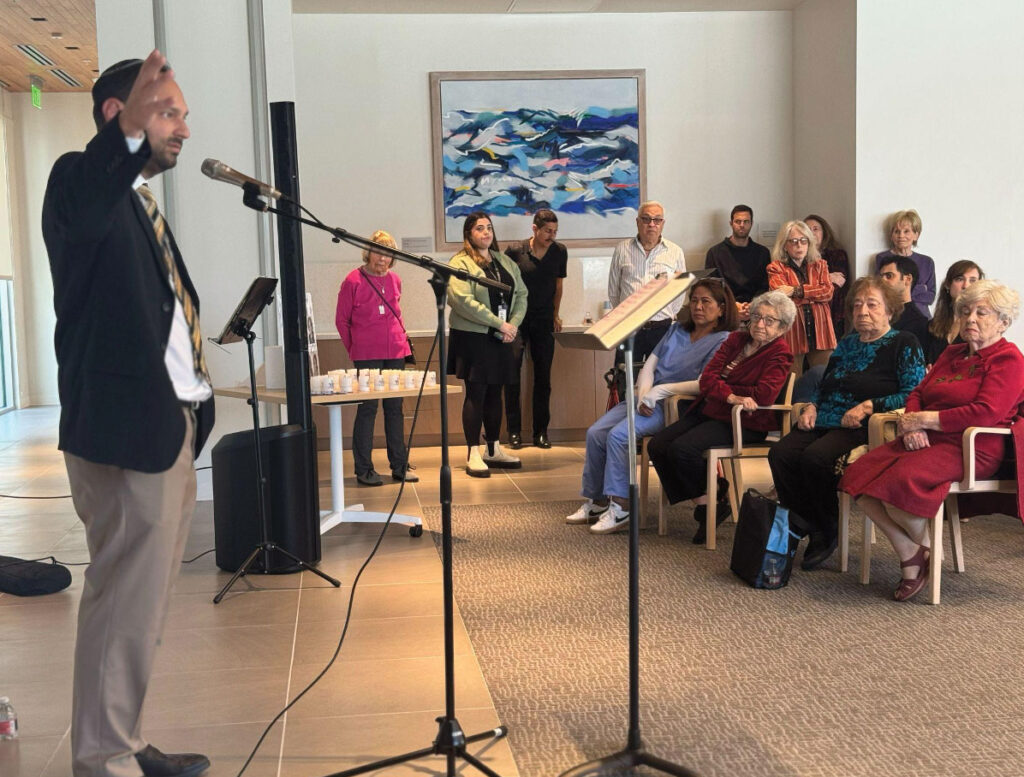
Dozens of Holocaust survivors gathered at the Jewish Family Service’s Gunther-Hirsh Community Center to observe Yom HaShoah, Holocaust Remembrance Day, at Café Europa, a weekly social gathering where survivors bond over music, food, and friendship. 

To honor the memory of the Café Europa attendees who passed away this year, Rabbi Nolan Lebovitz from Valley Beth Shalom gave a tribute and led the Jewish prayer V’hi Noam. Participants enjoyed live music, lit memorial candles and shared photographs of those who passed. 

“The courage, compassion and foresight that this generation exercised stands as an example for everything we need to embody today,” Rabbi Lebovitz said. “Their story is not a story that belongs behind glass in a museum. Their story belongs in the living, breathing world as a testimony to strength and resilience.” 

Jewish Family Service LA, the city’s oldest social service agency, plays a crucial role in ensuring that Holocaust survivors live with dignity, support and a sense of community. Year-round, JFSLA provides compassionate care to over 1,200 Holocaust survivors in the Los Angeles area. In addition to Café Europa, JFSLA offers comprehensive programming and support to survivors of the Holocaust, including case management and emergency financial assistance and other social services. 

“Café Europa is more than just a social activity. For many survivors, it’s a lifeline of memory and community,” said Susan Belgrade, senior director of Multipurpose and Senior Centers at JFSLA, who runs Café Europa. “On Yom HaShoah, we gather to honor the past, and to support and ensure survivors are seen, valued and cared for in the present.”

JFSLA helps survivors with caregiver assistance, social worker support and emergency financial needs. Approximately 80% of the Holocaust survivors that JFSLA serves are low-income and rely on Medi-Cal. Programs like Café Europa combat isolation, poverty and the challenges of aging by fostering belonging and community.

Jewish Family Service LA Honors Holocaust Survivors with Yom HaShoah Tribute Read More »

In Covenant — Together

On April 4, 1969, one year to the day after the assassination of Dr. Martin Luther King Jr., a group of Jews and African Americans gathered in the basement of a church in Washington, D.C. to celebrate Passover together. This evening was the beginning of a powerful tradition, the Freedom Seder.

The first Freedom Seder wove together the themes of our ancient ancestors’ journey from bondage to freedom with those of modern fights for liberation: the civil rights and women’s equality movements.

Over five decades later, we recognize that while progress has been made, there is still much work to be done to achieve true freedom; true equality. This is work that Blacks and Jews (which includes Jews of Color) must do together.

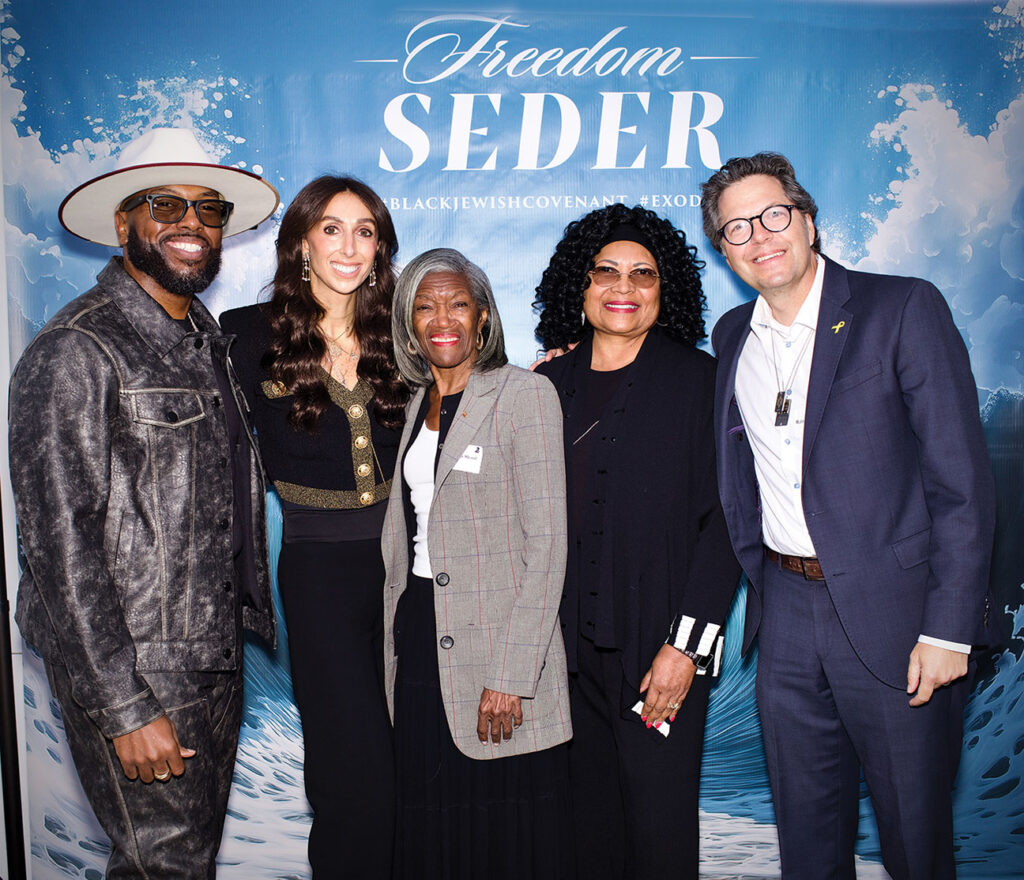
To that end, last week, our communities organized an extraordinary evening dedicated to continuing the work. Over 200 people gathered at Stephen Wise Temple in Los Angeles for a Freedom Seder hosted in partnership with Van Jones, Amanda Berman, Greater Zion Church of Compton, Stephen Wise Temple, and Deborah Marcus. 

Exploring the symbols and rituals of the Passover seder gave us a shared language for telling our stories both personal and communal. We also had the opportunity to dance together, to sing together, and to pray together. We connected our traditions in deep ways as we reflected upon Passover and Easter as holy days, central to each of our traditions.

The heart of the evening focused on renewing our covenantal relationship — the commitments and promises that we make to each other. As Van Jones has emphasized, shared dedication to this important work is not only to our specific communities’ mutual benefit, it has been, and is still, critically important to the development of our nation. As he powerfully states: “The reason this country is a democracy at all is because Black and Jewish people have loved each other, and helped each other, and supported each other, and stood up for each other.”  

“The reason this country is a democracy at all is because Black and Jewish people have loved each other, and helped each other, and supported each other, and stood up for each other.” – Van Jones

In our shared tradition, there is a Hebrew word for that love, help, and support: berit.  A berit is a covenant; a sacred and enduring promise. An oath. An eternal commitment which we honor throughout both the good times and the challenging ones as well.

This covenant is actualized — lived — through the obligations to one another which we take upon ourselves. It is born of a promise to stand together and support each other as we work for freedom and fight for our shared human dignity. Our communities are each all too familiar with the pains of oppression and bondage, xenophobia and hate, racism and antisemitism. 

There are powerful forces–both algorithmic and political–that are attempting to pull us apart. But we will not allow ourselves to be divided or to be used as pawns by others.

While we are humble enough to admit that we are sometimes unsure of the path forward, our faith reminds us that our journey is most decidedly a shared one.

As individuals and as leaders of our communities, we vow–in covenant–to, in the months and years ahead, continue doing the work together; encouraging and facilitating conversations with the intent of continuously learning from one another’s diverse backgrounds and perspectives. 

We know that we are not the first to recognize the challenge or embrace the possibilities of our partnership. Throughout the millennia, long before that historic evening in 1969, our paths have crossed and our stories have intersected. Today, as much as — or maybe even more so than — ever, we need each other as allies, as friends, and as brothers and sisters. We need to love, help, and support one another through times of pain such as the present one. When we and our fellow marginalized communities feel abandoned and alone, we must be able to lean on one another all the more.  

The Passover Seder reminds us powerfully that in every generation, it is our responsibility to see ourselves as if we personally went forth from Egypt. Each and every one of us must imagine the pain of bondage so that we can live one of the most powerful — and most difficult — commandments of the Bible: “You must love the stranger for you were strangers in the land of Egypt.” (Deuteronomy 10:19)

With an understanding of what it means to journey from slavery to freedom, and an acknowledgment that — having once been strangers ourselves — we now carry an obligation to all who feel estranged today, we embrace this berit, this covenant, and pledge ourselves to continue the work of liberation together.

For a meaningful opportunity to participate in this covenant of responsibility, join us on July 19 for a special project in Compton to physically protect and defend our neighbor’s community as though it were our own. For more information on how to get involved, please visit werepair.org/communities/los-angeles/

In Covenant — Together Read More »

Recipes for Your Cinco de Mayo Celebration

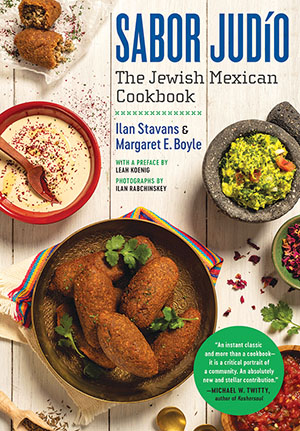
Ilan Stavans and Margaret Boyle wrote “Sabor Judío: The Jewish Mexican Cookbook” as a way to share stories, recipes and their love of their two culinary cultures.

The award-winning, internationally known Jewish Mexican writers and foodies spent a decade gathering material for this book, which features 100 deeply personal recipes. Stavans, who is originally from Mexico, is the Lewis-Sebring Professor of Humanities and Latin American and Latino Culture at Amherst College and the publisher of Restless Books. Boyle is director of Latin American, Caribbean and Latinx Studies at Bowdoin College and associate professor of Romance Languages and Literatures.
To celebrate Cinco de Mayo, Stavans and Boyle offered a taste of what’s inside “Sabor Judío:” Pomegranate Margarita, Mango Jicama Salad and Pollo Luis de Santángel (named for Luis de Santángel, a prominent converso in Renaissance Spain).

“Cinco de Mayo is a joyful day of liberation for Mexicans — kind of Passover — when the invading French army was defeated in the Battle of Puebla in 1862,” Stavans told The Journal. “There’s palpable pride on the streets, a sense that the country resisted outside forces to forge its own destiny.”

Stavans explained that, among Latinos in the United States, the holiday is often decontextualized; an excuse to have a piñata party, eat guacamole and drink Coronitas (small, seven-ounce bottles of beer).

“It has lost its national background: people simply celebrate the celebration,” he said. “Still, a fiesta is a fiesta and Latinos, oh yes, know how to throw one.”

Added Boyle, “These dishes let us taste and celebrate Jewish-Mexican cultures.”

Learn more about Stavans, Boyle and “Sabor Judío” on episode 77 of Taste Buds with Deb.

Pomegranate Margarita

The cocktail has become a ubiquitous presence at fiestas and other occasions, not to say a best-selling drink at bars and restaurants. It is Mexican, Mexican American, and, thanks to Mexican Jews, a luscious combination of traditions.

One way for La Comunidad to prepare it is with pomegranate. In Sephardic households, pomegranate is enjoyed on the second day of Rosh Hashanah as a symbol of righteousness, knowledge and wisdom in the new year. Throwing in a handful of pomegranate seeds invokes the sense of new beginning that Rosh Hashanah invokes.

Other ways to prepare it include incorporating pineapple, peach, and watermelon. Another combination called mojarita, part margarita and part mojito, mixes tequila and mint. There are spicy margaritas that contain not only a halo of salt or sugar but chile piquín. Ilan has been present at parties where that piquant rim is described as “the trace of a yarmulke.”

Serves 2

Preparation time: 2 minutes

8 ounces unsweetened pomegranate juice

4 Tbsp fresh lime juice

3 ounces tequila

1 ounce orange liqueur

For Serving

Coarse salt

Ice

Lime wedges

Pomegranate seeds

  1. Place some coarse salt on a small plate. Rub the rim of each glass with lime and dip in the salt.
  1. Combine the drink ingredients in a cocktail shaker, add ice, and shake vigorously, then strain into the prepared glass. Garnish with pomegranate seeds and a lime wedge.

***

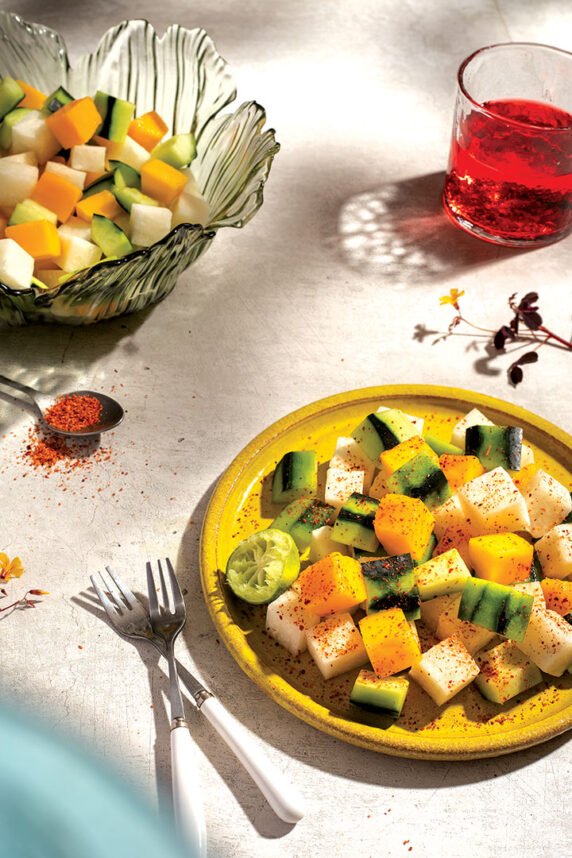
Mango Jicama Salad

Photo by Ilan Rabchinskey

The two stars of this salad are iconic of Margaret’s early food associations in Mexico City and across Los Angeles: peeled and sliced mango and jicama often sold on sticks or in plastic cups and covered in chile and lime. Heaping portions of this salad strike the perfect balance between casual and celebratory, sweet and spicy.

Serves 2

Preparation time: 10 minutes, plus 1 hour resting

2 medium yellow mangos, peeled and cut into ½-inch cubes

2 medium jicamas, peeled and cut into ½-inch cubes

2 small cucumbers, peeled, seeds removed, and cut into ½-inch cubes

½ cup finely chopped fresh cilantro

4 Tbsp fresh lime juice

¼ tsp chili powder or Tajín

½ teaspoon kosher salt

In a mixing bowl, combine the mangos, jicamas, cucumbers, cilantro, lime juice, chili powder, and salt. Toss well, cover, and refrigerate for at least 1 hour before serving. Adjust salt and chili powder to taste.

***

Pollo Luis de Santángel

Little of the diet of Luis de Santángel is known. However, the chicken dish below is named in honor of him, as a sign of gratitude for his effort to open new doors in the Jewish Diaspora. Why chicken in particular isn’t known either. Fowl was a fixture of European food, but not necessarily of Jewish cuisine. Quail, pheasant, and partridge are common in the Spanish diet. Chicken and hen were favored by the nobility. Ilan tried the Pollo Luis de Santángel at the home of a Lebanese Jewish family in Mexico City with whom he learned Ladino in the early 1980s. This variation is likely a fusion produced by entrepreneurial immigrants. It includes annatto, a tropical orange-red condiment derived from the achiote tree that is believed to have originated in Mexico and Brazil. The flavor is sweet, peppery, and nutty.

Serves 4-6

Preparation time: 30 minutes, plus marinating

Cooking time: 35 minutes

⅓ cup extra-virgin olive oil

⅓ cup fresh orange juice

2 Tbsp fresh lime juice

1 small white onion, roughly chopped 4 medium garlic cloves, peeled and roughly chopped

2 tablespoons ground annatto (achiote)

1 Tbsp kosher salt

1 Tbsp ground cumin

2 teaspoons ground coriander

2 teaspoons smoked paprika

2 teaspoons dried oregano

½ teaspoon freshly ground black pepper

½ teaspoon ground chipotle chile

4 pounds bone-in chicken thighs or drumsticks, trimmed of excess skin

Vegetable oil, for greasing

  1. In a large bowl, whisk together the olive oil, orange juice, lime juice, onion, garlic, annatto, salt, cumin, coriander, paprika, oregano, black pepper, and chipotle chile. Add the chicken pieces and turn to coat. Cover the bowl and refrigerate, turning the bowl once or twice, for at least 4 hours and up to overnight. Before cooking, allow the chicken to sit at room temperature for about 30 minutes.
  1. Heat the oven to 400°F. Line 2 large baking sheets with aluminum foil, then brush with a little oil. Arrange the chicken pieces on the baking sheets in a single layer, removing and discarding the garlic and onion. Bake until the internal temperature reaches 165°F on a digital thermometer, 30–35 minutes. Remove from the oven and let cool slightly before serving.
  1. Alternately, heat a grill to medium high and brush the grates with a little oil. Add the chicken to the grill, skin-side down, and grill, flipping once halfway through, until the internal temperature reaches 165°F on a digital thermometer, 10–15 minutes total. Remove from the grill and let cool slightly before serving.

Recipes for Your Cinco de Mayo Celebration Read More »

A Mexican Fiesta for Cinco de Mayo

I have to express my gratitude. The nanny that looked after my children was Nena, the most loving and wonderful person. She became part of our family. When my children were grown, she looked after my mother with tender care and devotion. Now she takes care of my father. Nena is like a sister to me and is beloved by my children and my nieces and nephews.

Living in Los Angeles, I learned to cook Mexican-style beef and chicken, black beans and refried beans and all varieties of salsas and salads.

Together, Nena and I would make taquitos, a rolled-up tortilla stuffed with chicken or mashed potatoes that is then fried to crispy perfection. We would make yummy cheese enchiladas. And we would make extra cheesy chile rellenos — poblano chiles stuffed with cheese, dipped into a batter and fried then smothered in a red salsa. I loved the simple garnishes used in Mexican cuisine — shredded lettuce and cabbage, grilled onions and hot chili peppers.  

Very often, we would have pozole, a traditional Mexican soup made with hominy and meat or chicken. (Nena referred to hominy as maiz. Hominy undergoes a process of removing the hull which softens the kernels of corn, making them easier to digest and much more nutritious.)

When the kids got older, Mexican food was their absolute favorite, and mine, too. It reminded me so much of the Sephardic food I grew up with. The red rice, the beans, the slowly stewed meat and chicken. The abundance of fresh vegetables and the spicy depths of flavor.

On Shavuot, it became a family custom to have a Mexican dairy meal with enchiladas, rice, beans and salads.

Over the years, whenever I have to entertain a sizable crowd or a birthday party or a graduation celebration, I go with a Mexican fiesta. It’s so easy to decorate with colorful tablecloths along with bouquets of fuchsia, orange and yellow flowers.

I love that the menu makes it easy to feed a big crowd. I have lots of soft tortillas on hand. I make a big pot of shredded chicken with a green enchilada sauce and a big pot of shredded beef in a red enchilada chili sauce. I make lots of refried pinto beans, white rice and a big grilled corn salad. And I serve homemade guacamole, a variety of salsas, corn and flour tortillas and crispy corn chips. Everyone helps themselves and makes their own tacos and everyone always goes back for a refill because you can never get enough of this delicious food.

Margaritas and mojitos, bottles of cerveza (beer) with wedges of lime and pitchers of homemade lemonade make the perfect pairing for this meal.

Sharon and I are very lucky to be part of a close circle of friends. It helps that our husbands and our kids like each other too. Sometimes we won’t see each other for months because everyone is busy and it’s hard to coordinate schedules. When we were long overdue in celebrating a few of our friends birthdays, Sharon and I hosted everyone in my back yard with a special candlelit Mexican dinner party. The food was good, the air was perfect and it was so nice to just laugh and be together.

—Rachel

As a young girl in Sydney, Australia, I was gifted a graphic t-shirt that featured the starry lights of Los Angeles. Printed underneath were the words City of Angels and that’s when I realized that Angeles referred to angels.

When my family moved here, I was very struck by the Spanish and Mexican influences on this city and state. The food. The street names. The architecture. It was a radical shift from the very British colonial style I had grown up with and was used to.

Living here, I began to learn Spanish and I learned to love Mexican food. I loved the crispy taco shells filled with flavorful ground beef, tomato salsa and fresh iceberg lettuce. I loved refried beans and red rice and sweet corn. I loved that every party I ever attended was guaranteed to have crispy tortilla chips and a big bowl of guacamole (with a prominently featured avocado pit in the middle to prevent browning).

As an adult, I find it fascinating that some of the most indispensable ingredients in the kitchen are foods indigenous to Mexico — tomatoes, avocados, sweet potatoes, beans, squash, corn, chili peppers, cacao and vanilla.

How could we live without any single one of those foods? I know that all of them feature in my recipes. Though I will say that I’m especially obsessed with avocado. There is no salad or sandwich or sushi roll that isn’t enhanced by the nutty, earthy, creamy flavor of a just ripe avocado! I always have a stockpile of hard avocados in my refrigerator and one or two (or three or four) avocados ripening in my fruit bowl.

With Cinco de Mayo (and summer) coming up, Rachel and I wanted to inspire you with these wonderfully simple, bright and healthful recipes for pulled beef and a grilled corn salad.

—Sharon

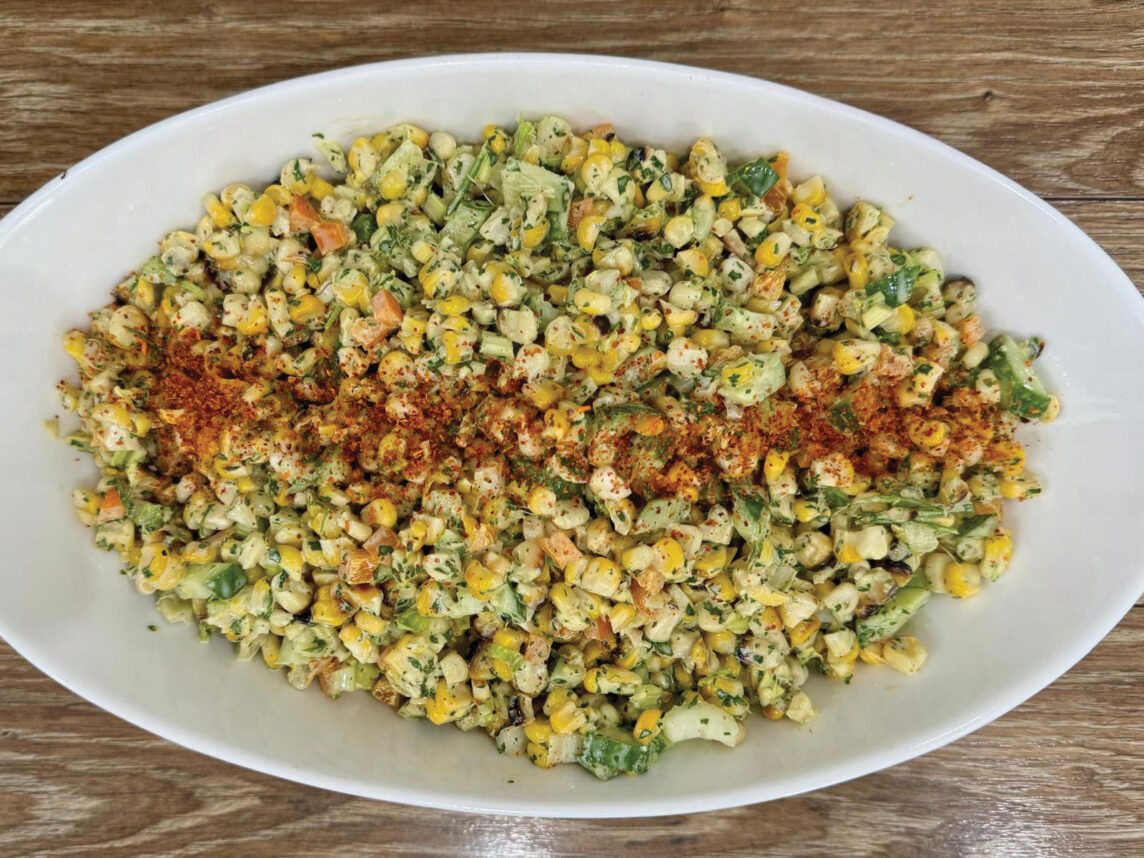
Grilled Corn Salad Recipe

You know spring is in the air when you start to see fresh corn on the cob in the markets. I’m so excited to start making grilled corn salads with herby cilantro and a creamy dressing of mayo, lime and tajin. I’m also fond of making an Israeli salad and tossing in grilled corn and avocado.

– Rachel

6 ears of corn

3 Roma tomatoes, cut in a small dice

3 Persian cucumbers, cut in a small dice

1 Tbsp avocado oil

1 cup mayonnaise

3-4 juicy limes

1 bunch chopped cilantro

1 Tbsp Tajin seasoning

Salt to taste

Remove the husks and silks from the corn. Grill on high heat, turning every 3 to 4 minutes until lightly charred on all sides. Remove from the heat and let stand until cool enough to handle.

Place the corn on a cutting board and cut the kernels from the cob. Place in a large bowl.

Add the tomatoes and cucumbers.

In a food processor or blender, combine mayonnaise, lime juice, half the chopped cilantro and tajin. Taste and adjust the seasonings by adding salt or lime juice, as necessary.

Add the dressing and the rest of the chopped cilantro to the grilled corn and mix until the dressing is fully combined.

Place in a serving bowl and top with an additional sprinkling of Tajin.

Serve with shredded beef and warm tortillas and enjoy!

 Store leftover salad in an airtight container in the refrigerator for up to 3 days.

Mexican Style Shredded Beef 

3lbs boneless chuck roast or brisket

1 large purple onion, sliced 

4 large garlic cloves

1 tsp salt

1 tsp ground black pepper

2 limes, juiced 

1 28oz can mild red enchilada sauce

1 Tbsp brown sugar, optional 

1 bunch roughly chopped cilantro, divided 

Place onion on the bottom of crock pot, then put the roast on top. Add garlic cloves. 

Sprinkle salt and pepper all over the roast. 

Pour the lime juice over the roast, then add the enchilada sauce and brown sugar. 

Place half the chopped cilantro into the pot.

Cover and cook on low setting for 8 hours. If roast is still tough after 8 hours, simply recover and cook for another 1 to 2 hours, until the meat is fork tender. If using an instant pot, use pressure cook mode and set to 2 hours

Remove the roast from the crockpot and place on a cutting board or baking sheet and shred the beef with two forks. 

Place the shredded beef back in the pot and mix with the broth and onions. 

Add the remaining cilantro. 

Storage:

Allow shredded beef to cool completely and then transfer to an airtight food storage container.  Refrigerate for 3-4 days or freeze for up to 3 months.


Sharon Gomperts and Rachel Emquies Sheff have been friends since high school. The Sephardic Spice Girls project has grown from their collaboration on events for the Sephardic Educational Center in Jerusalem. Follow them
on Instagram @sephardicspicegirls and on Facebook at Sephardic Spice SEC Food. Website sephardicspicegirls.com/full-recipes.

A Mexican Fiesta for Cinco de Mayo Read More »