fbpx

March 14, 2025

How My School Shapes My Jewish Identity: A Trip to Uganda

On November 6th, I embarked on a life-changing journey to Uganda with six other students from de Toledo High School. Our mission was to work alongside Semei Kakungulu High School students, sharing knowledge and learning together about spirulina. This remarkable superfood, packed with protein and nutrients, holds immense potential to combat hunger.

Exploring spirulina’s potential to fight malnutrition was not just fascinating; it reinforced my belief in science as a tool for global impact. What stayed with me most was learning from a professional from the Congo who joined our group. He cultivates spirulina in his community to support those facing malnutrition. Watching him share his knowledge with us and the students was a powerful reminder of how science can transform lives.
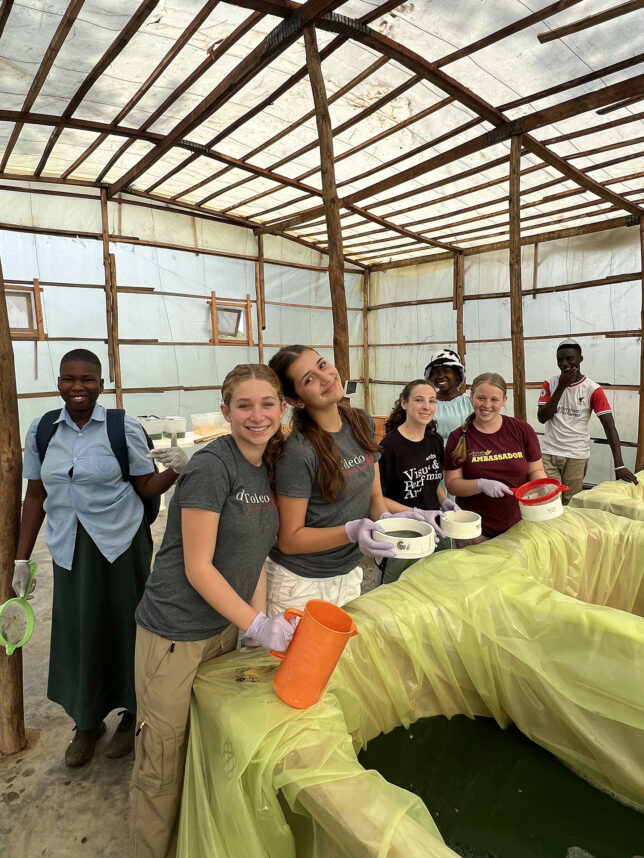
Photo by Lior Sibony

This initiative was supported by de Toledo’s greenhouse, which was built a few years ago to assist the Abayudaya community. We worked in the greenhouse for a week alongside the community members. Uganda is home to approximately 2,500 Jews, and our final destination was the Abayudaya community—the Jews of Uganda—near Mbale, about six hours from the capital.

My journey to Uganda was an extension of the values de Toledo High School has instilled in me. My school emphasizes active participation in the global Jewish community through initiatives like the Spirulina program and cultural exchanges. This past year, we have welcomed students from Turkey and Israel into our home. Through these programs, I have the opportunity to share what it means to be a Jew here in Los Angeles and learn what it means to be a Jew in other parts of the world. My school doesn’t just teach Judaism—it inspires students to live it, deepening our connection to our heritage while embracing the diversity within our faith.

While participating in Shabbat services with the Abayudaya community, I realized how deeply my school has shaped my understanding of Judaism—not just as a religion but as a culture and as an integral part of my identity. This trip transformed me by providing moments of clarity and inspiring me to lead with gratitude, purpose and responsibility, values that have shaped who I am today.

During our visit, we met Ruth, a 30-year-old community member whose life had a transformative experience with Spirulina. She shared that after a year of using it, she was able to eat large amounts of food—even those she didn’t particularly enjoy—leading to gain weight, improve skin health, and most importantly, regain her health after years of illness. Ruth shared that Spirulina had truly saved her life, an impact that we could see firsthand as we learned from her and the other members of the community.

As we concluded our work with the Abayudaya, the Shabbat experience became a focal point of our visit. This extraordinary community welcomed us warmly for Shabbat, and their hospitality filled me with a deep sense of pride in my Jewish identity.

Standing in the synagogue for Shabbat in Africa surrounded by their congregants, I was struck by how universal Judaism really is. As a Jew from California, I seamlessly participated in the services nearly identical to those at my home synagogue, Temple Beth Am. During the dvar Torah, a visiting rabbi from Kansas reflected on the week’s Torah portion about the destruction of the city of Sodom and Gomorrah, highlighting there are no righteous people. He contrasted this with the Abayudaya, describing them as virtuous people. I wholeheartedly couldn’t agree more.

What moved me most was that every member of this community had chosen the path of being Jewish. Watching Black Jews read from the Torah and lead services was inspirational. Their pride and faith in their Jewish identity was simply beautiful. Listening to this community sing familiar prayers I grew up with, alongside beautiful new tunes I had never heard before, was a powerful reminder that, despite our diverse backgrounds, we all belong to one global Jewish family.

After services, we engaged in a lively two-hour Torah discussion. The enthusiasm was energetic—questions and ideas bounced around like a championship tennis match, and no one wanted the game to end. Then came snack time, which turned out to be a highlight. As I handed out treats, I couldn’t help but laugh when some kids, promising to share, darted to corners with arms full of goodies, devouring them in seconds! Their amazement at the sheer abundance of food was heartwarming, and bringing those treats to them was a mitzvah.

But the biggest mitzvah was the one they gave me. I realized how lucky I am to have been born into my family and raised in a country, city and household that offers opportunities many can only dream of. I have always known I am blessed, but this experience deepened my sense of gratitude. In conversations with the Ugandans, I recognized that my life is so different from theirs that they cannot even grasp it—so much so that some of my realities are beyond their comprehension. They long for the opportunities I have to go to Europe, live in America, or, most importantly, visit our holy land, Israel. Every Jew I spoke with, of all ages, dreams of going to Israel.

Though that dream may currently appear remote, the Abaduydaya Jewish community are undoubtedly strong Zionists, living as proud Jews in a country where they make up just 0.004% of the population. As I write this during the celebration of Hanukkah, I am reminded of the light that shines within the Ugandan community, a light of resilience, hope and inspiration. Their spirit encourages me to experience the miracles of our holiday, including the hope for the safe return of the hostages. The Ugandans have inspired me to carry this light forward and share it with the world.

Am Yisrael chai.


Eleanor Samuel is a student at deToledo High School, West Hills, California.


How My School Shapes My Jewish Identity: A Trip to Uganda Read More »
Wicked, Frankenstein and the State of Gaza: What Makes a Monster

Eerie music plays as a fanged Dracula rises from his coffin. A clawed wolf man howls at a luminescent moon. Reptilian, scaled Godzilla demolishes New York City with a deafening roar.

Monsters haunt our imaginations; they send chills down our spines that instill fear, dread, and hatred.

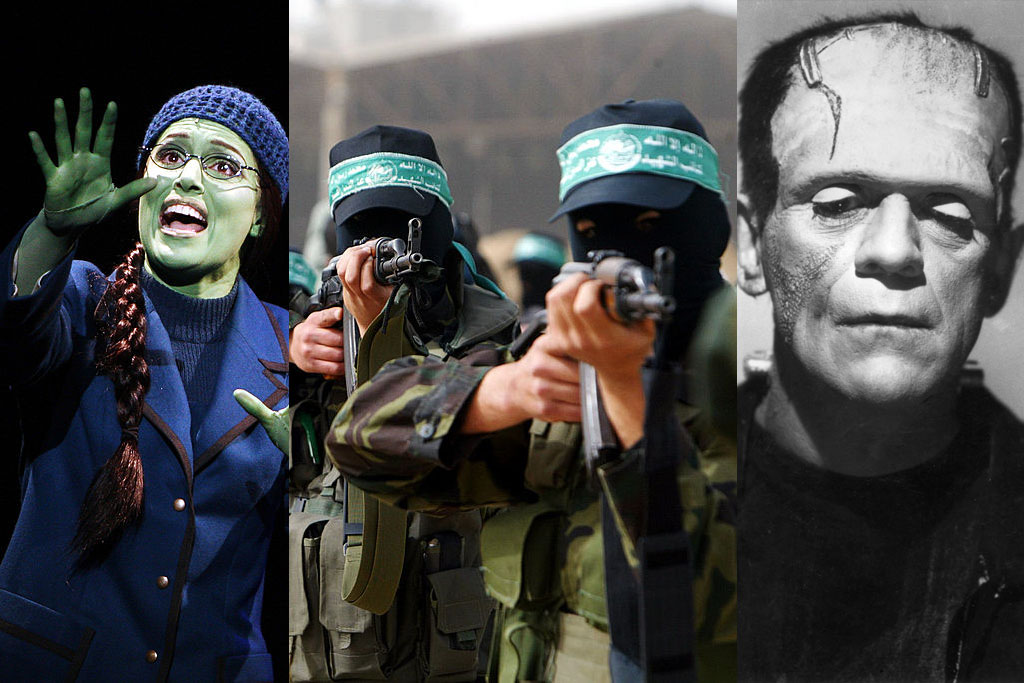
With the release, and rapid popularity of the 2024 film “Wicked” (based on the Broadway show of the same name), the paradigmatic monster, the Wicked Witch of the West, was put in the spotlight. Her green-skinned deformities, nightmarish cackle, and twisted features which instilled fear into any who watched the classic 1939 film, were transformed from monster to misunderstood. The 2024 film told the story of Elphaba Thropp, a woman who, due to her external differences, was unjustly ostracized and oppressed. Due to the cruel isolation and rejection from society, the woman who was full of love, life, and compassion became the cruel, heartless, hideous monster.

As Dana Fox, the co-writer of the film, told the BBC: Wicked continues to be relevant because “certain people are still othered in our society, or made to be the bad guys so other people can gain power.”

“Wicked” explains that the Wicked Witch of the West was not the monster, she could not be blamed for what she became, society bears responsibility, society created a monster, and only it is to blame.

Similar claims are made regarding the Israel-Palestine conflict. Claims are made that the villainy of Hamas is not in a vacuum, that Hamas are monsters just as the Wicked Witch of the West is a monster: their villainy is due to the oppression of Israel. Hamas is oppressed and othered by Israel, and their terror is a reaction to the oppression. Exactly like Elphaba, Israel has created a monster and they are responsible for what follows.

However, Mary Shelley’s quintessential monster novel “Frankenstein” tells a different story of monsters and responsibility.

Frankenstein’s monster is oppressed, shunned, and ostracized solely because of his external differences, and due to the cruel isolation and rejection from society, the being who was created full of love, life, and compassion becomes a cruel, heartless, hideous monster.

Frankenstein’s monster, as a reaction to his oppression, enters a life of terrorism and destruction, vowing to destroy his creator. Yet, when he is at last successful in destroying Victor Frankenstein, the monster laments what he has become. He recognizes that his actions have degraded him beneath the lowest animal, and that he can never justify what he has done. He recognizes that while it is true that society played a role in pushing him down a path of terror, villainy, and destruction, he is still to blame for his actions; Frankenstein’s monster recognizes that only he is responsible for his transformation to monster.

“But it is true that I am a wretch. I have murdered the lovely and the helpless, I have strangled the innocent as they slept and grasped to death his throat who never injured me or any other living thing… You hate me, but your abhorrence cannot equal that with which I regard myself.”

Although he was ostracized, shunned, and oppressed, and although society helped incubate his villainy, there is still none to blame but himself. Society is not the villain, Frankenstein’s monster, the Wicked Witch of the West, Hamas, bear responsibility for choosing a path of villainy, their actions cannot be pinned on society.

It is irrelevant whether Hamas was not created in a vacuum, and it is irrelevant whether Israel is partially at fault for the formation of the terror organization, since that cannot justify the terror and destruction that they choose to commit. People who “strangled the innocent as they slept and grasped to death his throat who never injured [any] living thing” cannot claim innocence. Society can be responsible for the creation of a monster, but that does not at all justify a path of evil, terror and destruction. Frankenstein’s monster, the quintessential monster, was a villain and a monster and could not justify his terror and destruction due to his oppression, and that is no different from Hamas.


 Noam Schechter is a Straus Scholar at Yeshiva University.

Wicked, Frankenstein and the State of Gaza: What Makes a Monster Read More »

Columbia’s $400M Wake-Up Call

For years, antisemitism has been quietly festering in higher education. What was once confined to radical student groups has now infected faculty, administration, and campus culture itself. Jewish students have been harassed, intimidated, and physically attacked—all while universities issued empty statements and ignored their own policies.

But now, the game has changed. The Trump Administration has sent a $400 million message to Columbia University: enough is enough.

A Campus Hostile to Jews

Since October 7, antisemitic incidents at Columbia have exploded. Jewish students have been spit on, shoved, and told to “go back to Poland.” Protests have turned violent, and faculty members have openly defended Hamas while Jewish students are left fearing for their safety.

In one particularly disturbing case, the Columbia Law School chapter of the National Lawyers Guild publicly justified Hamas’s massacre of Israeli civilians, calling it “necessary resistance.” At the same time, Columbia’s administration allowed student groups like Students for Justice in Palestine (SJP) and Jewish Voice for Peace (JVP) to disrupt campus life, intimidate Jewish students, and spread anti-Israel propaganda with zero consequences.

Columbia even tolerated calls for the destruction of Israel at protests on its own campus. And while universities are usually quick to investigate speech they deem offensive, when it comes to Jewish students, the same urgency is nowhere to be found.

BDS and the Institutionalization of Hate

Columbia’s antisemitism problem isn’t new. The Boycott, Divestment, and Sanctions (BDS) movement has been active on campus for years, fueling anti-Israel activism that frequently crosses the line into outright bigotry. In 2020, Columbia’s student body voted in favor of a referendum calling on the university to divest from companies that do business with Israel. While Columbia rejected the resolution, the hostile climate it created left Jewish students feeling alienated and targeted.

The rise of “anti-Zionist” rhetoric on campus has only made matters worse. Columbia faculty members have signed letters defending Hamas, and professors have openly called for Israel’s destruction. The message is clear: if you’re a Jewish student who supports Israel, you are not welcome here.

Federal Dollars, Federal Standards

The Trump administration has now taken the extraordinary step of revoking $400 million in federal grants and contracts from Columbia. This is not a symbolic move, but a direct response to the university’s failure to protect its Jewish students and enforce basic campus safety.

And it’s not just Columbia. The Department of Education has opened investigations into multiple universities, including the University of Pennsylvania, Johns Hopkins University, and Northwestern, over similar concerns about antisemitic discrimination. The message is clear: if universities refuse to protect Jewish students, they will pay the price.

For too long, elite institutions have prioritized radical activism over student safety. They have excused antisemitism, emboldened hate groups, and allowed their campuses to become breeding grounds for extremism. But now, for the first time in decades, they are facing real consequences.

Columbia is the first school to lose funding, but chances are, it won’t be the last. Universities now have a choice: will they take a stand against antisemitism, or will they wait until the money runs out?


Andrew Lawrence is a graduate of the George Washington University and founder of the Georgia Jewish Heritage Fund. He resides in Savannah, Georgia.

Columbia’s $400M Wake-Up Call Read More »

Defending Democracy: The Case for Defunding Columbia

Campus protests have long shaped America’s cultural and political landscape. From women’s suffrage to the civil rights movement, students have been catalysts for justice. The Vietnam War protests, though controversial, were rooted in democratic ideals.

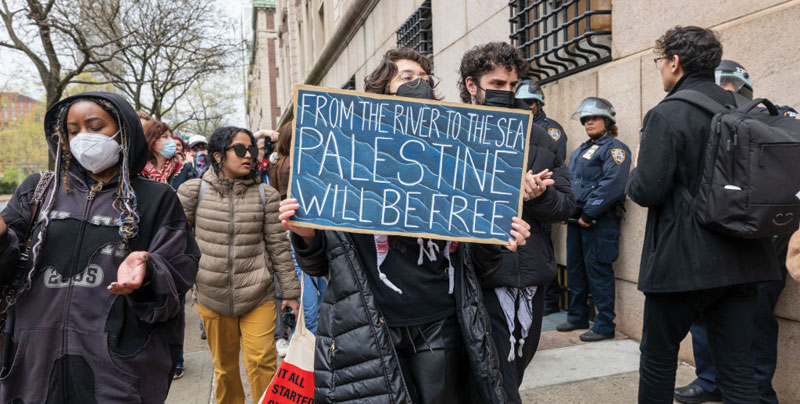
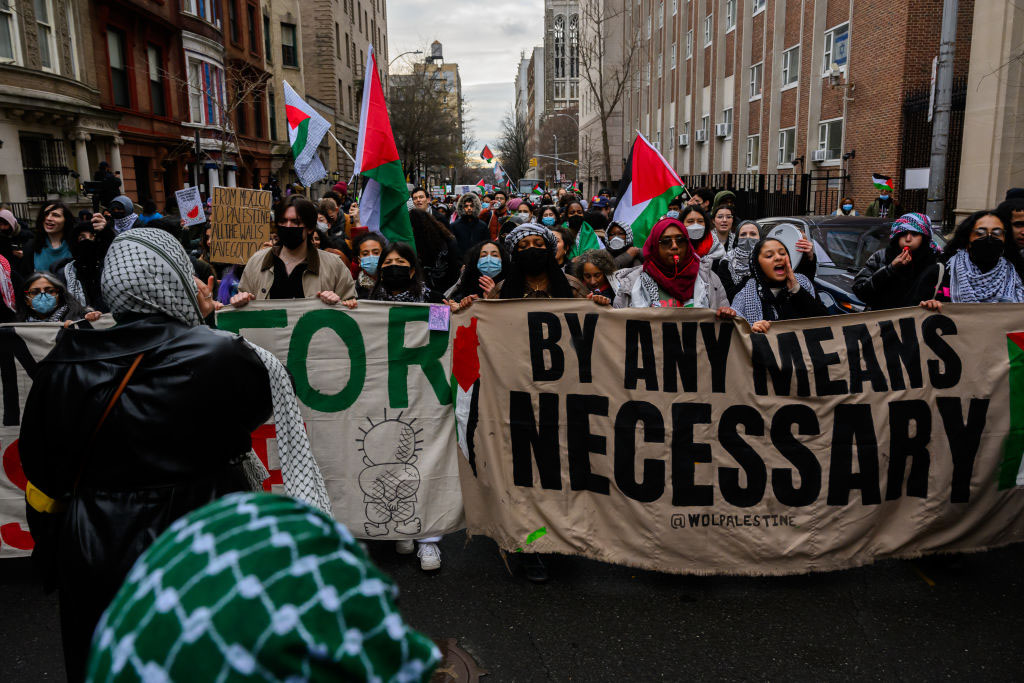
But the anti-Israel protests that have engulfed universities since Hamas’s brutal October 7, 2023, attacks against Israel are of a different nature entirely. They have not been peaceful or democratic. Instead, they have been fueled by hate, intimidation, and violence—threatening the very freedoms their organizers claim to defend.

Now, President Trump’s decision to revoke $400 million in federal funding from Columbia University is being met with outrage. But it is a necessary step to preserve the integrity of American institutions. This is not an attack on free speech—it is a defense of it, ensuring that campuses do not become breeding grounds for extremism and threats against Jewish students or any other group.

It is crucial to distinguish between genuine advocacy and the hate-fueled spectacles that have hijacked campuses. These protests have not been about peaceful dissent or constructive dialogue. Instead, they have been defined by violent mobs storming buildings, professors legitimizing bigotry, and students openly glorifying terrorism. References to the Holocaust have been invoked carelessly, while symbols of hate have tainted these gatherings.

What may have begun as a democratic exercise in critiquing Israeli policies has devolved into rallies steeped in the rhetoric of genocide and annihilation. Chants of “Globalize the Intifada” and banners depicting the Israeli flag in flames are now commonplace. At Columbia, student leader Mahmoud Khalil even referred to Hamas’s October 7 attacks as “Operation Al-Aqsa Flood,” the very term Hamas uses to celebrate the slaughter of innocent civilians.

Hate speech is protected under the First Amendment, but only to a point. Legal precedent (Brandenburg v. Ohio, 1969; Virginia v. Black, 2003) makes it clear: speech that incites violence, constitutes a true threat, or amounts to harassment is not protected. These campus demonstrations check every one of those boxes. Universities, charged with shaping the next generation, have utterly failed to maintain a safe learning environment.

The most alarming aspect of these protests is how they have imported not just the Middle Eastern conflict, but the Middle Eastern tradition to persecute its Jews. Jewish students have been harassed, physically blocked from classrooms, and subjected to open calls for Israel’s destruction… in the heart of New York. Barnard College’s historic Milbank Hall was stormed by masked demonstrators, and many Jewish students now fear attending class or simply walking through their own campuses.

The consequences are chilling. According to the Anti-Defamation League, antisemitic incidents on U.S. campuses surged by 321% following these protests, while the country as a whole saw a 200% spike. This hatred is not confined to academia—it is spilling into the streets, poisoning public discourse, and normalizing violence.

Universities should be sanctuaries of knowledge, not arenas for mob rule. They should encourage rigorous debate, not embolden extremism. Yet elite institutions—Columbia, Harvard, Penn, Berkeley, and even my own alma mater, McGill—have allowed radical ideology to flourish under the guise of “academic freedom.”

Some claim that cutting federal funding violates free speech. But what is truly unconstitutional and un-American is allowing a minority group to be targeted while administrators look the other way. Free speech is fundamental, but it is not absolute. It does not extend to incitement, threats, or harassment.

By revoking funding, Trump is sending a clear message: institutions that abandon democratic values will no longer be rewarded with taxpayer dollars. This is not an attack on education—it is a defense of it.

History has repeatedly shown that when antisemitism is left unchecked, it does not remain confined to Jewish communities—it spreads like wildfire. The Jewish people have long been the canaries in the coal mine; when hate against them flourishes, broader societal decay follows.

These protests did not champion peace or human rights. They did not call for the release of hostages or demand democratic reform within Palestinian leadership. Instead, they glorified destruction, deepened racial and religious divides, and undermined the very freedoms that define America.

If universities refuse to act, then it is up to leaders like Trump to step in. The future of democracy depends on it.


Margaux Chetrit is a writer, public speaker and entrepreneur.  She is a former parliamentary intern in Israel’s Knesset. From 2008-2015, she served at the Consulate General of Israel in Montreal.

Defending Democracy: The Case for Defunding Columbia Read More »

The History of Hate in ‘October 8’ Documentary

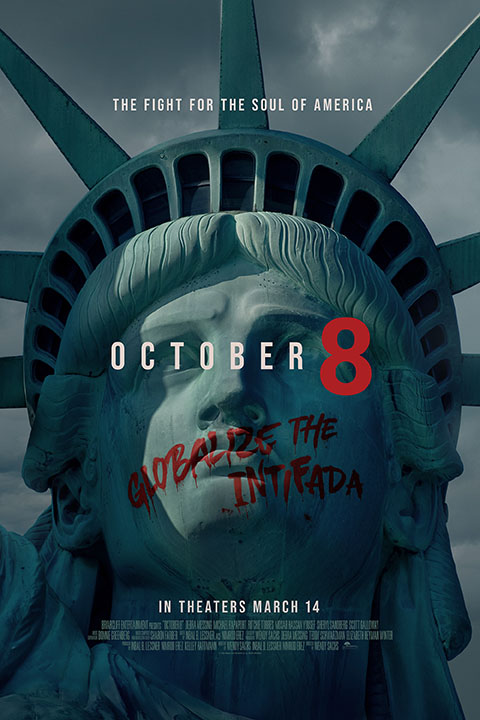
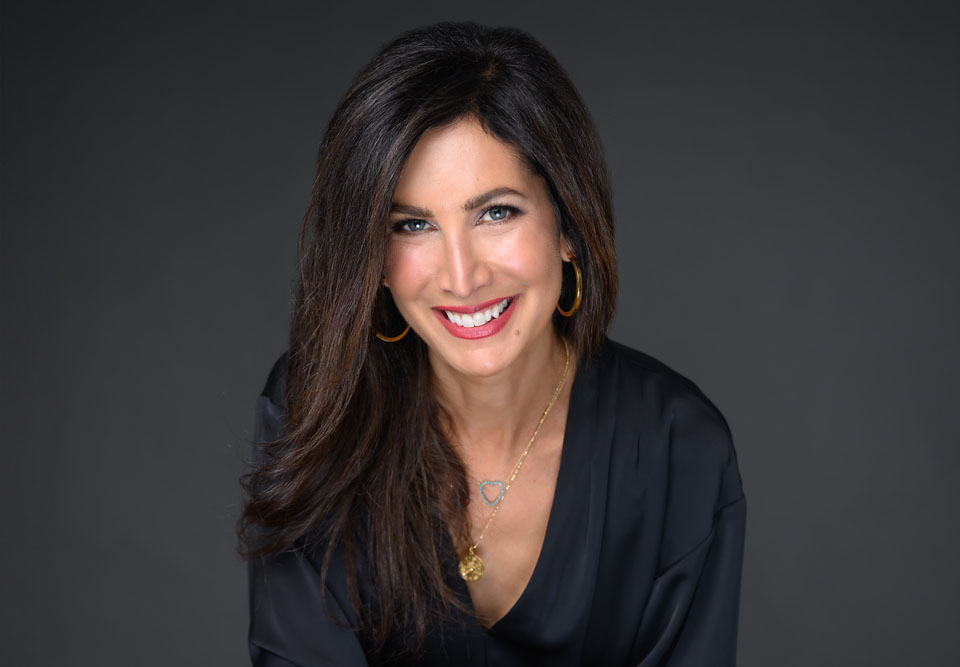
On October 8, the day after Hamas massacred innocent Israelis and kidnapped babies and elderly people to Gaza, director Wendy Sachs knew she was going to make a documentary. She began working on her film, “October 8” (originally titled “October H8th”). Two weeks later, she already had the treatment for the film.

At the time, she didn’t know how events would unfold—she had no idea that college students would be targeted on campuses, that Jewish people would face threats on the streets and that the world at large would turn a blind eye, or even worse, portray Israel as the aggressor and not the victim.
She was told that no production or distribution company would take the film and that no theater in the U.S. would screen it. However, she didn’t give up. She recruited Emmy-winning actress and activist Debra Messing as executive producer and started interviewing people. Among the 80 interviews she conducted, 40 of which made the final cut, were actor-comedian Michael Rapaport, Mosab Hassan Yousef (son of Hamas’s founder), former Meta COO Sheryl Sandberg, Congressman Ritchie Torres, Sen. Kirsten Gillibrand of New York, U.S. Ambassador Deborah Lipstadt and college students Tessa Veksler and Talia Khan, among others.

Once she completed the film, finding a distributor was no easy task. She heard “no” again and again from agencies that didn’t want anything to do with a film about Israel. But she proved them wrong. Briarcliff Entertainment took the film and is distributing it in 100 theaters across the U.S., including Regal Cinemas and AMC. The film was released March 14.

“Every agency I went to, they said, ‘We love the film and what you are doing, it’s great, but sorry, we are not going to represent you,’” Sachs said in an interview with the Journal. “And then I got to Tom Ortenberg, the head of Briarcliff, who really loved the project. He realized it’s a good story and it’s a quality and premium documentary. I would argue it’s the best documentary out there today.”

Sachs (“Surge,” “Land of The Giants: Titans of Tech”) believes “October 8” to be her best and most important project. The film explores what happened after October 7—the rise of antisemitism on college campuses, the silence of university faculties, the fear Jewish students have for their own safety and why so many students joined Students for Justice in Palestine (SJP). What she uncovered was nothing short of shocking.

Wendy Sachs (Photo courtesy Briarcliff Entertainment)

It will come as no surprise that SJP is funded by terror organizations, but how they infiltrated American campuses has long been a question. Hamas had effectively acted as a PR company, strategizing how to accomplish just that. In 1993, 25 Hamas leaders met at a Marriott airport hotel in Philadelphia. The FBI wiretapped the room, recording every word they said. There, they concocted a plan to infiltrate American campuses and the media hotel in Philadelphia. They determined that the most effective approach was to use key words in their propaganda that would resonate with their audience, including “apartheid” and “oppression.”

“That was mind-blowing to me and everyone else on our team,” said Sachs about the recording she reveals in the film. “I had some sort of foundational knowledge, but I had no idea how sophisticated they are—how they are really being financed from abroad, how they are connected to the Muslim Brotherhood, to Hamas and terror organizations—and you can really trace it back to Iran.”

Viewers should be prepared to feel frustrated, shocked, annoyed and disgusted by what Jewish students have endured since October 7. True, much of it has already played out on social media and in the news, but there is nothing like seeing it all packed into a well-crafted 100-minute film.

“We had around 150 hours of footage. Cutting it down to 100 minutes was a challenge, but I had an incredible group of editors,” said Sachs. “We wanted the pace of the film to be fast—not too academic or boring—just constantly moving. That was the heavy lift.”

One assistant professor at Columbia University, Shai Davidai, is seen in one scene on the film, on campus during a pro-Israel rally. “I’ve been asked in the past few days, ‘Aren’t you afraid to speak up? You’re putting your job on the line,’” he said. “You got it all wrong. I’m not afraid to speak up—I’m speaking up because I’m afraid.”

Perhaps the most frustrating part of the documentary is the silence of individuals and groups who are supposed to stand for women’s rights, children and victims of terrorist attacks.

Journalist and author Douglas Murray recalled what happened in northern Nigeria in 2014 when the Islamic terrorist group Boko Haram abducted 276 mostly Christian female students. There was an outcry around the world. However, “when Israeli children were abducted, silence in the world,” said Murray.

Messing expressed her disappointment in Hollywood. “No one was speaking about the hostages,” she said. “I thought that there would be an army of activists and celebrities and I felt completely betrayed.”

Actor-comedian Michael Rapaport, who has been a vocal advocate since October 7, participated in a rally supporting Israel and noticed that he was one of only two celebrities present. “I know where I am on the pecking order. There are bigger names [and] the fact that I was the big Hollywood name—it’s f**king disappointing,” he told Sachs.

Rapaport pointed out that people in the entertainment industry stand up for many causes, such as Black Lives Matter, the war in Ukraine, and LGBTQ rights, but were unwilling to speak about the terror attack on innocent Israelis and the hostages in Gaza. Their silence was deafening.

Sachs plans to take the film to college campuses. She has already screened it at the University of Washington, Northwestern, Duke and UT Austin. She views the film as an educational tool for both school administrators and students.

“We are going to be creating curriculum and are working with companies that specialize in developing educational materials that will align with the film and be taught in schools,” she said. “Kids don’t know much. I don’t mean that in a disrespectful way, but people don’t understand what antisemitism is and I think that’s such a big fundamental takeaway of the film—to help young people understand.”

“October 8” had no investors; it was entirely funded by Jewish philanthropists who recognized its importance. These were people who had never given money to a film before. Sachs met them through friends of friends, on Zoom or by making phone calls. They were all eager to help.

“This is my life’s work. I put everything I’ve got into it. I couldn’t have done it without the Jewish community.”

“They felt it was urgent to document this moment and show the world what antisemitism looks like today. This is my life’s work. I put everything I’ve got into it. I couldn’t have done it without the Jewish community. I have an army of support behind me.”

The History of Hate in ‘October 8’ Documentary Read More »