fbpx

December 19, 2024

Levin’s Marshmallow Test

Are you sure you want all the details? It’s no problem for me to lay them out for you. But remember the details are often no more than a smoke screen to hide a heartbreak. And what we see in Israel today is no less than a heartbreak. A country devastated by war, possibly on the cusp of victory, which suddenly turns on itself to revive an internal battle for no apparent reason other than ego, vengeance, and … did we say ego?

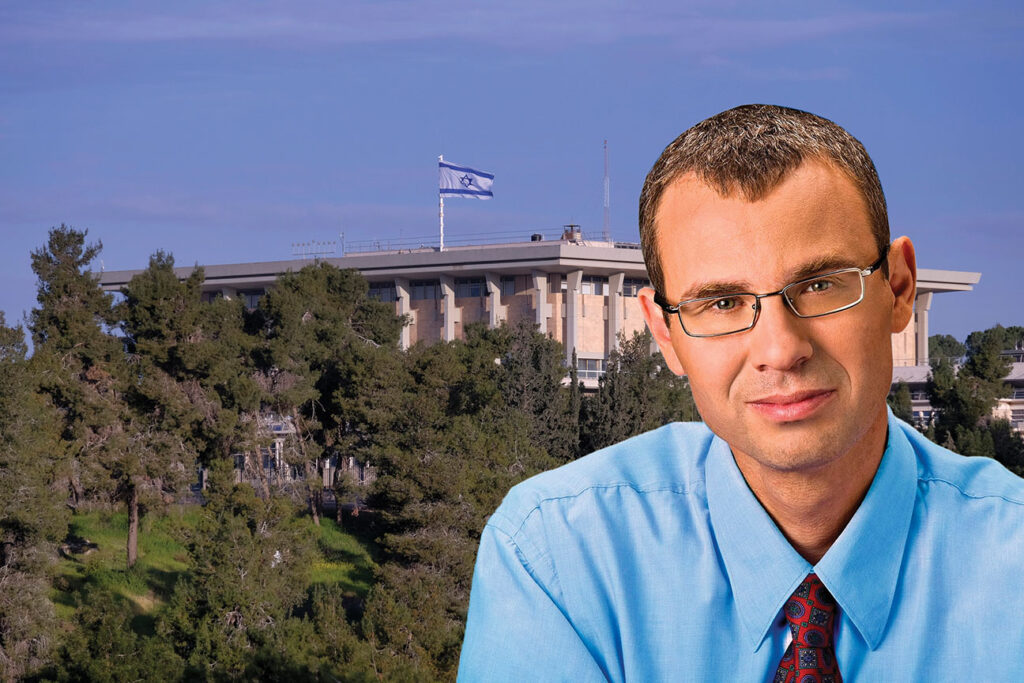
Details: Justice Minister Yariv Levin is the father of the so-called judicial reform from two years ago. For almost a year now he was relatively quiet. Israel was busy fighting a war. But he never truly gave up on his dream of reforming a system that he believes is an obstacle to the ability of Israel’s current coalition to rule. And now he’s back. Maybe that’s a good sign – maybe this means that the war is truly almost over. Or maybe a bad sign – that Levin never truly internalized his personal responsibility to Israel‘s internal turmoil. Like the child in the famous psychological marshmallow test, he was able to wait for only five or six minutes, but no more. He must eat his treat. Now!

More details: Levin wanted to appoint his own preferred candidate to become the chief justice. This runs contrary to an established custom according to which the chief justice is the longest serving member of the court. The justices and the opposition did not let Levin get his wish and break the accepted norm. So, Levin, using his raw bureaucratic power didn’t let them – meaning us – meaning Israel – have a chief justice. If he doesn’t get the one he wants, there will be no chief justice.

The high court intervened. Levin was told that he must proceed. Levin used more tricks to postpone the elevation of one of the justices, the one he truly dislikes, to chief justice. The court intervened again. It set a deadline: January 16. By then Levin must let the committee appoint a chief justice.

These are details and there’s more of them. Levin proposed a compromise. He’d let the committee appoint the chief in return for a division of three marshmallows. One justice for him, one for his opponents and one – well, it’s truly another one for him. Some on Israel’s right believe that the compromise is fair. Maybe it is. The justices do not accept it. Some on Israel’s right believe that the justices are just being stubborn. Maybe they are. Details. Behind them, Israel’s heartbreak. Another round of a full-fledged fight between the government and the legal system. Another round of the full-fledged fight between opposing factions of Israel’s society. Another round – while hostages are still in captivity. Another round – while soldiers still pay with their lives on the battlefield. Another round – as many towns and villages only begin the long process of rebuilding. 

Is Levin right to demand a legal reform at this time? Does he offer an acceptable compromise that the other side rejects? The justice minister would like Israelis to have this debate about details. He wants them to talk about the unimportant things. He wants them to think that these are the important things. And it’s easy to fall for this argument because the nature of the relations between the government and the legal system is indeed important. Because some of the complaints Levin and his friends raise against the current system are worthy of a serious discussion. 

So why am I saying these details are unimportant? Because importance is never a fixed value. Importance must always be considered within a framework of some hierarchy. Everything is important, except some things are more important and some less so. When Levin demands to have his marshmallow now, like an impatient child, he fails to recognize the hierarchy of importance. Winning the war is important. Having solidarity is important. Rebuilding is important. Judicial reform can wait. Judicial reform is not urgent – but Levin is impatient.

Like an impatient child, Levin fails to recognize the hierarchy of importance. Winning the war is important. Having solidarity is important.  Rebuilding is important. Judicial reform can wait. Judicial reform is not urgent – but Levin is impatient.

That would not be a problem had the prime minister told him to stop playing with fire. He doesn’t. At least, not yet. Maybe Netanyahu wants the same thing Levin does. Maybe he doesn’t want to pick a fight with Levin. Maybe he’s too busy. Maybe he didn’t yet make up his mind. The result is another round of bickering. The closer we get to Jan. 16 the louder the debate will become. The closer we get to Jan. 16, unless there’s compromise, the more dangerous the situation will become. 

Did I say dangerous? Levin threatens to rebuff the court’s order, and that would be the seminal event that Israel managed to somehow avoid since the beginning of the judicial reform tsunami – a constitutional crisis. And that’s dangerous, war or no war.

Something I wrote in Hebrew

Here is what I wrote when Israel did badly on literacy tests of the OECD:

An Israel that is not literate will first of all be a less interesting place. Less culturally vibrant, less intellectually stimulating, less sophisticated and intelligent. But let’s say that the cultural arena doesn’t interest you. Even then you should be worried. Because an Israel that is not literate will be a place that finds it more difficult to maintain a sufficient level of excellence. And without scientific and technological excellence, it will be difficult for it to maintain a high standard of living. And without a high standard of living it will be even more difficult for it to maintain scientific and technological excellence. And without all these, which are the basis of a strong economy, it will not be easy to have a strong army, which is an expensive thing. And without a strong army — well, what will happen without a strong army doesn’t need much explaining. 

A week’s numbers

Ultra-Orthodox Israelis say no to military service, and it’s not because of their need for specific condition. Offer these conditions, and most still say no (JPPI survey released earlier this week).

Screenshot


A reader’s response

Gil Evenzur: “I don’t think it’s reasonable to ask a PM to be on a witness stand for so long during a time of war.” Response: I tend to agree. But I’m not sure there’s an acceptable way to avoid it.


Shmuel Rosner is senior political editor. For more analysis of Israeli and international politics, visit Rosner’s Domain at jewishjournal.com/rosnersdomain.

Levin’s Marshmallow Test Read More »

We Prevail

In last week’s Torah portion, the Jewish people earn a new name: Yisrael. Here’s the context:

Jacob was left alone. And a figure wrestled with him until the break of dawn. When he saw that he had not prevailed against him, he wrenched Jacob’s hip at its socket, so that the socket of his hip was strained as he wrestled with him. Then he said, “Let me go, for dawn is breaking.” But he answered, “I will not let you go, unless you bless me.” Said the other, “What is your name?” He replied, “Jacob.” Said he, “Your name shall no longer be Jacob, but Yisrael, for you have striven with beings divine and human, and have prevailed.” (Genesis 32:25-29)

It’s a bit of clever word play; to be “Yisrael” is to strive or struggle or wrestle (“sariti”) with God and prevail.

A 20th-century commentator, Rabbi Zalman Sorotzkin (1881-1966), notices something peculiar about the end of the episode. In his middle-of-the-night wrestling match with the stranger (maybe a person, maybe an angel), Jacob is injured rather seriously. His hip is strained and as a result, he will walk with a limp for the rest of his life. Yet the text says that he has “prevailed.” Rabbi Sorotzkin notices this detail and finds both wisdom and a touch of dark comedy in it, saying:

“One could say, in a somewhat humorous way, that this is a typical Jewish ‘success story.’ When robbers attack a Jew and he is left ‘only’ with a permanent limp, it is considered a victory since he was neither killed nor was he forced to kill.”

There is a deep truth to this teaching as well as a beautiful Jewish value at its core: Not only do we want ourselves not to be harmed, we equally do not want to cause harm to others. We don’t want to be the targets of Jew-hatred. We don’t want to have to defend ourselves. A permanent limp seems to be, according to this text, a type of Jewish victory. It could have been worse! We could have been killed or forced to harm another!

But if we are to be completely honest with ourselves, this dark humor is painful and even a bit pathetic. Of course, we don’t want to have to defend ourselves from antisemitism. We don’t want to have the need to respond to those who slander us online or, God forbid, try to harm us physically. But if we are forced to do so, prevailing must mean more than “not dying.” Prevailing must mean that those who seek to destroy us are deterred from ever doing so again. 

And while we should, of course, never seek the harm of another, let’s not be naive. Sometimes the only way to defend ourselves and those we love is to take actions that result in the harm of those who seek to destroy us. And in defending ourselves and our values, bystanders might be swept up in the violence as well and we will have to deal with the fact that our actions resulted in the harm of the innocent.  

While we should, of course, never seek the harm of another, let’s not be naive. Sometimes the only way to defend ourselves and those we love is to take actions that result in the harm of those who seek to destroy us.

It is a core value of our tradition to never seek the harm of another (known as pikuach nefesh) and yet, at the same time, to protect ourselves and those we love and thereby truly prevail, we must, sometimes, take defensive action against those who seek to destroy us. Action which, tragically, does cause harm. Additionally, in protecting ourselves, bystanders can be swept up in the violence as well and we have to deal with the fact that our actions resulted in the harm of the innocent.

I read those verses differently than Rabbi Sorotzkin. 

Jacob doesn’t come looking for a fight. He is set upon while he is sleeping. He fights back, refusing to quit. Yes, he is injured in the process, but Jacob won’t let his attacker go until his attacker blesses him. Jacob gains a new name which he and his descendants wear with pride. 

Our prayer is that we would not need to fight. But when we must prevail, we remember who we are. We remember our name.

We are Yisrael. We are willing to wrestle, willing to fight when necessary, even if it means walking away with a limp.


Rabbi Yoshi Zweiback is the Senior Rabbi of Stephen Wise Temple in Los Angeles, California.

We Prevail Read More »

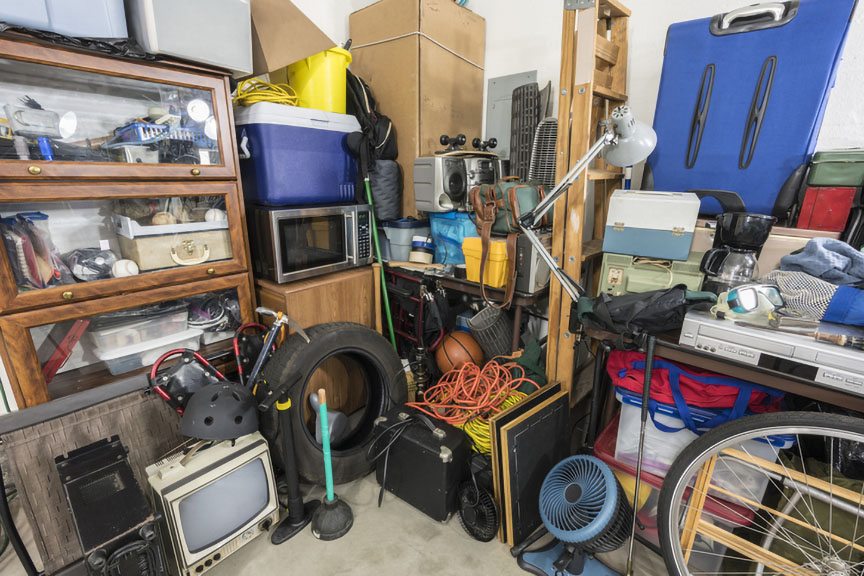
Got Junk?

Except for our house (which we still owe a boatload on), a few pieces of jewelry my wife won’t wear for fear of getting clocked and a few investments, almost everything we have is either junk or will be soon.      

We are at an age when we realize there is a ticking clock, and it’s time to get rid of stuff. No one wants to burden their spouse or kids by leaving behind all their priceless junk for them to dispose of once they dispose of us.  It’s a guarantee that almost everything we keep for our kids to sift through will be tossed faster than a flea plucked off a dog’s abdomen.

Remember how your kids used to fight over a helium balloon when they were young? Civil war can break out if you leave behind a painting by Yayoi Kusama and let them decide how to split the money.  Tell them in writing if they sue and lose, they get nothing. 

My 99-year-old friend George Stanley still hasn’t let go of thousands of books he’ll never read again. Instead of giving them away, George had a shed built in his backyard to store them — a shed he’ll probably never enter. 

In divorce, you must let go of stuff, but usually, it’s the things you don’t want to let go of, like cars, homes, bank accounts, and kids. Even the girlfriend or boyfriend you chucked everything for might say ta-ta once the lawyers send in the U-Haul.

One of our closets recently had an ant problem, so we had to empty it of almost everything. Thank you, ants. Because of the ants, we filled three giant Hefty bags with things like two-dollar dried-out ponchos, one left glove, a ski hat missing its pom-pom, half a dozen burlap bags from charity events, some of my dress suits and shoes, a few of my wife’s coats and a vacuum that spits out more dust than it takes in.

My wife has asked me to help her tackle the garage for years. I’d be best served if I told her, “Throw out everything you want to throw out. I trust you.” But I can’t bring myself to say those words. I need to be there, fighting tooth and nail for my 1960s Grateful Dead posters and my Mickey Mouse lunch box because, who knows, they might be worth a fortune.  eBay has created the ultimate junkyard for buyers for your 20-year-old knee and elbow pads you used during your high school football days.    

I have a bottle of unopened beet juice in the back left corner of the fridge that has been there for five months. If I leave something untouched, I become scared of it. Look at my desk if you don’t believe me. The beet juice is just that. I am afraid to drink it or toss it.  

I have a bottle of unopened beet juice in the back left corner of the fridge that has been there for five months. If I leave something untouched, I become scared of it. Look at my desk if you don’t believe me. 

Not long ago, we were lucky to be rid of our children who left much of their junk behind. Don’t get me wrong, our kids are not junk — we love them more than Trump loves being on TV — but we are done living with them. Amazingly, it was much easier for me to toss them than the beet juice. Go figure.  

My daughter-in-law Anna told my wife to get new living room lamps and remove a bench we have for people to sit on. She didn’t call our stuff junk but said, “They don’t fit your decor.” She’s also redecorated a playroom for our grandchildren. She did a good job, and the place looks newer and fresher. But she did it for one reason: we owned junk.  

Now that we are on a rampage to toss, I must admit the feeling of getting rid of our junk is freeing and calming. It’s almost a meditation. It almost feels like being released from prison. I am not a hoarder, but I am a saver of things. My mother used to say, “Why don’t you ever throw anything away?” My wife will pick up a two-week-old newspaper and say, “Are you saving this for any reason?” 

Guess what? I just got up my nerve and drank some beet juice. I’m glad I didn’t throw it out.


Mark Schiff is a comedian, actor and writer, and hosts, along with Danny Lobell, the “We Think It’s Funny” podcast. His new book is “Why Not? Lessons on Comedy, Courage and Chutzpah.”

Got Junk? Read More »

The Day I Decided My Jewish Identity Was Nonnegotiable

I attended public schools all my life, but was always drawn to other Jewish kids as friends. I suppose it was an invisible force field of spiritual connection, even though none of us kept kosher or were religious in a traditional sense. In the 10th grade, though, I became close with an Italian-Catholic senior named Kyle. Handsome and engaging, Kyle and I often had lunch together on the grass under a shady tree, talking about books, politics, and life.

One day, Kyle met me in our usual spot under the tree and appeared nervous. After stammering a bit, he invited me to go out on a date. At 15, I was so naïve that his question shocked me. In my mind we were just buddies and could never be anything else. Despite my family’s lack of ritual observance, I would never have dated a non-Jew.

When I explained that I could not go out with him, Kyle reacted angrily. He fumed that religion was nothing more than tribalism, even accusing me of bigotry. My heart thudded during his tirade, because I had never seen this angry side of him. Yet with every word, Kyle reinforced my certainty that my Jewish identity was nonnegotiable.

This strong sense of Jewish identity was a gift, and by no means inevitable. My maternal grandparents, the Cohens, were religious immigrants from Europe, somber from their harsh experiences with antisemitism in Ukraine and Poland. They were filled with almost grim determination to instill Jewish values into their grandchildren to ward off assimilation, but they couldn’t see that their lack of joy in their Jewishness made it mighty tempting to reject their path.

On the other hand, my paternal grandparents were proudly atheist/agnostic. Their home didn’t even have a Kiddush cup on a display shelf, even as a token for old times’ sake. Their lives felt more expansive, lively, eclectic, and enticing.

And yet when I watched papa Cohen chant Kiddush on Friday night in his fine Shabbat suit, I felt glimmerings of holiness in the air. After lighting our family menorah, he sang “Maoz Tzur” with dignity and pride. This, too, touched me. He stood next to the four-foot-high wooden Star of David that my mother wrapped each year in shiny aluminum foil, a string of shimmery blue and white letters spelling “Happy Hanukkah!” taped to the mantlepiece. Our Hanukkah display was almost hokey in its simplicity, but I sensed eternity when the little candles shone their light across our small living room.

After my older brother died in a car accident when he was 17 and I was nine, grief lay like a dark cloud over our lives. The kind teachers, staff, and rabbi at our Conservative shul gave me comfort and nurtured me in a way that wasn’t available at home from my loving, but grieving parents. I wanted to be at shul more than at home, and joined the youth groups. When I outgrew them I became a youth group advisor and assistant Hebrew school teacher. I didn’t know much Torah, but I equated Judaism and shul with warmth and fulfillment.

As a teen, I saw how assimilation was pulling most other young Jews I knew away from whatever slivers of Jewish tradition their families practiced. I began to share my Cohen grandparents’ anxieties about this downward spiral. Papa Cohen had become a highly respected Conservative rabbi and devoted his life in America to Jewish education, scholarship, and counseling. I felt his pain at seeing this slippery slope, the acute disappointment of realizing that the liberalized Judaism he believed would have staying power in a tantalizingly free society was failing.

In my senior year at UC Berkeley, I came home to Los Angeles during Sukkot and went to shul with papa Friday night. At the kiddush afterward, papa put one hand gently but firmly on my shoulder and steered me from where I was standing on one end of the sukkah to the other end, parking me in front of one of his friends.

“Meyer, this is my granddaughter. She is the editor of the Jewish newspaper at Berkeley!” Papa was himself a prolific writer for Jewish newspapers and made this announcement with such a beaming expression and bursting pride that I became choked up. I was driven to pursue Jewish journalism out of my own ambition, but it was also deeply important to me to show papa that I would continue to carry the light of Judaism forward. I was the only one of his surviving four grandchildren involved in Jewish life, and I would not let him down.

Five years after Papa died, I was a newly married baalat teshuvah. I had committed to a level of religious observance that would have appalled my Rosenfeld grandparents, but thrilled — if not startled — my Cohen grandparents. Choosing a Torah life was the most wrenching decision of my life, despite a lifetime of positive Jewish involvement. I feared the constraints of so many mitzvot, of losing friends, even of losing my individuality. Yet having experienced the compelling truth and joy of this life, and not wanting to be washed away in a tide of assimilation, I voted for a level of Jewish commitment that I knew would have staying power.

My grandparents now have 17 great-great-grandchildren, 13 of them being raised in Shomer Shabbat homes. Two — Dov Ber and Chana Ettil — are named after papa and nana Cohen, whose dedication to Yiddishkeit lives on. Each child adds another light in our family’s figurative menorah. Each child has been named for an ancestor, fulfilling the fervent hopes and dreams of those who came before.


Judy Gruen is the author of “Bylines and Blessings,” “The Skeptic and the Rabbi,” and other books. She is also a book editor and writing coach.  

The Day I Decided My Jewish Identity Was Nonnegotiable Read More »