fbpx

October 1, 2024

Casting Out Our Sins Like Plastic

When throwing sins into the water don’t forget
it’s dangerous to follow them by diving in,
and if you leave them high and dry, not washed and wet,
it’s putting them like plastic in a bin,

as when on Rosh Hashanah many Jews perform
Tashlich, our sins into restless water casting
away what realistically the ritual we can’t reform;
its repetition proves reform is not long-lasting,
not actually managing to destroy our sins
any more than we destroy rejected plastic
that dutifully we put each week in bins.

Both futile moral rituals merely are fantastic,
not based on any chance we may succeed
in getting rid of what may cause us harm
performing with each ritual a worthy deed
whose repetition is its crowning charm.


In a podcast on 9/18/24 by Meir Soloveichik, “The Tashlikh of Micah and the Omens of Rosh Hashanah” he mentioned that his father taught him that Tashlikh, a ritual which is not performed in his family, teaches us that sins are disposable and can be removed, thus preparing us for the repentance that we plan to perform on Yom Kippur. He added that when we perform the ritual by a suburban water’s edge soon after hearing the shofar, when we ritually crown God as our king, we recall how Zadok the priest behaved as he crowned Solomon by the river Gihon in Jerusalem, King David’s city, in the country Jews call Israel, though its Roman name, Palestine, seems to be as indestructible as plastic.

1 Kings 1:38-39 states:

וַיֵּ֣רֶד צָד֣וֹק הַ֠כֹּהֵ֠ן וְנָתָ֨ן הַנָּבִ֜יא וּבְנָיָ֣הוּ בֶן־יְהוֹיָדָ֗ע וְהַכְּרֵתִי֙ וְהַפְּלֵתִ֔י וַיַּרְכִּ֙בוּ֙ אֶת־שְׁלֹמֹ֔ה עַל־פִּרְדַּ֖ת הַמֶּ֣לֶךְ דָּוִ֑ד וַיֹּלִ֥כוּ אֹת֖וֹ עַל־גִּחֽוֹן׃

Then the priest Zadok, and the prophet Nathan, and Benaiah son of Jehoiada went down with the Cherethites and the Pelethites. They had Solomon ride on King David’s mule and they led him to Gihon.

וַיִּקַּח֩ צָד֨וֹק הַכֹּהֵ֜ן אֶת־קֶ֤רֶן הַשֶּׁ֙מֶן֙ מִן־הָאֹ֔הֶל וַיִּמְשַׁ֖ח אֶת־שְׁלֹמֹ֑ה וַֽיִּתְקְעוּ֙ בַּשּׁוֹפָ֔ר וַיֹּֽאמְרוּ֙ כׇּל־הָעָ֔ם יְחִ֖י הַמֶּ֥לֶךְ שְׁלֹמֹֽה׃

The priest Zadok took the horn of oil from the Tent and anointed Solomon. They sounded the horn and all the people shouted, “Long live King Solomon!”


Gershon Hepner is a poet who has written over 25,000 poems on subjects ranging from music to literature, politics to Torah. He grew up in England and moved to Los Angeles in 1976. Using his varied interests and experiences, he has authored dozens of papers in medical and academic journals, and authored “Legal Friction: Law, Narrative, and Identity Politics in Biblical Israel.” He can be reached at gershonhepner@gmail.com.

Casting Out Our Sins Like Plastic Read More »

They Want to Kill Us

I want to bring you into the everyday world of Israel’s existential war. Existential war: Fighting to survive, to not be wiped out.  

Excuse my chutzpah, but I want much more than that.  I want the right to enjoy a normal, peaceful existence — I do not want neighbors whose goal is to annihilate us. 

How close would you go to areas that weren’t evacuated but are theoretically within rocket range? You must ask yourself: Will there be air-raid sirens while I’m driving? While I’m there? An appointment at Ceders-Sinai: Should I go? I’ll wear clothes that won’t get too messed up if I have to jump out of the car and lie on the ground with my hands over my head. 

These are our daily dilemmas. Fears. Stresses.  Who accepts this in a recognized, sovereign country? 

Excuse my chutzpah, but I am tired of hearing we have the right to defend ourselves against terrorist rockets, missiles, drones and anti-tank missiles. I am tired of being forced to play defense until we are beaten down enough to win a short-lived international clearance to fight back. Not to win. Just to push them back until the next time. 

Israel left Lebanon in 2000 and Gaza in 2005. We did not start this war.

So I have to ask: Why are we still subjected to bombardments — whether sporadic (Lebanon) or routine (Gaza) almost from the day we left? Not just since Oct. 7. 

It’s very simple. 

They want to kill us. They are terrorists who want to kill Jews. 

Fear of an invasion like the one in the south on Oct. 7 led to the evacuation of more than 60,000 residents along the northern border. Even when that threat subsided, residents didn’t return. The north has been subjected to deadly and destructive attacks, especially from anti-tank missiles that have a range of nine miles – too close to shoot down or to take cover. These “internal refugees” have been living in crowded hotel rooms and guest houses while all attempts at diplomatic solutions have failed. 

That’s not a bad thing. Negotiations, withdrawals, U.N. agreements never gave us anything, but it gave these terrorist organizations time to regroup, restock and grow in numbers.  They do not honor agreements. They do not want neighborly relations. They do not want us.

 Why is it so hard to understand that?

The Israeli army is finally taking aggressive action that will hopefully enable residents to return: 

To their homes, if those structures are still standing and livable; 

To their farms, if their livestock and crops haven’t been burned to the ground; 

To their schools, if they are not afraid to ride a school bus; 

To their places of work, if they still have a job, if they haven’t filed for bankruptcy.

Sound extreme? Picture Beverly Hills, approximate population 32,000 according to the 2020 U.S. Census Bureau. Empty. Homes, shops and schools deserted. Visions of Coronavirus lockdown but with the addition of deadly rocket fire. Some buildings have crumbled onto the expansive sidewalks, insides blown through plate-glass windows onto Wilshire Blvd.  Or the Fairfax district (12,500) with the Farmers Market clock tower now rubble among the stalls. The Grove a ghost town. 

Remember hiding under desks in the 1950s and early ‘60s? Now Israeli children who ride school buses in border areas are drilled in hiding under the seats or bending down away from the windows while covering their heads. They have 15 seconds.  If they are in a “30-second” designated area, the adults riding with them can try to get them off the bus, away from vehicles, and make sure they lie on the ground and cover their heads. Thirty seconds.  Would you send your kids on a school bus under these conditions? 

We don’t want the “right to defend ourselves.” We demand the right to live without having to defend ourselves daily.

We don’t want the “right to defend ourselves.” We demand the right to live without having to defend ourselves daily. 

Excuse my chutzpah for wanting the new year to be one of enduring security and a normal existence. A new year that will see the return of the hostages, the return of our citizens to their homes, the return of our reservists to their families.  

Shana Tova.


Galia Miller Sprung moved to Israel from Southern California in 1970 to become a pioneer farmer and today she is a writer and editor. 

They Want to Kill Us Read More »

A Year Like No Other

It’s been a long year, possibly the longest year that we have faced since the Nazis were defeated and the concentration camp survivors were freed. Nineteen-forty-eight and 1967 and 1973 were long years too, but each of them ended in victory. While the many long years since then have not always led to such clear-cut results, we could almost always prepare for the High Holy Days with some sense of confidence that the modern-day Israeli experiment was succeeding. There were steps forward and backward, distractions and frustrations. But we knew that we were on the right path.

But as we mark the one-year anniversary of the Simchat Torah Massacre, the future is even more uncertain than it was last Oct. 8. The unresolved nature of the war against Hamas, the prospect of a broader conflict with Hezbollah, and the potential for a region-wide battle that ignites the entire Middle East has produced a level of uncertainty and trepidation both in Israel and among Diaspora Jews unlike any that we have seen in the last 76 years. 

We feel threatened, not only by the prospect of military attacks in the Middle East but the resurgent antisemitism throughout the world. One year ago, few of us believed that anti-Jewish hatred was gone. But the prevailing opinion in our community was that it was in retreat, that it had been banished to the margins and the shadows. We looked at tragedies in Poway and Pittsburgh and Charlottesville as aberrations rather than indicators, as infrequent exceptions rather than insistent warnings.

Since then, we’ve learned that those ancient hatreds never disappear. They are never fully eliminated. As hard as we try and as strongly as we hope, we will never exterminate true prejudice and bias. The bigots, both blood-and-soil nationalists and overly-woke Hamas apologists, will patiently wait for the opportunity to crawl out of their crevices and pick up where their predecessors left off. Throughout our long history, no previous generation of Jews has ever avoided this challenge from the oldest and darkest forces in our communities. Neither will we.

But while we shouldn’t have needed to relearn these lessons, we have now been reminded that the price of our heritage and our faith is eternal vigilance. We know that our religion and our culture require constant protection. We remember — yet again — that we must defend what we hold dear and we must do it ourselves. If we wait for others to come to our rescue, we will be repeatedly disappointed, disheartened and dangerously vulnerable. We benefit from friendships and alliances with others and we need to relearn the importance of reaching out to other underrepresented communities so we can work together, grow together and care for each other. But we can’t rely on others to do this work for us: we are the saviors we’ve been waiting for.

This will require us to deprioritize our quarrels over domestic policy in whatever country we live, and recognize that those divisions cannot divide us from the legacy, the traditions, the core beliefs of our shared past and shared future. We must recognize that while we are proud to be Democrats and Republicans, progressives and conservatives, we are first and foremost children of Abraham, Isaac and Jacob.

The Jewish religion is not perfect, nor is the Jewish state. Both our faith and our homeland benefit from questions asked from those who love them, and those challenges make us better. Of course Jews disagree. We revel in our disagreements. But our disagreements are supposed to bring us closer and not drive us apart. At our best, we disagree so that we can improve and move forward together.

Of course Jews disagree. We revel in our disagreements. But our disagreements are supposed to bring us closer and not drive us apart. At our best, we disagree so that we can improve and move forward together.

The false sense of security that many of us have felt in 21st-century America is no more. That could be a curse. It might be a blessing. But most likely and most accessibly, it should be an opportunity for us to begin anew and to commence a rebuilding process that will allow us to celebrate our Judaism the way we deserve.

Shanah Tovah


Dan Schnur is the U.S. Politics Editor for the Jewish Journal. He teaches courses in politics, communications, and leadership at UC Berkeley, USC and Pepperdine. He hosts the monthly webinar “The Dan Schnur Political Report” for the Los Angeles World Affairs Council & Town Hall. Follow Dan’s work at www.danschnurpolitics.com.

A Year Like No Other Read More »

LAPD: As High Holy Days Approach, No Specific Threats Targeting Community

In advance of the High Holy Days, leading Jewish groups in Los Angeles convened a security briefing that outlined whatever threats there may be facing the community. 

This year especially, in a post-Oct. 7 environment when antisemitic incidents are at their highest levels, Jews in Los Angeles are seeking reassurance that it’s safe to attend in-person services at synagogues. 

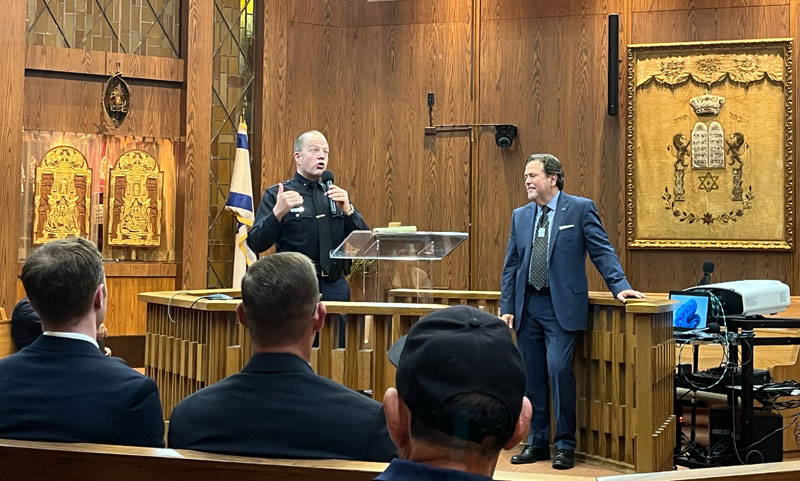
Fortunately, “There is no specific articulable information of anyone targeting the Los Angeles Jewish community during this season — none,” Los Angeles Police Department (LAPD) Commander Steve Lurie, the department’s Jewish community liaison, said during the security briefing, which was held Sept. 24 at Sinai Temple and was live-streamed to viewers around the community.

Approximately 50 attendees — including nonprofit professionals, synagogue leaders and security volunteers — attended the security preparedness discussion, featuring remarks by representatives of Anti-Defamation League (ADL), LAPD and the Jewish Security Alliance, a first-of-its-kind coalition that’s made up of leading California Jewish security organizations.

The formation of Jewish Security Alliance was announced in the summer of 2023, a time when antisemitic incidents in California were at an “all-time high,” according to the ADL. It also was a moment when the Los Angeles Jewish community was reeling from a pair of synagogue shootings in Pico-Robertson that had happened earlier that year. 

But that predated Oct. 7 and its aftermath, which has led to even more heightened concern around the community about what consequences there may be of being visibly Jewish on such high-profile days on the Jewish calendar as Rosh Hashanah and Yom Kippur.

Together, ADL and Jewish Federation Los Angeles — which runs Community Security Initiative (CSI), a network of Jewish schools, camps, synagogues and nonprofit organizations that attempts to bridge the gap between law enforcement and the Jewish community — are working closely and liaising with law enforcement to ensure the community feels safe, Jeffrey Abrams, regional director at ADL, said. 

“We’re blessed with [robust] law enforcement relationships,” Abrams said.

ADL and L.A. Federation co-chair the Jewish Security Alliance, which partners with Community Security Service (CSS), an expert in volunteer security services. 

During the briefing, Lurie spoke about the many steps law enforcement is taking to ensure the community feels secure this year. These steps include the strategic placement of security personnel — which Lurie described as “visual deterrents” — in areas where there will be heavy foot traffic of people walking to services. Many officers will be on foot; police vehicles will be present; and officers will be mounted on horseback.

“Our police officers on horseback, to this community that is both a great visual deterrent to crime and a great P.R. tool,” Lurie said. “Kids especially love and gravitate towards those horses. And we get a chance to have a conversation about safety, about awareness, about talking to the police [and emphasizing], ‘If you see something, say something,’ right?”

Also in attendance was Aubrey Farkas Harris, western states director for the Community Security Service (CSS), which offers free security training, guidance and resources to Jewish community members and institutions that want to protect against antisemitic incidents and security threats. 

Farkas Harris spoke about the importance of “situational awareness.” She urged synagogue leaders to have control over the ways visitors can access their buildings and to focus on “suspicious behaviors,” she said, “not suspicious people.” 

Rabbi Lori Shapiro, spiritual leader of Open Temple, was among those in the crowd. She leads an alternative community in Venice Beach that often meets in unconventional locations. She described her community, and those like it, as “synagogues without walls.” 

This year, her congregation’s Rosh Hashanah service is taking place on a beach in Venice, and she expressed concern that her congregation won’t be as secure as those attending services in traditional buildings. This was a worry she’d recently shared with a police officer in her neighborhood, she said.

“I’m here tonight to just bring awareness that a lot of communities look very differently than Sinai Temple and the brick-and-mortar synagogues,” Shapiro said at Sinai.

“I’m here tonight to just bring awareness that a lot of communities look very differently than Sinai Temple and the brick-and-mortar synagogues.” – Rabbi Lori Shapiro

Lurie, in turn, told Shapiro she did the exact right thing by speaking to an officer in her community, because feedback like that enables law enforcement to do its job more effectively.

“So, anybody here is in this community, anybody on the livestream, you need to reach out,” Lurie said. “Your first step is always your local police division.”

LAPD: As High Holy Days Approach, No Specific Threats Targeting Community Read More »

In Salads We Trust

They say hindsight is 20/20 and when I look back at my life, I’m amazed by all the people, famous and not so famous, I’ve met. In 1980’s Los Angeles, my path crossed with Hollywood stars like Elizabeth Taylor, Frank Sinatra, Sylvester Stallone, Goldie Hawn, Ryan O’Neal, Ali MacGraw and many more. 

But it’s the Torah luminaries and rabbinic leaders that I had the privilege to meet that touched my neshama the most. I had the honor of lining up for Sunday dollars from the Lubavitcher Rebbe in Crown Heights. I was honored to receive personal brachas from the saintly Sephardic Chief Rabbi Mordechai Eliyahu and famed Kabbalist Ha’Rav Yitzchak Kaduri. 

When I was young, I took so much for granted. I did not realize just how precious these opportunities were. But I am grateful for one youthful opportunity I didn’t squander. to study with Ha’ham Rabbi Solomon Gaon when I was a student at Yeshiva University. 

Rabbi Gaon was born in Travnik, Bosnia and Herzegovina in 1912 and he studied at the Yeshiva in Sarajevo. Tragically, both his parents were murdered in the Holocaust. He rebuilt his life, receiving his rabbinical ordination from Jews’ College in London and in 1949, he became the Sephardic Rabbi of the British Commonwealth. 

He helped found the Sephardic Studies Program at Yeshiva University and I took his classes on Jewish holidays and life cycle events. He was short and bald, with a round face and twinkling eyes, a soft accent and a kindly manner. He told us stories about the British royal family. (Did you know that all the Royal men were circumcised by a mohel? Although rumors are that Diana put a stop to that tradition.) 

One day in class, I was befuddled by his pronouncement that traditionally, Syrian Jewish women wore their gold embroidered wedding gowns to their son’s Brit Milah. How could they possibly fit, I asked. They were kaftans, he replied. Aah, that makes sense. 

He told us that in Sephardic and Middle Eastern societies, the man was responsible for the household food. That explained why my grandfather and father always brought home boxes of fruits and vegetables and sacks of rice and other kitchen staples.

In Sephardic and Middle Eastern societies, the man was responsible for the household food. That explained why my grandfather and father always brought home boxes of fruits and vegetables and sacks of rice and other kitchen staples. 

It explained why many years ago, Rachel’s father was at the kosher market, doing the Shabbat food shopping. When I greeted him with a smile, I saw that he was buying a lot of fennel. I wasn’t yet a Sephardic Spice Girl, so I asked what it was used for. He told me that it is excellent in salads and tagines. 

Ever since, I have loved to use fennel in my salads and roast chicken dishes. 

—Sharon 

The Jewish holidays just mean overindulging. No matter how much I resolve to make a small menu, I’m pulled by family traditions and new recipes. So, it’s always plentiful and we can’t help ourselves from eating just a little too much. 

The recovery from all this rich indulgent food is super important. And for me, the best way is to eat salads. Raw and cooked “salatim” are the stars of the Moroccan kitchen. 

Both Sharon and I love to start our Shabbat meals with at least three big beautiful salads. 

We encourage you to do the same — you’ll be surprised how delighted your guests will be. Salad is always a wonderful way to get creative. In addition to all the bright, colorful fresh vegetables (and fruit), you can add vegan proteins like canned beans, cooked lentils and quinoa and garnish with nuts and seeds. 

This red cabbage and fennel slaw has a truly festive feel, with its ingredient list of fresh pomegranate, crispy apple and nutty, earthy pistachios. The peppery cabbage and licorice fennel play against the cool menthol of the mint leaves and the celery adds extra crunch. Adding the light, sweet vinaigrette ten minutes before serving ensures that the salad retains its delightful crunch. Have the ingredients chopped up and ready in your refrigerator and you can throw it together with minimal effort. 

Honestly, although this salad is incredibly healthy (your gut microbiome will thank you) it’s also incredibly indulgent and quite addictive. We guarantee, the more salad you make and eat, the more salads you will crave.

—Rachel

Festive Red Cabbage and Fennel Salad  

Vinaigrette:
1/4 cup extra virgin olive oil
2 Tbsp honey
1/3 cup red or white wine vinegar
1 tsp garlic powder
Salt and pepper

In a small bowl or jar, whisk together honey and olive oil. 

Add vinegar, garlic powder and salt and pepper. Whisk until all ingredients are thoroughly combined. Set aside

Salad:
1/2 medium purple cabbage, shredded
2 large honeycrisp or gala apples, diced
1 large fennel, thinly sliced
3 celery stalks, diced
1/2 bunch mint, soaked, drained and roughly chopped
1/2 cup roasted and salted pistachios
1 cup pomegranate seeds 

In a large bowl, add cabbage, apples, fennel, celery, mint and pistachios. 

Ten minutes before serving, dress with the vinaigrette and toss well. 

Garnish with pomegranate seeds.


Sharon Gomperts and Rachel Emquies Sheff have been friends since high school. The Sephardic Spice Girls project has grown from their collaboration on events for the Sephardic Educational Center in Jerusalem. Follow them
on Instagram @sephardicspicegirls and on Facebook at Sephardic Spice SEC Food. Website sephardicspicegirls.com/full-recipes.

In Salads We Trust Read More »

Seven Jews to Keep in Mind This Rosh Hashanah

In some ways, I consider 2023/5784 the last normal Rosh Hashanah of my life. Last year around this time, my biggest concern for the Jewish people probably focused on whether we were collectively consuming enough fruits and vegetables during the challah-heavy High Holy Days. 

I am kidding. I don’t even remember what went through my mind last Rosh Hashanah, the last seemingly innocent Jewish New Year I would know. But whatever preoccupied me last year now seems so blissfully trivial in light of everything that has occupied my state of mind since Oct. 7.

As I contemplated what I could add to the undoubtedly beautiful wisdom of Rosh Hashanah stories in this week’s issue, I realized that this issue coincides with the one-year anniversary of Oct. 7 in the Gregorian calendar. And this Rosh Hashanah could be squandered if Jews worldwide, including myself, forget each other. 

Here are seven groups of Jews whom I implore you to actively remember this Rosh Hashanah, whether you sit in a synagogue pew or simply enjoy a moment of sunlight: 

The Hostages in Gaza

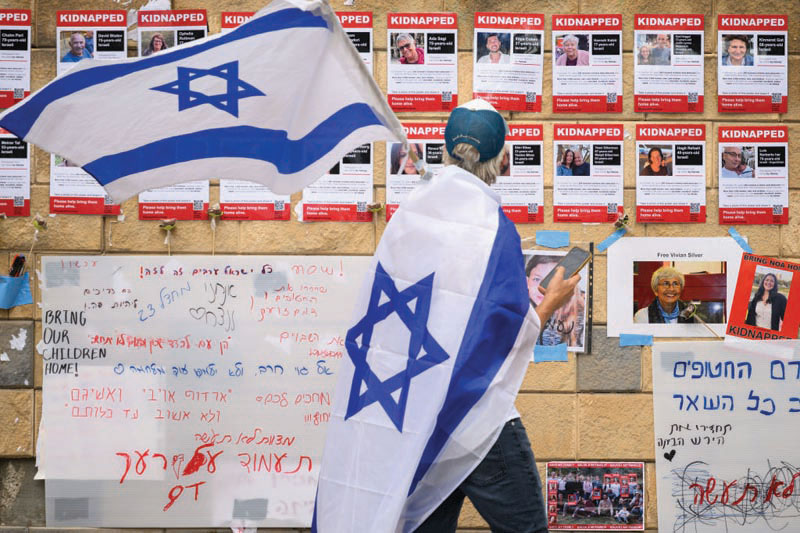
Do the remaining Israeli hostages in Gaza know that Rosh Hashanah begins tonight? Perhaps not, and perhaps it’s better that way. For me, the more important question is whether those hostages are still alive.

Do the remaining Israeli hostages in Gaza know that Rosh Hashanah begins tonight? Perhaps not, and perhaps it’s better that way. For me, the more important question is whether those hostages are still alive. 

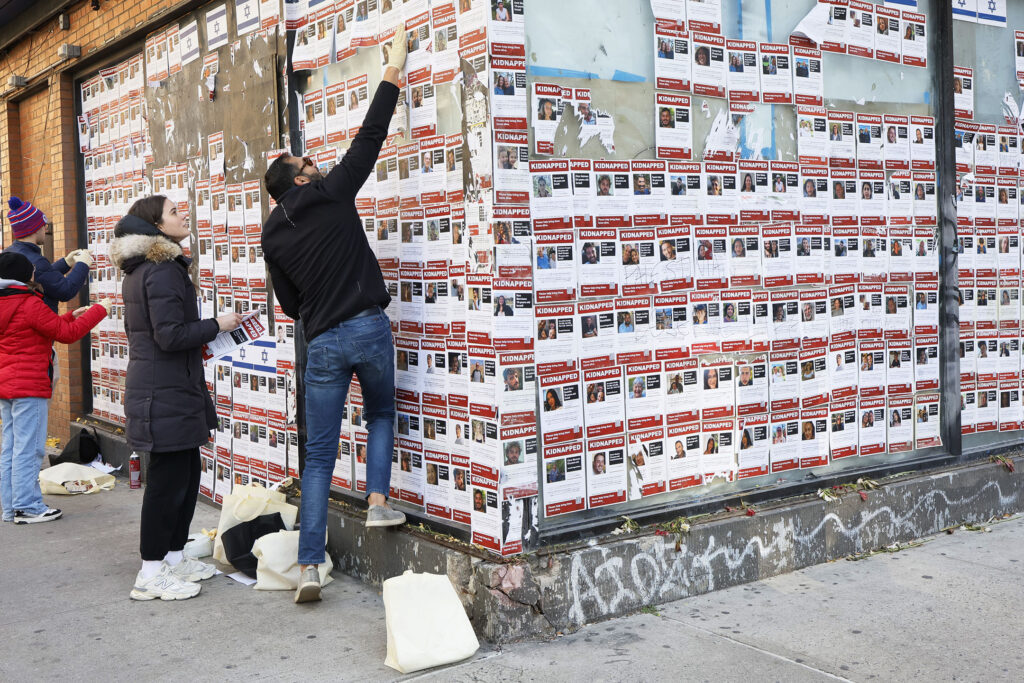
But I can’t stop thinking about how those hostages spent last Rosh Hashanah. Were they with family? Did they pray to have been “inscribed and sealed in the Book of Life” for a sweet and healthy new year, only to have been taken captive and brutalized mere weeks later? As I read testimonials in which rescued hostages described the physical and emotional abuse they endured by Hamas, including starvation and dehydration, I can’t bear to imagine the bounty of food and family that these hostages may have enjoyed last Rosh Hashanah. There was no way they could have known what was to come. 

If you are reading this column in a well-lit space, please remember the dark squalor of the tunnels or other spaces in which these innocent Israelis are still being kept in captivity. Do not forget their hunger and thirst; their fear and fortitude. 

This Rosh Hashanah, do not complain that it is too hot, too cold, too bright or too gloomy. Remember that for the past 12 months, over 100 of your Jewish brethren have not seen the light of day, nor inhaled even a life-saving breath of fresh air. As Dr. Itai Pessach, who treated some of the rescued hostages, told CNN, “It was a harsh, harsh experience, with a lot of abuse, almost every day … Every hour, both physical, mental and other types, and that is something that is beyond comprehension.”

The Rescued Hostages and Oct. 7 Survivors

To date, nearly 50 survivors of the Nova massacre have taken their own lives. For the past year, Israel itself has been suffering from what seems to be a national epidemic of Post-Traumatic Stress Disorder (PTSD). 

As for the rescued hostages, most of them arrived back in Israel so malnourished and suffering from so much psychological trauma that their healing is still in doubt. I have heard about the emotional states of rescued hostages who have toured America and shared their stories; in more intimate conversations, some have described what they call a “darkness” or a “demon” that follows them throughout the day (and especially at night) as they remember how Hamas tortured them or killed their friends or loved ones before their eyes.  

Perhaps the rescued hostages will have the emotional strength to return to a synagogue or to a Rosh Hashanah seder this year. Please have them in mind, because they will never be the same person they were last Rosh Hashanah. And neither will we. 

Bereaved Families and the Families of Hostages

This year, I will be thinking about the thousands of bereaved Israeli families who lost cherished children, parents, siblings, grandparents or other loved ones on or after Oct 7. The thought of that one … or two, three, or more empty chairs at their Rosh Hashanah meal this year (if they even have a seder) is too painful to imagine. But we must imagine it. 

This year, let us also not forget the families of Jews who are still being held in Gaza — families who do not know whether their loved ones are still alive. For them, there is no closure; only tortured thoughts of whether the person they love is safe. Let us imagine the empty chairs in countless Israeli homes this fall, and perhaps leave a chair or two empty in our homes and synagogues this Rosh Hashanah.

The Courageous Soldiers 

This year, I will be thinking more than ever before about the soldiers of the IDF, many of whom are so young that they wouldn’t be able to order a beer in the United States. Instead of hearing a shofar in a synagogue, many of them will be entrenched across from Hamas in Gaza or Hezbollah on the border with Lebanon, protecting their country in every way. For those soldiers and the remaining hostages in Gaza, the prayer to be sealed and inscribed for life takes on a whole other meaning. 

Please have these soldiers in mind, especially the ones who are under fire in Gaza and Lebanon, operating anti-missile weapons, manning dangerous checkpoints, or maintaining safety in the West Bank or the Old City of Jerusalem. 

And don’t forget about their young children, who stand at doorways and beg their uniform-clad parents not to leave, as well as the brave parents of these soldiers. Imagine hugging your son or daughter before they leave for reserve duty in merciless Gaza, wiping your heartbroken tears from your face, and composing yourself long enough to attend Rosh Hashanah synagogue services the next day. 

The Refugees Who Fled Northern Israel

We must not forget the 90,000 Israelis who, in the past year, have been displaced from their homes in the north due to the unrelenting Jew-hatred of Hezbollah in southern Lebanon. I truly hope that the hotels and other spaces that have been offering them shelter will also provide Rosh Hashanah meals for them, as well as nice holiday clothes and more toys for their children. Last year, they celebrated Rosh Hashanah in their own homes. This year, they are refugees in their own country. 

The Jews Who Have Woken Up

For all of the gratitude we have offered this past year for the multitude of Jews who have “woken up” in terms of embracing their Jewish identities and finally feeling connected to our people, wouldn’t it be wonderful if each of us invited a previously disconnected Jew to a High Holy Day meal or service, or offered them a good, old-fashioned visit, with a few apples, challah, and honey in tow? 

Please have all Jews in mind this year, including those who have lost many formerly meaningful friendships, been banned from activist spaces, left jobs that promoted an atmosphere of antisemitism, or shown courage in other ways, all because this year, they finally understood the immortal last words of Wall Street Journal reporter Daniel Pearl, z”l, when he looked at a camera and said, “I am Jewish.”

The Jews Who Cannot Be Named

Finally, given the recent unbelievable incidents involving Israeli intelligence, I cannot help but think of the Jews in the Mossad, the ones who could never afford to attend a synagogue service or a Jewish holiday meal in the country where they operate, lest they blow their cover and compromise the safety of Jews worldwide. 

Perhaps they will prepare a secret, modest meal for themselves at their undisclosed apartments this Rosh Hashanah, meals that won’t feature any overt ingredients such as apples or pomegranates, for fear of tipping off anyone at the Grand Bazaar in Tehran or Istanbul. Perhaps they will recite as much of the High Holy Days prayers as they can still remember from grade school silently to themselves, because they could never be caught in possession of a siddur, much less an open tab on their cell phones connected to anything Jewish. 

For all of the legends and lore surrounding Mossad agents, they make so many sacrifices, as do their families. I don’t know whether the legendary Eli Cohen (born Eliyahu Ben-Shaul Cohen), who operated in Syria for four years, ever secretly recited prayers to himself on Yom Kippur each of those years, or whether he spent Rosh Hashanah meals not in the company of his beloved family, but surrounded by murderous Syrian officials who thought he was one of them. I can only imagine the last words that may have left his mouth in the moments before he left this world on May 18, 1965: “Shema Israel…”

As long as we never forget each other, the People of Israel (Am Israel) live on. Shana Tova U’Metuka.


Tabby Refael is an award-winning writer, speaker and weekly columnist for The Jewish Journal of Greater Los Angeles. Follow her on X and Instagram @TabbyRefael.

Seven Jews to Keep in Mind This Rosh Hashanah Read More »

In Israel, a Cult of Life Defends Itself Against a Cult of Death

If you want a deeper understanding of Israel’s situation in the Middle East, a good place to start is the website of the Jaffa Hotel in Tel Aviv, which came up recently under a list of the world’s finest hotels. The Jaffa was the only entry from Israel.

What caught my eye was that in the charming area of Jaffa where the hotel is located, two terrorists murdered seven civilians and wounded 17 others in the deadliest terror attack since Oct. 7. The assault occurred on Tuesday evening, just as Iran was launching hundreds of ballistic missiles at Israel.

Here in America, it’s easy to get morally confused in the fogs of war. When bombs are flying everywhere and people are dying everywhere, whether in Gaza or Lebanon or Tel Aviv, things tend to blur. People with big hearts like to call on all sides to just stop the killing.

This moral blurring, however, is not just wrong but dangerous, especially for the side that didn’t start the killing.

The missiles from Iran and its terror proxies are not the same as the Iron Dome missiles from Israel. The soldiers from Israel’s army are not the same as the terrorist soldiers from Hamas or Hezbollah. Aiming to murder civilians is not the same as aiming to kill terrorists.

When Israel is at war, a Cult of Life is forced to defend itself against a Cult of Death.

It’s astonishing that this even needs to be said, given that it’s been true for so long and that Israel’s enemies have never pretended to be anything but an anti-Israel death cult.

For decades now, Iran, Hezbollah and Hamas have made clear that their primary mission is not to build fancy hotels, charming tourist districts, schools and hospitals that will improve the lives of their people.

It’s to get rid of Israel.

Israel left Lebanon in 2000 and Gaza in 2005 and has never occupied an inch of Iranian territory. The attacks on the Jewish state are based not on Israeli provocations but on a pure hatred that aims to destroy.

This ugly moral truth can easily get lost when Israel is involved, as demonstrated most sharply by the blatant double standards applied to the Jewish state at the United Nations.

The ugliness of pure hatred also gets lost with sophisticated and academic thinking. Perhaps the truth is too raw, too clear, too moral. Elite thinkers, by definition, must bring nuance and complexity to their analyses. They must weigh tactics and strategies and envision the geopolitical future. This has intellectual merit, but it tends to hide moral ugliness.

Israelis, on the other hand, know the ugliness well. What they worry about most is not geopolitics but the location of the nearest bomb shelter. Indeed, these bomb shelters are a poignant reminder of how much Israelis value life.

When they’re not running to bomb shelters, Israelis are busy building one of the most vibrant, creative and innovative societies on earth. This also can get lost in the noise of the loud civic protests against the government, the political infighting and the constant need to defend against terrorism. But the vibrancy and the resilience are there. Ask any visitor.

The genius of Israel is that despite being under siege since its birth, it has never satisfied itself only with physical security. It always aimed to thrive rather than just survive. Maybe because it was surrounded by a Cult of Death, it ended up worshipping life.

I felt that vibrancy and resiliency and love of life when I checked out the website of the Jaffa hotel, a magnificent tribute to ancient elegance:

“[The hotel] stands as a prestigious 5-star establishment situated within a meticulously restored 19th-century complex, once the home of Jaffa’s French Hospital. Ideally positioned near the Mediterranean Sea and the historic port of Jaffa, it grants effortless access to attractions such as the Shuk Hapishpeshim flea market, the city of old Jaffa’s art galleries, and charming local boutiques, all just a short stroll away.

“Our signature chef restaurant, Giardino, showcases culinary creations inspired by the flavors of the Northern Mediterranean, following a unique ‘port-to-table’ philosophy. Alternatively, relish elevated Israeli cuisine at Golda’s at The Jaffa. Experience serenity at the L.RAPHAEL Spa and indulge in the personalized luxury of our 120 opulent rooms and suites, thoughtfully appointed by the renowned designer, John Pawson. Allow our dedicated concierge team to meticulously orchestrate every aspect of your stay, renew your spirit, and ignite your imagination.”

If anything can renew our spirits in the midst of a war in Lebanon and ballistic missiles from Iran and enemies sworn to Israel’s destruction, it is this little corner of Israel that refuses to lose its imagination.

In Israel, a Cult of Life Defends Itself Against a Cult of Death Read More »

Man Sentenced Over Pico Shootings of Two Jewish Men

The man convicted in the shooting of two Jewish men in the Pico-Robertson neighborhood has been sentenced to 35 years in prison, the Department of Justice announced on Sept. 30.

As previously reported by The Journal, Jaime Tran pled guilty in May to charges of hate crimes with intent to kill and using a gun as part of a violent crime. In his guilty plea, the 30-year-old Riverside resident admitted he planned to shoot someone near a kosher market because he believed there would be Jewish people in the area.” He shot two Jewish men, one on Feb. 15 and the other on Feb. 16. Both victims survived their injuries. The DOJ noted in its Sept. 30 announcement that the government’s sentencing position argued that Tran’s “campaign of terror would likely have continued” had he not been caught.

“After years of spewing antisemitic vitriol, the defendant planned and carried out a two-day attack attempting to murder Jews leaving synagogue in Los Angeles,” Attorney General Merrick Garland said in a statement. “Vile acts of antisemitic hatred endanger the safety of individuals and entire communities, and allowing such crimes to go unchecked endangers the foundation of our democracy itself.” Garland, who is Jewish, noted that “as millions of Jewish Americans prepare to observe the High Holy Days of Rosh Hashanah and Yom Kippur, the Justice Department reaffirms its commitment to aggressively confronting, disrupting, and prosecuting criminal acts motivated by antisemitism, or by hatred of any kind. No Jewish person in America should have to fear that any sign of their identity will make them the victim of a hate crime.”

Los Angeles Police Chief Dominic Choi said in a statement, “While this sentencing cannot fully restore the sense of safety stolen from the two victims and the Jewish community, it is a decisive step towards justice and a clear message that such acts of hate and violence will not be tolerated.”

Speaking to reporters outside of the courthouse where Tran was sentenced, Anti-Defamation League Los Angeles Regional Director Jeffrey Abrams said that the sentencing will “ensure that Tran cannot threaten this community for decades to come. He came into our neighborhood in Pico-Robertson in an attempt to terrorize the Jewish community, today is a resounding message that he failed.”

The Jewish Federation of Greater Los Angeles said in a statement, “Jewish Federation Los Angeles is grateful for today’s sentencing of the perpetrator responsible for the 2023 antisemitic shooting in the Pico-Robertson area of Los Angeles, which targeted members of the Jewish community. We thank the LAPD, FBI, and the United States Attorney’s Office, whose joint efforts led to today’s result. Our community appreciates the swift filing of federal charges, thorough investigation, and successful prosecution of this hate crime. We hope today’s decision helps to bring closure to the victims and their families and makes our broader Jewish community feel protected.”

Man Sentenced Over Pico Shootings of Two Jewish Men Read More »

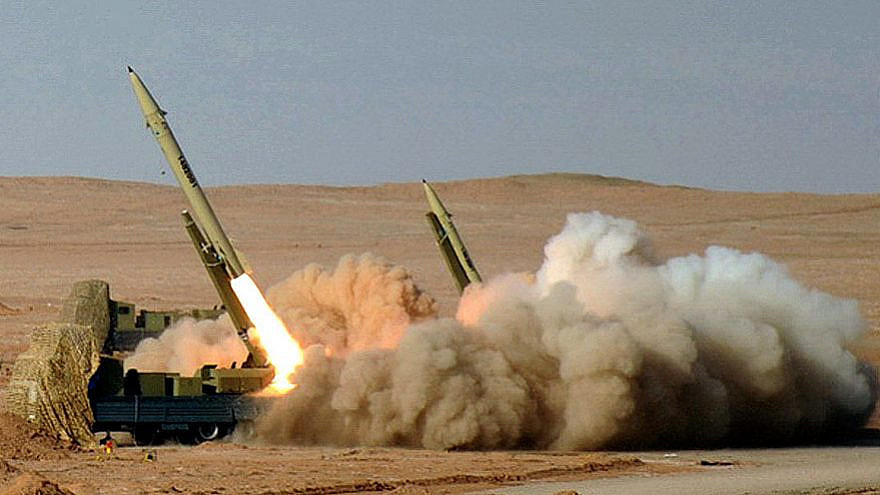
Iranian Fateh-110 missiles and launchers in a maneuver held in July 2012. Credit: Hosein Velayati via Wikimedia Commons.

Iran fires more than 200 missiles at Israel

Iran fired a barrage of missiles at Israel, forcing the entire civilian population of the country to be ordered into bomb shelters, the Israel Defense Forces said Tuesday.

The extent of the attack is not yet known. Iran fired more than 200 missiles, Hebrew-language media reported. Three people were reported lightly wounded.

At 8:26 p.m., the IDF sent out phone alerts saying that at this stage, everyone could leave their protected spaces.

“A short while ago, missiles were launched from Iran towards the State of Israel,” the IDF stated. “You are instructed to remain alert and precisely follow the Home Front Command’s instructions.”

The IDF wrote on X/Twitter that “all Israeli civilians” are sheltering from the attack.

Rear Adm. Daniel Hagari, the IDF spokesman, asked Israelis to remain vigilant.

“The air-defense system is fully operational, detecting and intercepting threats wherever necessary, even at this moment,” he said. “However, the defense is not hermetic.”

Three Israeli officials told The New York Times that the feared assault could involve suicide drones and missiles fired towards the Jewish state.

One U.S. official told the Times it would involve ballistic missiles, while another said that it was unclear what kind of attack would be launched.

The targets of the Iranian attack are believed to be three Israeli Air Force bases, as well as an IDF military intelligence headquarters just north of Tel Aviv, which was reportedly evacuated on Tuesday afternoon.

Israel informed Washington that an attack from Iran was imminent earlier on Tuesday. A direct Iranian attack on Israel will carry “severe consequences” for the Islamic Republic, a senior White House official told JNS.

“A direct military attack from Iran against Israel will carry severe consequences for Iran,” the White House official added.

In April, Iran conducted its first-ever direct attack on Israeli territory, launching some 300 missiles and drones, the vast majority of which were shot down in a multinational effort. It said it attacked in retaliation for an April 1 strike that killed a top Iranian general in Damascus.

In recent months, Iran and its allies have vowed to avenge the alleged Israeli killing of Ismail Haniyeh, the head of Hamas’s “political” bureau, and Hezbollah’s Hassan Nasrallah, assassinated by Israel on Sept. 27.

The United States Embassy in Jerusalem reportedly sent its employees home on Tuesday afternoon and told them to be prepared to enter bomb shelters, the first such order given since the April attack.

Iran fires more than 200 missiles at Israel Read More »