Among the shotguns, grenades, and other weapons hidden inside a civilian home in Khan Yunis, IDF soldiers found a 48-piece puzzle. When put together, a shocking picture was revealed: Young children from various Arab countries attacking and conquering Israel by sea and land, using tanks, ships, guns and stones. In a way, it seemed like a prequel to what happened on Oct. 7.
Yael and Benjamin Resnick, who moved to Israel from Los Angeles 11 years ago, watched the news in disbelief. “It was obvious that they are brainwashing kids at a very young age,” said Yael. “And it gave us an idea to fight hate with love.” said Yael.
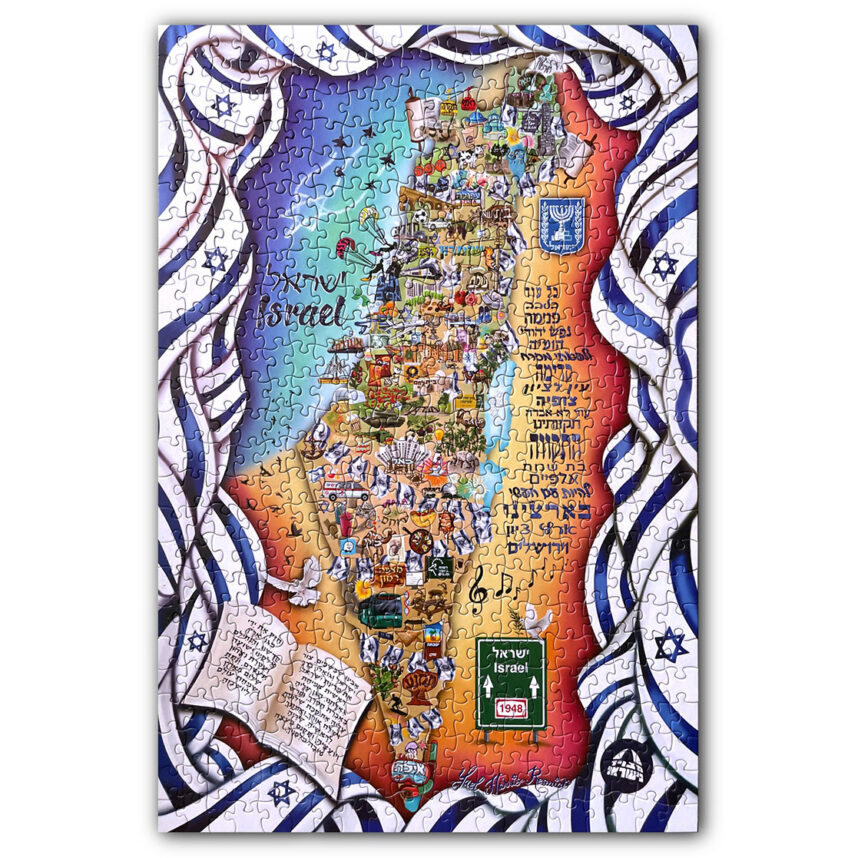
Yael, a talented artist, has filled her house with paintings and functional art, such as table runners depicting the crossing of the Red Sea, challah covers and more. Although she had never created a puzzle before and admits she doesn’t even like puzzles, this discovery inspired her to create one showcasing the state of Israel and all its great technological developments and monumental places. in the Holy Land.
Designed by Yael Resnick
“We felt that we are not soldiers and don’t have the ability to go and fight ourselves,” she said. “We are not even native Israelis, so we figured we are going to fight this war through art. We mapped all the great things Israel has shared with the world: Science, inventions, technology and so much more,” said Yael.
“We figured we are going to fight this war through art.” – Yael Resnick
The 500-piece jigsaw puzzle is an educational tool for children to learn about Israel’s geography. Each major city is labeled in Hebrew and includes a significant feature, such as the Western Wall in Jerusalem or people surfing in the Mediterranean Sea in Tel Aviv. The Israeli anthem, “Hatikva,” is written on the side of the map, along with a Jewish prayer, “Avinu SheBashamayim.” The puzzle is beautifully framed with dozens of Israeli flags.
“We have a QR code that leads players to each city in Israel with an explanation and some facts about it,” said Benjamin.
Yael also designed a second wooden puzzle with 210 pieces. In addition to the regular pieces, there are 18 custom shapes, includinga Torah, a Menorah and Shabbat candles. In the middle of the puzzle are the words of “Hatikva.”
The couple tested the puzzle on their four children, ages 13 to 22. Then they shared it with family and friends who have younger children to test its playability. After receiving approval from the kids, they started manufacturing the puzzles. Without any publicity and mainly through word of mouth, they sold hundreds of puzzles.
“We have parents as well as teachers buying them for their classes,” said Yael. “Some are calling us and saying they loved it so much they wanted to order more puzzles as gifts.”
The couple lives in Karnei Shomron, a settlement 30 miles northeast of Tel Aviv. “We met at a bat mitzvah at Adat Ari El where my cousin studied,” Benjamin said.
Yael was a student at the school and later worked there as a teacher before moving on to Valley Beth Shalom, where she taught Judaism. After making aliyah, Yael decided to turn her passion for art into a full-time profession.
Asked if they ever regretted their decision to move to Israel given the current situation, they both said they are very happy with their choice, despite the war. “Of course it’s a bit stressful, but the future of the Jewish people is in Israel and not in America,” Benjamin said.
Yael is often asked by clients to produce more puzzles, but she said she is taking a break for now.
“I just designed a few t-shirts connected to Oct. 7, with [drawings of] soldiers, war and peace. We are going to do a t-shirt launch soon.”
The Resnicks see the puzzle not only as a fun game for the entire family, but also as a powerful symbol of unity and resilience. By engaging in this activity, they hope to inspire a sense of connection and pride in Israel’s achievements, fostering a deeper understanding and appreciation for the country’s rich heritage and contributions to the world.
“We just wanted people to put Israel together again, literally building it piece by piece,” said Yael.
The puzzles are available for purchase on Amazon or on Yael’s website:yaelharrisresnick.com
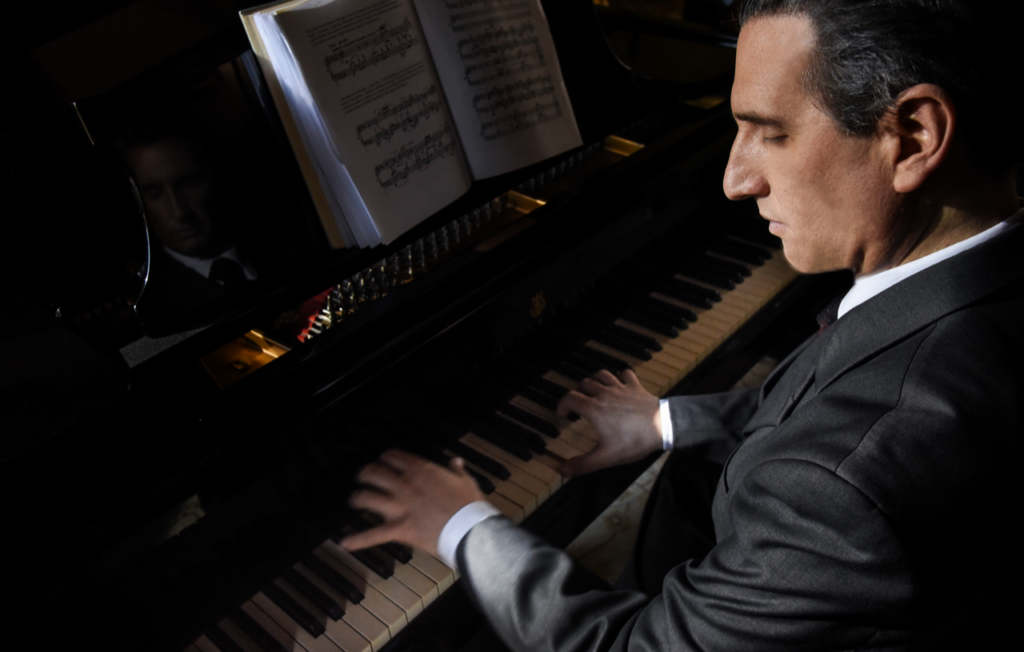
Audiences are used to seeing Hershey Felder perform solo. In 1999, the pianist and actor Hershey Felder created a one-man show, “George Gershwin Alone.” He initially thought it would run for a short time, mainly for family and friends, and then he’d move on to the next project. But something extraordinary happened: People kept coming, and the play, a combination of storytelling and music, became a huge success. People loved hearing the stories behind the music of the greatest composers, so Felder brought other beloved pianists and composers to the stage: Leonard Bernstein, Frederic Chopin, Peter Tchaikovsky, Claude Debussy and Ludwig van Beethoven. His new play, “Rachmaninoff and The Tsar,” is currently at the Eli and Edythe Broad Stage in Santa Monica, where it will run through August 25.
Image by Stefano Decarli
But this time, the show is a little different. For “Rachmaninoff and The Tsar” he will be joined on stage by Jonathan Silvestri (HBO’s “Borgia”) playing Tsar Nicholas II. Why did he double the size of the cast? “Circumstances,” Felder told The Journal via email.
In his previous productions, the composers “spoke to those around them quite freely, whether it was Chopin to his students, Gershwin to his audience, Bernstein to his TV and listening audience, Berlin to the people of the United States, and so on.” Rachmaninoff, on the other hand, “was a very reserved person. It was anathema to have him directly address the audience. And there is a reason for the second character to be there, an important one that the play lets us know.”
When it came time to cast the role of the tsar, the choice was easy. Silvestri had already worked with Felder, playing the artist Eugène Delacroix in Felder’s film, “Noble Genius – Chopin and Liszt.” After working on that film, Felder “immediately asked him if he would be interested in playing the Tsar in this new production.” He is, Felder said, “an exceptional actor and a perfect fit” for role.
In 2021, Felder made a film about Rachmaninoff, “Nicholas, Anna & Sergei.” On his deathbed in Beverly Hills, the composer is cared for by his wife Natalya, his doctor and given morphine for his pain, which causes him to see a drug-induced vision of Tsar Nicholas.He revisits his past: His aristocratic family’s troubled history, his years at conservatories in St. Petersburg and Moscow, his depressions and creative struggles and the Russian Orthodox Church bells that inspired him throughout his life.
Like the film, “Rachmaninoff and the Tsar” Rachmaninoff remembers the time when he tried to help a Polish woman who claimed to be Princess Anastasia, the younger daughter of Nicholas II who was rumored to have survived her family’s execution. The play features some of the composer’s most beautiful music, including the Second Piano Concerto, the Paganini Variations, Preludes, and Symphonic Selections.
During the research for the play, Felder was impressed by Rachmaninoff’s kindness toward others. “I was very touched by the fact that he helped so many people throughout his life. I didn’t know that he was very supportive of helping Russians in America. He also truly believed that the Tsar’s daughter survived and helped her, which is what the play is about.” Rachmaninoff left Russia during the 1917 revolution and settled in the U.S. In 1942. At 68, he finally received his American citizenship and bought a home on Elm Street in Beverly Hills, which still stands today. Shortly after the move, he was diagnosed with melanoma. Even as his health declined, Rachmaninoff continued performing recitals until it became impossible. He died in March 1943.
Felder, 56, born in Montreal, Quebec, had performed Rachmaninoff’s works many times throughout his career. He chose to portray Rachmaninoff because he was fascinated by his life as well as his music. “I played so much of his work ever since I was a kid and to me, this was just something I wanted to investigate,” he said in a phone interview from his hometown in Florence, Italy, where he lives with his wife, former Canadian Prime Minister Kim Campbell.
“A couple of years ago when I made the movie about all of this, one of my staff members visited Rachmaninoff’s house in Beverly Hills, as part of the research, and it turned out the current owners knew me, so I thought that was really nice,” he said. Felder shouldn’t be surprised he was known to the people who now own Rachmaninoff’s house. He has been performing for 26 years and has loyal followers, music lovers of all ages. He has given over 6,000 performances, never missing one, even when he was sick and running a fever. “Knock on wood, I never canceled a show,” he said. “People paid for it and waited to see me. I would sometimes take prednisone and hope for the best. I have gone on stage in the worst conditions, but once I’m on stage, I don’t even pay attention to it and just play.”
Felder started playing the piano when he was six years old. Neither of his parents pushed him to learn. “It was completely my idea. I demanded it. It felt completely natural to me.” The piano was also his source of comfort when his mother, Eva Surek Felder, passed away from breast cancer at only 35 years old. “I was 13 then, and it was very much an escape, even before she died, in the years when she was sick.”
The beautiful music he played soothed his pain and anguish and it also comforted his mother, who lay on her sickbed listening to her son play the piano. He didn’t only play the music, he learned about the composers. Each one of them had their own struggles, aches and hardships, be it an illness or a strong and demanding father.
The research he did for “Rachmaninoff and the Tsar,“ took him two years. “It’s all based on the history of doing shows and so you always learn something new each time.” One question he is often asked is which of the composers he has portrayed he most identifies with. “It has to be Chopin. Not necessarily the bipolarism of his character but his sensitivity. I feel very aligned with how sensitive he was,” he said.
There are other commonalities as well; his father, Jacob Felder, was born in Poland like Chopin. He spoke with Felder in English and Yiddish, as well as French, languages Felder speaks fluently.
The Eli & Edythe Broad Stage, 1310 11th St, Santa Monica CA. For tickets: RachAndTheTsar.com
I have often thought about how different my parents’ upbringings were. My dad began middle class: private school, multilingual, summers on the coast near Alexandria. Then in 1948 his family lost everything; suddenly he was a refugee living in the ma’abarot, education cut short, his only prospect manual labor. My mother, conversely, began life as a refugee—born to Holocaust survivors in a DP camp—but hers was a story of ascent. She was a keen student. She went to university. Became a teacher.
And it wasn’t only upbringing that was different. My dad was, in my mother’s mother’s eyes—or so he claimed—a Yiddish word that rhymes with quartz. An “intermarriage,” people called it, though they were both Jewish. But call it what you will, they had 50 years together, happy, loving, until my father’s death.
I thought about my parents as I read about Jay Prosser’s parents in his new memoir, “Loving Strangers: A Camphorwood Chest, a Legacy, A Son Returns.”Prosser’s parents similarly came from different worlds: one Singaporean, the other white, British, working-class. The Singaporean, his mother, was the daughter of a Chinese mother and Iraqi father. Racialized as “Asiatic,” she was the colonial subject of empire. His father, an army man, played a violent role in the maintenance of empire. And yet, it was only because of the roles they played in history that they met. They didn’t even share a religion. Nonetheless, as Prosser depicts it, well over half a century after meeting and falling in love, they’re still happily married, exemplifying, as the title indicates, “loving strangers.” In fact, “loving strangers” is the pattern throughout Prosser’s family history—and throughout, he argues, Jewish history. In fact, perhaps it is Jewish history itself.
Prosser’s subtitle gives away the location of many of his primary sources: a camphorwood chest his mother toted from home to home, a chest filled with love letters, photographs, a diary, and news clippings. It is a chest that reveals many, almost conflicting, parts of his inheritance.
Because there are so many “loving strangers” comprising his family, Prosser is able to take us through a series of different geographies and histories. After we learn about the courtship of his parents, who met in Singapore in 1960—Keith Prosser was a lieutenant in the British Army who went to serve in the Malayan Emergency; May Elias was a model, among other things, and Secretary of the Menorah Club, the social club for Singapore’s young Jews—we travel further back in time. We are with May as a young girl, evacuating Singapore when the Nazi-allied Japanese invade and intern the island’s Jews. May’s family made it safely to India, where they stayed in the neighborhood of Byculla in Bombay, the old Iraqi Jewish area where you can still see beautiful synagogues and the name of the “Rothschilds of the East”—the Sassoons—everywhere. This was, in fact, where May’s father Jacob was born. But we’re not there yet. First, we’ll learn not only of May’s fate but also that of her cousins Hilda and Zaida, Jews forced to wear armbands with a red stripe and the word “Utai” (Jew). These are the Jews who do not escape Singapore and instead are taken to a prisoner-of-war camp on Sumatra for three and a half years.
We are with May as a young girl, evacuating Singapore when the Nazi-allied Japanese invade and intern the island’s Jews.
Back, back, we go. Back to the story of Jacob and Esther—Esther, who was Koh-wei and Sim Jua and Sim Kua, a woman of uncertain provenance who left her first child behind in China and found herself caring for someone else’s children. Jacob’s children. And who became Jacob’s legal wife—eventually, after decades of being his wife in all other ways—and who became Esther, a Jew, and a mother to May and May’s siblings. Esther carried her conversion certificate in her handbag, her own little camphorwood chest that travelled with her from place to place.
As for Jacob, his story is complicated, too. And much of it was not found in a family handbag or chest, but in the newspapers. Here we find the stories May beseeches her son not to tell. But Prosser tells us, anyway, sharing the salacious headlines and even the image of one clipping. “An Unsavoury Case,” reads one headline, and “Trouble in a Jewish Family”; the stories are “pure soap opera melodrama,” Prosser tells us. But he doesn’t pull the stories from the archives merely to air his dirty laundry—or upset his mother. “I have to do something to write back at these reports,” he tells us. And so, he reimagines the stories he pieces together from the perspective of the Elias family, who committed misdeeds, yes, but were also subject to antisemitism in the law, in their social environments, and in the newspaper reporting.
In the last section, Prosser draws some conclusions from his family’s stories, compiled in this memoir. He begins to realize that Jewishness did not lie dormant, waiting for the return to homeland, for over two thousand years of diaspora; it was made in that crucible. His family’s Jewishness was forged among strangers (some loving, some not) in Babylon, Syria, Iraq, India, Singapore—and in England, where Prosser lives, a member of a synagogue in York, which last year got its first rabbi in 800 years (after the massacre in 1190, rabbis placed a herem on the city, long observed). It’s not an anti-Zionist screed, but more of a gentle reminder that many families, like Prosser’s, are about “celebrating and singing the distances, rather than mourning home and seeking singularity.”
Karen Skinazi, Ph.D is Associate Professor of Literature and Culture and the director of Liberal Arts at the University of Bristol (UK) and the author of “Women of Valor: Orthodox Jewish Troll Fighters, Crime Writers, and Rock Stars in Contemporary Literature and Culture.”
Congratulations, Los Angeles residents! You are now in Big Ten country.
Back in the summer of 2022 when the cataclysmic conference realignment was announced, The Journal ran a story on how USC and UCLA are joining the most Jewish Collegiate Athletic Conference.
A year ago this week, the Big Ten added two more Pac-12 exiles, the University of Oregon and the University of Washington.
I haven’t lived in Big Ten country in 17 years, but I spent 22 years living in it. So here’s a little dossier on what Big Ten country means to our readers in Los Angeles.
What is the Big Ten Conference?
The Big Ten athletic conference is composed of almost exclusively schools in the Midwest. The conference was founded in 1896 as the Western Conference with charter members Illinois, Minnesota, Northwestern, Purdue, Wisconsin and Michigan. The University of Chicago gave up their spot to Michigan State after World War II. From 1950-1990, the conference had exactly ten teams, until Penn State joined in 1990. The University of Nebraska joined in 2011, followed by Rutgers and Maryland in 2014. The conference moniker remained Big Ten even after they expanded from 11, to 12 to 14 teams. With the addition of UCLA, USC, Oregon and Washington, there are 18 teams in the Big Ten, and the name shall remain.
Whatever happened to the Pac-12 conference?
It gets a little messy here. The Pac-12 conference was originally founded as the Pacific Coast Conference in 1915 — USC would join in 1922 and UCLA in 1928. The conference would undergo name changes throughout the next 100 years, but only expanded twice, adding Arizona and Arizona State in 1978, and Colorado and Utah in 2011.
University of Arizona, Arizona State University, Colorado University, and the University of Utah all exited the Pac-12, but became members of the Big 12 Conference. Colorado was previously a member of the Big 12 from 1996-2011.
Stanford University and the University of California, Berkeley were both poached by the Atlantic Coast Conference (ACC), where they’ll begin play this fall. All of their ACC opponents are in the Eastern Time Zone, except for their nearest conference opponent, Southern Methodist University in Dallas, still two hours ahead of Pacific time. The Big 12 currently has 16 teams.
January 1, 2020: Fans of the Wisconsin Badgers and Oregon Ducks pack the Rose Bowl Stadium for the 106th Rose Bowl Game on New Year’s Day in 2020. As of August 2, 2024, both teams are now members of the Big Ten Conference (credit: Brian Fishbach).
That leaves the Oregon State Beavers and Washington State Cougars as the only remaining Pac-12 members. For scheduling “conference” opponents for football, both the Beavers and Cougars will play teams in the Mountain West Conference. For now, the Pac-12 (or Pac-2) is in a strange limbo state, but could return with new members in 2026.
How will the greater distance between schools impact student athletes and fans?
This football season, the UCLA Bruins will travel 22,048 miles for their games. The Washington Huskies will travel 17,522 miles, and the USC Trojans will travel 12,710 miles. Compare that with the Indiana Hoosiers, who will only travel 4,895 miles for their road games this fall.
Besides playing each other, UCLA and USC’s nearest conference rival will be in Eugene, Oregon — over 700 miles north. For contests against the Washington Huskies, Seattle is just under 1,000 miles one way. The next closest Big Ten team to UCLA and USC is Nebraska, about 1,300 miles to the east.
Unless they play in the big money-maker sports of football and basketball, most collegiate sports teams travel on commercial flights.
Back in 2022, The Wall Street Journal wrote that “even with the most creative scheduling models, there is no way around the reality that Trojans and Bruins athletes are about to be spending a lot more time on the road when the schools join the Big Ten.” The article opens with a story about a UCLA golfer taking a blue book college exam on Scandinavian Literature while seated between an elderly couple on a flight back from a competition in Hawaii.
Eliah Drinkwitz, head coach of the University of Missouri Tigers football team, had some heated words when he found out that his team’s road trips got longer — with trips to Colorado, Utah and Arizona now slated to be an annual occurrence.
“My question is: Did we count the cost?” Drinkwitz asked the Kansas City Star in August 2023. “I’m not talking about the financial cost. I’m talking about: Did we count the cost for the student-athletes involved in this decision? What cost is it to those student-athletes? We’re talking about a football decision, based on football, but what about softball and baseball, who have to travel across (the) country? Did we ask about the cost to them? Do we know what the number one indicator or symptom of or cause of mental health (problems) is? It’s lack of rest and sleep. Traveling in those baseball (and) softball games, those people, they travel commercial. They get done playing … they gotta go to the airport. They come back, it’s 3 or 4 in the morning, they got to go to class. I mean, did we ask any of them?”
Defensive tackle Casey Rogers, who played for Oregon before being drafted by the New York Giants, , is optimistic about the big change.
“The cathedrals of college football are in the Big Ten,” Rogers told OregonLive. “A lot of the historic, traditional football teams and stadiums that will be really cool for Oregon to play in. As a fan aspect, a lot of times the Big Ten their stadiums are 100,000 to 90,000, 85,000 people. It’s always fun to go into a big stadium like that and be a part of a big conference like that will be really exciting.
Penn State’s student blog, Onward State, said that “Less than 2% of Division I student-athletes will turn professional after their collegiate careers. Take football out of the equation, and that number certainly plummets, especially at Penn State. That’s why conference expansion is so dangerous. Penn State is asking its many student-athletes to place priority on traveling extreme distances for a conference matchup.”
UCLA defensive lineman Jay Toia told The Daily Bruin that doesn’t see a problem with the greater distance for collegiate games.
“You look at an NFL schedule — they’re doing way more,” Toia said. “That’s what we’re trying to do – is get ready for the next level.”
Why did this happen?
This all happened because of television money. Ten years ago, the Big Ten annexed Rutgers for the New York television market and Maryland for the Washington, D.C. television market. Both schools left behind their own longtime conference rivals and closer road trips for the almighty dollar. The same is happening here. The old rule in the Big Ten is that a new school could only join if it was in a state that shares a state line with an existing Big Ten state. With the addition of California in 2022, that rule is gone. The schools foresee more profit from the television money than loss in both time and money from extended travel.
So get used to seeing these distorted Big Ten maps commercials during your teams’ television broadcasts.
Why does this feel so strange?
I hear you. On August 1, 2024, I went to sleep in Los Angeles. When I woke up on August 2, I was still in Los Angeles, but I woke up as a resident of Big Ten Country for the first time since the day I graduated from the University of Wisconsin. For recovering college sports nuts like me, it’s a strange feeling.
Sure it’ll be nice that my alma mater, the Wisconsin Badgers, will be playing in Los Angeles on an annual basis. But the addition of Los Angeles to Big Ten country does water-down the allure and specialness of my midwestern team making a trip to Pasadena for the Rose Bowl in the dead of winter. Or the basketball team playing in an NCAA Tournament Regional at the Lakers’ home arena.
As someone who lives in the Wisconsin diaspora, it will be nice to have more frequent visits from friends and family. After all, I do give a pretty solid tour of Los Angeles.
In the end, this conference realignment for the vast majority of us will be not much more jarring than an iOS software update — strange, different, logically unnecessary but good for business for a few at the top of the supply chain. There will no doubt be many more people making their maiden voyage to the west coast as they follow their favorite teams on the road. It’ll be good for the town. And expect to see me rooting for the Trojans and Bruins any time that there’s an influx of Ohioans in scarlet singing “Hang on Sloopy” or gaggles of maize-wearing fellas shouting “Go Blue” ad nauseam.
How many Jewish students are there in the Big Ten Conference?
Even before the addition of UCLA, USC, Oregon and Washington, the Big Ten Conference had the most Jewish students of all collegiate athletic conferences. The numbers below are based on Hillel College Guide Magazine from October 2023.
The list of notable Jewish alumni is not exhaustive. If I left a notable Jewish alum out from the list on your alma mater, drop me an angry email.
Until then, here’s the list of Big Ten schools ranked by total number of Jewish students.
1. Rutgers University Scarlet Knights
Jewish students: 7,400
Total students: 50,383
City: Piscataway, New Jersey
Notable Jewish alumni: Economist Milton Friedman, former NBA Commissioner David Stern, computer scientist Judea Pearl, fashion designer Marc Ecko.
2. University of Maryland Terrapins
Jewish Students: 6,600
Total students: 40,718
City: College Park, Maryland
Notable Jewish alumni: Larry David, Sergey Brin, Bonnie Bernstein, Carl Bernstein, astronaut Judith Resnik.
3. University of Michigan Wolverines
Jewish students: 6,500
Total students: 50,978
City: Ann Arbor, Michigan
Notable Jewish alumni: Playwright Arthur Miller, actress Gilda Radner, music producer Don Was, actress Selma Blair, comedians Randy and Jason Sklar.
4. University of Wisconsin Badgers
Jewish students: 5,000
Total students: 47,840
City: Madison, Wisconsin
Notable Jewish alumni: Director David Zucker, Director Jerry Zucker, author Saul Bellow, former U.S. Senator Herb Kohl, former Major League Baseball Commissioner Bud Selig, former U.S. Senator Russ Feingold, author Robert Greene, journalist Rita Braver.
5. Pennsylvania State University Nittany Lions
Jewish students: 5,000
Total students: 47,246
City: State College, Pennsylvania
Notable Jewish alumni: Radio personality Benjy Bronk
6. Indiana University Hoosiers
Jewish students: 5,000
Total students: 46,746
City: Bloomington, Indiana
Notable Jewish alumni: Olympic swimmer Marc Spitz, entrepreneur and former Dallas Mavericks owner Mark Cuban.
7. University of Illinois Fighting Illini
Jewish students: 4,250
Total students: 54,101
City: Champaign, Illinois
Notable Jewish Illinois alumni: Architect Max Abramovitz, Ticketmaster CEO Irving Azoff, author Suze Orman, poet and author Shel Silverstein, musician Allan Sherman,
8. University of Southern California Trojans
Jewish students: 4,000
Total students: 48,751
City: Los Angeles, California
Notable Jewish alumni: Director Judd Apatow, director Jason Reitman, physician and radio host Dr. Drew Pinsky, comedian Mort Sahl, composer James Horner, writer Art Buchwald, author Joseph Heller, architect Sidney Eisenshtat, Second Gentleman of the United States Doug Emhoff.
9. Michigan State University Spartans
Jewish students: 3,200
Total students: 49,843
City: East Lansing, Michigan
Notable Jewish alumni: actor James Caan, director Sam Raimi.
10. The Ohio State University Buckeyes
Jewish students: 3,127
Total students: 59,557
City: Columbus, Ohio
Notable Jewish Ohio State alumni: Author R.L. Stine, U.S. Rep. Ron Kline
11. UCLA Bruins
Jewish students: 3,000
Total students: 47,781
City: Los Angeles, California
Notable Jewish alumni: Actress Mayim Bialik, actor Jack Black, politician Zev Yaroslavsky, U.S. Rep. Brad Sherman, commentator Ben Shapiro, Judea Pearl.
12. University of Washington Huskies
Jewish students: 2,500
Total students: 47,789
City: Seattle, Washington
Notable Jewish alumni: Costco co-founder Jeffrey Brotman, musician Kenny G.
13. University of Oregon Ducks
Jewish students: 2,400
Total students: 23,041
City: Eugene, Oregon
Notable Jewish alumni: Portland Trailblazers founder Harry Glickman, former NFL player Geoff Schwartz
14. Northwestern University Wildcats
Total students: 22,732
Jewish students: 2,200
City: Evanston, Illinois
Notable Jewish alumni: Actor Zach Braff, actress Julia Louis-Dreyfus, comedian Seth Meyers, actor Richard Kline, actor David Schwimmer, talk show host Jerry Springer, actor Richard Kind.
15. University of Minnesota Golden Gophers
Jewish students: 1,450
Total students: 46,267
City: Minneapolis and St. Paul, Minnesota
Notable Jewish alumni: New York Times columnist Thomas Friedman, actor Ron Perlman.
16. University of Iowa Hawkeyes
Jewish students: 750
Total students: 29,587
City: Iowa City, Iowa
Notable Jewish alumni: U.S. Senator Norm Coleman, comedian Tom Arnold, actor Gene Wilder.
17. Purdue University Boilermakers
Jewish students: 1,075
Total students: 50,731
City: West Lafayette, Indiana
Notable Jewish alumni: Astronaut Mark Polansky.
18. University of Nebraska Cornhuskers
Jewish students: 75
Total students: 25,390
City: Lincoln, Nebraska
Notable Jewish Nebraska alumni: former U.S. Senator Edward Zorinsky.
On behalf of all of us Midwest yokels, I sincerely wish you an official deep-fried, beer-battered Big Ten welcome to all you Trojans and Bruins in this city I love so much.
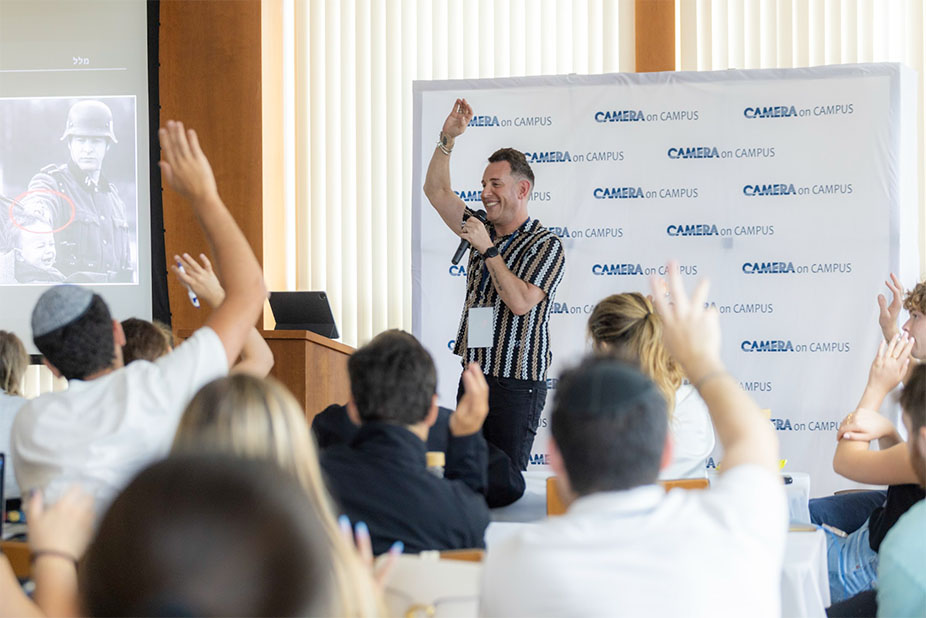
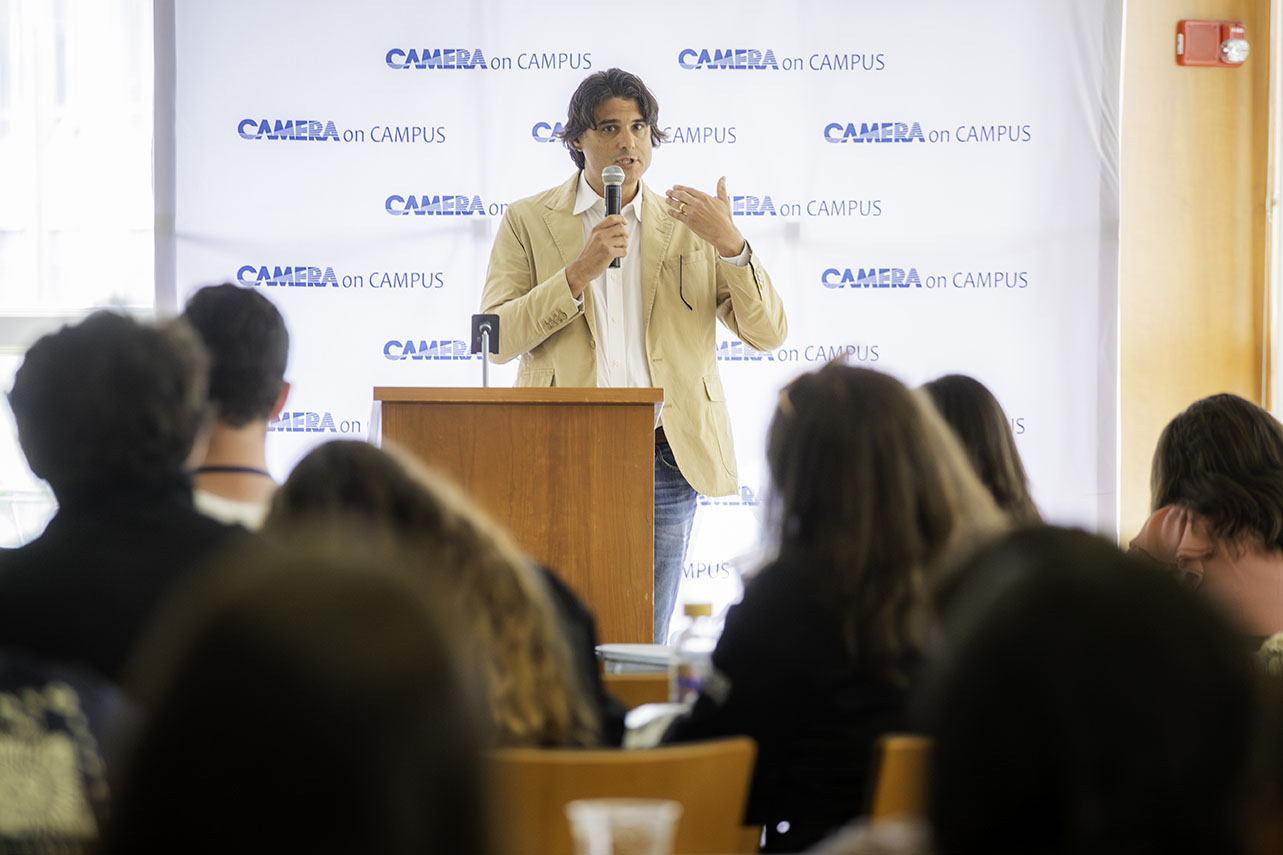
This year’s CAMERA (Committee for Accuracy in Middle East Reporting & Analysis) on Campus International Student Conference had “a far more serious tone” due to the “unprecedented” rise in antisemitism on campuses since Oct. 7, according to Campus Director Hali Spiegel. The 45 student leaders from the U.S. Canada, Israel and the UK who attended the conference in Boston on July 28-31 were eager to arm themselves with information to fight back against the surge of antisemitism on their campuses.
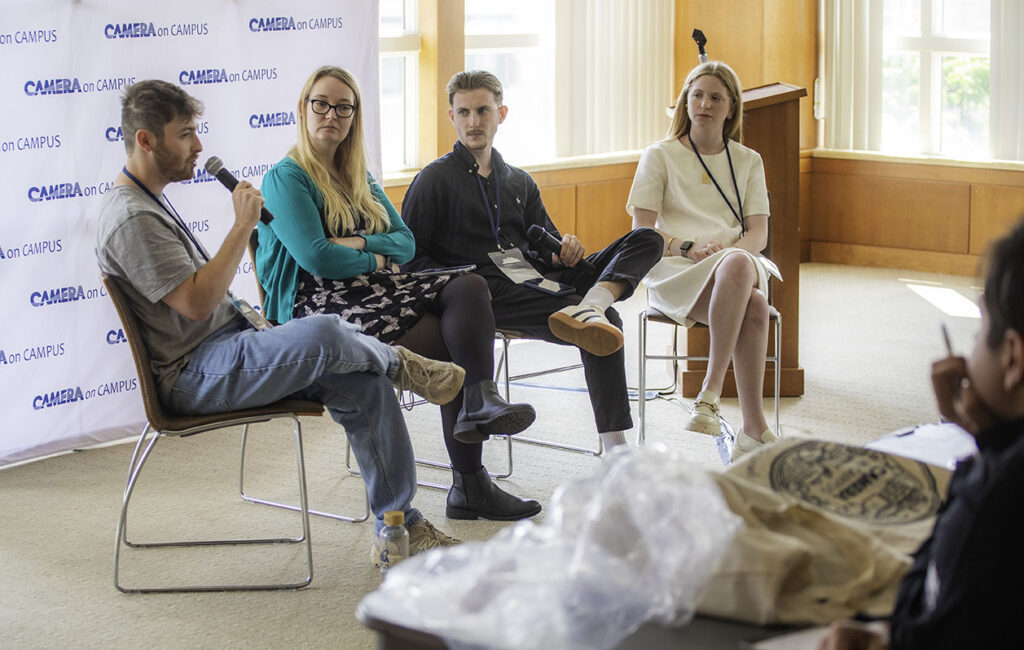
On the first day of the conference, a panel of students discussed their struggles on campus this past year. Panelist Brooke Verschleiser, a rising senior at Brown University who heads Brown Students for Israel, claimed that she obtained notes from the campus Students for Justice in Palestine (SJP) chapter that justified the Oct. 7 massacre “in the name of resistance.” Verschleiser said that she tried to get the story published in the campus student paper, but was rejected because her source wasn’t “reliable.” “SJP definitely outnumbers us,” she said.
That said, Verschleiser posited that a lot of anti-Israel students are “all bark and no bite,” pointing out that someone had left a note on a dorm room adorned with an Israeli flag that read, “those who support death will die by their own hand.” But no one ever admitted to leaving behind the note, which Verschleiser believes is further evidence that the anti-Israel students hide behind masks and don’t want their identities known.
Verschleiser predicted the upcoming academic school year will be a struggle, as the university made a deal with the anti-Israel encampment occupying campus earlier this year to vote on a Boycott, Divestment and Sanctions (BDS) resolution. She believes that if the resolution passes, the university will just throw their hands up when the Corporation of Brown University inevitably says no; at which point, she expects “all hell to break loose.”
Billy Alexander, a student at England’s University of East Anglia, recalled how the student union at his school issued a statement at his school after Oct. 7 decrying “the ongoing violence in the region” and condemned Israel’s “genocide.” The student union went into the code of conduct and declared their “integrity” to the BDS movement, claimed Alexander. “There was no time to mourn or anything,” Alexander said. He also claimed that the student issued a statement “that was just as bad” when Israel attacked the Iranian regime-backed Houthis in Yemen. Additionally, Alexander claimed two student union elected officers tried to ban him from the union for a year because he mentioned in an email that the two officers are a “disgrace” to their posts. “Apparently that’s considered harassment,” he said. Ultimately, Alexander was not banned.
Even Israeli universities haven’t been immune to anti-Israel activists. Robert May, a student at Ben-Gurion University, said that there have been anti-Israel protests on his campus — including Nakba Day (Arabic for “catastrophe,” which is how Palestinians view the 1948 war) protests — and young Israelis seem to be involved in them. He also claimed that a professor at his school brought a speaker from the Palestine Liberation Organization (PLO) who argued that Israel is implementing apartheid. May also claimed that around six or seven professors from the university signed onto a letter calling for the Biden administration implement an arms embargo against Israel; May demanded answers from the university president on the matter, to which the university president said that “there’s no place for stuff like this at our university” but in May’s view that wasn’t enough. May did, however, bring Jerusalem Post journalist Michael Starr to campus to discuss how SJP and Americans Muslims for Palestine (AMP) are funded.
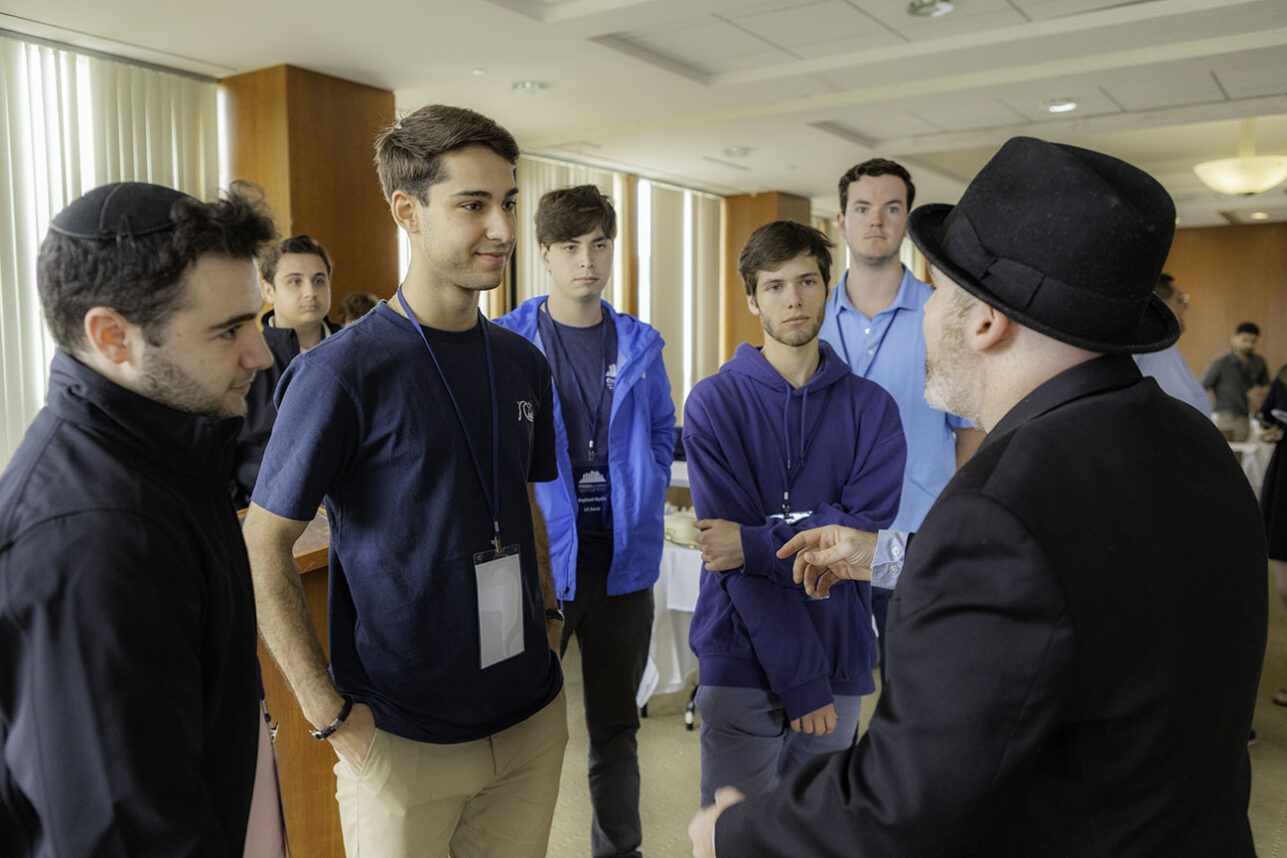
The Jewish Journal’s Aaron Bandler speaks to students (courtesy of CAMERA on Campus)
The Journal spoke to other students spoke to at the conference who shared similar stories of their campus experiences this past academic year.
“Sometimes it feels like it’s difficult to exist on campus.” – Raphael Myers
“It was pretty terrible and exhausting,” Raphael Myers, a rising senior at UC Davis, told The Journal. “It’s difficult to describe the amount of hostility on campus toward Jews and Zionists. Whereas before I felt safe going to the library and just going to random places on campus, now the moment classes are over, I immediately head to Hillel. Sometimes it feels like it’s difficult to exist on campus.” He claimed that the UC Davis SJP chapter “has consistently demonized us and dehumanized us, just for believing that Israel as a nation should exist. Many people have been called slurs, specifically the slur ‘zio,’ which was coined by David Duke and the KKK. We have had social media harassment where people have been stalked. We’ve had instances where the encampment has blocked buses during finals. We’ve had all manner of disruption on campus as a result of Palestinian protesters and it has created an atmosphere that is very unwelcoming and for almost all Jewish students … it has made them feel unsafe.” Myers added that when the anti-Israel encampment on campus was dismantled, Popular Front for the Liberation of Palestine and Hezbollah flags were found as well as signs depicting the red triangle symbol used by Hamas to designate targets.
Raphael Myers (courtesy of CAMERA on Campus)
He added it was “frustrating” to see “inaction” from the university administrators on the matter. “The only support network we as Jewish students and Zionist students have is each other, which is I would say a testament to our people’s strength.”
Mayan Zucker, a student at the University of the Arts London, recalled being shouted at on campus that she “should have died in the gas chambers.” Zucker also told me that she received an email from one of her teachers to students of Middle Eastern descent (Zucker was born in Tel Aviv) in her class inviting her to a discussion of the Nakba on Oct. 9 and to “bring spray paint and face masks” to join a protest afterwards. The teacher, who sent the email from their official university account, signed the email with “from the river to the sea, Palestine will be free.” She claimed the university told her that it was “freedom of speech” so there was nothing they could do about it. Zucker believes that the campus climate will be just as intense in the forthcoming academic school year, though she believes that antisemitism at U.S. campuses is more “physical” whereas in the UK it’s more “verbal.”
Information to Fight Back
The conference speakers were invited to educate the students as well as offer tactics and strategies to fight back in the information war. The Israeli Canadian TV personality Shai DeLuca, who spoke on July 31, told the students that they are fighting the war against misinformation right now, which he said “is so important to our existence.” DeLuca debunked various anti-Israel narratives, such as the trope that Israel is committing genocide in the Gaza Strip. He pointed out that the United Nations defines genocide as “proven intent on the part of the perpetrators to physically destroy an ethnic racial or religious group. Cultural destruction does not suffice nor does the intention to simply disperse a group.” He argued that there clearly is no intent on Israel’s part to commit genocide because, if that were true, the war would have been over on Oct. 8. “Why would we send our own soldiers our own children into Gaza … when we could simply carpet bomb the place?” DeLuca called the allegations of genocide against Israel “quite offensive” because it describes “Jewish history” like the Holocaust.
Shai DeLuca (courtesy of CAMERA on Campus)
Regarding the claim that Israel is engaging in apartheid, DeLuca pointed out that Israel has “a civil legal system in which everyone is equal.” He recalled that when he served in the Israel Defense Force (IDF) he had an Arab commander who “had control of my entire battalion. We didn’t think anything of it … Israeli Arabs serve in all aspects of Israeli life.” DeLuca also pointed to how an Arab judge convicted a former Israeli president, as well as a video of a Congolese Israeli border patrol officer explaining how he grew up in South Africa and that Israel is clearly not an apartheid state. DeLuca said that when he shares that video at his campus talks, there’s usually a male “as white as Casper” saying he’s wrong. You can’t argue with someone like that, added DeLuca.
As for those who claim Israel is a settler colonial state, DeLuca contended that the “return of Jews to our indigenous homeland after generations of colonization … is actually decolonization.”
DeLuca urged the students to follow celebrities and influencers like Gal Gadot, Montana Tucker, Ritchie Torres and Yoseph Haddad and to develop “allyship with groups outside of the Jewish community” to talk about Israel and being Jewish organically.
Kassy Akiva, a reporter for The Daily Wire who finished her conversion to Judaism a year ago, shared with students some examples of her reporting, including the viral video of Khymani James, a leader of anti-Israel student protests at Columbia University, saying during a livestream that “Zionists don’t deserve to live” (James has since been banned from campus) and a video of a protest at a Connecticut man’s house because he had a yard sign supporting Israel. One of the protesters turned out to be the city of New Haven’s director of community engagement, who Akiva said was subsequently put on unpaid leave for bit. She proceeded to go over some examples of online antisemitism and guided students on how they should handle it. For instance, a post on X telling Akiva not to “be surprised when you meet the same fate as Meir Kahane” — the Jewish Defense League founder who was assassinated in 1990 –– was reported to the FBI. Akiva responded to a post on X that contorted a picture of her husband proposing to her into a swastika by mocking it, telling the X user that she’ll make another Jewish baby “each time you tweet something antisemitic.” Dumb replies that get little views should be ignored, she told the students. Akiva believes that the campuses are lost but sees “glimmers of hope,” citing people like Bill Ackman pulling funding from universities and Claudine Gay stepping down as president of Harvard University.
Kassy Akiva (courtesy of CAMERA on Campus)
Other speakers at the conference included CAMERA Senior Analyst David Litman, Director of Communications Jonah Cohen and Associate Director Alex Safian.
Zucker told The Journal that the information she learned at the conference was “absolutely” helpful. “I have taken more notes and been given more information than I know what to do with,” she said, pointing to Cohen’s talk where he provided tips for debating anti-Israel narratives. One of Cohen’s tips was the “Gadfly method” of debating in which you simply ask three questions in response to an argument: What do you mean by that, why do you think that particular claim is true and then ask leading questions to expose holes and inconsistencies in a person’s argument. An example he pointed to was when Alexi McCammond, then a journalist for Axios, asked the Ben & Jerry’s co-founders in 2021 if they supported boycotting Texas and Georgia over their abortion and voting rights laws following the ice cream company’s Israel boycott.
Jonah Cohen (courtesy of CAMERA on Campus)
“It’s understanding where they’re coming from,” Zucker said. “Where is this information coming from … is it something that’s been passed down from family? Or is it an actual experience that they’ve been through?”
This author spoke to the students during a session about getting published in media, primarily discussing my experience as a journalist; I was peppered with questions from the students about how to go about handling certain journalistic situations. The students’ curiosity in the matter — and bravery — caused me to agree with Akiva when she said during her talk that there are “glimmers of hope” on the campuses.
After getting tipped off about an impending pogrom, Tevye, the Jewish dairyman who is the central character of Fiddler on the Roof, turns to God and says:
Dear God. ….I know, I know we are the chosen people. But once in a while, can’t you choose someone else?
Tevye kvetches about the covenant, imagining that a life free of chosenness would give him some peace and quiet.
While this quote is meant as a joke, it still poses a serious question. In times of misery and suffering, why didn’t the Jews turn their backs on Judaism? Why did they remain loyal to the covenant for 2,000 years of exile? During times of persecution, this question was no joke.
One of the most powerful pieces of Holocaust literature is Zvi Kolitz’ short play, Yosl Rakover Talks to God. It centers on the last will and testament of the title character, Yosl Rakover, which is recovered from the ruins of the Warsaw ghetto. Yosl has lost his wife and six children in a series of horrors; and now, as he is about to die, Yosl writes a letter to God. At the end of the letter, Yosl cites an account found in Solomon ibn Verga’s Shevet Yehudah:
My rabbi always told the story of a Jew who fled from the Spanish Inquisition with his wife and child, striking out in a small boat on the stormy sea until he reached a rocky island. A bolt of lightning killed his wife; a storm rose and hurled his son into the sea. Alone, solitary as a stone, naked and barefoot, lashed by the storm and terrified by the thunder and lightning, with disheveled hair and hands outstretched to God, the Jew continued on his way across the desolate, rocky isle, turning to God with the following words:
“God of Israel, I have fled here in order to be able to serve You undisturbed, to follow Your commandments and sanctify Your name. You, however, do everything to make me stop believing in You. Now, lest it occur to You that by imposing these tribulations You will succeed in driving me from the right path, I notify You, my God and the God of my father, that it will not avail you in the least. You may insult me, You may strike me, You may take away all that I cherish and hold dear in the world, You may torture me to death – I will always believe in You, I will always love You! Yea, even in spite of You!”
Rakover continues:
And these are my last words to You, my wrathful God: Nothing will avail You in the least! You have done everything to make me renounce You, to make me lose faith in You, but I die exactly as I have lived, an unshakable believer!
Kolitz’ script is a powerful statement of absolute faith. Although Yosl Rakover is a fictional character, his experience was true to life for many actual Jews. Yes, throughout history some Jews agreed that God should “choose someone else,” and cast their lot elsewhere. But like Yosl, so most remained loyal to the covenant. And that is remarkable.
Megillat Eicha (The Book of Lamentations) marks the first covenantal crisis, the first time the Jewish people had good reason to exclaim “choose someone else.” The Babylonians had conquered Israel and taken its king captive, destroyed the Temple, the center of Jewish worship, and exiled the Jews. It is an absolute catastrophe on every level. Megillat Eicha is written for these exiles.
Megillat Eicha presents itself as a well-ordered book; four of its five chapters are written alphabetically. But the book’s subject matter is very disordered.
There are many different views as to the meaning of the text. Is it an attempt to justify God’s judgment by pointing out the sins of the Jews? Is it a protest against God for punishing the Jews so harshly? Or is it merely an attempt to mourn, for the heartbroken to grieve together? Megillat Eicha is difficult to interpret because all of those sentiments, and more, are present in the text.
But one thing remains constant in Eicha: the covenant between God and the Jews will remain. This was far from obvious. Adele Berlin points out that stylistically Megillat Eicha has a great deal of similarity to Sumerian city laments. However, they are dramatically different theologically. The Sumerians saw the destruction of a city as an end, a time when another city would begin its dominance. Not so Megillat Eicha; even in destruction, the covenant remains. Everything else may disordered in exile; one’s thoughts and emotions may constantly change, in confusion and panic. But the covenant remains, from aleph to tav.
Megillat Eicha tells the story of the first Jews who refused to give up.
Why the Jews stuck with this covenant from catastrophe to catastrophe remains a mystery. Some see the undying faith of the Jewish people as evidence of a divine miracle. Secularists may see it as a response to antisemitism, a defiant stubbornness to give up in the face of hatred. Jewish philosophers might see it as an act of moral heroism; the Jews steadfastly refused to abandon their mission to make the world a better place, despite everything.
Another possibility comes from the very end of Megillat Eicha. After meticulously chronicling the pain and suffering of the destruction, Eicha comes to a close with the words “Bring us back to you, Lord, that we may return: renew our days as of old.” In the midst of destruction, there is a dream of renewal! This can only be seen as Jewish hope, an unwavering willingness to believe in a better future despite the miserable present.
Zechariah (9:12) refers to the Jewish exiles as “assirei tikvah,” a double entendre that means both “those who are bound to hope” and the “prisoners who continued to hope.” Hope defines the Jewish experience, and it has been a consistent source of strength and resilience in difficult times. Hope that we can “renew our days as of old” has kept the covenant alive.
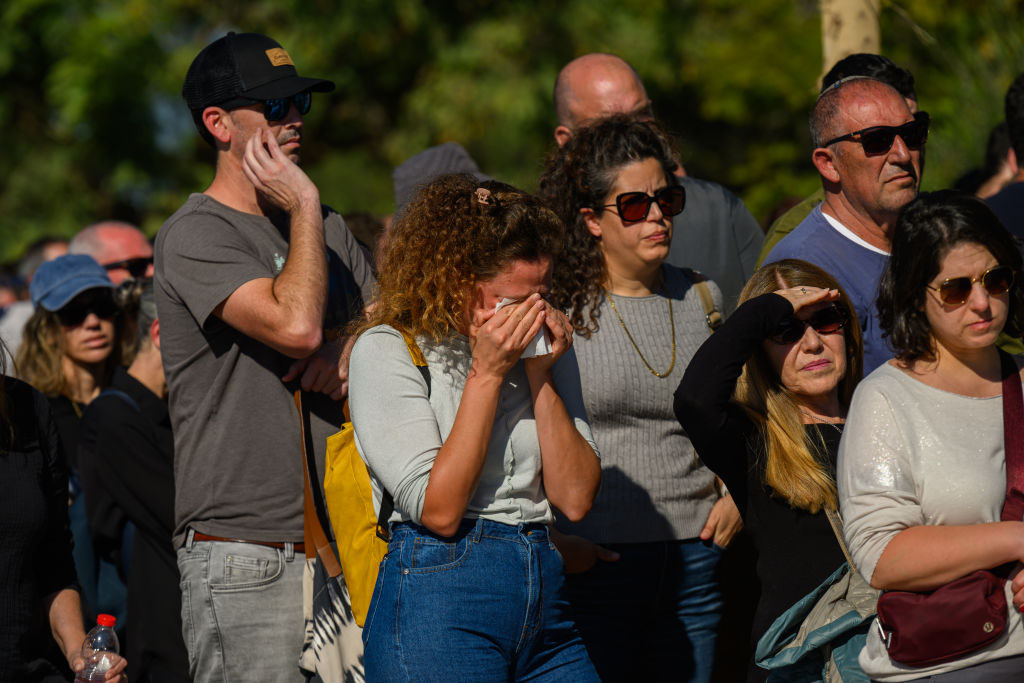
For the last 307 days, we have been a heartbroken people. Like Megillat Eicha, contradictory thoughts and emotions jump out all at once. Yet each day the Jewish people return back to the same covenant again and again. And that is because hope is part of our DNA.
Daniel Gordis recently shared an anecdote that speaks to this powerful hope. He wrote that:
One of the Shavuot traditions on kibbutzim all over Israel is harvest ceremonies…. which includes bringing out all of the new babies born on the kibbutz since the previous Shavuot….
In a video shared on Kibbutz Nir Yitzhak’s Instagram page on Erev Shavuot…. is the dance of the newborn babies of Kibbutz Nir Yitzhak and Kibbutz Eilot (residents of Nir Yitzhak have been relocated to Eilot since October 7…)
In the video, you’ll see a woman wearing a dress and white sneakers. She is Ela Balberman Chaimi, the wife of Tal Chaimi z’’l. Tal, a third- generation member of the kibbutz, was part of Nir Yitzhak’s emergency response team. On October 7, he was taken hostage by Hamas terrorists. It was later confirmed in December that he had been killed on the 7th and that his body is being held by Hamas.
In May, seven months after her husband was killed, Ela gave birth to their fourth child, Lotan. And here she is, with the rest of the kibbutz, dancing with “the first fruits” of the season……
Even after such tragedy, Ela and the women of the Kibbutz dance. You might say that maybe they should give up. Maybe they should choose to live elsewhere, maybe they should choose to be something other than Jews.
But they live by a covenant of hope.
And they won’t quit.
Rabbi Chaim Steinmetz is the Senior Rabbi of Congregation Kehilath Jeshurun in New York.
Thoughts on the Sabbath Before the 9th of Av (Parshat Devarim) 2024
We’ve all had moments of joy, connectedness, and purpose, where life felt as it was supposed to feel. We long to recreate those moments, to make them last. Well-being is within our reach. This is the good news.
For some of us, however, for some period of our lives, well-being seems unattainable. For some period of our lives, we might feel unfulfilled, unnourished, lost, alone, confused. We might take it out on ourselves or on others.
Misery, or the need to inflict misery because of our own misery, is inevitable. Sometimes misery comes from tragedy. Despite the good will of people, things unravel badly.
The good news is that if you are reading this, you are alive and conscious today. If you decide to, you can learn a teaching, and make use of it.
Here is the teaching for this period in the Jewish calendar, the commemoration of the destruction of the Temples, the memory of the land of Israel being laid waste. Let me start with an image. You are sitting among ruins, wind whistling through burnt out buildings. Or you are in a forest of trees blackened by a raging fire. You decide to put one brick on top of another. Or you go searching for a surviving sprout and start to nurture it.
Or you have lost your way, your ego-self having insisted on the always unique but well-travelled road to perdition. However, it’s today – you can take the road less traveled, the high road. How far? It does not matter. You are no longer on the road back to Egypt. You are heading elsewhere.
We are at the conclusion of the time in our calendar, the three weeks between the 17th Day of Tammuz and the 9th of Av. Both dates refer, in the minds of the ancient Rabbis, to the destruction of the Temple in Jerusalem in 586 BCE by the Babylonians, and in 70 CE by the Romans.
When the ancient rabbis asked the cause of the ruination of the Temples, they referred us to the Sin of the Molten Calf from Exodus 32 and the Sin of the Spies from Numbers 13-14. Those narratives are rooted in spiritual psychology archetypes of avoiding and rejecting truth.
“Sin” does not just mean a moral transgression, though it includes that. “Sin,” more existentially, means acting against our authentic nature – our authentic goodness as human beings.
The Sin of the Calf can be understood as the rejection of a divine teaching that would commit us to transforming ourselves – actualizing the well-being that is within our reach. The Molten Calf is the fixed place that justifies where we are now – that what we think, feel and say is right and true as an unreflective matter of habit. Truth beckoned, but the people preferred the familiar error of worshipping the young bull. The Worshipping of the Calf, as an ego-state, refuses any external criteria for truth and any path toward transformation. The Calf refers to Permanence, the way things were; the Divine takes to change. The Sin of the Calf is the rejecting of a teaching of truth so that we can live in a reality of our own making.
The Sin of the Spies is the sin of creating false history, to justify our current state of mind or feeling. It is gratifying in the moment to reject the truth and replace it with a reality of our contrivance, but those contrivances all eventually lead to misery.
The Spies, as a spiritual concept, represent the refusal to accept a reality, moral or otherwise, that does not match our feelings. The Sin of the Spies goes even further – the spies create a new reality. Conquering Canaan was a fearsome task, so, 10 of the 12 spies thought, it can’t be done. Any claim to the contrary was greeted with hysteria. Egypt was redefined (in a follow-up rebellion to the Sin of the Spies) as a land “flowing with milk and honey” (Numbers 16:13). The Israelites had pleaded with God to bring them out of Egypt; then they say that God brought them into the wilderness to kill them (also Numbers 16:13).
So, what is the truth? This is the right question. True – our inner lives are subjective; we experience the world through our own subjective lenses. It is also true that there is an objective world; there are other people and there are facts. There also exists a standard of the right way to live.
We assemble the truth of the right way to live through reflection on our own lives, including our engagement with other subjective human beings. We try to figure things out. Truth is assembled as a project, often with people with whom we disagree and wisdom traditions that awaken us from our torpor. Deep well-being is connected to living a life of truth. Misery is lies – those we tell ourselves, or those that other people are foisting upon us. (This is why I try to begin all relationship counseling with a “police report” – just the facts – to help people disconnect from the narratives that blind our vision.)
The city of ruins, the blackened forest, the journey to perdition are all the result of rejecting a life of truth. During this week, as we contemplate the ruins or the possibility of ruins, we also commit ourselves to a lifetime of the humbling, laborious work of building and planting truth, as we journey towards the Days of Awe, toward deep and sustained well-being.