fbpx

May 23, 2024

Ownership – A poem for Parsha Behar

For they are My servants, whom I brought out of the land of Egypt they shall not be sold as a slave is sold. ~ Leviticus 25:42

I own a coffee mug and
a pair of scissors and a
sofa (a few, actually).

I own a telephone and
headphones and a microphone.
I own a ring and a tambourine.

I own several guitars and
a book collection that has
gotten out of control.

I own file cabinets and a
desktop printer and a few different
coffee-making devices.

I own a car (it’s paid off!)
I own a home (by special
agreement with a bank.)

I own pants and a nice new
jacket, and file folders, and
numerous pillows.

I own a television and a treadmill.
I own a box of cords that connect
things to other things.

I own a mini jar that I drink
tequila from. I own a
Bootsy Collins action figure.

I own a very comfortable chair.
I own three cats (though, really,
they’re in charge.)

I own at least three domain names
Do I own the plants here? The cacti
and the rose bushes? The purple

and orange ones in the front?
Maybe. But they seem to be
doing their own thing.

I own all these things.
But the one thing I’ll never own
regardless of who they are

or how kind we’re instructed to treat them
or whatever the holy text says
is another human being

and neither should you.


Rick Lupert, a poet, songleader and graphic designer, is the author of 28 books including “God Wrestler: A Poem for Every Torah Portion.” Find him online at www.JewishPoetry.net

Ownership – A poem for Parsha Behar Read More »

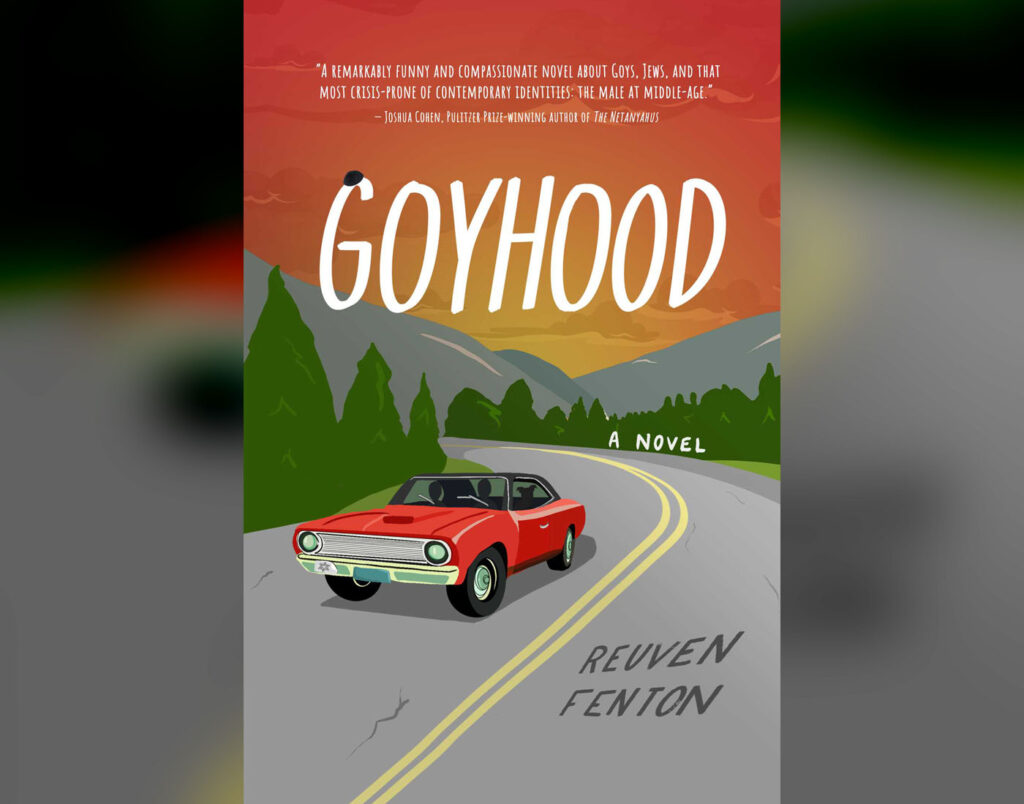
Jewish Brothers Find Out a Sinful Secret in New York Post Writer’s Debut Novel

If you were living your life based on a lie, would you want to know the truth?

New York Post writer Reuven Fenton’s provocative and humorous debut novel centers on the two Belkin brothers who react differently to a shared trauma. Mayer, who left Georgia to move to Brooklyn and became religious through Chabad, has a wife, a simple life and a flip phone. Things turn upside down when a final letter from their mother explains that she was not Jewish, so neither are they, as the law goes by matrilineal descent. His brother, David, who is a bit wild, isn’t religious and has made so much money with an e-cigarette business that he has a chauffeur, sees this as an opportunity to go on a road trip with his brother and reconnect. Mayer, on the other hand, decides he must stall his wife and have a quickie conversion so when he drops the bombshell, she won’t be as upset.

Fenton plants the “grass is always greener on the other side” tree here as the twang in Mayer’s accent comes back and he no doubt thinks about the freedoms he lost by becoming religious, while David may wonder about some stability or thinks he may have missed out in by chasing after money rather than getting married.

Fenton said the two brothers represent aspects that are a part of him as at one time in his childhood, he was observant

“I think that comes from abrupt transformations,” Fenton told the Journal. “I was clinging to the secular when I became Orthodox at 11 — there are opposite charges that are still inside me to this day.”

“I was clinging to the secular when I became Orthodox at 11 —there are opposite charges that are still inside me to this day.” – Reuven Fenton

I’ve always been amazed at how someone can be infuriated if a parent orders a sandwich for them at a deli, without letting them pick, but that same person may never ask themselves a single question and live a life religious life (be it Jewish, Muslim, Christian, atheist or other) as their parents have prescribed.

Fenton uses a number of phrases that only Jews would know such as “Hasgacha Pratis” (which means it is part of God’s plan; Mayer corrects David’s mispronunciation of the word) but the novel is accessible and can be enjoyed by people of any faith or none at all. That’s because conflict is universal. Are we passively driving the cars of our lives on a GPS system installed when we were children, or can we suddenly turn left if we want to?

It is important to note that there are some Jews who use the word “goy” in a derogatory way to describe in someone who is not Jewish, but it is clear that Fenton has no ill intent and is playing on the word “Boyhood.”

One of the things I liked in this novel was that it was unpredictable. The characters were credible and their dialogue was as it should be. The fourth chapter’s opening will grab you by the throat and likely cause you to pull at your hair and gasp.

Rumspringa, in which the Amish allow their youth to have experiences in the outside world that is usually denied them, is mentioned, and Charlayne, who is not Jewish, says that “chasing adventure has its perks, but after a while, you feel like a dog chasing its tail.”

Debbie, a Jewish character says: “I believe God delights in us contemplating his intentions especially nowadays when fewer and fewer people give God any thought at all.”

“Goyhood’ is a tasty literary pot of cholent where the beans are the morals, the meat is the ambition, the work is the potatoes, and the kishke is the soul. The Belkin brothers fight but love each other. Fenton threads the needle through the fabric of Judaism, poking fun here and there without being mean spirited or insulting.

What about the humor in his book?

“I’ve always been kind of drawn to comedy and tried to be funny and I’m always cracking jokes,” Fenton told The Journal. “I’ve been told I have a dry sense of humor.

I would be very gratified if unaffiliated Jews would read this and get something out of it and turn them on to Judaism,” Fenton said. “For the average reader I would want them not only to be entertained but to feel like they understand Judaism better.”

“Boyhood” is a bit of “The Chosen” meets “Shtisel” meets “The Hangover” but with no significant debauchery.  It is a well-paced book that will make you laugh and probably appreciate life a little bit more.

Jewish Brothers Find Out a Sinful Secret in New York Post Writer’s Debut Novel Read More »

A Bisl Torah – First, Look Inward

The Torah introduces us to the idea of not defrauding another person. Leviticus 25:17 teaches, “Do not cheat one another, but fear your God.”

Hasidic master, Rabbi Simcha Bunim cautions us in our reading of the verse. He says, “Do not read amito (one another) but instead, read emet (truth). Exchange the letter ayin with the letter aleph.” Meaning, do not cheat the truth from yourself.

It is much easier to criticize and judge someone else than it is to be honest with one’s own misgivings. Fingers pointed somewhere else. Others gossip. Others litter. Others find ways to cheat their neighbors. Rabbi Simcha Bunim teaches that we must first confront the lies we tell ourselves. Don’t cheat yourself in admitting the truth. We all have versions of ourselves we’re not willing to accept.

Before casting aspersions on our neighbors, consider your own behavior. First, look inward.

Shabbat shalom


Rabbi Nicole Guzik is senior rabbi at Sinai Temple. She can be reached at her Facebook page at Rabbi Nicole Guzik or on Instagram @rabbiguzik. For more writings, visit Rabbi Guzik’s blog section from Sinai Temple’s website.

A Bisl Torah – First, Look Inward Read More »

By Using Wiesenthal Gala for a Rant Against Netanyahu, Honoree Ari Emanuel Lost the Plot

Up until honoree Ari Emanuel began his divisive rant against Benjamin Netanyahu at the Simon Wiesenthal Center’s National Tribute Gala last night, the evening was everything you’d expect from these kinds of events—uplifting, unifying and hopeful.

Everyone knows that this is what fundraising galas are for—to unite people around a mission, not divide them around politics.

Indeed, in his opening remarks, new CEO Jim Berk praised Emanuel for his “leadership in supporting this event, and our mission” and for “exemplifying how all executives and people of influence should behave.”

The evening, which honored Hollywood powerhouse Emanuel with its Humanitarian Prize, focused on how the SWC is doubling down on its mission to fight hate and promote tolerance in light of the alarming rise in antisemitism since October 7. The videos, the speakers, the honorees were all there to pull at the heartstrings, which is exactly what these galas must do to succeed. By the time you get to the valet line, your heart should be full of empathy for the cause.

In this case, however, by the time people got to the valet all they could talk about was Emanuel’s surprise rant against Netanyahu. There were even boos and walk outs. The story of the rant is now all over the Hollywood press.

You’d never guess Emanuel would have gone in that direction by listening to the powerful first half of his speech, which is worth quoting in full:

“I want to thank the Simon Wiesenthal Center for this honor and for the indispensable work you do to fight anti-Semitism and hate in all its forms. We need you now more than ever.

“This is a painful and crucial moment for all of us who are Jews and who love Israel. It is not a moment to stay silent.

“My connection to Israel goes back to before I was born and even before the state of Israel was founded.

“In 1933, my uncle Emanuel Auerbach died during a massive protest in Jerusalem when a bullet struck him and killed him. Our last name was changed to Emanuel in his memory. I remember sitting with my family in front of the TV watching the first early morning reports when the Six-Day War started, praying that Israel would survive. Less than three weeks later, my mother, my brothers and I were on a plane to be in Israel ourselves. We returned summer after summer for six years.

“Israel is a small country. And in the entire world, there are only 15 million Jews. Precariousness is not something that ever needs to be explained to a Jew. We’re keenly aware of our position in the world — and what can happen if we forget.

“So we have to be better. Stronger. Wiser.

“One lesson of our history is that we must defend ourselves.

“All wars are brutal. Women, children, and civilians suffer. It is terrible.

“Yet some wars are justified. Israel did not start the war in Gaza. Hamas did.

“And I won’t even dignify with a response the outrageous decision by the I.C.C. to equate the murderous attacks by Hamas with Israel’s right to defend itself.

“Hamas slaughtered innocent Israelis — as well as civilians of the United States, Canada, Germany, Thailand, and many other countries. They were sexually assaulted, raped, mutilated, and tortured.

“Hamas has pledged to wipe out Israel. That is its raison d’etre. We all know in this room what “from the river to the sea” means — it’s a promise to eliminate Israel and all the Jews from the river to the sea.

“That is the definition of genocide.

“People who chant this slogan are calling for the end of the Jewish state. Students who say ‘Zionists don’t deserve to live’ are not misguided kids — they’re anti-Semitic thugs. This isn’t about free speech. It’s about right and wrong.

“The world is rightly outraged by the deaths of innocent Palestinians in this war. The UN has now cut by nearly half the number of women and children believed to have been killed in Gaza.

“But there is no doubt the number is still heartbreaking.

“The loss of even a single innocent child is a tragedy.

“But Israel cannot be the only country in the world that has to put up with terrorists on both its northern and southern border who, again and again, openly state their commitment to the destruction of Israel and all Jews, and act on that commitment.

“And who on October 7th broke another cease fire. The sort of cease fire that many are calling for now.

“And where is the outrage about the civilians being killed right now in Sudan, where earlier this month Human Rights Watch warned that an actual genocide could be unfolding? In Ukraine? Where were the campus protests when the Syrian dictator slaughtered his own people? According to the UN Human Rights Office, over 300,00 civilians have been killed there. Where were the protests when the United States attacked ISIS in Mosul in Iraq and thousands of civilians died?

“It is one thing for Jews to hold ourselves to a higher standard. But Israel should not face a double standard.

“Let’s be clear: Israel is not targeting civilians the way terrorists do. Israel is targeting the Hamas fighters who planned and perpetrated the October 7th attacks, who deliberately hide among civilians and use them as human shields, who put command centers and supplies in schools, mosques and hospitals, and who commandeer ambulances to move around. And who continue to fire rockets into Israel, like the 14 rockets that launched on May 10th.  Those are choices Hamas has made.

“They are the ones who continue to make all of Gaza a battlefield.

“Hamas could end this war today. They could free the hostages today. We don’t know how many exactly remain in captivity or alive because Hamas refuses to even release the details.

“Of course, they will not do that. Hamas started this war, and they continue to wage it, and so Israel must fight it.

“But it is up to Israel to decide how. And make no mistake: For the security of Israel and the sake of innocent people on both sides, this is a war that does need to end. Not just the fighting in Gaza but the broader conflict with the Palestinians.

“That means negotiating a political two-state solution that delivers peace, security and dignity for all. This won’t be easy. It will be incredibly hard. But it is not impossible.

“As Yair Lapid wisely said recently, ‘in order to stay the strongest country in the Middle East,’ Israel needs to ‘stay the strongest democracy in the Middle East.’ And to do that, Israel must start ‘the long journey’ to separate from the Palestinians. Lapid is right when he says that separating is not a favor or reward for the Palestinians. It’s for Israel’s own good – for Israel’s survival as a democratic Jewish state.

“The majority of Israelis and Palestinians want the same thing: For their kids to be healthy and go to school, to make a living and live a peaceful life they can pass on to the next generation.

“I know a bit about negotiations. My mother taught me, you don’t negotiate peace with friends. You don’t negotiate with allies. You negotiate with enemies.

“But to get there, you need strong and wise leaders on both sides.”

Emanuel could have wrapped up his speech right there. He had honored the group that honored him, as well as expressed some sharp personal views on the situation in Israel. He could have lamented that “we don’t have these strong and wise leaders at the moment,” which would have made clear where he stood, and ended with a recognition of the strong and wise leadership that was evident throughout the evening.

But instead of gracefully threading that needle, he jumped in with a full-throated takedown of Netanyahu, devoting about half of his 15-minute speech to rail against the Israeli prime minister.

This is where he lost the plot.

“Israel is being led by a man who doesn’t want a peaceful solution. He only wants to secure his own power and political survival,” Emanuel said in his diatribe that is now the lead story in coverage of the gala. “He is an agent of chaos, hatred, division and destruction — and enough is enough.” The rant went on and on interminably.

The point was not whether Emanuel is right or wrong. I’m sure he felt strongly that he was speaking important truths. In fact, for anyone who reads Thomas Friedman in The New York Times, these criticisms are already quite familiar.

The point was that Emanuel ignored a classic rule of Hollywood: Read the room. Call your audience. Timing is everything.

His timing obviously was terrible. He wasn’t at a summit for a think tank. He was at a gala in Beverly Hills for a beloved global organization that prides itself on bringing communities together around a common cause.

His timing obviously was terrible. There were boos. People walked out. Even the scattered applause confirmed the divisiveness of his speech.

Emanuel wasn’t speaking at a summit for a think tank. He was being honored at a gala in Beverly Hills by a beloved global organization that prides itself on bringing communities together around a common cause. Of all people, he should have known that nothing is more divisive these days than politics.

As a result, the gala became about him, and not an organization, as he himself noted in his speech, that does “indispensable work to fight anti-Semitism and hate in all its forms,” and that “we need now more than ever.”

Maybe the honoree can ask for a sequel.

By Using Wiesenthal Gala for a Rant Against Netanyahu, Honoree Ari Emanuel Lost the Plot Read More »

Iran, We May Be Enemies, But Can We Have a Love Story?

UCLA has been highly visible in the news recently because of the unhinged escalation of protests and rampant antisemitism on its campus. Yet for some reason, I felt an uncanny pull to visit my undergraduate alma mater to see what has become of the place where I spent some of the best years of my life.

As I drove past my old sorority house on Hilgard hoping to find that needle in a haystack parking spot, I looked across the street and saw the UCLA Faculty Center, and that is where my memories flooded back to me in a wave of nostalgia and longing for a time that once was, before the real world changed my future reality. It was simple. When I was 19, I needed to find a campus job to pay for my massive phone bills incurred due to having an Israeli soldier as a boyfriend and I was willing to work day and night for minimum wage to hear him woo me in Hebrew for five minutes a day.

However, as they say in the old country, when man plans, God laughs. Not only did I manage to land a job, but I also walked into a living and breathing fully functional Farsi-speaking ecosystem. Everyone from my co-workers to my bosses was Iranian, and I wasn’t going to waste this unexpected opportunity doing useless things like homework or studying on my off-peak hours. I was going to learn to read and write Farsi. My co-workers Mina and Pamela began to teach me, and my bosses Ali and Hamid began to embrace the novelty of the dokhtare sefid (white girl) scribbling the Persian alphabet in her notebook underneath the cash register after the mad lunch rush of professors. By the following semester, I was enrolled in Professor Hagigi’s Farsi class ready to forge the path to a new Middle East with youthful optimism and extreme naivete.

My unusually pale skin, blonde hair and awkward out of place excitement had my classmates wondering if I had wandered into the wrong classroom as their gorgeous Mediterranean faces stared at me like I was an ugly American trying to order tacos in failed and pitiful Spanish at Baja Fresh. I sat down and that is when our beloved professor entered and began by asking everyone “Kojayee hastid?” or “Where are you from?” Most of the answers were predictable—Tehran, Isfahan, and even Hamedan where some snickers were heard given the region’s reputation for being overly cheap to the point of obscenity. When it was my turn, I answered with composure and keen attention to authenticity of accent, “Man lehstani hastam,” or “I’m Polish.” I think that was a first for Professor Khanoome Hagigi but what followed was a year of a virtual treasure trove of learning that, along with the privilege of learning with Dr. David Myers and the late Dr. David Ellenson, defined the greatness of my undergraduate experience.

So much of our learned experiences are limited by forces beyond our control. While I dreamed of visiting the villages of Isfahan where the most intricate dast baf (handwoven carpets) are made and tasting kababe khoonegi (homemade kabob) from a street vendor in the bustling bazars of Tehran, I knew that my wings would be clipped by the fact that I am a Jewish woman and a brazen one at that. There are many reasons why the Iranian Revolution happened when we consider it through the obligatory historical lens. However, none was acceptable to me as a 19-year-old who wasn’t used to hearing the word “No” for any goal I had set my heart on and especially for some reason as miniscule as my gender.

I read recently that the Mullahs in Iran are doubling down on the harsh enforcement of the hijab. This further escalation of Islamic fundamentalism is likely an effort to match the tenor of their regional posturing having foolishly chosen to attack Israel and consequently suffer a humiliating defeat. My heart sank first and foremost for the women like the late Mahsa Amini whose bodies have defined the battleground of Islamic fundamentalism for the past 45 years. On a much less important and selfish note, this served as yet another reminder of how my life’s aspirations are determined by forces out of my personal control and that fills me with resentment toward how the games played by nations often define our individual paths.

One of my favorite images of pre-revolutionary Iran is that of the late Shah of Iran, Mohammad Reza Pahlavi, gleefully jumping over a fire to celebrate Chanarshanbe Suri, officially ending the year and ushering in Nowruz, or the Persian New Year. How I wish I could partake in the authenticity of this ceremony in Iran, joining hands with Iran’s Muslim, Bahai, Zoroastrian, Christian and of course Jewish communities.

Shah of Iran Mohammad Reza Pahlavi, jumping over the fire on Chanarshanbe Suri (Aidepikiwnirotide/Creative Commons Attribution-Share Alike 4.0 International license)

Let me love you, Iran, and I promise to bring the best of my Ashkenazi heritage to the table-minus the gefilte fish.


Lisa Ansell is the Associate Director of the USC Casden Institute and Lecturer of Hebrew Language at Hebrew Union College-Jewish Institute of Religion Los Angeles

Iran, We May Be Enemies, But Can We Have a Love Story? Read More »

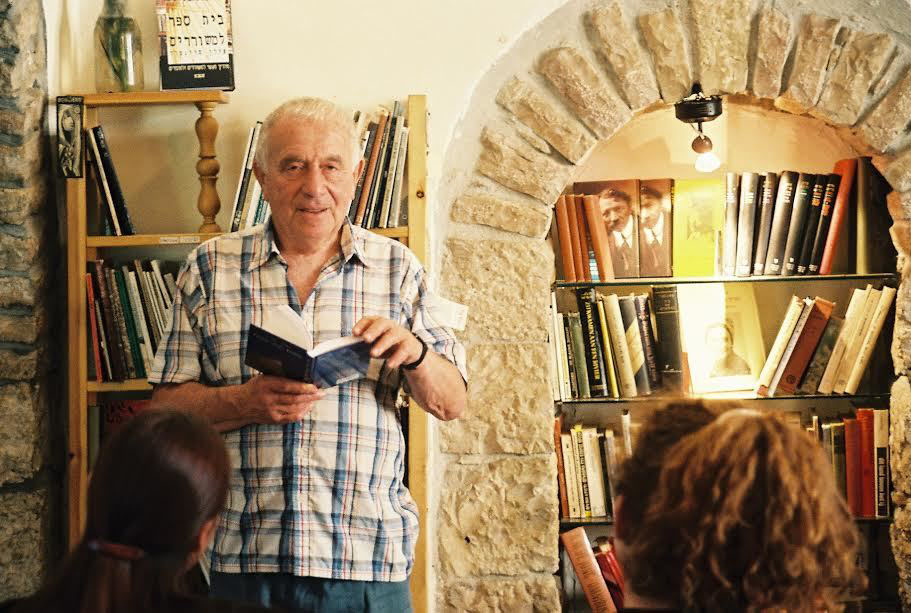
Rejoicing About My Birthday Shared with Yehuda Amichai

Although Yehuda Amichai was born on May

the third in 1924, in Germany,

exactly fourteen years before the day

that I was born there, our two termini

will probably be less similar. The date

on which I’ll I reach, my fatal terminus,

unlikely to share this strange fate. The world must wait

to find out if Death’s Angel will determine us

to have not only shared the wish to write

in verse about our inner thoughts and feelings —

shared like the date on which we came to earth

and tried in wordways to break prosaic ceilings

by celebrating with our verse our birth —

but the date on which our souls departed

from earth, a thought that should not ever make

the readers of this poem feel downhearted

before they read it, maybe at my wake,

my timbers shiva’d unlike those of Finnegan,

and celebrated like the day of Bloom,

inspiring non-mourners to begin again

to laugh by reading what I wrote before death’s doom.


In a wake where wanderers are woke,

do not reject my most traditional views

as a being a stale geriatric joke,

as some regard the odd choice of the Jews

by God, the heaven’s President,

whose life He’ll never choose to lose,

eternally preventing such a precedent.


In “The Jewels of the endtime,” TLS, 5/3/24, Robert Alter writes:

https://www.the-tls.co.uk/articles/yehuda-amichai-at-100-essay-robert-alter/

Yehuda Amichai, who was born a hundred years ago on May 3, was a rare literary phenomenon. A bestseller in his home country, Israel, he was also something of a sensation internationally, with translations in more than forty languages and an enthusiastic following, especially in anglophone regions. His unusual success can be explained in part by the engaging accessibility of his poetry, though there is more to it than meets the eye encountering it in translation. It also has to do with the humanity of his poems. He lived in a country beset by war and the constant threat of war. (He had come to Palestine with his parents and sister from Germany in 1936, at the age of twelve.) His poems bear witness to the terrible toll of war and to the urgent need to preserve the preciousness of private experience in a war-torn world.


Gershon Hepner is a poet who has written over 25,000 poems on subjects ranging from music to literature, politics to Torah. He grew up in England and moved to Los Angeles in 1976. Using his varied interests and experiences, he has authored dozens of papers in medical and academic journals, and authored “Legal Friction: Law, Narrative, and Identity Politics in Biblical Israel.” He can be reached at gershonhepner@gmail.com.

Rejoicing About My Birthday Shared with Yehuda Amichai Read More »

A Moment in Time: “Torah – the Bridge of our People”

Dear all,

Eli found a 100 year old Torah commentary in our home library that had belonged to the grandfather of my husband, Ron. He opened the book and (accompanied by his bunny) perused the pages.

Eli’s not so little hands touched the same text that the generations of our family had studied for over a century.

What’s so incredible about Torah and the way we approach it – is that:

we read it

we question it

we debate it

we challenge ourselves through it

we revisit it

and we might even reject parts of it….

But we do not walk away from it.

Torah is the bridge of our people. Wherever we are, whenever we are, its words connect us with both uplifting wisdom as well as challenging passages.

We don’t have to embrace Torah as our science textbook. But it is our story. And in any given moment in time that we engage with its teachings, we add our voices to the pages of our people.

With love and shalom,

Rabbi Zach Shapiro

A Moment in Time: “Torah – the Bridge of our People” Read More »

Print Issue: Wokepedia? | May 24, 2024

CLICK HERE FOR FULLSCREEN VERSION

Print Issue: Wokepedia? | May 24, 2024 Read More »

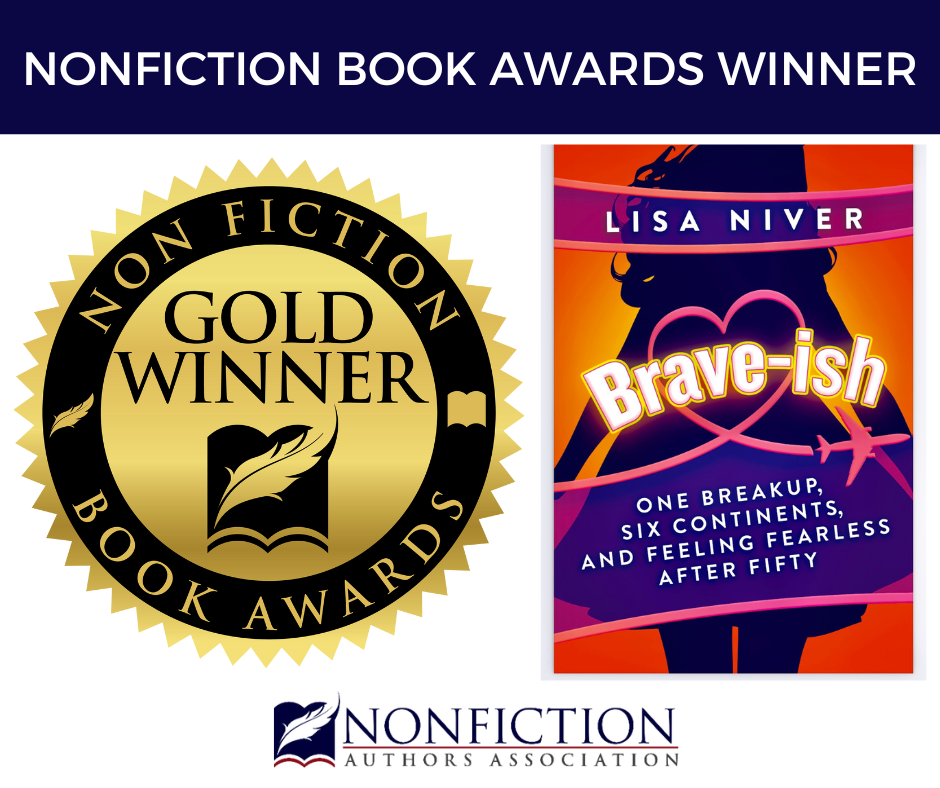
Brave-ish is a GOLD NonFiction Book Awards WINNER!

My memoir, Brave-ish: One Breakup, Six Continents and Feeling Fearless After Fifty, is a GOLD NonFiction Book Awards WINNER!

Thank you to the Nonfiction Author’s Association for this incredible honor and these amazing reviews!

  • The beginning of this book is just a prelude to a fascinating story of one woman’s lifelong career as a traveler and writer. Though Lisa Niver’s story begins with the end of an abusive marriage, she is able to pick herself up and turn her love of travel and writing into a career. With a background as a teacher and experience working on cruise ships, Lisa opts first for a career as a host on cruise ships, then turns to writing about her trips to Asia which always included diving outings. Though originally terrified of diving, Lisa finds her way to a love of investigating waters, natural phenomena, and sunken treasures.
 
  • A quick pace, easy reading, very good start to set out the background to her adventures. Short chapters mean you definitely want to hear more about her adventures and what she chooses to do next. You can see why she was initially attracted to her husband, so the eventual break-up is very sad.
  • Lisa Niver, author of Brave-ish, is the heroine of her own story and if this weren’t her own story, it would be a wonderful fiction/fantasy novel; but the truth is it’s not imagination. At its core it’s a story of survival and growth after near tragedy.
 
  • There are a lot of beautiful descriptions of places visited and the sometimes-odd activities she enthusiastically took part in. There is also an interesting discussion about her sight and how everything suddenly made sense. Basically, you can see why the marriage couldn’t work and it is a relief when she finally gets to lead the life she wants. I love the list of 50 things to do before her 50th birthday!
 
  • Niver has the reader ride a wave of up and down emotions included with action and adventure that would rival any of Hollywood’s movies. Surviving a disastrous, abusive marriage that she did not see until it almost caused her demise. Being brave enough to get out from under the abuse, she starts and new life and thrives. But that wasn’t enough for the heroine of the story. She kept challenging herself to grow and overcome, at times, insurmountable obstacles. She accomplished things she never dreamed of and fulfilled items on her wish list. Yet, if there wasn’t enough to her journey of growth and survival, she takes on the challenge of accomplishing 50 Things Before her 50th Birthday in a very short time frame. And the reader is off again on another round of action and adventure as Niver learns new things, explores new places across six continents. Niver wants to be fearless after fifty and tries things that would make a seasoned professional squeamish and any woman over fifty clinging to the safety of her bed covers. Her courageous behavior clearly indicates that is fearless. Niver’s story shows us her portrait of life and her philosophy of life. Brave-ish is a story of survival that speaks to any woman and lets them see what can happen if you let go of your fears, expectations, and perceptions.
 
  • It is not just the story of a travel writer, but of the strength and tenacity you need to become one. Very brave!
2024 Gold Nonfiction Book Award by Nonfiction Authors Association 2024 Literary Titan Nonfiction Gold Book Award 2023 Zibby Awards Runner-up: Best Book for The Strong Woman 2023 1st place HEARTEN Book Awards winner for Inspiring & Uplifting Non-Fiction 2023 WINNER: Goody Business Book Awards: Memoir/Self-Help Featured in Conde Nast Traveler Women Who Travel Book Club: 10 New Books We Can’t Wait to Read this Fall As seen in Forbes Best New NonFiction

BRAVE-ish is a winner: 2024 Literary Titan Gold Book Award

Goody Business Book Awards: Memoir/Self-Help

Zibby Awards: Best Book for The Strong Woman

My Podcast, Make Your Own Map, won 2nd place for Diversity in TV/Streaming at the NAEJ Awards

My website is #10 on the top 100 Travel Lifestyle Blogs and Websites

I am also the #3 Top Travel Influencer for 2024 for Afluencer as well as #10 of Female Influencers Brands Can’t Get Enough of for 2024!

I want to send a special thanks to my awesome literary agent, Chip MacGregor and my phenomenal Post Hill Press editor, Debra Englander! This team has believed in my book from the very beginning. I am very grateful.

THANK YOU for all of your support.

My AUDIO BOOK of Brave-ish narrated by ME is now available!

Brave-ish is a GOLD NonFiction Book Awards WINNER! Read More »

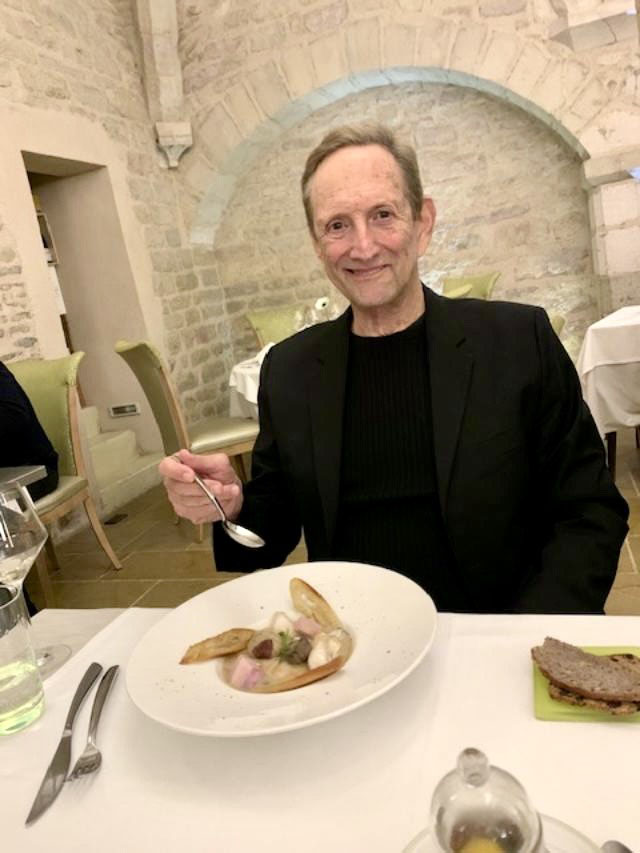
Murray Kalis: Advertising, Food and Mexican No-Matzo Matzo Brei

Murray Kalis has lived the “Mad Men” life in real time. And while you may not know the name, chances are you’ve seen many of Kalis’ creative advertising endeavors.

Taster’s Choice Decaffeinated Coffee: “If you didn’t know the difference, you couldn’t taste the difference.”

Noah’s Bagels: “From NY to LOX,” rather than LAX.”

WisPride cheese spread: “The best thing to happen since sliced bread.”

Santa Monica resident Kalis, who was honored in May at Mishkon Tephilo’s annual gala, started his career in advertising in August 1970. He went from copywriter to VP/creative director with Leo Burnett in Chicago (Schlitz beer, Taster’s Choice). He then moved to Los Angeles as creative head for Young & Rubicam (he worked on brands, such as Kraft Foods, KFC, Wienerschnitzel and Nissin’s Cup o’ Noodles), before starting his own agency.

While Kalis has not solely worked on packaged goods (aka food), he has played a significant role building up names such as STAGG® Chili, Hormel Foods, Wetzel’s Pretzels and Starbucks Coffee. He is also helping the future generation with Murray Kalis Award for Creativity in Advertising at the College of Media of his alma mater the University of Illinois (BS 1861). Kalis endowed this award to emphasize to students the importance of creativity in advertising.

“The technology changes, people don’t change,” Kalis told the Journal. “They’re looking for that new taste, that new thing … or they’re looking for the memory of something wonderful, like mom’s special soup.”

Whether someone is seeking convenience, speed or something else, it’s the job of the advertiser to identify the consumer’s needs and wants and find a creative way to capture their attention.

“There’s gotta be a reason,” Kalis said. “If they’ve tried you, you want to give them a reason to try you again.

He added, “People need to eat, but they want something special.”

Today, Kalis is a strategic investor and consultant on advertising strategy and creative direction for fast-growing Dave’s Hot Chicken, including developing their current television campaign.

The thing that they discovered with Dave’s Hot Chicken is people would be so excited to try it, they would post their first taste on Instagram.

“So here I am, from the 1970s to the 2000s, and finding these Instagram posts [where] they are absolutely blown away,” Kalis said. “Sometimes their head goes back and they are really knocked out by it.”

Kalis uses Etta James’ “Something’s Got a Hold on Me” from 1962 to illustrate customers’ experience in the ad. “It must be love,” the song says.

The food memory that sticks out for Kalis is sitting in the kitchen while his grandmother made gribenes; he was three or four years old at the time.

“She did everything by hand; she would bring home a chicken and she would skin it,” he said. “She’d fry it, put some kosher salt on it and give it to me; it was just amazing.”

He added, “She would put the gribenes inside the matzo ball, so it was a surprise.”

Putting that secret ingredient (extra effort, love, enthusiasm) in matzo balls – and advertising – is what makes it extra special.

Kalis cooked a lot for his kids growing up, and he still likes to cook. His kids, now grown up and married, asked him for recipes.

One of his favorites is Mexican No-Matzo Matzo Brei.

“If you’ve been snacking on the taco chips, you get to the end of [the bag] and there’s all those little broken pieces and everything,” Kalis said. “Just like you do with matzo, pick up a handful, run them underwater, throw them in a bowl, break some eggs over them, stir it all up and scramble it.

“It’s fast, it’s easy, and it’s a great breakfast surprise.”

Connect with Murray Kalis on Linkedin.

For the full conversation, listen to the podcast:

Mexican No-Matzo Matzo Brei

By Murray Kalis

2 hearty servings

 3-4 eggs

milk

butter

tortilla chips

2 tortillas

avocado

salsa

plain yogurt

Cilantro

Whip up the eggs, just like you always do for matzo brei. Then, instead of matzo, crunch up the leftover tortilla chips and toss in. Empty all the little pieces left in the bag. Whip that all together. Melt the butter in your frying pan, and go ahead and scramble, stirring to keep it chunky.

For each serving, put a warm tortilla on a plate. Scoop the scrambled eggs and chips on the tortilla, then put on a couple of slices of avocado, plenty of your favorite salsa –jarred is fine– and sprinkle around some cilantro. (If you use fresh cilantro, you can even dress up the plate like you would with parsley).

Top with a dollop of yogurt. For chutzpah, you can also shake on a couple drops of Tapatio hot sauce. Serve con gusto, and you and your guest(s) will be kvelling over how muy bueno it tastes.


Debra Eckerling is a writer for the Jewish Journal and the host of “Taste Buds with Deb.Subscribe on YouTube or your favorite podcast platform. Email Debra: tastebuds@jewishjournal.com.

Murray Kalis: Advertising, Food and Mexican No-Matzo Matzo Brei Read More »