If you were living your life based on a lie, would you want to know the truth?
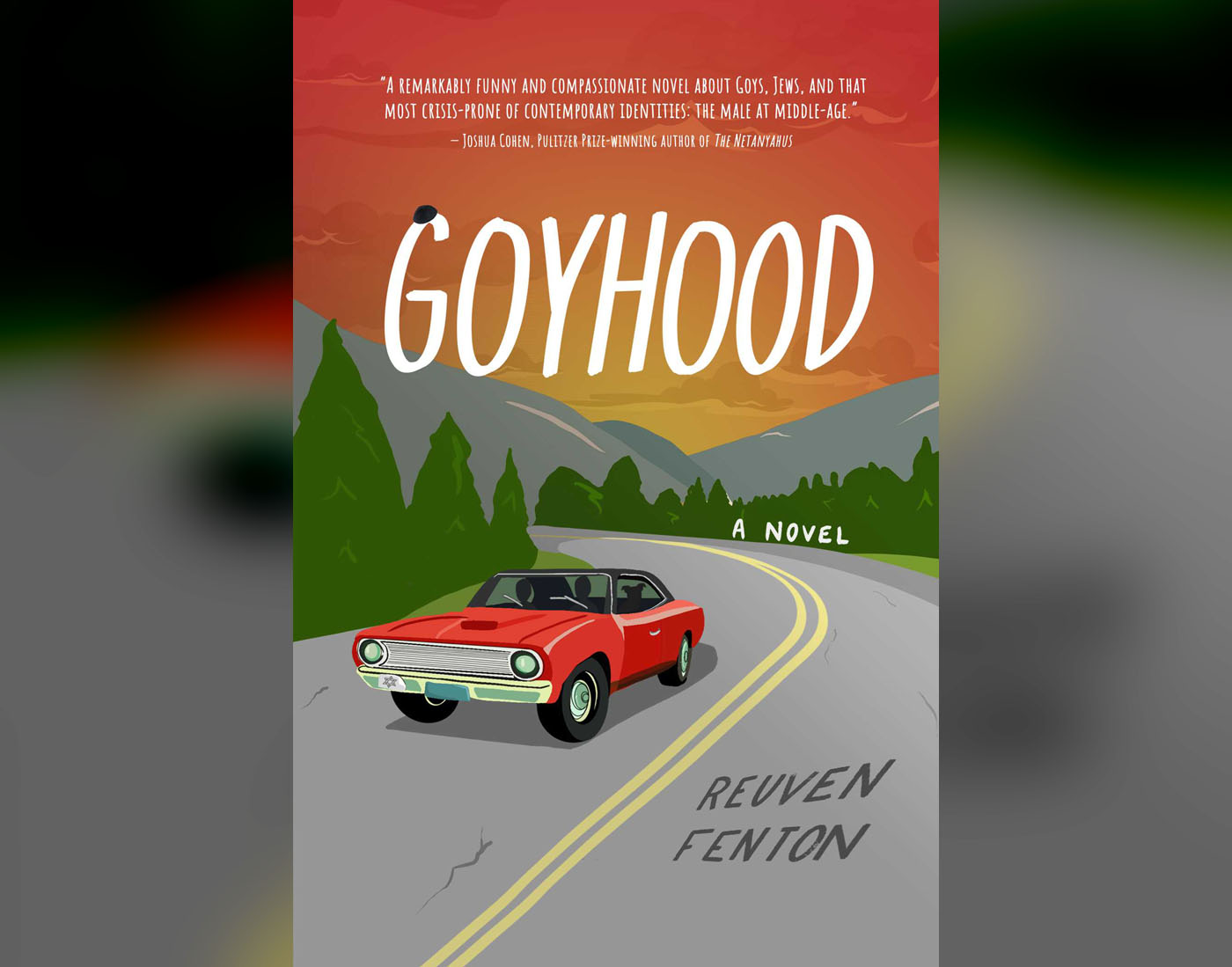
New York Post writer Reuven Fenton’s provocative and humorous debut novel centers on the two Belkin brothers who react differently to a shared trauma. Mayer, who left Georgia to move to Brooklyn and became religious through Chabad, has a wife, a simple life and a flip phone. Things turn upside down when a final letter from their mother explains that she was not Jewish, so neither are they, as the law goes by matrilineal descent. His brother, David, who is a bit wild, isn’t religious and has made so much money with an e-cigarette business that he has a chauffeur, sees this as an opportunity to go on a road trip with his brother and reconnect. Mayer, on the other hand, decides he must stall his wife and have a quickie conversion so when he drops the bombshell, she won’t be as upset.
Fenton plants the “grass is always greener on the other side” tree here as the twang in Mayer’s accent comes back and he no doubt thinks about the freedoms he lost by becoming religious, while David may wonder about some stability or thinks he may have missed out in by chasing after money rather than getting married.
Fenton said the two brothers represent aspects that are a part of him as at one time in his childhood, he was observant
“I think that comes from abrupt transformations,” Fenton told the Journal. “I was clinging to the secular when I became Orthodox at 11 — there are opposite charges that are still inside me to this day.”
“I was clinging to the secular when I became Orthodox at 11 —there are opposite charges that are still inside me to this day.” – Reuven Fenton
I’ve always been amazed at how someone can be infuriated if a parent orders a sandwich for them at a deli, without letting them pick, but that same person may never ask themselves a single question and live a life religious life (be it Jewish, Muslim, Christian, atheist or other) as their parents have prescribed.
Fenton uses a number of phrases that only Jews would know such as “Hasgacha Pratis” (which means it is part of God’s plan; Mayer corrects David’s mispronunciation of the word) but the novel is accessible and can be enjoyed by people of any faith or none at all. That’s because conflict is universal. Are we passively driving the cars of our lives on a GPS system installed when we were children, or can we suddenly turn left if we want to?
It is important to note that there are some Jews who use the word “goy” in a derogatory way to describe in someone who is not Jewish, but it is clear that Fenton has no ill intent and is playing on the word “Boyhood.”
One of the things I liked in this novel was that it was unpredictable. The characters were credible and their dialogue was as it should be. The fourth chapter’s opening will grab you by the throat and likely cause you to pull at your hair and gasp.
Rumspringa, in which the Amish allow their youth to have experiences in the outside world that is usually denied them, is mentioned, and Charlayne, who is not Jewish, says that “chasing adventure has its perks, but after a while, you feel like a dog chasing its tail.”
Debbie, a Jewish character says: “I believe God delights in us contemplating his intentions especially nowadays when fewer and fewer people give God any thought at all.”
“Goyhood’ is a tasty literary pot of cholent where the beans are the morals, the meat is the ambition, the work is the potatoes, and the kishke is the soul. The Belkin brothers fight but love each other. Fenton threads the needle through the fabric of Judaism, poking fun here and there without being mean spirited or insulting.
What about the humor in his book?
“I’ve always been kind of drawn to comedy and tried to be funny and I’m always cracking jokes,” Fenton told The Journal. “I’ve been told I have a dry sense of humor.
I would be very gratified if unaffiliated Jews would read this and get something out of it and turn them on to Judaism,” Fenton said. “For the average reader I would want them not only to be entertained but to feel like they understand Judaism better.”
“Boyhood” is a bit of “The Chosen” meets “Shtisel” meets “The Hangover” but with no significant debauchery. It is a well-paced book that will make you laugh and probably appreciate life a little bit more.