fbpx

April 17, 2024

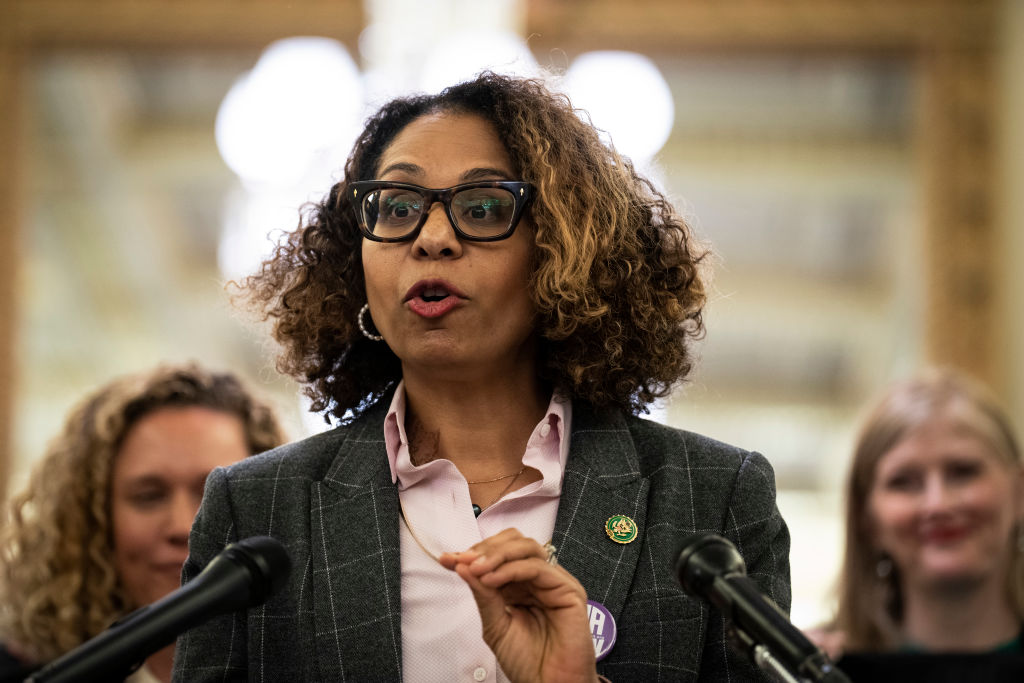
LA Congresswoman Sydney Kamlager-Dove Votes Against Resolution Declaring “From the River to the Sea” Is Antisemitic

On Tuesday, April 16, the House passed a resolution declaring that the saying, “From the river to the sea, Palestine will be free” is an antisemitic slogan. Forty-four members of Congress – including LA Congresswoman Sydney Kamlager-Dove, Rep. Ilhan Omar, Rep. Rashida Tlaib, Rep. Jamaal Bowman and Rep. Cori Bush – voted against it. Forty-three of those votes came from Democrats, while one came from Republican Rep. Thomas Massie.

The Journal reached out to Congresswoman Kamlager-Dove for comment, but did not hear back.

U.S. Congressman Josh Gottheimer (NJ), Congressman Anthony D’Esposito (NY) and Congressman Jared Moskowitz (FL) led the bipartisan resolution.

Gottheimer said, “Our resolution makes it clear that the slogan ‘from the river to the sea, Palestine will be free’ is antisemitic and calls for the total eradication of the Jewish, democratic state of Israel and the annihilation of the Jewish people.”

In the past, Congresswoman Kamlager-Dove, who was formerly a CA state senator, spoke at a private event for AIPAC, where she brought up highlights of her Jewish Federation trip to Israel.

“From the river to the sea” refers to the Jordan River and the Mediterranean Sea, and the slogan has been chanted on city streets and university campuses by anti-Israel protestors since the Oct. 7 massacre.

In the past, Congresswoman Kamlager-Dove, who was formerly a CA state senator, spoke at a private event for AIPAC, where she brought up highlights of her Jewish Federation trip to Israel.

Before she was elected as a congresswoman in 2022, she told the Journal that Israel is “an example of what a young, vibrant democracy looks like, and we should be supporting it,” and that she doesn’t subscribe to the anti-Israel rhetoric in her party from politicians like Ilhan Omar.

“Who would I be to marginalize an important, vocal, engaged and vulnerable population in my community?” Kamlager-Dove said at the time. “I don’t know Ilhan [Omar]’s constituency, but I wouldn’t stand for it. We have an obligation to talk about the consequences of hateful language on all sides within our party, as well as outside of it.”

Kamlager-Dove represents the 37th district, which includes a large Jewish population in Pico-Robertson, Beverlywood and West LA. According to Open Secrets, during the 2022 election cycle, she received $5,500 in donations from AIPAC and $17,830 from JStreetPAC – her third largest donor – which calls itself a “pro-peace” and “anti-occupation” alternative to AIPAC.

On November 3 of last year, Kamlager-Dove put out a statement that she supported a “humanitarian pause” in Israel and Gaza, saying that “Israel has a right to defend itself, and its military strategy must abide by international law, must be operationally incisive, and work to protect civilian life… I represent a large and diverse Jewish community in Los Angeles that has been grappling with the effects of this terrorist attack, including an alarming uptick in antisemitism. Many are also connecting with their Muslim and Palestinian brothers and sisters to rebuild a fractured community and continue the work of peace. The impact of this crisis has been a catalyst of hate crimes against American Muslims and American Jews.”

A month later, on December 5, the congresswoman voted “present” for H. Res. 894, which was a resolution put forth that denounced and condemned all instances of antisemitism in the U.S. and globally. It also stated that anti-Zionism is antisemitism, and it passed.

“Under the guise of condemning antisemitism, Republicans are weaponizing words and preying on the trauma of the American Jewish community by purposely including an overly broad definition of antisemitism that goes so far as to imply that it is antisemitic to criticize the actions of the Israeli government,” said Kamlager-Dove in a press release after the vote. “This is a dangerous conflation that politicizes and minimizes the anxieties of the Jewish community and the desire for a safe Israel to score cheap political points.”

In the same statement, she continued, “We also cannot forget that systematically rooting out antisemitism requires dismantling the bigotry and discrimination based on religious affiliation and national origin that is also the basis for Islamophobia against our Muslim and Palestinian brothers and sisters. The safety of these two communities is interlinked — at home and abroad. I will always call out hate, but I will also refuse to play into Republican games that politicize human suffering and fear.”

On March 19, Kamlager-Dove,  went on MSNBC and reflected on Senator Chuck Schumer’s criticism of the Israeli government. She stood by him, telling the news channel, “Chuck Schumer said the quiet part out loud. He said there are four obstacles to peace: Hamas, Abbas, Israel’s right wing government coalition, and Netanyahu. Here we have an Israeli Government negotiating right now for the release of hostages and Netanyahu is saying ‘that’s unrealistic,’ he’s saying he’s going to invade Rafah, and he says he’s totally opposed to a two-state-solution. [Netanyahu] is a peace antagonist.”

Kamlager-Dove is up for reelection in the 37th district on November 5.

After publication, we heard back from Congresswoman Kamlager-Dove, who released this statement:

“While I recognize that ‘From the River to the Sea’ is, understandably, viewed as a hurtful phrase by many in the Jewish community, I voted no on this resolution because House Republicans didn’t bring it to the Floor to actually address or condemn antisemitism,” Kamlager-Dove told The Journal. “Speaker Johnson brought this Republican-introduced resolution to the House Floor to exploit Iran’s attack on Israel to advance the GOP’s long-standing goal of equating antisemitism with criticism of Israel and support for Palestinian self-determination, thus restricting space around legitimate policy discussions. Weaponizing the real concerns of the Jewish community to advance a partisan political agenda is cynical and exploitative, and I will not allow my constituents to become pawns in House Republicans’ political games.”

She continued, “‘From the River to the Sea’ has a complex history and has been used by malign actors from the PLO and Hamas to Prime Minister Netanyahu and far-right Israeli ministers. When said in the context of denying self-determination to Jews or Palestinians, advocating for the dismantling of the state of Israel, or calling for the displacement or elimination of any people, it is wrong and must be forcefully condemned. While it is regrettable that many advocating for an independent, democratic Palestinian state living alongside Israel in peace and security employ this phrase without understanding the context, condemning these individuals as inherently antisemitic—as this resolution does—is wrong and only sows greater division between communities.”

Update from Sam Markstein, RJC national political director on April 18:

“Let’s be clear: calling for the elimination of the Jewish state “’from the River to the Sea’ is antisemitic. It is a call to deny the Jewish people the right to self-determination through removal from their ancestral homeland. The 44 lawmakers who voted against the legislation should be ashamed, as should House Democratic leadership who refuse to hold these Members of Congress accountable.”
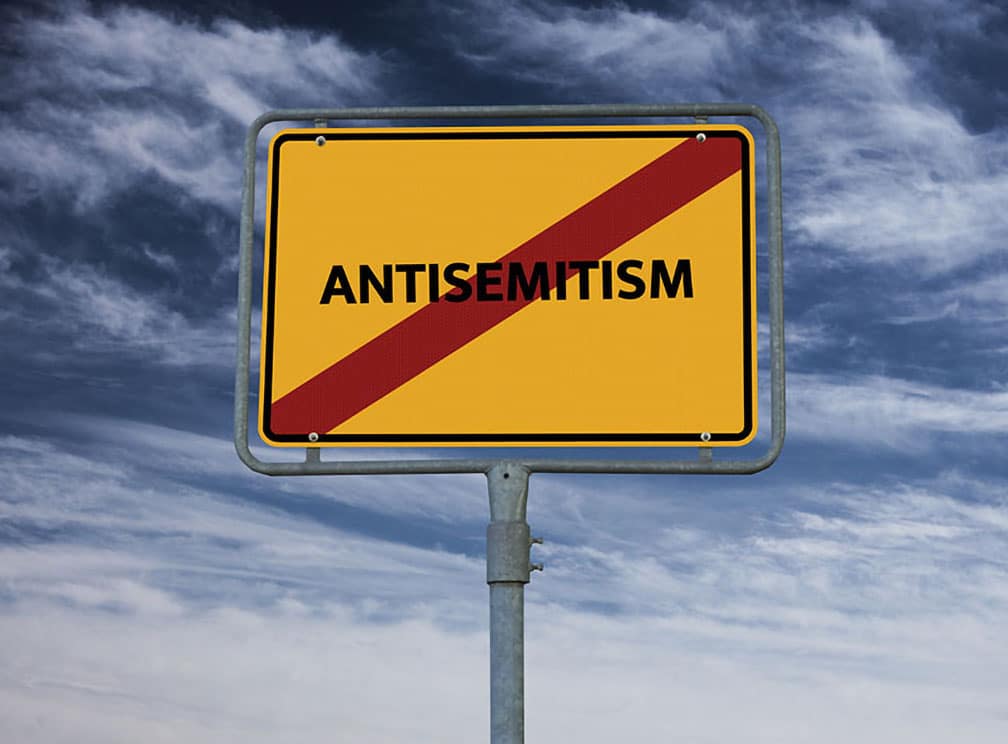

LA Congresswoman Sydney Kamlager-Dove Votes Against Resolution Declaring “From the River to the Sea” Is Antisemitic Read More »

ADL: Antisemitic Incidents Increased 140% Last Year

The Anti-Defamation League (ADL) released their annual antisemitic incidents report on April 16, finding that antisemitic incidents surged by 140% in 2023 from the year prior.

The ADL recorded a total of 8,873 incidents — the highest they have ever recorded — and consisted of 6,535 incidents of harassment (184% increase), 2,177 incidents of vandalism (69%) and 161 incidents of assault (45%). The state with the highest amount of antisemitic incidents was California at 1,266, followed by New York at 1,218, New Jersey at 830, Florida at 463, and Massachusetts at 440.

There were also 3,162 incidents of anti-Israel or anti-Zionist antisemitism; there were only 241 such incidents in 2022.

In Los Angeles, there was a 112% increase in antisemitic incidents from 2022-23 (237 to 503). Broken down by category,  326 were harassment (120% increase), 159 of which were vandalism (85%) and 18 were assaults (125%).

“These are not just record-setting figures, they are record-shattering numbers,” ADL Los Angeles Regional Director Jeffrey I. Abrams said in a statement. “And this modern-day plague of antisemitism, which is particularly relevant as Jews around the world prepare to celebrate Passover next week, has infected every element of our society, from college and university campuses to K-12 schools to Jewish institutions such as synagogues and schools, and even to Jewish-owned businesses.”

“Despite these unprecedented challenges, American Jews must not give in to fear,” ADL CEO Jonathan Greenblatt said in a statement. “Even while we fight the scourge of antisemitism, we should be proud of our Jewish identities and confident of our place in American society. It may not feel so right now, but we have many more allies than enemies. And we call on all people of good will to stand with their Jewish friends and neighbors. We need your support and your allyship.”

ADL: Antisemitic Incidents Increased 140% Last Year Read More »

Fun Haggadot for Passover

The center of every seder meal is the Haggadah. Some choose traditional, while others do something personalized within their family or community. Then there are those who enjoy a satire seder.

While the spoof Haggadah is not new, each year there’s a booming crop of creative texts to consider for your seder. Here are two Haggadahs to check out.

This Haggadah is the Way: A Star Wars Unofficial Passover Parody

“This Haggadah is the Way: A Star Wars Unofficial Passover Parody” is Martin Bodek’s fifth Haggadah. He is also author of “The Emoji Haggadah,” “The Festivus Haggadah,” “The Coronavirus Haggadah” and “The Shakespeare Haggadah.”

“This is for lovable dorks,” Bodek, a technologist by day and writer on Jewish interest topics by night, told the Journal. “I aim to target every demographic imaginable with each of my creations, and this fifth child needs love and attention too.”

As a pop-culture enthusiast, “This Haggadah is the Way” was next on Bodek’s list of things he enjoys that no one had tackled yet. “I rewatched every movie for the 87th time, and I was off to the races,” Bodek said. “I had already seen the original trilogy exactly 137 times, and the rest of the films at least 26 times each, so I was well versed with the entire mythos.” 

He then “shoehorned, crammed, wedged, jimmied, wrangled and squished every quote, scene, legend, storyline, character, meme, and plot into the Haggadah text that I could.” This includes the 10 questions (one of the author’s favorite parts), the four Padawan and the 15 plagues.

Bodek claimed his endeavors are not just silly for silliness’ sake. “I want teenagers to want to join their families at the seder table … it’s hard for them, I get it,” Bodek said. “It’s also hard for the unaffiliated sometimes to be drawn to the table. What I do is intended to urge them back for a little enjoyment, and family bonding.”

“In every generation our enemies rise up to destroy us, but The Man Upstairs frustrates their plans.” – Martin Bodek

The author said to remember the core message of the Haggadah.  “In every generation our enemies rise up to destroy us, but The Man Upstairs frustrates their plans,” he said. “It’s palpable this year in a very real way. Together, we will again.”

The Spoof Seder Haggadah: A Passover Parody of Mel Brooks Parodies! 

“The Spoof Seder Haggadah: A Passover Parody of Mel Brooks Parodies!” is Dave Cowen’s sixth Haggadah. After positive responses to his Haggadahs parodies on Jewish-American comedies like “Seinfeld” and “Curb Your Enthusiasm,” he wanted to continue exploring that vast tradition. 

“Mel Brooks is one of the most beloved parody artists himself, as well as an influence on much other Jewish humor, so he seemed like a perfect subject to appeal to a wide audience,” Cowen, who has written for The New Yorker, McSweeney’s, Points In Case and Haggadot.com among others, told the Journal.

Cowen said he did his best to lightly weave in a few current topical issues facing our community in 2024/5784 in ways that bring us together, despite our potential differences. “If you’re looking for a way to have a lot of fun, but also engage a little with what’s going on, this could be for you,” he said.

Crafted in the form of a play, “The Spoof Seder Haggadah” transforms the traditional Passover experience into a theatrical event. It includes references and characters from the “2000 Year Old Man” sketch (which also has a “5784-Year-Old Mother” character), “Spaceballs,” “Young Frankenstein,” “Blazing Saddles,” “History of the World” Part 1 and 2 and more.

“My favorite part might be ‘The Producers’ parody,” Cowen said. 

In “The Producers,” a down-and-out producer and his new accountant put on the worst play possible. The successful movie, starring Zero Mostel and Gene Wilder – who won an Oscar – inspired a successful musical starring Nathan Lane and Matthew Broderick, who won a Tony.  

“There is a fun sketch where the two generations are surprised to find out that they have different beliefs about who should be the new contemporary target of the parody of the song ‘Springtime For Hitler,’ which is now ‘Karpas For …’”

Cowen believed even seder guests who aren’t as familiar with Mel Brooks’ work will enjoy his Haggadah. “Each section of the seder is set up with brief exposition, so readers will have no trouble enjoying and laughing along with the sketches,” Cowen said. “Hopefully, through that process of connecting with the almost 100-year-old icon’s work, generations can come closer together too.” 

Whatever Haggadah you use, have a meaningful seder and a Happy Passover!

Fun Haggadot for Passover Read More »

UC Berkeley Law School Dean Talks About Antisemitism on Campus

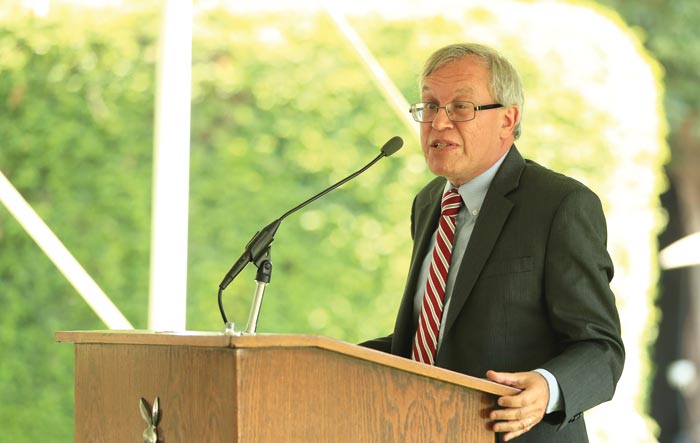
Erwin Chemerinsky, the dean of the UC Berkeley School of Law, never expected to see a caricature of himself on a poster resembling antisemitic Nazi propaganda from WWII: a  drawing of him with bloody lips, holding a bloody knife and fork, and the text: “No Dinner With Chem While Gaza Starves!”

“I was shocked, I was saddened, I was upset as anybody would be,” Chemerinsky told the Journal. “To have a bloody knife and fork and blood over my lips is the horrible antisemitic trope of blood libel.“ 

“I was shocked, I was saddened, I was upset as anybody would be,” Chemerinsky told the Journal. “To have a bloody knife and fork and blood over my lips is the horrible antisemitic trope of blood libel. It’s not subtle. I haven’t defended the Israeli government. My field is United States Constitutional Law.”

Chemerinsky said there was no attack against anything he said, because he has said nothing about the war publicly. The only explanation was that students made the poster because Chemerinsky is Jewish. Despite some Jewish and non-Jewish students telling him the poster made them feel unsafe, he said the poster was protected by the First Amendment and did not call for it to be removed from a bulletin board.

But protesting on private property is not protected as free speech, he said. He hosted dinners for graduating law students over three nights. On Tuesday, he said he served chicken, rice, lentils and tofu. A group smiled at him and he smiled back. Then, after people took their food from the buffet, someone pulled a microphone and amplifier out of her backpack and began to speak. It was a student, Malak Afaneh, and she started to make a speech demanding the school withdraw investments in companies that allegedly support Israel.   

CNN’s Jake Tapper reported that the student was co-president of a group called “Law Students for Justice in Palestine,” which put up the poster. Tapper also noted the student claimed she was assaulted. A video shows the student claiming she has a First Amendment right to speak and shows that Chemerinsky’s wife, Berkeley Law professor Catherine Fisk, momentarily put her arm on the student in an attempt to take the microphone.  

Chemerinsky explained the home is not connected to the university and he asked the student to leave. He explained that with the popularity of social media, these kinds of activities become prevalent. “They were all set and ready to film it,” he said.  

The ADL’s report card on antisemitism gives the school a “D.” Asked if he thought this was a fair grade, Chemerinsky said he could not comment on it as he had neither read the report nor seen the criteria used to establish how the grades were given. But he said he felt safe and thought the administration was doing its best.

“I’ve been at Berkeley for seven years,” he said. “I think the campus administrators care deeply about the Jewish students and about creating a conducive learning environment for the Jewish students. Our chancellor and our provost care so much about campus climate, including Jewish students. I can’t fault them at all.”

The noted constitutional lawyer, who has argued before the Supreme Court, said students told him there would be protesters if the dinner took place. He said he had not thought of canceling the event. 

“I can’t give in to that kind of intimidation,” he said.

He said one irony was that he had a security person come as a precaution. “We had someone there in case anything happened, and we expected picketing in front of the house,” he said. “The person was in the front and the house is in between so you can’t hear what’s happening the backyard.”

In an Op-Ed in The Los Angeles Times on Oct. 29, Chemerinsky wrote that “Nothing has prepared me for the antisemitism I see on college campuses now.”  

He added that someone at the university tweeted that he had taken a sabbatical to join the IDF. This was his opening paragraph: “I am a 70-year-old Jewish man, but never in my life have I seen or felt the antisemitism of the last few weeks. I have heard antisemitic things from time to time in my life. I remember as a child being called a ‘dirty Jew,’ and my friends and I being called ‘Christ killers’ as we walked to Hebrew School … I had an incident in a class I was teaching about the ethics of negotiations, where a student matter of flatly said, ‘the other side will try to Jew you down,” without the slightest sense of how that was a slur.”

He also wrote that a student told him what would make her feel safe would be to “get rid of the Zionists.” He was stunned that students across the country and at Berkeley celebrated the Hamas terrorist attack of Oct. 7, and noted that Students for Justice in Palestine (a national organization with chapters at numerous colleges) called it a “historic win.”

Chemerinsky said he is a fervent supporter of free speech and is the author of “Free Speech on Campus” which he wrote with Howard Gillman.

UC Berkeley Law School Dean Talks About Antisemitism on Campus Read More »

Father’s Captivity in Gaza Spurs Family’s Tireless Advocacy for Hostage Release

Six months after the Oct. 7 attacks on Israel, Hamas was presented with a ceasefire offer that included the release of 40 Israeli hostages. Among them, Israel requested that the released hostages include women and elderly men, in exchange for 900 Palestinian prisoners. However, Hamas informed the mediators that they did not have 40 hostages who fit this criteria.

For Rotem Cooper, whose father, Amiram Cooper, has been held by Hamas since October Oct. 7, this news was not surprising. “Given the grave situation, I realize it’s quite possible my father is no longer alive,” he said.

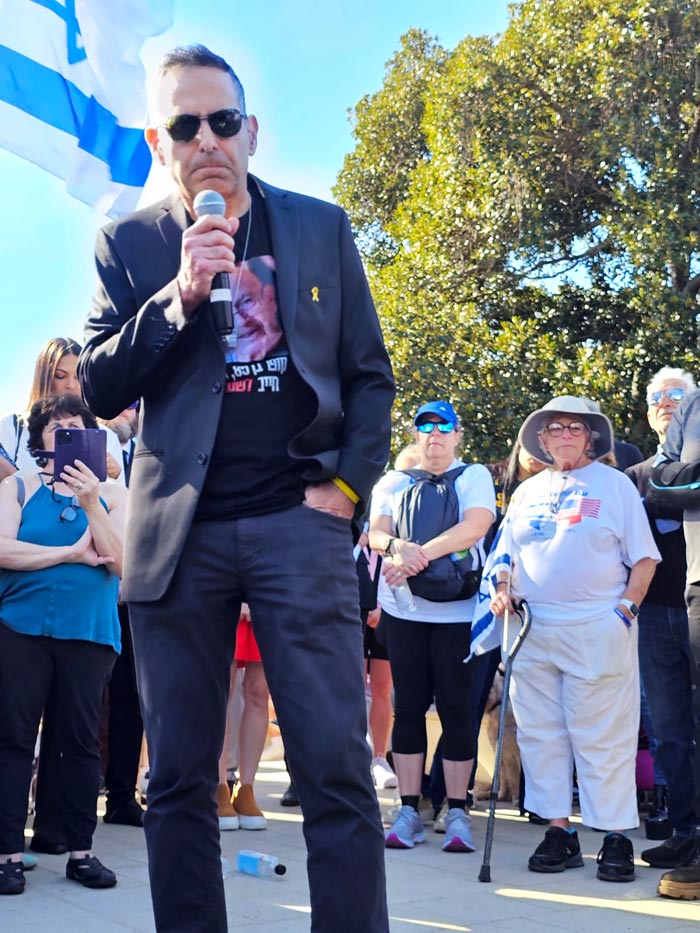
Rotem lives in San Diego with his family; he moved from Israel to the U.S. 34 years ago. Despite acknowledging the unfavorable odds for his father, he has not ceased his efforts. Since learning of the kidnapping, he has traveled to Israel four times.  “Everyone reacts differently to something like that,” he told the Journal. “My sister was crushed. I invested my time in transferring medications to Gaza and then worked on a letter signed by families of the hostages to include our representative at the negotiation table.”

Rotem Cooper

Rotem learned of the Hamas attack on Friday night at 10:30 p.m. “I called my parents, and they told me that terrorists had broken into the kibbutz. I asked them if there was a way to lock the mamad (Israeli bomb shelter), and they said, no. They were worried but still didn’t understand how severe the situation was. Hamas was in the kibbutz for two-and-a-half hours, but oddly enough, they didn’t hear anything.”

Amiram Cooper, who turned 85 in captivity, was one of the founders of Kibbutz Nir Oz in 1955. He raised his three children there and, with his wife Nurit, remained there even after all three had moved out. One of them moved to a nearby kibbutz, Nir Am.

Rotem was in touch via WhatsApp with a group of 16 friends whose families live in the kibbutz. When they couldn’t hear back from their parents, they initially thought the communication tower had failed. “One of our group members, however, who still lives there, said that there is still Wi-Fi and no problem with the system. That’s when we started really worrying,” he said. “We didn’t sleep at all that night. We watched the news and saw that people were kidnapped. We weren’t sure if their phone battery was dead and that’s why we couldn’t get hold of them.”

IDF soldiers arrived at the kibbutz around 2 p.m., but by then, Amiram and his wife Nurit, 79, had already been kidnapped. 

“By then, the entire kibbutz was looted,” Rotem said. “Many Palestinian civilians, including children, entered the kibbutz and stole everything they could — clothes, computers, TVs. By the time they left, there wasn’t a bicycle left there. They also took all the tractors.”

Rotem expressed frustration about the slow response of the IDF to reach the kibbutz. “We had more people, percentagewise, who were murdered and kidnapped than any other kibbutz in the area. Fifty people were murdered, 70 people were kidnapped and 40 of them were released. Hundreds of terrorists entered the kibbutz, and no soldier had arrived to help them. That’s why Kibbutz Nir Oz suffered the biggest loss.”

Rotem’s aunt, Amiram’s sister, is also frustrated and angry over her brother’s situation. Ora Cooper, an artist who resides in Los Angeles, spoke to her brother a few hours before he was kidnapped. “He didn’t feel good. He said he had diarrhea, and let’s talk on Sunday. I urged him to go and see a doctor, and he said he was going on Thursday.”

That was the last conversation they had. The next time she saw her brother was when Hamas released a short video of three of the hostages, her brother among them. 

“It seemed like he had lost a lot of weight,” she said. “I could also tell he couldn’t see anything. He wasn’t wearing his glasses, and he has bad eyesight. He doesn’t see at all from one eye, and in the other, he sees better but needs his glasses. When I saw that image, I started crying. He looked exactly like my father did before he passed away.”

Ora feels that the hostages were abandoned by the government. She believes that Prime Minister Benjamin Netanyahu should have made bigger concessions earlier on. “The hostages’ families feel that the coalition doesn’t care about their loved ones,” she said.

Two days after his father was kidnapped, Rotem was on his way to Israel. The first thing he did was arrange for medication to be sent to the hostages, many of them elderly and sick. “Of course, we were unsure if they would ever receive the medications, but this is not an excuse to do nothing. At least we tried and indeed we learned three months later that our effort was extremely successful when the IDF found remnants of the medicines we sent in Nasser hospital in Khan Yunis, close to where my father and many of the Nir Oz hostages were held. At the same time, we didn’t see any attempt by the State of Israel to get their medical records and transfer vital medication to the hostages.”

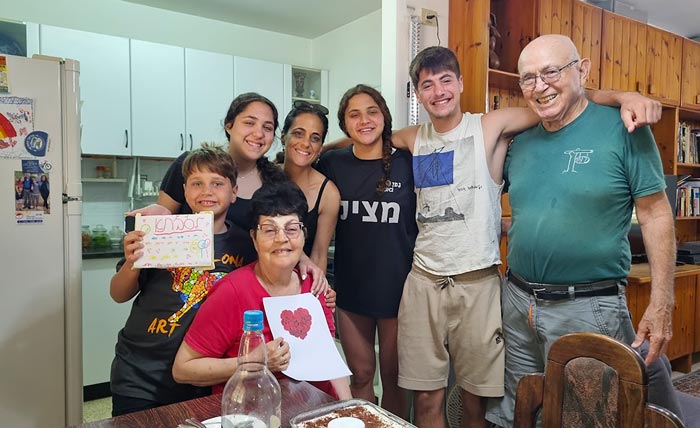
Seventeen days after she was kidnapped by Hamas, Nurit, 79 , was released. While the family was relieved to see her back home, they remained extremely worried about Amiram. 

“She was held with my father throughout her captivity,” said Rotem. “She told us that Hamas broke their eyeglasses, so they couldn’t see much. My mother’s shoulder got broken when she was kidnapped. When they took her in a car through Gaza streets, someone reached in and punched her in the face. While in captivity, the conditions were harsh: high humidity and not enough air and food.”

Since her release from captivity, Nurit’s physical condition has improved, but she has a hard time remembering things from her time in Gaza. Rotem, an engineer and owner of a startup company, returned to L.A. a few weeks ago and is planning on going back to Israel soon. Despite being unsure as to whether his father is still alive, he remains committed to doing everything he can to help the efforts to release the hostages.

“We have drafted a letter to President Biden that was signed by close to 600 family members of hostages who represent 81 hostages still being held in Gaza,” he said. The letter is asking President Biden to intervene and put pressure on all sides, including the Israeli prime minister, to bring an end to the situation and to bring about the release of the hostages. He continued, “I am now devoting all my time and energy to the hostage release cause. It beats sitting at home and worrying sick.”

Father’s Captivity in Gaza Spurs Family’s Tireless Advocacy for Hostage Release Read More »

Understanding the As-a-Jew Jew

In the passover haggadah, we read of the wicked son, who scornfully asks, “What is this worship to you?”

To you and not to him, the Haggadah stresses. This is what makes him wicked. He has separated himself from the community. 

The wicked sons of today, however, preface their scorn for other Jews with a proud declaration of Jewish identification. 

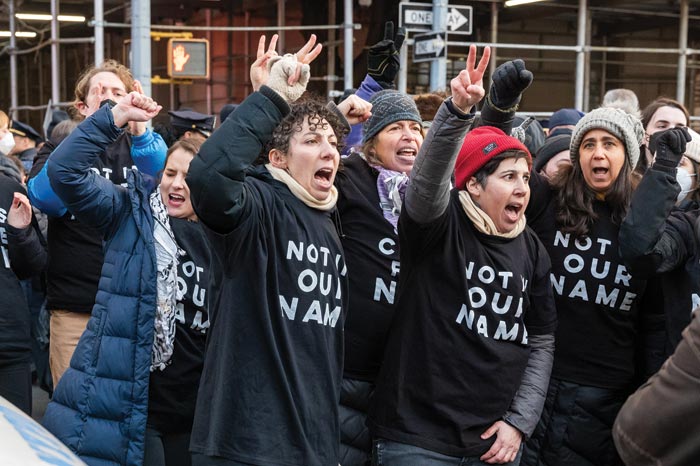
They are anti-Zionist. They accuse Israel of genocide and liken the IDF to Nazis. They oppose Israel’s right to exist and defend itself. And they want you to know that they do all this as Jews.

When Jewish director Jonathan Glazer framed his condemnation of Israel as a matter of Jewish principle, he became the poster child for this new archetype. There’s also actress Cynthia Nixon (“as the mother of Jewish children …”); Chuck Schumer (“I speak as a member of a community of Jewish Americans …”); Wallace Shawn (“Jews say ceasefire now!”); and many others.

What motivates this “as-a-Jew” Jew? 

One answer is that they want Israel to act according to their own personal sense of Jewish values. The irony, of course, is that these are the same people who think Israel needs less mixing of shul and state, not more.  Nevertheless, they think the religious sentiments of Jewish noncitizens should direct Israel’s security policy.

Another answer would be that they think their Jewishness confers credibility. To be a Jew defending Israel is to be suspect of tribal bias. To be a Jew condemning Israel is to be a whistleblower. 

Others might choose to pathologize the as-a-Jew Jew, diagnosing him as a troubled sufferer of internalized antisemitism.

The as-a-Jew Jew pairs condemnations of Israel with references to Jewish identity because, for him or her, the two things are one and the same. To be a good Jew is to condemn Israel. 

The truth is simpler than any of these explanations. The as-a-Jew Jew pairs condemnations of Israel with references to Jewish identity because, for him or her, the two things are one and the same. To be a good Jew is to condemn Israel. 

This was made abundantly clear by a recent Washington Post essay written by journalist Peter Maass titled, “I’m Jewish, and I’ve covered wars. I know war crimes when I see them.” 

The essay begins with a confession: Maass is a “war-crimes reporter” whose “family bankrolled a nation that’s committing war crimes.” 

“My ancestors were key funders of Jewish immigration to British-controlled Palestine,” he writes. Later, we learn, they also raised millions for the nascent state of Israel during the War of Independence in 1948.

In other words, his ancestors helped rescue and resettle Jews during the most deadly chapter of our history, and when the Arab League attempted to finish off any Jews that Hitler had missed, his ancestors raised money to help them defend themselves. 

Some might feel proud of such a heritage, but Maass identifies this as a source of psychic tension and Jewish guilt, a term which increasingly refers to the sense of innate shame that all Jews are supposed to feel for the fact of Israel’s existence.

As anti-Zionist Rabbi May Ye stated in an interview with the Jewish Women’s Archive, “Naming that I was Jewish, for me, meant recognizing in the same breath that there was blood on my hands.”  

“Millions of Jews in America feel connected to Israel’s creation,” Maass writes, by which he means that millions of Jews in America are stained by this original sin. That can’t be changed — but we can do penance. 

“What’s a Jew to do now?” Maass asks. The answer: Stand “against any nation that commits war crimes. Any.”

He italicizes “any” as if his Jewish principles are so strong that they must come to bear even on the Jewish state. In truth, it’s not a matter of “even Israel” but of “only Israel.” I’m sure there are other countries that Maass has singled out for criticism. But I sincerely doubt there are any other countries whose very existence he opposes as a matter of religious principle. 

After some more offensive drivel (“The victims of genocide — which Jews were in the Holocaust — are not gifted with the right to perpetrate one”) he arrives to what might be said to be the heart of his essay — and the key to understanding the as-a-Jew Jews. 

“My Jewish identity was always a bit vague,” he writes. “When I was growing up, we even had a Christmas tree.” Later in life, when he saw that opposing Israel was increasingly recognized as “an act of Jewish identity,” he realized that this “felt right for him too.” 

Unlike the wicked son of the Haggadah, this new Jewish archetype turns out to be neither snide nor mocking, but rather shamefaced and afraid of losing his last connection to the rich Jewish heritage of his ancestors — the very ones whose heroic legacy of Zionist activism has caused him so much angst.


Matthew Schultz is a Jewish Journal columnist and rabbinical student at Hebrew College. He is the author of the essay collection “What Came Before” (Tupelo, 2020) and lives in Boston and Jerusalem.  

Understanding the As-a-Jew Jew Read More »

Leave a Seat or Two Empty This Seder

Sadly, I am updating something I wrote in 2003, when Palestinian terrorists were targeting Israelis, as they still are today. I suggest saying it at the beginning of the Passover Seder:

Once again, during this year’s Seders, we will celebrate our joyous holiday of liberation with heavy hearts. Even as we revel in our freedom, some of our brothers and sisters in Israel, both Jewish and non-Jewish, are in pain. This year, as in previous years, we must reclaim our symbols, remember our losses, reaffirm our commitment to Israel, to the Jewish people, and to a true peace, which allows Israelis to live with no threat against their lives, from near or far.

Over the years, and in this particular evil surge since Oct. 7, when the Palestinians turned toward violence yet again, too many have died, too many have been injured, and 245 were kidnapped, with 133 still not free or unaccounted for. Far too many Seders will have empty chairs: Missing husbands, fathers, brothers, sons; missing wives, mothers, sisters, daughters. 

How agonizing is it to know that they will never come home! How agonizing is to imagine them celebrating the holiday of freedom in captivity, simply because they are Jewish!

The Seder’s power comes from its ritualization of memory. It is a primal, sensual, literal service. The Seder plate, evoking the mortar used in building with charoset, and the tears shed by the slaves with salt water, helps us visualize the trauma of slavery. The physical acts of reclining, of eating special foods, of standing to greet Elijah the prophet, help us feel the joy of Yetziat Mitzrayim, of leaving Egypt. And, in an affirmation of the importance of peoplehood, we mark this special moment, not as individuals but as a community.

In that spirit, we cannot proceed with business as usual during these challenging times. We must improvise a new ritual that marks our present pain, that illustrates our vital connection with Israel and Israelis today.

Let each of us, as we gather at our Seders, intrude on our own celebrations by leaving one setting untouched, by having one empty chair at our table, as many of us have had in previous years. Although this year, as we lament kidnapped brothers and sisters, and mourn murdered loved ones too, we might consider two empty chairs.

Let us take the time to learn the name of at least one victim murdered since last Passover, or one victim murdered years earlier, one Jew who cannot celebrate this year’s holiday, one family in mourning, one family with an empty seat at their table and a hole in their hearts.

Let us take a moment to reflect on our losses. And let us take the time to learn the name of at least one victim murdered since last Passover, or one victim murdered years earlier, one Jew who cannot celebrate this year’s holiday, one family in mourning, one family with an empty seat at their table and a hole in their hearts.

Let us call out the name of Koby Mandell, age 13, an American immigrant murdered in May, 2001, whose father, Rabbi Seth Mandell, noted the empty seat at his Shabbat table and shared the pain of watching other boys grow up, watching their voices deepen, their shoulders broaden, their gaits quicken, even as his son lay dead.

Let us call out the name of Hadar Goldin, a 23-year-old soldier killed by Hamas in August, 2014 but whose remains Hamas holds in a cruel assault on Hadar’s family and civilized norms.

Let us call out the names of Rabbi Eitam and Naama Henkin, ambushed in October, 2015, slaughtered in their car’s front seat as their four children sat in the back.

Let us call out the name of Ezra Schwartz, an 18-year-old Boston kid enjoying his yeshiva “gap” year, gunned down at a traffic stop.

Let us call out the name of Awad Darawshe, 23, an Israeli medic working at the Nova concert festival this Oct. 7, who refused to leave, telling friends, “I speak Arabic, I think I can manage.” Hamas terrorists killed him as he bandaged a wounded concert-goer.

Let us call out the names of Ben Mizrachi, 22, originally from Vancouver, and Itai Bausi, 22, friends simply attending the Nova concert. As good Zionists and trained Israelis, Ben, who moved to Israel and served as a combat medic, and Itai, who was a Duvdevan commando, plunged into action, trying to save others. Killed in a hail of bullets, both are now buried in their beloved kibbutz, Kvutzat Yavne.

Let us call out the names of Sgt. Eden Alon Levy 19, Cpt. Or Moses, 22, and Lt. Eder Ben-Simon, 20, three Home Front Command soldiers who died saving over 90 recruits when eight Hamas terrorists stormed their base from the beach.  

And let us think for a moment, about a 10-year-old Bedouin girl, whose house collapsed just days before Passover, injuring her badly, because the Islamic Republic of Iran unleashed a barrage of missiles against the Jewish State, demonstrating that the intense hate against Jews and anyone in Israel, crosses the 1,157 miles separating Tehran from Jerusalem. 

As we call out these names, let us commit to some action to embrace the victims’ families. Moreover, let us build a friendship with Israel and Israelis, which is not just about politics and not solely about mourning.

And as we call out these names, unlike our enemies, we don’t call for vengeance.

Instead, as we mourn, let us hope; as we remember the many lives lost during this crazy, pointless war, let us pray more intensely for a just and lasting peace, and for an end to the global scourge of terrorism afflicting Jews and non-Jews.


Professor Gil Troy, a Senior Fellow in Zionist Thought at the JPPI, the Jewish People Policy Institute, is an American presidential historian and the editor of the new three-volume set, “Theodor Herzl: Zionist.”

Leave a Seat or Two Empty This Seder Read More »

From a Jewish Nightmare to an American Dream

As we approach the venerable holiday of Passover, many of us are feeling as if Jews are living through a collective nightmare. Everywhere we turn the news seems to be getting worse. From that most horrific day on Oct. 7 to a rising tide of anti-Jewish and anti-Israel sentiment across the world to the recent Iranian missile attacks against Israel, it’s disheartening to see once again the special kind of dangers that are reserved for the Jewish people.

Given this present darkness, the obvious thing at our Passover Seders will be to draw attention to that well-known verse in the Haggadah — you know, the one that reminds us how “in every generation they rise against us to destroy us.” This past year has provided as much evidence of this dictum as we’ve seen in decades. So yes, this is a crucial and timeless cautionary note Jews must never forget.

But in the spirit of resilience, I’d like to suggest that we dare add something more hopeful to our Seders this year, something more American, something about transforming nightmares into dreams.

Imagine sitting down at your Seder tables a few hours after hearing that the Civil War had finally come to an end, with 360,000 Union and 260,000 Confederate soldiers dead. That is what American Jews experienced on Monday, April 10, 1865, on the eve of the Passover holiday, when news broke that Generals Grant and Lee met in Appomattox Courthouse, Virginia, to sign the Confederate surrender.

That fateful day signaled the beginning of the end of slavery and the preservation of the cherished union. Talk about ending a nightmare.

“We can imagine the elegant symmetry that those Jews sympathetic to the Union cause saw in the advent of their Festival of Freedom, commemorating the Israelite exodus from slavery, coinciding with the Confederacy’s defeat,” Rabbi Meir Soloveichik writes in an essay in the “Promise of Liberty” Haggadah. “Thinking of their own relatives, who like other Americans had fought, bled, and died for several terrible years, we can imagine their finding a double meaning at their Seder tables that Monday evening, as they uttered the immortal words of the Haggadah: ‘Why is this night different from all other nights?’”

For the Jews of 1865, the American nightmare of the Civil War was also a Jewish nightmare, just as the American liberation was also a Jewish liberation. Imagine how they felt, then, when several days after the end of the war, on the Shabbat of Passover, the news came that President Abraham Lincoln, who was shot the night before, had died at 7:22 a.m.

As cited by Soloveichik, here is how Bertram Korn, in his book “American Jewry and the Civil War,” described the scene:

“Jews were on their way to synagogue or already worshipping when tidings of the assassination reached them … Jews who had not planned on attending services hastened to join their brethren in the sanctuaries where they could find comfort in the hour of grief. The Rabbis put their sermon notes aside and spoke extemporaneously, haltingly, reaching out for the words to express their deep sorrow … Samuel Adler of Temple Emanu-el in New York began to deliver a sermon but he was so overcome that he could not continue. Alfred T. Jones, the Parnas of Beth El-emeth Congregation of Philadelphia, asked [the well-known Jewish scholar and writer] Isaac Leeser to say something to comfort the worshippers; he did, but it was so disconnected that he had to apologize: ‘The dreadful news and its suddenness have in a great measure overcome my usual composure, and my thoughts refuse to arrange themselves in their wonted order.’”

What strikes me about those words is how bonded the Jews were to their leader and their country. As America went, so the Jews went. As America grieved, so the Jews grieved. As America dreamed, so the Jews dreamed.

This mystic bond between the Jews and America is not a coincidence; it is rooted in sacred texts. As the late British Chief Rabbi Jonathan Sacks once wrote:

“It is no accident that the founders of America turned to the Hebrew Bible, or that successive presidents have done likewise, because there is no other text in Western literature that draws on these themes — history, providence, covenant, responsibility, the need to fight for freedom in every generation—together in a vision that is at once political and spiritual … Israel, ancient and modern, and the United States are the two supreme examples of societies constructed in conscious pursuit of an idea.”

A letter from George Washington to the Jews of Savannah in 1790 best expresses this bond. In the letter, Soloveichik notes, Washington was “telling his fellow citizens that the tales of the Exodus and of America parallel each other: The Jews were not only to be welcomed as equals in America; their story inspired America. For the first president, God’s blessings bestowed upon the Jews had never been removed — and he hoped that his nascent nation could be similarly blessed.”

Washington had no way of knowing that 75 years after he wrote that letter, a traumatic war that tore his country apart would harken a new birth of freedom that would deliver on the American promise for all its inhabitants.

Of course, it’s hard to see blessings in times of darkness. During the Passover Seders of 1861, 1862, 1863 and 1864, few blessings were visible as American blood flowed like never before. It’s only in 1865 that these blessings finally began to shine through.

The darkness of the Civil War is exponentially worse than anything we are experiencing today, just as the Holocaust is exponentially worse than the horror of Oct. 7. But the principle remains: There are times when hope seems to be in eclipse, when dreams take a back seat to our present-day dramas.

This is one of those times.

The American Dream itself is going through an eclipse. As I wrote recently, “America today is broken, and the more it is broken, the worse it is for the Jews.”

But if there is anything we can learn from the Passover holiday of 1865, it is that a broken America is not a hopeless America. Indeed, given that the American and Jewish stories are so intertwined, the remarkable survival of the Jewish people augurs well for this country.

As American icon and humorist Mark Twain famously wrote:

“The Egyptian, the Babylonian, and the Persian rose, filled the planet with sound and splendor, then faded to dream-stuff and passed away; the Greek and the Roman followed, and made a vast noise, and they are gone; other peoples have sprung up and held their torch high for a time, but it burned out, and they sit in twilight now, or have vanished. The Jew saw them all, beat them all, and is now what he always was.”

For me, these are words not of triumph but of resilience, words of hope that permit the flame of our dreams to stay lit.

We’re living at a time when both Jewish dreams and American dreams are under siege. Who’s got time to dream when America is torn apart by tribal divisions and the erosion of trust in our most vital institutions?

Who’s got time to dream when Israeli and American hostages are still held captive in horrid conditions?

Who’s got time to dream when we see that a predatory Iran is launching attacks on Israeli soil? 

Who’s got time to dream when anxiety floods our consciousness?

I got a personal answer the other night from an Israeli woman who is part of a film project connected to the hostages. She told me that after filming, the former hostages danced like crazy. Their hearts were still broken, yes, but their spirit demanded that they dance.

Her answer brought to mind a recent news item about how the Israeli cultural scene is trying to maintain a semblance of normality during the war, with the Israeli Opera, The Israel Philharmonic Orchestra, the Suzanne Dellal Dance Centre and the Tel Aviv Cinematheque all signaling “business as usual.”

Dancing and living and creating and enjoying the fruits of life give meaning to our wars and our fights. It reminds us why we fight in the first place, why we dream.

In the midst of a devastating war that crushed his soul, Lincoln must have sensed the special value of dreams when he spoke at the killing fields of Gettysburg about the “great task remaining before us.”

He knew that no nation can survive without redeeming its times of darkness, without giving meaning to its lowest moments. So he called on his nation “that from these honored dead we take increased devotion to that cause for which they gave the last full measure of devotion — that we here highly resolve that these dead shall not have died in vain — that this nation, under God, shall have a new birth of freedom — and that government of the people, by the people, for the people, shall not perish from the earth.”

Lincoln knew it wasn’t only the people who must survive but also the transformative ideas and ideals that animated their very existence.

One of those ideals is surely the power of the dream. It’s telling that Lincoln chose a particularly bleak moment, when the despair of death hung in the air, to utter the most elevating and enduring words of his presidency.

Whether here or in Israel, as we continue to face the brokenness of our world, the growing hate against Jews and the bombs of evil that keep falling on Israel, Lincoln’s words at Gettysburg remind us that when all we see is a nightmare, that is precisely the moment to never forget our dreams.

The Jews of 1865 who had braved the Civil War read the same words at their Seders that we will read Monday night. They knew that after “in every generation they rise up to destroy us” came “but the Holy One, Blessed be He, delivers us from their hands.”

That prayer has sustained us for millennia. If we remember to keep our dreams alive even when everything around us tells us not to, we will live up to Twain’s immortal words and remain what we always were.

Chag sameach.

From a Jewish Nightmare to an American Dream Read More »

What Does Freedom Mean to My Mother?

I was on a Zoom shiur with my Rebbe, the brilliant David Sacks, who posed the classic Passover question: “What does freedom mean to you?” David is a highly regarded TV & film comedy writer who started this shiur with fellow comedy writer Jeff Astrof and is now joined by other writers such as Jay Kogen and myself. 

A few years ago my mother, Lynn Gold, who has a voracious appetite for Torah learning, wanted in on this shiur. “But Mom, you’re not a comedian or a comedy writer.” To which she replied, “But my son is! And that’s close enough!” Who can say no to their Jewish mother? So I asked and she’s been a regular participant and often great contributor to our learning. 

When David posed his question, we all went around and gave our answers. My answer wasn’t anything too insightful, rather more of what you’d expect: “The freedom to not worry. Like about finances, health and all the other things we are consumed with. Life without worry is freedom.” No one was impressed. 

Then it was my mother’s turn and her response was so meaningful, I asked her to write it down because more people need to hear it. It’s a reminder of how much is taken for granted in today’s modern world. This was her answer:

I was brought up in the ‘50s, an era when women were confined to societal roles of wife and mother. This was commonly enforced by the “man of the house” with his expectations of a dutiful wife, regardless of her ambitions outside the home. “Allowing” a woman to pursue a career suggested he was unable to support her and be the sole provider. It was almost a shanda for a woman to work! 

Even though I had suitors who were perhaps richer, taller, more athletic and more scholarly than the man I ultimately chose to marry, I knew he was different than the others from the moment I met him. I had an inkling that he would not just “allow,” but foster my ambitions and determination to pursue a career. I was right.

“My freedom was the ability to follow my passions and goals for self-fulfillment and self-actualization as an educator and perpetual student. To teach and to learn, while fulfilling my obligations as wife and mother. Throughout our almost 60-year marriage, my husband Sid had and still has the utmost respect and support for my endeavors.” – Lynn Gold 

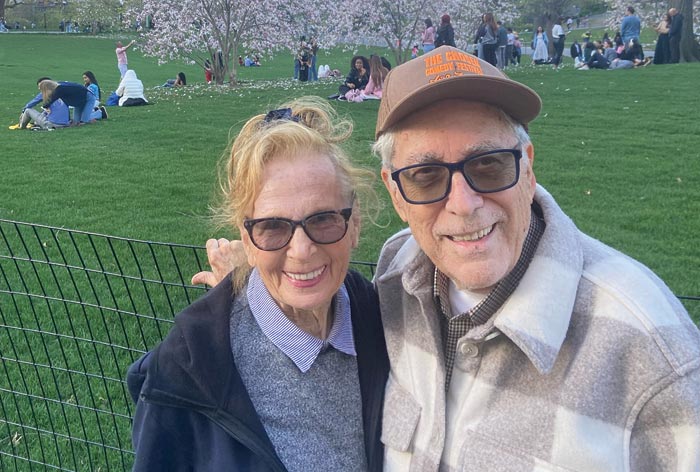
My freedom was the ability to follow my passions and goals for self-fulfillment and self-actualization as an educator and perpetual student. To teach and to learn, while fulfilling my obligations as wife and mother. Throughout our almost 60-year marriage, my husband Sid had and still has the utmost respect and support for my endeavors. He equally encouraged our sons to nurture their talents so they, too, would achieve their optimal potential, resulting in their unconventional, yet successful careers in music and comedy. He gave to them what he granted me: The freedom to be their best selves.


Elon Gold is a comedian and actor.

What Does Freedom Mean to My Mother? Read More »

A Walk in Jerusalem After the Doomsday That Wasn’t

Seven hours after the booms started, after crowding into the safe room of my friends’ home, on maybe three hours’ sleep I walked out onto the streets of Jerusalem at 8 am. I saw the city intact and untouched, people moving everywhere, running, bicycling. The delivery trucks were on route, the fruit and vegetable market was open. I took a deep, life-affirming breath. I thought how Israel and the Jewish people faced down annihilation just a few dark hours ago and that I am so proud of this country. With all its drawbacks — and there are too many — Israel knew how to work with its allies and protect its existence, its citizens, the Jewish people, so impressively. I’m proud of the IDF—the commitment of its soldiers and its technological superiority. I’m realizing after this experience, while I am teaching here for the semester, how even more bonded I am to this place.  

I walked further. Life was happening in every direction. How important it is, I thought, that we have our Jewish homeland. Because of it, we are not the defenseless people we were a century ago, and had been since the Roman conquest. 

I hope this government realizes what it has just demonstrated to the world, and the admiration it is garnering even among its enemies for the unparalleled ability it showed this morning to thwart its most insidious and strongest foe. I believe all those haters are reeling in both anger and awe, seeing their hopes dashed and Israel standing tall. The world saw another nation try to destroy Israel and the Jewish people with a relentless force of death and destruction. I hope the Israeli government takes advantage of the reality of this new perception, and doesn’t make stupid moves. 

The communication war is an integral piece of the bigger war. It is essential to the overall victory. And after this morning’s aerial defeat of the looming disaster, Israel and the Jewish people’s communication strategy has changed. We have a new reality. 

Today, the world, much as it may not want to, sees us again as strong and unbeatable. With this perception, we no longer have to respond to all our enemies’ baseless accusations of genocide, apartheid, colonialism — all those empty defamations of our national character. No matter how many hundreds of thousands of marchers chant “From the River to the Sea,” Israel has again proved it isn’t going anywhere. Those protesters, those campuses, that TikTok garbage, those Students for Justice in Palestine, those If Not Now traitor Jews — and the behind-the-scenes countries, funders and organizers of this campaign, who don’t show their faces — have just learned that they are not going to bring Israel down. (And maybe, just maybe, those extreme left-wing Jewish organizations who will not mention “Israel,” but only “Israel-Palestine,” will understand it’s “Israel and the Jewish people.” “Palestine,” which may become its own entity, is not part of ours.)

They’re all wasting their time. 

The countries will be better off building their societies on progress, rather than hate. The students will be better off studying and pursuing careers that fight world poverty and dengue fever, rather than expending their energies lining up behind lies and shouting their heads off.

Our Jewish communication strategy has to position us as a strong and creative people, charismatic and smart, values-driven believers and pursuers of truths, not cowed by lies, not defensive against baseless accusations.

Our Jewish communication strategy has to position us as a strong and creative people, charismatic and smart, values-driven believers and pursuers of truths, not cowed by lies, not defensive against baseless accusations.  Our strengths can overwhelm the weakness of their manufactured false realities.


Gary Wexler was recently honored by the National Library of Israel with the creation of The Gary Wexler Archive, a 20-year history of Jewish life told through the advertising campaigns he created for Jewish organizations in the US, Canada and Israel. 

A Walk in Jerusalem After the Doomsday That Wasn’t Read More »