fbpx

January 17, 2024

The TeaBook’s Noah Bleich: PositiviTEA, Combining Flavors and Coffee vs Tea

Noah Bleich has found a way to combine his love of tea, positivity and the environment.

Bleich is the founder and artistic director of The TeaBook. The company, founded in 2015, offers organic, kosher teas with punny names and custom art to go with it, as well as a literal “TeaBook” organizer.

“[People] just love the art and the puns that we do,” Bleich told the Journal. “We joke that we test all of our jokes on dads to make sure they’re not dad jokes, because those just make you cringe and puns just make you chuckle.”

The TeaBook’s first series had a LiTEArary theme, with ShakeSpeareMint,  Agatha ChrisTEA (earl gray) and Mark Twainquility (chamomile and fruit tea). The second was EqualiTEA, featuring Dr. MarTEAn (Martin) Luther King, Jr. (black equalitea aka English breakfast) and Marie Curie (radiant hibiscus; a context pun). Harriet Tubman’s original name was Araminta Ross, and her nickname was Minty, so her tea is a mint orange spice tea.

After they choose the series type, they make sure the potential subjects have a positive reputation. They also try to stay within the confines of what is public domain, although they occasionally license from the subject or their estate.

Then there’s the art.

“The goal was to create a gallery of art on tea,” Bleich said. “We’ve worked with nine different artists. One of them, Rob Armstrong, was the first nationally syndicated black cartoonist in America (“Jumpstart”).  He drew the art for their Barack “Tisane” Obama’s Barry Berry Tea. In fact, the Obama Foundation contacted Bleich about donating the art to the Obama museum.

When asked what it is he loves about tea, Bleich says he associates the smell with Shabbos.

“It reminds me of all of those connections to my Jewishness,” he said. “Then there’s another connection, which is it helps you relax, it feels good. … At the end of the day, we want that happiness, that joyfulness,  and I think tea brings that to you.”

As an environmentalist by degree, Bleich says tea is about 70 percent more green, ecologically, than coffee.

“Part of it has to do with the science of what we do, “ he said. “When you drink coffee, you’re taking the bean, the fruit of the tree. And when trees produce fruit of any kind, they have to put all as much resources as they can [water, nutrients] into producing that fruit.”

He continues, “When you drink tea, you’re drinking the leaf and the leaf [grows] very fast. It’s also a lot less intense [of a] process to harvest and roast…. in [terms of] transport it’s very light.”

Plus, there is actually more caffeine in tea than coffee, you are just using less of it.

There’s also an innate happiness factor to tea versus coffee.

“If you Google ‘coffee’ and ‘t-shirts,’ [they are] going to be angry [results],” he said. “‘Don’t talk to me before my coffee.’”

Google “tea” and “t-shirts, and you’ll see the opposite: “‘Life is beautiful.’ ‘It’s going to work out.’ ‘Stay calm.’”

It’s obvious Bleich has a lot of fun coming up with puns, unique artwork and flavors that go with it.

“Just like our art, we toy with history and make these beautiful, colorful creations,” he said.

For instance, their Frida Kahlo tea, called FriTE Kahlo, is a watermelon rose hibiscus tea.

“It’s probably one of our most popular flavors when people try it,” he said.  Even if the flavor pairing seems unique.

“I’m a vegetarian, so when I would cook for Shabbat dinners, it was always vegetarian,” he said.

One of his favorites was veggie bacon wrapped dates stuffed with pecans and goat cheese.

“Delicious,” he said. Yet, people were hesitant to try it.

“Sweet and salty [is] a combination that just tickles your taste buds,” he said. “So watermelon rose hibiscus is the same way.”

The first painting Frida Kahlo ever did was of a rose; her last painting was of watermelon.

“This is her entire life from start to end as a tea flavor,” Bleich said.

Another example is TÉiego Rivera for Diego Rivera. This hot cinnamon tea represents his Mexican culture. If you look closely at the art on the tea, you’ll notice other nods to his background.

“Diego Rivera was actually Jewish,” Bleich said. “His mom was a converso. … He did once or twice mention how being Jewish was a significant part of what helped inspire him to be an artist.“

But what are the best foods to pair with tea?

“Green teas are a little lighter, so they’re [more] dessert-y,” Bleich said. “And then for the heavier stuff, you’re going to want to pair it with a black tea.”

Bleich likes oolongs because it’s halfway between a black and a green tea, and it’s a little smoother.

If you’re a coffee drinker, Earl Grey tea is closest to coffee, as it’s really bitter, very dark.

“I’ve had amazing Earl Grey shortbread cookies,” he said. “Just interject what you would normally do, but just throw in tea instead of water and you’re going to get that Earl Gray flavoring. “

Another option for eating your tea is putting tea leaves in salads.

“Just take it, crumble it up and throw it in and you’re going to have green tea salad,” Bleich said. “So you get that little caffeine, a little bit of green tea and a lot of taste.”

Learn more about Noah Bleich and all things tea at TheTeabook.com.

Check out this article for more on cooking with tea.

For the full conversation, listen to the podcast:

Watch the interview:


Debra Eckerling is a writer for the Jewish Journal and the host of “Taste Buds with Deb.Subscribe on YouTube or your favorite podcast platform. Email Debra: tastebuds@jewishjournal.com.

The TeaBook’s Noah Bleich: PositiviTEA, Combining Flavors and Coffee vs Tea Read More »

Don’t Forget About Hashem

Immediately after Oct. 7, I couldn’t stop doomscrolling through social media and checking my newsfeed. Everything I saw made me feel depressed, anxious and scared. I couldn’t sleep, I wasn’t eating right and I couldn’t think straight.

But every night, when I’d cuddle with my daughters before bedtime, I’d feel better.

When my husband and I would talk about what was going on, I’d instantly calm down.

While learning Torah over the phone with my study partner in Lakewood, I’d become a little more centered.

Why? All these things brought me closer to Hashem. 

Receiving and spreading Hashem’s love is our mission as the Jewish people. And yet, so often these days, that’s being left out of the conversation.

Many people are afraid, sharing stories about antisemitism and the atrocities happening to Jews in Israel and around the world. Trust me, I’m very familiar with it. Whenever I talk about being Jewish on social media, I get hundreds of antisemites coming after me. 

It’s not very encouraging, but I choose not to focus on it. Instead, I focus on what’s right in front of me: Hashem. So many of us are spiritually dehydrated right now and feeling worn out and beaten down. But there are ways to turn this around.

For instance, whether or not we keep Shabbat, Shabbat exists. We can choose to step into this holy day and feel calm and collected. We can sit around the Friday night table with family and friends, eat a soul-satisfying chicken soup and laugh and cry and feel less alone. We can go to synagogue to listen to an inspiring speech from our rabbi and connect with our community.

During the week, we can learn Torah on our own or with a friend, or we can tune into a podcast for a few minutes per day.  And we can pray from a prayerbook or simply from our hearts. Hashem hears every request, big or small.

As human beings, our perspective is limited, but Hashem can grant miracles. He can turn everything around in an instant. I know, because I’ve seen it.

As human beings, our perspective is limited, but Hashem can grant miracles. He can turn everything around in an instant. I know, because I’ve seen it. In my 20s, I was constantly struggling and pleading to Hashem for help. There were so many times I couldn’t afford my basic necessities. I’d tell Him, “Please send me money to pay my bills.” And then I’d say, “I trust you, Hashem. Now I’m going to stop worrying about it and go on with my day. I know You’ll take care of me.”

Within minutes, I’d have that money in my bank account. 

This is just a small example, but it’s one that I believe anyone can learn and implement in their everyday lives. 

It’s important to put down your phone and stop looking at everything bad. Instead, think of what you can do to connect to Hashem. It can be as simple as saying a blessing before you eat a certain food or saying Shema or telling your children how much you love them. 

If you’re having trouble solving a problem – and you know you’ve tried your best to figure it out yourself – ask Hashem for help. Then, leave it in His hands and see what happens.

Remember: Human beings have free will; Hashem gives us choice so that we can have an authentic relationship with Him. If our sins immediately led to punishment and our good deeds immediately resulted in rewards, an authentic relationship would not be possible. 

But because free will exists, bad things happen. People make bad choices all the time. We don’t have to focus on the bad. We can focus on all the good. We can think more broadly about what happens in the world and say, “Hashem is in control. I trust in Him.”

This is difficult at times, but it’s what gets me through. Since I started believing in Hashem, my life has improved greatly. And it has been the ultimate source of comfort since Oct. 7.

Are you ready to open your eyes and see Hashem? I know He’s ready for you.

What’s been bringing you comfort? Email me: Kylieol@JewishJournal.com.


Kylie Ora Lobell is the Community Editor of the Jewish Journal.

Don’t Forget About Hashem Read More »

The Higher Calling

There are a few stories in the Torah that always stand out to me. The first appears when G-d upgrades Jacob’s name to Israel, meaning “He who wrestled with G-d,” for his boldness in authenticity; the other when Avram earns the letter “hay” —  the initial of Hashem — to become Avraham, for his boldness in generosity. Both symbolize points in our patriarchs’ lives where they boldly stepped up to a higher calling, and Hashem rightfully acknowledged them for doing so. They were no longer who they had been — but somehow forever changed. Forever evolved. Forever held to a higher standard. 

Last month, I experienced what I believe was my own personal moment of transformation before G-d. I was in Rome, at the Great Synagogue and Museum in the Jewish ghetto. I walked out of that synagogue as a different person than when I walked in. I would like to share my story.

I walked down the steps of this museum looking at yet another collection of remnants and artifacts of what was once a vibrant Jewish community. Perhaps these artifacts hit me more powerfully as what I had been looking at was the first trace of the Jewish diaspora, when Jews came to Rome as slaves after the destruction of the Beit Hamikdash some 2,000 years ago. 

I ran my fingers over the tombstones, menorahs … the proof of Jewish life. 

“How much? How much have we tolerated?” I began having flashbacks of the many similar museums and abandoned temples I have visited. My family and I are avid travelers and make it a point to explore Jewish heritage sites around the world.

I couldn’t help but think, “How many museums? How many monuments? How many dedications symbolizing our oh so familiar narrative — Jews came here, set up shop, tried to live peacefully, pray faithfully and were kicked out, massacred and sent away, only to naively try again somewhere else?” 

How many times have we tried to plant our flag across the four corners of this earth — only to have the same story repeat itself? How often are we going to be thrown around hoping this time will be different? This time they will accept us. This time they will defend us. This time they will protect us. Only to find instead of our flourishing community yet another monument that documents we once existed.

I felt myself falling to my knees, sobbing from the depths of my soul, only to rise again with a certainty I have never experienced — an unwavering, unapologetic fervor as I began to shout ENOUGH IS ENOUGH. 

Something took over me in that moment. Maybe that was my Avraham and Jacob moment. I felt myself falling to my knees, sobbing from the depths of my soul, only to rise again with a certainty I have never experienced — an unwavering, unapologetic fervor as I began to shout ENOUGH IS ENOUGH. 

We don’t want your memorials.
We don’t want your monuments.
We don’t want your museums.
We want our home. 

As this calling took over me, I kept walking through this museum to find one of the seven original signed copies of Israel’s declaration of independence, with a huge framed photo of David Ben-Gurion making his famous speech when he declared Israel’s sovereignty. 

And I got it. That same fervor that I felt. That same unwavering determination is what our founding Zionist fathers felt that said we have no other choice- “ein li eretz achere” — that same force that pulled our people together from those very four corners back home. With such vision. With such determination with such a conviction that there is simply no other choice, because like me, like you, like us all — Herzl, Ben-Gurion, Golda —  all said enough is enough. 

They were called forward and they answered the call boldly.

As I looked up at that photo of Ben-Gurion, I felt I was a different person. It was almost as though my soul hugged his soul, saying, “I feel you. I share your steadfast resolve.” I never before understood how he had the courage, how he had the execution to achieve such a return. I understood then and there how. It was this sense that there is no other choice for our survival. There is no other home for our people but Israel. 

No one is coming to save us. We must save ourselves.  We have no one but each other.  

I assure you what took over me there as I looked at him was this: Had Ben-Gurion not already declared Israel an independent nation, I assure you that in that moment I would have. For in that moment, I went from being Rona the Israel activist, to Rona the relentless Zionist. 

We, as the Jewish people, are facing that exact fork in the road, that pivotal point in our journey as a nation right now. Where we are called upon by our one homeland, our one family and our one G-d and after what we have been called forward to witness, to fight to overcome the past two months has also forever changed us. 

What is our call forward? 

There was a calling forward that Abraham and Jacob answered in the Bible. 

There was a calling forward that the Maccabees answered in the story of Hanukkah.

There was a calling forward of Herzl and Ben-Gurion in the establishment of Israel’s independence. 

Amazing things happen when we answer the calling: Hanukkah was a miracle. Israel is a miracle. We are a miracle. The Jewish people are a miracle. 

It’s because we answered the higher calling. We are a people who answer the call. We rise up. We shine our light even brighter.

And there is a calling forward of you that you must answer as well. The mission has and always will be the same: Our people need to go back home — today with the hostages, that mission is a quite literal one. 

Enough is enough.

As we continue to process the devastating stories of Oct. 7, let’s ask ourselves: What is the personal transformation G-d awaits from you?


Rona Ram Lalezary is creator of The Divine Download Podcast and a transformative life coach.

The Higher Calling Read More »

Taylor Swift, My Granddaughter, and Me

As a long-distance grandmother of a 12-year-old girl, I’m starting to notice our connections are fraying. While she is busy making her new life with friends, I’m standing in the dust outside her room, missing our cozy bedtime stories and hugs. I know I shouldn’t kvetch. On the rare summer day that she is in town we still enjoy hanging at the beach or strolling to Jeni’s for an ice cream together. But I know which direction this gap is going in, and it makes me sad.

To buy more time before Piper goes full teenager, I decided to meet her on her own ground. I asked her to help me understand the one subject about which every pre-teen and teen girl is expert — pop music savant and Person-of-the-Year Taylor Swift. I asked her to help me “get it” so that I too could be swept up in a hysterical fad that looks like a lot of fun, if you don’t mind crying and fiddling with beaded bracelets. I requested an interview to lock in personal time with P, who is very busy.

To prepare, Piper suggested that I listen to the recent albums “Evermore,” “Folklore” and “Lover” — albums she thought I could “handle.” Swift’s music was easy to listen to. No matter the situation, Swift brings a sparkly light touch to all her subject matter. Essentially hers is the story of girlhood and I get it. I was a girl once. 

Yearning to go haywire over the singer-songwriter, I dug deeper. I watched the TV documentary “Miss Americana,” saw the charming NPR Tiny Desk concert. I even convinced a friend to see the “Eras” concert film with me on a big screen. After two hours, we got it enough to bolt. 

By the time I came to town for Hanukkah latkes and the interview, I knew my subject as well as any 73-year-old grandma could. Like other big female singers before her, Swift has broken up with her management, ditched bad boyfriends and set off on her own. Where she did something new was to rerecord six albums (and own the master recordings) and then sell them back to the same fans. Hers is the story of a beautiful suburban girl born with huge talent and supportive parents who writes and sings the stories of her life to great acclaim. All while seeming nice enough for a grandma to like.

It was delightful to sit in Piper’s room again and have some personal time together. Piper patiently explained her fandom. “Her [Swift’s] life and songs are inspirational.” When I asked what she thought of the whole Travis Kelce brouhaha, she shrugged. “I like them together,” she confessed. If it doesn’t work out? “She’ll keep on dating. Or maybe she’ll just stay single. I like where she is right now,” P declared.

The first time I got swept up in a pop music fad, young women were picking out which Beatle to marry and screaming their brains out to catch their attention …

Her tone was much more down-to-earth than I expected. The first time I got swept up in a pop music fad, young women were picking out which Beatle to marry and screaming their brains out to catch their attention — as I did at their Forest Hills Tennis Stadium concert in 1964. My counterintuitive pick was Ringo since I figured that Paul and John were just too obvious and George was just too weird. Mr. Starr, in my teen brain, was the accessible one who would be easier to live with. I kissed his picture every night and prayed for him to find me. Yes, I loved the music, but there was also something hormonal going on. 

Jump ahead a few years and I trekked to Woodstock to worship new musical idols. Sex, drugs and rock n roll were in full swing by then. We weren’t just concert-goers; we were making the world a better place, right? None of us knew what was really going on at that mad concert, but ticket sales and merch were the last things on our minds. We just wanted to survive the rain, liberate the republic and be reborn as the free children of the Aquarian age. 

Today’s pop music feels less magical. Swift’s fans have hard cold data on their crush. They know about her high school scandals, her gal pals, her business strategy and the public slaps she has endured. In an odd way, today’s fans meet the mega performer on a more level, if virtual, playing field. To them she’s just another girl trying to figure things out. As Piper explained, “Taylor just started doing what she wanted. She stopped pleasing others and she deserves her success.” I agree. What’s not to like about a woman at the top of her powers?

I stopped listening to Swift’s music soon after our interview. It was all a ruse anyway. I never really “got it” on a visceral level. As the cultural gap continues to grow between us, I’ll continue to look to my granddaughter for cultural updates. Meanwhile, I’ve gone back to listening to my latest crush, jazz singer Samara Joy, with weekends devoted to my forever heartthrob, Bach.


Los Angeles food writer Helene Siegel is the author of 40 cookbooks, including the “Totally Cookbook” series and “Pure Chocolate.” She runs the Pastry Session blog.

Taylor Swift, My Granddaughter, and Me Read More »

Vermont School District Class Features Unit Discussing “Palestinian Social Movements”

A class focusing on “social movements and protests” at a Vermont school district has a unit discussing “Palestinian social movements,” according to documents obtained by the grassroots organization Parents Defending Education (PDE) via a Freedom of Information Act (FOIA) act.

The course, titled “U.S. and the Modern World: Social Movements and Protest,” is an elective for juniors and seniors at the Champlain Valley School District (CVSD) in Shelburne, Vt. and one of the units in the course “is spent discussing Palestinian social movements against Israel,” per PDE. “The unit begins with a video detailing the history of Palestinian uprisings against Israel and declares, ‘Until … Israel ends its occupation, we will continue to see Palestinians struggle for their rights on our screens,’” the PDE states on its website.

The video, titled “Brief Animated History of Palestine,” states, among other things, that Israel “claimed much more of Palestine than the [1947 United Nations] partition allocated” after declaring independence in 1948 and “more than half of the Palestinians were expelled from or fled their homes and ended up in refugee camps in the West Bank, Gaza and neighboring countries.” “Palestinians refer to this as the nakba, or catastrophe,” the video adds. The video does not mention that the Jews in what was then Mandatory Palestine actually accepted the partition plan, but the Arabs did not and instead launched a war against the newly established state of Israel.

Additionally, the course suggests the Palestinian Youth Movement (PYM) and the Palestine Campaign as “possible social movements” to cover. According to the Anti-Defamation League (ADL), the PYM “has expressed support for terrorism against Israel and frequently engages in inflammatory rhetoric about Zionism, including calls to stigmatize and ban Zionists from community spaces.” As examples, the ADL pointed to a PYM speaker at a protest in Washington, D.C. following the Oct. 7 massacre declaring that the “settler colonial project was in greater danger than before and scrambling in the face of the steadfastness of the Palestinians.” Additionally, the ADL noted that other PYM-sponsored protests have featured signs stating, “Zionism is fascism, Colonizers out at DC” and “Congress is Israeli occupied territory.”

“This course is illustrative of a troubling trend of completely one-sided content that seeks to convince students that Palestine is good and Israel is bad.” – Erika Sanzi

The Palestine Campaign, per the PDE, states on their website that the Oct. 7 massacre “can only be understood in the context of Israel’s ongoing military occupation and colonization of Palestinian land, and imposition of a system that meets the legal definition of apartheid.”

Any Jewish and Israeli perspectives are excluded from the course, per the PDE.

“This course is illustrative of a troubling trend of completely one-sided content that seeks to convince students that Palestine is good and Israel is bad,” PDE Director of Outreach Erika Sanzi said in a statement to the Journal. “The bias is staggering but also not surprising because this is what so many schools teach now.”

The district did not immediately respond to the Journal’s request for comment.

UPDATE 1: Rene Sanchez, superintendent of the district, told the Journal in an email that the course is being featured at Champlain Valley Union (CVU) High School in Hinesburg, Vt. and that the district “is a learning institution that engages in inclusive practices that help our community implement the shared vision from our Diversity, Equity, and Inclusion work. This vision strives to ‘create and sustain safe, diverse, equitable, and inclusive learning ecosystems that meet individual needs, foster belonging, acknowledge histories, and cultivate and celebrate identities and stories.’

“This commitment to inclusivity can be found district-wide, particularly in our strategic plan, policies, and practices,”  Sanchez added. “The first priority from our Strategic Plan is academic growth and belonging, and we empower schools to provide “opportunities for students to develop and affirm their identity and expand their understanding of how their experiences contribute to their educational journey.” It continues with the goal of developing an ‘inclusive, diverse, and affirming curriculum that removes barriers, ensures students see themselves represented in curriculum materials, and teaches students to examine various perspectives.’ Moreover, the CVSD Equity Policy also notes our mission to create ‘inclusive multicultural school environments for adults and children.’ And our teachers use culturally responsive practices ‘that support and empower all students socially, emotionally, intellectually, and civically by leveraging students’ lived experiences to ensure learning.’”

Additionally, Sanchez claimed that the PDE “did not contact the school to learn more about this particular class or other courses where it could have learned more about CVU’s and CVSD’s commitment to inclusivity.”

UPDATE 2: Adam Bunting, principal of CVU High School, said in a statement to the Journal, “After reviewing the materials sent to Parents Defending Education, we determined that the course… was in process as opposed to fully developed. The objective of the course is to provide multiple perspectives on social movements to allow students to engage in critical thinking. We will continue to vet the resources we share with our students to ensure equitable and inclusive learning spaces.”

Vermont School District Class Features Unit Discussing “Palestinian Social Movements” Read More »

Bernie Sanders Abandons the Jews. Again.

Bernie Sanders says his new bill to restrict aid to Israel is a response to the deaths of civilians in Gaza. Yet he also proposed cutting aid to Israel more than four years ago. The current war, it seems, is just a convenient excuse for Sanders to slam the Jewish state again.

In the immediate aftermath of the mass slaughter, torture and gang-rapes of 1,200 Israelis by Hamas on October 7, Sanders briefly took Israel’s side. He called Hamas “barbaric” and rejected the demands by his political allies that Israel cease firing at the terrorists. That enraged friends such as his ex-press secretary, Briahna Joy Gray, who claimed there’s no evidence that Hamas raped Israeli women and called Sanders “the biggest political disappointment of our generation” for not agreeing with her.

It didn’t take long for Sanders to succumb to the criticism. He’s now the author of legislation to put restrictions on the supply of U.S. weapons that Israel needs to fight the gang-rapists.

But Sanders cannot pretend his motive is the current casualty toll in Gaza. In October 2019, addressing the annual conference of J Street, Sanders proposed reducing U.S. military aid to Israel—and he said a portion of the Israel aid should be diverted, “right now,” to Gaza.

Sanders said he was proposing that the funds to Gaza consist of “humanitarian aid.” But it has been well known for years that “humanitarian aid” such as concrete, ostensibly to build houses, was being used by Hamas to build tunnels. That is, the hundreds of miles of tunnels, underneath Gaza, where Israeli rape victims and other hostages are still being held to this day.

So it appears the new Sanders legislation represents nothing more than a political calculation. Impressing Briahna Gray and other rape-deniers is more important to Sen. Sanders than standing by Israel. And it’s not the first time that he chose to abandon Jews in their hour of need.

On May 17, 1988, then-U.S. Representative—today Senate Majority Leader—Chuck Schumer led a delegation of eight Democratic congress members to the Soviet Embassy in Washington to protest the Soviet regime’s persecution of Soviet Jews.

They were especially concerned about onerous new restrictions the Kremlin had imposed to deny requests for exit visas. Soviet Jews seeking to emigrate now had to prove that their departure would not cause financial hardships even for distant relatives. Invitations to Soviet Jews from relatives in America would no longer be accepted unless the relative was a parent, child or sibling. And not only were Jews who supposedly knew “state secrets” disqualified from emigrating, but now their spouses and children would be denied, too.

In addition, all families with children under the age of 17 would be denied exit visas until the children completed military service. That new rule was particularly cruel because it was a Catch-22: those who completed their army service were often then denied exit visas on the grounds that they had learned military secrets during their service.

Congressman Schumer said he was worried the Soviet Jewry issue would “be swept under the rug” in the name of pursuing détente between the U.S. and the USSR. He was right to be worried. Because his future Senate colleague, Bernie Sanders, was one of the ones doing the sweeping.

Two weeks after the Schumer protest, Sanders and his new wife, Jane, decided to spend their honeymoon with a group of Vermont political activists on a visit to the Soviet Union to promote friendly relations with the Kremlin. Upon their return, Sanders—who was then mayor of Burlington, Vermont—held an hour-long press conference with his fellow travelers to discuss their trip.

Sanders spoke first. He heaped praise on the friendship and openness” of the extremely generous and warm” Soviet officials who hosted them. He hailed the Soviet governments cultural programs for youth, which, he said, go far beyond what we have in this country.”

Sanders focused on the trains in particular. In Moscow we were extremely impressed by their public transportation system,” he said. In fact, it was the cleanest, most effective mass transit system that Ive ever seen in my life…The stations themselves were absolutely beautiful, including many works of art, chandeliers that were beautiful, it was a very, very effective system.”

While Sanders had much to say about the efficiency of Soviet trains, he had nothing to say about the vicious mistreatment of his fellow-Jews behind the Iron Curtain. He never mentioned the plight of the three million Soviet Jews who were being persecuted and prevented from emigrating. He never spoke about the grueling new restrictions the Kremlin had imposed.

When Soviet Jews needed Bernie Sanders to raise his voice in protest, he abandoned them. Today, when the Israeli victims of Hamas rapes and torture need Senator Sanders to raise his voice on their behalf, he has chosen to abandon them, too.


Dr. Medoff is founding director of The David S. Wyman Institute for Holocaust Studies and author of more than 20 books about Jewish history and the Holocaust. His latest is “Whistleblowers: Four Who Fought to Expose the Holocaust to America,” a nonfiction graphic novel with artist Dean Motter, to be published by Dark Horse in February 2024

Bernie Sanders Abandons the Jews. Again. Read More »

Can There Ever Be a Real Peace Between Israelis and Arabs?

On May 4, 1994, as the Spokesman of the Rabin Government, I went to Cairo for the signing of the Gaza-Jericho Agreement, part of the Oslo Accords. President Hosni Mubarak put out a moving, spectacular show, signaling Egypt’s commitment to Arab-Israeli peace.

At night, I went with a friend from the Israeli Embassy to have hummus in the souk. Suddenly, there was a commotion, and to my surprise, someone called my name. It was my friend, Lutfi Mashour, an Israeli-Arab from Nazareth, the wealthy publisher and editor-in-chief of the Al-Sinara newspaper. Turned out he had been arguing with some Egyptian journalists and needed my help. He was animated: “They don’t believe me when I say I can publish whatever I want,” he cried, “come tell them how it is with us” (he said etzlenu, with us in Hebrew, with clear pride).

Later, however, my mood changed, when a local intellectual joined our table. I asked him what he thought about the peace, to which he shocked me: “What peace?” he wondered. “The peace we have just signed with the Palestinians,” I said, “which followed the peace we had signed with you.” He shrugged his shoulders. “It’s peace between leaders,” he said, “it’s not a real peace between peoples.”

If that is true, can there ever be a real peace between Israelis and Arabs? The Saudi Peace Initiative, which was adopted by the Arab League in 2002, answers in the affirmative, presumably accepting the division of the land between Israeli and Palestinians. At the same time, however, it conditions it with the return of the 1948 refugees to their homes in Israel, which is a non-starter.

One might argue, perhaps, that peace would only occur when Arabs stop living under authoritarian regimes, because according to the Democratic Peace Theory, democratic states do not go to war against each other. This idea goes back to German philosopher immanuel Kant, who, in his Perpetual Peace: A Philosophical Sketch (1795), wrote that unlike autocratic rulers who don’t care, when citizens have a say, they opt against war, not willing to suffer its dire consequences. Would the people of Gaza have supported the current destructive war had they not been repressed by Hamas, being able to express their will freely? Except that once again we reach a sort of dead end here, because as the late Prof. Elie Kedourie taught us, when Arabs talk about their preferred kind of government, half opt for democracy in the Western meaning and half about a regime run by the Sharia laws. Alas, when religion enters, conflicts become much more difficult to be solved peacefully.

How about the promise of peace to generate a rise in the Arab standards of living? After all, when Palestinians were asked recently by pollster Khalil Shikaki what their biggest problem was, a vast majority selected “the economic situation, such as poverty, unemployment and inflation.” In that case, looking back at the economic history of this land is enlightening. In 1947, before Israelis and Palestinians went their own separate ways, the GDP per capita was 1,400 dollars. Today, the figure for the Palestinians in the West Bank and Gaza is 3,800 dollars, lower even than that of Jordan or Egypt (4,300 dollars), while the Israeli one stands at 55,000 dollars, like Canada and Sweden, and higher than Japan, Germany and many others. In other words, in the last eight decades, the GDP per capita for the Palestinians barely tripled, while that of the Israelis was multiplied by forty. Furthermore, the Israeli Arabs, whose contribution to the GDP is about half of that of the Israeli Jews, have a GDP per capita of, say, 27,000 dollars, seven times bigger than that of the Palestinians in the West Bank and Gaza.

If Israel was smart, it should have made its Arab citizens the happiest people in the Jewish state, enjoying full equality, respect and opportunities. As such, they could have served as our best marketing agents, telling the rest of the Palestinians: You want to be free and prosperous like Lutfi Mashour? Then hurry and make peace with the Israelis.

Which brings me to the conclusion that if Israel was smart, it should have made its Arabs citizens the happiest people in the Jewish state, enjoying full equality, respect and opportunities. As such, they could have served as our best marketing agents, telling the rest of the Palestinians: You want to be free and prosperous like Lutfi Mashour? Then hurry and make peace with the Israelis.

Does that mean that the Palestinians should forgo their national aspirations in return for economic benefits? Not at all. While only 30 percent of Palestinians and Israelis respectively believe that the two-state solution is viable now, guess who – according to Shikaki’s polls – strongly believe that this is possible? Sixty percent of Israeli Arabs. And when it comes to trust, 88 percent of West Bankers and 81 percent of Gazans disagree that it is possible to trust Israeli Jews, with 85% of Israeli Jews saying the same about Palestinians. Again, Israelis Arabs are begging to differ, with half agreeing that it is possible to do so. Letting them become our ambassadors for peace, therefore, might turn out to be Israel’s best investment ever.


Uri Dromi, founding President of the Jerusalem Press Club, was the Israeli Government Spokesman (1992-96). 

Can There Ever Be a Real Peace Between Israelis and Arabs? Read More »

Court Rules Against Nazi-Looted Art’s Return to California Family

A three-judge panel of a California court ruled on Jan. 9 against a family’s appeal to retrieve a Nazi-looted artwork that currently hangs on public display in a Spain museum.

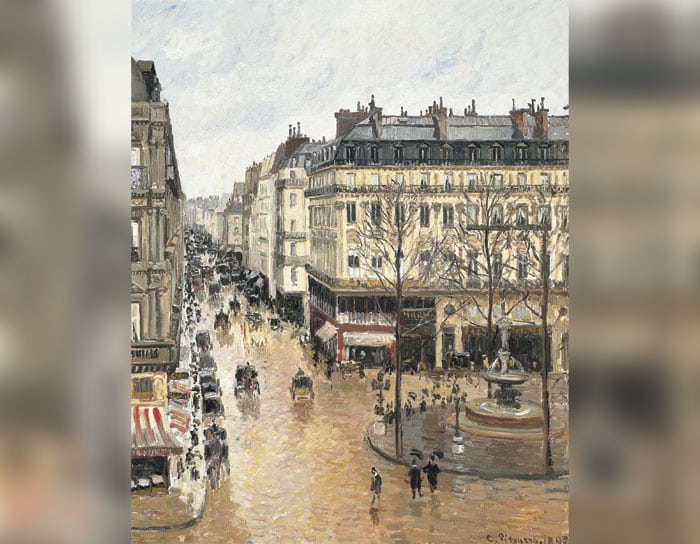
“Cassirer v. Thyssen-Bornemisza Collection Foundation,” overseen by the U.S. Court of Appeals for the Ninth Circuit, was concerned with artist Camille Pissarro’s 1897 Paris streetscape, “Rue Saint-Honoré in the Afternoon. Effect of Rain.” During World War II, the painting, considered a masterpiece of French-impressionism, belonged to Lilly Cassirer, a Jewish woman living in Germany. Lilly was forced to surrender the painting to the Nazis in exchange for an exit visa in 1939.

For decades, the painting moved between different galleries and owners before being sold to the Thyssen-Bornemisza National Museum in Madrid, Spain. And for the past 24 years, the Cassirer family has been trying to get back the painting from the national museum in Spain. 

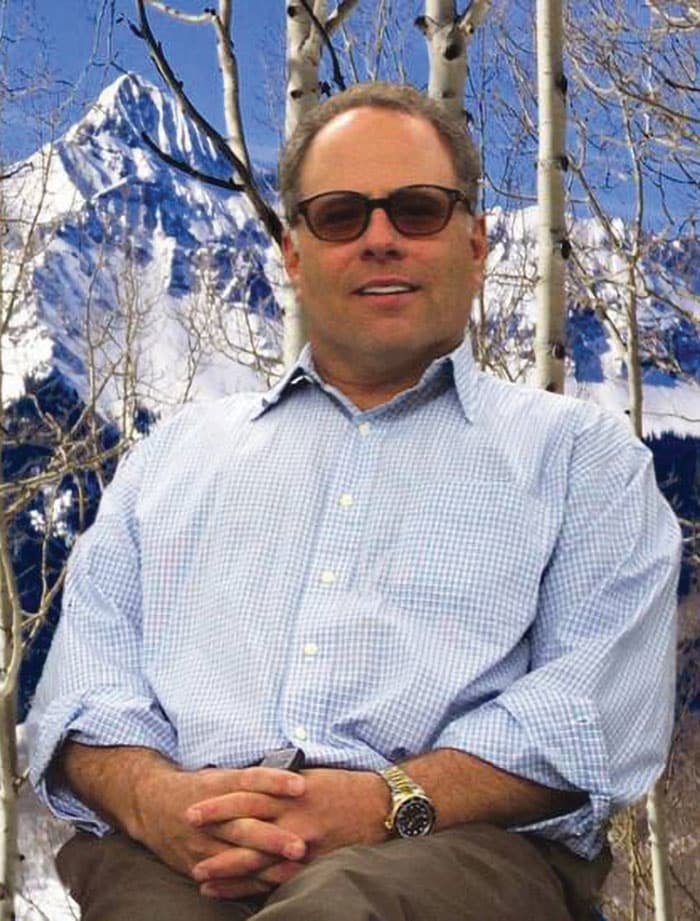
Plaintiff David Cassirer.
Courtesy of David Cassirer

David Cassirer, Lilly’s great-grandson and one of three plaintiffs in the case, denounced the court’s ruling that the painting remain in Spain.

“I was certainly stunned and hurt by their decision,” Cassirer told the Journal in a phone interview from his home in Telluride, Colorado. “In a perfect world we would have gotten this painting back 20 years ago. This was a serious miscarriage of justice.”

“We were all just sickened by the ruling,” he continued. “We’re upset, amazed and hurt. On behalf of my immediate family, all of whom have died; on behalf of the Jewish people, facing exponentially growing antisemitism, this is a terrible ruling.”

The high-profile case has navigated through various courts since Claude Cassirer (David Cassirer’s late father and Lilly’s grandson) learned of the painting’s existence in 2000 and petitioned the museum, as well as the Spanish government, for its return. That petition was denied. Last week, the Cassirer family faced its latest setback when an appellate court, in a highly technical decision, determined Spanish law, not California law, applied to the case, meaning the museum had acquired the painting through adverse possession.

The court ruled that because the museum, which acquired the painting in 1993, had held the painting for a minimum of six years before the Cassirer family petition made a claim for it, Spanish law dictates the museum has fair possession of it. And because the Ninth Circuit court determined to go by Spanish law, not California law, the painting will remain with the museum for now.

Long at issue has been whether the museum was knowingly acquiring stolen artwork when it purchased the Pissarro painting, along with other works, from Baron Hans Heinrich Thyssen-Bornemisza, an industrialist and art collector, in 1993. The museum’s leadership maintains it did not know, while Cassirer’s legal team has argued any knowledgeable art collector would have known the work was stolen.

Before learning of the painting’s existence, the Cassirer family had presumed the painting lost or destroyed; in 1958, Lilly was granted a settlement for the presumed-lost painting from the German government. 

Before learning of the painting’s existence, the Cassirer family had presumed the painting lost or destroyed; in 1958, Lilly was granted a settlement for the presumed-lost painting from the German government. 

Not at dispute is that the impressionist masterwork, which could be worth up to $60 million, was once the property of Lilly Cassirer.

“There is no dispute that the Nazis stole the Painting from Lilly,” Judge Carlos Bea, one of the three circuit judges to hear the appeal, wrote in his opinion. 

In a dissenting opinion, Circuit Judge Consuelo Callahan wrote that she agreed with the court’s decision from a legal standpoint but was troubled by it. 

Spain, Callahan wrote, “should have voluntarily relinquished the painting.” 

Cassirer was joined by the estate of his late sister, Ava, and United Jewish Federation of San Diego, as plaintiffs. Cassirer’s father, Claude, was active with the Jewish Federation of San Diego and left a percentage of the painting’s proceeds to the Federation. 

One of the family’s attorneys, Sam Dubbin, a principal in the law firm Dubbin and Kravetz and an expert in the restitution of assets looted from Holocaust victims, said the family planned to appeal for an en banc review, a special procedure when all judges of a particular court hear a case.

“We believe the decision is incorrect in its application of California’s choice of law framework, and Mr. Cassirer will definitely seek en banc review,” the legal team said in a statement.  

Cassirer, the only living direct descendant of Lilly, still believes his family will get the painting. He hopes to sell the artwork at auction and would use the proceeds to start a family foundation. It’s what his late father and mother—the two died, respectively, in 2010 and 2020—would have wanted. 

“They were ecumenical. They would be proud if I were helping Black people, Native Americans,” he said. “That’s how they raised me.”

Court Rules Against Nazi-Looted Art’s Return to California Family Read More »

Keeping the Light Aglow

There is a remarkable exhibition currently at the Skirball Cultural Center called “This Light of Ours: Activist Photographers of the Civil Rights Movement.”  It was organized by the Center for Documentary Expression and Art in Salt Lake City and Cleveland’s Maltz Museum of Jewish Heritage, and is on view through Feb. 25th.  I have seen it four times, not just because I find it so informative and challenging, but because my daughter Alissa happens to be the curator for the present edition of the show.  If she weren’t, I probably would have only seen it twice!

The show consists of 157 photographs as well as 15 archival objects added by the Skirball that together tell the story of those who in the 1960s put their lives on the line for civil rights. The nine photographers whose work is featured remind us of the sacrifices made by Black Americans and their allies during one of the most difficult times in U.S. history.

At a moment when Black-Jewish relations are particularly strained over different narratives regarding the Middle East, I was moved by the unity displayed back then. You might be familiar with the iconic photo from the 1965 march from Selma to Montgomery in support of voter rights. There is Dr. Martin Luther King, Jr., arms linked with a number of his colleagues, among them John Lewis, then chairman of the Student Nonviolent Coordinating Committee and later a much revered member of the U.S. House of Representatives. Also is the front row you will find Rabbi Abraham Joshua Heschel. A close friend of Dr. King, Rabbi Heschel was determined to be there for Black Americans when they needed him most.

Heschel isn’t the only Jew portrayed in the exhibition who, inspired by his Jewish values, cared more for justice than for his own safety. The show includes a heartbreaking display created by the Skirball about three young volunteers, James Chaney, Andrew Goodman, and Michael Schwerner, the latter two, Jewish New Yorkers, whose effort to register Black voters cost them their lives. They didn’t die in vain: Historians argue that their murders in June of 1964 in Philadelphia, Mississippi, were instrumental in gathering the support that led to the Civil Rights Act of 1964 and later to the Voting Rights Act of 1965.  In a well-deserved honor, the three martyrs were awarded the Presidential Medal of Freedom by President Obama in 2014.

The show also includes a photo of a bloodied older man sitting along the side of the road.  It turns out that he is Rabbi Arthur Lelyveld, of Cleveland’s Fairmont Temple.  He had been badly beaten with a tire iron at a 1964 voter registration campaign event in Hattiesburg, Mississippi. Next to the photograph, headphones offer visitors the chance to listen to the voice of photographer, Herbert Randall, who explains that when he stopped to assist the rabbi, Lelyveld told him in no uncertain terms, “Photographer, take the picture.”  He was more interested in documenting the brutality than in stopping the bleeding.

But in my mind the most touching example of the Jewish support for civil rights is a photo of a man with one leg on crutches, wearing a yarmulke and sweating profusely, as he persevered during 54 grueling miles on the trek from Selma to Montgomery. His name was Jim Letherer, an amputee who marched alongside Dr. King and other activists. Last month my daughter gave a tour of the exhibition to the celebrated civil rights leader Dr. Bernard Lafayette. Dr. Lafeyette paused in front of this photo and said “I remember this guy.  John (Lewis) and I kept asking him to take a break because we thought he was going to pass out during the march.  But he insisted on continuing on.”

How poignant it is to recall a period when Black and Jewish Americans were literally marching arm in arm.

Despite these trying times, we must do the work to keep that light aglow.  A step in the right direction is the Karsh Family Foundation’s gift to the Skirball highlighting and fostering connections between the Black and Jewish communities. As we celebrate what we have done together in the past, may we write a new chapter that one day observers will view with awe and appreciation.


Morton Schapiro is the former president of Williams College and Northwestern University.  His most recent book (with Gary Saul Morson) is “Minds Wide Shut:  How the New Fundamentalisms Divide Us.”

Keeping the Light Aglow Read More »

What Will Become of the Jews of Iran? Part One

As a writer, I have a love affair with words. But even I am left at a loss for words in describing the unique shame and pain of witnessing how, for the last 45 years, my former homeland, Iran, has brutalized the homeland of my soul, Israel. 

Last week, I wrote about the grim prospect of war between Israel and Iran. It’s a terrible thought, but an important one, and while I believe most American Jews can imagine what war between the Jewish State and the Islamic Republic would imply for Israelis, few may be thinking about what a post-Oct. 7 reality means for Jews of Iran, who currently comprise one of the largest Jewish communities in the Middle East outside of Israel.  

American Jews, by and large, don’t know enough about Iranian Jewry. That is why, as promised last week, I want to help readers understand more about this ancient community and what is at stake for its present, as well as its future. 

But I feel compelled to share something with readers that is not often mentioned by writers when reporting about the Jews of Iran: It’s an unspeakable code, an understanding, if you will, and anyone active in matters related to Iranian Jewry knows its limits. Quite simply, it is extremely difficult to write about the present-day state of Jews in Iran. If writers, even those in the West, condemn the regime too much, especially by making the grave mistake of actually quoting sources from within Iranian Jewry who might describe life as miserable, they may risk actual Jewish lives back in Iran. 

But if Western journalists — and I have seen so many, including from The New York Times and PBS NewsHour — downplay the risks and paint a rosy picture of a community that is generally doing well in a Middle East otherwise plagued by violence and antisemitism, they aren’t telling the whole story.

Here are some important facts about Jews in Iran: Many scholars believe that Jews are Iran’s oldest religious minority, having lived there nearly 2,700 years (if you count the first 100 years of Jewish captivity in Babylon, after the fall of the First Temple). Jews lived in Iran, which until 1935 was known as Persia, for over 1,000 years before the arrival of Islam. The land — its language, culture, prose and history — is ingrained in us, whether we still live in Iran or escaped in the last four decades and resettled in countries such as the United States, Israel, Canada or Italy.

Before the 1979 Islamic Revolution that ousted the Westernizing, secularizing Shah Mohammad Reza Pahlavi, there were nearly 100,000 Jews in Iran. Today, that number is less than 10,000, according to Israeli sources, though the regime (and Jewish leaders in Iran themselves) often elevate that number to 20,000. 

Before the 1979 Islamic Revolution that ousted the Westernizing, secularizing Shah Mohammad Reza Pahlavi, there were nearly 100,000 Jews in Iran. Today, that number is less than 10,000, according to Israeli sources, though the regime (and Jewish leaders in Iran themselves) often elevate that number to 20,000. 

Why? It’s simple: It is in Iran’s best interest to boast that it has a large, thriving Jewish population, especially when the regime is slammed with accusations of antisemitism as a result of everything from funding billions of dollars to terrorist organizations such as Hamas and Hezbollah, to executing over 20 Jews since 1979 and hosting Holocaust cartoon contests. 

It’s no secret that Iran helped plan Oct. 7, and, as Mark Hetfield, president and CEO of HIAS (formerly known as the Hebrew Immigrant Aid Society) told me, “Conditions in Iran — in particular for Jews — have deteriorated even further after Oct. 7.”

How do Jews fare in Iran today, especially during the last four months? More than ever before, they find ways to survive. 

It should be noted that in Iran, Jews (and Christians, Zoroastrians and other recognized religious minorities, excluding Baha’is) are considered a protected religious minority, and Jews and Christians are a people of the “ketab” (book/Bible). And unlike Jews who escaped Arab countries long ago, Iran’s Jews are not currently harassed or being killed. 

Again, optics are vital to the regime and the last thing it needs now, while it demands a better deal from the West and seeks to sabotage Saudi-Israel relations, is news that it has executed members of its own Jewish community, especially after Oct. 7.

Jews in Iran have synagogues, access to kosher meat (and wine for Shabbat, despite a national ban on alcohol) and one Jewish member of parliament to represent their community. In 2014, the regime extended a much-appreciated gesture to the Jewish community by unveiling a monument that honored Jewish soldiers who had fallen during the Iran-Iraq War (1980-1988), in which over one million people died. That gesture helped Jews feel recognized as an identity by which they have always viewed themselves: Iranian. Still, the Jews of Iran live in a perpetual state of saying and doing anything that is necessary in order to survive. It’s not easy living in a theocratic state in which Zionism is punishable by death. 

Last Passover, some Jewish communities were forced to cancel Passover events in order to participate in the country’s annual “Quds Day,” celebrating Palestinian “resistance” and demanding an end to “the Zionist entity.” In October, shortly after worldwide false reporting that the IDF had bombed a hospital in Gaza, fanatics burned Israeli flags at the tombs of Esther and Mordechai in the northern town of Hamadan. The tomb is the holiest site in Iran for Jews, and as Iran expert Alireza Nader wrote on X, “This is the first time such an event has taken place within the grounds of the tomb.” 

In what may have been a first, after Oct. 7, the regime warned its Jewish citizens to cut all ties with relatives in Israel. According to Iran International, which is based in the U.K., Jews in Tehran and Shiraz received phone calls warning them not to be in contact with family in Israel. 

As you can guess, many Jews immediately left WhatsApp groups and even blocked messages from loved ones in Israel. According to Iran International, Iran’s attorney general “criminalized any action aimed at confirming, strengthening and consolidating Israel in cyberspace.”

Imagine that: Leaving a WhatsApp group chat with family in Israel because you are afraid of being arrested (or worse). Sometimes, I wonder if we appreciate the special freedoms we enjoy in this country. 

Most notoriously, on Oct. 30, hundreds of Jews in Iran were forced to march against Israel in what became the largest anti-Israel demonstrations by Jews since 1979 (those demonstrations also occurred under intense pressure to keep the Jewish community safe by towing an anti-Israel line). Images and videos of Jews in five Iranian cities — Tehran, Shiraz, Isfahan, Yazd and Kermanshah — mostly men wearing yarmulkes and holding signs condemning the Jewish State, went viral. 

The forced protests even prompted a spokesperson from the State Department to announce that the Biden administration acknowledged that the protests were coerced, according to Voice of America (VOA). The spokesperson called the pressure against religious groups reprehensible, adding, “Iran’s apparent exploitation of this conflict to advance its repression and propaganda against its Jewish community is abhorrent.”

If it was possible to find humor in all this, it came in the form of a response issued by Iran’s U.N. mission in New York, which sent VOA a statement regarding criticism from the U.S.: The regime compared the Jews it forced to protest in Tehran with leftist American Jews who protested against Israel in Washington, D.C. on Oct. 18. 

Asking whether these American Jews had also been “subject to pressure,” Iran’s U.N. mission declared that “Iranian Jews, akin to other Jews worldwide … are indeed fed up with the egregious crimes committed by the occupying regime [Israel] against innocent Palestinian women and children.”

Yes, we all know that Jews in Iran enjoy as much agency and freedom to condemn Israel as a bunch of left-wing American Jews who have, more or less, been allowed to shut down everything from freeways to airports because they live in a democracy.

I asked Dr. David Menashri, founding director of the Alliance Center for Iranian Studies at Tel Aviv University, whom I also quoted in last week’s column, one not-to-simple question: Are today’s Jews of Iran safe?

Like me, Menashri knows what’s at stake in offering an inaccurate response that might suggest that Iran’s Jewish community currently faces existential peril. I’ve known Menashri, one of the world’s foremost Iran experts, for nearly two decades and admire that his research-driven approach to studying Iranian Jews, including those who live in Israel, is imbued with compassion and humanity. 

“Are Jews safe in Iran today?” he asked me, mirroring my question. “When there is a trend of [government] denial of the Holocaust and shouts of ‘Death to Israel!’ Jews, no matter where they live, cannot be indifferent to such messages,” he said. “Iran’s government isn’t actively harassing Iranian Jews or pushing them out of the country, but there are the subjective feelings of the people (Jews) themselves. Iranian Jews have done whatever they can do to be faithful to Iran. Iranian Jews, no matter where they live, love Iran, are attached to the culture and to Persian civilization. You can see this in Israel, Los Angeles and elsewhere. And some remain in Iran because of their attachment to the culture.”

It’s true, despite how surprising it may be: Many Jews still choose to live in Iran, and the reasons range from old age and financial security to nationalism. “If they haven’t left in 45 years, maybe they want to live there,” said Menashri, “but again, we don’t know. All their statements from their [Jewish] leaders are in line with policies of the regime.” 

Menashri also reminded me that there are two sides to every coin. “Things like access to kosher meat or a parliament member make it more pleasant for them when there are Holocaust denial conferences and other forms of antisemitism,” he said. 

Menashri, who was born in Iran, also reiterated, “We can assess people by what they do or say, but not what they think,” referring to whether some Iranian Jews do sympathize more with Palestinians than Israelis. 

“Antisemitism is a common phenomenon in the history of Iran, period,” he said. “So living 45 years in the Islamic regime, they [Jews] learned to live with it, and they’re not scared of being executed every day. Yes, 21 Jews have been executed since the revolution, but when you look at how many Muslims have been executed, it shows a broader trend.”

The Jews of Iran are living threads in an ancient tapestry that weaves a story of many other Jewish communities in exile, a story that recent Torah portions have highlighted in the plight of Jews in Egypt once a new pharaoh who held them in contempt took power. “When you live in the Diaspora, you live with the temperament and the development of the country you’re in,” said Menashri. “You live with the law. By our Jewish tradition, we pray for the good health of the leaders of the state. In millennia, Iranian Jews learned to adjust to be faithful to the state.” 

Next week, I’ll share what options, if any, exist for Jews to currently leave Iran and offer insights from experts, including HIAS leaders, who are leading these efforts on the ground, especially in the U.S. 

For now, I’ll leave readers with a final observation by Menashri, who edited a new, 600-page book in Hebrew, “Iranian Jews in Israel: Immigration, Challenges of Integration and Absorption,” which was published last month (and which I’ll report on separately): “The clear expression of Jewish feelings after the revolution is the migration of most Jews from Iran,” he said. According to Menashri, more Jews of Iranian descent live in Israel – probably more than in the rest of the world combined– because many arrived as early as the 19th century through the establishment of the State of Israel in the 1940s and 1950s.

But, he said, “For better or worse, after the Islamic Revolution, most of the Jews who emigrated from Iran have not immigrated to Israel. It can be said that the higher their socioeconomic status, the more they flew West – mainly to the large concentrations of Iranian immigrants in Los Angeles and Long Island. Iran, by contrast, one of the oldest Diasporas in Jewish History – and the largest in the Muslim World then – has fallen to a historic low.”


Tabby Refael is an award-winning writer, speaker and weekly columnist for The Jewish Journal of Greater Los Angeles. Follow her on X and Instagram @TabbyRefael 

What Will Become of the Jews of Iran? Part One Read More »