fbpx

December 22, 2023

Sleepdriving

We give ourselves more credit than we’ve earned,

thinking we’re more advanced than actually we are.

From the past we’ve very little learned:

we’ve marred the future where we’d hoped that we would star,


unable from our status quo to steer,

to static we’d created making no objection,

our eyes fixed on the mirror to the rear

not correcting, as required, the direction  


we should have known we really should have taken,

poorly informed before we crossed the double line,

sleep-driving while unwilling to awaken.

Meanwhile we kid ourselves that we need not confine


ourselves to rules, because we are inclined

to give ourselves more credit than we really should.

That is the story of all humankind,

and why most of its stories’ endings are not good.


“Those were the days,” we tend to say, reflecting

the fact we realize we’re suffering from ent-

ropy, a process in which those expecting

improvement are like those who run for President.


Envoi

I apologize to all of you, if comparable to a kochleffel I

have stirred you in a way that makes you more depressed

than you were till you read this. Only those who with the vanity of hevel lie,

as was protested by the Preacher, will contest

that we are in an oversalted soup today, where hate

for Jews arouses little protest, lacking any sell-by date.


Kochleffel is the Yiddish word for “cooking spoon,” and denotes a person who stirs up trouble; a meddler, busybody. Hevel is the Hebrew word which the King James version of Qohelet (Ecclesiastes) translates as “vanity.”

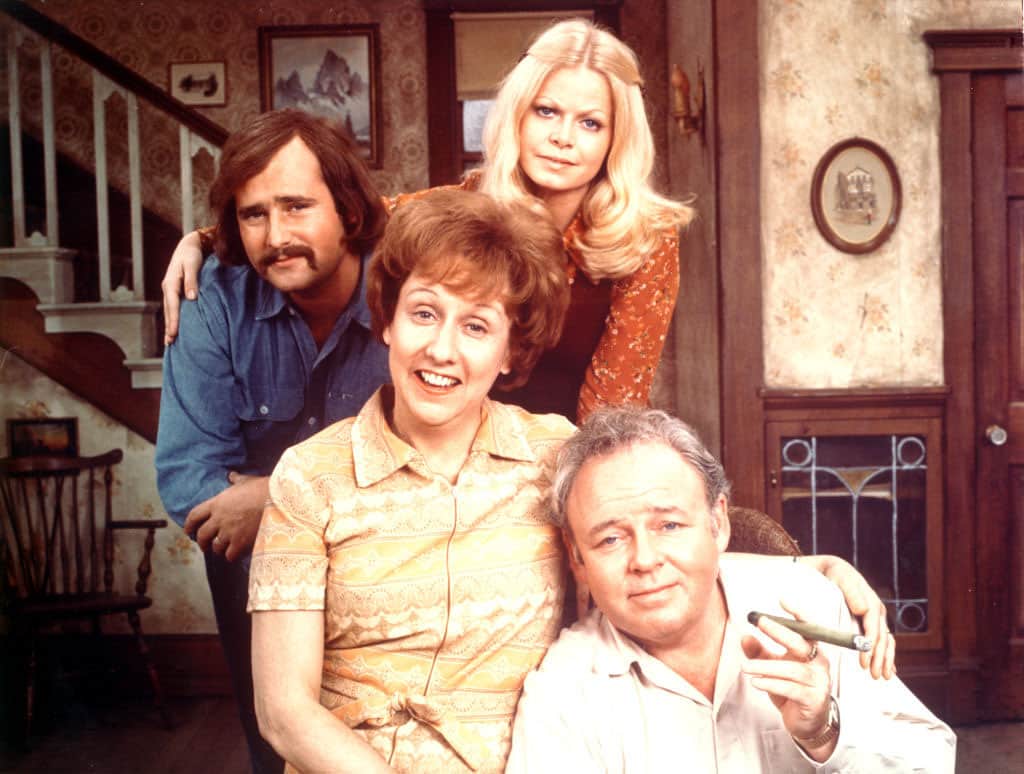
David Itzkoff (“Those Were the Days, Not Simple or All Sweet: Norman Lear’s Memoir, ‘Even This I Get to Experience,’” NYT, 10/5/14) wrote about Norman Lear:

For someone whose most enduring contribution to popular culture might be the image of a husband and wife sitting at a piano and singing about the good old days, Norman Lear is not particularly nostalgic.

He has spent the last 20 of his 92 years pondering a vow to tell his life story: not just the backstage tales from his popular sitcoms like “All in the Family,” “Maude,” “Good Times” and “The Jeffersons,” but also his account of how a Depression-era kid with a challenging childhood came to produce the button-pushing, boundary-breaking comedies that defined the 1970s and influenced future generations.

P. J. Grisar writes in the Jewish Journal, 12/6/23:

While most of his characters, from the bigoted Archie Bunker to the Black working-class Sanfords, weren’t Jewish, Lear always hinted at a Yiddishkeit in his outlook, and even in the name of his production company, “T.A.T. (Tukhes Afn Tish) Communications.”

T.A.T. is an acronym for “Tukhes Afn Tish,” a Yiddish term that means “bottom on the table.”  The fact that Norman Lear gave his company this name may explain why Michael Stivic (Meathead), who played the role of Archie and Edith Bunker’s son-in-law, used a Yiddish word, “kochleffel,” meaning “pot stirrer,” to describe the man whose Yiddish-labeled company enabled a famous fictional version of his life to flourish.


Ramban, interpreting Jacob’s words in Gen. 32:4 to his brother Esau as self- criticism for offenses he had committed against Esau, and as  translated by Chavel, writes:

In my opinion this too hints at the fact that we instigated our falling into the hand of Edom [Rome], for the Hasmonean kings during he period of the Second Temple entered into a covenant with the Romans [Maccabees 1:8], and some of them even went to Rome to seek an alliance. This was the cause of their falling into the hands of the Romans. This is mentioned in the words of our Rabbis [Avodah Zarah8b) and is well published in books [Josippon, see Ramban on Lev. 26:16].


Gershon Hepner is a poet who has written over 25,000 poems on subjects ranging from music to literature, politics to Torah. He grew up in England and moved to Los Angeles in 1976. Using his varied interests and experiences, he has authored dozens of papers in medical and academic journals, and authored “Legal Friction: Law, Narrative, and Identity Politics in Biblical Israel.” He can be reached at gershonhepner@gmail.com.

Sleepdriving Read More »

Don’t Say Goodbye

An old Jewish joke begins with the question: “What’s the difference between a Jew and a Frenchman at a party?”. The answer is: “A Frenchman leaves and never says goodbye; a Jew says goodbye and never leaves.” In my experience, this joke is true to life; at weddings, when people get up from the table and announce that they are leaving, you can still catch them in the hallway a half an hour later chatting on their way out.

Culturally, goodbye is a foreign word for Jews. During the years of the Soviet Union, visitors from abroad would come to meet with Jewish dissidents. When they would leave, they made a point of not saying “shalom,” (goodbye); instead, they would say “l’hitraot,” which roughly means “see you later.” Separation is an unavoidable reality; but at the very least, one can make clear, (to paraphrase the words of the Midrash,) that it is “too difficult to say goodbye”.

This ambivalence about saying goodbye has its roots in the Talmud, which records of practice of “levaya,” accompanying guests after they leave the host’s home. The primary purpose of this practice is to ensure that the guest doesn’t get lost, which was far more dangerous in ancient times. The Talmud declares that if the host does not accompany the guest, (or even if the guest refuses to be accompanied,) it is as if one has shed blood; walking without clear directions in a sparsely inhabited area can expose one to multiple hazards. Maimonides adds that each community should appoint representatives to accompany visitors who are passing through their town.

The practice of “levaya” is connected by the Talmud to the ritual of Eglah Arufah. This ritual is performed when a person is found murdered near a city, and there is no witness to the crime; a calf is taken to a dry valley and sacrificed, and the elders wash their hands and proclaim; “Our hands did not shed this blood, nor did our eyes see it done.” This declaration is strange; the Talmud wonders “Would we have imagined that the Elders of the court are murderers?” The leaders of the city are certainly not suspects in this death! The Talmud answers that it is because the Elders might have been guilty of the crime of neglect; they proclaim that they did not fail to perform levaya, and that they did not see the victim embark unaccompanied and unfed. Leaving a stranger unaccompanied is a matter of life and death.

However, the practice of accompanying guests goes beyond safety. Other passages in the Talmud suggest that levaya evolved, and became a ritual of expressing honor. For example, a student has to accompany a teacher for a longer distance than a teacher has to accompany a student. This implies it is also an expression of respect; the longer you walk, the more respect you show. But it is still notable that even teachers have to accompany their students; no one should be given a quick goodbye.

Later rabbinic authors debate why the practice of accompanying guests fell out of favor; but this was already the case in the mid-1500s, when Rabbi Moses Isserles wrote “that nowadays this is not our custom”; walking the guest a symbolic distance of six or seven feet is enough. Even so, many today continue to walk their guests a few feet past the door to continue this ancient practice.

It is intriguing that Rabbinic literature associates the practice of levaya with our Torah reading. After Joseph reveals his identity to his brothers, he sends them back home with wagons to bring his father and the rest of the family down to Egypt. From the context it is clear that these wagons are of great significance; they are mentioned four times. This might be to highlight, as some commentaries explain, that royal wagons are difficult to obtain, and offer the protection of the Egyptian empire, much like a diplomatic passport. Certainly, they offer greater comfort for the traveling family.

Rashi cites a Midrash which offers a poetic reading of this text. Using a play on words, it explains that the wagons are meant to remind Jacob of the last Torah topic he had studied with Joseph, that of the Eglah Arufah. The explanation is based on a play of words; wagons are “agalot” in Hebrew, which is similar to the Hebrew word for calf, eglah.

Midrashim are products of poetry; even so, this comment seems strange. What could be the meaning of this connection? Rabbi Isaiah Di Trani quotes a tradition from the Talmud Yerushalmi which offers further detail, and better explains this connection. On the fateful day that Jacob sent Joseph to meet his brothers (and Joseph was later sold into slavery,) Jacob accompanied Joseph, fulfilling the practice of accompanying someone on their way. Joseph turned to Jacob along the way and begged him to return home, not wanting to burden his father. Jacob responded by teaching Joseph about the ritual of Eglah Arufah and the importance of accompanying guests.

The Zohar (11:116) offers a dramatic interpretation which is the polar opposite of the one offered by the Yerushalmi. It writes that:

Joseph, when he left his father, was sent away without being accompanied and without food; what happened happened. And when Jacob cried ‘Joseph my son has been torn apart’ and said ‘I will I will go down mourning to the grave,’ Jacob was saying it was his fault. Furthermore, Jacob knew that the brothers hated Joseph, and sent him anyway. And this is the hint that Joseph is giving Jacob (with these wagons, and the connection to Eglah Arufah.)

In other words, the wagons are a bitter reminder of Joseph being sent away unaccompanied into obvious danger. The lesson of the Eglah Arufah was ignored.

The meaning of Rashi is now much clearer; it comes to compare how Joseph was once sent away by Jacob, and how Joseph now sends off Jacob on his journey.  While the Yerushalmi and Zohar disagree on whether this is meant to indict Jacob or exonerate him, they both agree that Joseph’s wagons represent an ideal of how to send someone away on a journey.

This insight is profound. The practice of accompanying others is fundamental to this next stage of Jewish history. Jacob’s sons had more or less lived their own lives until now; they may have been compassionate towards each other, but they didn’t share a deep connection. They could still say a quick goodbye, or even leave without saying goodbye.

But Joseph’s wagons represent a turning point. Now, the connection remains even when people are far apart geographically. Goodbye becomes too difficult to say; a new sense of solidarity demands that Jews declare I will never leave you, and will see you later.

In recent weeks, American Jews have been organizing a multitude of missions to Israel; KJ organized one in November, and is in the process of organizing two more. During our first mission, we were thanked at every stop for visiting Israel; we were thanked by soldiers, politicians, volunteers, and even bereaved families. We were overwhelmed. We couldn’t understand why they are thanking us, a group of visiting Americans, when they are sacrificing so much more themselves? But what they were saying to us is that they don’t want to be alone. That’s why we came to accompany them.

Jews never say goodbye, they just say l’hitraot, we will see you soon. And now’s the time to see our brothers and sisters in Israel.


Rabbi Chaim Steinmetz is the Senior Rabbi of Congregation Kehilath Jeshurun in New York.

Don’t Say Goodbye Read More »

A Moment in Time: “Filtered or Unfiltered?”

“Filtered or unfiltered?”

I paused for a moment in time before answering the barista. It wasn’t that I was deep in thought with regard to my coffee preference. But the question brought to the surface the state of world dialogue today.

In recent years, our proclivity to expressing thoughts with unfiltered honesty has shaken the paradigms of civilized discourse. We are “speaking our truths,” and “telling it like it is” without a consideration for how our words impact others.

But perhaps we just don’t care anymore. Perhaps we don’t believe it matters how our proclamations affect our neighbors, our family members, our co-workers, and our classmates.

Freedom of speech has been under scrutiny. Presidents of top Universities, students on campus, and protestors in our cities believe they can say whatever they want while protected by our Constitution. And while there may be a legal foundation to this, we are relinquishing our moral and ethical compass along the way.

I’m sure that lawyers far smarter than I can make an argument that calling for Genocide of the Jews is a protected right.

I’m sure that academics with greater intellectual breadth than I can build a case upholding the right to invite a Holocaust denier to speak on a college campus.

And I’m sure that political candidates with more impressive oratory skills than I can inspire crowds (to intimidate those with opposing views.)

And all this, all this is so very exciting and mobilizing and invigorating.

But they create headlines without offering a roadmap . And they spark controversy without encouraging dialogue.

The Talmud, complied in Babylon around 500 BCE during the time of the first Jewish exile from Israel, is Judaism’s incredible text of law that highlights rabbinic discourse and debate. There is a section focussing on “Lashon Hara” (the evil tongue) which teaches that our misguided words kill three people:

  1. The person we speak about (because we ruin their reputation).
  2. The person who is speaking (because we lower ourselves spiritually)
  3. The person who is listening (because their presence is giving us permission that all this is ok).

So … even if what we are saying is true, our purpose in sharing words doesn’t matter if it results in undo harm. Speaking our truth does not translate into creating a better society. If we want real change, we need to have conversations, not proclamations. And we need to have our radar on, to be open emotionally, and to be perceptive to those surrounding us.

My husband, Ron, reminds me often: “When we keep our mouths shut, we are the masters of our words. But once we let the words come out, they are the master of us.”

“Filtered” I responded to the barista. Studies actually have shown that filtered coffee is healthier for the heart. A parallel can be made that filtered speech is healthier for our society as a whole.

A Moment in Time: “Filtered or Unfiltered?” Read More »

A Bisl Torah: Living with Grief

Franklin Pierce was our 14th US president. Prior to the presidency, President Pierce suffered the death of his young sons. One was 11 years old and died in a train crash.

There is much written about President Pierce’s relationship with his wife, Jane. Most of which isn’t praiseworthy. Jane grieved for her children and wasn’t suited for the public life of being a president’s wife. Especially while she mourned. At a certain point while in a deep depression, it was clear she wasn’t going to come downstairs from her White House bedroom.

President Pierce knew how much his wife liked fresh flowers. Lore explains that he ordered fresh flowers for each room of the White House, hoping to brighten his wife’s spirits. While still incredibly sad, she ventured downstairs to see the flowers. A step. The tradition continues to this day—in each room of the White House, there are freshly cut flowers.

We all know people in our lives who are suffering in different ways. Often this holiday season brings up fresh memories and reveals an ever present pain. Although often masked, grief continues.

Perhaps one of the greatest gifts we can offer someone else is acknowledging that pain while hidden, still exists. Rabbi Yehuda HaChasid once said, “I will build an altar from the broken fragments of my heart.” Which means we can grow, learn and live, using our tears and love as cement and mortar.

During the darkest days of the years, don’t turn away from someone’s angst. It may be our acknowledgment and embrace that helps someone take yet another step forward. Walking with grief and with you, willing to build.

Shabbat shalom


Rabbi Nicole Guzik is senior rabbi at Sinai Temple. She can be reached at her Facebook page at Rabbi Nicole Guzik or on Instagram @rabbiguzik. For more writings, visit Rabbi Guzik’s blog section from Sinai Temple’s website.

A Bisl Torah: Living with Grief Read More »

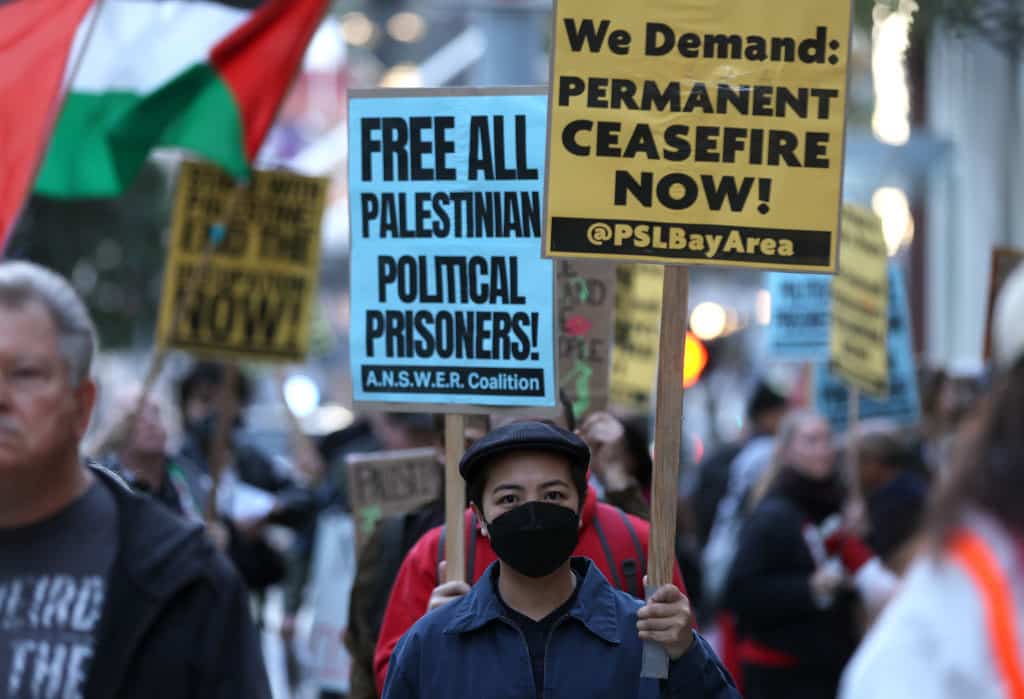
Where Are The “Cease Hamas Fire Now” Posters?

It’s crazy how some truths are so engrained we end up just taking them for granted. Take this well-established whopper: the Jews are humanity’s favorite scapegoat. That sordid reality has been so true for so long that saying it today only draws a yawn.

Since the Hamas invasion of Israel on October 7, we have seen this “favorite scapegoat” phenomenon displayed in all its glory.

The scapegoat-mongers, of course, first had to overcome an annoying wrinkle: those 1200 Israelis who were murdered by Hamas didn’t lend themselves neatly to scapegoat status. But sure enough, because they were Jews, that proved to be just a wrinkle. Within days, the scapegoat locomotive had revved up. By the time Israel began retaliating to eliminate the Hamas threat, the “blame only Israel” engines were roaring.

Country after country, activist group after activist group lined up to join the roar and demand that Israel “cease fire now.” It never occurred to anyone to ask someone else to stop their aggression.

It’s only when U.S. Secretary of State Antony Blinken stunned the world on Dec. 20 with an extraordinary explosion of logic that some people did a double take.

“What is striking to me,” Blinken said, “is that even as, again, we hear many countries urging end to this conflict, which we would all like to see, I hear virtually no one saying— demanding of Hamas that is hiding behind civilians, that it lay down its arms, that it surrender. This is over tomorrow if Hamas does that.”

This is over tomorrow if Hamas does that.

How many justice-seeking groups have had the courage to scream that logic on campuses and on city streets? How many “Cease Hamas Fire Now” posters have we seen? Last anyone checked, that number was zero.

Blinken’s simple logic is that the group that murdered, mutilated, raped and burned alive 1200 people on October 7 should bear some responsibility for the consequences of its actions. In other words, it is HAMAS that must stop firing, not the country that was forced to retaliate. It is HAMAS that is most responsible for the tragic deaths and humanitarian disaster it has knowingly and cowardly unleashed on its own people.

If those hysterical rioters accusing Israel of being genocidal monsters had any sense of justice, they would be demanding that the perpetrators of the October 7 massacre cease their murderous aggression, return the hostages and put the interest of their people first.

If they really cared about the welfare of Palestinians, they would have demonstrated long ago in support of the millions of Palestinians who have suffocated and been brutalized over the years in Lebanon and Jordan. Why have they kept so quiet about that other Palestinian suffering? Here’s a hint: the Jewish state had nothing to do with it.

For those of you who are new to this single-minded obsession with Jews, one fact from the United Nations tells you all you need to know. Since 2015, there have been more UN resolutions against Israel than all other nations combined. Yes, that includes Syria, Russia, Iran, China and all of the planet’s top gangsters. That is radical Jewish chosenness.

“Horrific massacres of unarmed civilians are, unfortunately, taking place right now in South Sudan, Congo, Ethiopia, Syria, and Darfur,” NYU Professor Susie Linfield wrote recently in Quillette. “Unforgivably, the so-called international community usually ignores them.” Why? You guessed it: Jews and Israel have nothing to do with any of it.

Even terror groups get special treatment when it comes to Jews.

“In recent years, the Left’s embrace of terror seemed to have ebbed,” Linfield writes. “The notable exception has been groups devoted to the destruction of Israel: Hamas, Islamic Jihad, and Hezbollah, all of which still garner enthusiasm and deluded admiration.”

This deluded admiration may seem inexplicable, but I have a theory that may help explain it.

After the murder of six million Jews during the Holocaust, for obvious reasons much of the world was deprived of its convenient and invaluable Jewish scapegoat. But that is a centuries-old habit that is hard to shake. So, eventually, with the birth of Israel and the subsequent wars the Jewish state was forced to fight, the good old days of “blaming the Jews” for everything people hate came back with a vengeance. And thanks to wily terrorist groups like Hamas who are geniuses at provocation, that favorite scapegoat status seems secure, if dressed up now as a powerful modern state.

Evidently, nothing riles up the world quite like modern Jews who have the chutzpah to defend themselves.

That’s why we’re not likely to see too much pressure on Hamas or any “Cease Hamas Fire Now” posters. While Hamas may indeed be guilty as sin, luckily for them they’re not Jews.

Where Are The “Cease Hamas Fire Now” Posters? Read More »

Temple Beth Am to Hold Shabbat Afternoon Services At Private Residence Due to Pro-Palestinian Rally

Temple Beth Am (TBA) announced in an email on Thursday that their afternoon Shabbat services will be relocated to a private address due to a pro-Palestinian rally being held near the Olympic and La Cienega synagogue.

The email, which was obtained by the Journal, noted that the protest was being held at La Cienega Park at 3 p.m. on Shabbat. Rabbi Adam Kligfeld wrote that it was an “agonizing decision … In 2023? In the city of Los Angeles? A Jewish community even considering not holding religious services at their own synagogue because of a looming threat posed by a rally that has a very good chance of spilling from pro-Palestinian rhetoric to virulently anti-Zionist and dangerously antisemitic? It boggles the mind that that is where we are in modern America,” wrote Kligfeld. “But it is where we are.”

Referencing Paul Kessler, the rabbi pointed out that “a Jewish man was killed at a similar rally in Thousand Oaks last month” and that an elderly Jewish couple was recently assaulted in Beverly Hills. He also noted Jewish students “had to take refuge” in a library at Cooper Union in New York City as pro-Palestinian protesters were banging on the building’s doors.

“It very well may be that it is the most prudent thing to do what we are doing, to relocate services, to not put anyone in harm’s way in the name of TBA or Jewish practice,” Kligfeld wrote. “But the decision hurts.”

“It very well may be that it is the most prudent thing to do what we are doing, to relocate services, to not put anyone in harm’s way in the name of TBA or Jewish practice … But the decision hurts.” -Rabbi Adam Kligfeld

He acknowledged that “many expressed discomfort with the notion of cowering, rather than representing.” “Perhaps we, as a community, ought to have done the neighborhood version of that this Shabbat: shown up, in large [numbers], not to counter-rally, but to counter-pray, and counter-study and counter-Jew,” Kligfeld wrote. “Perhaps we ought to have called for hundreds of TBAers to change their Shabbat afternoon plans, and descend upon TBA’s campus not to engage in protesters, but to engage in Judaism, and refuse to yield these square blocks to those who wish us and our friends and family in Israel harm. A significant piece of me wanted that to be the decision. And … we made a different decision, with truly heavy hearts.”

In a separate message, Kligfeld and TBA President Mark Samuel urged community members to become part of “a large and robust crowd” at the private residence during Saturday afternoon’s Shabbat services.

The rabbi told the Journal in an email that the community has been “mostly supportive” of the synagogue’s decision, although some wished “we had not yielded the space/campus, but rather doubled-down on our presence that night” and were “concerned for setting a bad precedent.” “And some, who are truly ideological outliers in the community, consider us to be over-reacting by a long shot, and contributing to unnecessary hysteria, and believe such rallies pose no harm or danger to Jews,” Kligfeld added.

Anti-Defamation League (ADL) Los Angeles said in a statement to the Journal, “ADL supports freedom of assembly, however, in a time of increased antisemitic incidents and polarizing rhetoric, we are concerned that this sets a dangerous precedent of having the Jewish community pay the price for the right of those who spew hate and vitriol to gather. After last weekend’s barrage of bomb threats to over 400 synagogues and Jewish institutions, we call on LAPD and BHPD [Beverly Hills Police Department] to be vigilant in ensuring that the protests don’t devolve into antisemitism.”

The Jewish Federation of Greater Los Angeles also said in a statement to the Journal, “Our Community Security Initiative (CSI) are closely monitoring the security situation and the rescheduling of services at Temple Beth Am this Saturday as a result of a nearby planned protest. We are disheartened and saddened that Jewish ritual observances have to be moved out of an abundance of caution. We continue to hope and pray for peace.”

“The decision by Temple Beth Am is difficult but understandable given the current climate,” American Jewish Committee Los Angeles Regional Director Richard Hirschhaut told the Journal. “The safety of congregants must always be a top priority for synagogues. It is not a decision made in a vacuum, but with insight gleaned from recent pro-Palestinian and anti-Israel rallies having descended into vandalism and even violence. Still, it’s regrettable that Shabbat plans must be altered for this reason.”

Shabbat services for Friday night and Saturday morning will still be at the synagogue as planned.

Temple Beth Am to Hold Shabbat Afternoon Services At Private Residence Due to Pro-Palestinian Rally Read More »

Long Beach City Council Passes Proclamation Calling for Ceasefire in Israel-Hamas War

The Long Beach City Council passed a proclamation on Tuesday night urging the federal government “to support negotiations that lead to a lasting humanitarian ceasefire in Israel and Gaza.”

The proclamation passed by a margin of 5-2, with the two city councilmembers voting against it being Kristina Duggan and Daryl Supernaw, according to NBC Los Angeles. The proclamation states: “The City Council acknowledges the current humanitarian crisis in Gaza and has condemned the attacks on Israel. Palestinian people deserve self-determination. Israel has a right to defend itself. Palestinians and Israelis equally deserve dignity, security, and to live without harm. The City Council calls on our federal leaders to support negotiations that lead to a lasting humanitarian ceasefire in Israel and Gaza, the release of all hostages, the safe passage of food, water, medical supplies, and other life-saving humanitarian aid into Gaza, and a peaceful resolution that achieves both an end to the attacks on Israel by Hamas, and the protection of civilian life in Gaza and Israel.”

Long Beach Mayor Rex Richardson (D) said in a statement following the passage of the proclamation, “The City of Long Beach stands firmly on the foundation of unity, inclusion, and respect, and with this proclamation we join the international community in supporting peace in the region.” He later added: “There is a pain in Gaza and Israel that is reverberating here in Long Beach. As local leaders, we have a responsibility to challenge the growing incidents of hate and intolerance happening in our region and across the country by affirming our longstanding values of peace, social justice, equity and safety.”

Duggan told the Press-Telegram that she voted no because “I wasn’t elected to weigh in on foreign affairs” and that the city council “should be focusing on things within our control.”

Anti-Defamation League Orange County/Long Beach Regional Director Peter Levi said in a statement to the Journal, “While we appreciate that much of the inflammatory language that was in the original recommendations was not included in this proclamation, the latest proclamation still lacks direct condemnation of Hamas as a terrorist organization, and fails to acknowledge the ongoing crisis of rockets being fired at Israel. While the latest proclamation includes a request for releasing all hostages, it does not include a call for Hamas to lay down their weapons nor acknowledge Hamas’s central commitment to the death and destruction of Israel. These types of proclamations only cause further division in an already polarized community.”

The Long Beach City Council’s call for a permanent ceasefire in Gaza does not take into account the reality of this war. – Richard Hirschhaut

American Jewish Committee Los Angeles Regional Director Richard Hirschhaut said in a statement to the Journal, “While seemingly well-intentioned in acknowledging the suffering of both Israelis and Palestinians from the evils of Hamas terror, the Long Beach City Council’s call for a permanent ceasefire in Gaza does not take into account the reality of this war. A better proclamation would echo the sentiments of Secretary of State Antony Blinken, who noted that the war could end today if Hamas surrendered, laid down its arms and released its hostages.”

According to the Press-Telegram, there were around “400 people combined inside and outside council chambers, with around three-quarters supporting Palestine and the rest pro-Israel.” The Press-Telegram also noted that there has been “mounting pressure from pro-Palestine activists and the Long Beach Equity and Human Relations Commission” for the city council to support a ceasefire and that pro-Palestinian protesters disrupted a Dec. 5 city council meeting multiple times.

Among the cities in California that have also passed ceasefire resolutions include Oakland and Richmond.

Long Beach City Council Passes Proclamation Calling for Ceasefire in Israel-Hamas War Read More »

WATCH: Ami Horowitz Exposes SFSU Students’ Support to Kill Jews

Filmmaker Ami Horowitz released his latest video on Thursday that shows several students at San Francisco State University (SFSU) expressing support — and even offering money — for killing Jews.

The video, which is being distributed through Prager University, shows a compilation of Horowitz approaching students on campus and asking them if they want to donate “money for arms and weapons against the Jews” worldwide. “We want to fund operations against soft targets, schools, hospitals, Jewish cafes,” he can be seen saying to students. To another student Horowitz says: “All we have is rockets and suicide bombers, that kind of thing.”

Several students, while Horowitz’s team filmed them from hidden cameras nearby, agreed to Horowitz’s faux fundraising pitch.

“I would totally be down,” one student tells Horowitz.

“I like what you’re saying,” another student says

“I think their behavior and the actions are evil,” one student says.

“Because they want the land,” says a different student. “It’s a money thing.”

Some students offered to provide dollar amounts such as $5, $15, $20 and even $30, though Horowitz told the Journal that no money was actually exchanged. One student said he couldn’t provide money but offered to help spread the message.

“Peace and love!” Horowitz says to the various students as they walk away. Most of the students’ faces were blurred in the video.

“The rhetoric in demonizing Jews we have seen globally has led to this.” – Ami Horowitz

He concludes the video by saying: “The rhetoric in demonizing Jews we have seen globally has led to this. Twenty-eight out of 35 people I engaged in conversation with expressed support for what I was doing. And 17 out of 35 — nearly 50% of the people I spoke with — offered me money to kill Jews.”

Talking to the Journal by phone, Horowitz said that he didn’t count students who simply said they would check out his website afterwards as being interested. “You had to have actually talked about antisemitism, hatred of Jews, why they’re so evil, for me to counted you among the people who supported the position,” he said. “Which was the majority of people I came across.”

The filmmaker added that he’s “really good at is getting my subjects to say the quiet part out loud” because he’s “able to get people comfortable enough with me — or frankly to trick them into thinking that I’m on their side — they put their guards down, and inexplicably they tell me the reality either on-camera or off-camera.”

Going into filming at SFSU, Horowitz had hoped that this endeavor was going to be “a failed experiment,” but it wasn’t. In fact, Horowitz said he only spent less than two hours on campus to find all those students and estimated that the amount of money the students offered to provide him was around $500.

“Not a single person I came across — not one — said, ‘This is insane. I need to call the authorities,’” Horowitz said, adding that “they had their reasons: Money, power, religion, all those things. They know exactly what they’re doing and why they’re doing it.”

Horowitz added that one of his camera members — who is center-left and not Jewish — was dumbfounded at what he had witnessed, even asking Horowitz if the students who expressed support for killing Jews were paid actors. “He could not understand what he was seeing in real time,” Horowitz said. “That’s how f—ed up it was.”

He called on the university to expel all the students who expressed support for killing Jews in the video and offered to provide the university with his full, unedited footage should they ask for it. But Horowitz isn’t holding his breath that the university will do so, pointing to the congressional testimony from the presidents of Harvard University, University of Pennsylvania and Massachusetts Institute of Technology saying that it would depend on the context if calls for genocide against Jews violate university policy.

The university did not immediately respond to the Journal’s request for comment.

Horowitz chose to film at SFSU because “it is one of the most progressive schools in America” and has a reputation for being “anti-Israel,” though Horowitz clarified that being anti-Israel doesn’t necessarily mean someone is antisemitic. However, Horowitz contended there is an “overlap” between the two, but he’s not sure how much an overlap there is. He believes that antisemitism on the “hard left” — which Horowitz distinguished as being different from the “center-left,” who he believes would be appalled at the students in the video — is due to “a form of Marxism.”

“They look at Jews as the most successful sub-group, and therefore in their paradigm, the only way you could be successful is by stepping on the neck of someone below you,” Horowitz said. “It’s the oppressor-oppressed matrix.”

WATCH: Ami Horowitz Exposes SFSU Students’ Support to Kill Jews Read More »