fbpx

December 20, 2023

StandWithUs Urges Yale to Take Action Against Prof Who Celebrated Oct. 7 Massacre

StandWithUs sent a letter to Yale University on Tuesday urging the university to take action against a professor who celebrated the October 7 massacre on social media.

The letter, authored by StandWithUs CEO and Co-Founder Roz Rothstein, SWU Saidoff Legal Department Director Yael Lerman and Center for Combating Antisemitism Director Carly Gammill, stated that they are “dismayed” that Yale Associate Professor of American Studies, Ethnicity, Race & Migration and Religious Studies Zareena Grewal “posted a photo of Israel’s southern border being broken into during the attacks and wrote in support of ‘Palestinian Resistance fighters’ who murdered, raped, mutilated and kidnapped Israelis and others on Oct. 7.” Rothstein, Lerman and Gammill added that “Grewal insisted that Hamas had ‘EVERY RIGHT’ to launch their attack because she believes that “Israel is a ‘violent, genocidal, settler state.’”

Some of Grewal’s other posts highlighted by StandWithUs include the associate professor stating on Oct. 7 that “settlers are not civilians” and “retweeting a video about the October 7th attacks with the caption, ‘It’s been such an extraordinary day!’” Additionally, Rothstein, Lerman and Gammill documented multiple instances in which Grewal accused Israel of genocide on social media during and since Oct. 7 as well as Grewal posting as her Facebook cover photo a “defaced” billboard.

Instead of pretending that principles of free speech and academic freedom require it to shield Professor Grewal from accountability, Yale, as a private institution can and should take action here to address the abhorrent and antisemitic rhetoric against this professor.”

“The original billboard had read, ‘Let’s be clear: Hamas is your problem too,’ along with the sponsoring organization’s name below it,” Rothstein, Lerman and Gammill wrote. “On the version posted by Professor Grewal, however, the word ‘Hamas’ had been changed to ‘Zionism’ and the name of the billboard’s sponsor was covered up with, ‘Jews4FreePalestine.’ Similar incidents of vandalism by the same group have been categorized by police as a hate crime.”

They expressed concern that Yale’s response to Grewal’s posts was that her “personal accounts represent her own views.” “Instead of pretending that principles of free speech and academic freedom require it to shield Professor Grewal from accountability, Yale, as a private institution can and should take action here to address the abhorrent and antisemitic rhetoric against this professor,” Rothstein, Lerman and Gammill argued. As examples, Rothstein, Lerman and Gammill pointed to Babson College, Rutgers University and Oberlin College disciplining or firing professors for spreading antisemitism online and noted that Yale itself “has ostracized and penalized professors for expressing views on such things as Supreme Court nominees, yet thus far has stood by Professor Grewal’s blatant bigotry on the grounds that her views on her own.”

The letter called on the university to investigate Grewal and remove her from class during the investigation, and then “impose immediate consequences” if the investigation concludes that Grewal violated university policy. They requested an answer from the university by the end of the month.

The university and Grewal have not responded to the Journal’s requests for comment.

In an October article about Grewal’s social media posts, The Yale Daily News noted that Grewal is tenured and therefore cannot be fired “without direct cause, in the interest of academic freedom.” However, the letter noted that Rutgers had disciplined a tenured professor over “antisemitic rants on his Facebook page.” A petition calling for Grewal to be removed from the Yale faculty has thus far garnered nearly 57,000 signatures.

StandWithUs Urges Yale to Take Action Against Prof Who Celebrated Oct. 7 Massacre Read More »

Defending the Rights of Jewish Students: A Legal Primer

The insanity and Jew-hatred that have been on display since Oct. 7 have taught every American Jew that we must fight for our rights with as much energy and resourcefulness as we have fought for the rights of others in the past. In this fight, a central tool is the legal system.

Jewish students on college campuses are being subjected to bullying acts intended to intimidate and harass them because of their actual or imagined support for Israel. Thankfully, there are legal tools available which can and must be used to assert and defend the civil rights of Jewish students and faculty.

This essay will serve as a primer for the use of those legal tools by focusing on one key question: What kind of legal claims can be brought and against whom?

Like all Americans, Jews are entitled to protection from discrimination. The most robust anti-discrimination laws are usually those passed at the state and local level. State human relations commissions and other local bodies are usually more directly responsive to community demands. This means they typically include more protected categories of populations. Protected categories are identifiable groups of people who share a common characteristic which is vulnerable to discrimination.  Some of those identifiable groups are given special legal protection, although not all anti-discrimination laws provide protection for all the same categories. Among the categories protected  are ethnicity, shared ancestry and national origin — all of which cover Jews. Under most anti-discrimination laws religion is considered a protected class, but that isn’t the case for the federal anti-discrimination law which covers education: Title VI of the Civil Rights Act of 1964. This impediment was a real obstacle until recently, when Jews and Muslims were both recognized as being protected as members of an ethnic group or through shared ancestry.

Also at the Federal level, of course, is the U.S. Constitution. Jewish students are entitled to equal protection under the law.  For example, if a university forbids Jewish associations from engaging in a particular behavior, it must forbid that same behavior by any other religious group or face formal complaints. Unless relief is granted, it can be sued. If an arm of the government — or the recipient of federal funds — favors students who belong to any other religion over that of Jews, that makes a viable First Amendment/Free Exercise of Religion claim.

Jewish students and teachers and professors who claim that a hostile environment has been created and permitted to be maintained against Jews have successfully invoked this protection.  Enforcing the rules against Jews while ignoring violations of the same rules by people calling for the death of Jews is an insidious way to maintain a hostile environment for Jews and for Zionists. That is actionable under Title VI and such a claim can be brought in court by a private litigant such as a student at the affected institution, or by the Office of Civil Rights of the U.S. Department of Education.  But there are still other avenues to pursue this claim.

Jewish teachers and administrators can sue for employment discrimination.  Every ethnic, gender-based or religious group in American knows it has the right to go to court when employers, superiors or colleagues attack them because of their gender, religion or ethnicity.  As Bill Ackman – one of the prominent philanthropists who threatened to pull his millions from his Ivy League alma mater – has said, everyone would know the law had been violated if people held a public demonstration and cried “Tulsa, Tulsa, Tulsa” – calling for a repeat of the racist riot in that city in 1921 during which up to 300 African-Americans were murdered by their own countrymen.

Why then are cries for “Intifada, Intifada, Intifada” met with anything less than the same outrage?  And if cries for the murder of Jews are condoned or ignored rather than being publicly damned and compelled to stop, the institutions that tolerate such racism and discrimination are vulnerable to legal action.

One recently unsheathed weapon against Jews, which can create a wrenching experience for those subject to it, is when colleges use academic disciplinary proceedings to punish Jews and advocates for Israel.  People who speak up for Israel are being accused of harassing the enemies of the Jewish State simply by stating their positions in public.

Accusing Jewish students of violating rights by speaking the truth is another example of discrimination that is ripe for legal action. One graduate student I currently represent was charged with the “offense” of telling Hamas supporters who justified the Oct. 7th atrocities as “resistance” that they support baby killers.  To any well-informed reader of news from the Middle East since Oct. 7, this is obviously true.  But it was found to violate the university’s rule against “behavior which causes a serious disturbance of the University’s community or infringes upon the rights and well-being of others.”  The accusation was made by people who accused my client of supporting “genocide” by the Israeli army and the State of Israel. But the latter statement – obviously false – was not even viewed as problematic.

In another case, a professor I represent is accused of the “crime” of disagreeing with students advocating for a ceasefire in Gaza.  This too is charged as a form of harassment.  If found guilty, my client, a tenured professor, could be forced out of work.

These are clearly biased applications of university ethics rules. They are, by themselves, a form of discrimination, even if the result of the proceeding is not outright dismissal.  That needs to be attacked as such in court.

It is the Jews — not the Jew-hating professors — who need to be talking about academic freedom on American campuses, and about their right to speak about what they believe is true.

Denunciation of Jews for holding Jewish ideas, or for defending the Jewish people and Israel, is also legally indefensible. When a student at Yale submitted a story to the Yale Daily accurately describing Hamas’s actions in Southern Israel on Oct. 7, the paper edited out the facts and published the piece with the disclaimer that it had been revised to remove “unsubstantiated” claims that Hamas had raped and murdered Israelis. By accusing the student writer of publishing unsubstantiated rumors, the paper defamed its reporter. The Yale Daily issued a correction the next day retracting this baseless charge.  Had it not done so, a lawsuit would have been the right response.

Virtually everyone in America implicitly accepts banning certain words and phrases that are hurtful or deemed threatening to certain minority groups. At least as a practical matter if not as a legal certainty, for example, no one has the right to use the N-word in any academic institution.  Why then is it considered “free speech” for marchers to intone the eliminationist chant “From the River to the Sea, Palestine Must be Free” or the call for “Jihad” and to “Globalize the Intifada” – which effectively mean the murder of Jews?

The Biden Department of Education has recognized that Jews share an ethnic commitment to the land of Israel as the home of the Jewish people. Calling for the death or removal of Jews from “Palestine,” wherever that is and whatever its borders might someday be – is calling for the death of Jews.  You can’t get more antisemitic than that.

But here’s the rub: Jews have not yet been conditioned, and perhaps they don’t yet believe in their kishkes that they are entitled to demand the respect and the rights accorded all other American ethnic groups.

I have spoken to numerous Jewish parents and students since Oct. 7, many of whom know they are being victimized unfairly but still recoil at the idea of pressing their civil rights as Jews.  I remind them of a time before there were civil rights laws protecting Black Americans as an essential part of the American legal system.  Then, in the decades before the Civil Rights Act of 1964, brave Black American students, and their equally brave lawyers and allies, brought case after case into the courts and demanded, initially without winning but still without surcease, that American courts dispense justice to those demanding it and to which they were entitled as Americans.

The same must be true now for Jews. It is no longer enough to be smug about the strongly worded letter to the editor or the public condemnations or the retreat to hand-wringing in chat groups. It is time for Jews to take the legal gloves off and demand respect for their people and security for themselves and their children.

Both sides of the equation have to change – both the law and the Jews.  The law must become the same for the Jews as it is for everyone else. And Jewish students, with their families behind them, must now demand that their civil rights be respected just as are those of every other ethnic group. Harassment of Jewish students cannot be tolerated. Educating Jewish and non-Jewish students that the Jewish State is engaged in genocide is a race libel and no Jewish child or adult student should be forced to study in a school where this defamation is spread.

Denouncing Jews as a category of privileged whites who are oppressors also cannot go unchallenged, just as it can no longer be acceptable for Jews, who lived as a sovereign Jewish nation in the land of Israel for a thousand years, to be denounced as colonializing invaders of their own home.

Here is the hard reality:  Unless Jews everywhere are prepared to stop accepting the treatment that has, until now, been meted out by academia, things will only get worse. There will be more wild anti-Israel mobs like the ones pounding on the doors of the library for access to the Jewish students at The Cooper Union. Cooper Union staff who appear in the video of the attack did nothing to dispel the protesters who had permission to march outside, but not inside, the building. Instead, the school chose to barricade the Jews inside, just out of reach, but not out of sight or sound of the throng braying for their heads. Stunningly, the Jews were offered the “opportunity” to hide in the library’s attic.  No word on whether they were also offered copies of Anne Frank’s diary to read while they were there.

This outrageous scenario is a vivid portrait of academic administrators acting out of fear of a violent, rule-breaking mob.  Cooper Union utterly failed to fulfill its duty to protect its Jewish students.  That must be called out. And it cannot go unpunished.  Punishment will only come when legal provisions requiring the Jews’ protection, and their right to equal enforcement of the law, are raised and then enforced in court.

Every Jew who is victimized by this form of hatred must fight back.  The law is a crucial weapon in that fight.  We must learn to wield it and go boldly into the courts and fight, for our students and for our people.


Lori Lowenthal Marcus is the legal director of The Deborah Project, a public interest law firm that asserts and defends the civil rights of Jews facing discrimination in educational settings. 

Defending the Rights of Jewish Students: A Legal Primer Read More »

Our Failed Colleges: Time to Get Radical

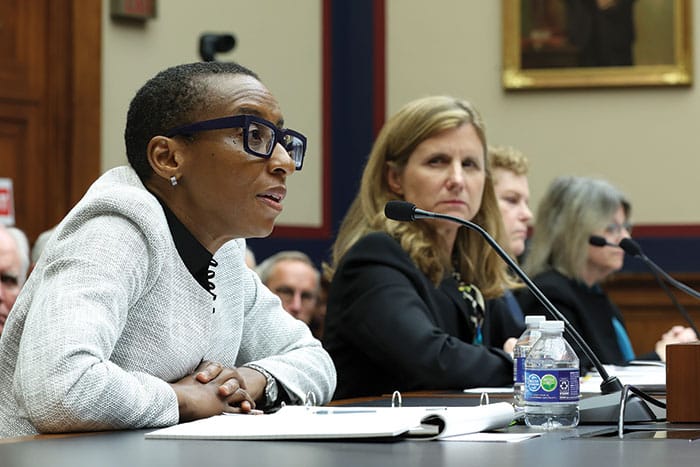
They are now the smirks seen ‘round the world. Three leading university presidents arrogantly, dismissively, explained that Harvard, MIT and UPenn students could freely call “for the genocide of Jews” and it wouldn’t even be a microaggression, “depending on the context.” 

Outsiders think these leaders let their institutions down. Even if you agree that freedom of speech allows people to say awful things, and even if you understand that context matters, their academic callousness and hypocrisy were unforgivable. It was bad enough that the presidents showed no empathy for the many Jewish students who feel threatened by calls for Jewish genocide. But all three institutions have cancelled professors and students for far milder transgressions. In short, this precious presidential “context” actually persecutes speakers when a favored “oppressed” group endures even microaggressions, while suddenly protecting wild speech when targeting those deemed “oppressors,” especially the “privileged” Jews, absorbing their deserved daily quotas of nano-aggressions.

In fact, these ambitious academic pols knew their haughtiness would play well on campus.  The “smirks” revealed that they were appealing to their key constituents, to the anti-colonial professors and Poisoned Ivy bureaucrats who risk turning these centers of learning into moral cesspools of totalitarian indoctrination, especially in the humanities and social sciences.

The smirks were the smirks that helped elect Donald Trump, sure that Representative Elise Stefanik, a mere “deplorable,” could never outsmart them, just like a buffoonish Trump would never win. They were the smirks of those who, as soon as Trump and Ron DeSantis attacked “wokeness,” defined being woke far-too-benignly, as just wanting to treat everyone equally, while simultaneously denying it existed. 

And they were the smirks of the academic racketeers, these gatekeepers guarding access to America’s most cherished credentials, who have executed the greatest bait-and-switch in educational history. Decades ago, it was corrupt enough: Parents paid thousands, thinking they were buying the best teachers for their kids, while we professors were hired based on research skills not classroom effectiveness. Today, parents pay hundreds of thousands, while donors fork over tens of millions, thinking they are buying the best liberal education for their kids, fostering critical thought. However, many professors now are hired based on fealty to one particular ideology, which they impose in the classroom. How odd. Millions of parents collectively pay billions so their children can be bullied into buying an anti-American, Marxist-infused ideology demeaning those who can afford the insane tuition bills these very institutions charge. No wonder this scam’s beneficiaries keep smirking.

And no wonder over 700 Harvard faculty members supported President Claudine Gay and she kept her job, despite doing more reputational damage to Harvard in her short presidency than any of her predecessors in Harvard’s 400-year history, as the donor-activist Bill Ackman bristled. No wonder The Chronicle of Higher Education cheered, saying “the presidents couldn’t answer yes or no,” because “they behaved liked academics” and “that’s a good thing.” Apparently, “their visions … conjure colleges as oases of enlightened society … places where expression does not lead to oppression.”  

The Harvard Corporation didn’t fire Claudine Gay because she is doing what she was hired to do. Her thin scholarly resume is balanced by a thick commitment to the “Anti-Racism” ideology that, like the more popularly-targeted anti-colonial mindset, also rotates on the simplistic, Marxist, oppressed-versus-oppressor axis. 

Note, Anti-Racism is not the same as opposing racism or all bigotry. “Anti-Racism” is the vision Ibram X. Kendi popularized in his blockbuster “How to be an Anti-Racist.” The strategy, propagated now in many leading high schools, let alone universities, stresses outcomes not attitudes, while demanding total submission. Kendi explains: “there is no neutrality in the racist struggle. The opposite of ‘racist’ isn’t ‘not racist.’ It is ‘anti-racist’ … One endorses either the idea of a racial hierarchy as a racist, or racial equality as an anti-racist … One either allows racial inequities to persevere, as a racist, or confronts racial inequities, as an antiracist. There is no in-between safe space of ‘not racist.’”

Such absolutism pervades Claudine Gay’s post-George Floyd August 20, 2020 memo, recently posted on X by the author C. Bradley Thomson. Serving as dean of the Faculty of Arts and Sciences (FAS), Dr. Gay proclaimed: “Our engagement in anti-racist action and the infusion of inclusive practices into all aspects of our teaching and research mission reflect a new sense of institutional responsibility and will require sustained effort over time … The work of racial justice is not a one-time project. We must be relentless, constructively critical, and action-oriented in our pursuit to build the thriving, more equitable FAS we all deserve.” This memo apparently helped propel Gay into Harvard’s presidency.

In the traditional university, her memo’s call for “Inclusive Excellence” would express a subtle blending of two values which most Americans now accept: Keeping standards high while broadening the faculty to incorporate more diverse perspectives and welcome still-highly-qualified but traditionally under-represented minorities. 

Alas, in today’s antiracist university, “inclusive excellence,” works about as well as “meritocratic nepotism.” Especially at the insistence of the multi-billion-dollar DEI (Diversity Equity and Inclusivity) Complex, inclusivity keeps trumping excellence. Hiring committees define professors by the group they belong to not the accomplishments they achieved. It’s the same Manichean oppressed-versus-oppressor mentality that decides that threatening members of certain groups is never acceptable, while menacing others is somehow OK, depending on the context, of course. 

In this struggle, beware cheap victories. Liz Magill of the University of Pennsylvania may have resigned, but the ideological and moral rot runs deeper. A generation of professors now views scholarship as advocacy, treating the lecture podium as a political platform.  This goes far beyond who gets hired or promoted. Most scholarly associations have turned anti-racist, anti-colonial and thus activist. That means that anyone seeking letters of recommendations, searching for jobs or hoping for prizes must embrace the reigning ideology.

The American Sociological Association proclaims: “As a national association, we place value on dismantling power inequalities.” Declaring racism “systemic,” it explains that “Anti-racism education lays bare these systemic inequities, which is a critical step in understanding how to move toward a more just society.” The American Studies Association (ASA), whose bylaws claim that “The association is organized exclusively for education and academic study purposes,” nevertheless had its Executive Committee issue a biased Statement on Gaza. It emphasized that “ASA continues to stand with the Palestinian people and their ongoing struggle for liberation” and “calls on the U.S. to end support of Israeli apartheid and work toward negotiations.” Racializing this national conflict between Israelis and Palestinians, the statement declares:  “Our struggles as Black, Brown and Indigenous peoples are real, and they connect us … The Palestinian struggle is also the struggle for global Black solidarity in our collective liberation.”

Naturally, the National Women’s Studies Association, which has traditionally seen its professors as “feminist educators” working “to transform … the society at large,” and declared in May 2021 that “Palestinian solidarity is a feminist issue,” has silently consented to Hamas’s mass rape. It had no comment about Hamas’s perverse breakthrough in mounting the largest, most-self-publicized, campaign of gendered violence in history on October 7. 

Amid their two recent calls for Israel to end its “genocidal war on Gaza,” these pick-and-choose feminists acknowledged that “violence and war often inflict gendered and sexualized harms on women and queer, trans and non-binary people.” But by Oct. 11, they insisted that “The current escalation must be viewed in the context of decades of illegal Israeli military occupation and systemic violent campaigns in the West Bank and Gaza Strip. To end the violence, its root causes must be addressed.”

These Victimization Olympics help no one, this addiction to grievance must end. The DEI regime should be dismantled, not enhanced. Jews don’t need special status – we all need to return to an academic liberalism that seeks to treat everyone equally as individuals.

In this environment, those fighting Jew-hatred should not lobby for Jews, or even Israelis, to become one of the favored groups, swept up in DEI bureaucrats’ ever-growing maw. These Victimization Olympics help no one, this addiction to grievance must end. The DEI regime should be dismantled, not enhanced. Jews don’t need special status – we all need to return to an academic liberalism that seeks to treat everyone equally as individuals.

The Poisoned Ivy League will not be fixed easily or quickly. It took decades since the 1960s of identity politics, assaults on Western Civ and the canon, of political correctness, postmodernism, decolonization theory, intersectionality, Wokeness, and anti-racism, for this revolution to succeed. A full-fledged assault will fail. 

A partisan fight will also fail. A New York Times article shortly after Liz Magill resigned framed the problem in ways that will doom the necessary counterattack. Headlines proclaiming “As Fury Erupts Over Campus Antisemitism, Conservatives Seize the Moment,” return the conversation to the polarization seen during Trump’s tenure. Disgust with Trump neutralized any restraints as the universities veered Woke. Most Ivy League parents and alumni are Democrats. Especially with the Republican Party still going full-MAGA, few of them wish to give any conservatives a victory.

The battle to save America’s universities must be framed around non-partisan issues. These include improving the quality of student life, fighting educational malpractice and preserving liberal democratic values.

The battle to save America’s universities must be framed around non-partisan issues. These include improving the quality of student life, fighting educational malpractice, preserving liberal democratic values, and protecting the particular school’s brand while justifying the liberal arts themselves.

Donors, parents, and students should try shrinking the problem, while creating centers of scholarly integrity. You shrink the problem by attacking educational malpractice, asking if students feel comfortable in the classroom disagreeing with others, and if professors offer a range of views, while also emphasizing the quality of the teaching more broadly. You shrink the problem by creating forums for students to complain if they feel bullied politically in class, let alone physically or emotionally, by faculty and fellow students. You shrink the problem by insisting that schools start reducing their DEI bureaucracies as part of a broader reduction of academic administrators, to cut costs while focusing on student-faculty ratios.  Forbes recently reported that between 1976 and 2018, full-time administrators and other professionals” soared “by 164% and 452%, respectively, as the number of students only grew by 78% and the number of instructors grew by 92%.

Because credential-obsessed American parents remain addicted to the college brands, it’s time to start sending students to institutions that may be less prestigious but are less doctrinaire too. Over time, universities’ reputations can be burnished by careful investment, broader recruitment, and ambitious leadership.

Meanwhile, in every major university, donors should offer to endow one center for liberal education, an honors college of sorts, with a binding contract serving as a charter guaranteeing a focus on nonpartisan liberal ideals – and a commitment to teaching critical thought. With donors’ help, academics working in these centers may need to establish their own ecosystem: fellowships, prizes, a scholarly association truly committed to scholarly pursuits. 

In the 1980s, conservative intellectuals fled the university and created a network of think tanks. In doing so, they abandoned the campus – and the students – to the decolonizing fanatics.  Campuses must be saved, one new center at a time, dedicated to excellence, critical thought, clear writing, broad reading, and open discussion.

At the same time, Jewish parents should also start looking to gap year programs in Israel that at least help inoculate their children for a year before plunging into the academic indoctrination camps, or Israeli universities as four-year alternatives. More gap year programs should focus on academic excellence and teaching liberal arts, in addition to fostering Jewish identity and offering positive Israel experiences. 

Donors in the Diaspora and administrators in Israel must beef up Israel’s English-language offerings, especially in the humanities and social science. While actually improving the quality, they also should launch PR campaigns improving the brands of Israeli universities. The target should be ambitious American Jewish parents and the broader American community that hires graduates. 

I take no joy in watching the campuses explode and the Ivy League brand get singed. I am a case of arrested development: I got to university when I was 18 and never left. Many of us have watched the problems fester – and saw our warnings ignored. 

For others, the Congressional hearing – parts of which have been watched over 1 billion times – was a wake-up call. It’s time to get radical. The problems are, ahem, systemic. But America’s need for a robust higher education system, where students learn to think deeply, engage respectfully, and disagree constructively, is greater than ever. We owe it to our students to succeed – we owe it to ourselves, too.


Professor Gil Troy, a Senior Fellow in Zionist Thought at the JPPI, the Global Think Tank of the Jewish People, is an American presidential historian, and, most recently, the editor of the three-volume set, Theodor Herzl: Zionist Writings, the inaugural publication of The Library of the Jewish People.
Our Failed Colleges: Time to Get Radical Read More »

Magen David – A Jewish Shield

These days have brought great fear and insecurity to many Jews in America, a rather unknown and unfamiliar feeling. From the moment we entered these lands there was an underlying assumption: The melting pot was a safe haven for all immigrants from different countries with their own unique cultures and ways of living. Even at times when groups tried to carve out their own territory, so well depicted in “West Side Story,” they were welcome to thrive and build their own neighborhoods, fully present, engaging in the American Dream.

Synagogues blossomed and Jews were proud of their heritage. Growing up in Canada, my experience was no different. Our treasured streets, in the midst of a bustling metropolis, were full of markets and vendors known for their kosher products, dill pickles, seltzer water and even religious wares. Eventually moving toward the outskirts, the suburbs, Jews created new communities with day schools and modern synagogue buildings, settling in to the ever-expansive promise of acceptance and success. Deeper connections into civil institutions developed and we found ourselves helping to build a country based on principles that only reinforced social complexity and civil discourse.

Like much of our treasured traditions, teachings, and customs, the star lives with us in our hearts and perpetuates a connection between all our people, no matter what part of the world. 

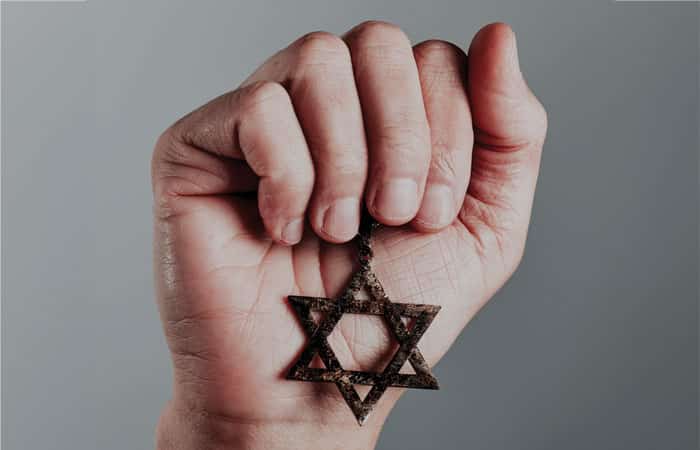
We are part of the very foundation and soul of this country. We have been proud participants whose unique traditions have not been hidden but worn with dignity. Just as the cross has been an identified symbol of Christianity, so the Star of David has been our own motif whose rich meaning goes back centuries. The Star of David with two overlapping triangles has represented our pride and joy, sitting with honor between two stripes on the flag of Israel. The stripes represent the tallit, a symbol of faith, while the star brings hope. Despite its use during the most horrific moments of the Holocaust, an attempt to create shame for our people, that hope has remained strong and is imbedded in our N’shamahs. Like much of our treasured traditions, teachings, and customs, the star lives with us in our hearts and perpetuates a connection between all our people, no matter what part of the world. My most treasured memories in Europe were being identified by locals, “You must be Jewish, welcome to our home.”

This is why it is so disturbing when people tell me they are afraid to have their Magen David visible, seen by others in public. How quickly the pressures of invisibility have taken hold with the rise of antisemitism. But is this the kind of response we want to reinforce? Will the reality of war for our brethren force us to hide who we are, or should it fortify our beliefs, standing visibility strong?

In Hebrew, magen means shield. The first inference is to G-d, the deliverer, referred to as a shield, a refuge, “V’Atah Adonai Magen…” as well as in psalms and proverbs, “For You Adonai are a shield…” Torah is also a referred to as a magen, a shield for all of us. And when the rabbis created one of the most important blessings that opens the central section of the prayer service, the Amidah, they enshrined G-d as the “Shield for Avraham.” Wearing the Magen David connects us with our past, with our forefathers, and with G-d.

This shield is two triangles that overlap becoming one: one pointing upward from the earth, the feminine, Shechinah, and one pointing downward from the heavens, the masculine, Kaddosh Baruch Hu. “The Heavens are the Lord’s, the earth is for the children.” The lower triangle points up from our physical plane and the body, while the upper points down, representing the spiritual and higher wisdom. These two polar opposites merge and become Shaleym, a wholeness. Polarities, a reality of life, need to be massaged, unified, and often compromised. This “star” is a symbol of taking differences and merging them into new possibilities.

It also represents symmetry, balance and harmony, bringing a sense of equanimity when in its presence. Wearing this treasured star is a reminder of the powerful presence of the Divine, both male and female. Two become one, so much greater than the sum of its parts. Wearing my star is an expression of my identity and when I see it worn by others I am comforted once again, knowing I am not alone.


Eva Robbins is a rabbi, cantor, artist and the author of “Spiritual Surgery: A Journey of Healing Mind, Body and Spirit.”

Magen David – A Jewish Shield Read More »

Biden Takes the Gloves Off

“Bibi, I love you, but I don’t agree with a damn thing you say.”

When Joe Biden wants to describe the complicated nature of his relationship with Benjamin Netanyahu, he invariably relies on a familiar anecdote about a photo he signed for his Israeli counterpart many years ago that featured the inscription above. It’s Biden’s way of reminding his audiences that his strong personal relationships with international leaders can help bridge policy differences and move sometimes difficult allies like Netanyahu in his direction.

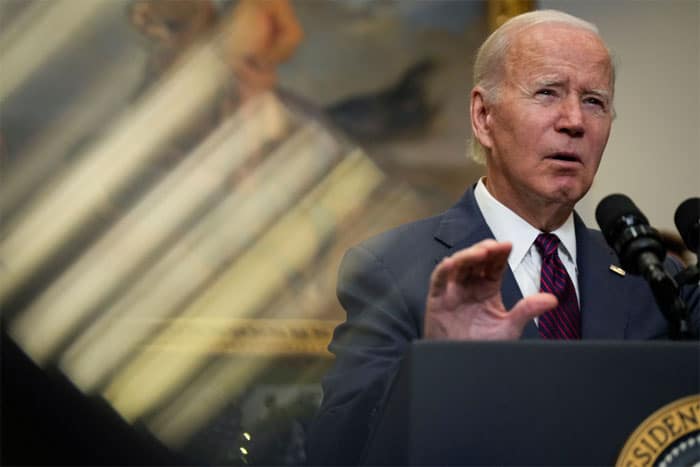
The quote perfectly captured the binary and often conflicted bro-mance that has developed between the two men over the course of their lengthy careers. But last week, Biden dramatically altered the balance in their partnership, shifting emphasis from their ongoing personal affection to the growing scope of their disagreements. The American president publicly and harshly criticized Netanyahu on a number of fronts, including Israel’s conduct of the war against Hamas, their plan for keeping Gaza stable after the war, and what Biden sees as a need for the Israeli leader to overhaul his governing coalition.

Biden did not hold back. Up until now, he had delivered these messages more discreetly, first in private conversations and then through surrogates and media leaks. But in a very public speech, he bluntly criticized Israel’s “indiscriminate bombing” of Gaza, warned that the Jewish state was rapidly losing international support and needed to “be more careful” in its military efforts, and urged Netanyahu to replace his current coalition with a more centrist group that would be willing to work toward a two-state solution. 

All in all, it was the harshest public admonition that Biden had ever delivered to Netanyahu. The White House had been adamant until now that praising Netanyahu in public gave Biden the leeway to confront him more directly behind closed doors. But with the U.S.’s closest allies calling for a ceasefire and Democratic progressives in open revolt against the president as he heads into a critical reelection campaign, Biden decided that shining a spotlight on their disagreements was necessary.

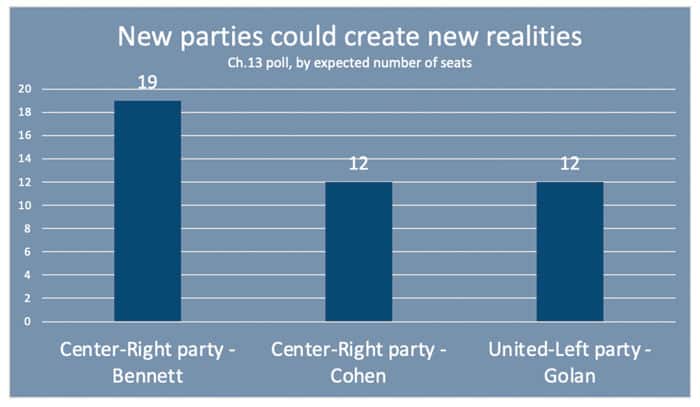
Netanyahu’s immediate reaction was to soft-pedal those differences, acknowledging that their dispute was primarily over the path forward after the war. The longtime Israeli leader knows that his country’s voters have historically turned to him when they feel unsafe, and he also recognizes that their trust in him was lost on October 7. So he quickly pivoted to establish himself as Israel’s sole defender against a Palestinian state, promising that he would stand up to external pressure for a two-state solution. Netanyahu’s poll numbers are abysmal: His Likud Party would lose more than a dozen seats in the Knesset if elections were held today and he would be replaced by a center-right leader like Benny Gantz. But warning about “the fateful mistake of Oslo” allows him to remind Israeli voters that he has always protected them in the past against similar concessions that could put them and their families in danger.

Israel will continue to be America’s strongest Middle East ally, and the Arab world’s ongoing flirtations with Russia and China make this relationship more important than ever. But the White House believes that the only way to make Gaza work is with the full cooperation of Egypt, Jordan, Saudi Arabia and other regional powers. And it is becoming increasingly clear to Biden and his advisors that Netanyahu’s forceful resistance to that preferred outcome of a cooperative security arrangement headlined by the Palestinian Authority has become an obstacle for which they are quickly losing patience. 

So expect the public pressure on Israel from the Biden Administration to continue. Right now, the focus of that strong-arming is on the war effort itself. But Netanyahu will soon find himself feeling just as coerced to accede on questions regarding Gaza’s post-war future. And don’t be surprised if Biden himself continues to talk about what he thinks an Israeli government will need to look like in order to bring peace. An American president will never call for the people of Israel to replace their prime minister. But the implication will be clear.


Dan Schnur is the U.S. Politics Editor for the Jewish Journal. He teaches courses in politics, communications, and leadership at UC Berkeley, USC and Pepperdine. He hosts the monthly webinar “The Dan Schnur Political Report” for the Los Angeles World Affairs Council & Town Hall. Follow Dan’s work at www.danschnurpolitics.com.

Biden Takes the Gloves Off Read More »

Is It Time for Jews to Move to Israel?

October 7 was the worst massacre of the Jews since the Holocaust. Since that tragic day, Hamas has been firing thousands of rockets at Israel. Now, the IDF is facing a dangerous battle on the ground in Gaza that will likely last for several months.

And yet, despite all this devastating news coming out of the Jewish homeland, so many of us are asking, “Should we move to Israel?”

I think this every morning when I wake up and see another case of antisemitism on a college campus, or pro-Hamas protestors shutting down highways and bridges or another foiled terrorist plot to blow up a synagogue in the United States. I am terrified to be a Jew here right now. 

When I first moved to Los Angeles in 2012, I felt totally comfortable being openly Jewish. These days, especially after Oct. 7, I will only wear my head covering, my tichel, in Jewish neighborhoods. My husband Daniel covers his kippah with a baseball hat. As a mother of two daughters, I can’t risk being targeted. I’m devastated that America has come to this, but it doesn’t surprise me at all. 

A major problem is that Americans are becoming less and less religious; Gen Z is the nation’s least religious generation, according to Pew Research. Jews are a source of spirituality and holiness in the world and our mission is to spread Hashem’s light and love. Godless people aren’t going to respect us at the very least, and in the worst case scenario, they will actively try to harm us.

At the same time that the younger generation is turning away from God, it’s also moving more towards wokeism, their new religion. Wokeism wrongly posits that Jews are oppressors because many of us are successful, and some of us are light-skinned. Therefore, if anybody is hateful towards us, it’s OK, especially if they come from one of the more “oppressed” classes. This racist ideology has taken over college campuses and led to Jewish students hiding in libraries and shielding themselves from angry mobs while walking to class. 

This misguided generation is going to be entering the government soon enough and making their hateful ideas into law. I fear that “the Squad” is just a taste of what’s to come. 

There is also an economic storm brewing, with high inflation, astronomical gas prices and an American dream that is becoming less and less attainable; 30-year fixed-rate mortgages have more than doubled over the past three years, going from 3.72% to 8%. 

If you study history, it’s clear that the Jews are always the scapegoat for bad times. Remember how we supposedly started the Bubonic Plague and were apparently responsible for all of Germany’s failings? 

Personally, I’m not sure if I want to stick around to see what happens. But I also don’t want to feel like I’m escaping to Israel.

There is a good argument to be made that we should stay the course and try to fix things because if we leave, the antisemites win. 

As someone told me, you have to make aliyah because you want to run towards Israel – not run away from where you live. There is also a good argument to be made that we should stay the course and try to fix things because if we leave, the antisemites win. 

I love America, and it hurts deeply to see how so many people are trying to ruin our beautiful country. It has been an incredible home for the Jews for so many years and an inspirational melting pot where people can freely practice their religion and pursue meaning.

I never thought a time would come when I’d feel like I’d have to leave. If I do leave, I want it to be for a good reason: because Israel needs me, and I can contribute more there than I can here. I feel like my work here is not done, but I’m open to any possibilities and ready to go if I have to.

For now, I am going to keep giving back to my community, showing respect, love and kindness towards my fellow Americans and spreading light however I can. I know that’s my mission for this moment, and I won’t give up on trying to fulfill it. 

Have you considered making aliyah? Email me your thoughts: Kylieol@JewishJournal.com.


Kylie Ora Lobell is the Community Editor of the Jewish Journal.

Is It Time for Jews to Move to Israel? Read More »

When Jews Are Suffering En Masse and Your Only Contribution Was to Shut Down the 110 Freeway

I often wonder about what phone conversations between the grandmothers of young, vehemently anti-Israel Jews sound like: 

“Hello, Irma, how’s that grandson of yours?”

“Daniel?”

“Yes, that one. Is he studying for college finals now?”

“Oh, you know kids, Miriam. I think he spent the day shutting down the 110 South.”

On December 13 at 9 a.m., members of IfNotNow (INN) sat in the middle of all lanes of the 110 South freeway and called for a ceasefire in Gaza.

I can forgive those shortsighted protestors who identify as Jews for bringing the 110 South to a complete stop (though their immaturity only hurt hard-working commuters). But I can’t forgive them for bringing a giant, seven-foot-tall menorah to the middle of one of Southern California’s most congested highways during morning rush hour, prompting some angry drivers to exit their vehicles and push and shove some of the protestors as they grew tired of waiting helplessly in a traffic jam that could be seen for miles. 

In one video, an enraged commuter is seen pinning a protester to the hood of a car. A full-scale brawl seemed ready to erupt. 

Imagine that: You’re already running late to work, desperate to clock in a few more hours to buy your family some extra Christmas presents, and the only people in your way are what look like a bunch of infantile Jews and their massive menorah. 

G-d help us.

At precisely the exact moment when Jews need more sympathy and compassion, IfNotNow enabled thousands of L.A. drivers to associate us with utter selfishness.

At precisely the exact moment when Jews need more sympathy and compassion, IfNotNow enabled thousands of L.A. drivers to associate us with utter selfishness. It’s even more unforgivable given the organization’s marginalization in the greater Jewish community, most of whom disassociate from it.

Who would expect thousands of angry, non-Jewish commuters to understand the nuances between a bunch of fringe, anti-Israel Jews, and the majority of Jews, who support Israel?

For the record, it was IfNotNow that responded to Oct. 7 by posting, “Israel makes every day under apartheid a living hell for Palestinians. Human beings can’t live like this … Blood is on the hands of Israel’s fascist government, army, and everyone who has aided their crimes against Palestinians.”

Before the Israel Defense Sources even entered Gaza, INN blamed Israel, and only Israel. 

Unforgivable. 

Regarding the protest, The Los Angeles Times reported, “Organizers with IfNotNow, the progressive Jewish group behind the protest, apologized to drivers but said they felt there was no other way to make their voices heard to stop the killing and mass displacement in the Middle East.”

Really? They thought apologizing to drivers, including blue-collar workers, those facing emergencies, and others with infants in their backseats, would make up for shutting down a freeway? It’s almost as foolish as believing they could sit, arm-in-arm, across those lanes and actually affect American foreign policy toward Israel.

Seventy-five people were arrested for failing to disperse. According to The Times, “A protester with his arms bound behind his back said ‘Free Palestine’ when asked for comment as officers led him away.

That’s it? That’s all he or she had to say? If I hear one more young, brainwashed, self-identifying Jew yell “Free Palestine” without any regard to Jewish suffering, I’m going to reapply for Iranian citizenship. At least back in Tehran, when young people protest, they do so against actual tyranny because, unlike INN, they live in a brutal theocracy that executes them for Instagram posts. 

What truly breaks my heart is a certain suspicion that if I invited these misguided, young Jews to join a Los Angeles protest against the regime in Iran, they would only participate if they could also bring their Palestinian flags and drag Israel’s name through the mud. 

Innocent Palestinians are paying a terrible price for Hamas’ indescribable evil. Their suffering as a result of decades of degenerate leadership is devastating, and it’s real. But blocking a freeway, sitting in the middle of Sunset Boulevard at evening rush hour or illegally taking over the Capitol Building rotunda in Washington, D.C. do nothing to help Palestinians. These thoughtless PR stunts only accomplish two goals: They enable the protestors to feel good about themselves, and they confuse a lot of people about Jews. “Our action is grounded in our nonviolent philosophy and doing what we can with our bodies and voices,” one protester told The Times. 

Jewish civil rights activists, they ain’t. 

The Jews who marched — and — died alongside Black Americans during the Civil Rights movement had the right values. Some hitch-hiked from New York City to Mississippi to support human rights. Their activism meant something.  

What IfNotNow wrought on the 110 South was activism for viral memes and short attention spans. 

Perhaps they view themselves as next-generation Jewish Che Guevaras. But ask thousands of L.A. drivers last week and they will probably describe these protestors as a bunch of selfish, privileged youth. 

It pains me to observe that the organized Jewish world bears some responsibility for all this. In the world of Jewish advocacy, all you need is youth. And if you’re young, you must be heard, and you must be right. 

In this world, offering donors statistics about next generation engagement often guarantees more funding. The traditional Jewish establishment has approached young people from a place of love, but also from a place of fear — a decades-long fear of losing them. 

How have some of these organizations kept young Jews on board? They’ve consistently made them feel that their views, however immoral, are still precious. 

But you can be young, and be completely wrong. 

Young anti-Israel Jews remind me of a faction of people in the Hanukkah story — the Tobiads. 

Yes, the Tobiads. We’ve all heard of the Maccabees, but there was another group of Jews that have mostly been forgotten in the history of Hanukkah. 

The Tobiads were Hellenizing Jews who lived in Jerusalem. After being exiled, it was the Tobiads who convinced the notorious Antiochus IV to recapture Jerusalem. They actually lobbied him to defeat their fellow Jews and, in 175 B.C.E., he invaded Judea at their request. We know the rest from the story of Hanukkah. 

Today, we don’t remember the Tobiads; we remember and celebrate the Maccabees. We are descendants of the Maccabees. As for the descendants of the Tobiads, where are they now? 

I recently described INN’s antics to a Holocaust survivor. She slapped her arm and responded, “Your people suffered the worst massacre since the Holocaust and your only contribution was to sit in the middle of a highway?” My friend then asked me if I knew the definition of the Yiddish word, “putz.” 

Jews thrive in democracies, and the Jewish world has no shortage of Jews who will denounce Israel’s every move because they know Israel will never assassinate them. It would be remarkable if the Arab and Muslim world, including the Palestinians, had such similar groups that consistently protested Hamas, Hezbollah and Middle Eastern tyrants. If these groups actually existed, it would mean there are democratizing elements at play, and, let’s face it, that no one would be afraid of being targeted as a protestor. 

It would be remarkable, but let’s not count on it.


Tabby Refael is an award-winning writer, speaker and weekly columnist for The Jewish Journal of Greater Los Angeles.Follow her on X/Twitter and Instagram @TabbyRefael

When Jews Are Suffering En Masse and Your Only Contribution Was to Shut Down the 110 Freeway Read More »

Rosner’s Domain | Hamastan, Fatahstan, Realistan

Prime Minister Netanyahu does not want Hamas to rule Gaza. The Israeli public supports his position, the Americans support it, as do the British, the Egyptians and his political rivals. The question of Hamas rule is not a question, except for one small matter: A way must be found to get Hamas out of Gaza.

Netanyahu says: “I will not let Israel repeat the Oslo mistake.” He also says: “I will not allow … [Gaza to be ruled by] those who support terrorism, finance terrorism. Gaza will be neither Hamastan nor Fatahstan.” As we have said, there is full agreement on “No Hamastan.” As for the other part of the statement, it consists of two parts that merit a separate discussion. 1. No to those who support and finance terrorism. 2. No to “Fatahstan”.

Let’s start with the second part: Netanyahu will refuse to hand Gaza over to Fatah. OK, but no one is proposing such a thing. There is a proposal – or an aspiration – to hand Gaza over to the Palestinian Authority. Not to Fatah. And if you think there is no difference, I’d be careful with such claim. Netanyahu chooses his words with care and knows that if he says certain words now it allows a certain degree of maneuvering later.

Now let’s turn to the first part of Netanyahu’s statement: No to those who support and finance terrorism. Now we can ask: What about the Palestinian Authority? This is an important question because President Joe Biden wants the Palestinian Authority to rule Gaza. But pay attention to what Biden wrote in the Washington Post: “Gaza … [should be governed by] a revitalized Palestinian Authority.” Note an important word: “revitalized.” What does “revitalized” mean? Here is one option: It means a Palestinian Authority that does not support nor finance terrorism.

In other words: If you’re under the impression that the U.S. and Israel disagree on the future of Gaza, there is certainly a compromise at hand. Does this mean that it will be easy for Netanyahu and Biden to agree on the necessary reform of the Palestinian Authority? No. On the other hand, it might not be impossible to find a middle ground.

A compromise is necessary for two reasons.

First, because the inflated talk about Netanyahu’s unique ability to resist American demands is improper. The Americans are not Israel’s enemies, and although there have been cases in the past where idiotic or irresponsible measures were imposed on Israel by the U.S., this doesn’t mean that all American ideas ought to be rejected out of hand. Sometimes Israel must stand firm and oppose faulty suggestions, sometimes it had better listen and cooperate. Netanyahu himself did this several times. He signed the Hebron agreement, he froze settlements. Netanyahu maneuvered as the landscape of proposals, demands and circumstances changed. Keeping strong ties with the Biden administration is an important objective, and under certain terms it could be more important than the exact title of the new ruler of Gaza.
A second thing that must be considered is that Israel must say yes to something. Netanyahu keeps saying what he doesn’t want. No to Hamastan, no to Fatahstan, no to supporters of terrorism. But what does he want? Many players, Israeli and international, have weighed in on the issue of “the day after” in recent days. One example: MK Danny Danon of Likud. His vision is to initiate in Gaza a process somewhat similar to “the denazification of Germany and the deradicalization of Japan” after World War II. But his proposal remains somewhat vague on who is going to implement such a plan.

Last week, a collection of articles was published in The New York Times, including various proposals for the day after in Gaza. Ten proposals, some fantastic, some merely unrealistic. Former PM Ehud Olmert proposed a NATO force. Good luck with that. Jerome Segal proposed to rapidly establish a state in Gaza, for a three-year trial. I wondered if that was a joke, but apparently it wasn’t. May Pundak and Dahlia Scheindlin proposed a Jewish-Palestinian confederation. Maybe the news about the events of Oct. 7th haven’t yet reached them. Diana Buttu proposed the establishment of a Palestinian port and airport. Because now it is finally clear that no Palestinian would use such infrastructure to smuggle explosives and rockets.

So, all these proposals are nonstarters. But Netanyahu is the PM of Israel, not an occasional columnist in a newspaper that seems to lack editors with common sense. Netanyahu should answer the question of what yes means, if not publicly, at least behind closed doors. He has to tell the IDF what to do, he has to show the allies a plan. Is Netanyahu’s plan is for Israel to take care of garbage removal in Gaza, provide clean water and electricity, pave roads, build houses? Does he intend to do all this at the expense of Israeli taxpayers? Clearly, no Arab country is going to bear the cost of reconstruction if Israel refuses to let anyone rule Gaza other than the IDF.

Here is something that Netanyahu is not ready to say, and most other Israeli leaders will also have difficulty saying, for fear of the voters’ ire: Israel has no convincing alternative to the Palestinian Authority.

Here is something that Netanyahu is not ready to say, and most other Israeli leaders will also have difficulty saying, for fear of the voters’ ire: Israel has no convincing alternative to the Palestinian Authority. Israel does not have a plan that is much different than what has been going on for many years, with varying degrees of success, in Judea and Samaria. In other words: control by the PA, and freedom of action for the IDF. Is this a perfect solution? Far from it. But we are oceans away from thinking about the perfect solution. Let us start with a realistic, tolerable one.

Something I wrote in Hebrew

In quiet Ramallah the PA has control and the IDF rarely visits. In restless Nablus, the PA barely has control, and the IDF is a frequent, if unwelcome, visitor. This is an arrangement born of necessity. The circumstances that brought about the idea of “managing the conflict.”

You might say: But post Oct. 7th we can no longer stick to this old idea.

And I’ll ask: What’s the alternative?

You might say: Wasn’t this the lesson of Oct. 7?

And I’ll say: Maybe. Or maybe that wasn’t the lesson. Maybe it was that the conflict still must be managed – just better.

A week’s numbers

What comes after Israel’s next election? Supporters of most parties prefer a national unity government.

A reader’s response:

Rivka Levy asks: “Do Israelis care about growing antisemitism in America?”

My response: They do now more than in the past, as it adds to their own sense of isolation and fight for survival.


Shmuel Rosner is senior political editor. For more analysis of Israeli and international politics, visit Rosner’s Domain at jewishjournal.com/rosnersdomain.

Rosner’s Domain | Hamastan, Fatahstan, Realistan Read More »

Eight Days and Nights of Good News

The Lubavitcher Rebbe Menachem Schneerson commanded Jews to be joyful. By combatting brutally tough times with joy and happiness, we can spread light and defeat darkness. In the wake of the Oct. 7th, 2023 Hamas attacks on Israel, there has been plenty of pain. Yet this most recent Festival of Lights brought plenty of joyous occurrences. Eight days and nights of good news made Hanukkah 2023 memorable and meaningful.

On Hanukkah Night 1, Dec. 7th, the Biden administration removed the Council on American Islamic Relations from its antisemitism strategy. Marginalizing CAIR deprives them of media oxygen at a time when the information war for hearts and minds is critical. Dec.7th was also Pearl Harbor Day. It was especially nice to see Jewish Pearl Harbor heroes given tributes. Oct. 7th and Pearl Harbor allowed the world to see heroism in the toughest of circumstances.

On Hanukkah Night 2, Dec. 8th, the United States vetoed a United Nations resolution demanding an immediate Gaza ceasefire. This veto was critical in giving Israel valuable time to carry out military operations. This veto was a clear message to the fringe left that America is still a pro-Israel nation.

On Hanukkah Night 3, Dec. 9th, University of Pennsylvania President Liz Magill resigned under pressure. During a disastrous appearance before a House committee on antisemitism, Magill would not admit that calls for genocide against Jews violated UPenn’s standards. Those opposed to campus antisemitism are finally fighting back.  Meanwhile, Dec. 9th was a triumph for the B’nai B’rith Youth Organization. BBYO’s Global Shabbat brought together 16,000 teenagers from 30 countries to spread the joy of Shabbat. Many young Jews in the face of antisemitic attacks are choosing to become more Jewish.

On Hanukkah Night 4, Dec. 10th, the National Football League allowed teams and players to show their support for Israel. Minnesota Vikings owner Ziggy Wilf is the son of Holocaust survivors. He enthusiastically allowed his placekicker Greg Joseph to wear special sneakers during the game. Normally covered in purple and gold, Joseph wore blue and white sneakers promoting Leket Israel humanitarian aid. Leket Israel is the National Food Bank and the leading food rescue organization in Israel. After 58 minutes of scoreless football, Joseph’s field goal in the final two minutes gave the Vikings a 3-0 victory.

On Hanukkah Night 5, Dec. 11th, Republican South Dakota Governor Kristi Noem declared the week of Dec. 11th to be “Shine a Light, Breaking Bread Week.” Governor Noem previously declared Nov. 28, 2021 as “Antisemitism Awareness Week” and proclaimed Feb. 24, 2022 “Israel Relations Day.” Plenty of governors around the country have taken similar actions of solidarity since the Oct. 7th attacks.

On Hanukkah Night 6, Dec. 12th, fantastic fundraising numbers came in. In the two months since the attacks, the Jewish Federation of North America tallied over 700 million dollars in donations. That money gets spread around to over 300 supportive organizations including Chabad, Magen David Adom, United Hatzalah and others. This does not include many more millions of dollars raised by the Friends of the Israeli Defense Forces.

On Hanukkah Night 7, Dec. 13th, the IDF officially began flooding Hamas’s underground tunnels with seawater. This bold strategy forces Hamas terrorists out of the tunnels and above ground. Even the early stages of flooding the tunnels have led to some Hamas terrorists surrendering and others reaching above ground long enough to be eliminated. Dec. 13th also made history on Wall Street. For the first time ever, the Dow Jones Industrial Average hit 37,000. Wall Street leans pro-Israel. The more money Jewish traders make, the more they do give back to Jewish causes.

On Hanukkah Night 8, Dec. 14th, Miami lit up blue and white. Chabad of Downtown Miami and others arranged Jewish Heritage Night with the Miami Heat. Several thousand Jews descended on the Kaseya Center Arena. Kosher food was everywhere. Dancing rabbis were on the jumbotron. After the first quarter, the entire crowd cheered a courtside Menorah lighting. Halftime featured a Jewish music concert. The 12 to 15 minute halftime was also enough time for attendees to daven Maariv. After one final mourner’s Kaddish, it was back inside the arena for the second half.

It is vital to remember that Hanukkah is a joyful celebration of Jewish triumph over anti-Jewish evil. Hanukkah 2023 brought joy and triumph to Jews through sports, education, and military matters. As 2024 approaches, opportunities to keep that positive momentum going are everywhere. Chabad of Lauderhill barely finished Hanukkah before beginning their Hey Teves Farbrengen. Judaism never stops. Nor should it.


Eric Golub is a retired stockbrokerage and oil professional living in Los Angeles.

Eight Days and Nights of Good News Read More »

Why ‘Barbie’ and ‘Barbra’ Are Big Beautiful Books

Released in July, “Barbie” starring Margot Robbie and Ryan Gosling, is the highest grossing film of the year, selling $1.4 billion in tickets. Directed by Greta Gerwig, there are a few scenes in which Rhea Perlman plays Jewish inventor Ruth Handler in the film that has earned numerous Golden Globe nominations and is sure to garner many Oscar nominations.

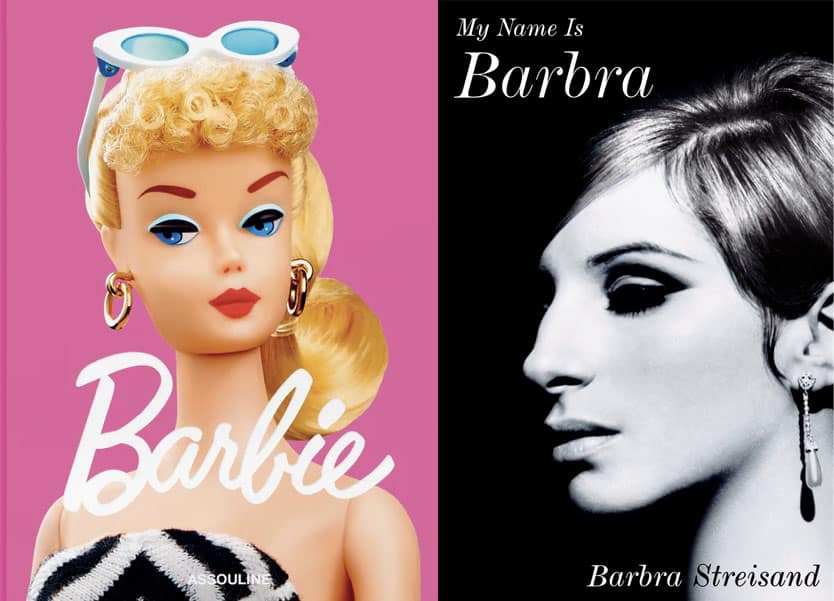
Best-selling author Susan Shapiro’s new coffee-table book “Barbie” traces the rise of Handler and her iconic doll as well as how it was affected by cultural changes and moments in history over the decades. There are amazing pictures and it’s a great conversation starter.

Shapiro, known for her writing classes at Columbia University, The New School, NYU and online, notes in the book that executives and even Handler’s own husband, Elliot (who she met at a B’nai B’rith dance when she was 16), thought her doll would be a flop. And at first, it was. But after a successful TV ad campaign, linked with “The Mickey Mouse Club,” it sold like hotcakes. Coming from a family of Polish Jewish immigrants who fled the Russian army, Handler was inspired by Lilli, a doll she saw on a trip to Switzerland, that originated from a German comic strip. She decided to create her own doll, naming it after her daughter Barbara, whose nickname was Barbie later introducing a male doll, Barbie’s friend, and named it after her son, Ken. Introduced at the American International Toy Fair on March 9, 1959 —  with a price tag of $3.00 — a mint Barbie from that time period can fetch $25,000 today.

The first chapter is called “A Star Is Born” and describes how Handler, the daughter of Ida and Jacob Moskowicz, quit her job typing screenplays at Paramount, where she made $25 a week, to go all in on Barbie.

“My whole philosophy was through that doll, a little girl could be anything she wanted to be,” Shapiro cites Hander as saying.

Girls and women felt empowered by the dolls; then came accessories such at Malibu Barbie with the Dreamhouse.

In 1967, Francie, a doll introduced the year before as Barbie’s “mod” cousin,was produced in a darker skin tone; with her Caucasian features, “Black Francie” looked suntanned.  A year later, Christie — considered the first African American doll in the Barbie universe — was introduced.

“The subtle message was similar to the iconic segment from ‘Mister Rogers Neighborhood’ in which the African American Officer Clemons sits beside Rogers,” Shapiro writes,  “both dipping their feet in a kiddie pool, an episode that aired in 1969, amid protests against segregated community swimming pools.”

The lavishly illustrated book  includes photos of Barbie in her various incarnations, including a surgeon, paleontologist, Olympic gold medalist and ecologist; there’s a Muslim Barbie, Supreme Court Justice Barbies, Soccer Barbies and a doll with Down’s Syndrome.  Some of the dolls took their fashion cues from  Jackie Kennedy and and some inspired by the hairdo of Barbra Streisand.

“Like many modern women, Barbie has lasted because she is not afraid to revamp, revise, revamp, evolve and modernize too,” Shapiro writes. “The secret to her success is constant reinvention and striving to be a sincere reflection of current culture.”

It’s obvious that Shapiro is both a fan (she has more than 68 Barbies) and is a feminist. “Barbie” (Assouline,343 pages, $105) is not cheap but it is a one of a kind book,with great pictures from the decades that will be able to get your guests talking.

Streisand Is In A Class Of Her Own

Talk about trying to crush a dream.

Despite getting rave reviews from her 1962 Broadway debut as Miss Marmelstein in the musical “I Can Get It From You Wholesale,” its director Arthur Laurents (his real last named was Levine) had some unkind words for the aspiring singer.

“You’re never going to make it, you know,” Streisand recalls him telling her, in her epic autobiography “My Name Is Barbra.” He told her the reason was she was undisciplined.

Such a prediction coming from the man who wrote the book for “West Side Story” might have destroyed the confidence of many other 19-year-olds. But Streisand, who sang with her eyes closed the first time she was in a club and was self-conscious about her nose (some told her to get surgery and she refused) would not be broken. That role earned her a Tony nomination, she’d get another for Lead Actress in “Funny Girl” and a Special Tony Award naming her “Star of the Decade” in 1970. She won an Emmy for the 1965 CBS special “My Name is Barbra” (and went on to win four more). Her debut record, 1963’s “The Barbra Streisand Album” earned two Grammys including Album of The Year; she was nominated 40 more times, winning eight. In 1969, she won the Oscar for Best Actress for her role as Fanny Brice in “Funny Girl” and would win for the Best Original Song in 1976 with  “Evergreen” (from “A Star is Born”).

Her book explains that she had a clicking sound in her ears that was tinnitus, she once stuffed her dress so her hips would look bigger, and despite her success, her mother, Diana, would never compliment her. Her father, Emanuel, who grew up in an Orthodox home and on some Friday nights when he worked at Columbia University’s Teachers College, he’d walk home from West 120th Street all the way home to Brooklyn. Her father died at the age of 35 when she was only 15 months old.

“Years later, after my mother told me that for months after my father died, I would still climb up the window ledge waiting for him to come home,” Streisand writes. “In some, ways, I’m still waiting.”

She not only starred as a woman dealing with her father’s death, pretending to be a man and studying at a Polish yeshiva in “Yentl,” she also directed, wrote and produced it. Streisand writes that “in writing dialogue and imagining scenes for Yentl’s father, I got to create the father I never had.” The film includes the song “Papa Can You Hear Me?”

Based on the Isaac Bashevis singer short story, she was told not to waste her time with some “fakakta” or “crappy” story. Studio executives were not enthused, and she writes that some were Jewish and worried the script was” too Jewish.” (In preparation for the film, she  studied Talmud.) Her co-star Mandy Patinkin told her he wanted to have an affair with her; she declined, and he ultimately delivered a good performance as Avigdor. She became friends with Steven Spielberg; after she showed him a mostly finished version of “Yentl” he told her not to change a frame. An article The Los Angeles Times gave the false notion that Spielberg gave her advice she used in making the film, she writes.

Streisand puts a lot of humor in the book, and we learn she hated the potatoes at a Jewish summer camp, loved yellow cake with dark chocolate frosting she’s been searching for, and her desire for Marlon Brando was almost realized. He told her bluntly that he’d like to have sex with her but instead she asked to be taken to a museum. Inreal life, Streisand says she couldn’t tell a joke, but her comedic performance in the Broadway and film versions of “Funny Girl” as Fanny Brice were hits. The film was banned in Egypt because her romantic co-star in the film, Omar Sharif. was from Egypt, and the idea of his being in love with a Jew was not tolerable.

She also writes that she dislikes interviews because many writers  made up or misinterpreted things, including a rivalry between her and Judy Garland that she says was a written joke and not her real desire. She also notes one of the reason she married actor JamesBrolin was because of his great teeth. Her first husband was Jewish actor Elliot Gould. They married in 1963 and had a son, Jason.

Many will love the book, not only because it allows the reader to be a fly on the wall of one of the most famous Jewish entertainers in history. Had she been born affluent instead of having to lick stamps to get money, she might have gone into another profession, but the world can be thankful that was not the case. At 992 pages, it’s a lot of reading, but it’s well worth it. While she was excellent in the film “A Star Is Born” we learn that being a celebrity entertainer is not happenstance and requires work and a tough exterior.

In the film, “Funny Girl” Streisand, as Fanny Brice trying to prove why she deserves to be a dancer in a show despite not having a traditional look, says: “I’m a bagel on a plate full of onion rolls. Nobody recognizes me.”

Everyone recognizes her now.

If there is a Heaven where one can hear the songs from the Earth, there is no doubt that Streisand’s father, Emanuel is kvelling up above.

Both “Barbie” and “My Name is Barbara” deal with issues of standards of beauty, the role of the media, popular culture, and the rise from obscurity and little money to great fame and fortune. Both books will make you laugh, feel happy to be alive and might make you a little jealous.

Why ‘Barbie’ and ‘Barbra’ Are Big Beautiful Books Read More »