Last March, during a philosophy class discussion about race and power, a Black student expressed that, “the Holocaust is a lot more sensitized because Jews are white. Compared to [anti-Black] racism, antisemitism seems to be a non-issue.” Later that year, another student confronted me, asserting that I had no right to speak about Jewish vulnerability because I had “no color on my skin.” Had both students realized that Jews do not, in fact, fall into the category of “white” but rather represent an ethno-religious group indigenous to the land of Israel, their naive observations may have been quite different.
This past June, the White House released the United States National Strategy to Combat Antisemitism, urging “employers—including states, cities, K-12 schools, institutions of higher education, private companies, and nonprofits—to review their own diversity, equity, inclusion, and accessibility (DEIA) programs to ensure full inclusion of antisemitism awareness.”
Regrettably, DEIA initiatives have seen considerable setbacks and are being substantially curtailed. The U.S. Supreme Court has mirrored this reality through its pivotal decision to overturn Affirmative Action this past June.
Will diversity initiatives endure and is their survival warranted? To uphold the White House’s commitment to advance nationwide education on Jewish identity, their continuation is essential—albeit with a fresh, new perspective. The approach I propose leverages Zionism as a philosophical foundation and an educational tool that has the potential to transform DEIA initiatives to positively impact Jewish and non-Jewish groups.
Arguments against DEIA programming are not without merit. Indeed, as Black comedian and former media personality, Karith Foster once noted, many DEIA policies have “the tendency to reduce people to victim or villain [which can] strip agency from and alienate everyone.”
While the intent behind diversity programming is noble, it is often overwhelmed by an oppressed vs. oppressor narrative, giving rise to a “victim-villain” mindset.
As for Jews, David Bernstein, author of “Woke Antisemitism,” and others claim that DEIA programs are anathema to Jewish interests. They “undermine Jewish narratives of self-determination in the binary oppressed vs. oppressor paradigm,” which “negates the rights of Jews, who may not wish to identify as part of the ‘white’ dominant class, to define their own identity, experience, and vulnerability.”
Still, it is imperative to educate both employers and DEIA practitioners about identity and social biases. This holds particular significance as it concerns today’s Jewish college students. At George Washington University, my home campus, Jewish and Israeli students have been labeled “colonial apologists” and harassed in the classroom for being “born in Israel.” My own friends have had their mezuzot (encased religious scrolls) torn from their doorposts or have been spat-on for wearing a Jewish star.
This widespread trend is further intensified across America’s universities as CUNY students such as Fatima Mohammad and Nirdeen Kiswani are permitted to elevate antisemitism in their consecutive year graduation speeches. Instances of radical Islamists and neo-Nazis uniting to set Israeli flags ablaze in close proximity of synagogues, or reports of assaults on Orthodox Jews on New York City or London streets have become increasingly commonplace.
Education about the Jewish experience deserves equal priority to that of other minority groups. Late British Rabbi Lord Jonathan Sacks has characterized the evolution of antisemitism as a “mutating virus.” In an address to the European Parliament in 2016, he expressed, “Once Jews were hated because of their religion. Then they were hated because of their race. Now they are hated because of their nation-state.”
Israel has long held the title of being the most “misunderstood country on earth,” according to former Israeli Special Envoy to Combat Antisemitism and Delegitimization, Noa Tishby. For this reason, Jewish identity education must underscore the inextricable tie between Jewish peoplehood, religious values and ancestral land. The unyielding perseverance and resilience of the Jewish people throughout history merits equal acknowledgement to that afforded any other indigenous community reclaiming their homeland or any minority group securing their civil rights. Not unlike the pursuit of gender parity that endures beyond the attainment of women’s suffrage, we must strongly advocate for Jewish self-determination beyond Zionism’s original manifestation.
Education about Zionism must transcend mere facts and delve into its defining characteristics. The new generation should draw inspiration from visionary Zionist thinkers such as Theodore Herzl, who took decisive measures to combat vulnerability. His approach did not involve elevating one identity over another, but rather harmonizing different philosophical strands to achieve a higher purpose.
Spanning the spectrum of Abraham Isaac Kook’s religious Zionism to Moses Hess’s socialist Zionism, Ze’ev Jabotinsky’s revisionist Zionism to Agudas Yisroel’s non-Zionism, and Theodore Herzl’s political Zionism, adhering to rigid conformity and binary classification only hindered the collective endeavor. Instead, the plethora of rich and sometimes conflicting intellectual and theological philosophies ultimately guaranteed the Jewish nation’s success. Never before as during the unfolding “Israeli spring” with tens of thousands of Israelis publicly criticizing their government and proudly brandishing Israeli flags, has it become more evident that Zionism yields its influence in the same manner.
The diversity of ideas behind Zionism allows coexistence and collaboration with multiple communities. At home, Zionists have long engaged in a sustained tradition of examination and self-critique aiming to showcase Israel as a light beacon unto itself and among nations. Globally, Zionist leaders have vigorously pursued alliances and fostered diplomatic discourse.
In 2004, the Israel Allies Foundation founded the Knesset Christian Allies Caucus and, in a subsequent move, the U.S. House of Representatives formed the Congressional Israel Allies Caucus in 2006. Since then, Japan, Finland, South Korea, England, Brazil, Canada and other nations have created their own caucuses in support of Israel’s right to exist in peace.
Amid Palestinian rejectionism and terror activity, Zionism’s role was pivotal in the realization of the landmark 2020 Abraham Accords, successfully cementing bilateral relations with neighboring countries such as the United Arab Emirates, Morocco, Bahrain and Sudan. Eyes are now set on the prospective normalization with Saudi Arabia, which promises to be a game changer in the region’s geopolitics.
Zionism’s remarkable achievements despite daunting existential challenges can serve as inspiration for other minority groups. Relaying its genuine history and promoting its progressive tenets can aid in its acceptance and in countering anti-Zionist prejudices. The DEIA community can derive inspiration from Israel’s accomplishments, using their own intricate pasts as springboards for constructive advancement.
The American Congressional Black-Jewish Caucus and Dubai’s Abrahamic House exemplify the White House National Strategy’s promotion of interfaith and cross-communal initiatives. These efforts move beyond historical adversities, focusing instead on celebrating the intersections of cultures, fostering unity, and mutual support.
Genuine diversity entails countering hate and nurturing ties irrespective of identity. The DEIA community can gain insight from the commitments made in Israel’s Declaration of Independence: “guarantee[ing] freedom of religion, conscience, language, education and culture,” and “extend[ing] its hand to all neighboring states and their peoples.” French, British and Spanish Europeans; Americans across its states including Jews, Christians, Hindus and Muslims; the Black, Latino, and LGBTQ+ communities—all deserve a seat at the DEIA table to enrich the dialogue and enable collective partnership.
As former Israeli Ambassador Michael Oren notes in “2048: The Rejuvenated State,” Zionism embodies “responsibility, vision, and will.” Inclusive responsibility counters divisive identity politics. While no diversity program may create utopia, centering on resilience, diversity, constructive critique and collaboration can pave a path toward unified Tikkun Olam, the repair of the world.
Sabrina Soffer is a junior at the George Washington University and the Commissioner of its Task Force to Combat Antisemitism.
When I hold a book in my hands, I enjoy one of life’s most sublime pleasures. With limited time for pleasure reading, I choose carefully before hunkering down between the covers of a book. Some writers awe me with their talent, and I savor their finely crafted sentences by rereading them many times.
I have two orphaned Kindles sitting uncharged in a dark bedroom drawer. While e-readers and audiobooks have opened the world of books to many who enjoy taking their libraries “to go,” for me, holding a book in my hands makes my reading experience feel more personal. I like the elemental, physical reality of a printed book, and can better appreciate its cover artwork, interior layout and fonts, the quality of the paper, and even its trim size. Somehow, I also feel more connected to the author, who labored long and hard to produce this work.
Swiping a screen to turn a page feels soulless compared to actually turning each page with my fingertips.
Swiping a screen to turn a page feels soulless compared to actually turning each page with my fingertips. “Real” books are also simpler. I can fan through pages to find a particular section faster than I can by clicking on a device. I like attaching my flotilla of tiny, colorful sticky notes to significant pages when I am reading for the purpose of writing a review.
I ditched my e-readers not only because I missed the tactile experience of holding a book but because I found that my retention wasn’t as strong. I’m not alone. Research studies consistently show that reading on paper correlates to higher comprehension and recall than reading digitally. This is true even for college students who have grown up tethered to digital devices.
Sure, you can upload a tremendous library of more than 3,000 books on an 8 GB e-reader, but wouldn’t your bookcases look a little lonely? Books do furnish a home. They give it color and personality. In religious Jewish homes, bookshelves can seem intimidating, brimming with tall, heavy, leather-bound sets of the Talmud, along with prayer books, Torah commentaries, biographies, history, and more. (Ikea shelving need not apply.) These days, websites such as Sefaria have become valuable digital repositories of Jewish literature and commentary. Still, I’d much rather read a Torah commentary from a Chumash and daven from a siddur rather than from an app. Call me sentimental, but I believe that these pages carry spiritual history: the echoes of the diligent study by individuals to learn Torah, and the echoes my family members and I have left behind on well-worn pages where we have poured out our hearts in praise, thanks, and heartrending pleadings.
Traditional Torah study is often done in person and in pairs with the holy books in front of them. Each partner discusses, dissects, or even vehemently disagrees about what Ramban really meant, adding a live, physical dimension to a spiritual and intellectual quest. The words on the pages speak through the ages.
Our living room features our Torah and history books, while virtually every other room features writers through the ages and across genres: from Shakespeare to Rabbi Jonathan Sacks; Edith Wharton to P.G. Wodehouse; Graham Greene to Malcolm Gladwell. I like seeing solid books on our shelves, reminders of the vast array of writing talents available to us, and sparking memories of how these books have impacted our lives. The trick is making room for the new books I can’t resist.
Digital books will never replace printed books. In fact, bookstores are climbing back from the industry’s dire straits of recent years. Hundreds of independent bookstores have opened since COVID. Barnes & Noble, under new direction, is retooling their existing and new stores to cater to local needs. Each new store opening affirms that a love of reading, and especially of printed pages bound between two covers, is timeless.
I’m usually in the middle of several books at once and tend to leave them around the house. From my bedroom nightstand or the small table between the living room club chairs, I can almost feel a neglected title calling out jealously, “Leave that other book alone. We haven’t finished our story yet! Come back!”
I always do.
Judy Gruen is the author of several books, including “The Skeptic and the Rabbi: Falling in Love With Faith.” Her next book, “Bylines and Blessings,” will be published in February 2024.
Orthodox Judaism is not usually seen as a place where women are accepted into the clergy. But B’nai David-Judea’s Rabbi Yosef Kanefsky is working to change that stereotype: For the second time in ten years, he is seeking a woman to be his second-in-command.
Rabbi Kanefsky and the Modern Orthodox congregation hired Rabbanit Alissa Thomas-Newborn in 2015, making her the first woman rabbi at an Orthodox synagogue in Los Angeles. She left last year to move to the East Coast with her family, and is now a chaplain at New York-Presbyterian and working part-time at an Orthodox shul in Teaneck, New Jersey, where she, her husband and daughter live.
Rabbi Kanefsky’s decision to be a trailblazer did not shock those familiar with his career.
Ordained at Yeshiva University in 1989, the New York native spent six years as associate rabbi at the Hebrew Institute of Riverdale, led by the activist Rabbi Avi Weiss, founder of “Open Orthodoxy.” In 2009, Weiss ordained the first woman rabbi in the U.S. The appointment of Thomas-Newborn did not meet resistance from his congregation, and Rabbi Kanefsky is confident round two will be quiet, too. He believes this move is tailor-made for his community. “I am hopeful this will go quietly,” he said, “in the sense we will do what is best for our institution, always our goal. This is our clientele. For our population – this is clearly a very important role, that a woman be a spiritual leader here.”
Looking back on Thomas-Newborn’s hiring, Kanefsky believed planning was the key. “We went about it in a thoughtful way,” said the youthful looking grandfather of three. “We wanted to make sure everyone knew what the purpose was, what it would look like. The congregation was very, very embracing. Now it’s not everyone’s priority to be sure. But that is not nearly the same as pushing back against it.”
As an Orthodox rabbi, Kanefsky acknowledged that hiring a woman rabbi has been on his mind since shortly after he was ordained. When asked how the idea came to him, he replied, “That is a good question. But I do not have an answer. It was no one thing, probably an accumulation.
Did women in his life suggest this? “I don’t think so.” Did he discuss it with his wife, Sari Abrams, director of parent and child education at Pressman Academy, and mother of their three sons? “Yes,” Kanefsky said. “She always has been incredibly supportive of the idea. And she has consistently modeled for me what an accomplished, learned woman can be and do.”
Long visible in the shul, Abrams has filled numerous roles, especially with Women’s Tefilah since its inception 25 years ago. “She has taught many bat mitzvah girls, and has been a source of guidance for them,” the rabbi said. “For me, she has been a very clear voice about what women can do and should be given the opportunity to do.”
While he can’t pinpoint a specific moment when he decided to hire a woman, it’s a subject that’s been on his mind for some time. In the mid-1990s, not long before joining B’nai David, he raised the subject at a conference where he was speaking. “I talked about how we are severely underutilizing half of our population,” he said. “This made no sense at all … I am not sure how long, but certainly for a while I had been thinking this would be a positive development for the Orthodox community.” In his strongest endorsement yet, Rabbi Kanefsky declared that hiring a woman rabbi “would make the Orthodox community better, more learned, more observant, and richer.”
Once Rabbanit Alissa was hired, were there subtle (or overt) changes in Rabbi Kanefsky’s life around his shul or in the wider community? Did colleagues treat him differently? “I didn’t particularly notice that,” he said. “Colleagues with whom I have a warm relationship, that has remained so. Others had their minds made up.”
He prefers looking at ordination of women more broadly. “Just the emergence of women in an Orthodox context gave rise to the idea within a larger social context of equal opportunity,” the rabbi said.
He prefers looking at ordination of women more broadly. “Just the emergence of women in an Orthodox context gave rise to the idea within a larger social context of equal opportunity,” the rabbi said. “It gave rise to the idea that women are a) capable, b) entitled to opportunity, and c) can do things men cannot do. Therefore, they can enrich the community in ways that men cannot.”
What are the things men can’t/shouldn’t do? “For sure in pastoral counseling, women can do things men can, and perhaps shouldn’t, do. But also in appreciating halachic questions from the perspective of a woman — and how those halachic discussions impact women in ways only another woman could fully understand.”
The B’nai David search committee is seeking a new rabbanit in institutions that train women in Talmud and Halachah, “but not necessarily giving them ordination.” The notion of an Orthodox woman rabbi remains as controversial as it ever was. “The statement and the positions staked out by the Orthodox Union (opposing ordination) have not changed,” Rabbi Kanefsky said.
He doesn’t have a hard deadline for a successor to Rabbanit Alissa because “we don’t know what candidates will be available.” Hopefully, he said, they hope to do it within the next few months Inevitably, Kanefsky predicts, there will be more women Orthodox clergy. But within Orthodoxy, “its strength and its weakness is that things move slowly.”
Fast Takes with Rabbi Kanefsky
Jewish Journal: What superpower would you like to have?
Rabbi Kanefsky: Making more than 24 hours in a day and more than seven days in a week.
J.J.: Do you have a major unmet goal?
Rabbi Kanefsky: Writing. I have wanted to do much more writing. To get organized thoughts out of my head and onto paper.
J.J. Is there a lesson you learned from your family?
Newsom Warns Schools Not to Adopt Ethnic Studies Curriculum Promoting “Bias, Bigotry, or Discrimination”
California Governor Gavin Newsom (D) issued a letter on August 23 warning schools not to adopt any ethnic studies curriculum that promotes “bias, bigotry or discrimination.”
The full letter, authored by Newsom Education Policy Adviser Brooks Allen, stated that under AB 101, schools will be required to offer a semester-long ethnic studies course to students in 9th-12th grade starting in the 2025-26 academic year and then such courses will be a graduation requirement in the 2029-30 academic year. But AB 101 also states that any ethnic studies curriculum adopted by schools cannot “reflect or promote, directly or indirectly, any bias, bigotry, or discrimination against any person or group of persons on the basis of any category.” “Vendors have begun promoting curriculum for [local education agencies] to use for ethnic studies courses. We have been advised, however, that some vendors are offering materials that may not meet the requirements of AB 101,” Allen, who is also the executive director of the State Board of Education, added that this was particularly true regarding the requirement that the curriculum can’t promote “bias, bigotry or discrimination.”
UC Berkeley AEPi House Hit with Shellfish
UC Berkeley’s Alpha Epsilon Pi (AEPi) fraternity house had shellfish thrown on it during Shabbat.
The AEPi chapter posted a statement to social media on August 27 stating that “a group of six individuals” put the shellfish on the front door and then threw it “into the house and onto the front porch, also scattering it around the premises.” “By singling out AEPi, the Jewish fraternity, and deliberately employing non-kosher food, this act of vandalism goes beyond mere destruction; it represents a calculated decision to target Jewish students within the campus community,” they added. The AEPi chapter said they are working with the campus and city police as well as the university on the matter.
But UC Berkeley Assistant Vice Chancellor Dan Mogulof told the Journal that “new details have emerged that suggest a recent incident at UC Berkeley might not have been targeted specifically at the Jewish fraternity, and that similar vandalism (the deposit of shellfish) may have occurred at multiple fraternities. However, the incident is still under investigation and all details have yet to emerge.” “Regardless of the chain of events, the members of the Jewish fraternity were very understandably upset to see what appeared to be a targeted attack on their Jewish religious and cultural traditions,” Mogoluf continued. “UC Berkeley campus leadership has taken this issue very seriously and has been in regular communication with key stakeholders on campus and at the fraternity about next steps and how best to move forward.”
CUNY Hires Marc Lamont Hill
The City University of New York (CUNY) has brought on Marc Lamont Hill as a presidential professor of Urban Education at CUNY’s Graduation Center.
Hill told The Philadelphia Inquirer on Tuesday that he has “always dreamed of” the opportunity that CUNY is providing, saying that his decision is “was much more a pull from CUNY than a push from Temple.” Hill had been working at Temple University’s Klein College of Media and Communication as a professor and Steve Charles Chair in Media, Cities and Solutions. Hill was fired from CNN in 2018 after he said in a speech to the United Nations, “We have an opportunity to not just offer solidarity in words but to commit to political action, grass-roots action, local action and international action that will give us what justice requires and that is a free Palestine from the river to the sea.” He eventually apologized for those remarks.
A CUNY Graduate spokesperson told The New York Post, “Professor Hill, a widely respected expert in his field, was unanimously selected by the Urban Education hiring committee for a position that focuses on advancing conversation and research about the role of education in American society. The committee reviewed the entirety of his scholarship and public comments, which include a public letter of apology for remarks made half a decade ago and his strong, unequivocal condemnations of antisemitism and antisemitic violence.”
Homophobic Graffiti in Front of UMich Jewish Center
The sidewalk in front of the University of Michigan’s Jewish Resource Center was vandalized with homophobic graffiti on August 22.
FOX 2 Detroit reported that video footage shows two suspects committing the vandalism at 5 p.m. that evening. University President Santa J. Ono said in a statement, “We are aware of the homophobic graffiti that has been reported to Ann Arbor Police on the sidewalk in front of the Jewish Resource Center, an organization located near our campus that provides support to students seeking to stay involved or become involved in Judaism. The Jewish Resource Center is an important and valued part of our campus community.” She added that the graffiti was “the second act of vandalism at a Jewish-centered location in the past three months. We strongly denounce this act of vandalism and all antisemitic acts.”
USC Student Added to AJC Campus Board
USC student Chanelle Mizrahi is joining the American Jewish Committee’s (AJC) Campus Global Board.
The AJC announced in an August 22 press release that Mizrahi will be one of 30 students on the board from campuses across the globe as a resource to teach students about Jewish advocacy and other various issues.
“This board is all about empowerment,” AJC Director of Campus Affairs Jeffrey Greenberg said in a statement. “We will ensure these outstanding students have the resources they need to combat anti-Israel bias and antisemitic attitudes. Jewish students deserve to feel safe and protected as much as anyone else.”
Rhodes is a tiny island in the middle of the Aegean Sea. Captured from Greece by the Ottoman Turks, it provided a safe haven for the Jews of Spain. They escaped the Inquisition with their faith and traditions, their Ladino language (Judeo-Spanish) and their beloved recipes. In the early years of the 20th century, many young Rodeslis left in search of opportunity. They established communities in Seattle, Atlanta, New York and Los Angeles.
When I met my husband Neil in the early 1990’s, I was introduced to some pillars of the Los Angeles Rodesli community. They welcomed me into their hearts and homes, and especially into their delicious kitchens.
Over the years, my mother-in-law taught me how to bake many of their unique delicacies, including burekas, boyos, biscochos, reshas, rojaldes and frijaldados. But there was one little gem of the baking repertoire that I never felt confident enough to learn — pasteliko (little pies). They are a small round savory pastry filled with ground meat or eggplant. Quite time intensive to make, but so worth the effort. Becky, my mother-in-law, used to lovingly craft them for us, but then her hands became arthritic and she was no longer able.
Recently, Neil was reminiscing about this favorite treat. He told me that before his mother learned to bake them, the old ladies of the community loved to spoil him with a steady supply. There are only a few ladies left in Los Angeles that know how to make these treats that date back to medieval times. I decided the time had arrived for me to master the pasteliko!
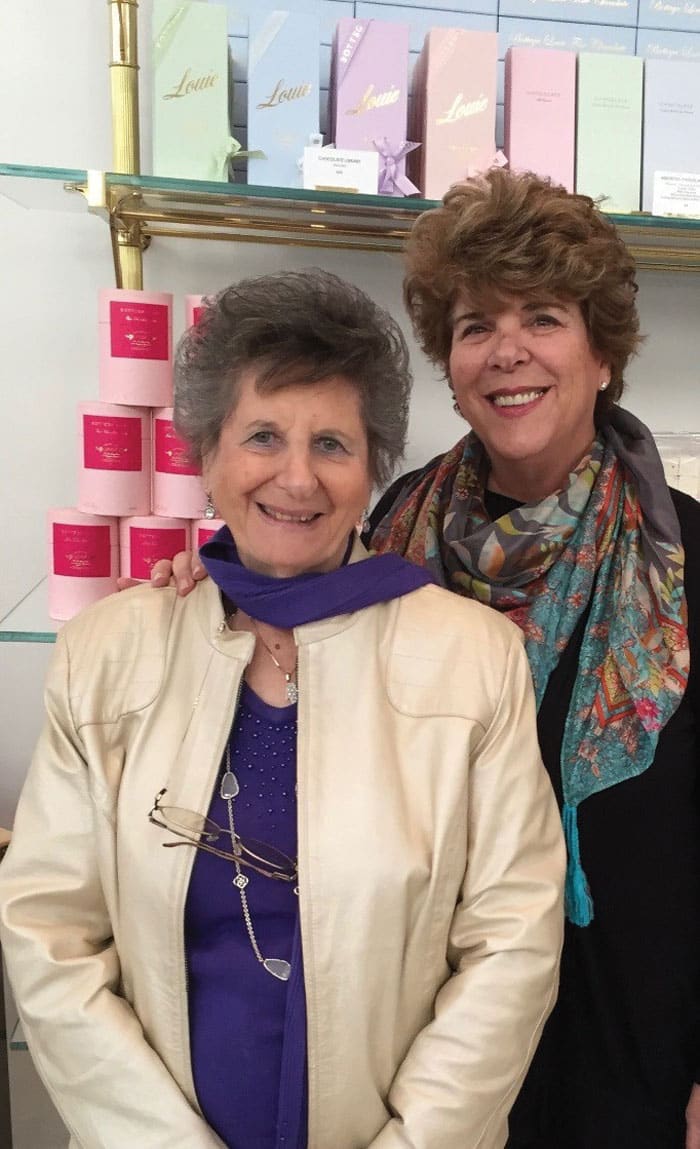
I emailed our dear friend Marcia Israel Weingarten and asked her if she thought her lovely mother Kaye would consider teaching me. Marcia writes the amazing food blog, “Bendichas Manos” (Ladino for “blessed hands”). She runs a popular Facebook group by the same name filled with her mother’s recipes and videos keeping the old memories alive. I was so honored when Marciainvited me over one morning to learn how to make these savory treats with her mother Kaye Israel.
Kaye Israel and Marcia Israel Weingarten Photo courtesy Marcia Israel Weingarten
Kaye’s parents, Hacco and Sarota Hasson, were born, raised and married on the Island of Rhodes, when it was still part of the Ottoman Empire. In 1909, they arrived in Seattle, Washington, a magnet for the Ladino-speaking Jews of Rhodes and Turkey. Kaye was born there, the youngest of five children. They lived in the Yesler Way neighborhood, surrounded by many other families from Rhodes. Her father was a shoeshine man who worked in the Pioneer Square District in Downtown Seattle. He built them a home and eventually bought the property next door where he built a second home, all on a shoe shining income! They lived up the hill from the Rodesli synagogue and on Saturday mornings, friends would pass by after Shabbat services. Her mother would always invite them in for “Desayuno” (traditional cheese-and-spinach filled breakfast pastries, fritatas, cheeses, brown hard-boiled eggs and more).
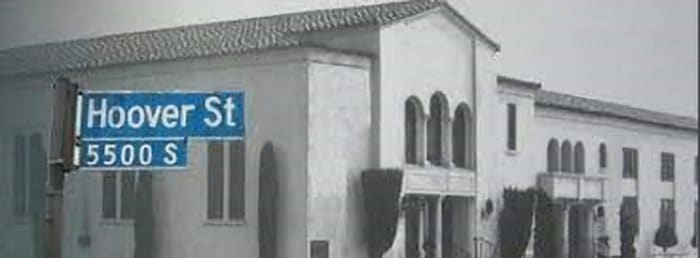
In 1929, when Kaye was only five, her eldest sister was engaged to a man from Los Angeles. The family decided they should all move together and they settled on 52nd Street and Hoover, near the Coliseum. This was the center of Rodesli Sephardic life in Los Angeles and cousins, second cousins, in-laws, aunts and uncles all lived close together.
On Shabbat afternoons they would go to Kaye’s aunt tia Rosha Solam for a vijita (visit). The ladies would sit and drink caveh (coffee) and snack on pipitas (roasted pumpkin seeds), sweets and fresh fruits. Homemade dulse (sweet preserves) were passed around and the spoonful of sweetness would be washed down with a glass of water. In the late afternoon, the table would be set with either pastellikos or boyos and burekas.
This tradition carried into the 1960’s, when the community lived in Liemert Park and Crenshaw Village. As a child Neil remembers tagging along with his grandparents to the home of La Ermana Miriam, the mother of his “aunt” Sylvia. Almost every home on that block of Dublin Avenue belonged to a Sephardic Rodesli or Turkish family. The first building of the Sephardic Hebrew Center was located nearby at 55th and Hoover. The Sephardic Temple Tifereth Israel (now on Wilshire Boulevard in Westwood) was just around the corner on Santa Barbara Avenue (now MLK Boulevard).
Photo courtesy of Aron Hasson
Kaye recalls that growing up, especially during the Great Depression, meat was not a staple. On Friday nights, they would eat chicken in honor of Shabbat. Weeknight dinners consisted of vegetables sometimes cooked with a small piece of lamb, just to add flavor. Beans were flavored with marrow bones and there was always Sephardic red rice, cooked with tomato sauce. Food was never wasted. When her mother peeled zucchini for a dish, the peels were saved and chopped up with garlic, lemon and oil and served as a tapenade.
While Kaye learned to cook primarily from her mother, when her mother passed away, Kaye would spend many days baking with her aunt Boule Benveniste. Boule taught her that “first you taste with your eyes” and that it was paramount to create uniform and eye pleasing items when baking. She would spend hours in the kitchen, listening to her aunt tell stories about life in Rhodes. That is how the family stories have been passed on, sharing tales one generation to the next.
Soon after receiving the invitation from Marcia, I took a day off work and headed out to Tarzana. Along my drive, I reminisced about her father and Kaye’s husband Jack Israel, who had a wonderful sense of humor and a special “down to earth” kindness. He was president of the Sephardic Hebrew Center (where Neil became the youngest board member). Jack was a very smart, talented and eloquent writer who became the first editor of the SEC’s Hamerkaz Newsletter. He was LA’s first “Sephardic blogger,” only he used pen and paper! He was so good to all us young adults in the early days of the Sephardic Educational Center.
As soon as I walked in to Kaye’s home, I felt so welcome. The dough was already prepared. “I know that you know how to make this dough. It is the same as the bureka dough your mother-in-law Becky makes,” Kaye told me. So we immediately started with the conduchu, a meat filling which consists of ground beef, onions, parsley (some cooks add cut up brown hard boiled eggs).We went to the dining room table, where there were three boards and trays of dough. Kaye and Marcia had already formed the dough into apricot size balls (for the cups) and smaller walnut size balls (for the hats).
Kaye patiently showed me over and over how to shape the dough. “Okay, go ahead,” she said. I didn’t expect to be thrown in the deep end so quickly! I usually pick up cooking skills pretty quickly, but this was truly challenging. Kaye was very patient and kind, as she tried to guide my hands in this unfamiliar task. Marcia, who has been in the kitchen with her mother all her life, gave me a few tips.
I kind of got the hang of forming the little cups, filling them with the meat, then taking the smaller dough pieces, dipping them into the sesame seeds and then closing up the cups. But then came the excruciatingly tough part—crimping the edges of the “hat”. There’s a video of Kaye on Facebook showing how to crimp the dough. I’ve probably watched it one hundred times. I have never been able to get it right. We finished up all the meat filling and we put all the pastelikos into the hot oven.
We shared a lovely lunch featuring these delicious freshly baked meat pies. I heard Kaye’s amazing stories about growing up in Los Angeles’ Sephardic community.
We shared a lovely lunch featuring these delicious freshly baked meat pies. I heard Kaye’s amazing stories about growing up in Los Angeles’ Sephardic community.
Before I left, Kaye filled up a shopping bag full of pastelikos forNeil (fondly called Pasha by Marcia). She gave me another bag filled with her famous, incredibly perfect biskochos (crown shaped cinnamon cookies). She gave me all the leftover dough balls in a Tupperware and told me to use it to practice my crimping. And that night that’s what I did. To my shock and surprise, I was actually able to crimp. And it was a rather decent pretty crimp!
Neil came home from work and must have eaten at least five pastelikos while standing in the kitchen. All he could say with every bite, was “mmmmmm!”
-Rachel
Photo by Marcia Israel Weingarten
Kaye Israel’s Pastelikos Recipe
2 onions, peeled and diced
2 lb ground beef
5 tsp tomato sauce
a dash of cayenne pepper (or pepper
flakes) and garlic powder
Salt & Pepper to taste
1/4 cup rice
1 egg
1/2 cup chopped parsley
¼ cup water
1. Parboil rice. To do so, bring 3/4 cup water to a boil. Add 1/4 cup rinsed rice. Cook covered on stove approximately 10 minutes on low/simmer heat. Rice should be only partially cooked.
2. In a large skillet (or electric frying pan) sauté diced onions, using 3 -4 tablespoons of oil.
3. Add ground beef and brown.
4. Add tomato sauce and spices, Add parboiled rice, followed by chopped parsley. Add water to mixture. Cover and cook on medium heat until all water is absorbed, approximately 35-40 minutes. Add egg to mixture to bind.
While cooking, begin making dough.
Dough
(for pastelikos and burekas)
3 cup ice water
2 1/2 cup oil
1 tsp salt
10 – 12 cups flour
1 cup sesame seeds
1. Put ice in measuring cup and ice water to 3 cups
2. Add oil and salt.
3. Incorporate flour into dough as you add it. (Ice cubes will melt and/or will “pop up” and you will remove as dough is mixed.)
4. Once dough is ready, prepare balls the size of an apricot for the “cup”, and a ball the size of a walnut for the “hat.”
5. Place an apricot-sized ball in the palm of your hand. Use the thumb on your other to form the cup. Fill with conduchu. Then, take a walnut sized ball, dip it in a bowl of sesame seeds, then flatten. Place on top of the filled “cup” (sesame seed side facing out).
6. Crimp close the edges. Place in a mini cupcake tin. (helps pastelikos keep their shape).
7. Brush with an egg wash (beat an egg with a few drops of water).
8. Place on lower shelf in 350°F oven.
9. Bake until bottoms begins to turn color (golden), about 20-25 minutes. (This will depend on your particular oven. Keep an eye on them.)
10. Move to top shelf until tops are a gold color.
Pastelikos are delicious right out of the oven! (after a few minutes of cooling). They freeze well. Pack in airtight freezer bags or boxes. To enjoy from the freezer, defrost and reheat at 350 degrees in the oven.
Sharon Gomperts and Rachel Emquies Sheff have been friends since high school. The Sephardic Spice Girls project has grown from their collaboration on events for the Sephardic Educational Center in Jerusalem. Follow them on Instagram @sephardicspicegirls and on Facebook at Sephardic Spice SEC Food. Website sephardicspicegirls.com/full-recipes.
On August 22, the community came together to honor the memory and legacy of Tommy Mark, as his parents, Doug and Nikki Mark, dedicated and opened Tommy’s Field at Vista Del Mar.
The multipurpose sports field, which is open to the public after school and on weekends, is on the 18-acre campus of Vista Del Mar Child & Family Services.
“We are honored to share Tommy’s spirit of play with Vista and to brighten our city one Tommy’s Field at a time,” Nikki Mark, president of TM23, said at the event.
In attendance at the opening were Mayor Karen Bass, LA City Councilmember for District 5 Katy Yaroslavsky, Vista CEO and President Lena Wilson and Chief Development and Marketing Officer Craig Prizant, as well as board members and leadership, community partners and donors. Vista’s children and teens also attended and participated in a Sports Day event provided by the L.A. Galaxy and L.A. Breakers F.C.
“Tommy’s Field at Vista Del Mar will be the heartbeat of our campus and culture, inspiring each and all of us to ‘Play it Forward’ on the field and off, thereby building a better, stronger, more just community and world together, united by the transformative power of play,” Vista board chair Jill Friedman said.
“Playing is one of the more fundamental behaviors,” Nikki Mark told the Journal. “Tommy taught me … you’ve got to have fun.”
Tommy Mark, who was passionate about all sports — especially soccer — was a month shy of his 13th birthday when he passed away unexpectedly in his sleep in the spring of 2018.
Tommy Mark, who was passionate about all sports — especially soccer — was a month shy of his 13th birthday when he passed away unexpectedly in his sleep in the spring of 2018. While the exact cause of death remains uncertain, according to the TM23 Foundation website, it is likely that an undiagnosed structural issue with his heart played a role.
TM23 Foundation’s mission is to create open air spaces and programming that embrace diversity, equality and inclusivity, inspire children to play and to positively impact the community.A few days before Tommy passed away, he asked his mom what she was going to do next. Nikki was a consultant, and she had just wrapped her latest project.
She told him it had to be something meaningful. In the meantime, she wanted to refurbish a dirt field in the park down the street to create a soccer/athletic field for the community until she found her next job. “‘He said, ‘That’s so cool, Mom. Everyone’s going to want to play on it. I can’t wait,’” Nikki said. Three days later, he was gone.“The day he left, my house filled up with people and friends and family,” she said. “A close soccer mom friend said, ‘Let’s build that field.’”
Tommy’s Field at Vista Del Mar is the second Tommy’s Field in the Los Angeles area; the first one opened in Westwood in fall of 2021. This one is a gift through Vista’s Premiere Philanthropy program, which enables a purpose-driven donor to honor or celebrate someone with a customized program. “This gift is a game changer that will both uplift the lives of generations of Vista children of all abilities and our care community and is also designed to solve a Vista and societal problem,” Prizant told the Journal.“Needless to say, these legacy projects are mitzvot, short term and long.”
Vista Del Mar provides help, hope, home and healing for children of all circumstances and abilities. What started out as a cottage-style orphanage in Southern California has become an innovative leader in education, mental health, autism, adoptions and early intervention. “With more than 4,000 families helped annually through our services, Vista is an important and active member of the community,” Prizant said. “Our unique therapeutic programs play a critical role in healing LA and making sure that no child is left behind. “
Added Lena Wilson, “We are energized by the boundless potential to collaborate with others, thereby bolstering new opportunities for our care community and our neighbors who together may thrive and reach their highest potential. On Tommy’s Field at Vista Del Mar and beyond, our unity is our strength.”
The Marks are honored to continue to lift up Los Angeles through the power of play. Nikki Mark said it’s beautiful to see adults and children playing together — or side by side — on a field. “What I love about the Jewish religion and faith is that it’s really about being good to your neighbors,” she said. “These fields really open up the idea that when you do something out of love, and for the right reasons, anything’s possible.”
One verse, five voices. Edited by Salvador Litvak, the Accidental Talmudist
This day, the Lord, your God, is commanding you to fulfill these statutes and ordinances, and you will observe and fulfill them with all your heart and with all your soul.
– Deut. 26:16
Yehudit Wolffe Founder, Bais Chana, STAM Center Los Angeles, and Bar/ Bat Mitzvah Tmimim.
How are humans better than AI robots? Answer: We have a Godly soul.
How can we be assured that AI will not be more valuable than humans? Answer: If we use our best asset: Our soul! Will competing with AI spur us to value our soul more? Will we strive more to fulfill the purpose of our soul? WHAT IS THAT PURPOSE? Surely, it’s not being robots following commands! “God is commanding you … fulfill them with all your heart and with all your soul”! How?
Tanya chapter 2, teaches that our soul is “a part of G-d infused into our body.” We all have a soul which experiences relationships with love and joy. Our souls can experience Godliness and a relationship with G-d beyond the body’s functions. We are not programmed, we are challenged and given chances to CHOOSE wisely. We choose to connect with G-d making our body and soul work together (our souls and bodies have opposite desires) anywhere, anytime. We choose to give our soul command and control and this makes G-d present in our body and world. We choose our soul’s perspectives and desires, making G-d known as our truth and essence. G-d’s truth, will and wisdom (Torah) becomes our life’s focus and reality. Choosing G-d’s will and wisdom reveals G-d’s purpose to create us, the world: including AI! Perhaps valuing our soul as our main asset is the true intent for which AI was created?
Salvador Litvak Writer, Director, Accidental Talmudist
Our verse draws a line in the sand. Until now, says Ramban, Moses taught the laws — now turn those thoughts and words into deeds!
Does that mean we weren’t performing our obligations for 40 years in the desert? God forbid! The moment had arrived, however, when Moses finished transmitting the law. The rest of his month-long sermon would be the greatest motivational speech ever given — one whose impact never faded. Rashi says our verse opens with the words, “This day” to tell us that Torah should be as fresh and exciting every day as the day it was given. And we do that by cleaving to it with all our heart and all our soul.
Sounds great, but how do we observe and perform laws given in the ancient world via ancient language with all our heart and all our soul? The question mirrors the most basic Jewish commandment — “You shall love the Lord your God with all your heart and all your soul.” (Deuteronomy 6:5). We do that by 1) desiring it, 2) working at it, and 3) saying “I love you, God” regularly, just as you do with your spouse, parent, or child. In performing the rest of God’s commandments then, we also need to cultivate desire, work, and the language of love.
So prior to doing any mitzvah, we can say, “Thank you, God, for giving me everything, and for commanding me to do this. Help me do it right. I love you.”
Rabbi Scott N. Bolton Congregation Or Zarua, New York, NY
The idea of commandedness and chiyyuv — Jewish responsibility — is foundational. It is also a challenge to free-thinkers, freedom-lovers and emancipated citizens. The Jewish People are asked first to embrace a notion of being commanded not only through the covenantal arrangement our ancestors made but to embrace our ways, present tense. God, whose voice echoes through eternity, commands the Jewish People to fulfill statutes and ordinances. “I’ll do it when I understand it, if I accept it” is antithetical to the Torah. “If not now, when?” as the Sage Hillel said, is the call to action that reflects the true Jewish spirit, when it comes to Jewish observance and fulfilling mitzvot with all our heart and soul.
But does punctilious observance of one or another of the statutory laws fulfill the obligation that our verse outlines? What is wrapping tefillin and then using our hands to steal from the proverbial cookie jar? What is standing on tiptoes to pronounce words like “holy, holy, holy” when we fall short of making soul connections to others who need our help or love?
The Torah here is warning against behaving religiously and letting our hearts fill us with antagonism, victimhood and self-righteousness. Moses is encouraging us to listen for the Divine voice, the message of the soul, which is only accessible through the performance of commandments. The Jewish way is to accept commandedness, in order to fill the heart with compassion and to complete one’s unique soul-mission. The statutes and ordinances are the keys to our hearts and souls.
There is no theological concept within Jewish tradition more challenging or complicated than the idea of Moshiach, the coming of a Messiah. For the skeptically minded, (Yep, that’s me!) a redemptive character emerging from the woodwork to turn an upside down world right side up feels fantastical at best and dangerous at worst. But I think there’s another way to conceptualize messianism; one that I believe better fits the call of Jewish life to fulfill the words in our Torah, to engage in our mitzvot with all of our heart and all of our soul.
See, long before modern physics — before string theory, micro biomes, and complexity theory — there was Kabbalah, Jewish mysticism, and with it, the fervent belief that all of existence is one. That we are connected to one another, to the world around us, and to the Divine. And because of this great cosmic unity, every action, and conversely, every non-action, directly impacts all of creation.
With this in mind, the mystics teach that the choices we make (or don’t make!) do one of two things: 1) Help put a broken world back together. Or, 2) Break the world apart even more. To live with heart and soul, therefore, is to live with the intention to turn the upside down world right side up. It is to bring redemption. This changes everything.
Because now, the theology is still hard, but not epistemologically. It’s hard because we have to stop waiting for Moshiach and instead … BE Moshiach.
Dr. Erica Rothblum Head of School, Pressman Academy
Some people keep kosher because eating intentionally elevates the experience of eating, brings additional gratitude and mindfulness to their habits, and connects them to God with each mouthful. And others keep kosher but, if they found out there was no God, would immediately eat a Philly Cheesesteak. They are both keeping kosher, but only one is fulfilling the mitzvot with their hearts and their souls.
Observing the mitzvot with our full hearts and souls is one way to cultivate joy. Author Angela Williams Gorrell writes “Joy is what we feel in our bones when we feel connected to what is good, beautiful, meaningful.” When we feel connected to the mitzvot, when we observe them because we find meaning in them, when we fulfill them because we want to, we have the potential to bring joy into our lives.
Rabbi Jonathan Sacks shares that joy ”is what gives the Jewish people the strength to endure. Joy is the ability to celebrate life.” Our world needs more joy right now. People, individually, need to feel more joy right now. One way of doing this is through observing the mitzvot with our hearts and souls — in doing this, we are able to connect with our community, to connect to God, and to connect to something bigger than ourselves.
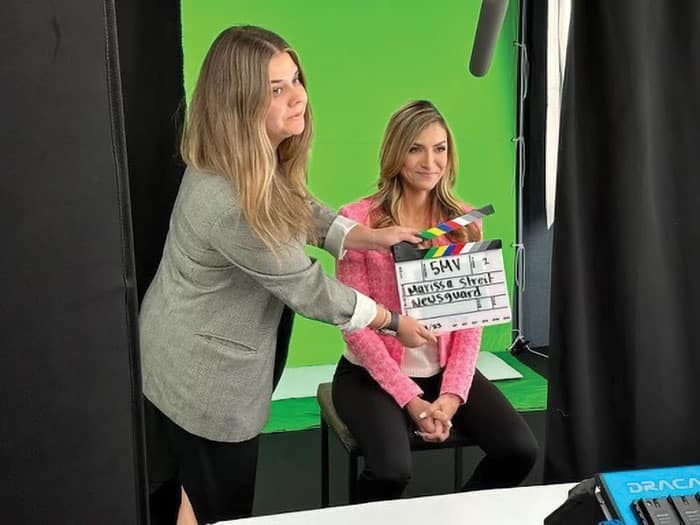
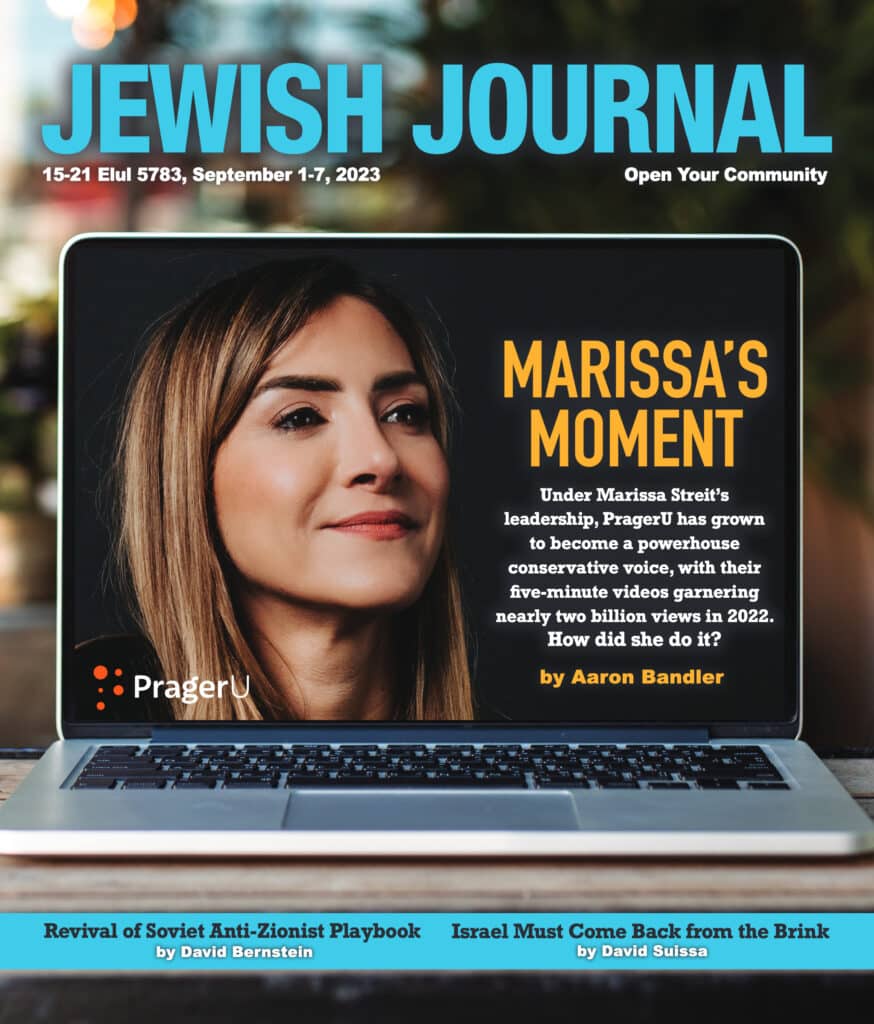
At the age of 13, Marissa Streit, CEO of PragerU, walked through the hallowed halls of Yad Vashem in Jerusalem and was overwhelmed by the enormity of the evil perpetratedby the Nazis during the Holocaust.Streit, who is Jewish, recalled asking a docent “How could this happen? How could people not stop it? Why weren’t they fighting? Did they not understand what could happen if they didn’t fight?” The docent’s reply is etched into Streit’s memory: “Well young lady, most people don’t fight until it’s too late and most people rely on others to do the fighting for them.”
To this day, Streit, 42, now a mother of three herself, still has nightmares where she sees herself as one of the freedom fighters during the Holocaust, but her experience at Yad Vashem still fuels Streit’s “courage to fight.“
The Los Angeles native was not the only visitor to Israel’s Holocaust museum to walk away determined not to allow the mass murder of Jews to happen again, but Streit followed a unique course, serving in Unit 8200 of the Israeli Defense Forces before returning to Los Angeles where she went from teaching elementary school to the CEO of Prager University (PragerU), an educational organization whose videos are watched 5 million times every single day.
Co-founded by author and talk show host Dennis Prager, PragerU’s videos have been praised and condemned, but rarely ignored. The organization estimates that nearly 1 in 3 Americans have watched a PragerU video.
Co-founded by talk show host Dennis Prager, PragerU’s videos have been praised and condemned, but rarely ignored. The organization estimates that nearly 1 in 3 Americans have watched a PragerU video. And the attacks, some of them high-profile, haven’t daunted Streit.
“If you don’t toe the line of what is expected, you experience extreme societal backlash and, sometimes, even worse than societal backlash — you can lose your job, you can lose your friends, you can be called all kinds of names and ad hominem attacks,” Streit told the Journal in a video interview from PragerU’s headquarters in Los Angeles. “I’m often called anti-woman or xenophobic. I speak more than four languages, so to call me xenophobic — it’s silly. But that’s what people will do when they don’t agree with you.”
Despite the backlash, Streit knows staying on the sidelines is not an option. “If you don’t fight against evil when you see it, you become part of it … you can’t stay in the middle.”
Under Streit’s leadership, PragerU has become a leading voice in the national debate.Since its founding in 2011, the organization claims that its five-minute videos have amassed over 8 billion views, nearly 2 billion in 2022 alone. “We get more viewers than CNN,” Streit said. “It’s incredible.” Beyond the internet PragerU is also entering the classroom — Florida’s Board of Education approved PragerU’s K-12 supplemental resources to be used in classrooms throughout the state, and more states could soon follow suit.
While critics portray PragerU as xenophobic and even racist, opposed to immigration and multiculturalism, Streit was born in America to an Australian father and Moroccan mother — who had met in Israel where her mother was working to integrate Moroccan Jews into Israeli society. Her parents divorced when she was seven, prompting Streit and her mother to move to Israel — which she described as her “spiritual homeland” — but maintained “a strong connection to the U.S.,” since her father and sister were still there. After serving in the IDF, Streit moved back to America and decided to study business and economics at UCLA because, she said, “like many Israelis, I had that go-getter mentality” and wanted to be independent. It was while she was studying at UCLA that Streit fell in love with teaching. “Given that I had a unique skill in that I spoke another language — Hebrew — and understood Israel’s history, I taught Hebrew school at $75 per hour. What a great way to make money as a college kid,” she chuckled.
Immersed in the educational system at the ground level, Streit saw what children were and weren’t learning. Armed with a master’s degree in education, she became a teacher, describing her “sweet spot” as the fourth and fifth grades. She became an assistant head and head of a school — even starting a preschool — before working as the director of operations for the Israeli-American Council for less than a year.
Eventually, someone from the education world connected her to Dennis Prager. “This person called me up and said, ‘Hey we are looking to start this new organization. It’s kind of an educational thing but it’s online, so we need somebody who has a digital background and who understands education but also knows how to develop a nonprofit from scratch,’” Streit said, adding that she had just received her MBA in nonprofit management and fit the criteria of what they were looking for. She met with Prager and his producer, Allen Estrin, a Hollywood screenwriter, and they sold her on the idea of five-minute YouTube videos to educate people about the conservative and pro-Israel point of view on various issues.
“They gave me the example of the Middle East problem … they’re like, ‘People don’t understand what is happening in Israel. They think that Israel is the biggest problem in the Middle East, this tiny little country the size of El Salvador or New Jersey … what if we could explain it to them in five minutes?’ I thought that idea was really interesting.”
– Marissa Streit
“They gave me the example of the Middle East problem,” Streit said. “And they’re like, ‘People don’t understand what is happening in Israel. They think that Israel is the biggest problem in the Middle East, this tiny little country the size of El Salvador or New Jersey … what if we could explain it to them in five minutes?’ I thought that idea was really interesting.” Estrin compared Streit to George Washington: “You’re like a general without an army,”
PragerU’s first available video on Israel, “The Middle East Problem,” sponsored by the Adam and Gila Milstein Family Foundation, has racked up over 14 million views. The former elementary school teacher who had once stood horrified at Yad Vashem was making a difference.
“I loved this idea of being able to provide people with food for thought, an alternative perspective, truth, and accessed for free,” Streit explained. “I’m not going to lie, I get lazy, too, and I’m busy, so I don’t want to read 600-page books. So the idea that I can watch a five-minute video that summarizes something complex and it’s summarized by one of the great explainers — like Dennis or others — I thought was very exciting.”
Selling donors on the potential of PragerU’s five-minute videos was an uphill battle at first. “It was really hard on a lot of people who felt very passionate about these ideas,” Streit recalled. The response would be, “Really? Why would you dumb it down to only five minutes? That’s not doing justice to the amount of education that needs to be had around the subject. You can’t possibly explain the importance of Israel in the Middle East in only five minutes. You can’t possibly explain the brilliance of the Constitution in only five minutes … They were literally offended by us when we pitched them on taking their 600-page book and turning it into five-minute content,” Streit said. And when PragerU argued to donors that “it’s actually harder and more expensive to make a five-minute video than an hour-and-a-half interview because brevity is actually hard,” the donors would reply: “What? You want money for only a five-minute video? Five minutes is: Grab your phone and film it.”
Other nonprofits that produced conservative content scorned the concept that PragerU’s videos should be advertised. “It’s the Hollywood model,” Streit said. “The Hollywood model is that the amount of money that you spend on your content, on production, is the amount of money that you spend on marketing … in the war of ideas, people think that it’s embarrassing to put money behind your ideas because people want to believe that if your idea is great, it’s going to grow its own legs and somehow go viral. But we fundamentally did not believe in that, and maybe one of the benefits of being in Hollywood is that we recognized that if Hollywood is doing it and if it’s good enough for Disney to put money behind their shows, then it should be good enough for our values and ideas.”
Despite the skepticism, PragerU stood its ground. “We, like many other visionaries and entrepreneurs, were willing to run against the herd,” Streit said. “This is one of the phrases that I like to use as a business entrepreneur, is to do what people are not doing. Dare to go where others won’t because that’s where the opportunity is.”
And its commitment to the five-minute video concept proved to be fruitful for PragerU. “The Middle East Problem,” PragerU’s first video to go viral, featured Dennis Prager discussing the Israeli-Palestinian conflict. “Semester after semester, we studied the Middle East conflict as if it was the most complex conflict in the world when in fact, it is probably the easiest conflict in the world to explain,” Prager, with his trademark baritone voice, explainsin the video. “It may be the hardest to solve, but it is the easiest to explain. In a nutshell, it’s this: One side wants the other side dead. Israel wants to exist as a Jewish state and to live in peace. Israel also recognizes the right of Palestinians to have their own state and to live in peace. The problem, however, is that most Palestinians and many other Muslims and Arabs, do not recognize the right of the Jewish state of Israel to exist.” And the video has received 14.5 million views over nearly 10 years. “That one was when we realized that we were onto something,” Streit said.
Big Tech companies have taken action against PragerU’s video that the nonprofit believes were tantamount to censorship.
PragerU’s rise hasn’t been without controversy. Big Tech companies have taken action against PragerU’s video that the nonprofit believes were tantamount to censorship. “We’ve had multiple videos that have been marked or deemed as ‘misinformation’ or ‘hate speech’ and because of that, we’re either blocked on YouTube or we are not allowed to advertise them,” Streit said. A YouTube spokesperson told Newsweek in November 2020 that they had removed an episode of conservative commentator Candace Owens’ show on PragerU with The Daily Wire’s Michael Knowles from a year earlier because that episode violated YouTube’s hate speech policies. In that episode, Owens and Knowles implied “that transgender individuals are mentally ill,” Newsweek reported at the time.
With Nikki Haley (Photo courtesy of PragerU)
PragerU filed a lawsuit against Google and YouTube in 2017, alleging that the tech companies discriminated against it by restricting the reach of more than 50 PragerU videos on YouTube. The videos include Dennis Prager’s 2014 “The Ten Commandments: What You Should Know” and columnist Bret Stephens’ “Should America Be the World’s Policeman?” in 2015. YouTube labeled some of these videos as “inappropriate” for children and demonetized others altogether, the lawsuit alleged. The lawsuit ultimately failed after a court concluded that, as a private company, YouTube’s actions were protected under the First Amendment.
During Senate testimony in 2019, Google executive Karan Bhatia defended his company’s actions, arguing that the videos in question would only be inaccessible to 1.5% of YouTube viewers who are using YouTube’s “restricted” mode, including “churches, schools, maybe libraries that don’t want to have their viewers exposed to more mature content.” The Ten Commandments video had “references to murder and I believe potentially Nazism and World War II,” Bhatia added. In the video, Prager argues that “we all need God to tell us” that murder is wrong because “unless there is a God, all morality is just opinion and belief.” He proceeds to argue: “Another problem with the view that you don’t need God to believe that murder is wrong, is that a lot of people haven’t shared your view … In the 20th century millions of people in communist societies and under Nazism killed about one hundred million people — and that doesn’t count a single soldier killed in war.” As in “‘thou shall not murder,'” she said. “You can’t make this stuff up.”
The alleged Big Tech censorship against PragerU goes beyond Google and YouTube. “On Facebook, we’ve been shadowbanned, which basically means we upload a video and it looks like it’s up there but nobody can see it,” Streit claimed, further alleging that Instagram has shadowbanned its videos as well.
Streit also claimed that PragerU has “been denied the ability to reach people with our ads on Spotify and Hulu … We get job postings pulled down at times from LinkedIn, and have had a variety of vendors refuse to work with us due to our conservative beliefs.” Nor was PragerU allowed to advertise on Twitter (since renamed to X) until Elon Musk took over the platform, Streit alleged.
NewsGuard — an online platform that rates the reliability and credibility of various news sources and institutions — has deemed PragerU as “misinformation,” Streit said. If you open your browser through Microsoft Edge, which comes with the NewsGuard extension, “you’ll get a warning sign that will say that our content is ‘misinformation’ or ‘hate speech,’” she said. Matt Skibinski, General Manager of the NewsGuard, told the Journal, “NewsGuard rates each source based on the same basic, apolitical criteria of journalistic practice. Under this apolitical rating system, many conservative-leaning websites outscore similar left-leaning news brands, and vice versa. For example, FoxNews.com is rated higher than MSNBC.com, The Daily Caller is rated higher than The Daily Beast, and The Daily Wire rates higher than The Daily Kos. These examples alone should dispel any notion that NewsGuard is biased against conservative websites.”
The reason why all these Big Tech companies treat PragerU this way is because they’re all “essentially abiding by the same rules and regulations” in terms of policing speech on issues like climate change, COVID-19, transgenderism and even Israel, because under the leftist doctrine of intersectionality, “you’re being mean to minorities” if “you don’t speak about Israel in a certain way,” Streit said.
As of publication time, Google, Facebook, Twitter/X, LinkedIn, Hulu and Spotify have not responded to the Journal’s requests for comment on Streit’s allegations.
Despite the alleged Big Tech censorship, PragerU still has 4.5 million followers on Facebook and 3.12 million subscribers on YouTube; its YouTube videos receive hundreds of thousands of views. “We are fighting uphill constantly, and those millions of followers are despite all the throttling, shadow-banning and tipping of the scales that comes from Big Tech,” Streit said. “We can only imagine how many more views we could have if they didn’t censor us or label us as misinformation.” A representative from PragerU told the Journal that despite the 4.5 million Facebook followers, its posts on Facebook and Instagram have “low reach comparatively” due to the apparent continuation of shadow-banning.
PragerU is not relying on Big Tech platforms alone for people to see its content. “We’re building our own audience,” Streit said, adding that the conservative nonprofit has its own email lists and an app for people to download.
PragerU is not relying on Big Tech platforms alone for people to see its content. “We’re building our own audience,” Streit said, adding that the conservative nonprofit has its own email lists and an app for people to download. The organization claims that over 1 million users have downloaded the app and that the nonprofit gained an additional 2 million subscribers to their email lists last year.
Today, PragerU has wide-ranging content in addition to its trademark five-minute videos; for instance, it has daily shows hosted by Generation Z personalities such as Amala Ekpunobi, a self-described far-left activist who has become a conservative influencer. The conservative nonprofit also releases four 20-minute documentaries a year, such as the recently released “Unwoke Inc.” featuring Ekpunobi documenting the rise of wokeism in the corporate sphere and how to fight back against it. Prager has his weekly hourlong fireside chats. PragerU is also producing kids’ content, aiming to teach the youth things like “financial literacy, important biographies, critical thinking, [and] character development,” Streit said. Streit herself has a weekly, hourlong interview show, where she discusses topics “ranging from parenting, the sexualization of children, education, all kinds of myths that we’ve been told about fossil fuels or overpopulation, or even food,” she said. “Like what should we eat?” Streit described the variety of content available on PragerU as “broccoli for your brain” for people of all ages.
When the Journal interviewed Streit, PragerU had just finished filming a video of a 100-year-old Holocaust survivor as part of the organization’s “Stories of Us” series of 5-10 minute videos. “He’s horrified by the fact that people don’t believe that the Holocaust happened,” Streit said. “Now there’s Holocaust denying, because we live in a society where truth doesn’t matter. We’re in a society that actually doesn’t put truth first, it puts wokeism first or what sounds good first or tyranny of the minority first … truth is not being held as a value — not in our media, not in our education.” According to Streit, the Holocaust survivor said that he “never thought in his lifetime after living through the Holocaust he will have to travel to all corners of the Earth and show people the numbers on his wrist and tell people that the Holocaust happened. That evil happened in the hands of humans because others did not fight hard enough to stop it.” According to Streit, the survivor also said, “Here we are: We’re living in an era when people yet again feel fearful to fight against evil because they don’t want to feel like they’re an outsider or they don’t want to speak up or they want to rely on another person to fight for them.”
One common misconception about PragerU is that “we’re a political organization because we teach conservative values and conservative ideas and these days everything has become political, including sports,” Streit said. “To me, it’s really more about preserving traditional American values or ideas or ideologies that have made America what it is.”
One common misconception about PragerU is that “we’re a political organization because we teach conservative values and conservative ideas and these days everything has become political, including sports,” Streit said. “And so if you don’t lean left, you’re immediately a right-wing activist. To me, it’s really more about preserving traditional American values or ideas or ideologies that have made America what it is.”
Asked what video she would recommend to those on the left who may not be familiar with PragerU, Streit chose,“Why I Left the Left,” by conservative commentator Dave Rubin.Rubin left the left “because he dared to wrestle,” Streit said. “He actually followed the traditions of his forefathers of wrestling with this concept that he was always on the left, he was told that he needs to be on the left, but he dared to wrestle. And he ended up leaving the left because he realized that the classical liberals that most Jews want to be don’t have a home anymore on the left.” She added: “If you are a classical liberal and you really believe in freedom of speech and personal choice, and perseverance and reward based on merit, and all of those characteristics that many Jewish homes teach their kids — wake up early and hustle and work hard and the harder you work the more you’ll get rewarded — all those values, those are not left-wing values … you may disagree with Dave, but you might find yourself in a similar spot that he is in. It’s a freer spot.”
(Photo courtesy of PragerU)
Streit had another message for Jews on the left: “The Jewish people are called the Nation of Israel. What does Israel mean? It means to wrestle with God. It means to wrestle with ideas … why is it my group of people, the Jews, who are so locked into leftism that they’re not willing to hear an alternative perspective?” Streit said. “That should be so counter to what we do as Jews.” She added that “we are the nation that if the university says so, we believe every single word. We worship every word that comes out of university. There’s something quite ironic about that. If there is a message that I would have for the Jewish Journal audience, it is to think about that and allow them to open their mind and wrestle with ideas … when you wrestle with ideas, you become smarter. It expands your intellectual bandwidth.”
Ki Tavo is the Torah portion that nobody likes. While it does contain beautiful verses of blessings, there’s that one frightening section, the sixth aliyah, with 54 verses of devastating curses. It’s the aliyah that nobody wants. My father told me that in Morocco, they would pay the gabbai to take that aliyah. The schedule of Torah readings is fixed for Ki Tavo to be read before Rosh Hashanah, assuring we do not begin our New Year on a clean slate and then go to the synagogue to hear curses. Brilliant thinking!
We also assure that these curses don’t carry over into the New Year by beginning Rosh Hashana with a ceremony of blessings in our homes. But we don’t simply pronounce these blessings, we eat them! It’s what many call the “Rosh Hashana Seder.” How did this beautiful custom begin?
The Talmud teaches that on the eve of Rosh Hashana, we place pumpkin (kra), fenugreek (rubiya), leeks (karti), beets (silka) and dates (tmari) on our tables. These are all omens – or blessings – for a good year. But do we eat them or just decorate our tables with them? For many years, the prevalent custom was to decorate and not eat.
That changed when Rav Yosef Karo, Judaism’s most authoritative halakhic codifier, established in the Shulhan Arukh (The “Set Table”) – Judaism’s most authoritative code of Jewish law – that we eat them. His decision was a halakhic ruling that most likely reflects a cultural reality: can you imagine a Jewish table where food items are placed before you and we say “don’t eat them, just look”? Not likely!
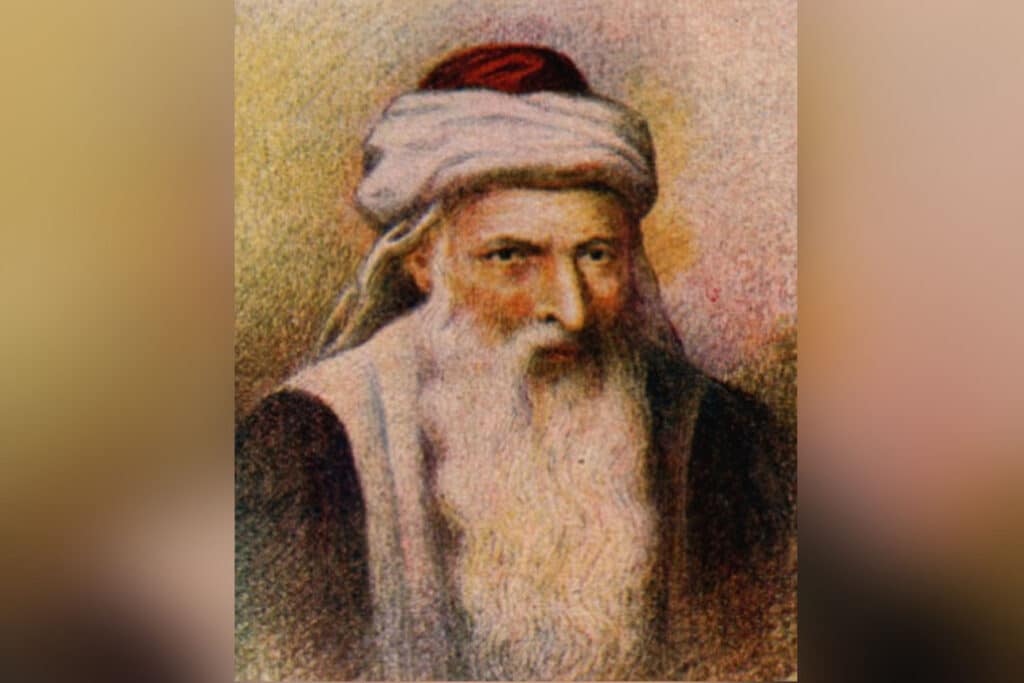
Born in Spain in 1488, the young Yosef was 4 years old when the Jews were expelled from Spain in 1492. He eventually moved to Safed, Israel, and when codifying this custom, he added creative wordplays for each, as they all share in common the nuance of words that “sound the same but are spelled differently.”
Kra doubles as “pumpkin” and “tear up,” so we pray that God will “kra ro’a gzar dinenu” – “tear up evil decrees against us.”
Rubiya (fenugreek) sounds like “yirbu” – “multiply,” so we pray “she’yirbu zahiyotenu” – “may our merits multiply.”
Karti doubles as “leeks” and “cut off,” so we pray “she’yikartu oyvenu” – “may our enemies be cut off.”
Silka doubles as “beets” and “disappear,” so we pray “she’yistalku oyvenu” – “may our enemies disappear.”
Tmari (dates) sounds like “yitamu” – “come to an end,” so we pray “she-yitamu oyvenu” – “may our enemies come to an end.”








 Immersed in the educational system at the ground level, Streit saw what children were and weren’t learning. Armed with a master’s degree in education, she became a teacher, describing her “sweet spot” as the fourth and fifth grades. She became an assistant head and head of a school — even starting a preschool — before working as the director of operations for the Israeli-American Council for less than a year.