Summer travel is back. It may even be more stressful than in the past, given the travel industry is still recovering from the pandemic, but don’t let that stop you from having an adventure.
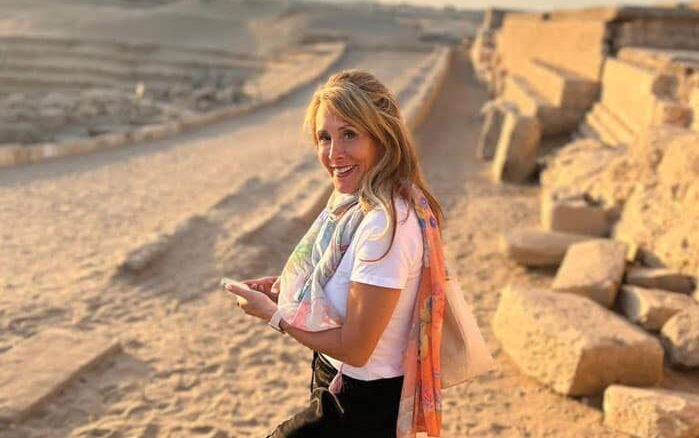
“I’m not sure if it is my age or post-pandemic disorientation, but travel feels so hard and more anxiety provoking than ever,” Rabbi Cantor Judy Greenfeld, founder of the Nachshon Minyan, told the Journal. “And at the same time, it is so necessary for health and well-being.”
To help you embrace the beauty and challenges of summer travel, the Journal asked Greenfeld for her insights and advice.
Jewish Journal: How can people reframe their mindset before making plans and/or embarking on summer travel?
“The Jewish people are not strangers to the challenges of travel.”
– Rabbi Cantor Judy Greenfeld
Judy Greenfeld: The Jewish people are not strangers to the challenges of travel. After all, are we not reminded every Passover that our forefather was a wandering Aramean? We have many prayers and teachings about travel that can help us if we take time to reframe and make our travels into an adventure. Think of your summer travel as a discovery.
There is a legend that when we were created, we were given a purpose on this planet. As we live our lives, along the way, we are meant to find hidden sparks that teach us who we are. Some of them are hidden in people we meet randomly, many are found hidden under the guise of a “trip” or pilgrimage. A spiritual journey is any journey where you find “sparks of wisdom” that are awaiting you. Even if the worst, most aggravating things happen, remember that the way you navigate them, or the choices you make, are precious teachings, for you and those around you.
JJ: What can travelers do to connect/reconnect with Judaism as part of their journey?
JG: When you get to the airport, turn yourself into a “shaliach mitzvah,” a messenger of mitzvah (which is an action that creates a ripple effect of good in the world). There is a famous Jewish custom which says, “If you make yourself a messenger of a mitzvah; no harm will come your way.” If we know of a friend or relative that is traveling, we traditionally give them a coin or bill and appoint them as a messenger to give the money to charity, or to a person in need that they encounter along the way. In doing so, they become an emissary to do a mitzvah (in Hebrew: a “shaliach mitzvah”), and they receive an extra level of God’s protection. If no one has given you money, you can appoint yourself and see who is in need.
JJ: How do you feel about day trips?
JG: Day trips are mini-opportunities to zero in on your own wishes and those of your fellow travelers, friends and/or family. I suggest you let everyone help plan these mini-escapes. Let someone decide on a restaurant, perhaps another person choses a special stop along the way or their top place to visit. Also, try not to have unreasonable expectations. Even on short journeys, expect things to go wrong and bolster up on a Plan B.
Whenever Greenfeld travels, she brings the Tefillat Haderech, which is the prayer for travelers. For those who do not read Hebrew, here’s her creative translation.
Tefillat Haderech/Travellers Prayer
Creative translation by Rabbi Cantor Judy Greenfeld
May (you/we/I) be blessed upon embarking on the way.
Just as our ancestors journeyed, may You guide us with the same protection and care that You provided for them. God, replace feelings of anxiety and fears with faith and trust as we travel.
Help us to be kind, and compassionate when meeting other travelers along the way.
May our highways, flight-ways, and railways be safe and secure. May we find and give the holy sparks that are awaiting discovery;
And may these experiences help us to find our inherited connection to You and our soul’s purpose.
May we travel with ease; and return with the gifts we were meant to receive.
And may we remember to thank the One who guides us along our path.
On November 21, 1984, Israel conducted a covert mission to rescue thousands of Ethiopian Jews from war-torn Sudan. Called Operation Moses, it was the first of three subsequent missions to save the lives of these Jews and bring them to their ancestral homeland.
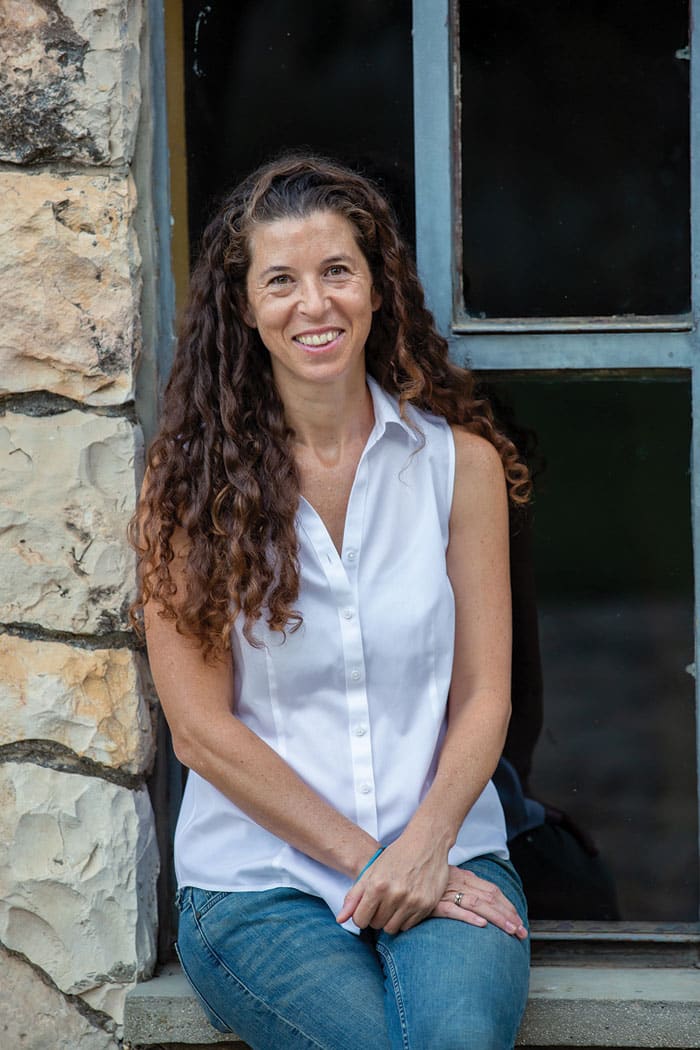
Kim Salzman
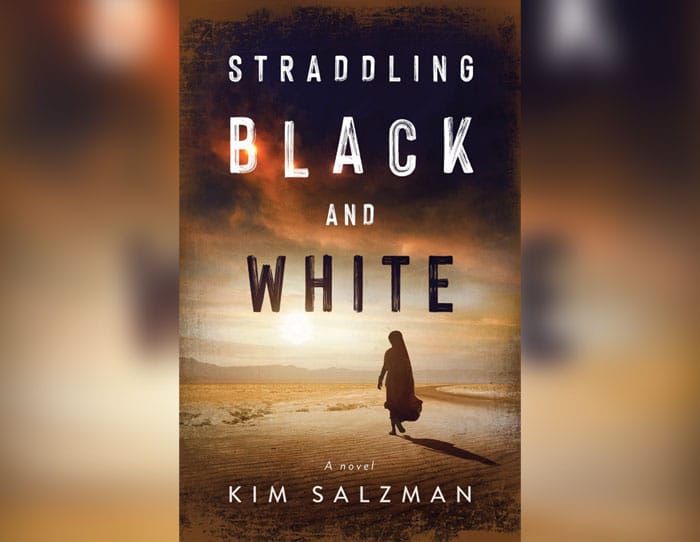
Author Kim Salzman has fictionalized Operation Moses in her new book, “Straddling Black and White,” about an Ethiopian-Jewish family that is torn apart during the mission. It tells the story from the perspectives of the different characters: Kebede, the father who gets to Israel, Tigest, the pregnant mother who is left behind in Ethiopia with her four young children, and 14-year-old Azmera, who is making the journey to Sudan to hopefully go to Israel and reunite with her father.
Salzman made aliyah in 2006 and was inspired to write the book after working for Tebeka, a legal aid society advocating for the rights of Ethiopian-Israelis.
“I became fascinated by Ethiopian aliyah and their tremendous longing to return to Jerusalem and the sacrifices they made along the way to make that possible.”
“I learned from my colleagues about their personal aliyah stories from Ethiopia,” she said. “I became fascinated by Ethiopian aliyah and their tremendous longing to return to Jerusalem and the sacrifices they made along the way to make that possible.”
When Salzman went on her honeymoon, she spent time in the Gondar region, the northern region in Ethiopia where most Ethiopian Jews came from.
“The more I researched, the more I realized that there was little to no literature written in English about Ethiopian aliyah, and this was especially the case for historical fiction novels which have the ability to bring to life their stories through compelling storytelling,” she said. “My motivation to tell their story, and to tell it in a compassionate and moving manner, grew.”
“Straddling Black and White” isn’t just a work of historical fiction – it’s also a book that focuses on complicated family dynamics and how they affect our worldviews. Once Azmera does find her father, she discovers that he’s been drinking to deal with the challenges of being an immigrant, and she learns shocking secrets from her parents’ past.
“The reader is exposed to the different challenges olim face when immigrating to Israel, but also to the ways in which Am Israel stand by one another in their time of need and the Talmudic teaching of kol yisrael arevim ze le’ze (the People of Israel are responsible for one another),” Salzman said.
The book includes traditional storytelling as well as letters from the characters. In a letter that Kebede writes to his wife, he details his struggles with fitting in, as well as the kindness of some of the people around him, like his ulpan (Hebrew language class) teacher.
He writes, “Israel is nothing like I expected. Everyone moves so fast and there are so many cars and buses that it’s easy to forget that this is the place where our forefathers came from … The best part of my day is when I go to my Hebrew class. My teacher is Israeli, and she is amazing. She has been so kind and welcoming to us. Hebrew is a difficult language, but I study religiously every afternoon and feel that I’m improving like the younger boys in class.”
As someone who was an immigrant herself and worked with immigrants, Salzman perfectly captures the experience.
“I have been intrigued by the stories of other olim, new immigrants, to Israel, whether they come from Morocco, Ukraine, the U.S. or Ethiopia,” she said. “All of us olim have something in common – leaving behind our culture, language, family and more to start a new life in the Jewish homeland.”
The title of the book, “Straddling Black and White,” not only refers to the differences between Israel and Ethiopia and the color of people’s skin, but also to Azmera’s coming of age story and her integration into Israeli society.
“Upon making aliyah, she learns that the world is not nearly as black and white as she once thought, but rather much more nuanced and complex than she ever imagined,” said Salzman.
The author hopes that when people read “Straddling Black and White,” they will learn about the sacrifices Ethiopian Jews made during their aliyah journeys. She thinks that once readers are informed, they could become more accepting of Ethiopian olim – and olim in general – and realize that the ingathering of the exiles to Israel is what truly matters.
“I hope the book will connect readers to Israel emotionally as they learn more about the complexities of Israeli society, the strength of the Jewish people and how incredibly diverse Israel truly is,” Salzman said. “I believe it can be an important book which unites the Jewish people in these divisive times.”
Ron, Maya, Eli, and I arrived in Tel Aviv on Wednesday in preparation for Temple Akiba’s Israel trip. We are a long way from Los Angeles, and I have to tell you …. the kids did a great job with the flights.
At one point during the journey, Maya asked, “Are we home?”
And while my mind raced through thousands of years of Jewish wanderings, the response bridged our incredible history into a simple moment in time. “Are we home?” Yes!”
Ron and I thought a long time in the planning stages of the trip. Will toddlers not yet 4 years of age appreciate a visit to our Homeland?
Well, we are committed to immersing them in both our history and our future, nourishing them with culture and adventure, and embracing them with peoplehood and spirituality.
We began the trip with a wonderful swim! Soon, Akiba members will arrive! And we are excited! (Ok, ok … ask us again in 10 days how we are holding up!)
Soon after Alan and I announced our engagement, a keg of beer was delivered to his doorstep. Alan called his sister-in-law Ingrid in London and they laughed over the phone. She had remembered their long held wager — she bet that he would land up with a South African girl, he was adamant that he would not. My South African accent is rather good … but I’m not South African.
We planned an engagement party. Alan’s parents flew in from San Francisco and his sister Brigitte and brother-in-law Michael traveled from St Louis. But Ingrid and Larry may have had the last laugh when they surprised Alan by also landing on our doorstep from London.
We served the beer at our engagement party.
Then it was time to set a wedding date. Alan’s sister (a doctor) told us the wedding couldn’t be in June because of her hospital rotation. We were left with very limited options because of the three weeks (Jews don’t have celebrations between the 17th of Tammuz and the 9th of Av, a time of mourning).
The date we chose for our wedding was July 3rd. That year, the Hebrew date was Yud Bet Tammuz, an auspicious day on the Chabad Lubavitch calendar. It marks the day in 1927 that the previous Rebbe, who had been sentenced to death, was miraculously freed from Soviet imprisonment and became known as the Frierdiker Rebbe. Soon after, the headquarters of Lubavitch were moved to Latvia, then Warsaw, Poland. In 1940, with the lobbying of many Jewish leaders and help from the US State Department, Rav Yosef Yitzchak Schneersohn, his wife, his mother, his daughter Chana, son in law Rabbi Gurary and grandson reluctantly fled Nazi-occupied Poland.
When he arrived in New York, two of his chassidim came to him and advised him not to start the activities that Lubavitch had been involved in Europe. “America is different,” they said. He said that out of his eyes came “boiling tears.” The next day he started the first Lubavitcher Yeshiva in America, declaring “America is no different.”
In my mind, our wedding has always been tied to this wonderful piece of history. Whenever Alan and I travel to New York, we always stop at the Ohel, the resting place of the Frierdiker Rebbe and the Lubavitcher Rebbe.
As immigrants from other lands, Rachel and I both appreciate the gift of America. We both love celebrating American holidays. There’s symmetry in the fact that Neil and Rachel married the day before Thanksgiving and Alan and I the day before the 4th of July. That I threw a Thanksgiving Sheva Bracha for Neil and Rachel and Rachel threw a July 4th Sheva Bracha barbecue for Alan and I.
Grilling food on fire is primal. When done right, it’s also perfection. Served with Rachel’s trademark homemade harissa and some of the regular fixin’s, the steaks were truly melt-in-your-mouth delicious.
Grilling food on fire is primal. When done right, it’s also perfection. This Sunday, Rachel and I grilled some pasture raised bison from a kosher ranch in South Dakota. L’Chaim Meats is a husband and wife operation with the commitment to allow their bison to run free to ensure a healthy product. Served with Rachel’s trademark homemade harissa and some of the regular fixin’s, the steaks were truly melt-in-your-mouth delicious.
Happy 4th of July (and happy anniversary to my wonderful husband Alan)!
—Sharon
I have fallen in love with Harissa.
In the past, I would buy harissa at my local kosher market and use it in my Friday night Moroccan fish. But I never really paid too much attention to it.
My family is Spanish Moroccan and the foods we ate had more of a Sephardic influence rather than an Arabic flavor. I did not grow up eating harissa. Our brush with spicy food came when we would occasionally eat sausages called Merguez. A North African delicacy, merguez are usually made from lamb mixed with harissa. My most vivid memory from Morocco was the treat of a baguette stuffed with red hot, spicy merguez and French fries from the kosher sausage vendor. So good!
During the period of Spanish colonization, red peppers were imported from Mexico to Tunisia and chili peppers have been cultivated there since the mid-sixteenth century. The name harissa comes from the Arabic word that means“to crush, to grind or to puree.” The condiment is made by blending strong red peppers, garlic and olive oil and depending on which region of North Africa, various spices are added, like cumin, coriander or caraway.
My son Sam is a private chef (Sheff At Home) and he would make his own batch of harissa whenever he was cooking for his clients and would always bring me a jar. It was so much better than anything store bought.
This encouraged me to attempt my own version of harissa. Sam walked me through the steps, then left me to figure it out. Just like everything else you do in the kitchen, you have to taste, taste, taste, until that moment that you get it right.
The first taste was awful. Puréed peppers and garlic. So I started adding more oil and more salt. I decided it needed acid and threw in some vinegar. I finally achieved that deep pungent taste.
As a personal note of caution, wear gloves when making harissa so you don’t stain your nails and especially avoid rubbing your eyes. Avoid spills—once I dropped an open jar of harissa on my brand new white sneakers and I had to throw them in the trash.
Harissa is truly the perfect condiment. Use it to enhance meat and fish dishes or as a marinade for chicken thighs and breast. Add it to ground beef patties and grill them to make kofte kebab. Or add it to mayonnaise to make an aioli that’s great in sandwiches or salads.
My personal favorite way to eat harissa is with a grilled steak.
I hope you try this easy recipe and use harissa in your dishes this Fourth of July!
—Rachel
Harissa Recipe
Photo by Sephardic Spice Girls
Harissa is very adaptable, so you can use any combination of dried peppers. In California we have access to the best Mexican chiles, with every flavor profile, from fiery hot to smoky and sweet. I prefer to keep my harissa mild, adding cayenne pepper at the end to set the heat level.
If you love the heat, use one or two chiles de Arbol. For this recipe I use dried guajillo peppers which are very mild with a lot of depth and ancho for that classic smoky, sweet flavor.
-Rachel
2 dried ancho chile
1 tsp cumin seed or ground cumin
1 tsp caraway seeds or ground caraway
2 garlic cloves
1/4 cup red wine vinegar
3 Tbsp tomato paste
1 tsp cayenne pepper
2 tsp kosher salt
3/4 cup olive oil, divided
Step 1
Place chiles in a large heatproof glass bowl. Pour boiling water over the chiles, then cover with plastic wrap, or a heavy plate.
Set aside for 15-20 minutes, until the chiles are very pliable and are cool enough to handle.
Drain the water. Remove the stems and seeds and discard (wear gloves for this part).
Step 2
Toast the cumin and caraway in a dry small skillet over medium-low heat, tossing constantly, until very fragrant, about 3 minutes. (If you don’t have seeds, ground cumin and coriander can be used. ) Transfer to a food processor, add garlic, and pulse until spices and garlic are broken up .
Add the chiles and pulse until mixture forms a coarse paste. Add the vinegar, tomato paste, cayenne pepper and salt and process until the mixture is mostly smooth but retains a little texture. With the motor running, stream in ½ cup of olive oil. Process until the oil is incorporated.
Step 3
Transfer the harissa to a bowl or glass container. Pour remaining ¼ cup oil over top.
Cover tightly and chill.
Note:
Harissa can be stored in the refrigerator for 1 month.
Sharon Gomperts and Rachel Emquies Sheff have been friends since high school. The Sephardic Spice Girls project has grown from their collaboration on events for the Sephardic Educational Center in Jerusalem. Follow them on Instagram @sephardicspicegirls and on Facebook at Sephardic Spice SEC Food. Website sephardicspicegirls.com/full-recipes.
In 1963, when my family moved from Chicago’s very Jewish Albany Park to Los Angeles’ very Jewish Fairfax area, I told my parents, “We just moved 2,000 miles to the exact same neighborhood.” Yet, I was no longer surrounded by my aunts, uncles, cousins, friends from birth, and all the people I was connected to because my parents grew up in Albany Park and knew everyone — and therefore so did my brother and I.
In 1966, by the time I entered Fairfax High, I again knew everyone. In a post- World War II Jewish neighborhood of American-born parents, Holocaust survivors, public schools that were 90% Jewish, and lots of synagogues, everyone knew almost everything about everyone.
By that time, I felt very Angeleno, very Fairfax. But I still felt very Chicagoan.
Whenever I would return to Chicago during high school and college years, I still identified as a son of the city. Growing up in the early ’60s was a very different time in America. By the age of eight in Chicago, I was taking the city’s El Train and busses alone and with my friends, everywhere — downtown, Wrigley Field, to many different places. I’d ride my bike for miles. I knew the city and its streets and neighborhoods well.
I found that the familiarity of my returns over the years wasn’t just physical. I knew the city’s personality, its people as well as the place. I also knew the Albany Park personality. Even though the Jewish residents had moved to northern neighborhoods and suburbs, they transported their Albany Park personalities with them and I could identify it immediately. I realized how much it was a part of me. I still have my best friend from childhood who remained in the city. We talk to each other all the time.
Being in Chicago recently for a wedding, I had a chance to go back to Albany Park. The main streets and stores were different, now Latino, Korean and Arab. But the side streets felt exactly the same.Every house, apartment building, every brick in every structure.
Walking Albany Park, I could recapture memories of what happened in each place. There was a yellow brick building. I could see my 10-year-old self standing in front of it, fascinated,watching workmen build it with concrete and then dig precise lines so they looked like bricks. That was 62 years ago. I wondered if anyone, except me, knows that those bricks are fake. The Tel Aviv Kosher Bakery had become the Middle Eastern Holy Land Bakery, and I laughed to myself, “See, they got some land back.”
In my return to Albany Park, I could recapture the feelings, senses and atmospheres of my youth, as if I left them hovering there waiting for me.
In my return to Albany Park, I could recapture the feelings, senses and atmospheres of my youth as if I left them hovering there waiting for me.I entered into the 1920’s main building of the neighborhood park where I went to day camp, to its public swimming pooland where we sledded in the winter. The same red bricks. The same smells. The tall elm trees still embraced me in the way they did in my youth, and how they do in my dreams where I’m running through the neighborhood.
From my parents’ many close friends, there was a family with three daughters, Bayla, Arlene and Ellen. Over the years, I maintained loose contact with them. Twenty years ago, I received a call from Bayla, telling me that Linny, my downstairs neighbor growing up, had just lost her son. So I called Linny, who I hadn’t spoken to since I was 12 years old.
This week, Linny made dinner in honor of me being in Chicago, inviting over Bayla, Arlene and Ellen. Bayla, once a beautiful bathing suit model,is now an Orthodox woman, showing up in modest dress and a wig.Arlene and Ellen, more alternative, grandparenting together Arlene’s granddaughter. Linny and her husband, Jack, more traditionalretirees living in Skokie.
There was so much to remember. So much warmth and connection. So much to say. No one hid anything about our lives’ pains or our celebrations. The interaction was so Albany Park, as the children of first generation blue collar working class Jews recovering from a war, who struggled economically, but knew how to build and maintain relationships.Unlike our parents, we became college educated. But we all agreed we never forgot where we came from and how integral it still is to who we are today.
Gary Wexler woke up one morning and found he had morphed into an old Jewish guy.
In June 2021, entertainment journalist Malina Saval wrote an exceptional and highly-discussed critique of how Hollywood has caricatured Jews and reinforced harmful stereotypes. When reading the essay, many Jewish writers, myself included, couldn’t believe their eyes; Saval had captured what many of us believed, but felt helpless in verbalizing beyond Jewish eyes and ears. And she had made her case in Variety, a premier publication for entertainment news.
The essay, titled “Too Jewish For Hollywood: As Antisemitism Soars, Hollywood Should Address Its Enduring Hypocrisy In Hyperbolic Caricatures of Jews,” went viral and in February 2022, won Saval, a features editor for Variety, first place in commentary for gender/diversity at the National Arts and Entertainment Journalism Awards.
To understand the significance of her first-place award, one ought to imagine how many commentaries are written each year addressing issues related to gender and diversity; the fact that an essay that unabashedly defended Jews — the accused purveyors of everything that is allegedly white, powerful and privileged — won first place in the gender/diversity category at a major national journalism competition reveals the power of Saval’s essay. But it also highlights a distinctive trademark of Saval’s work: when it comes to standing her ground on antisemitism, it’s not easy to prove her wrong.
Saval, who is based in Pasadena, begins the essay with a story of a non-Jewish film producer who, several years ago, casually informed her that “Jews control Hollywood.” In response, she highlights that while Jews may have essentially founded Hollywood because they were excluded from so many other white-collar industries in this country, the majority of those who actually shaped early American cinema weren’t Jewish. “In short,” she wrote, “there is a core etymological difference between invent and control.”
It’s an argument she’s apt to repeat to anyone who suspects otherwise, and one that she made again in a CNN interview this past February. When interviewer Nick Watt informed Saval that “20% of managers, agents, executives in Hollywood are Jewish,” she coolly responded, “There’s no hard facts to back up that number,” adding, “Say we come up with the numbers and we do find out that there are a disproportionate number of Jews working in Hollywood, just for argument’s sake?” When Watt pressed her to continue, she responded with two simple words: “So what?”
Saval could have stopped there. She had convinced Watt, who then observed, “If 20% of Hollywood big wigs are Jewish, 80% are not.” But Saval isn’t one to abandon a cliffhanger, and after observing that many non-Jews play many Jewish roles, concluded her argument with one question: “We don’t even cast Jews as Jews. So, where is the control?”
”Jews in Hollywood are not looking for control. What we are looking for is a voice.”
During my interview with Saval, she observed that she “doesn’t personally know a single Jewish artist, writer, actor or filmmaker who is angling to have complete control over the entertainment industry. The very notion of that is ludicrous. Let’s dispel that entirely. Jews in Hollywood are not looking for control. What we are looking for is a voice.”
The Jewish role in Hollywood has always been complicated, and today, the contrasts are disturbingly extreme. On one hand, the immigrant, Jewish “founding fathers” of American cinema were shockingly left out of any exhibits when the new Academy Museum of Motion Pictures in Los Angeles opened. Far from controlling Hollywood, Jews, apparently, weren’t even there when the industry began.
On the other side, there are the likes of rapper Ye, formerly known as Kanye West, who has more social media followers than there are Jews in the world, and who, among other antisemitic libels, has claimed that “the Jewish community, especially in the music industry … they’ll take us and milk us till we die” and has alleged that “every celebrity has Jewish people in their contract.”
The canards never get old. Jews are in control; Jews are helpless. Jews victimize others and society must prioritize the real victims (this, despite the fact that, according to the FBI, Jews are the No. 1 target of hate crimes in this country). It’s time to ask if and how depictions of Jews on screen have rendered us excluded, stereotyped and worst of all, unsafe.
In her 2021 essay, Saval, who has served as a features editor at Variety since 2013, mentions that in the late 1990s, her then-agent informed her that a script she had written based loosely on her Jewish upbringing in the Boston area needed to be “less Jewish.” Could the Jewish characters be changed to Irish ones? asked the agent. The story was set in Boston, after all. Saval acquiesced and landed a deal at a major motion picture company, only to realize the essence of the script had been lost. “From that moment on,” she wrote, “the message was clear: you can be Jewish in Hollywood, but not too Jewish.”
“A Very Strong Jewish Identity”
Saval was born to Ashkenazi parents in Boston in the 1970s, and lived in the Boston suburb Revere, before moving to Stoughton. Her extended family had escaped Ukraine, Poland and Russia and settled in new homes in Boston, Toronto and South Africa. Her great-grandmother, Jenny, lost many family members in the Holocaust.
“I definitely grew up with a very strong understanding of what the Holocaust was, what it meant and what had happened to my paternal great-grandmother’s family,” she told the Journal.
At home, Saval grew up with a “very strong Jewish identity.” One of the most important values in her family was a commitment to philanthropy within the Jewish community. Her great uncle, Maurice Saval, was an insurance tycoon who donated vast sums to Maimonides School in Brookline, MA, a Modern Orthodox Jewish day school founded in 1937 by Rabbi Joseph Soloveitchik and his wife, Tonya. Her uncle also contributed generously to Solomon Schechter schools and to Brandeis University.
“Growing up in the Boston area, I felt kinship with Irish people, culture and playwrights,” said Saval, “but it was a very Catholic city. Being in a public school in a South Shore suburb of Boston in the eighties, I definitely experienced antisemitism in that it made me feel like I didn’t belong, wasn’t accepted and wasn’t good enough.”
One day at school, a classmate turned to Saval and said, “All you talk about in Hebrew school is all the people that want you dead.” Another student tried to stuff Saval into a locker while spewing antisemitic slurs.
The antisemitic stereotypes were pervasive and worse, normalized. Students would throw pennies at Saval to see if she would pick them up. That reinforced the stereotype of the miserly Jews. Yet her sixth grade teacher openly called her a “Princess in Training” (PIT), suggesting a privileged wealthy Jew. Saval’s parents met with the teacher, but to no avail, and young Saval continued to feel isolated.
“The antisemitism made me feel depressed in the literal sense of the word,” she recalled. “I didn’t feel like getting out of bed… When you’re an adult, you’re better equipped to process these emotions.”
“The antisemitism made me feel depressed in the literal sense of the word,” she recalled. “I didn’t feel like getting out of bed; going to school felt like I had weights on my ankles. I felt worthless. When you’re an adult, you’re better equipped to process these emotions.”
I asked Saval how her experiences with antisemitism as a child fueled her clear-minded advocacy on behalf of Jews for the past several decades.
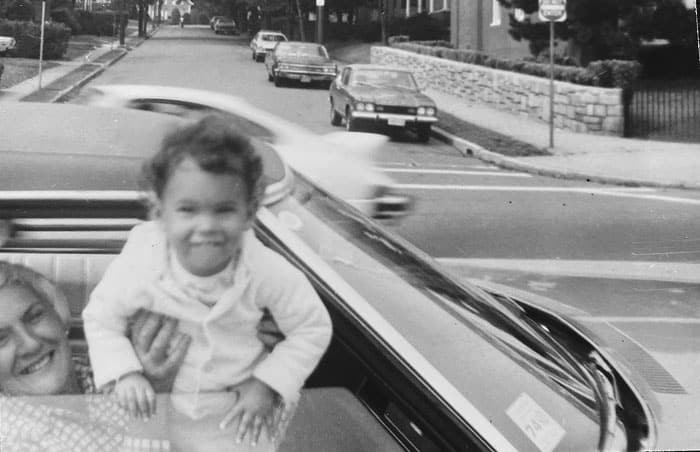
A young Malina Saval with her grandmother, Reina Saval, z”l
“In some way, I still haven’t processed it,” she said. “But when I encounter antisemitism today, it hurts in a physiological way; it does something to my body that I remember feeling even back then. To feel like the other. To be the other. To be made to feel different and even ugly, not in an aesthetic sense, but as someone who’s made to feel they don’t belong.”
But despite such difficult childhood experiences, Saval’s love for Boston has never waned. “I love Boston. I feel like a person born of two cultures; having always felt my neshama was Jewish, but another part of me is all Boston,” said Saval, who describes herself as a “huge Boston sports fanatic.”
Saval’s father was a public school teacher and her mother was a homemaker who cared for Saval and her two younger brothers. “I was living proof that assumptions about Jews and wealth weren’t true,” said Saval.
The ’90s (and moving away from antisemitic peers) proved beneficial for Saval, who left the Boston area and graduated from Cornell University in 1995 with a bachelor’s degree in English Language and Literature. As an undergraduate, she studied abroad in Israel in 1993-1994, attending the Rothberg International School at the Hebrew University of Jerusalem, where she studied Hebrew Language and Literature, as well as Jewish Studies (she claims her Hebrew is “fairly good” and that she can “get by,” but I know better; her Hebrew is excellent). With the signing of the Oslo Accords, it was a unique time to have lived in Israel.
“Israel was always a topic of conversation in our home,” said Saval, who first visited the country during an organized trip when she was 14. Back home, she attended Jewish girls’ summer camps “with a heavy emphasis on Israel.”
In 1995, Saval arrived in Los Angeles to attend graduate school at the University of Southern California, and in 1997, received a Master of Fine Arts (MFA) in Screenwriting. At USC Film School, she gained a deeper understanding of the power of visual imagery, which she would retain in the decades to come as she began paying closer attention to how Jews were depicted on film.
In the years after graduate school, Saval worked as a journalist and editor, writing for many Jewish and non-Jewish publications, including LA Weekly, Los Angeles Times, Glamour, Forward, Variety, The Jerusalem Post, Ha’aretz and Tablet. For The L.A. Weekly, Saval wrote a cover story that would prove essential to her next career move: author.
“God forbid, Jews like being Jewish”
Saval’s acclaimed first book, “The Secret Lives of Boys: Inside the Raw Emotional World of Male Teens” (Basic Books, 2009) told the real-life stories of 10 teenage boys who opened up to her about everything from girls to society’s harsh pressures. She spent three years of research to write the book, which, for many readers, was a first-time venture into the hearts and minds of American boys. It even earned Saval the nickname, “The Boy Whisperer” and was lauded by dozens of reviewers, including The New York Times and The Boston Globe, for offering one of the first looks into what makes boys tick.
“The Secret Lives of Boys” also reinforced one of Saval’s most unshakeable commitments in the realms of storytelling and identity: allowing people to speak for themselves. This commitment would also inform her future advocacy for Jews on screen.
I asked Saval whether a specific incident motivated her to write the “Too Jewish For Hollywood” essay. The originality and hard truth of the story connected Saval on social media with many Jewish readers, including Anti-Defamation League Director Jonathan Greenblatt, who reached out to Saval to discuss antisemitism.
“I’m an entertainment journalist and avid consumer of pop culture,” Saval told me regarding her decision to write the essay. “And every time I turned on the TV or went to a movie, I saw caricatures and stereotypes of Jews. I knew I needed to write about it because it was so frustrating. And I’m not saying I was the first to do it, but I’m happy that it received a lot of interest.”
Saval was arguably the first to write about Jewish representation in Hollywood with such candor, common sense and clarity. The fact that it appeared in Variety was no less important. When asked if she had any hesitation in writing the story, Saval responded, “None.”
The brilliance of the essay lies in Saval’s direct, but eloquent ability to write what so many Jews believe about how they are depicted on screen. She was particularly disturbed by the dangerous stereotype of Jewish power in Hollywood; during her years in the film industry, her experiences had mostly been characterized by a lack of decision-making powers on her part.
“Jews were left out of the DEI (Diversity, Equity and Inclusion) conversation, and in a lot of ways, they still are.”
In contemplating those experiences, Saval told me, “Jews were left out of the DEI (Diversity, Equity and Inclusion) conversation, and in a lot of ways, they still are.”
She takes particular issue with who gets to play Jews on screen (in recent years, the term “Jewface” has been used to describe non-Jews who play distinctly Jewish characters). In one astute observation in the 2021 Variety essay, she wrote:
“Are there Jewish characters on screen? Of course. From Jerry Seinfeld to Fran Drescher’s nanny and Debra Messing’s Grace, there are Jewish protagonists that are writ large in the American pop cultural canon. But for every Larry David, there’s a Cheryl Hines, a non-Jewish spouse, friend — foil, if you will — to offset the Jewishness. To make it more ‘accessible’ for American society at large. (Unless the storyline is about the Holocaust; then Hollywood seems to be OK with an entire family being Jewish, especially if they die at the end.) When there is a Jewish actor playing a Jew, Hollywood effectively demands said actor to express at least slight moral disdain and psychological discomfort with one’s Jewishness. The edgy, neurotic misfit Jew has become synonymous with Jews in film and TV, from Woody Allen in every movie he’s made to every actor playing Woody Allen’s surrogate to Seth Rogen’s nebbish-y pothead slacker in ‘Knocked Up.’ Because, God forbid, Jews like being Jewish. Far more fashionable to be a little self-hating.”
Regarding portrayals of Jewish women on film, Saval wrote, “Hollywood seems to find an almost obsessive, near-pathological need to dilute female Jewish characters. Or erase.” A notable and recent example is Helen Mirren, who plays Golda Meir in Guy Nattiv’s 2023 “Golda.” Regarding Mirren, Saval recognized her talent as an actress, but wrote that “nothing says Kiev-born, Milwaukee-raised kibbutznik-turned-’gray-bunned grandmother of the Jewish people’ — a political figure who embraced her ‘ugliness’ as a political asset and whom David Ben-Gurion was fond of calling ‘the best man in the government’— than a regal British Dame with ancestral ties to Russian nobility.”
The fact that Saval was perturbed by Mirren’s portrayal of Meir reminded me of a story that Jewish producer and screenwriter Jonathan Prince told Variety in March 2022 about an older Jewish writer. When Prince was new to the industry, the older writer advised him to “Write Yiddish, cast British.”
#MeJew
The Variety essay led Saval to meet Allison Josephs, Founder and Executive Director of Jew in the City (@jewinthecity). Josephs founded the organization in 2007 to change the negative ways in which Orthodox Jews are presented in Hollywood and to help content creators portray more Orthodox Judaism in more realistic ways. “Malina has been an amazing resource to our work and a wonderful addition to my life,” Josephs told me.
In March 2022, Jew in the City launched a Hollywood Bureau for Jewish Representation. Josephs told Variety that she was motivated to create the Bureau upon learning that other minorities had previously been launched by NAACP, the Muslim Public Affairs Council (MPAC) and the Coalition of Asian Pacifics in Entertainment (CAPE).
Though Josephs, who is Orthodox, launched the bureau to ensure that Orthodox Jews had a seat at the table when their portrayals were discussed, it wasn’t long before non-Orthodox Jewish writers and producers reached out to her as well to share that they weren’t happy with how Jews were being depicted in general, whether by non-Jews or worse, by fellow Jews.
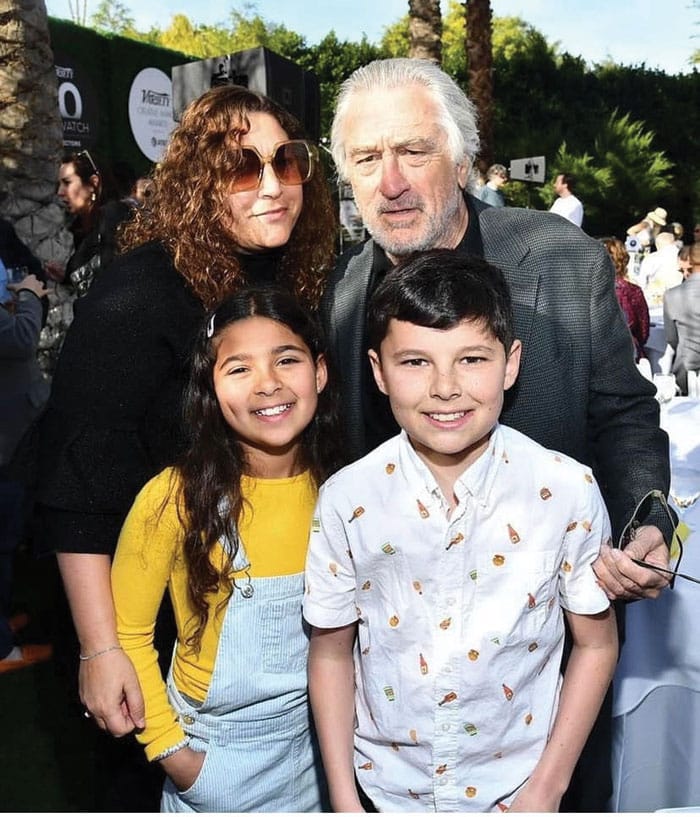
Malina Saval and her family with Robert De Niro at a 2018 Variety event in Palm Springs.
“Malina is the best combination of brilliant, brave and hilarious,” Josephs said. “Her award-winning article about tropes in Hollywood Jewish characters inspired me to cold-message her two years ago and find out how Jew in the City could help. Without realizing it, her passing mention of the Muslim PAC Hollywood Bureau created something revolutionary. Once I knew that every other minority group had formally organized to advocate for authentic depictions in Hollywood, we built the first and only Hollywood Bureau for Jews.”
JITC is currently raising funds to commission an “Impact Study” with a major academic entertainment group and building a fact sheet about Jews with Think Tank for Inclusion and Equity. “We’ve been going to DEI summits in Hollywood and are in talks with some studios about training showrunners and bringing in consultants when the strike ends,” said Josephs.
In January, Saval and Josephs spoke together on stage at the first-ever panel on Jewish representation in TV and film at the Sundance Film Festival in Park City, Utah, titled, “#MeJew: Antisemitism, Authentic Representation and Jewish Identity in Hollywood.“ The two spoke to a standing-room only crowd.
Regarding representations of Orthodox Jews, Josephs told Sundance blogger Vanessa Zimmer, “You never hear the story of a happy Orthodox Jew.” Josephs and Saval spoke together again on May 31 for a Jewish National Fund (JNF) event in Los Angeles titled “Hollywood, Antisemitism & Israel Exposed,” continuing their conversation from Sundance by dissecting Hollywood’s complicated history with Jews.
Saval’s connection with Israel is practically second nature, and she consistently uses social media to expose anti-Zionism.
Saval’s connection with Israel is practically second nature, and she consistently uses social media to expose anti-Zionism. In February, a CNN tweet about a terrorist attack in Israel said, “A car drove into people at a bus stop in Jerusalem Friday, killing a man and a young child in what Israeli police described as a ‘ramming terror attack.’” Saval was quick to correct such blatant bias, replying to CNN on Twitter, “A terrorist drove the car intentionally into a bus stop with the intention of killing Jews. The car did not drive itself.”
When I asked Saval if she considers herself a Jewish activist, her response was typical of her “get things done” mentality, as well as her innate humility. “I’m not big on labels. If you’re Jewish and you’re not an activist, then what are you doing?” she responded. “I never woke up one day and declared I’ll be an activist. I consider myself a Jew. The ‘activist’ part waters it down; if you’re not part of the solution, I think you’re part of the problem. For me, doing something is an involuntary response.”
Saval is especially committed to sharing how many Jewish customs “are filled with fun and joy.” She loves all Jewish holidays (though Passover cleaning arouses some anxiety), but feels most connected with Hanukkah. “If people really understood the meaning of Hanukkah, it’s an anti-assimilationist holiday,” she said. “It’s all about collective pride” (though she’s “not big on presents”). Saval also delights in the literal and metaphoric lights of Hanukkah. “The candles represent flickers of home, promise and community. As an avid photographer, you cannot get better photo props than a Hanukkiah.”
Her paternal grandfather, Samuel Saval, was a photographer and he gave Saval her first camera when she was eight years old. She especially loves portraits. Her photographs, many of which may be found on Instagram (@malinasaval) convey Saval’s fascination with all kinds of people.
As an author, entertainment journalist and storyteller herself, Saval is also bothered by what she describes as the sheer “unoriginality” on the part of antisemites, as well as those who create Jewish stereotypes on screen.
Nothing New
Many in the Jewish community take issue with how Jews are presented in Hollywood. But as an author, entertainment journalist and storyteller herself, Saval is also bothered by what she describes as the sheer “unoriginality” on the part of antisemites, as well as those who create Jewish stereotypes on screen. “You People,” a 2023 Netflix film about two families, one Jewish and the other Black, “wasn’t even funny,” said Saval.
As for Dave Chappelle’s controversial November 2022 monologue on “Saturday Night Live,” it was nothing new. “What was original about that SNL monologue?” Saval asked. “It’s not like he came up with new antisemitic jokes. Why do you need to express antisemitic lies to get laughs? It’s mind-blowing how many gifted artists acquiesce to this. And it brings down the overall quality of the work.”
“You People” was particularly disturbing to Saval. “You People” is what happens when our people are silenced,” said Saval. “There’s literally no Jewish mother who acts that way. It’s as if that character has never met a Black person before.” Saval added, “A lot of people are being extra cautious with that film and not talking about how antisemitic and dangerous it is. What is most dangerous about “You People” is that the Jewish stereotyping goes unchecked; the characters in the film don’t even have a chance to fully respond. It’s a manipulative tactic of slipping in nonsense about Jews and folding in with other points [about race] that are actually valid. And it continues to drive a wedge between Black and Jewish communities.”
Ever astute, Saval understands what many Jews may take for granted: Works such as “You People” are not only seen in America, but worldwide, given that Netflix is available in 190 countries. “There were people in Japan, Turkey or other countries watching it who may not even know that it [negative portrayals of Jews in the film] are a joke,” said Saval. “I understand that there’s a fear about standing up to this. But Jews are in trouble because we are afraid to stand up in defense of our own people.”
A Bright Future
Though she loves American comedies such as “Curb Your Enthusiasm,” Saval is a “huge fan of Israeli TV due to its authenticity,” and that includes the hit show, “Shtisel,” which debuted in 2013. Saval described the show as “not perfect, but at that point, it was the only show that showed an authentic representation, granted the characters were ultra-Orthodox.”
Capturing the human experience is essential for Saval, who has won numerous awards for her writing in Variety, including first place awards for essays ranging on topics such as what television gets right and wrong about autism, Canadian filmmaker Jean-Marc Vallée, and the passing of Howard Stern’s father, Ben, who died in 2022.
That explains why she has traveled to Slovakia three times to gather research for a book she is writing about state-sanctioned parental kidnappings in that country, and why she is also working with producers on adapting “The Secret Lives of Boys” as a TV pilot. In late June, Saval will bid adieu to her ten-year role as features editor at Variety to serve as editor-in-chief of Pasadena Mag which along with Los Angeles Magazine and Orange Coast, were sold to attorneys Mark Geragos and Ben Meiselas in December 2022.
Shirley Halperin, executive music editor at Variety since 2017, has worked with Saval on various essays. Halperin recently stepped away from Variety to become editor-in-chief of Los Angeles Magazine. Regarding Saval, Halperin told me, “I love her editorial judgment. She was one of the first people I met when I got to Variety, and of course, we completely hit it off. And we also had Israel in common,” said Halperin, who was born in Jerusalem.
In Saval, Halperin found a “willing partner to explore ideas; Malina was the one to actually do it, not as a martyr, but because she knows a good story when she hears one.” Halperin and Saval worked together to conceptualize Saval’s award-winning essay on Ben Stern.
“In the last few years, the conversation has changed to being inclusive. She [Saval] and I, as Jews, we really feel an empathy toward that,” said Halperin.
Saval described her upcoming move to Pasadena magazine as “a great opportunity for me to execute a creative vision from start to finish.” And that includes making space for stories about the city’s growing Israeli and Jewish community, including Chabad of Pasadena and Israeli post-doc students at CalTech.
“The new owners really wanted someone who knew the city inside and out,” said Saval, who described leaving Variety in late June as a “hard decision.”
“Pasadena needs her,” said Halperin. “They need her editorial view.” The two will work together, and both magazines share some resources.
For Pasadena magazine, Saval will cover everything from the city’s culture and diversity to culinary arts and fashion. “Of course,” she said, I’ll be continuing to write about my passion, the Jewish community.”
Saval has no plans to stop writing, creating visual content and speaking until Jewish caricatures on screen are obsolete. “When it’s time to report for duty, some people will not be there,” she said. “But there are those of us who will show up, and who will answer that call.”
Fast Takes with Malina Saval
Jewish Journal: Without naming names, have you met self-hating Jews in Hollywood?
Malina Saval: Yes. They’re either scared to express their Jewish pride, or afraid or unwilling to share thoughts about Israel on social media. They say they don’t identify closely enough with their Jewish identity. It’s an internalized shame.
JJ: What can American TV and filmmakers and writers learn from their counterparts in Israel?
MS: Israeli TV, when it comes to Jewish characters, are so much more nuanced. And there are some dud Israeli shows that we don’t get in the States. But on the whole, many American shows about Jews keep relying on these age-old stereotypes that are just lazy.
JJ: What has changed for boys in the 14 years since you wrote “The Secret Lives of Boys”?
MS: In 2009, there wasn’t social media like there is today. It’s just a different world today, with a veritable assault of stimuli; it’s overwhelming. One of the boys whom I interviewed later passed away from a drug overdose. You could do a comparison, but it wasn’t like it was easy being a teenage boy back then in 2009, either. What has changed the most is that no one was talking about teenage boys back then.
JJ: Why don’t more Jews answer the call to expose antisemitism and defend fellow Jews?
MS: It’s fear. There’s an internalized self-fear.As a result of antisemitism, if you tell a Jewish person enough times that they don’t count, they will eventually internalize it. Some are worried about losing their livelihoods if they speak out; they don’t want to get fired, or don’t think or trust that they’ll have the support, because for the most part, they won’t.
JJ: Are you afraid that you will ever be fired or canceled for speaking out about Jews and Israel?
MS: “Zionist” has become such a dirty word. Of course, I’m a Zionist. And if someone is going to stop reading my work and wants nothing to do with me because I’m Jewish, then good riddance. That’s not my problem; that’s their problem. I can’t pretend to be something I’m not. It’s a fool’s errand. It’s exhausting enough dealing with antisemitism, but to pretend you’re not as Jewish as you are is even harder.
JJ: What does Jewish joy look like in your home?
MS: My daughter attended Camp Ramah and made best friends there. Israel comes up a lot at home and I’m hoping for a family trip this fall. I speak Hebrew to my son and daughter when I can; they both had both a bar and bat mitzvah and Chabad of Pasadena has been supportive. We enjoy Shabbat dinners and lighting candles, and also have a very strong Jewish identity that is anchored to pop culture and good representations of Jews.
JJ: How did it feel when Howard Stern discussed your Variety essay about his father on-air?
MS: It was a dream come true. I meant everything I wrote in that essay. And Howard is an absolute genius; no one does a better interview than he does. He’s the best. I grew up listening to him talk about his relationship with his dad, and it affected my relationship with my dad. It was incredibly flattering that he spoke about the essay. If I ever had a fangirl moment, that was it.
JJ: Do you own any cherished Jewish heirlooms or items?
MS: My great-grandmother’s candlesticks from Galicia, Poland; travel [Shabbat] candlesticks from Brookline, MA; and tealight holders from an Arab shuk in Old City [of Jerusalem].
JJ: If you could visit a Jewish community in any country that you haven’t visited before, where would you travel?
MS: I’ve never been to Cuba and I’d love to go. And it would be an amazing place to photograph.
JJ: How do you define joy?
MS: Israel. Israel is my happy place. It’s not a perfect place. I’ve been there enough to know. But to me, it is the place where I feel most at home and connected, and it has the funniest people on planet earth. Because I’m a writer, when I visit Israel, everything is creative fodder.
Tabby Refael is an award-winning writer, speaker and civic action activist. Follow her on Twitter and Instagram @TabbyRefael
One beloved Israeli volunteer organization has now been able to quantify its impact in the billions.
Yad Sarah, an Israeli NGO staffed largely by volunteers that has become its largest nongovernmental social and healthcare service provider, reported earlier this month that its operations save the country’s healthcare system over NIS 5.5 billion (1.5 billion USD) annually.
Yad Sarah calculated the figures based on current hospital costs and how many days of hospitalization they prevented by lending equipment.
While Israel is renowned for its first-class healthcare and universal coverage for citizens and residents, the healthcare system still requires support due to a rapid increase in population, insufficient numbers of physicians and nurses, and a perpetual shortage of hospital beds.
Yad Sarah estimates its expansive social services save Israeli taxpayers hundreds of millions of shekels in personal healthcare expenses. With 123 branches and 7,000 volunteers, Yad Sarah aids more than 1,250,000 people annually and impacts one in every two Israeli families. In 2022, Yad Sarah reported their efforts reduced total hospitalization stays by 14,000 beds through providing at-home hospital equipment for patients, relieving strain on hospitals nationwide.
Israel’s leading volunteer organization also focuses on prescription drug distribution, legal services, caring for the elderly, a mobile dental clinic, a medical hotline, rehabilitation services, and more. In recent years, U.S. communities have been recognizing the value of Yad Sarah’s model and implementing their own lending centers; for example, Wheel it Forward in Connecticut, or the Durable Medical Equipment Re-Use program in Maryland.
“We are very proud of Yad Sarah’s contribution to the health of the entire country,” stated Rabbi Uri Lupolianski, Founder of Yad Sarah. “While it is impossible to truly understand the enormous value Yad Sarah provides to the people and their families who receive its services, by placing a shekel amount on the work our volunteers and staff do each year and the various forms of help we provide, we are able to better understand and appreciate the formidable impact it has had on Israeli society and its citizens.”