fbpx

May 4, 2023

Tortilla Espanola—The Classic Spanish Egg & Potato Dish

This past week, Neil and I had the great pleasure of visiting our daughter Rebekah in Madrid, where she is doing her semester abroad. Since arriving here in January, she has become enamored with this vibrant and lively city. She loves that the charming streets are filled with people enjoying life, day and night. That she and the 13 other American girls that she lives with can walk home from a nightclub at 3am without a care. That the metro is so safe and efficient. That the streets are clean and safe enough for children to play alone. 

In Madrid, there are only a few kosher restaurants and the butcher at the kosher market doesn’t always stock the items Rebekah wants, so keeping strictly kosher is tough in this city. However vegetarian tortilla espanola is the unofficial national dish of Spain and it is so popular that there are restaurants that only serve tortilla. Rebekah grew up eating my mother’s more rustic tortilla de patatas recipe, so finding tortilla in Madrid felt very familiar for her. Needless to say, it became a staple of her diet. 

Now let me explain, tortilla espanola is a fluffy fried omelette made with diced or sliced potatoes and fried onions. Tortilla means little cake and it is thought that this dish got this name because the layers of potato resemble a cake. Tortilla in Spain has nothing in common with the Mexican tortilla we know and love, except that both are round and they share the same name.

On our first day, Rebekah took us for lunch at her favorite tortilla cafe. Spain has been experiencing a heat wave, so on our arrival we were ready to cool down with ice cold cerveza. We ordered a whole tortilla and a side order of pimientos verdes, fried and salted little green peppers. In the United States, I generally don’t eat green peppers as they are hard to digest. But trust me, you need to order the pimientos verdes. They’re nothing like the peppers we are accustomed to. They’re heavenly. 

The tortilla arrived and it was huge and golden and beautiful. It is cooked in a pan, then flipped and cooked again until the outside is a beautiful honey color. Rebekah cut into it and served us each a piece, as if it were a cake. The inside is soft and a little runny and the pieces of potatoes are fried until tender but not golden and the fried onion adds a sweet, savory note.

Neil and I noticed that the cost of living is very high in Spain, but that eating well costs next to nothing. A whole tortilla costs 10 euro and a beer is only 2 or 3 euro. The typical salad is simple and delicious — sliced tomatoes with red onion, garnished with extra virgin olive oil, vinegar and coarse salt —and only sets you back 3 or 4 euro. I was pleasantly surprised that Spaniards are incredibly friendly and nice and helpful. They are so happy to meet you and always inquire where you are from and what you think of their food and their beautiful country. 

Needless to say that tortilla and beer was the best lunch we had in Madrid. A few days later, we traveled to Seville and I ordered tortilla for lunch again, twice. The ingredients are so humble but the flavor is incredibly delectable. Honestly, I would eat it every day if I could. 

—Rachel

Food historians think that tortilla espanola, like the French omelette and Italian frittata, is inspired by the herb-and-vegetable-filled Persian egg dish “kookoo sabzi”. In the 1500s, the Spaniards discovered the Incas in South America. They brought back lots of produce, including potatoes, which soon made their way into Spanish cuisine. 

This week we present the recipe for tortilla de patatas, lovingly handed down by Rachel’s Maman, who hailed from Larache, which was part of Spanish Morocco. It’s equally good served warm or at room temperature. It’s truly simple to make and it’s the perfect make-ahead dish to serve for any brunch, lunch or dinner. 

—Sharon  


Maman’s Tortilla de Patatas

8 medium russet potatoes, peeled and quartered
1 Tbsp turmeric
1 large onion, finely diced
10-12 large eggs
1 bunch fresh Italian parsley or cilantro, finely chopped
2 Tbsp chicken consommé powder
Salt and freshly ground black pepper
1/2 cup avocado or vegetable oil, for frying
1 lemon quartered, for serving

Fill a large pot halfway with cold water, then add the potatoes and the turmeric. Boil the potatoes over medium low heat, about 15 to 20 minutes.
When the potatoes are fork tender, drain all the water. Mash the potatoes coarsely, leaving some small chunks.
Preheat the oven to 400°F.
In a deep, heavy frying pan, warm a small amount of oil over medium heat. Add the onions and sauté until golden, then set aside.
In a large bowl, lightly beat the eggs. Add the parsley, the consommé powder and salt and pepper.
Add the warm mashed potatoes. Heat the remaining oil in the pan over medium high heat, then pour the egg and potato mixture into the pan.
When the tortilla is sizzling, lower the flame. Cover the pan and cook for 30 minutes.
Wrap the pan handle in foil and bake in the oven until the top of the tortilla is golden brown.
Cool for 20 minutes, then flip onto a serving dish.
Squeeze a dash of lemon over the tortilla and garnish with remaining lemon.
Serves 10 to 12 people.


Rachel Sheff and Sharon Gomperts have been friends since high school. They love cooking and sharing recipes. They have collaborated on Sephardic Educational Center projects and community cooking classes. Follow them on Instagram @sephardicspicegirls and on Facebook at Sephardic Spice SEC Food.

Tortilla Espanola—The Classic Spanish Egg & Potato Dish Read More »

The Swell App’s Deborah Pardes: Storytelling, Entertaining and Portobello Leek Soup

“Food is a gateway to conversations,” Deborah Pardes told the Journal.

As vice president of stories and voices at Swell, Pardes’ job is to ignite and continue conversations

Deborah Pardes (Photo by Alon Goldsmith)

Swell is a micro-podcasting app, where in 5-minute audio posts, people can share their opinions and expertise. They can also ask and answer questions, explore new ideas/concepts, connect with new friends and more.

On the Swell App, Deborah Pardes has a post, asking, “What’s in your bowl?”

You’re 10 years old, there’s an empty bowl. What food memory from your childhood fills it up?

For her, that food is holipches, also called holishkes. It is traditional Jewish cabbage rolls, stuffed with meat, rice, sweet and sour sauce and occasionally raisins.

Now a vegetarian, Pardes still enjoys the traditional dish. She uses Beyond Meat with quinoa or couscous. It’s the sweet and sour sauce that ignites that food memory.

For Pardes, in-person conversations are just as invigorating. After all, she said, isn’t food just a medium for connection?

“I hate eating alone,” she said. “I tend to have people over on Friday or Saturday nights. It’s really stretched me, because I’ve wanted to make it low-stress [and] not that expensive, but really robust and fun.”

When she entertains, Pardes’ go-to is lots of mezze platters. She serves a lot of dips, breads and other appetizers. “It takes the pressure off the main dish,” she said.

Pardes loves trying new things.

“When you mix vegetables and fruits, you have to have that right combination,” she said. “Mango is a hero fruit, because it can be dropped in a lot of things that work perfectly.

Pardes’ favorite is a nice starter soup.

“I’m a big fan of roasting something and then putting it in a soup, because it adds all that yummy taste to it,” she said. “I make this portobello mushroom and leek soup that people love.” The recipe is below.

When asked what she knows now that she wishes she knew when she started cooking, Pardes said, “Every food that you cook usually has an amazing natural flavor. Don’t be afraid to bring it out with heat or with salt or with the temperature change.”

As with food, what do people need to know about storytelling to become better?

“I think storytelling has to do with the ability to get out of your own way, just like cooking,” she said.

Imagine, whoever you’re talking to is someone who loves you and wants to hear what you have to say.

“Half the time, when we tell stories, we’re afraid of being judged,” she said.

Like cooking, storytelling is confidence.

Realize that person is enjoying the words you are weaving together in a format that creates an image. You are sharing something they didn’t know before. They are as happy to receive the story, as you are to share it.

Discover more about the Swell App and how it curates community and conversation.

For my full conversation with Deborah Pardes, listen to the podcast:

Watch the interview:

Follow Deborah Pardes on Swell at swellcast.com/dbpardes. Follow Debra Eckerling at swellcast.com/thedebmethod.

Portobello Leek Soup

4 portobello mushrooms

4 leeks

1 shallot (optional)

5 cups of water

Bay leaves

1 tsp fresh thyme

1 tsp salt

1 tsp pepper

2 tbsp white miso paste

1 – 2 cups regular coconut milk, depending on your taste/preference

Brush clean the portobellos; do not use water. Brush three of them with a bit of olive oil and roast for 20 minutes at 300°F.

Meanwhile, sauté the leeks (plus one shallot; it’s a nice touch) in butter or avocado oil until tender.

Add that fourth raw chopped portobello into the leeks. Stir in and cook a bit longer.

When the other three mushrooms are roasted, chop them finely and add to the leeks and the mushroom.

Add 5 cups of water. Raise heat to medium, and add some bay leaves, fresh thyme, salt and  pepper.

Boil for 10 minutes. Then simmer, partially covered, for about 10 more minutes.

Cool the soup slightly; discard the bay leaf

Add 2 tablespoons of white miso paste. Note: Don’t boil miso; add it now, not before.

Puree the soup in batches in a blender or food processor.

Return the pureed soup to the pan and add coconut milk. This makes it creamy, a tad sweet and a bit thicker. Be sure to use regular coconut milk, not light.

Cook over low heat until you serve. Garnish with parsley and maybe a few golden mushroom bits.


Debra Eckerling is a writer for the Jewish Journal and the host of “Taste Buds with Deb.” Subscribe on YouTube or your favorite podcast platform. Email Debra: tastebuds@jewishjournal.com.

The Swell App’s Deborah Pardes: Storytelling, Entertaining and Portobello Leek Soup Read More »

Pomp and Circumstance, Coronation Incense

Grand the gestures, great, big, surging,

proudly, patriotic, urging

optimism lacking stigma,

quite devoid of all enigma.


Pomp and circumstance’s marches,

under marble of the arches;

were like inspiring incense, written

by Elgar for the king of Britain,


less holy than the incense offered,

with David’s psalms together, proffered

in Solomon’s great temple, when

produced by ancient priestly men.


A song with which Jews end the service of Shabbat morning, אֵין כֵּאלֹהֵינוּ, “There is none like our God,” ends problematically.


אֵין כֵּאלֹהֵינוּ אֵין כַּאדוֹנֵנוּ

אֵין כְּמַלְכֵּנוּ אֵין כְּמוֹשִׁיעֵנוּ


מִי כֵאלֹהֵינוּ מִי כַאדוֹנֵנוּ

מִי כְמַלְכֵּנוּ מִי כְמוֹשִׁיעֵנוּ


נוֹדֶה לֵאלֹהֵינוּ נוֹדֶה לַאדוֹנֵנוּ

נוֹדֶה לְמַלְכֵּנוּ נוֹדֶה לְמוֹשִׁיעֵנוּ


בָּרוּךְ אֱלֹהֵינוּ בָּרוּךְ אֲדוֹנֵנוּ

בָּרוּךְ מַלְכֵּנוּ בָּרוּךְ מוֹשִׁיעֵנוּ


אַתָּה הוּא אֱלֹהֵינוּ אַתָּה הוּא אֲדוֹנֵנוּ

אַתָּה הוּא מַלְכֵּנוּ אַתָּה הוּא מוֹשִׁיעֵנוּ


אַתָּה הוּא שֶׁהִקְטִירוּ אֲבוֹתֵינוּ

לְפָנֶיךָ אֶת קְטֹרֶת הַסַּמִּים


Translation:

There is none like our God: none like our Lord. There is none like our King: none like our Savior.

Who is like our God: who is like our Lord? Who is like our King: who is like our Savior?

We will give thanks unto our God: we will give thanks unto our Lord. We will give thanks unto our King: we will give thanks unto our Savior.

Blessed be our God: blessed be our Lord. Blessed be our King: blessed be our Savior.

Thou art our God: thou art our Lord. Thou art our King: thou art our Savior.

Thou art the one before whom our ancestors made the fragrant offering of incense.


The last line of this song, “Thou art the one before whom our ancestors made the fragrant offering of incense,” appears to be anticlimactic, after praise of God as King, Savior and Lord. The apparent anticlimax implies that the fact that our ancestors used to offer incense to God, is greater than any of His titles.

In “Many in U.K. Greet King Charles’s Coronation With a ‘Take It or Leave It’ Shrug,” NYT, 4/30/23, Mark Landler writes:

When King Charles III is crowned on Saturday, he will undergo a ritual so rare in modern British history that it last occurred 70 years ago, roughly the wait between sightings of Halley’s comet. And yet the coronation has yet to capture the imagination of a Britain preoccupied by other concerns.

Images of the new king — in chocolate, in Legos and in wax — are popping up in bakeries, toy stores and at Madame Tussauds wax museum. Ancient relics of coronation, like the Scottish stone of destiny, are being delivered to Westminster Abbey for the ceremony. Charles and his queen consort, Camilla, are rehearsing every step of the service in a specially staged room at Buckingham Palace.

But in a recent poll of 3,070 adults in Britain by the market research firm YouGov, 64 percent of respondents said they had little or no interest in the coronation. Only a third said they were strongly or fairly interested in it. Among those aged 18 to 24, the number voicing little or no interest rose to 75 percent.

“Love for the royal family has sort of declined,” said Jason Abdalla, 24, an information technology worker outside a pub last Friday in the exclusive Mayfair neighborhood of London. “It feels like appreciating the monarchy is an older, more mature thing. I mean, my parents are into it. They love the royal family. It’s ‘take it or leave it,’ for me.”

Mark Landler’s report implies that in anticipation of King Charles III’s  coronation in Westminster Abbey, his Anglican temple, the new British monarch is not being offered  praise of value comparable to that of the incense formerly offered to God  by ancient priestly ancestors of the Jews in His temple, in a Jerusalem which,  since the time that King David purchased the granary of Araunah (2 Samuel 24:18-25), has always been in Israel and not in William Blake’s “England’s mountains green.”


Gershon Hepner is a poet who has written over 25,000 poems on subjects ranging from music to literature, politics to Torah. He grew up in England and moved to Los Angeles in 1976. Using his varied interests and experiences, he has authored dozens of papers in medical and academic journals, and authored “Legal Friction: Law, Narrative, and Identity Politics in Biblical Israel.” He can be reached at gershonhepner@gmail.com.

Pomp and Circumstance, Coronation Incense Read More »

A Bisl Torah – Transformed through Challah

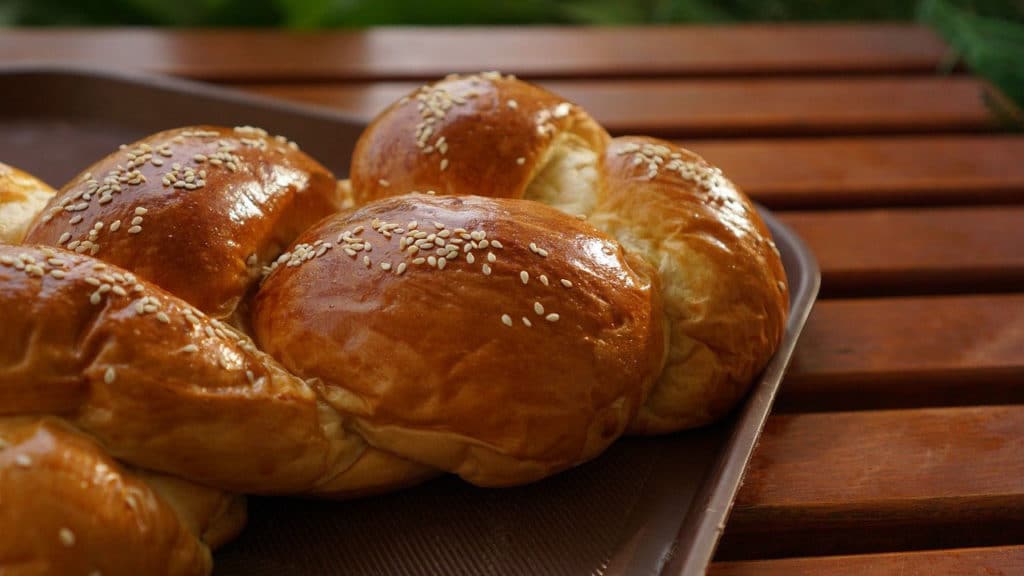
Throughout the year, different communities put on a “challah bake.” Hundreds of women come together to learn about this ancient Jewish ritual, connecting with our past and connecting with each other. This Thursday, Sinai Temple’s Sisterhood hosted our own evening of learning, baking, bonding, transforming and growing.
Because there is something special about making challah. We reenact the mitzvah of separating a piece of the dough that was traditionally reserved to sustain and feed the priests. Which means that every week, we transform our homes into places of giving and places of blessing. Making challah is involving ourselves in a ritual that was meant to nourish someone else in need.
Now, as we knead and braid the dough, we become nourished. We are transformed into future vessels that actively look for those who are lost or wanting, choosing to reserve a piece of our souls to give back and contribute to the brokenness of the world.
Challah transforms. Rabbi Hayyim Moshe ibn Attar comments on the idea of segulah. A segulah is something that possesses special, supernatural qualities, something we might view as a treasure or gift. We are told that when 40 or more women come together to bake challah, there is a segulah, a special power that emanates from the gathering.
But I dare say the segulah exists even when one person chooses to make challah. When we engage in rituals that have giving embedded within its core, we harness a spiritual superpower. The power to look beyond our panes of glass and wooden doors to hear who is crying, to see who is shaken, to feel the pain of the broken hearted. Challah powers a heart of generosity.
What a special opportunity to bake challah together. What a beautiful tradition that continues throughout the generations. Week by week, from our kitchens, let us be a treasure to the world.
Shabbat shalom

Rabbi Nicole Guzik is a rabbi at Sinai Temple. She can be reached at her Facebook page at Rabbi Nicole Guzik or on Instagram @rabbiguzik. For more writings, visit Rabbi Guzik’s blog section from Sinai Temple’s website.

A Bisl Torah – Transformed through Challah Read More »