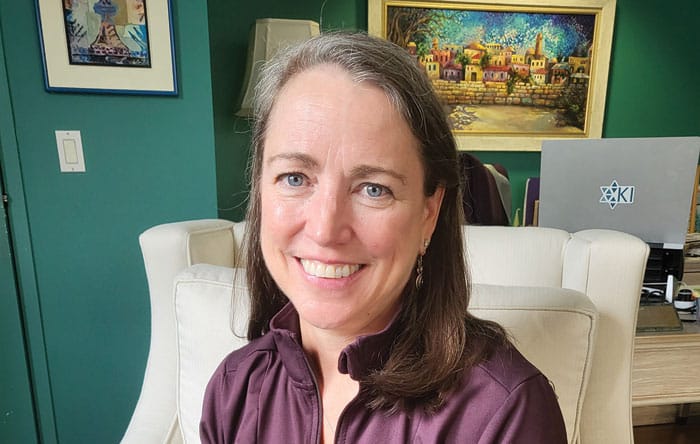
Seven years ago I walked off a cliff, quitting the tiny Trotskyist organization that had given my life purpose and a sense of belonging for over a quarter century. For a long time after, I knew only that I had no idea what I knew. As a middle-aged woman whose entire adult life had been defined by beliefs, this was hard to deal with. How much of what I’d fought for all those years had been flat-out wrong? Could it be that my former comrades—the often funny, brilliant, aggravating people I’d considered my surrogate family—were right to stick the course, while I was just a quitter? Had all those annoying people been right to say someday I’d regret not having kids? What on earth was the point of my life?
So I volunteered at a North London hospital near my home with my then-husband and tried to find some kind of Meaning serving lunches and teas to mostly elderly patients. An atmosphere of cheerful chaos prevailed in the ward, and feeling indispensable was a simple enough matter of successfully begging the kitchen for more servings of shepherd’s pie. I’d get lost in tasks and banter, patients would laugh at my stubbornly American way of saying “tomato,” and I’d forget to think about Meaning for a while. Afterward I’d walk home, stopping at my favorite Turkish-run fruit-and-veg shop for dinner ingredients, and my old life would overtake me. Because as I stood on the sidewalk selecting eggplant, I was terrified of running into one of the former comrades I loved, hated and missed so much it hurt.
I’d been won over to a set of ideas that had to be publicly upheld for membership, and quit when I could no longer say I truly believed them. But real attachment to a group like my party comes not through the head, what you believe, but the heart—what you feel. Life inside is infused with intensity, and you cling to this headiness against what you learn to call “a biological existence.” (“I hear Frank is taking a pottery class these days,” you might hear about a once-cherished comrade who’d joined the ranks of the cowards by quitting. “He’s just living a biological existence.”) An exhausting meeting is experienced as profound, both because it taps your need to sacrifice yourself and because the misery is shared. Laughter is sweeter during a grueling campaign. Few experiences in the world can be as stirring as singing “The Internationale” alongside fellow warriors, choking back tears, in honor of a beloved comrade who just broke your heart by dying. The love you feel for comrades inside an embattled, widely maligned organization is unlike anything you feel elsewhere.
And nothing enhances such love so much as hate against a common enemy. I’d have sincerely denied I hated anyone: I thought my heart was pure and I was fighting for the most righteous of causes. Righteousness can only be defined against evil, however, and every ugliness seems justified in the fight against evil. The capitalist class, other leftwing groups, “bourgeois feminists” and—maybe most of all—“Zionists”: Raging against these groups intensified our bonds to each other while summoning the basest emotions. Hate masquerading as virtue warmed a cold and lonely world.
I quit the party in 2016 only to find mainstream society infested with the same toxicity and divisiveness. It exists on both sides of the political spectrum, but I’m unavoidably more troubled by what I still consider my political home, the left. It’s there not only when radical “trans” activists howl down “TERFs” at “Let Women Speak” rallies where women try to assert their rights, but in comfortable living rooms where expressing respect for allegedly “rightwing” figures can get you uninvited from your mah jongg group. Certain books, newspapers, podcasters, news programs, children’s book authors are deemed out of bounds: Only a bad person would consider them. I regard this world and think: I’ve seen it all before. The authoritarianism I experienced in the party has gone mainstream. For too many people meaning, justice and a sense of belonging seems attainable only by demonizing and shutting down “enemies.”
“Dare to know” is said to have been the motto of the Enlightenment—meaning have the courage to think for yourself, even if it means going against your tribe. I can verify from painful experience that this is hard to do. Challenge those you love and you may find yourself out in the cold for a while, but you’ll make the marvelous discovery that the world is a more vibrant and rewarding place than you ever dreamed. Meaningful connections can be had with people you fundamentally disagree with when you learn to civilly engage with them. Intellectual riches can be found in places you long ago learned to dismiss. You may even conclude that good people exist everywhere. In short, you may find a truer source of meaning and love. And you’ll wonder what took you so long to face the cold.
Kathleen Hayes is the author of ”Antisemitism and the Left: A Memoir.”
The Santa Ana Unified School District (SAUSD) Board of Education approved two ethnic studies courses that Jewish groups say contain anti-Israel bias.
The course, titled “Ethnic Studies: World Geography,” passed by a margin of three votes in favor and one abstention; the other, “History 10 Ethnic Studies World Histories Course,” passed unanimously. StandWithUs alleged that the former course “promotes bias and bigotry against Israel and the Jewish people” and the latter “includes at least one book that promotes similar bias.” Unit 2 of the geography course, titled “Colonialism’s Impact on Migration,” states: “The concept of migration will be introduced and focus on the avenues through which colonial empires have maintained hegemonic influence over flows of migration within nations and internationally around the globe through genocides, tourism, wars, neocolonialism and settler colonialism.” It then provides several links to supplemental material, one of which is a January 2020 Middle East Monitor op-ed claiming that the Israeli occupation of the West Bank has resulted “a massive wave of ethnic cleansing that saw the forced removal of approximately 300,000 Palestinians from the newly-conquered territory.”
The op-ed particularly focused on Israeli military “firing zones” in the West Bank that have “ethnically cleansed Palestinians” and suffocated “the Palestinian way of life,” arguing that the sole purpose of these firing zones is to provide “an Israeli legal justification to confiscate nearly a fifth of the West Bank for future colonial expansion.” The op-ed cites the Palestinian villages of Masafer Yatta in the South Hebron Hills as an example of this. Left unsaid in the op-ed is that there has been a legal dispute between the Palestinians and Israelis since 2000 on whether or not the Palestinian were permanent residents when the area was declared a firing zone––which Jewish Telegraphic Agency (JTA) defined as a “firearms training ground”––in the 1980s, as Israeli law provides the military with the authority to declare an area a firing zone if the residents are temporary. In May 2022, the Israeli High Court of Justice unanimously ruled in favor of the Israelis, although JTA noted that that the United Nations, European Union, the Biden administration, some members of Congress and some Jewish groups were urging the Israeli government not to pursue further demolitions and evictions regardless.
The course then provides a list of “essential questions” about “European colonialism” and “American hegemonic actions” as well as the following question about Israel: “How has the settlement of Israelis after WWII changed the socio-economic status and sovereignty of Palestinians over time?”
Unit 4 of the course, titled “How Political Geography Marginalizes Minority Groups,” discusses “how the distortion of arbitrary geographic borders by Western colonial powers has caused famines, political corruption, and internal and external strife for first nations.” The unit includes a critique of “the plan by the United Nations to divide Palestine between Jewish and Palestinians areas” and “state sanctioned violence against Palestinians, Rwandans, and Kurds will be placed in their proper context as consequences of European imperial nation-making.” The unit also focuses on how the Israeli blockade of the Gaza Strip has affected Palestinians, providing a link to a video in the supplemental materials section on how it has adversely affected Palestinian fisherman in Gaza. Though the video acknowledges that the blockade is in response to Hamas, the terror group that rules Gaza, it doesn’t mention that, according to The Washington Institute, “Iran and Hezbollah have also smuggled weapons and rocket manufacturing materiel by sea, evading the Israeli blockade by dropping floatable items for Palestinian fishermen to pick up near the Gaza coast.”
“The World Geography course outline accuses Israel of state sanctioned violence against Palestinians, falsely framing Israel’s legitimate defense of its citizens against terrorism,” Jany Finkielsztein, a researcher for the CAMERA Education Institute, said in a statement to the Journal. “The Santa Ana School Board approved the Ethnic Studies World Geography course outline with clear evidence of its anti-Israel slant. CAMERA is alarmed by the upsurge in attempts to embed anti-Israel content into social studies courses.”
As for the World History course, the book referenced by StandWithUs is sociologist Michael Mann’s 2004 book“The Dark Side of Democracy: Explaining Ethnic Cleansing,” which will be used for teacher reference. Mann calls Israel “the main contemporary example of settler-conquerors,” arguing in the book that “for half a centuryIsraelis have been cleansing the occupied territories of native Arabs, most murderously in the late 1940s, renewed again in the Jewish landgrabbing of the past few years. Israelis have mainly cleansed within their own occupied territories, devising the typical settler state: democracy for the settlers, lesser rights for the natives.”
“The ethnic studies courses approved by SAUSD’s board falsely portray Jews as colonizers in Israel, erasing 3,000 years of their history and connection to their ancestral home,” StandWithUs CEO Roz Rothstein said in a statement. “They cover the Israeli-Palestinian conflict in a deeply one-sided and inaccurate way, and completely ignore Jewish refugees who fled or were expelled from Arab states and Iran. This violates the spirit, if not the letter, of California law regarding K-12 ethnic studies, as well as SAUSD policy about how to teach controversial issues.”
Simon Wiesenthal Center Associate Dean and Director of Global Social Action Agenda Rabbi Abraham Cooper said in a statement, “Perhaps the SAUSD is unaware that this curriculum masks its anti-Jewish and extreme anti-Israel propaganda as historical fact. American Jews across the US are the #1 target of religious-based hate crimes according to the FBI. We cannot have young impressionable students indoctrinated to such biases, distortions, omissions and lies about the Jewish people and the Jewish state of Israel.”
AMCHA Initiative Director Tammi Rossman-Benjamin similarly said in a statement to the Journal, “It is really a shame that California school districts are rushing to approve biased and bigoted curricula that will only serve to spread further hate, division and antisemitism among students throughout the state when it appears that the law mandating that such curricula be taught is not now, and may never be, operative. Unfortunately, school districts don’t know this yet. They are being misled into thinking they must act quickly to abide by the law by groups like the Liberated Ethnic Studies Model Curriculum Coalition, whose anti-Zionist educator activists are ideologically and financially motivated to ensure their curricular development and professional training services are widely adopted. But in fact, school districts do not have to, and should not move forward with costly, divisive, and bigoted ethnic studies programs unless and until the state legislature makes this bill operative.”
Rachel Lerman, general counsel and vice chair of the Louis D. Brandeis Center for Human Rights Under Law, told the Journal, “We suspect that Santa Ana’s curricula embraces the discredited antisemitic ideologies that were contained in the rejected first draft of California’s Ethnic Studies Model Curriculum. We are currently investigating. If that turns out to be the case, then Santa Ana is taking a very ugly road and one which they may come to regret.”
The board did not respond to the Journal’s request for comment.
It was 11:15 PM on Saturday night, and the energy in the room was frenetic – a group of journalists stood eager to report on the events of the day, and a fledgling nation waited with bated breath to read all the details.
But this was no ordinary Saturday night. It was Saturday night May 15, 1948. The new State of Israel – Medinat Yisrael – had been proclaimed by David Ben-Gurion a little more than 24 hours earlier, the British had just evacuated their last officers, and Arab armies were attacking from all sides.
The sound of teletype machines, typewriters, and printing presses filled the room, along with the crackle of gunfire in the distance. Editors scrambled to assemble the incoming communiqués, writers were working to articulate the details of the war, and emotions were running high. There was excitement in the air – but also great anxiety.
Would the hundreds of Haganah men and women fighters survive in the Kfar Etzion block near Hebron? Would Tel Aviv be destroyed by Egyptian Spitfire aircraft? Or by the two columns of Egyptian troops and artillery that just crossed the Southern border? What was the status of the battle for Jerusalem and the Old City?
On the diplomatic front, many questions remained unanswered. Did the United States recognize Israel? Would it lift the arms embargo? Will Russia recognize the new State? What would be the outcome of the UN Special Assembly session?
The very existence of Israel was at stake. Tel Aviv was blacked-out on Friday, Jerusalem was under a State of Emergency – the first order issued by a Jewish commander in almost 2,000 years – but a newspaper needed to be published.
The newspaper was The Palestine Post. Founded in 1932 as part of a Zionist-Jewish initiative, the newspaper’s intended audience was English readers in Palestine and nearby regions – British Mandate officials, local Jews and Arabs, Jewish readers abroad, tourists, and Christian pilgrims. The publication supported the struggle for a Jewish homeland in Palestine and openly opposed British policy restricting Jewish immigration during the Mandate period, and was considered one of the most effective means of exerting influence on the British authorities.
And then, suddenly, as if a mysterious hand flicked a switch, darkness descended upon the room. There had already been a blackout ordered for the entire country that day due to the new war, but the electric company succeeded in providing the office with power at 10:15 PM. Then, just an hour later, there was a new power failure and the paper had to wait to be published, if at all.
That was a most special day of course, and with a lot of determination, at 1:00 a.m. power was restored, the Linotype machines clanked back to life, and the most historic newspaper in 1,900 years barely eked out a single two-sided broadsheet.
The original May 16, 1948 newspaper.
Seventy-four years later, in 2022, Arthur Ganz, an art director who had a love for print, stepped into a Jerusalem antique store and his eyes lit up when he saw an original newspaper for sale.
As a child he had already developed an interest and appreciation of letterpress printing. In 1967, as a young impressionable 9 year old he had watched the mesmerizing rhythm of his grandfather’s Heidelberg printing press in Toronto. He watched as his grandfather’s hands, blackened by ink, turned on the hulking machine, and as tiny suction cups lifted sheets of paper, snapped them into place for the steel plates to mightily crash their impression on them. He remembers being handed the printed card – it was a wedding invitation – and how he ran his fingers over the paper, feeling its texture. It was an immersive sensory experience of sight, sound and the smell of fresh ink, all combined into one.
Those memories resurfaced that day in the Jerusalem store as he gingerly ran his hands over the antique newspaper. And at that moment he knew he had to buy it.
Excited to frame and hang it, he learned of some troublesome news. Displaying it on a wall would expose it to UV light which could make it not only fade and turn yellow, but also turn brittle. Historic documents need to be protected in acid-free archival materials and stored in cool dry conditions.
As a graphic artist he knew he could digitally scan the original, but that just wouldn’t do it justice.
He had a grander – some would say crazy – idea. “What if I were to reprint the newspaper using the exact same techniques as was done 75 years ago? Would that even be possible?” he asked himself.
And so, his journey began.
Using his many years of design and printing experience, along with some tenacity and persistence, he set out on a challenging mission. He located a company that still made letterpress plates. Entering the building, he was suddenly transported back in time … “It was like stepping into a time machine to 1977 when I had first started working at a printing company. Paper job tickets, a huge bellowed camera, dark room, light tables for stripping and opaquing film negatives, vacuum frames and acid baths for making plates. It was surreal.”
Together with a veteran cameraman he placed the original newspaper in the camera, and then watched excitingly as the headline “STATE OF ISRAEL IS BORN” and the image of Ben-Gurion appeared on a huge sheet of film.
He then supervised, and participated in, the many stages of platemaking – magnesium being exposed to UV light, then bleached, acid-sprayed in a huge steel tank, washed, gouged, and mounted on a block of cherry wood.
The magnesium letterpress plate, after being dipped in an acid bath.
With plate in hand, and beautiful 100% cotton paper from Cranes (the company that manufactures the paper used in US currency) procured, he located one of the few remaining places in America that had vintage presses large enough to print this heritage piece. But then his heart skipped a beat when he learned that it was an educational museum, and not a trade or commercial printer to the public.
Not to be deterred, he took a chance and called the director of the museum. He described the project, and the historic nature and conditions of the original publication, and his heart skipped a beat again when the director said “Let’s do it!” It would have to be done on a hand-operated vintage 1962 proof press and the process would be very slow – feeding one sheet at a time and rolling it over the plate with a significant amount of muscle, but at this point he was running on adrenaline. He rushed to the museum – a nostalgic and sentimental experience itself – where they mounted the plate, inked the press, and ran several test sheets to get the positioning and ink pressure just right.
“Here I was, printing something historic, in the same way it was done in 1948! The reproduction came out breathtakingly beautiful – all the nuances of the typography of the original newspaper – including uneven columns, broken type, and tiny impressions between individual letters – were authentically reproduced.”
He recalls the moment the first sheet came off the press: “Here I was, printing something historic, in the same way it was done in 1948! The reproduction came out breathtakingly beautiful – all the nuances of the typography of the original newspaper – including uneven columns, broken type, and tiny impressions between individual letters – were authentically reproduced. I thought it remarkably accurate and in many ways more beautiful and impactful than the original.”
There is really nothing that matches the tactile feeling of ink on paper. The relationship is so much more visceral than looking at a computer screen or smartphone. Running my hands over the sheet and feeling the impressions of the letterforms – just as I had done a child in 1967 – was just so exciting. And knowing how much work went into that single sheet of paper made it all the more meaningful.”
Arthur has always had a love and appreciation for design, printing, history, archaeology, and the modern miracle of the establishment of the State of Israel. All those interests converged into one with this project, and it allowed him to step back in time and connect to what that exciting day must have felt like 75 years ago.
He shared a parting and personal thought… “This paper – and the famous Bar Kochba coins – represent the bookends of the exile. Those coins were one of the last known expressions of Jewish sovereignty in antiquity and were minted in 135 CE. This newspaper, printed 1,813 years later, was one of the first expressions of Jewish sovereignty of the newly established State. It will always have a special place in my heart.”
Am Yisrael Chai.
A limited number of sheets were hand-printed and certified, and are available to those who would like to frame and display a most momentous day in Jewish history. For more information visit: www.State-of-Israel-is-Born.com
Yaffa Sacks is an educator who splits her time between Los Angeles and Israel.
At roughly 9 a.m. on Wednesday, April 26, the first group of small children, cheeks glowing with blue and white face paint, entered the main yard of Harkham Hillel Hebrew Academy in West Los Angeles. In their hands were small Israeli flags and strings tied to blue and white balloons, some of which promptly blew away, resulting in a few squeals.
The early childhood students were soon joined by a group of eighth graders, many of whom, merely half a decade ago, were sitting cross-legged on the cement, cheeks painted and helium balloons in hand. But now, in their final year at Hillel, they were tasked with bigger responsibilities during a Yom Ha’atzmaut ceremony for students and their families celebrating the 75th anniversary of the establishment of the modern state of Israel.
While Yom Ha’atzmaut is celebrated annually at many local Jewish schools across denominations, Hillel enjoyed a unique connection with Israel in 2023: Like the Jewish state, Hillel also turned 75 this year. Founded in 1948 in the basement of Beth Jacob Congregation in Beverly Hills, what began as a handful of students has expanded to Southern California’s largest and oldest modern-Orthodox day school, with over 600 students currently enrolled from early childhood to eighth grade.
“The legacy, founding and deep history of Hillel are closely intertwined with that of Israel and the development of the Jewish Community in West Los Angeles,” Head of School Rabbi Josef Fradkin told the Journal. “Hillel was the anchor Jewish educational institution upon which the community developed and grew over many years and generations.”
Multiple generations of administrators, teachers and alumni parents (and grandparents) attended the Yom Ha’atzmaut ceremony. “I have been working at Hillel for the past 30 years; my children are Hillel alumni and my grandchildren are all learning at Hillel,” said Morah Dalia Golan, Director of Ivrit (Hebrew) and Israel Education. “So celebrating Yom Ha’atzmaut with Hillel, for me is celebrating 75 years of both homes.”
According to Golan, plans for this year’s ceremony began the day after last year’s celebrations. “We have created (by our staff and myself) an exclusive spiral Israel education that is part of our yearly curriculum,” she said. “The students start learning about Israel from September, and on Yom Ha’atzmaut we celebrate our learnings.”
This year’s Yom Ha’atzmaut program showcased seven pillars of Israel’s success: Torah, chesed (acts of kindness), tikkun olam (repairing the world), aliyot (immigration), culture, Tzahal (the Israel Defense Forces [IDF]), Israeli innovations and peace.
Consul General of Israel Dr. Hillel Newman, who spoke at the ceremony, concluded his remarks with a heartfelt message to students: “See Israel as your second home. Israel will always be there for you.”
For Golan, the secret to instilling a love of Israel in students is “to teach Israel with love; to have the right staff who believe in our mission; to engage the parent body and make it always a community celebration.”
Fradkin added, “The secret to creating a deep love and commitment to Israel and Judaism is transmitting the underlying skills, knowledge, and understanding along with a healthy balance of personally meaningful, experiential learning.”
In honor of the IDF, a stuntman portraying an Israeli paratrooper dramatically descended down a rope over the side of a main building, landing on the playground.
In honor of the IDF, a stuntman portraying an Israeli paratrooper dramatically descended down a rope over the side of a main building, landing on the playground. Joyful music blasted through loudspeakers; Hillel’s seventh grade class released 75 white doves, while eighth-graders displayed an enormous Israeli flag during “Hatikvah,” Israel’s national anthem (the eighth grade boys’ and girls’ flag dance was a highlight of the program).
A quartet of “Bat Ami girls,” young Israeli women who help connect students with Israel, also performed. In a powerful ode to Jewish continuity, a Hillel student joined Rabbi Arik Wollheim, hazan of Beth Jacob Congregation, and Eitan Aharon, former hazan of Nessah Synagogue, in blowing large shofars.
“Since the start of the year, our theme has been ‘75,’” said Rabbi JJ Duchman, director of Experiential Learning. “It’s no coincidence that we share birthdays, with Hillel having such a deep love and passion for the Jewish state.”
Duchman takes particular delight in offering students experiential opportunities, and this year was no exception. At the conclusion of the ceremony, four CJ6-A aircraft flying in formation suddenly appeared in the sky to the excitement of the students and their families. The aircraft show honoring the Israel Air Force (IAF) was organized by Gil Lipaz, founder of Tiger Squadron, a Southern-California based flight formation flying team. Lipaz served in the U.S. Air Force (along with his brother, Rabbi Ron Li-Paz; their father and grandfather served in the IAF).
As the aircraft flew over Hillel, traffic came to a near standstill in the surrounding area, a bustling intersection of Beverly Hills and Los Angeles.
“Yom Ha’atzmaut at Hillel reaffirms the inseparable bond between our Kehilla and Medinat Yisrael,” said Hillel Executive Director Eitan Sender. “The state of Israel is not an individual experience, it’s a collective experience. Zionism is something which extends beyond the borders of any given piece of real estate. It’s an approach to the world that says that we as a people matter to human destiny and that by coming together, we create something more than we do as individuals.”
Asked what they loved most about Israel, students’ responses were varied: “Israel is home,” said one seventh-grader. “I feel really proud of Israel and America.” For their part, kindergarteners’ responses varied from “that’s where Safta lives” to “I love hummus.”
Hillel will celebrate its 75th anniversary with current families, alumni and the Los Angeles Jewish community on May 9 (Lag b’Omer) with a concert at the historic Ford Amphitheater, featuring performances by Avshalom Katz and his sons, Eitan and Shlomo Katz. For tickets, visit hillelhebrew.org
Ultimately, Hillel administrators believe that the most powerful element of Israel and Jewish education is love. “When it comes to the education of our children and the very future of Am Yisrael, the way to create pride and commitment is through love and joy,” said Fradkin. “Judaism thrives in a place of love and happiness. Our future depends on it.”
Tabby Refael is an award-winning writer, speaker and civic action advocate, and weekly columnist for The Jewish Journal of Greater Los Angeles. Follow her on Twitter and Instagram @TabbyRefael
Jewish Student’s Mezuzah Vandalized at Simmons University Dorm
An Orthodox Jewish student’s mezuzah was torn down from her dorm room door at Simmons University on March 27.
The Simmons Voice reported on April 24 that the student, Luciana Libis, reported the incident to the university and they are investigating the matter. “I was distraught,” Libis told the Voice. “What it meant to me, as an openly Jewish woman, is that a 5-inch by 1-inch by 1-inch box is too much space for me to take up at Simmons University.”
Chelsea Kranc, vice president of Simmons Hillel, told the Voice that the university “is doing the best they can at the moment.” “It’s always difficult when something like this happens on campus because we have to follow protocol…it takes more than a day to make change happen,” she said.
MI High School Superintendent Retires Following Anti-Israel Speaker at Diversity Assembly
The superintendent of Bloomfield Hills High School is retiring following backlash over the school hosting an anti-Israel speaker at a diversity assembly in March.
WDIV-TV reported that Superintendent Patrick Watson announced his retirement on April 18, citing “personal reasons” and family time. His last day will be July 31. “I firmly believe that our district is well positioned for future success,” he said. “I am thankful to have had the opportunity to serve the students, staff, and community of Bloomfield Hills Schools as your superintendent.” The assembly was not mentioned.
The anti-Israel speaker, Huwaida Arraf, reportedly called Israel an apartheid state that oppresses the Palestinians and kept referring to Israel as “Palestine.” After the assembly, both Watson and Principal Lawrence Stroughter issued letters apologizing to the community; Stroughter claimed that Arraf veered from her planned remarks that she and the school had agreed she would stick to. Stroughter has since been placed on leave.
Santa Ana Unified School District Approves Anti-Israel Ethnic Studies Courses
Santa Ana Unified School District (SAUSD) voted to approve two anti-Israel ethnic studies courses on April 25, according to StandWithUs.
One course, titled “Ethnic Studies: World Geography,” passed by a margin of three votes in favor and one abstention; the other, “History 10 Ethnic Studies World Histories Course,” passed unanimously. StandWithUs alleged that the former course “promotes bias and bigotry against Israel and the Jewish people” and the latter “includes at least one book that promotes similar bias.” The pro-Israel education organization noted that the geography course describes Israel as a “colonial empire” and provides supplemental material accusing Israel of “ethnically cleansing” the Palestinians. The book referenced by StandWithUs similarly accuses Israel of “ethnically cleansing” Palestinians and Arabs that is “backed up by American imperialism,” per The Daily Caller.
“The ethnic studies courses approved by SAUSD’s board falsely portray Jews as colonizers in Israel, erasing 3,000 years of their history and connection to their ancestral home,” StandWithUs CEO Roz Rothstein said in a statement. “They cover the Israeli-Palestinian conflict in a deeply one-sided and inaccurate way, and completely ignore Jewish refugees who fled or were expelled from Arab states and Iran. This violates the spirit, if not the letter, of California law regarding K-12 ethnic studies, as well as SAUSD policy about how to teach controversial issues.”
Students at CO Middle School Draw Swastikas on Themselves
An unspecified number of students at a Colorado middle school reportedly drew swastikas on themselves following a Holocaust presentation on April 28.
Lissa Staal, the principal of Campus Middle School in Greenwood Village, sent a letter to parents that what the students did “creates an unacceptable environment of intolerance and exclusion in our school community,” FOX31 reported. “When these events are reported to the administration, we address them immediately and those involved face disciplinary consequences,” Staal wrote. “We are also connecting with the Anti-Defamation League to discuss additional measures that we can take to interrupt these incidents of racism in our school.” She added that the school “will continue to work to educate our students around the impact of this behavior through our already planned No Place for Hate Awareness Week. We are providing Advisory lessons around the negative impact and trauma that hate speech, antisemitism, anti-ableism and the use of racial slurs have on the overall culture of our school environment.”
A spokesperson for the school district told the Journal, “We take matters like this very seriously and do not tolerate antisemitic or any hate-motivated actions or words. Campus Middle School Principal also met with ADL yesterday.”
Yeshiva University, UAE School to Hold Joint Jewish Studies Conference
Yeshiva University and the Mohammed Bin Zayed University for Humanities in Abu Dhabi will be co-hosting their first ever Jewish Studies conference.
Israel Hayom reported that the two universities will host a program called “Interacting Philosophies, Shared Friendships” in Abu Dhabi that will explore the similarities between Judaism and Islam, especially the influence of philosopher Moses Maimonides as well as foster dialogue between Jews and Muslims in the Middle East. A kosher dinner will be provided.
It was the summer of 2018, and my husband Daniel and I were in Edinburgh, Scotland for the second August in a row. I was producing his one-man comedy show at the Edinburgh Festival Fringe, the largest arts festival in the world, with 50,000 shows playing during the month in this majestic Scottish city.
We’d decided to participate in the Fringe to hopefully build up Daniel’s comedy career and get him gigs around the world – after all, this was where agents were looking for new talent – and because his grandmother lived in Glasgow. We could celebrate her 95th birthday with her and Daniel’s other family members.
We spent months preparing for the show. Daniel wrote it and revised it over and over again, and we did a practice run at the Hollywood Fringe. It took a long time to secure a venue, find accommodations, print flyers and reach out to reviewers. Daniel did shows six days a week and we spent the rest of the time staying up late at the local hangouts to make connections and flyering to get people to come to the show.
By the third week, we were so exhausted and a bit disappointed that a huge agent hadn’t discovered Daniel and told him, “I’m going to make you a star, kid!” just like in old timey movies. That’s what we anticipated would happen. But of course, life doesn’t work that way … especially when you’re in show business.
We were having trouble seeing everything we accomplished and all of the blessings Hashem had sent out way. We were able to spend time with Daniel’s grandma. We were in Edinburgh, a beautiful city, away from the hot and sticky summer in Los Angeles. We had packed out the show every single night. And we were having so much fun.
We focused on the end goal, which was unattainable and out of our control, instead of focusing on all the amazing experiences we were having.
We focused on the end goal, which was unattainable and out of our control, instead of focusing on all the amazing experiences we were having. One Sunday, though, when we decided to go to a random show about the comedy duo Laurel and Hardy, everything changed.
The show’s theater was small and seated only 30 people. It was in a black, windowless basement in an administrative building not designed for live entertainment. The one-page program describing the show noted that the two actors were accountants in England, and this was their first Edinburgh Fringe. It was clear that this was not a professional production. I prepared myself for a disaster.
However, once the actors came on stage and started performing, Daniel and I were thoroughly entertained. They were so convincing as Laurel and Hardy. They made us laugh and even earned some applause from the audience. There were a few small flubs, like when the guy playing Hardy almost fell off his chair, but other than that, it ran pretty smoothly.
At the end of the show, which turned out to be interesting and hilarious, the actors received a loud round of applause. As the audience members filed out of the room, I could hear one of the actors telling the other, “I think this was our best one yet!”
“Did you hear that?” I said to Daniel. “That’s so sweet.”
“He’s so happy,” Daniel said.
In that moment, when we heard the pure joy in that actor’s voice, we realized that we hadn’t been prioritizing the right things. Sure, it would have been nice for a huge agent to approach Daniel and make all of his wildest dreams come true. But was that realistic? And in the meantime, why couldn’t we be like these two accountants and just have fun?
From then on, Daniel and I relaxed and decided on a new goal: we were going to enjoy every last minute we were at the Fringe. We laughed with family and friends. We explored different parts of the city. And we had a lovely Shabbat with his grandma.
At the end of his run, when we weren’t even thinking about it, Daniel received a formal offer to sign with an agent and play in a bigger theater in Edinburgh the next year.
And you know what happened with that next show? Well, it was the best one yet.
Rabbi Amy Bernstein’s 28-year career has been evenly divided – 14 years as senior rabbi at Temple Israel, Duluth, Minnesota and 14 years at Kehillat Israel (KI) in Pacific Palisades, the largest Reconstructionist synagogue in the country.
She still sounds surprised at the way her life has turned out.
Growing up the daughter of a single mother in Atlanta, Bernstein felt most at home at her Jewish day school. “My safety was in going to school, being with teachers I adored and respected. For me to feel safe meant being part of the Jewish culture, Jewish worldview, Jewish assumptions about what we are here for.”
That safety was shaken up when, at 16, she came out as a lesbian. “The message was clear that a gay or lesbian relationship was completely outside the realm of holiness,” she wrote. “It was also clear that anyone living in a gay or lesbian relationship stood outside of the tradition, and any ‘family’ created out of such a bond could only be a mockery of a Jewish family.”
She felt estranged from her Judaism. And that self-imposed separation was painful. “My safety,” Bernstein explained, “always came from the wisdom of the Jewish tradition, the priorities of Jewish values lining up with how people lived their lives. The heartbreak for me was when those two were separated, when I had to leave yeshiva because it was not going to matter.”
But Bernstein was also taught that what you do, what you say, what you are in the world matter. Your neshama is what matters. When she came out as lesbian “all of that was being betrayed. They were saying ‘no, that isn’t what matters most.’Did you lie to me or leave a big part out? I wrestled a long time with that question. I was heartbroken.
“If my neshama is what matters, if how I act in the world is what matters — I am kind, I am honest, loyal, I love this tradition. I am always seeking to learn. You won’t teach me, and I am so hungry to learn. Nothing else about the person matters.”
Even though ”being out in the world without a Jewish context was really hard,” it was a decade before she found her way back to her faith after attending a Reconstructionist service at a gay and lesbian synagogue in Atlanta.
“In the theater world you age out very quickly. Playing the ingénue, you are done at 27. I really wanted something I was going to be better at as I got older.”
A graduate of Northwestern University, where she studied English Literature and Cultural Anthropology, Bernstein still had no idea what she wanted to do with her life. She had danced professionally, but didn’t want to be in a profession where careers were short. “In the theater world you age out very quickly. Playing the ingénue, you are done at 27. I really wanted something I was going to be better at as I got older.”She was working at a job in women’s healthcare when a rabbi recommended she pursue the rabbinate.
But when a chance to apply for the senior rabbi position at Duluth’s Temple Israel, she wasn’t sure it made sense. “I was amazed [Temple Israel] hired me,” she told the Journal. “I didn’t think a congregation in Duluth, or anywhere, would be ready for a female senior rabbi, or maybe at all. But certainly not an out lesbian.“
She was more confident when she auditioned for the senior rabbi position at KI.
“The deal was sealed when I taught Torah for my audition out here,” she said. “I came out from behind the bimah, holding the Tanakh in my hand, and just started. I picked the raciest part of the parsha, where Tamar seduces her father-in-law, rather than doing the safe part. I asked them to join me in getting the real gorgeousness out of this story, clothing, hiding, trickery and how it’s run through this family. They were so excited to have someone who was excited to learn with them.”
She still feels that excitement 14 years later. “They respond the way they did the first time – so beautifully to (my) enthusiasm about our tradition. They wanted somebody with intellect and warmth; I had to have chops, too.” Bernstein’s influence can be felt beyond Kehillat Israel. The rabbi’s podcasts, available on the Kehillat Israel website, have been downloaded over 250,000 times.
Closer to home, Bernstein remembers her mother’s reaction when she came out. “She handled the gay part fine — if it was somebody else,” Bernstein said. “Homosexuality was not the issue.It was that I was going to ruin her picture of walking down the aisle with her son-in-law. I looked like Susie Creamcheese — and she had a lot of assumptions about that. Eventually, though, she did come around.”
Fast Takes with Rabbi Amy Bernstein
Jewish Journal: What is your favorite Jewish food?
Rabbi Bernstein: Brisket.
JJ: If you could have a super power, what would it be?
Rabbi Bernstein: To talk to animals.
JJ: If you had not chosen the rabbinate, what would you be doing today?
One verse, five voices. Edited by Salvador Litvak, the Accidental Talmudist
One law shall be exacted for you, convert and resident alike, for I am the Lord, your God. – Lev 24:22
Rabbi Lori Shapiro Open Temple
Stating “one law or judgement,” this utterance from God is an unequivocal statement of democracy and, in the ancient world, a revolutionary innovation of governance; a seedling sprouting forth what would later become known as Liberalism.
As secular as the protestors rising up in response to Netanyahu’s judicial overhaul may be, the greatest arsenal in their decry for a pluralistic Israel stems from such Biblical utterances and imagery. From disruptive, poetic protestors dressed in red cloaks akin to “The Handmaid’s Tale” (Margaret Atwood’s dystopian world view with modern day Bilhah and Zilpah), to pithy statements from secular Israelis declaring at one protest: “The messiah’s donkey has had it,” Biblical utterances reign supreme in all matters of judicial reform.
Dissent through Biblical poetics has its antecedents to today’s protestors: Early Oleh, Tuvia Ruebner, and later Israeli poets Yehuda Amichai and Dahlia Ravikovitch. All borrow from a tradition born in the soils of ancient Israel where Jeremiah roamed the streets of Jerusalem with his laments. As the Biblical prophets modeled, the role of protest poetry is to declare emphatically that something is amiss. From posters to graffiti to chants, the images and sound bites from Israel these past weeks provide a reminder that even for secular Israelis, it is a Living Torah.
Rabbi Abraham Lieberman Judaic Studies, Shalhevet HS
Long before the Universal Declaration of Human Rights, the Torah a number of times (Exodus 12:49, Numbers 15:16 etc.) emphasizes the importance of equality before the Law.
Ancient codes of law like Hammurabi’s Code concentrated more on creating a peaceful environment and a social order and a hierarchy than focusing on individual human rights. Joshua A. Berman in his very informative book, “Created Equal, How the Bible Broke with Ancient Political Thought,” conclusively shows that the Torah brought about a significant change in the understanding of equality on many levels of human rights not practiced in the ancient world. Rabbi Samson R. Hirsch (1908-1988) in his commentary to this section, points out the fact, that the Torah in its first law-giving opportunity (Genesis 9:5-6), where it speaks of the higher dignity of human life as opposed to animal life, based itself on the premise that we are endowed with (Tzelem Elokim) the Image of Hashem. He writes: ”The fundamental concept for all law, that prerequisite for all human rights, is none other than Hashem.” He concludes his comments with the statement: “Moreover, there are to be equal rights for all, for the native-born and for the stranger; for (Ani Hashem) I am Hashem of them all.” The Talmud speaks much of the primacy of Kavod Ha-Briyot, the concept of respecting and honoring human dignity in every way possible. This verse charges us and refocuses us to remind ourselves that we are all part of the Human Family.
Rabbi Chaim Miller Author, Gutnick Edition Chumash and “Practical Tanya”
Most converts I know go through a period of disillusionment at a certain point in their journey. Converts often share how they are treated with suspicion and how they lack a sense of belonging. (Let’s not even start with the topic of dating.)
At first glance, this is absurd. Converts are the only Jews who actually chose to be Jewish. Shouldn’t they be celebrated as our heroes and heroines? Every convert is a living example that Judaism is compelling in the modern day; their great personal sacrifices to join our faith are both humbling and inspiring.
What goes wrong? Why do so many converts feel estranged?
Some Jews are primarily engaged with the ideology of Judaism, its lessons, values and sacred texts. Others are more culturally Jewish.
As someone who became interested in Jewish practice only in adulthood, I made the mistake of thinking that ideology was everything. It was only after years that it dawned on me: Israel stood at Sinai to receive the Torah as a community, which means that Judaism must never be practiced in isolation. Ideology and culture should always be wedded together.
Inevitably, converts tend to be inspired more by ideology and lack cultural Jewishness. On the other hand, those of us born Jewish can more easily “make do” with Jewish culture alone and not take the time to engage personally with Torah ideas and practice. Ideally, the two paths should be integrated, “One law shall be exacted for you, convert and resident alike.”
Miriam Yerushalmi CEO SANE; Author, “Reaching New Heights” series
The mountain peak is so close to the sun, but holds little of its warmth. Yet the valley, which is at the foot of the mountain far below, is full of the sun’s heat. The scientific explanation for this phenomenon is that the atmosphere of the mountain heights is too thin to contain the solar energy, but the valley has an abundance of the mechanism necessary to capture it. The Alter Rebbe actually provided this explanation over 200 years ago, in relation to helping us understand our needs and our abilities to contain the holiness of Hashem and His Torah in this world.
The law that Hashem gives us is the mechanism by which we can contain the warming energy of the holiness that He wants to bestow upon us. Up in heaven, where the angels function, while they are so much closer to Hashem than we are, they lack the atmosphere of Torah and mitzvot; they do not have the ability that a human being has to absorb such powerful kedushah and would be overwhelmed by its energy. Hashem’s law is meant to help us develop ourselves into vessels appropriate to contain Hashem’s kedushah. Those who have accepted G-dliness and reside in the proper atmosphere can absorb and utilize that inherent holiness. We are advised to be exact in our observance of the law, because that will enable us to absorb and retain a maximum of G-dly energy.
Rabbi Chaim Tureff Rav Beit Sefer Pressman and author, “Recovery in the Torah”
Was the Torah the originator of wokeism 3,500 years ago? The commentators note that this verse implies that a convert and a Jew by birth are equal. The laws are the same and God sees you the same. As the Chizkuni noted, the Torah is equally concerned for the well-being of a convert and one who was born Jewish. This reminds me of when I was a child growing up in the South. Whenever there was someone who converted to Judaism, they were introduced, “This is Charlie, he converted.” Even in Adam Sandler’s popular Hanukkah song there is a reference to Rod Carew converting (which he actually never did, but that is for another article).
One law for everyone implies how we treat another. Showing sensitivity with our speech. By introducing someone as a convert, we are making a public distinction about them. The Torah frowns upon this and in Baba Metzia it reminds us not to treat a convert any differently. It is one thing for someone to share their story and another for someone to do it for you without your consent. Even if one has good intentions, it can come across as a source of embarrassment or lashon hara. Ultimately, we all have things that we prefer to share on our own or don’t want to share publicly. It is incumbent to demonstrate sensitivity and understanding for each person as an individual. This leads us to honor each precious neshama.
On a typical Shabbat, when you walk into Chabad SOLA, the first thing you feel is the energy. You’ll hear men and women praying loudly and see a particularly excited man or two dancing on the tables during one of the more upbeat prayers. Children of all ages are running around, playing tag and giggling among one another. Rabbi Avraham Zajac and his wife Stery, who run SOLA, can be seen joining in, laughing with their congregants, generously giving out hugs and inviting newcomers to stay for lunch.
Rabbi Avraham Zajac
Someone unfamiliar with the synagogue may wonder: Is this a prayer service, or is this a party?
There is no question that people have a good time at the lively SOLA. But for the Zajacs (pronounced “Zions”), their work is about much more than having fun: It’s about serving their beloved community and bringing Jews closer to their Yiddishkeit at the same time. Now, with an ambitious expansion of the shul, the Zajacs are hoping to attract more families to the neighborhood as well as provide much-needed resources to the entire Jewish community of L.A.
Nineteen years ago, Avraham and Stery arrived in L.A. Chabad headquarters sent the couple, who was running a community center in São Paulo, Brazil, to L.A. to start a new synagogue. It would be located southeast of Pico-Robertson, one of the main Orthodox Jewish neighborhoods in town. At the time, there were very few families who lived east of Robertson.
“When we moved here, it wasn’t considered such a safe neighborhood,” said Avraham. “But the security situation in São Paulo was so bad that this was Gan Eden [the garden of Eden] for us.”
Chabad SOLA, which stands for Chabad-Lubavitch of South La Cienega, first opened in 2007. The synagogue would meet every Shabbat inside Cheder Menachem, the newly purchased Chabad boys’ day school across the street. Then, once the school started renovations, the Zajacs rented trailers on the lot and were there for a year and a half. A few families that had moved to the area quickly became regulars.
Josh Moorvitch, a lender and mortgage broker in real estate, joined SOLA when it opened.
“We were very inspired by Rabbi Zajac in his ability to connect with us and many other young couples and families,” he said. “Although the physical environment was definitely very humble in temporary trailers, the rabbi’s positivity and personal attention made it an easy transition for our family.”
When a large building across the street from Cheder Menachem at 1627 S. La Cienega Blvd became available, the Zajacs moved the shul there.
In addition to Shabbat services, they also offered daily minyans and classes. They became known for their epic Purim parties, which feature a DJ blasting music, gourmet food and drinks, separate dance floors for men and women and a red carpet with a photographer.
Pretty soon, word spread that this friendly and enthusiastic Chabad couple were building a community outside of the typical boundaries of Pico-Robertson. Jews of all different backgrounds — frum from birth, converts, secular, singles, married couples, seniors, young professionals, Sephardic, Ashkenazi — started coming, even if they didn’t consider themselves Hasidic.
“Regardless of cultural background, nussach [custom], level of religiosity, gender or age, SOLA is welcoming for all,” said the shul’s gabbai, Daniel Fishman, who has been going to SOLA since it began. “SOLA is more than a synagogue. SOLA is home for its congregants. It’s why my kids and I walk over two miles there every Shabbos, passing more than 30 fantastic shuls on our way.”
To outside observers, it was obvious that SOLA was on the up and up.
It made sense. Not only were the Zajacs and their community welcoming, and the prayer services and events enjoyable, but also rents and mortgages in Pico-Robertson were becoming too expensive, especially for young people.
Homes were listed at $1.5 million and above in Pico, while homes around SOLA were going for around $1 million or below. Rents were at least a few hundred dollars less per month, and people could get bigger places if they moved a little bit outside of what was dubbed the “’‘hood.” Once they heard that there was a nice shul they could walk to on Shabbat that was close to more affordable houses and apartments, many began their exodus east.
“Having a local shul on South La Cienega allowed for other families to afford homes and lower rent in this new location,” said Moorvitch. “Over these 15 years, the community has now expanded to east of Fairfax, to Venice Boulevard, attracting families from Carthay Circle and others from Beverlywood. Real estate values have doubled and tripled in some areas due to all the new families moving around Faircrest Heights and surrounding areas.”
SOLA got so big that they hosted separate minyans for Ashkenazim, Sephardim, teens and young professionals.
SOLA got so big that they hosted separate minyans for Ashkenazim, Sephardim, teens and young professionals. They also invited people to stay after kiddush, providing a catered lunch from Lieder’s every week, and hosted a singles lunch every Shabbat as well.
According to the Zajacs, they currently serve upwards of 500 adults and children every Shabbat. During the week, Avraham, who is a grandparent, teaches a number of classes, speaks to members of his community in private, organizes events with Stery and is actively involved in every facet of his synagogue.
On Shabbat, he gives animated speeches that weave in teachings from the weekly Torah portion, Hasidic tales and inspiration for his congregants. He speaks loudly, ensuring he reaches the hundreds of people who are listening. Many wonder: Where does he get the energy?
“Anyone involved in something that’s important and meaningful will be filled with energy.” — Rabbi Avraham Zajac
“Anyone involved in something that’s important and meaningful will be filled with energy,” he said. “The ultimate goal of what we’re doing is to bring Moshiach. That means we have to inspire people to really redeem themselves, break out of their boundaries, really reach their own promised land. We’re speaking about inner work that doesn’t happen from one day to the next. As the rabbi of Chabad SOLA, it’s very inspiring to watch other people’s journeys. If I can be part of that, and help them reach their promised land, that’s a big goal of my life.”
Years ago, Stery, an educator, made it her personal project to open up a Jewish Montessori preschool, which didn’t exist in L.A. at the time. After all, she knew how important it was to instill a love of Yiddishkeit in children.
“When other parents saw what I was doing, they were intrigued and signed up. We started with one classroom, and the following year, we had two.” — Stery Zajac
“I started it for my son,” she said. “When other parents saw what I was doing, they were intrigued and signed up. We started with one classroom, and the following year, we had two.”
There are now close to 100 students in the school, which caters to Jews of all backgrounds—the norm in many Chabad preschools.
“You have many families that identify themselves belonging to Conservative or Reform movement and they go to services in those synagogues,” Avraham said. “They did not send their children to Stery’s school because they were looking for a community. They were looking for best education you can find in L.A. It’s a badge of honor that families that are already part of other communities that have a preschool and educational systems understand the quality of the Jewish Montessori.”
While some families hope to keep their children in Jewish schools after they graduate from the Montessori, others plan to transition into public school.
“But after coming to our school, some of the Jewish boys want to wear a yarmulke and tzitzit,” Stery said. “It happens because they experience the joy of Yiddishkeit. The child feels it and wants to continue.”
The Jewish Montessori Preschool is a huge priority for the Zajacs. In 2014, they raised $4.5 million to purchase an 8,000-square-foot property at 1701 S. La Cienega Blvd., just steps away from the shul. After completing construction on the land, which used to be home to a luxury car dealer, their first item of business was to move the preschool from the shul to the new property in 2019. It’s now the permanent home for the preschool, and has a large and shady outdoor space for the children to play outside.
“When it comes to a community center, what is the greatest communal service you can provide?” said Avraham. “Without a doubt, the answer is anything connected to Jewish education. It’s education that impacts the next generation of Jews and gives them a happy, meaningful Jewish experience. The Lubavitcher Rebbe, who gave attention to everyone, would give additional time for people involved in educating young children. If you want to build a community and guarantee the continuity of the Jewish people, it all begins with education.”
Along with housing the preschool, the Zajacs have even bigger plans for their new property: They plan to make it into a multifaceted space for the community not just south east of Pico-Robertson, but also for any Jew in L.A. and beyond.
Through what they call The Eiden Project, they’re aiming to raise $13.5 million to build a women and men’s mikvah and spa, create a 4,000 square foot rooftop events space with two fully equipped catering kitchens and move the shul into the new building, which is a key priority.
“We are doing good and busting at the seams,” said Avraham. “If we get another 10 to 20 families, we’ll be in good trouble.”
The Eiden Project is expected to break ground in October of this year and complete the rest of the necessary work within an estimated 12 to 18 months. In total, the project will cost $20 million.
“The new building will enable us to do everything we’ve been doing for the past 17 years, but do it better. [It will have] a more comfortable synagogue environment, a nicer kiddush, a larger Friday night meal, a better kids program, a more attractive environment for singles, more Torah learning as well as add a local women’s mikvah, which is critically needed in our area.”— Daniel Fishman
“The new building will enable us to do everything we’ve been doing for the past 17 years, but do it better,” said Fishman. “[It will have] a more comfortable synagogue environment, a nicer kiddush, a larger Friday night meal, a better kids program, a more attractive environment for singles, more Torah learning as well as add a local women’s mikvah, which is critically needed in our area.”
Currently, women in Pico-Robertson who need to go to the mikvah on Friday nights or the holidays will walk all the way to Pico and Reeves, nearly a two-mile walk each way for some. Observant women need to walk to the mikvah after sunset, which can present some safety issues for them.
The mikvah at The Eiden Project will solve that issue.
“A woman cannot walk over an hour and go to the mikvah and walk an hour back at night when they have a family,” said Avraham. “This is a real need for all of the families that live in this area.”
So far, donations for the mikvah and other amenities have come in from people who go to SOLA, as well as the greater L.A. Jewish community. Earlier this year, SOLA’s marketing team, made up of members David and Chaki Abehsera, Justin Oberman and Chaim Berkowitz, launched a billboard and print campaign throughout L.A. with different slogans from The Eiden Project showing a variety of people.
There was a picture of a man with tattoos on his arms. It said, “You don’t need to be a Chassid to have a place in Eiden.” There was another billboard with a photo of women talking to each other that stated, “You don’t need to be married to have a place in Eiden.” The billboards were reflective of the mission that the Zajacs want to continue to fulfill and the experience of congregants.
“Rabbi and Rebbetzin Zajac have created a haven for an eclectic group of Jews from every imaginable background,” said Sarah Adivi, a member of the SOLA community who sends her children to the preschool. “Theirs is the first shul my husband Elan and I visited after becoming baal teshuva, and where we dropped any concern for whether we ‘fit the mold’ or not. At SOLA, there is no mold. Nobody fits, so everybody fits.”
Community member Chana Leah Lacesa echoed a similar sentiment.
“Rabbi Zajac is a true leader,” she said. “The community he has built is nothing short of incredible. He has always made time to speak to me and I truly feel heard and listened to. l feel so privileged to be a part of such a flourishing, active and dynamic space. This is at the same time that hundreds of other families want to speak with him as well. I am excited about to think of what the future holds for SOLA.”
The Zajacs named their venture The Eiden Project because of what the word “eiden” signifies. Their entire mission is to make Judaism not only meaningful, but also exciting to every Jew.
“The word ‘eiden’ represents the highest level of pleasure that God created. We can guarantee the continuity of Judaism and all our people if we celebrate all aspects of Jewish life with tremendous joy and pleasure.”
— Rabbi Avraham Zajac
“The word ‘eiden’ represents the highest level of pleasure that God created,” Avraham said. “We can guarantee the continuity of Judaism and all our people if we celebrate all aspects of Jewish life with tremendous joy and pleasure.”
The Eiden Project is emerging at a time when La Cienega Boulevard is going through its own changes. Many of the businesses and stores surrounding SOLA became vacant during the pandemic, which then gave rise to homeless encampments and frequent fires. But over the past year or so, the area has seen a bit of a revival. Small businesses are coming back, and some of the encampments have been cleared. A Beverlywood-esque housing development emerged in nearby Faircrest Heights, while numerous luxury apartment complexes are being built just to the east. And recently, the city repaved the street outside of SOLA, down a few blocks to the 10 freeway, ridding it of potholes and making it safer for drivers.
The Zajacs, who have witnessed how much the neighborhood has changed over the years, know that the Jews of L.A. have some concerns about where their city is headed. But for the rabbi, the benefits greatly outweigh the downsides.
“As people move out of L.A., many people are moving in, and it’s our responsibility to give them a home,” he said. “Housing is a problem, but we are a big part of that solution. We appreciate how objectively we are an amazing city. We will work to make it better. But we’re not gong from bad to good. We’re going from good to great.”