fbpx

March 15, 2023

montana tucker doug emhoff

Jewish Influencer Montana Tucker Interviews Second Gentleman Doug Emhoff at The White House

In October 2022, Montana Tucker, a Jewish influencer, singer and dancer, with more than 9 million TikTok followers, posted “How To: Never Forget,” a docuseries of her trip to Auschwitz. In a recent interview with second gentleman Doug Emhoff — the husband of Vice President Kamala Harris —  at the White House, spoke about the impact of his own trip to Auschwitz.

“I’m forever changed for being there,” Emhoff, Emhoff, the first Jewish spouse of a vice president, told her, explaining that he was struck by the desolation and the barbed wire.

Tucker, who made headlines traveling to Poland with her mother, Michelle, and documenting her trip in a series of two-minute TikTok reels, “How To: Never Forget,” which YouTube picked up and edited into a single, 20-minute video. Tucker told Emhoff that her Zaide, or grandfather used to wear a pin every day that said ‘I’m a Survivor, Never Again, Never Forget.’”

“…We can’t allow this to happen again,” she told him.

Emhoff said he met an 80-year-old Jewish woman who told him she lived her whole life hiding her Judaism but after seeing him speaking about Judaism, she decided she wanted to love the rest of her days proudly.

“There is an epidemic of hate going on right now. It’s not just against Jews, it’s not just antisemitism, it’s against so many groups,” he said.

“The more I’m doing, she keeps pushing me to do more,” Emhoff said of his wife.

Tucker said she was sad people are scared to speak out.

Emhoff said he spoke to Jewish youth in Texas and told them to be proud and live without fear.

“We have your back, you’re not alone,” he said, repeating his message.

The 23-minute YouTube video shows that Tucker goes to Auschwitz, where he grandmother was sent. Many family members were killed in the Holocaust.

“It’s really important to learn about this history,” she says in the video.

Tour guide Zak Jeffay takes Tucker to the last synagogue built in Krakow. She said her grandfather had a good relationship for years with people who suddenly called him a “dirty Jew.”

She said she once posted about her grandparents being Holocaust survivors and someone sent her a message saying the Holocaust didn’t happen.

She cried when standing in the forest where about 6,000 Jews were murdered.

Tucker says she realized she has lost more family members than thought.

“I literally wouldn’t exist if my grandmother didn’t survive from this terrible place,” she said.

Of the 1.1 million people killed in Auschwitz 900,000 were Jews.

She said she thought her talent was to dance and entertain.

“It’s now way bigger than that,” she said.

Watch the full interview with Doug Emhoff on Montana’s Youtube:

Jewish Influencer Montana Tucker Interviews Second Gentleman Doug Emhoff at The White House Read More »

Not Really Sephardic: Why Has Extremism Hijacked My Heritage?

I will never forget the 10th of February, 1983. I was in my second year of yeshiva studies in Israel. The country was deeply divided over the Lebanon War that broke out several months earlier. Anti-war protests raged throughout the country, including on February 10, 1983, when the “Peace Now” organization held a large rally in Jerusalem. A right-wing counter demonstration was held opposite the Peace Now rally, and as tensions reached a boiling point, one of the counter-demonstrators violently launched a live hand grenade into the “Peace Now” crowd. Nine of the “Peace Now” protesters were injured and one person – Emil Grunzweig z”l – was killed. This day went down in Israeli infamy as the first time someone was killed at a political rally. I remember listening to the chilling reports on the radio with my friends. We were shocked and horrified, and the country was outraged.

Someone needed to step up and bring calm, comfort and unity to a very angry and divided Israeli society. One person did. His name is Rabbi Shalom Messas, and he was the distinguished, beloved and highly regarded Sephardic Chief Rabbi of Jerusalem. In the midst of those tumultuous days, here is what Rabbi Messas said:

“I reach to out to all segments of the sacred community of Israel, and I do so with a heavy heart, shocked and terrified from this terribly sad act of violence that ended in bloodshed, an expression of baseless hatred that agitated us and threatened to rock our very foundations. It is such acts that destroyed our Temple and caused our long exile from this land, and I pray that this will not be repeated. I appeal to every member of our society saying: let us remove all causes of strife and division in our country, tear down the walls of separation that divide people, and expel baseless hatred from our society. Let us behave with respect and tolerance towards one another, and let us especially be careful to preserve the ethic of respecting human beings and human life.”

Rabbi Messas’s unifying words were spoken in the spirit of the tolerant and moderate Sephardic tradition that he came from. Sephardic rabbis historically shunned religious and political extremism, choosing instead to seek peace and foster calm and unity through their words. 

Rabbi Messas’s unifying words were spoken in the spirit of the tolerant and moderate Sephardic tradition that he came from. Sephardic rabbis historically shunned religious and political extremism, choosing instead to seek peace and foster calm and unity through their words.

As a Sephardic Jew who was raised with the classic Sephardic principles of tolerance, respect and religious moderation, I lament the contemporary absence of these values in today’s Sephardic rabbinic leaders, especially in Israel. Gone are the peaceful words of Rabbi Messas, or those of the 20th century Tunisian Rabbi Halfon Moshe Ha-Kohen, who wrote:

“It is important for us to recognize the value of each human being created in the image of God, and to avoid conflicts between any human beings – amongst Jews, between Jews and Christians, or between Jews and Muslims – for when it comes to humanity and our lives on this planet, we are all brothers.”

The beautiful classic Sephardic tradition has been eclipsed, indeed hijacked, by Sephardic pretenders to the throne, who hold the titles of “Sephardic Chief Rabbi” or “Sephardic Rosh Yeshiva,” but whose words are a far cry from the tradition they claim to represent.

Israeli society is in turmoil and chaos, and rather than trying to bring people together, Sephardic rabbis are unfortunately known today as the ones who sow the seeds of division through their inflammatory public rhetoric.

In his recent Saturday evening lecture, Sephardic Chief Rabbi Yitzhak Yosef weighed in on the current dispute dividing Israel society, the proposed judicial reforms. He did so by launching a personal attack on retired Supreme Court Justice Aharon Barak:

“They asked him on the radio if there’s a God? He said he doesn’t believe. They told him to lay Tefillin (phylacteries) and say the Shema prayer. How embarrassing, an 86-year-old man doesn’t know how to say the ‘Shema Yisrael’ verse. That’s a Jew? All of the state and religion problems are because of these people, these heathens.”

Do Rabbi Yosef’s words bear any resemblance to those of his predecessors who encouraged “respect and tolerance towards one another”? Does Rabbi Yosef really believe that his personal attack on Aharon Barak will help bring people together, which was the traditional societal role that his Sephardic predecessors assumed? Or is he now reduced to being an instrument of sectarian Israeli politics, simply trying to score political points with his base? Is this what the Sephardic Chief Rabbinate has become?

When violence claimed Emil Grunzweig’s life at a political rally, Rabbi Messas was shocked and saddened by the bloodshed of a fellow human being. But today, with tensions at an all time high at political rallies, and the potential of violence being ever present, the prominent Sephardic Rosh Yeshiva Rabbi Meir Mazuz recently praised Baruch Goldstein’s 1994 massacre of 29 Palestinians in a mosque. Rather than shunning violence, he praised it, with a baseless claim that it “saved Jewish lives.” Are these the “words of wisdom and tolerance” we should expect from a Sephardic Rosh Yeshiva?

Rabbi Shlomo Amar, the former Sephardic Chief Rabbi of Israel and the current Sephardic Chief Rabbi of Jerusalem, claims to know why Israel was struck with aftershocks from the devastating earthquakes in Turkey and Syria. “It’s a direct result,” he recently said, “of the rise of LGBTQ rights in Israel.”

I can unfortunately fill the pages of this newspaper from cover to cover with more examples of current “Sephardic rabbinic rhetoric,” but instead I will ask a question: how did this happen? How has the tolerant, unifying spirit of Sephardic rabbis been replaced by such divisive words?

In his book “Dear Zealots: Letters from a Divided Land,” the late Israeli author Amoz Oz remarks:

“Jewish immigrants from Middle Eastern and North African countries brought (to Israel) a generations-old heritage of moderation, relative religious tolerance and the custom of living in good neighborly relations, even with those who are different. Conversely, European ultra-Orthodox fanaticism secludes itself inside a walled ghetto and defends itself against anything different. These forms of European fanaticism are now erasing the moderation of Middle Eastern Jews.”

Indeed, the moderate religious lifestyle that Sephardic Jews practiced in their countries was supplanted in Israel by influences of Lithuanian and Hasidic brands of ultra-Orthodoxy. This happened because shortly after their arrival in Israel, thousands of poor Sephardic children were recruited into the Ashkenazi ultra-Orthodox yeshiva system, where they ultimately adopted the yeshiva lifestyle, black-hat mode of dress and insular worldview of those communities. They were taught that their parents and rabbis practiced a “weaker” form of Judaism in their countries, but now that they live in Israel, they should abandon that for this “stronger and more authentic” brand of Judaism.

This transformation of the Sephardic population led to the emergence of young rabbinic scholars who were ethnically Sephardic but ideologically entrenched in the ultra-Orthodox worldview. They no longer spoke the language of tolerance, moderation and unity, but instead saw themselves as part of the religious war against secularism and the modern world. Rabbis such as Shalom Messas were a small carryover from the Sephardic past, and once they passed away, they were replaced by rabbis who preferred toxic language over words of peace and unity.

In the early 1950’s, in a newly-born Israeli society plagued by poverty, ethnic strife and security threats, Sephardic Chief Rabbi Benzion Uziel – an exemplary rabbinic scholar and thinker of the classic Sephardic tradition – boldly declared:

“Let us conduct ourselves in the paths of true peace, respecting each other’s opinions and feelings, as well as respecting the differences amongst the factions in our country. Let us remove all language of hatred, animosity and provocation from our midst, fulfilling the Biblical verse You shall love truth and peace.’”

Rabbi Uziel’s words are as powerfully relevant today as they were when he spoke them. It’s sad that no Sephardic Chief Rabbi speaks this way today.

The loss of the classic Sephardic rabbinic style of leadership is a tremendous loss for the Jewish people – Sephardim and Ashkenazim alike. For the sake of the Jewish people as a whole, I continue to hope and pray for its return.


Rabbi Daniel Bouskila is the director of the Sephardic Educational Center and the rabbi of the Westwood Village Synagogue.

Not Really Sephardic: Why Has Extremism Hijacked My Heritage? Read More »

Schwarzenegger Encourages People to Reject the “Path of Hate,” Calls Antisemitism “Horrible Loser Ideology”

Renowned actor and former California Governor Arnold Schwarzenegger posted a 12-minute video on March 6 urging those who espouse antisemitism and other forms of hate to renounce their “horrible loser ideology” and take control of their own lives instead.

In the video, Schwarzenegger recounted his recent visit to Auschwitz and suggested that such a visit will make one realize that fighting against hate and prejudice is a lifelong battle to ensure that the Holocaust never happens again. That’s why he urged people to reject “the path of hate,” recounting how his father, who was a Nazi soldier, and other men he knew growing up in Austria “drank to numb their pain.” The pain wasn’t just from the war injuries, but also because they were guilt-ridden for being suckered into “a horrible, loser ideology.”

 The “Terminator” star warned those who believe in antisemitism and hate that while it’s easier to scapegoat others for their problems, they won’t “find fulfillment and happiness.” “It’s the path of the weak,” he later added. “It breaks you.” Schwarzenegger also pointed out that “there has never been a successful movement based on hate.” “Nazis? Losers,” Schwarzenegger said. “The Confederacy? Losers. The Apartheid movement? Losers. I don’t want you to be a loser. I don’t want you to be weak.”

Instead, Schwarzenegger encouraged those who believe in antisemitism and hate to “pull yourself away from that anger and that hate, eventually you will start to feel empowered.” 

“Choose strength,” he said at the end of the video. “Choose life. Conquer your mind. You can do it.”

Special Envoy to Monitor and Combat Antisemitism Deborah Lipstadt tweeted that his video was “moving” and that “his message about the strength that comes when a person chooses to turn from the path of hate is indelible.”

Jewish groups thanked Schwarzenegger for his message.

“Thanks @Schwarzenegger for your resounding, robust condemnation of #antisemitism and for your unflinching support of your allies and friends in the Jewish community,” Anti-Defamation League CEO Jonathan Greenblatt tweeted.

The Simon Wiesenthal Center Founder and Dean Rabbi Marvin Hier and Associate Dean and Director of Global Social Action Agenda Rabbi Abraham Cooper also thanked Schwarzenegger in a tweet.

StandWithUs CEO and Co-Founder Roz Rothstein, the daughter of Holocaust survivors, noted in a tweet that Schwarzenegger’s video has already garnered millions of views. “Let’s hope this makes a difference,” she wrote. “Thank you Arnold.”

Schwarzenegger Encourages People to Reject the “Path of Hate,” Calls Antisemitism “Horrible Loser Ideology” Read More »

Is Ron DeSantis Channeling Neville Chamberlain?

The statement by Florida governor Ron DeSantis that Russia’s war against Ukraine is just a “territorial dispute” and is not “a vital American interest” has set off a firestorm of debate, finger-pointing, and, inevitably, comparisons to the Hitler era. But are the Nazi analogies completely unfounded this time?

The controversy began when Fox News host Tucker Carlson asked possible GOP candidates if they consider “opposing Ukraine in Russia” to be “a vital American national strategic interest.” Carlson is a skeptic of U.S. support for Ukraine and the way he worded the question made it more likely respondents would take his side.

Carlson could have asked simply whether the U.S. should continue supplying weapons to Ukraine. Instead, he added the word ‘vital’— “necessary for the success and continued existence of something,” according to the Cambridge Dictionary; derived from the Latin word for “life.” That left the door open for the candidates, even those who support aid to Ukraine, to say that doing so is not necessary for America’s existence. Gov. DeSantis turned out to be the one who stepped through that open door.

Not only did DeSantis take Carlson’s bait, he compounded matters by mischaracterizing the nature of the Russia-Ukraine conflict. “While the U.S. has many vital national interests,” DeSantis said in his written reply, “becoming further entangled in a territorial dispute between Ukraine and Russia is not one of them.”

The patently erroneous term “territorial dispute” invoked by DeSantis (or his speechwriters) is reminiscent of a blatant misstatement about the Russians  made by President Gerald Ford. In his October 6, 1976 debate with Democratic challenger Jimmy Carter, Ford asserted that “there is no Soviet domination of Eastern Europe.” He named Soviet-occupied Poland as an example of a country that supposedly was “independent.”

Ford was widely criticized at the time. DeSantis is now on the receiving end of similarly withering denunciations. Former New Jersey governor Chris Christie declared that DeSantis “sounds like Neville Chamberlain talking about when Germany had designs on Czechoslovakia.” Senator Lindsey Graham said, “The Neville Chamberlain approach to aggression never ends well.” It certainly didn’t end well for the Czechs.

In 1938, Hitler demanded that Czechoslovakia surrender its western region, known as the Sudetenland, which had a large population of ethnic Germans. The Nazi leader presented the matter as a territorial dispute, not a threat to the existence of Czechoslovakia.

The British and French decided it was not in their vital interest to confront Hitler. So they pressured the Czechs to surrender the Sudetenland in exchange for Hitler’s promise not to make any additional demands. The Munich agreement was signed. Chamberlain declared that he had delivered “peace in our time.” President Franklin D. Roosevelt said he “rejoiced” that “the outbreak of war has been averted.” Less than six months later, Hitler invaded and occupied the rest of Czechoslovakia.

The Russian war against Ukraine is not a dispute over some piece of territory. The Russians never limited their attacks to the Donestk or Luhansk areas in eastern Ukraine; recall that the invasion began with an all-out assault on the Ukrainian capital of Kyiv. Vladimir Putin’s statements that Ukraine should be part of Russia illustrate his goal of conquering the entire country.

The broader problem here is the question of what constitutes a “vital American interest.” Tucker Carlson and other isolationists or fellow-travelers have embraced an extremely narrow definition. And they are far from the first to have adopted such a perspective.

During the Holocaust, President Roosevelt saw no American national interest in taking even minimal steps to interrupt the Nazis’ mass murder of European Jews. In 1973, Secretary of State Henry Kissinger advised President Richard Nixon that even “if they put Jews into gas chambers in the Soviet Union, it is not an American concern.” In 1994, President Bill Clinton refused even to jam radio stations that were inciting the massacres in Rwanda, because he did not perceive any American economic or strategic interest in getting involved.

Note that none of those types of intervention would have involved putting American lives in danger. Bombing the railways to Auschwitz would not have posed any additional risk to American pilots who were already targeting other railways in the vicinity. Putting economic pressure on the Soviet Union or interfering with inciting broadcasts in Rwanda would not have endangered American lives. Neither does sending U.S. weapons to Ukraine.

Most Americans believe that our country should stand for something bigger than the mere pursuit of economic or strategic advantages. Values and ideals stand at the core of the concept of American exceptionalism. A definition of “American interests” so narrow as to exclude interrupting mass murder abroad or assisting U.S. allies against aggression betrays that cherished concept.


Dr. Medoff is founding director of The David S. Wyman Institute for Holocaust Studies and author of more than 20 books about Jewish history and the Holocaust. His latest is “America and the Holocaust: A Documentary History,” published by the Jewish Publication Society & University of Nebraska Press.

Is Ron DeSantis Channeling Neville Chamberlain? Read More »

A Jewish American Amid Israel’s Blue and White

Arriving from JFK airport, I was unsure how I would feel visiting my wife’s family in Israel. I had always experienced a sense of belonging in the Jewish State. But with an ultra-nationalist government in power, I wondered whether the country still represented or welcomed liberal Zionists like me who prayed in egalitarian synagogues.

I settled in with my wife and daughter in Jerusalem’s Baka neighborhood. I felt at home amid its upscale boutiques, cafes, and old Arab stone houses.

Yet Baka also crystalized the liberal Zionist dilemma. The area’s old stone houses once belonged to Palestinians who had abandoned their homes; a tangible reminder that the Israel I identified with came at a high moral cost.

I had believed that Israel was at heart a pluralistic nation, which would eventually reject the occupation’s cruelty. But when the ultra-nationalists came to power last December, the Israel I’d known was reduced to a nation of my imagination.

This realization was especially painful because I adored my wife’s family, regarding their country as a bond between us. Many of my relatives had participated in the protests opposing the government’s proposal to neuter the Supreme Court, which would enable the governing coalition to enact their far-right agenda, without judicial interference.

The protests gave me hope that Israelis would resurrect the liberal Zionist dream. Yet the rallies were squarely focused on the courts. There was no call to confront the West Bank settler movement; the moral cancer that metastasizes with every checkpoint search, every eviction in East Jerusalem, every new settlement outpost.

Our first night in Jerusalem, my wife, daughter and I met my sister-in-law Abby and brother-in-law Simon, at a cafe. They told me that a rally was scheduled for the next day at the Knesset, Israel’s parliament. I said I wanted to go.

 “There are concerns the right will send thugs into the crowd to stir up violence,” Simon said. “Nobody will think less of you if you decide not to go.”

How could I not? The protestors were fighting to keep Israel a true democracy; to preserve the core of the nation which was essential to my Jewishness.

Besides, what happens in Israel does not stay there. Because Israel has such a large impact on Jewish identity, the Jewish State’s rightward turn has emboldened the religious and political right within America’s Jewish community, turning many Jews off to both Israel and Judaism. In joining the protest I would be adding my voice to the struggle against Israel’s ultra-nationalist agenda, while standing up for America’s Jewish left.

I walked the three miles between Baka and the Knesset. Before I could see the rally I heard it. There were speeches in Hebrew, a language I didn’t understand. Then I heard a chant that needed no translation. Democrat Ya! Democratic Ya!

As I approached the Knesset building an immense throng marched in an unwieldy circle that at points became a scrum. The speeches had ended and I watched from the perimeter.

Nearly everyone was festively waving large, Israeli flags. The marchers were obscured by the sea of blue and white. It was a peaceful scene.

I was lifted by a feeling of camaraderie, similar to what I experienced when seeing American flags displayed in the aftermath of 9/11.

The protestors broke into song. I recognized Banu Choshech Legaresh, which is about light banishing darkness. It was sunny and warm, and the night seemed far off.

Later, a relative explained that in past political clashes the flag had been monopolized by Israel’s right. But during the democracy movement the left had reclaimed the blue and white as their symbol. The flag waving protestors seemed to convey the message that while the ultra-nationalists had their sphere of influence in the West Bank, they would not get their wish to impose their fanaticism on everyday Israelis.

On Shabbat my wife, daughter and I gathered with 50 of our relatives, at a kibbutz in the desert. This was my Israel.

By the end of the trip the protest and embrace of family had exorcised the feeling of estrangement that I had arrived with. At the airport I looked at a news site. The headline on my phone jolted me back to the reality of Netanyahu’s unholy resurrection: “ELEVEN PALESTINIANS KILLED DURING ISRAELI RAID IN NABLUS.” That is also Israel.

One day I hope to see mass protests with Israelis waving Palestinian flags alongside the blue and white. That may be far off, but perhaps the democracy movement will spur a comprehensive rethinking of where Israel needs to be.

It is unclear whether the protests will scuttle the designs of the Israeli right. Still, the hundreds of thousands of Israelis who have taken to the streets makes it clear that the Jewish State’s center is insistent on living in a pluralistic, democratic nation.

Israel is not the nation I want it to be. But the pride I felt amid the waving blue and white flags was enough. For now.


Ben Krull is an attorney and free-lance writer, living in Brooklyn New York.

A Jewish American Amid Israel’s Blue and White Read More »

Updated FBI Report: Antisemitic Hate Crimes Rose Nearly 20% in 2021

The FBI released a supplemental report on March 13 finding that antisemitic hate crimes rose 19.6% from 2020 to 2021.

The supplemental report found that the number of antisemitic hate crimes rose from 683 in 2020 to 817 in 2021; additionally, the report chronicled 109 antisemitic assaults in 2021, a 16% increase from the year before. The total number of antisemitic hate crimes consisted of “a little more than half of all religion-based hate crimes in 2021,” per the Anti-Defamation League (ADL). The total number of hate crimes amounted to 10,840, “the highest level recorded in more than two decades,” according to the ADL.

“The supplemental hate crime data released today confirms what ADL predicted at the time of the initial release – reported hate crimes for 2021 reached record high levels,” ADL CEO Jonathan Greenblatt said in a statement. “Data drives policy. Moving forward, law enforcement agencies must urgently commit to hate crime data collection and reporting, and Congress must make it mandatory for state and local law enforcement agencies that receive federal funding to participate in the FBI’s hate crime data collection efforts each year. Absent comprehensive and inclusive data, policymakers will lack the critical information that is needed to address these concerning trends.”

He added: “With antisemitic incidents up across the board in nearly every category we track, and with the FBI data now reflecting a 19.6 percent increase in reported antisemitic hate crimes for 2021, a whole-of-government, whole-of-society approach will be needed to address these extremely disturbing trends. Hate crimes are message crimes; they are uniquely harmful and deeply personal, both to the individual and to the group of people who share the individual’s characteristics. It is essential that, as we craft policy solutions and dig into the hard work of addressing hate crimes, we take a community- and victim-centered approach.”

The American Jewish Committee similarly said in a statement, “We welcome additional data in the 2021 Hate Crimes Statistics Report and thank the FBI for efforts to bridge the gap from the incomplete data in the report, which is the only official record on the state of hate in America. Supplemental hate crimes data was report from 96 reporting agencies in nine states and reflects hate crimes data from major Jewish population centers such as Los Angeles and New York City. We applaud the Biden administration for its efforts to tackle the rise in hate across the country, specifically antisemitism, with the rollout of its action plan, the [Department of Justice]’s United Against Hate initiative. The supplemental data was collected through the FBI’s outreach to agencies that were not able to meet the March 2022 deadline to submit data to the National Incident Based Reporting System. Underreporting of hate crimes is a problem for all targeted minority groups that regularly face incidents of hate.”

Simon Wiesenthal Center Associate Dean and Director of Global Social Action Agenda Rabbi Abraham Cooper said in a statement, “Simon Wiesenthal Center reiterates its call to the FBI for the creation of a Special Taskforce on Anti-Semitism. We reiterate our call on social media giants to stop extremists – from terrorists to anti-Semites – from leveraging their powerful marketing platforms used to mainstream hate into our everyday lives.”

Updated FBI Report: Antisemitic Hate Crimes Rose Nearly 20% in 2021 Read More »

Travels With Darley talking about SEASON TEN!

Thank you to Travels with Darley for joining me on my podcast!

Lisa and Darley at the NYC Travel and Adventure Show Feb 18, 2023

Recognized in Forbes for her “PBS Travel Empire,” Darley Newman is the creator and host of Emmy Award-winning series “Travels with Darley” and “Equitrekking” broadcast on PBS, Amazon Prime, Ovation TV JOURNY, Wondrium and networks in over 85 nations. Having led production teams in over 25 nations and 26 states, her filmmaking adventures include traversing one of the world’s largest salt pans in Africa, free diving in South Korea, swimming with sharks in Dubai and biking the WWI ‘red zone’ in northeast France. Her series takes viewers to remote and stunning locations to reveal fascinating global cultures, adventure and cuisine, and inspire viewers to break out of their comfort zone to learn more about the world. She’s received six Daytime Emmy Award nominations, for hosting, writing, producing and best series, and has been honored with two Telly awards and the North American Travel Journalist Award. She recently completed her 10th season and 59th half hour of “Travels with Darley.”

Check out Season 10 of Travels With Darley:

Travels with Darley Season 10 Promo from Darley Newman on Vimeo.

Darley-Newman.com

DarleyCNewman.com

Travels with Darley 10th Season Special Edition T-Shirt https://www.darleycnewman.com/shop

Follow Darley on Instagram // Twitter // LinkedIn // TikTok // Facebook

Darley Newman and Lisa Niver at The Mar Vista Sept 16, 2019

Lisa Niver:

Good morning. This is Lisa Niver from We Say Go Travel and I’m so honored to be here today with Darley Newman. Hi Darley.

Darley Newman:
Hi Lisa. Good to see you again.

Lisa Niver:
In a short amount of time we’ve been so lucky to be together in real life in Los Angeles, in New York. Who knows where we’re going to meet up next besides here on the internet.

Darley Newman:
Maybe Türkiye?

Lisa Niver:

I hope to go with you there. Congratulations first of all on 10 seasons with your PBS show. That’s really incredible.

Darley Newman:

Thank you. We’ve done a lot of episodes now. 59 half hours. I’ve written a lot of scripts.

Lisa Niver:

It’s really impressive. Congratulations just to even get started at all — let alone to get to 59 episodes. I know that you’ve done a lot of different things with video, with production, with travel. Tell people a little about how you got on this path because I’m sure you have people come up to you all the time and say you have my dream job.

Darley Newman:
Oh my gosh. Totally. You know, it is a dream job. It’s a lot of work but I love it. I figure if I’m going to be working every day anyway I might as well work on something I love and get to travel. That’s really why I started the series. I caught the travel bug early and I wanted to try and see the world and thought if I have to be in an office every day how am I going to go out there and see the world. I don’t want to wait until I retire. I want to do it now.

So, I came up with the idea for my first series on PBS which was Equitrekking and did 35 half hours of and went horseback riding all around the world and learned so much doing that series and really felt like the theme of what I was doing is similar to what I’m doing now with traveling with locals and getting those insights from people who live in the destinations.

That’s what I do with Travels with Darley and now we’ve been everywhere from Los Angeles to Little Rock Arkansas and Türkiye and Istanbul and France and a lot of different places but through that local perspective on what it is like to really live there and be there and also the history and culture and, of course, the food because food is so important in life in general.

READ MORE ON WE SAID GO TRAVEL


Travels With Darley talking about SEASON TEN! Read More »

The Saudi-Iran Shocker

It wasn’t that long ago that our biggest concern about China was their surveillance balloon over Montana.

Nor was it so long ago that the most important news out of Iran was the uprising against the government in the wake of the tragic death of Mahsa Amini, or possibly their decision to ship military drones to Russia.

And it seems like just yesterday that the most prominent headlines from Saudi Arabia were about the challenge of the West balancing between oil prices and human rights.

It seems like just yesterday that the most prominent headlines from Saudi Arabia were about the challenge of the West balancing between oil prices and human rights.

But last Friday, these three countries blew a gaping hole in the conventional thinking of Middle Eastern geopolitics when Iran and Saudi Arabia announced a historic agreement that had been brokered by China to restore diplomatic relations between the two countries. For years, the Saudis and Iranians had been fierce rivals, skirmishing through military proxies and dividing up the region into two equally determined coalitions. But the animosity between the two regional heavyweights had fundamentally altered the power dynamic in this critical part of the world, shifting the overriding priority away from Arab hostility toward Israel and toward a Saudi-led enmity against Iran.

Israel had realized significant benefits from this altered landscape, most notably through the establishment of the Abraham Accords with four Gulf states but also through unofficial relations with Saudi Arabia. Because most of the countries in the region had decided that their dislike for Israel was not as great a priority as their fear for Iran, Israel was able to form unlikely partnerships with a number of its former adversaries – and diminish the importance of the Palestine conflict in the process.

Although the Saudi-Iran deal is not yet finalized (and may never be, given the mullahs’ unpredictable history in such matters), the anti-Iran coalitions on which Israel has been relying are now at great risk. It’s not yet clear what concessions Saudi Arabia may receive as part of this nascent agreement, but if the acrimony between the two countries is lessened, there will also be a diminished incentive for the Saudis to strengthen their connection with Israel or to make it official. It is no coincidence that only hours before this agreement was announced that The Wall Street Journal ran an exclusive story outlining an offer that Saudi officials had made to the United States regarding potentially joining the Abraham Accords.

According to the Journal report, Saudi Arabia told the White House they would be willing to join the Accords in exchange for a range of security guarantees, arms agreements and civilian nuclear capability from the U.S. These conditions have been non-starters with American presidents of both parties for many years and would normally be dismissed out of hand this time too. But on a dramatically transformed Middle East landscape, President Biden will be forced to consider this offer much more seriously.

The prospect of a newly-empowered Iran presents a dire threat to both Israel and the United States. So an official partnership with Riyadh becomes even more important for the Israelis. Meanwhile, the U.S. had already lost influence in the region to Russia during the war in Syria, and China’s enhanced presence in the Middle East would create even more difficult challenges for American interests.  The increased tension in relationships between the U.S. and Saudi Arabia that has developed in recent years has been a problem for Biden, but a manageable one. Watching both of the region’s strongest powers move into China’s orbit would be a full-on crisis.

All of which will make it harder for Biden to reject the new Saudi proposal. His advisors already see the Ukraine war as something of a test case for a similar conflict in Taiwan in the not-too-distant future, and they are already scrambling to match China’s relationships in Africa, Latin America and the Pacific Rim. A Chinese foothold in the Middle East is something to be avoided at all costs.

Just last week, it looked like the most important matter in Israeli politics was the domestic battle over Benjamin Netanyahu’s proposed judicial overhaul. That now seems like a long time ago.


Dan Schnur is a Professor at the University of California – Berkeley, USC and Pepperdine. Join Dan for his weekly webinar “Politics in the Time of Coronavirus” (www.lawac.org) on Tuesdays at 5 PM.

The Saudi-Iran Shocker Read More »

Have You Heard of the Jewish Joan of Arc? Part II

In last week’s column, I described the extraordinary story of a 19th-century Moroccan Jewish teenager named Solica Hatchouel, also known as Sol HaTzaddikah (“the righteous Sol”) or Lalla Suleika (“holy lady Suleika”). In some ways, she was a Jewish Joan of Arc, yet most Jews have not heard of her. 

Solica was falsely accused of converting to Islam, and then wanting to return to Judaism, a grievous crime punishable by death. She refused repeated offers to convert to Islam (as well as repeated marriage proposals, including, it is believed, an offer by the sultan’s son). Even the hachamim of Morocco begged her to comply because the Jewish community was also at risk, but Solica refused to abandon Judaism. Rather than decide her fate himself, the sultan placed her case into the hands of the cadi, or an Islamic judge and court.

Solica’s final words are astonishing: “Do not make me linger — behead me at once — for dying as I do, innocent of any crime, the G d of Abraham will avenge my death!”

That sealed Solica’s fate. The Jewish community was mortified to learn that she was sentenced to beheading on market day in 1834. The executioner first made sharp cuts in her neck, hoping she would finally agree to convert. Solica’s final words are astonishing: “Do not make me linger — behead me at once — for dying as I do, innocent of any crime, the G d of Abraham will avenge my death!”

Believing she would still relent, the executioner cut off her limbs, but still Solica would not convert. Some believe that Solica Hachuel was beheaded on June 5, 1834, while others claim the date is unknown and hold the annual hilloula (pilgrimage) to her tomb in May or June to coincide with the passing of Rabbi Haim HaCohen, another Jewish tzaddik (saint) who also is buried in the Fez Jewish cemetery. 

Of that dark day in Fez, Eugenio Maria Romero, a Christian scholar, wrote, “The Moors, whose religious fanaticism is indescribable, prepared, with their accustomed joy, to witness the horrid scene. The Jews of the city … were moved with the deepest sorrow, but they could do nothing to avert it.” Romero claimed he interviewed those who knew Solica, including her parents, for his 1837 book, “El Martirio de la Jóven Hachuel, ó, La Heroina Hebrea” (The Martyrdom of the Young Hatchouel, or, The Hebrew Heroine”).

I’ll spare readers the details of the incredible trouble the Jews of Fez endured to secure Solica’s body, the blood-soaked earth beneath her, and especially her head, and to properly bury them in accordance with Jewish law. Those details are not for the faint of heart, but I’m always amazed at the lengths Jews will endure to ensure proper Jewish burial, whether for loved ones or strangers. 

Solica was buried in the Jewish cemetery in Fez, in a space normally reserved for the hachamim. Each year, thousands of Moroccan Jews make an annual pilgrimage to her tomb, but amazingly, she is also considered a saint for some Muslims. For nearly 200 years, Moroccans have believed that Solica intervenes on behalf of sick children; many baby girls are named after her. 

And many songs, as well as several books, works of art and even a film have been made about this remarkable young woman. Nineteenth-century French painter Alfred Dehodencq famously depicted her execution in his painting “Execution d’une juive au Maroc” (“Execution of a Jewess in Morocco”). Jewish mothers often sang to their young daughters in Ladino about Solica and the harm of jealousy and undesired romantic pursuits.

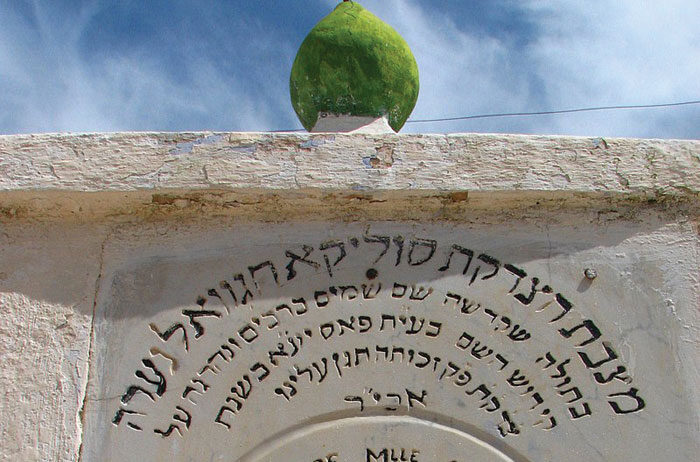
Inscribed in both French and Hebrew, her headstone, which still stands in Fez, reads, “Here rests Mademoiselle Solica Hatchouel born in Tangier in 1817 refusing to enter into [in French — rentrer, to return] the Islamic religion. The Arabs murdered her in 1834 in Fez, while she was torn away from her family. The entire world mourns this saintly child.”

She is one of the few women in Jewish history who, in death, has been treated as a tzaddika. In contemplating her refusal to convert to Islam, I believe that such an act would have been anathema to everything the teenager believed in her heart as a Jew who truly loved and feared G-d. It also would have been extremely difficult for a girl who grew up in a home where her father hosted Talmudic classes to renounce her Judaism. 

But I also believe that Solica didn’t want to be the newly-converted wife of a Muslim man who had forced her to convert to Islam. Sadly, forced conversions often occurred in Arab and Muslim countries. Solica was executed only five years before the Jewish community of Mashhad, Iran, was forcibly converted to Islam. Amazingly, the community lived as crypto-Jews for several generations and many of them may now be found on the East Coast, with synagogues and rich traditions of their own.

How many of us today would have the courage that a 17-year-old Jewish girl in Morocco demonstrated nearly 200 years ago? 

How many of us today would have the courage that a 17-year-old Jewish girl in Morocco demonstrated nearly 200 years ago? I’m moved to tears contemplating how many young Jews today choose to distance themselves from their Jewish identity, while this teenager chose death over being disconnected from her Judaism. 

In learning about Solica’s story, it’s easy to stop at her death. But Solica was a daughter, a sister and a member of a vibrant Jewish community; I can’t imagine the lifelong pain and trauma that her parents, siblings, loved ones and her community, including the hachamim, endured. It wouldn’t surprise me if that trauma lasted several generations. It also wouldn’t surprise me to meet Moroccan Jews today who are descended from Solica’s family. 

Before being executed, Solica recited the eternal words of the “Shema Israel” prayer. She was born a Jew and died a Jew, in an Arab land that more often than not has sheltered Jews throughout their 3,000-year history in the country. 

In fact, Morocco is the only Arab (and Muslim) country to fund restoration or renovation of Jewish cemeteries, holy sites and neighborhoods, and is home to the only Jewish museum in the Arab World, Casablanca’s Museum of Moroccan Judaism. “Morocco has never forgotten the Jews and Jews have never forgotten Morocco nor Moroccan Muslims,” Zhor Rehihil, director of the Museum of Moroccan Judaism, told U.S. News and World Report in 2021. “In Morocco, there are Jewish footprints everywhere: from the ‘mellahs‘ (Jewish quarters) to temples, cemeteries, synagogues, butcher shops and even schools. How do you want to forget your other half? And I say this as a Moroccan Muslim woman.”

Twenty years ago, in May 2003, 12 suicide bombers targeted five Jewish sites in Casablanca, killing 33 innocent people; they were the deadliest terrorist attacks in Morocco’s history. But overall, Morocco seems to be one of the safest destinations for Jews traveling to Arab and Muslim countries. Before the pandemic, nearly 45,000 Jews toured Morocco, most of them from Israel. 

The story of Solica is a dark one in a land that has rightly earned its place as having given shelter to a “Judaism of the sun,” as Jewish Journal editor-in-chief David Suissa, who was born in Casablanca, wrote in 2020 in response to Israel and Morocco announcing normalized relations. 

In contemplating International Women’s Day last week (March is Women’s History Month), I challenge readers to find stories of amazing Jewish women throughout history — and more importantly, to share those stories. Begin with the extraordinary courage of Solica Hatchouel and then, search for other stories that serve as a reminder that Jewish women are the eternal backbone of our community’s faith, warmth and continuity.


Tabby Refael is an award-winning, L.A.-based writer, speaker and civic action activist. Follow her on Twitter and Instagram @TabbyRefael.

Have You Heard of the Jewish Joan of Arc? Part II Read More »

Rosner’s Domain | Legal Reform Crisis: Fight or Flight?

Talk of leaving Israel, or threats of leaving Israel, is mostly an expression of a certain mood. Most talkers will stay; most don’t really want to leave. And yet, people talk. They talk because they don’t know what else they can do, and because many of them believe that the country is on a dangerously wrong path.

The number of talkers is worrying. More than a quarter of the Jews in Israel told us this week (in a poll) that they have considered leaving Israel or urging their children to leave. 

More than a quarter of the Jews in Israel told us this week (in a poll) that they have considered leaving Israel or urging their children to leave.

An elected government cannot base its policy on the fear of disaffected citizens leaving. On the other hand, a wise country does not conduct itself in a way that makes a significant part of its citizens feel that they better flee. A smart country does not behave like this unless it has a very strong reason to do such thing. 

Is the move the government is leading now critical enough to justify thoughts of leaving? This is a question both for the government (is the legal reform important enough to justify the very high price of many people leaving), and a question for those pondering leaving (will life in Israel after the reform be so unbearable as to justify leaving). Either way, more than a quarter of the Jewish citizens of Israel considered leaving “following recent events”. A much smaller share, but not insignificant (6%) say that they have already begun to plan their move.

More than a quarter! A million adult Jewish Israelis are considering leaving. And the higher their income, the more likely they are to consider leaving. Of course, that fact is a little annoying: why should we consider the departure of the rich more than the departure of the poor? On the other hand, isn’t it clear that if a million Israelis whose income is higher than the average gradually depart, Israel’s economic situation will be affected by their move? 

As you’d expect, the tendency to consider leaving is noticeable mostly among supporters of the center-left. It may be due to a somewhat weaker commitment of these parties to life in Israel, but it is mainly due to the event that is currently leading to thoughts of departure. A senior Israeli politician, whose personal wish is to seek compromise, told me earlier this week that “this is the worst crisis in Israel since the Yom Kippur War.” And it affects center-left supporters who oppose the legal reform, and does not affect the religious right-wing supporters, most of whom support the reform.

53% of the voters of Yesh Atid, a majority of voters to the second largest party in Israel, considered leaving Israel, or took steps towards leaving. This is also the case with most other opposition parties, such as Labor and Meretz, with the exception of Mamlachti Camp (headed by Benny Gantz). Among the voters of this party, a little more than a quarter considered leaving. 

There will be those who see these data as proof that the opposition, the left, call it whatever you want, simply don’t love the country as much. Perhaps those critics will see the instinctive tendency to look for refuge as another reason for using phrases like “go to hell” (this was the term Communications Minister Shlomo Karhi used against Air Force pilots who threatened not to keep reporting for reserve duty). Such harsh response is understandable. There is something unpleasant about citizens holding suitcases in their hands, threatening to leave unless the government does as they wish. And on the other hand, what did the government think is going to happen? Did they think that all Israelis would stay no matter what?

It doesn’t work that way. Not in Israel,  nor anywhere else. Citizens have many considerations when choosing where to live. There are considerations of habit, of ideology, of loyalty, of comfort, family, friends, language. There is also the politics, the nature of the regime. Quite a few patriotic Chinese would probably move to other countries, because of the nature of their regime. More than a few Russians left Russia, not because they are not patriots, but because life under the Soviet or Russian rule became unbearable.

You might say, well, Israel is not close to being Russia. And you’d be right, But I’m not the one who needs to be convinced of this. More than a quarter of Jewish Israelis need to be convinced of this. Moving the legislative process forward while failing to convince them would have consequences.

Something I wrote in Hebrew

In recent days there was a small debate about a decision by the city of Tel Aviv to prevent a Purim party for religious boys and girls with gender separation. Some thought that the decision was petty. Some thought it was proof of hatred, or evidence of an unwillingness to compromise. Those who thought so do not understand the true nature of the event that Israel is going through. They don’t understand that the conflict has already gone far beyond the question of changes in the legal system, and has become a large-scale demand for an overhaul of the social system. Tel Aviv is itself becoming an “ultra-Orthodox” city – a mirror image of other ultra-Orthodox cities. Just as an ultra-Orthodox city would not allow a street party in swimsuits, Tel Aviv would not allow segregated events. Why? Because it is not the “Minhag”. 

A week’s numbers

See above column for details:

A reader’s response:

Galya Abramson asks: “What can we in America do to help Israel in such time of need?”

Answer: Let us (and the government) know your view, without threatening to disown Israel.


Shmuel Rosner is senior political editor. For more analysis of Israeli and international politics, visit Rosner’s Domain at jewishjournal.com/rosnersdomain.

Rosner’s Domain | Legal Reform Crisis: Fight or Flight? Read More »