fbpx

December 14, 2022

Israel Needs a Zionist Party

There is a truism in Israeli politics that Israeli elections are not about issues, but rather personalities. 

This would certainly explain why Israeli elections, unlike American ones, eschew debates and downplay party platforms. It would also explain why Netanyahu’s biggest political rivals in the last five years, most notably Benny Gantz, resemble him so much when it comes to the most significant political issues of the day — issues such as religion and state, foreign policy, the administration of the West Bank, immigration, etc.  

One of the lessons of the most recent election, however, is that this truism has become false. Issues matter, and the people of Israel voted in big numbers for politicians who are passionate about issues. 

The result is a government loaded with ideologues who want to reshape the state in accordance with their ideology. They want to eliminate non-Jewish immigration to Israel, they want to scale back LGBT rights, they want to deepen and entrench Israel’s settlement of the West Bank, and they want to mutilate the court system so as to tilt the scales of the Jewish Democracy away from democracy.

For Israelis who agree with this ideology, making a choice on election day was a simple affair. The far-right united under the banner of “Religious Zionism,” a name which signaled, in clear and unambiguous language, that these politicians believe in something. 

For Israelis who voted for the other bloc, election day was far less simple. The parties of the “center-left” (itself a rather parve and uninspiring name for a political camp) came together around vague and senseless terms like “change,” “unity,” and “stateliness.” 

For years now, the center-left has proceeded as if this is a winning strategy, despite mounting evidence to the contrary. The Israeli populace does not want a cipher in suit running the country, and isn’t motivated to vote by inoffensive platitudes.

On the off chance that the opposition learns their lesson in time for the next election, I offer my humble suggestion for an ideological banner which could unite their half of the electorate and inspire passion among the voting public: Zionism. 

The first step would be reminding the public what Zionism means. In today’s political parlance, it has become synonymous with loyalty to Israel as a Jewish state. Hence the parties that are deemed “non-Zionist” are the Arab parties and the Haredi parties. All the others, from Meretz and Labor on the left to the far-right parties of Ben-Gvir and Smotrich, are all understood to be Zionist by default.

It is therefore time for Israelis to be reminded that “Zionism” represents specific values and a specific worldview, and can therefore serve as an answer to the most pressing questions facing the country. 

In truth, however, Zionism means more than this. It is not a catch-all term, nor a synonym for loyalty to a vaguely-defined Jewish state. It is therefore time for Israelis to be reminded that “Zionism” represents specific values and a specific worldview, and can therefore serve as an answer to the most pressing questions facing the country. 

A Zionist party would take a principled stand on the occupation, and would frame the issue in terms that resonate with the Israeli public. Zionism has always centered Jewish political independence. The current state of affairs in the West Bank cannot be called independence. Rather, it is a state of codependency. A stagnant peace process and an entrenched occupation means that for most people in the world, Israel cannot be mentioned without also mentioning “Palestine” in the same breath. A Zionist party would recognize this as an affront and a threat to a viable, secure future for the Jewish state.

A Zionist party would take a stand on matters of religion and state. Zionism was always a movement for a Jewish state, not a Halachic state, and a Zionist party would pursue policies that ensure that all Jews — from the ultra-Orthodox to the solidly secular — will feel a sense of belonging in the public space.

A Zionist party wouldn’t back down from Israel’s historic mission to aid in the ingathering of Jews — including the descendants of Jews — in the land of Israel. It would thus oppose alterations or limits to the Law of Return, and advocate fiercely for a sane, accessible conversion process for those immigrants who choose to undergo a halachic conversion.

A Zionist party would push for Israel to take its place among the best of nations in matters of human rights, justice, economic growth, cultural achievement, health, and quality of life. It would place these matters at the very top of its agenda. 

A Zionist party would push for Israel to take its place among the best of nations in matters of human rights, justice, economic growth, cultural achievement, health, and quality of life. It would place these matters at the very top of its agenda. 

A Zionist party would value the security and safety of all its citizens and residents. It would prioritize strength and would not flinch from a fight, but it would also understand that only a lasting peace can bring lasting security. 

In the era of “Religious Zionism,” hiding from the issues is no longer an option for the center-left. If they want the people of Israel to vote for them, they need to take a stand.

Zionism remains the most powerful tool at their disposal. After all, it is an idea that has proven effective at mobilizing the Jewish people in the past. It can do so again.


Matthew Schultz is the author of the essay collection “What Came Before” (2020). He is a rabbinical student at Hebrew College in Newton, Massachusetts.

Israel Needs a Zionist Party Read More »

Iran Removed from UN Women’s Commission

Iran was expelled from the United Nation’s Commission on the Status of Women (CSW) on December 14.

The UN Economic and Social Council (ECOSOC) voted with 29 nations favor, eight against and 16 abstentions to remove Iran from the commission. The United States, Israel and the United Kingdom were among those who voted in favor of removing Iran from the commission; Russia and China were among those who voted against it.

Iranian journalist and activist Masih Alinejad tweeted that the vote “is a victory for Iranian revolutionaries who have been facing guns & bullets as they fight this gender apartheid state.”

Jewish groups also praised the move. “We welcome the vote to expel Iran from the UN’s Committee on the Status of Women, a decision that sends a message to the Iranian regime that its brutal treatment of women will not be tolerated,” Anti-Defamation League tweeted. “Other international orgs should take notice and take action.”

The American Jewish Committee similarly tweeted, “We applaud the 29 members of the UN’s ECOSOC who declared today that they will no longer allow Iran, a country that relentlessly persecutes women and girls, to serve as a member of the Commission on the Status of Women. Its removal from the @UN_CSW corrects a grave mistake.”

The European Leadership Network (ELNET) commended the various European countries that voted to expel Iran from the commission. “Iran should never have been on this panel,” they wrote.

UN Watch Executive Director Hillel Neuer tweeted, “Make no mistake: this is just the beginning. We in the free world need to sanction the killers, expel their ambassadors, designate the IRGC [Islamic Revolutionary Guard Corps] as a terrorist entity, and do everything we can to help Iranians put an end to this child-killing, women-torturing regime.”

Iran Removed from UN Women’s Commission Read More »

Debbie Gibson on Her New Hanukkah Song and Connection to the Jewish Community

Before there was Taylor Swift, Olivia Rodrigo, or any of the young female singer-songwriters on the charts today, there was Debbie Gibson. Bursting onto the music scene in 1987, she set the Guinness World Record at 16 as the youngest artist ever to have written, produced and performed a Billboard number-one single, for the song “Foolish Beat.” She still holds that record.

I’ve followed Ms. Gibson’s career for three decades, having seen her multiple times in concert and on Broadway in “Beauty and the Beast” and “Cabaret.” Lately, she’s been busier than ever. Last year she released her 10th album “The Body Remembers,” and this October released her first holiday album “Winterlicious.” 

While listening to “Winterlicious,” I noticed that she had recorded an original Hanukkah song called “Illuminate.” I knew that Ms. Gibson was not Jewish, so I was curious about what inspired her to write it. To answer this question and others, she kindly took time from her current tour for a Q&A via email.

Jewish Journal: This is your first holiday album. Why was now the right time for one? 

Debbie Gibson: I’m a believer in divine timing and this is my true second act and a moment of deeply inspired music!

JJ: What inspired you to write a Hannukah song for your holiday album? 

DG: Growing up on Long Island there was a very strong Jewish community. I always felt that Christmas music was so prevalent, but the message of Hanukkah needed a stronger musical presence. I wanted to honor this community that has such strong values and commitment to their faith.

JJ: What message do you want to convey with “Illuminate”?  

DG: The idea that people set out on a long journey and trusted that they would have enough light for eight days and nights even though technically the oil should have only lasted for one is so beautiful and honestly the same message that gets me through my days. The line “There’s always enough for those who have faith” is something that was born of the story of Hanukkah but is so universal and so needed in these times. The Jewish people have always fought against overwhelming odds with conviction, strength, and dedication. I don’t ever claim to know what the Jewish people feel in their soul in relation to the Holocaust and antisemitism. I can only shine a light on this beautiful people and celebrate their tenacity and commitment to faith and family the best way I know how … which is through music.

JJ: You not only wrote “Illuminate,” but you have sole producer credit on it as well. Did you have a clear idea from the start on how you wanted it to sound?  

DG: I did! And though I produced this song I enlisted the help of some incredible arrangers and musicians: John St. Claire and Filip Thorpe as well as Sean Thomas who all contributed greatly to the sound. I wanted it to be spacious and spiritual and to allow the song and message to be the star. I must also shout out friends and Broadway stars Orfeh and Andy Karl who lent their incredible voices and Johnny Gibson who did the mix to perfection.

JJ: Another song on the album, “Cheers!” is a moving tribute to your mother Diane, who sadly passed away earlier this year. She wasn’t a “Jewish mother,” but she was the original “momager,” as you’ve called her. How did she guide —and protect — you in the music business?  

DG: I think Sicilian and Jewish Mamas have a lot in common! She was a Mama Bear, which I needed as a teenager in the male-driven music world. She encouraged me to hone and own my skills above all else because nobody can take that from you. She also allowed me to grow up on my own timeline when male record execs would have had an easier time selling a sexier teenager. But, she wanted me to be sane and healthy and happy above all else … and, I’m proud to say that I am all of those things. And, thank you … yes … “Cheers!” is a song that pays tribute to savoring moments with those we love and raise a glass to those who are here in body and those eternally here in spirit.

JJ: In 1996, you toured as Fanny Brice in “Funny Girl” and was this close to taking the show to Broadway. What’s your favorite memory about playing Ms. Brice?  

DG: I always connected to Fanny Brice as I had the same chutzpah! I would talk my way into auditions that I didn’t have an appointment for. I was always very resourceful. Working my vocal chops and physical comedy skills to the level that the role demanded was like being in the Olympics. I met Jule Styne before he passed and he gave his wife Margaret the final say on casting me … which she did.  He also passed along a gift to me, which is a cassette of a song called “He’s My Fella” that was intended for the original but instead became “Coronet Man”, so I got to debut that song in our production and I have the cassette in my home of that original demo with Mr. Styne playing piano and singing. It was all so surreal and challenging and to have the mission to rise to that occasion and to portray one of the greatest entertainers of all time was a once in a lifetime magical experience! Ms. Brice was a trailblazer and a strong woman who went toe to toe with men at a time where that was frowned upon. The pregnant bride moment was probably my favorite musical number along with “The Music That Makes Me Dance.” What a full circle moment for me as I recorded “Let It Snow” for this holiday album written by Jule Styne and Sammy Cahn.

JJ: While you’re not Jewish, you clearly have a strong connection to the Jewish people. Tell me about that. 

DG: I played Baby June in the Bellmore Jewish Center’s production of “Gypsy “as a kid and loved being surrounded by the cast and crew but the most lasting impression was made by the women who were fierce and funny and bold and joyful. They took me under their wing. Our Mama Rose was a woman named Roz who was an extraordinary local talent. I later was in a long relationship with a very observant Jewish fella who introduced me to the Sabbath and Shabbat dinners. I love that there is a period of time with no phones and focus on family and food and being present in the moment without distraction. I now live in a very religious Jewish community in Las Vegas and always greet my neighbors as they head to temple with their families. It’s a beautiful scene! My bestie from Junior High Iris is Jewish, my longtime agents, as are so many close friends. I could go on and on … it’s almost odd pointing all of this out because quite simply the Jewish community is a part of my world and always had been.

JJ: You seem to be busier than ever now. What keeps you going? 

DG: Connection! To art, to music, to community. I’m all about connection.

Debbie Gibson on Her New Hanukkah Song and Connection to the Jewish Community Read More »

A Blossoming Love Story

Being a road comic I’ve probably stayed in more hotels than Conrad and Paris Hilton combined. Well, maybe not Paris. 

I’ve stayed in some of the best and the worst. 

In Ottawa, I stayed in the Eastview Motel. I checked in on an ice-cold snowy afternoon. The lobby door was missing. Someone had kicked it in.  At the reservation desk was a guy wearing a parka, mittens, and a Muskrat Shearling trapper hat. 

Another winner, instead of cotton towels they had disposable three-foot-long brown paper towels to dry off with after a shower. 

In Dallas, when I asked for someone to come clean my room they said the woman that was supposed to clean it stabbed someone and they were short-staffed. Glad I never asked her for extra shampoo. 

My favorite was when I entered my hotel room I saw a guy sitting on the toilet. Quite nonchalantly he said, “I’ll be done in a minute.”

Then there are the good ones. At a Ritz, the manager greeted me at my car then handed me my keys then escorted me to my room. Some places leave expensive chocolates on your pillow. Tiny lavender atomizer sprays for the sheets.  Nice, but far less memorable than an electrician on my toilet. 

But recently I stayed in a place the likes I’ve never stayed before. A place where there was a blossoming love story. I spent a glorious Shabbat with my newly married son Noah and daughter-in-law Chloe in their Manhattan apartment. 

Usually, when I’m leaving town my wife kisses me and says I love you. Occasionally she’ll toss in be safe. This time she said, “no throwing towels on the floor, and easy with the passing gas.” You’d think she was sending an orangutan. 

She then reminded me even though these were our kids I was a guest in their home. And even though they made me feel totally comfortable I never forgot I was a guest. 

They even bought bananas for me. My wife must have told them she was sending an Orangutan.

The funny thing is our three boys lived with us for about 20 years and never once acted like they were guests. Sometimes they acted like it was their house and we were encroaching on them. There was even a 15-year run where we gave them an allowance every week for eating all our food. 

So here I am in their Upper East Side apartment spending Shabbat with them. Friday night Chloe’s parents joined us for dinner. On the table were two homemade loaves of challah she baked. It was just the five of us singing, talking, and a bisl Torah. Enjoying Shabbat and each other’s company. It was beautiful.

I recommend that if you can, spend a few days living with your married kids. It’s a real eye opener. You get to see closeup how they do their relationship. 

I recommend that if you can, spend a few days living with your married kids. It’s a real eye opener. You get to see closeup how they do their relationship. And though there are similarities in many relationships, every relationship has a uniqueness all their own.  I’ve always brought Shabbat flowers, every week. My son Noah brings his wife flowers. I guess I did something right. Eventually I had to realize that not me but my wife runs our home. And does a masterful job. Noah seems to understand he also has to step it up and at times step aside. 

But what really impressed me most was how much they seemed to really like and love each other. It was a fantastic thing to see. To watch your kids doing well and happily married gives you a great sense of well-being and naches. It’s truly a breath of fresh air. 

Yes, we dressed and schooled them. Taught them some manners and hopefully implanted some morals. Then with any luck sent some nice people into the world. 

No matter how much we’ve done for them, they ultimately spotted the diamond in each other. They are the ones that locked eyes and saw through into each other’s hearts. 

When I was checking out and thanking them for having me as a guest I said, “you’re both going to be very sorry that you treated me so well.” 

They smiled and said “anytime.” Then gave me a banana for the plane ride home.


Mark Schiff is a comedian, actor and writer, and host of the ‘You Don’t Know Schiff’ podcast.

A Blossoming Love Story Read More »

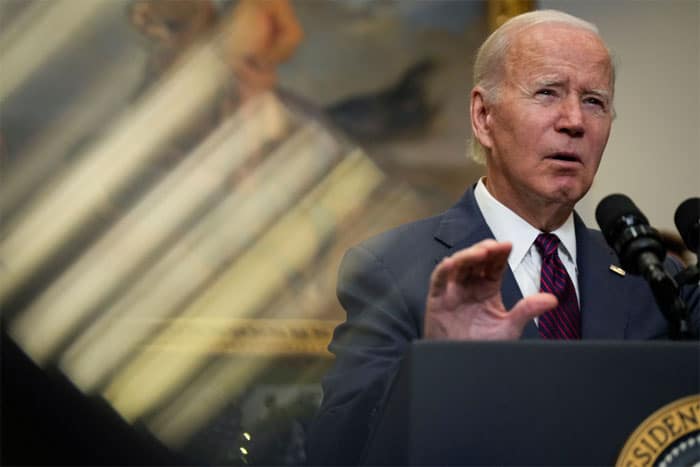
Biden Admin Launches Inter-Agency Group Against Antisemitism

The Biden administration announced on December 12 that they are launching an inter-agency group to fight antisemitism.

White House Press Secretary Karine Jean-Pierre said in a statement that the group will consist of staff from the National Security Council and Domestic Policy Council to lead efforts “to counter antisemitism, Islamophobia, and related forms of bias and discrimination within the United States.” “The President has tasked the inter-agency group, as its first order of business, to develop a national strategy to counter antisemitism,” Jean-Pierre said. “This strategy will raise understanding about antisemitism and the threat it poses to the Jewish community and all Americans, address antisemitic harassment and abuse both online and offline, seek to prevent antisemitic attacks and incidents, and encourage whole-of-society efforts to counter antisemitism and build a more inclusive nation.”

Jewish groups praised the Biden administration. “We welcome the Biden Administration’s announcement that they are forming a new interagency group to develop a national strategy to combat antisemitism and other forms of hate,” Anti-Defamation League CEO Jonathan Greenblatt said in a statement. “This is one of the steps that we have long advocated for as part of a holistic approach to address the antisemitism has been increasingly normalized in society. We stand ready to lend our expertise and support to assist in the formation of this important national strategy.”

The American Jewish Committee similarly thanked Biden in a statement and said that they are “ready to help the Biden administration develop a national strategy to combat antisemitism.” “Anti-Jewish incidents have risen to alarming levels all over the U.S. All must stand together against this hatred and continuously condemn it. A whole-of-government approach is essential so government agencies can quickly and effectively combat the world’s oldest hatred as it morphs into contemporary forms.”

B’nai Brith International also commended the Biden administration “for facilitating better coordination of U.S. gov. efforts to counter anti-Semitism.”

J Street said in a statement that their recent polling data showed that “76% of Jewish-American voters believe that Trump and his MAGA movement allies are responsible for a rise in antisemitism.” “We appreciate that the Administration is treating the issue of antisemitism and other interrelated forms of bigotry with the seriousness and urgency that it merits, and that the Administration recognizes that antisemitism must be understood and confronted alongside the general phenomenon of rising white supremacy and discrimination against our fellow vulnerable minorities,” J Street’s statement read.

Stop Antisemitism, however, noted in a couple of tweets that Biden recently posed for photos with Representatives Ilhan Omar (D-MN) and Rashida Tlaib (D-MI). “Embracing antisemites like Rashida Tlaib & Ilhan Omar is the opposite of fighting antisemitism. Jew haters must be shunned, not posed with,” Stop Antisemitism tweeted. “Without meaningful action, words and proclamations are fruitless.”

Journal columnist Blake Flayton accused the Biden administration of “all lives mattering antisemitism” in Jean-Pierre’s statement. “You are better than condemning Islamophobia in a specific statement on the rise of antisemitism as if to imply that the Jewish community bears blame as well,” Flayton tweeted. “Disappointing.”

Biden Admin Launches Inter-Agency Group Against Antisemitism Read More »

Universities Inadequately Protect Jewish Students from Anti-Zionist Harassment, Report Says

A new report released by the AMCHA Initiative on December 14 found that American universities’ policies are insufficient in protecting Jewish students from anti-Zionist harassment on campus.

The report, authored by AMHCA Co-Founders Tammi Rossman-Benjamin and Dr. Leila Beckwith, a UCLA Professor Emeritus, states that they researched the harassment codes and codes of conduct at 100 different universities and found that while verbal abuse was included in every harassment code, a quarter of universities did not include verbal abuse in their conduct of banned behavior. Rossman-Benjamin and Beckwith also found that fewer than 40% of universities define harassing behavior “as conduct that limited, interfered with, or impaired a student’s ability to participate in campus life” and more than a third provided harsher punishments for those who harassed students in “protected” identity groups more than those who are in “unprotected” identity groups. Additionally, more than 75% of universities have a special office dedicated to investigating complaints of harassment against “protected” identity groups while complaints of harassment against “unprotected” identity groups were “handled by the same office that handles all student conduct complaints.”

“Jewish students who fall victim to harassment motivated by their support for Israel are often not covered by these policies, since many university administrators do not consider support for Israel an expression of a Jewish student’s religious beliefs or ethnicity,” Rossman-Benjamin and Beckwith wrote in the report. “And despite the fact that in recent years considerable efforts have been made by Jewish student groups and communal organizations to get schools to adopt the International Holocaust Remembrance Alliance (IHRA) definition of antisemitism, which includes examples identifying anti-Zionist rhetoric as antisemitic, most administrators are hesitant to do so, fearing pushback from students and faculty claiming the definition impedes their freedom of speech.”

But Rossman-Benjamin and Beckwith noted that even if Zionist Jewish students were to become a protected identity group, university harassment policies would still exclude Zionist students who aren’t Jewish. “This distinction highlights a troubling inequality: under school harassment policies, the exact same harmful behavior will be either addressed or ignored by administrators, based solely on the identity of the student,” they wrote. “Even more troubling is the fact that the severe, pervasive or persistent behavior in question—whose effect is to limit, interfere with or deny a student the ability to participate in or receive benefits, services, or opportunities from the school’s educational programs and/or activities—is clearly behavior that no student should have to contend with, irrespective of his or her identity.” This, Rossman-Benjamin and Beckwith contend, is why Jewish students who support Israel allege that university administrators inadequately handle complaints of verbal antisemitism.

To solve the problem, Rossman-Benjamin and Beckwith suggest that schools adopt new harassment policies that provide equal treatment for “protected” and “unprotected” identity groups and for lawmakers to bring forth legislation “that establishes a clear legal process and robust government enforcement mechanisms for ensuring that all students in state and federally funded schools are equally and adequately protected from harassing behavior.”

“Whether antisemitism emanates from the right, in the form of classic antisemitism, or from the left, in the form of anti-Zionism, the rhetoric used to portray Jews is becoming increasingly similar: Jews possess undue power and privilege, which they use to control and oppress others. And while the antisemitism may be directed to different audiences, its intended effect is the same: to portray Jews as a threat to the common good, whose malevolent influence must be challenged and neutralized,” Rossman-Benjamin said in a statement. “Yet, as the problem is rapidly becoming more acute, with a new massive assault on Jewish identity on campuses nationwide, a thorough examination of university policies reveals Jewish students are left neglected, vulnerable, exposed and without recourse against antisemitic harassment.”

Universities Inadequately Protect Jewish Students from Anti-Zionist Harassment, Report Says Read More »

Kamala’s Struggles

For almost a half century, the U.S. Naval Observatory has served as the official residence for the nation’s vice presidents and their families. But this may be the first time in which the most prominent and impactful political luminary in the family was not the nation’s second ranking elected official but rather the vice presidential spouse. 

In the past, figures such as Tipper Gore and Lynn Cheney created controversies while their husbands served in the VP job. But Douglas Emhoff’s star turn as the leader of last week’s White House roundtable on antisemitism was an unprecedented role for which America’s second gentleman deserves immense credit and enthusiastic applause. Emhoff’s success in convening the historic gathering and establishing himself as one of the most important national figures in the fight against anti-Jewish hatred stands in stark contrast to the struggles that his spouse has faced during her first two years in office. 

Kamala Harris stumbled early in her term during a high-stakes trip to Central America to address immigration policy, and many Washington observers believe that she has yet to regain her political footing. Democratic strategists worry openly about whether she could be an effective party standard-bearer if Biden were to choose not to seek reelection.

But while Harris has contributed to her problems with recurring verbal mishaps, in fairness many of her difficulties are due to circumstances beyond her control. Her first two assignments from the Biden White House were the no-win jobs of solving a worsening immigration crisis and of passing a partisan voting rights bill in a 50-50 Senate. (The president’s staff has also seemed very comfortable leaking what they see as Harris’ inadequacies to journalists covering her office.)

Broader forces and long-standing Washington customs are also conspiring against Harris. For most of the modern political era, the American people have tended to select outsiders and relative newcomers as their presidents. Donald Trump’s lack of political experience was an extreme example, but Governors Jimmy Carter, Ronald Reagan, Bill Clinton and George W. Bush all ran on pledges to change Washington, as did first-term Senator Barack Obama. 

In order to reassure voters that they would be able to govern effectively if elected, each of these outsider candidates turned to more established political leaders to serve as their running mates. Former Senators Walter Mondale, Al Gore, Joe Biden, and Mike Pence, former CIA Director George H.W. Bush and former Defense Secretary Dick Cheney all provided longer-term perspective to the new presidents, and the concept of a “wise old hand” as vice president became conventional wisdom in the nation’s capital.

Before Biden’s election in 2020, the only exception to this trend was Bush the elder, who, like Biden, had served eight years as vice president before winning the Oval Office. Neither Bush nor Biden needed someone with more experience than their own, and so both balanced their respective tickets by selecting a young up-and-comer to represent their party’s next generation of leadership.

Dan Quayle was a young conservative Senator from Indiana, who while largely unknown by the voting public outside of his own state, had gained respect on Capitol Hill for his knowledge of national defense policy. But since Bush had no need for a vice president to advise him on the ways of Washington, Quayle was quickly marginalized and ended up as ongoing target of disparaging jokes on late night television. When he ran for president a few years later, he made little impact as a second-tier candidate and dropped out of the race after the first few primaries.

Like Bush, Biden did not require a vice president to help him understand the federal government. And so like Quayle, Harris has struggled to find a useful role in this administration. Biden appears likely to seek a second term, which gives Harris ample time to find a role and voice in her office with which she is more comfortable. But at the midway point of the Biden-Harris ticket’s term in office, it is clearly Emhoff who has emerged as the most impressive member of the VP family on the national political stage.


Dan Schnur is a Professor at the University of California – Berkeley, USC and Pepperdine. Join Dan for his weekly webinar “Politics in the Time of Coronavirus” (www.lawac.org) on Tuesdays at 5 PM.

Kamala’s Struggles Read More »

Stop Sending Jews Christmas Cards

In December of 2020, after Joe Biden won the presidency and while the Biden transition team was settling into the executive branch, Vice President Kamala Harris and her husband Doug Emhoff recorded a short video wishing Jewish Americans a happy Hanukkah. It is a common gesture of politicians, corporations and various brands to release a statement around this time of year to show support for their Jewish constituents, consumers and followers. Unfortunately, this particular statement by Harris and Emhoff illustrated everything that I believe to be wrong with Hanukkah messages, although one can hardly blame the two of them for what most likely amounted to a communications error. “I love Hanukkah because to me, it is really about the light,” said Harris. “It is about bringing light where there is darkness. And there is so much work to be done in the world to bring light. And it [Hanukkah] is a celebration of, always, Tikkun Olam, which is about fighting for justice and the dignity of all people,” she continued. Emhoff then added: “And it’s about joy.”  

These words, to put it bluntly, have nothing to do with Hanukkah, but rather express sentiments typically characteristic of Christmas. Unbeknownst to them, Harris and Emhoff have contributed to the Christmasfication of a Jewish holiday, using the season to lump Jewish Americans into universalist messages of love and light and happiness and quality time with family. 

I have written before about the trend of stripping Hanukkah of its meaning to make the holiday more palatable to the non-Jewish majority, especially as it manifests commercially in the U.S. — with blue and yellow decorations in the CVS Pharmacy and advertisements on television where snowflakes blow over a menorah (with an inaccurate number of candles) and a new Chevrolet that can be yours for a fabulous price. But I had no idea how entrenched this phenomenon was until I immigrated to Israel this year and heard for the first time that Israeli children do not receive eight presents for each day of Hanukkah. “Why would we get presents?” my friend asked me while I stood stupefied in our local Tel Aviv coffee shop. “You Americans do that, so you don’t feel left out of Christmas.” I felt like the breath had been knocked out of me. My favorite time of year in childhood was formed not by connection to Jewish identity as I had assumed but by the winds of assimilation —the very winds that the story of Hanukkah warns against. It remains ironic that millions of American Jews have reformed Hanukkah to be more in line with the values of their society, when the meaning of Hanukkah is to resist such temptation whatever the cost.

The theme of Hanukkah is the resilience of the Jewish people against the forces that sought to annihilate us.

The theme of Hanukkah is the resilience of the Jewish people against the forces that sought to annihilate us. However, unlike Purim, when we celebrate the miracle of being saved from an imminent genocide, during Hanukkah we commemorate being saved from spiritual oblivion, when our identity was threatened not by the sword but by the enlightened Hellenized Greeks who worked to change Jewish ideas. The Greeks occupying Judea did not adhere to a vicious ideology that demanded dead Jews. Rather, as novelist Dara Horn writes in her essay in Tablet Magazine, “The Cool Kids,” the antisemitism of the Greeks was insidious — it sought to kill Jewish civilization by way of placing statues of Zeus in the holy temples, by placing social pressure on young Jewish athletes resulting in them reversing their circumcisions, and by enticing the entire land out of its archaic monotheistic practices that were obnoxiously old-fashioned. Judah Maccabee and his band of zealots rebelled against not only foreign rule but also against the erosion of Jewishness in the Holy Land and subsequently  of their sovereignty as Jews, which yes, included rebelling against other Jews who had taken the Greeks’ bait.  

Horn connects the story of Hanukkah to the story of Jews, even the most loyal communist Jews, who lived in the Soviet Union. “In 1918, the Soviets created an entire branch of their government solely for cool Jews (the Yevsektsiya) whose paid job it was to persecute uncool Jews,” Horn writes. The “uncool” Jews in this era were the Jews who refused to accept the principles of socialism, which emphasized hegemony, internationalism, and the chipping away of all religious observance. “Yevsektsiya-style antisemitism, or Hanukkah style antisemitism, always promises the Jews a kind of nobility,” Horn continues, “offering them the opportunity to cleanse themselves of whatever the people around them happen to find revolting. The Jewish traits designated as repulsive vary by country and time period, but they invariably contradict the specific values that the surrounding culture has embraced as universal.”

What we are meant to contemplate during Hanukkah is Jewish particularism and our unique culture and traditions, not our obligations to mankind. 

If art and poetry that praised Athena rather than Hashem was all the rage in antiquity, if Marxism was all the rage in the twentieth century, then today the hottest commodities are human rights, secularism and social justice — the values that Harris and Emhoff endorsed in their Hanukkah message and the values the majority of Americans associate with Hanukkah. Please do not be mistaken — these are all things that I, and many Jews, value wholeheartedly. But they could not be more at odds with what we are meant to contemplate during Hanukkah: Jewish particularism and our unique culture and traditions, not our obligations to mankind. 

Theodor Herzl, the architect of the modern State of Israel, was at one point the poster child for a Hellenized Jew. There was no Jew more westernized, more modern, or “cooler” (in Dara Horn’s terminology) than Herzl. In fact, he was known to erect a Christmas tree in his living room during the holiday season, and his infamous initial solution to the Jewish question was a mass conversion to Christianity to evade the scourge of antisemitism. Yet fortunately for future generations of Jews, Herzl eventually realized that antisemitism could not be evaded even with the most intense stripping of identity. Members of the Yevsektsiya in the Soviet Union discovered this as well when they were eventually purged from the Communist Party and thrown into gulags.  

During his grand recognizance of reality, Herzl authored an essay entitled “The Menorah,” which begins with:

“Once there was a man who deep in his soul felt the need to be a Jew … He had long ceased to trouble his head about his Jewish origin or the faith of his fathers when the age-old hatred re-asserted itself under a fashionable slogan. Like many others, our man, too, believed that this movement would soon subside. But instead of getting better, it got worse. Although he was not personally affected by them, the attacks pained him anew each time. Gradually his soul became one bleeding wound.”

Herzl then proceeds to wax poetically on the meaning the lighted menorah bears for him and his children during a time of increased anxiety in Europe. Its flames, as Kamala Harris mentioned during her Hanukkah message, inspire reflections on light. “No office is as blessed as the servant of light,” Herzl concludes, except his interpretation of light pertains to the resurrection and rededication of Jewish identity, in himself and in others, and to fighting antisemitism. In other words, Herzl did not send the Jews who were reading his work a Christmas card. Evading such tropes allowed him to lay the foundation of the world’s only Jewish state. 

This holiday season, during yet another time of rising anxiety in the Diaspora, I would implore all politicians, corporations and brands to rethink their repurposed Christmas messages. If it is your earnest desire to wish Jews a Happy Hanukkah, then please, cancel your glowing remarks about love and friendship. Instead, express your solidarity with the Jewish people against our enemies, whether they are outright violent in their hatred of Jews or more subliminal. Tell us how you admire not only the Maccabees but also all Jews since who have championed self-defense and self-preservation. This is how true allies wish good will, allies who not only recognize our history but understand its contemporary implications as well.


Blake Flayton is the New Media Director and Columnist for the Jewish Journal. 

Stop Sending Jews Christmas Cards Read More »

Have Depression? You’re Not Alone

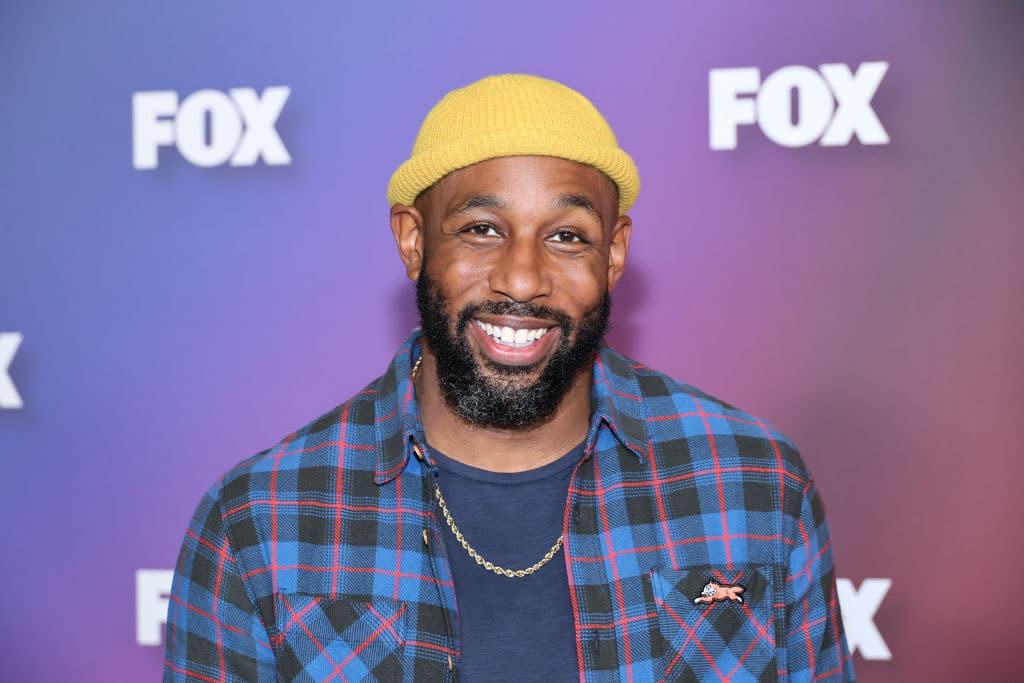
On December 14, TMZ reported that Stephen “tWitch” Boss, a famous dancer and DJ, had committed suicide. He was talented, he had a beautiful family and amazing career and he was only 40 years old. He left behind a wife and three children.

The news was absolutely heartbreaking. I always enjoyed watching videos of Stephen and his lovely wife, Allison Holker, dancing together. They seemed so happy.

But that’s the thing about depression, which I assume Boss suffered from: it’s typically not visible. We think that just because somebody “has it all,” they aren’t prone to mental health issues. Sometimes, the exact opposite is true. Since they are famous or rich or prominent, there is more pressure on them and they feel more alone.

Throughout my entire life, I’ve battled depression. In my freshman year of high school, it got so bad that I attempted to overdose on Ibuprofen and I was sent to the ER for threatening to kill myself.

I fought my depression, taking antidepressants at certain times of my life, going to therapy and becoming more spiritual. Today, I surround myself with incredible people, do what I love and know what my triggers are and how to avoid them.

It took a lot of hard work and, even though I’m generally a happy person, my depression still pops up every now and again. I’ve used the Suicide and Crisis Lifeline at 988 my fair share of times when my therapist wasn’t available and I was in the throes of a very bad panic attack – especially after I had my second child this past year and was experiencing terrible post-partum depression. On the outside, I seemed fine, but I wasn’t at all.

You may not know that people are depressed because they don’t want to feel like they’re burdening their friends and family with it. Everyone seems like they’re always busy, even if that isn’t true. Everyone has something going on. Who has time to talk? Who will listen? Therapy is a huge help, but you can’t go to therapy 24/7.

There is also the expectation to lead a perfectly curated life on social media, to look happy even when you aren’t. On Instagram, Stephen Boss seemed content. Who would have known he was going through depression? That probably made him feel even more isolated.

Unfortunately, antidepressants are not a cure-all, either. I’ve been on antidepressants that made me suicidal. You need the right doctor who actually listens to you and doesn’t just write you a script for any drug. And, of course, you need to know yourself and be able to spot shifts in your mood.

My spirituality is what I often rely on when I’m depressed. I think about what I’m grateful for. If I’m having a bad day, and nothing is going my way, at least I can breathe. At least I woke up that morning. Then, once I’m grateful to be alive, I start to realize there are many other ways in which I’m blessed. It helps to make a list.

In my darkest moments, I ponder what my life will look like the next day or the next week or the next year. What if I don’t feel so bad tomorrow? What if things get better? Looking back at my life, there is plenty of proof that there was always something good on the horizon. All I had to do was survive the tough times.

If you are struggling with depression, I urge you to get professional help. Talk to your loved ones and talk to God. Go to a community dinner at your local Chabad for Shabbat so you aren’t alone. Take a walk outside and enjoy some beautiful nature.

You should not be suffering. Nobody should be suffering or think that suicide is the answer, because it’s not. God did not make a mistake when He created you. There are no extra souls. The world needs you.

I wish that poor Stephen Boss, may he rest in peace, would have realized that. But for others, it’s not too late.

Take a look around, and realize that you are worthy, you are valuable and you are surrounded by love.

Want to talk? Email me at Kylieol@JewishJournal.com.

If you or someone you know is affected by any of the issues raised in this story, call or text the Suicide & Crisis Lifeline at 988.


Kylie Ora Lobell is the Community Editor at the Jewish Journal.

Have Depression? You’re Not Alone Read More »

Brutally Honest ft. Talia Lichtstein

This week, Marla and Libby are joined by Tiktok sensation, Talia Lichtstein. With over 1.1 million followers, Talia is known for her hot takes, brutal honesty, and what it’s like living in NYC in your 20s. Per usual, your co-hosts start off with their relationship updates of the week. They start off their conversation with Talia discussing her rise to popularity on TikTok and the importance of finding your niche when turning digital creation into a career. Next the ladies talk about the struggle of getting into other industries or hobbies when you’re already known for something else. The trio then discusses the power of social media, how posting about certain topics is cringe until you’re popular, how it affects dating and the lack of privacy within social media. They end with a game of “Cute or Cringe” and “Bad or Jew It.”

Brutally Honest ft. Talia Lichtstein Read More »