As Eli and Maya embraced each other last week (and no – it’s NOT always like this in the Shapiro-Galperin household – through YES, they do love one another), I thought of sage advice shared in the Mishna by Rabbi Ben Zoma.
He asked the question: “Who is rich?” And he answered his own question: “Those who are happy with what they have.” (Pirkei Avot 4:1).
As our email inboxes overflow with “Black Friday” sales – let’s keep the perspective this Thanksgiving that the the most important stuff in our lives is usually our friendships, our family, our memories, and our love.
So we take a moment in time to be thankful. And we hope that by taking that moment, we will express our gratitude to those we hold dear.
Ron, Maya, Eli, and I wish you a happy and healthy Thanksgiving.
Due to an angry altercation between our son and a baseball, he received several stitches above his eye. He’s completely fine and we’ve now had several conversations about not literally keeping his eye on the ball.
While the stitches themselves are miraculous little inventions, we experienced different kinds of stitches over the course of the last 48 hours: surgeons giving their expertise and care, family and friends dropping everything to offer an extra set of hands, my son’s teachers and classmates calling with compassion and concern.
In the grand scheme of life, this is a small event. The tragedies of this week alone are unfathomable. But for our son, this was big. He got hurt playing sports he loves. And he watched his community rise for him, modeling empathy, kindness, and love. He is learning that when the time comes to be a friend to someone in need, he has realistic examples to easily conjure and act out.
What does it mean to celebrate Thanksgiving? This year, I’m cognizant of those who act as stitches in my life. Those that offer themselves and embody healing and hope. To my stitches—you don’t go unnoticed. Thank you.
Modeh Ani Lifanecha, Dear God, I offer my thanks before you, grateful beyond measure. And to those in this world that offer healing to others, I am grateful for you. Our children are watching. Let them witness acts of loving-kindness so that this world is transformed into a place of benevolence and light.
Shabbat Shalom
Rabbi Nicole Guzik is a rabbi at Sinai Temple. She can be reached at her Facebook page at Rabbi Nicole Guzik or on Instagram @rabbiguzik. For more writings, visit Rabbi Guzik’s blog section from Sinai Temple’s website.
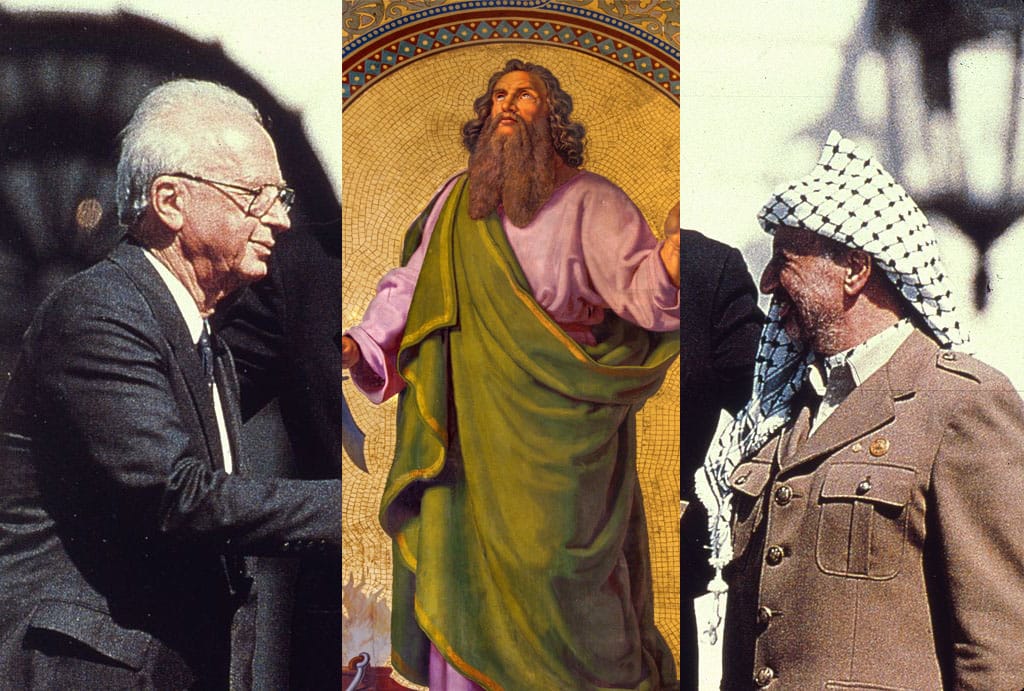
When Abraham, admitting to the Hittites he was not indigenous,
said “I’m a stranger who would like to be accepted as a resident,”
he hoped to be far more acceptable to them than any pigeon is
on Thanksgiving, and told their leader Ephron, “You’re a President
with whom I’d like to make a deal. I need some land where I can bury
my dear wife, Sarah.” The negotiations for the deal, though somewhat murky,
were most successful, ending with a handshake that was very
friendly, like the one that Rabin made with Arafat when they had finished talking turkey.
Yet although Abraham as non-indigenous himself to Ephron had defined,
not celebrating this with turkey in a post-funereal Thanksgiving,
and though the land was to him in a covenant with God without a country clubby handshake assigned,
his descendants now inhabit land in which they truly are indigenously living.
Gen 23:4 states:
ד גֵּר-וְתוֹשָׁב אָנֹכִי, עִמָּכֶם; תְּנוּ לִי אֲחֻזַּת-קֶבֶר עִמָּכֶם, וְאֶקְבְּרָה מֵתִי מִלְּפָנָי. 4 ‘I am a stranger and a sojourner with you: give me a possession of a burying-place with you, that I may bury my dead out of my sight.’
גר ותושב אנכי עמכם I AM A STRANGER AND A SETTLER WITH YOU — A stranger having
come from another land, but I have settled down amongst you. A Midrashic explanation is: if you agree to sell me the land then I will regard myself as a stranger and will pay for it, but if not, I shall claim it as a settler and will take it as my legal right, because the Holy One, blessed be He, said to me, (12:7) “Unto thy seed I give this land” (Genesis Rabbah 58:6).
Gershon Hepner is a poet who has written over 25,000 poems on subjects ranging from music to literature, politics to Torah. He grew up in England and moved to Los Angeles in 1976. Using his varied interests and experiences, he has authored dozens of papers in medical and academic journals, and authored “Legal Friction: Law, Narrative, and Identity Politics in Biblical Israel.” He can be reached at gershonhepner@gmail.com.
Early in the COVID-19 pandemic, Sarah Pachter decided she had had enough. The Los Angeles-based author and Jewish motivational speaker who has lectured on three continents was pregnant with her fifth child, constantly nauseated, and to make matters more difficult, her children, like millions of others around the country, were distance-learning from home because their school had closed.
Sarah Pachter Photo by Gloria Mesa photography
“To keep from becoming overwhelmed, I learned to stop and appreciate the small things,” she reflects about that time in her book, “Is It Ever Enough? A Journey Toward Joyful Living” (Feldheim 2022). For Pachter, those small moments that held hidden happiness included the look of joy in her children’s eyes as they talked or “the rays of light shining through the trees” when she watched them riding their bikes.
During the pandemic, Pachter had a baby, published her second book and resumed her work and family responsibilities. But one task was visibly absent from her To-Do list: After having her baby, she took a long break from cooking for Shabbat and instead relied on pre-made meals from supermarkets.
“I said to myself, ‘What matters?’” she told the Journal. “What matters is that my home is peaceful, that I have shalom bayit [a peaceful home], I am not too exhausted to talk to my husband and that I have patience for my children. The Torah says it’s better to have plain bread at Shabbat than to have a festive meal in a home where there’s no shalom bayit.”
Pachter, it seems, is obsessed with two tenets that she believes make life undeniably better: knowing when to stop (or to cut back) and maintaining an unflinching commitment to gratitude.
Pachter, it seems, is obsessed with two tenets that she believes make life undeniably better: knowing when to stop (or to cut back) and maintaining an unflinching commitment to gratitude.
During the pandemic, Patcher asked herself a vital question: “What is it that I want to do, and what do I feel I have to do?” She drew on her own advice from her first book, “Small Choices, Big Changes” (Targum Press, 2017) and committed to a series of small choices that, in hindsight, preserved her sanity and made life better for her entire family.
“Ten Minutes a Day”
When “Small Choices, Big Changes” was first published, Pachter, no stranger to recognizing the limits of her own capabilities as well as the realities that surround her, was home with a four-week-old newborn. When asked how she was able to research and author two books in the last five years, she said, “the small choices we make accumulate and create big change. I committed myself to writing for ten minutes a day.”
To know Pachter is to see that she is a force of nature. One of the most sought-after speakers in the Jewish world today, she was born to what she describes as a “traditional Sephardic home” in Atlanta, where she lived until age 18. Her father is French Moroccan and her mother is American, and the family embraced Orthodox Judaism as Sarah and her siblings grew up.
In high school, Pachter was extremely social and fun loving, but also deeply introspective and spiritual-minded. But there was one problem: Pachter admits she began to observe Jewish mitzvot, or commandments, because she “wanted to and felt it was right,” but she didn’t know “the whys” of practicing Jewish rituals such as observing Shabbat and kosher dietary laws.
After high school, Pachter moved to Jerusalem for two years, absorbing as much Jewish learning as she could at various seminaries because she hoped to be a teacher in the realm of Jewish kiruv, or outreach. After completing seminary, she returned to the United States and volunteered to teach small classes about Jewish values. Pachter also attended Stern College for Women, where she double-majored in Speech and Audiology and Judaic Studies.
During her junior year at Stern, Pachter was asked to be a guest teacher at the Jewish Enrichment Center (JEC) in New York City, and that singular lecture changed everything. “When they found out I was only 21, they said ‘No. We can’t have a 21-year-old teaching a class. But they took a chance and allowed me to speak anyway. The women who attended said they loved it.” The topic of that class was the deep power of Passover.
For several years, Pachter was one of the most popular speakers at the JEC. But four years after marrying her husband, Adiv, the couple moved to Los Angeles when Pachter was 24. Leaving the JEC was difficult, and for the next two years Pachter continued to teach classes by phone to women with whom she had cultivated relationships back in New York. “In New York City, I was at the top of my field, and in Los Angeles, no one had ever heard of me,” said Pachter, who moved to LA in January 2010 after Adiv, who works in real estate, was transferred to the West Coast.
Today, Pachter is a prominent figure among LA’s Orthodox Jewish community, and her energy and passion for this community makes it hard to believe that she is not a native Angeleno (or at least a true California girl). Unabashedly optimistic and mindfully upbeat, she emanates an air that is, at times carefree but also deeply grounded. It’s easy to see why Pachter seems so at home in The Golden State. But she is nothing if not the consummate professional, a self-assigned protector of every word that she utters and writes.
I asked Pachter, who lectures in L.A., throughout the U.S. and abroad, how she prepares for her classes, or shiurim, which are often exclusively for women. “It takes a very long time,” she said. “People don’t realize the amount of energy, effort and learning it takes. I have to learn for hours and hours to pique my interest and tie in to whatever theme I’m trying to create. I start with something that seems random, find a hook, then add other elements.”
The greatest strength of Pachter’s books and lectures is that they offer a striking blend of Torah wisdom, hard-to-forget true stories, and psychological (and quantitative) data to support her arguments.
A Daily Dose of “Vitamin G”
Anyone who reads “Small Choices, Big Changes”and “Is It Ever Enough?” will not be surprised to learn that Pachter is, first and foremost, a deeply gifted teacher. But she is also an eternal student, constantly drawing from sources that span various disciplines, sciences and even millennia. The greatest strength of Pachter’s books and lectures is that they offer a striking blend of Torah wisdom, hard-to-forget true stories, and psychological (and quantitative) data to support her arguments.
Pachter is particularly adept at asking deeper questions about why we often feel that we are not enough. In her second book, “Is It Ever Enough?,” she writes, “We often view life through a lens of scarcity. Even upon waking, these thoughts can creep up. How many of us wake up, yawn, and think, I’m so tired! I didn’t get enough sleep? Or, I have such a busy day today. I don’t have time to get everything done. The key phrase is: I don’t have enough, which creates a scarcity mentality. How could we expect ourselves to want to give when we don’t feel we have enough time or resources?”
In a chapter titled, “Vitamin G Cure-All” (“G” is for “gratitude), Pachter suggests that “the best way to experience happiness is to have something called a low appreciation threshold … Individuals with low appreciation thresholds experience joy much sooner and faster than those with higher thresholds.” Put simply, this means that someone who is moved to feel gratitude by the small things has a much higher chance at accessing happiness.
Pachter is a unique blend of motivational thinker and hardened realist.
The second section of the book, “I Am Enough,” offers three four-letter words that “could literally change your life.” Pachter is a unique blend of motivational thinker and hardened realist. In confronting a human tendency to complain over our unrealized dreams, she writes, “Forget excuses. For every smart individual out there, there are ten less-smart individuals who are more successful. It’s not about what you have. It’s about making the choice to commit to what it is you want and then taking action.”
And in case we attempt to rationalize our own behavior, Pachter writes, “We know what decision we should make, and we may even have resolved to do it. But we often resist that action because we don’t feel like doing it. Well, I’ve got news for you: We may never feel like it.”
“A Walking Miracle”
Pachter is the first to openly discuss her own life challenges. At 18 months old, she survived an emergency mastoidectomy to remove an infection in the mastoid — a bone in the inner ear that is attached to the skull. It was not until she was enrolled in an audiology course in college that her professor, utterly shocked upon hearing her story, informed her that she is “a walking miracle.”
“He said that back in the ‘80s, when I was born, many people died from a mastoidectomy,” Pachter recalls. Her professor then looked her in the eye and said, “If someone by chance survived, it was impossible not to sever the facial nerve, and half of your face would be paralyzed. The fact that you’re alive and that your face is functioning normally is beyond me.” The mastoidectomy was performed shortly before Thanksgiving, which has imbued Pachter and her family with a unique sense of gratitude for this particular time of year.
“I believe that gratitude swims us through sadness and keeps us afloat from depression; it is the antidote to not feeling enough.”
“The main part of facial paralysis occurs in your mouth,” Pachter said tearfully. “Part of my promise to Hashem is that I will use my mouth for the good, to teach and inspire myself and others in Torah. I believe that gratitude swims us through sadness and keeps us afloat from depression; it is the antidote to not feeling enough.”
When asked why she felt compelled to write “Is It Ever Enough?” Pachter said, “I believe that one of the greatest issues that we are dealing with today is the lack of satisfaction, the desire for more, to be perfect in every arena of our lives; we just want the best of everything, always. We should strive for greatness, but are we feeling satiated with what we have? Are we happy with who we are and content with our current life?”
Readers would do well to know that the book does not offer easy answers about how to believe we have enough (or are enough). Rather, Pachter, in true lecturer style, takes her time in setting up a beginning, a middle and an end — a foundation of Torah and psychology-based lessons that reward the patient reader with a denouement that truly brings it all together at the end. Some chapters do not directly address our need for more, and that’s part of Pachter’s strategy. True to form, she sees the bigger picture, even as readers may wait impatiently for simple answers. The third section of the book, “I’ve Had Enough: Inspiration for the Holidays,” offers readers a holiday-by-holiday blueprint for healthy thoughts and behaviors, but it is the fourth section (“That Is Enough: Difficult Relationships, People, and Kids”) that is particularly relatable.
“Ça Suffit”
In “Is It Ever Enough,” Pachter writes, “I am often asked by my students: ‘What can we do when we don’t feel satisfied with our lot in life? And, isn’t wanting more a good thing? Isn’t it a sign of ambition? Where is the balance?’” Pachter has discovered that balance in a French phrase her mother would often say to her and her siblings: “Ça suffit,” which translates to “That will suffice.”
And Judaism, it seems, is obsessed with teaching gratitude and its connection to holiness and experiencing joy. One of the most famous teachings of Pirkei Avot (“Ethics of Our Fathers”) asks, “Who is rich? He who rejoices in his lot, as it is said: You shall enjoy the fruit of your labors, you shall be happy and you shall prosper” (Psalms 128:2). Even the Hebrew term for a Jew (“Yehudi”) is derived from “hodaya,” or thanking God/thankfulness. To be a Jew is, in essence, to be grateful; in Judaism, to live in reality is to recognize God as the source for all that renders one grateful.
Pachter directs readers’ attention to the Passover seder recitation of Dayenu (“That would have been enough”). In “Is It Ever Enough,” she writes, “Regarding Dayenu, of course the Jewish nation needed more than just the Sea splitting to survive, but in that moment, we were so awestruck and appreciative that worrying about what was coming was not in our schema.
“This is what we are recounting when singing Dayenu,” she continues. “We’re not saying that it would’ve been enough. We are expressing that the moment felt ‘enough’ while it was occurring. The experience was appreciated fully. There are two ways to experience life. We can constantly be thinking about what’s coming next, or be satisfied with our current situation.”
The Wise CEO
For Pachter, her day begins at 6 a.m. as she helps her children prepare for school, takes care of her baby (she writes, prepares classes and conducts interviews for her own articles while the baby naps) and makes certain that she has time to pray each day. Her choice of what to wear on her feet when she is at home says it all: Pachter tries to wear sneakers, rather than slippers, around the house to help her remain in a much-needed Get-It-Done mindset.
The Pachter Family Photo by Pacific Dream Photography
Pachter’s advice for working women who are also raising families is focused on solutions and delegation: “Cut back or be willing to delegate, even if it’s asking a friend for help,” she said. “Find a young girl in the local Jewish community to watch your kids for an hour. And to mothers of young children who feel particularly overwhelmed: Give yourself a weekly break of some sort, even if it’s an hour, so that if your kid is having a tantrum on a Thursday, your mind can remind you that a break, even if it’s just one hour, is coming.” Pachter stresses that dedicating one hour a week does not have to cost money. One of her favorite ways to enjoy a break is to curl up with a book.
“Part of the problem is that we don’t know what we want,” she said. “We have to first figure out what we want, and that’s half the battle.”
In the 16 years since she began speaking, Pachter’s catalog of research and inspirational ideas has ballooned beyond notebooks to include hundreds of e-documents. She does not have it all (no one does), but she does seem particularly masterful at keeping it all together. Her secret, of course, is knowing when to stop, when to politely say “no” and to recognize the role that she plays in her own life. When I tell Pachter that, in one of her publicity photos, she resembles an assertive CEO, she responds, “I am a CEO. I run a small business; it’s called my family.”
And just as we would never expect to run a corporation alone, we must be honest with our capabilities, our limitations and our needs. “There are two types of people in the world: those who feel controlled by life, and those who try to control life,” Pachter writes in “Is It Ever Enough?” She recalls a time when she was worried whether she would have enough food for [last-minute] extra Shabbat guests. Pachter called a friend who told her, “Sarah, whatever amount you have, it’s enough.”
Ultimately, Pachter has found a simple, but deeply wise practice as she tackles the demands of five children, family life and career ambitions: “There are some things I can’t control, but I try to schedule my day so I’m not completely overwhelmed,” she said. “I’m just getting it done. That’s my stage of life right now, and that’s okay.”
A group of Black Hebrew Israelite protesters can be seen chanting “we are the real Jews” and “time to wake up” in support of NBA star Kyrie Irving on November 20.
The chanting occurred in front of the Barclays Center, the home of Irving’s current team, the Brooklyn Nets. The protesters were a part of Israel United in Christ, an affiliate of the Black Hebrew Israelites, according to ESPN. It was Irving’s first game back after serving an eight-game suspension; Irving had shared a link to an antisemitic movie and refused to apologize for it, prompting the suspension.
Black Hebrew Israelites out in force today, chanting “we are the real Jews” and “time to wake up,” as they marched towards the Barclay’s Center in support of Kyrie Irving’s return. pic.twitter.com/hUPbbHlsBg
The American Jewish Committee (AJC) tweeted that the chanting amplified “a troubling antisemitic trope with dangerous potential.” “We cannot allow this supremacist ideology to spread and gain greater acceptance,” they wrote.
Black Hebrew Israelites chanting "We are the real Jews" is a troubling antisemitic trope with dangerous potential.
We cannot allow this supremacist ideology to spread and gain greater acceptance.pic.twitter.com/CzHA7wOsSr
Writer and policy analyst Avi Mayer tweeted, “’Jews will not replace us’ and ‘We are the real Jews’ are two sides of the same antisemitic coin. No surprise former neo-Nazi and KKK leader Tom Metzger said the Black Hebrew Israelites are “the black counterparts of us.”
"Jews will not replace us" and "We are the real Jews" are two sides of the same antisemitic coin.
No surprise former neo-Nazi and KKK leader Tom Metzger said the Black Hebrew Israelites are "the black counterparts of us." https://t.co/u7MKmIACbT
Jaylen Brown, a star on the Boston Celtics, quote-tweeted a video of the protesters with the words, “Energy,” before later clarifying that he had thought the protesters were members of a fraternity expressing support for Irving and was unaware that they were actually Black Hebrew Israelite members. “Me being proud of that support [for Irving] and being proud of our community for doing that does not mean I endorse or celebrate some of the things that were being done or being said,” Brown told ESPN. He does not plan to remove the tweet. Brown and Irving are both vice presidents of the National Basketball Players Association.
The day before his return, Irving told SNY that he is not antisemitic and “deeply” apologizes for sharing a link to the film in question. “I just really want to focus on the hurt that I caused or the impact that I made within the Jewish community,” he said. “Putting some type of threat, or assumed threat, on the Jewish community, I just want to apologize deeply for all my actions for the time that it’s been since the post was first put up. I’ve had a lot of time to think, but my focus initially, if I could do it over, would be to heal and repair a lot of my close relationships with my Jewish relatives, brothers and sisters.”
If you’ve kept up with the headlines this week, you might be tempted to question life’s fairness: a shooting at an LGBTQ nightclub in Colorado Springs, terror attacks in Jerusalem, a mass-shooting at a Walmart in Virginia, ongoing bloodshed in Ukraine, antisemitism on the rise. On any week these events would be cause for despair but how are we to make sense of them at this time of giving thanks in particular?
Our sages and teachers can help us to achieve a greater sense of perspective at moments like these. Rabbi Eugene Borowitz, of blessed memory, was one of the leading theologians of the past fifty years. I was lucky enough to be his student at the Hebrew Union College-Jewish Institute of Religion where he taught for almost five decades. In his great work of Jewish theology, Renewing the Covenant, Rabbi Borowitz teaches that often in life “…we are tempted to itemize all the occasions on which…” we might say: “’I didn’t deserve that.’” For Rabbi Borowitz, this mostly refers to those moments when “we found God or the world unresponsive.”
He points out however that it “does not often mean all the good that comes to us on which we have no claim, life being the obvious case.”
Just as, perhaps, we didn’t deserve much of the misfortune that has befallen us, he reminds us that we didn’t deserve the blessings–the good things–as well. On those things, too, we must admit that we have no legitimate claim.
Rabbi Borowitz continues: “If we wish to be fair when we speak about God’s justice and ourselves, then we must begin with all that God has given us that we had no right to or had not earned. In my experience, what God gives most people hour by hour most generously exceeds what, as a simple matter of justice, they deserve. When one lives in gratitude, the absence of justice stands out primarily in the astonishing benevolence showered on most people.”
It’s a powerful and much needed reminder, especially at times like this when we might find despair welling up inside of us as we reflect on the sad state of our world.
But if we pause for a moment and consider the extraordinary gift of life itself, we can find the path back to gratitude. Life is a miracle that we have no right to and that we did not earn. While we might justifiably take credit for some of the good things that have come our way throughout our lives because of wise decisions we have made or hard work we have done, our existence itself–the very existence that has made everything else in our lives possible–is in its entirety a gift given to us by others.
Here’s how journalist and author Bill Bryson puts it in his book, A Short History of Nearly Everything:
“Consider the fact that for 3.8 billion years, a period of time older than the Earth’s mountains and rivers and oceans, every one of your forebears on both sides has been attractive enough to find a mate, healthy enough to reproduce, and sufficiently blessed by fate and circumstances to live long enough to do so. Not one of your pertinent ancestors was squashed, devoured, drowned, starved, stranded, stuck fast, untimely wounded, or otherwise deflected from its life’s quest of delivering a tiny charge of genetic material to the right partner at the right moment in order to perpetuate the only possible sequence of hereditary combinations that could result—eventually, astoundingly, and all too briefly—in you.”
Life is an undeserved miracle. So for that “injustice” at least, let us be grateful. There really are blessings all around, blessings which we didn’t earn, blessings for which we should give thanks.
Rabbi Yoshi Zweibackis the Senior Rabbi of Stephen Wise Temple in Los Angeles, California.
If all you do is follow the news, chances are you think our world is slip, slip sliding away. In fact, according to a 2015 survey cited in the Our World in Data (OWD) site, only 6% of U.S. respondents think the world is getting better. And that was before Trump.
But is our world really slip sliding away?
We’ve been around for thousands of years. If we look at just the past 200 years, here’s what we would find, according to OWD:
In 1820, the vast majority of people lived in conditions that we would call extreme poverty today. In 1950 two-thirds of the world were living in extreme poverty; by 2015 – the last year for which we currently have data – the share of the world population in extreme poverty has fallen below 10%.
How about literacy, the bedrock of educational and social progress?
In 1820, only 10% of people older than 15 years were literate; in 1930 it was 33%; today we are at 86% globally. In absolute numbers, in 1800 there were fewer than 100 million people who could read and write. Today there are about 4.6 billion people with the same skill.
How about child mortality?
In 1800, the health conditions were such that around 43% of the world’s newborns died before their 5th birthday. By 2017 child mortality was down to less than 4%, a ten-fold improvement.
The key reason we rarely discuss such extraordinary longterm progress is that we’re swimming in 24-hour new cycles that focus mostly on what’s wrong with the world at the moment.
There’s plenty wrong with the world, of course, but if that’s all we see, we lose sight of the most fundamental aspect of the human condition—our ability to make things better.
Take the much-hyped claim that the United States is currently awash in systemic racism, a view that overlooks or downplays how far we’ve come.
As far back as 1998, the Brookings Institute noted that “Progress is the largely suppressed story of race and race relations over the past half-century.” The point was not that racism was eradicated, but that we’ve come a long way since the days of segregation only a few decades earlier.
Racial progress should not be idealized. There’s still a long way to go. As Jennifer Richeson of The Atlantic wrote in 2020, “It is obviously true that many of the conditions of life for Black Americans have gotten better over time. Material standards have in many ways improved. Some essential civil rights have advanced, though unevenly, episodically, and usually only following great and contentious effort.”
In other words, progress is neither linear nor inevitable, and it’s not an excuse for complacency. Like most good things in life, it requires effort.
But we’re more likely to make that effort if we have hope. That’s the power of being aware of progress—it gives us hope. It reminds us that we can do it, if only we put in the work.
If all we do is follow the daily news cycle and wallow on how bad things are, we risk nourishing a perception that our flaws are not just systemic but irreparable. That engenders not hope but cynicism and despair, the twin killers of progress.
As we enter this American day of thanks, and as we count our many blessings, let us not forget the blessing of progress, the blessing of being able to make things better, not just in the world but in our own lives.
On this one day at least, let us be grateful that there is good news hidden in the bad, if we know how to look for it.
May this Thanksgiving be even better than last year’s.
It’s not uncommon for a comedian to hear “Hey, maybe you can use this joke.” A stranger approaches the comedian after a show and tells them they have a funny idea. Most times, what they think is a comedy nugget is about as funny as a rock. The death of a much-loved pet is probably funnier. Then they follow with, “So what do you think? You can have it. I won’t charge you. You know I’m not a comedian.”
And I politely respond, “Oh really, you’re not a comedian?”
Even my wife, who lives to make endless suggestions to me, hardly ever suggests new comedy ideas.
For a comedian to remain funny, they need to be around other funny people. Or at a minimum, somewhat funny people. I’m lucky to have funny friends both in and out of show business.
Worst of all is that person who is so delusional that they think they are funnier than the actual comedy professional. Those people are pitiful and desperately seeking to be loved. Electric shock therapy can’t stop these rabid maniacs.
Get my drift? It has to be funny. Not chuckle funny. Not tickle your fancy funny. Hopefully scream-worthy funny.
But occasionally there comes along that rare individual who is not only funny themselves but also has some ideas with true comedy potential.
Now, Jonas is funny. He has a great laugh and a somewhat advanced sense of humor. Like Adam had an extra rib, Jonas has an extra bone. The funny bone.
One such person is Jonas Hanelin. Jonas is a hardworking husband, father, son, religious man, and closet comedy writer. Jonas has a keen eye. He is also my friend. Now, Jonas is funny. He has a great laugh and a somewhat advanced sense of humor. Like Adam had an extra rib, Jonas has an extra bone. The funny bone.
We were friends long before Jonas started pitching me jokes.
Jonas and I were both born on April 20th. Many years ago, we decided that every year, on our birthday, we would go get foot massages and then dinner. No wives —just two guys celebrating being alive.
And it’s never a letdown. We meet at my house. Then we walk to get the massage, walk to dinner, and finally walk home. It’s four hours of Jonas-and-Mark private time, chatting about where we are at in life.
When my work slowed down and money wasn’t coming in, Jonas suggested other ways for me to make a buck. What I liked was that he never suggested I do anything outside the creative world.He knew me well enough to understand that I needed something that included funny. The fact that he understood me at that deep level makes for a strong friendship.
One day, years into our friendship, he calls and says, “Hey Marko, it’s Jonas. I think I have something for you.” Now, Jonas never pitches a bunch of ideas. Like the old-fashioned door-to-door vacuum cleaner salesperson, he comes with one bit at a time. A few of his early pitches were funny but not right for my act. A good comedy idea needs to fit tight and smooth, like a doctor’s glove.
After a few tries, he hit gold. He came up with a bit called “cage-free”. Cage-free is not only funny but also timely. I’ve done it to easily over 20,000 people.
Recently, he came with a bit about paying the restaurant check on those minicomputers they sometimes hand to you. And how the waitstaff watches over to see how much tip you’re leaving. No more tip privacy. Jonas’s big gripe is should you tip for takeout food?He says no.
These are keen and timely observations. One sign the idea is funny is when it bothers the person who created it. Jonas is truly upset about the shift in his private tip moment. It’s perfect Larry David. Larry would go to war with that one.
Not long ago he left me a message, “I just read in The Wall Street Journal that there’s an Adderall shortage.The problem is no one is focusing on it.”
Jonas gets a big kick knowing that his material is working.
I get a big kick out of making it work.
Sometimes the audience gets a big kick out of hearing it.
With friends like Jonas, who needs to pay writers?
Mark Schiff is a comedian, actor and writer, and host of the ‘You Don’t Know Schiff’ podcast.
When Chana Boteach was nine years old, her father, Orthodox Jewish Rabbi Shmuley Boteach, released a book called “Kosher Sex.” It was about the Jewish approach to sex, intimacy and relationships, and it became an instant bestseller.
“I’d grown up with the message and saw the effects of the book,” said Chana, who is now 32. “As much as it was controversial, I’d met so many people who told me ‘Kosher Sex’ changed their life or marriage.”
As Chana got older, she noticed how sex and intimacy were being distorted. Women were coming out with traumatic #MeToo stories, the divorce rate was skyrocketing and hookup culture became trendy.
“We have sex in our face all the time, yet we’re still so uneducated and confused about sex and the role it plays in our lives,” she said. “Judaism has so many answers and so much healing and guidance to offer about sex.”
So, the rabbi’s daughter decided to do something about it. She started a company called Kosher Sex, which would continue to teach people about the Jewish ideals regarding sex, just like the book. Then, she took it a step further and opened a Kosher Sex shop right in the heart of Jerusalem, at 7 Bezalel St. The site and shop sell sex products, offer courses like “Do You Need a Man?” and “Sex After Kids” and provide information for couples in need.
“Sex shops are actually desperately needed and essential for couples to enhance and sustain an exciting sex life,” said Chana, who is Orthodox. “The problem is, most sex shops are scary and mortifying for people. They’re dimly-lit, seedy and pornographic, [which is] the opposite in my opinion of what’s needed in a sex shop.”
Kosher Sex, which has an Instagram page, is more like an upscale boutique than a typical sex shop.
“I designed the shop to be minimalist and elegant, so that entering the shop isn’t intimidating or overwhelming,” she said. “People actually don’t even know that they’re walking into a sex shop at first glance. I curate all the products to be tasteful, not phallic or obscene, easy to use, and top quality.”
While Chana originally opened her store in Tel Aviv, she decided to move it to Jerusalem three years ago.
“I was hesitant about opening there,” she said. “I thought I’d have my windows smashed in. To this day though – and the shop has been running three years – I haven’t had one nasty comment, only the loveliest, most heartwarming experiences.”
She also opened a pop-up shop in New York before COVID hit, but it didn’t go over so well.
“It turns out, New York is not as ‘sex-positive’ and progressive as I thought,” Chana said. “I had people covering my Kosher Sex sign, leaving me threatening notes, shouting at me. Who would have thought it would be more welcome in the holy city of Jerusalem?”
While there are taboos around sex and religion in society, Chana insisted that they don’t come from Judaism.
“In Judaism, sex is holy and the glue that holds a couple together. Not only is Judaism open about sex, but also it is so understanding of human nature and therefore gives us guidelines on how to approach our sexuality.” – Chana Boteach
“It could be that puritan Christian values bled into our culture, because if you open a Talmud, the Rabbis talk so in-depth, so explicitly about sex, it’s sometimes shocking,” she said. “But in Judaism, sex is holy and the glue that holds a couple together. Not only is Judaism open about sex, but also it is so understanding of human nature and therefore gives us guidelines on how to approach our sexuality. There is just so much wisdom and it’s so unknown.”
Chana runs her business, but her father works with her on special projects. They host Instagram Live events and host a podcast, where they talk about different topics surrounding sexuality.
“He’s kind of like the guru behind Kosher Sex,” she said. “Though, I will say, we butt heads sometimes. He’s more of the older generation and I’m the new, so our ideas aren’t always perfectly aligned.”
Serving the Jewish community runs in the Boteach family genes. One of Chana’s sisters, Shaina Gitler, is a Yoetzet Halachah, or a woman who can advise on matters related to the laws of family purity in Judaism. On Instagram, her other sister, Rochel Leah (Boteach) Taktuk, is an outspoken activist for the Jewish community.
With her shop and company, Chana hopes to dispel the myths about Judaism and sex and spread a positive message instead.
“What most people think about when they hear Judaism and sex, they think prudish and rules,” she said. “This couldn’t be further from the truth. People still actually believe that religious Jews have sex through a sheet and that so many sexual practices are off the table, which is, again, completely untrue.”
She continued, “Judaism allows almost any sexual practice that a couple desires and brings them closer together, increasing their lust for each other. Judaism wants you to have really good, pleasurable sex. Don’t let anyone tell you otherwise.”
The past few weeks saw elections both in Israel and the United States. Whether pleased or distressed by the outcomes, we should celebrate the incredible privilege we enjoy of being able to participate fully in our democracy. As Jews, we know that this has generally not been the case throughout our history. Despite our justified concerns about growing antisemitism in our nation, we must not forget how extraordinarily blessed we continue to be here in America and how fortunate we are to live in a time when a vibrant, strong State of Israel exists.
Still, with so many candidates and voter propositions in play, in the wake of such important civic moments there are disappointments as well as victories. Some of the candidates we care about lost. Some of the values that matter deeply to us are potentially threatened as result of the outcomes of these elections. Not surprisingly, we can find wisdom and comfort in the words of our tradition. Parashat Vayera, begins: “The ETERNAL appeared to [Abraham] by the oak-trees of Mamre; he was sitting at the entrance of the tent as the day grew hot” (Genesis 18:1).
Why does the Torah include information about where Abraham was sitting and the temperature at that particular time? Generally our sacred text lacks such mundane details. The commentators teach that this helps highlight a fundamental aspect of Abraham’s character. On a hot day, one would expect him to be inside the tent, enjoying its shade. Instead, he sits at the entrance, looking out. Why? As Rashi, the great medieval commentator teaches: “that he might see whether there were passers-by and invite them in.” Abraham works actively to remain open to outsiders, to strangers who might, especially on a warm day, appreciate his hospitality.
And that’s just what happens. Three men happen to pass by and Abraham invites them to enjoy a cool drink, a bite to eat, and some shade. Then Sarah and Abraham together prepare a sumptuous meal for the strangers. The lesson is clear: To be descendants of Abraham and Sarah is actively to seek opportunities to open ourselves to the other, welcoming all those we might encounter.
It’s an urgent lesson that we desperately need right now.
In a time of such deep divisions, its easy and tempting to retreat to our “bubbles,” to vilify others with whom we disagree, to avoid rather than embrace the stranger.
In a time of such deep divisions, its easy and tempting to retreat to our “bubbles,” to vilify others with whom we disagree, to avoid rather than embrace the stranger. We stay in our cozy echo-chambers where we hear opinions that are mostly no different from our own.
This is not the Jewish ideal.
The famous and painful story in the Talmud of Rabbi Yochanan and Resh Lakish illustrates this powerfully. Resh Lakish was Rabbi Yohanan’s student. At one point in their relationship, they have a falling out. Soon after, Resh Lakish dies. Rabbi Yochanan is inconsolable; he misses his friend terribly. To comfort him, Rabbi Elazar ben Padat comes and sits by Yochanan’s side. When Yochanan would teach a matter of Jewish law, Elazar would immediately cite an opinion that supported Yochanan’s ruling. Instead of being comforted, Yochanan is greatly upset by this. He laments: “I used to sit with my friend Resh Lakish and when I would state an opinion, he would raise 24 counterarguments. Then I would respond with twenty-four counterarguments of my own! In the end, this process would clarify the matter!” (Babylonian Talmud, Bava Metzia 84a).
Especially in times of heated debate and conflict, we would be wise to follow the examples of Abraham, Sarah and Rabbi Yochanan. Now is not the time for echo chambers. Instead, we should remain open to others with whom we might disagree. Our teachers made space in their tents, in their thinking, and in their hearts for others, treating them, even when they disagreed, with dignity and respect.
If we and all of our fellow citizens and elected officials could emulate these qualities, how much more united would we be as a nation?
Rabbi Yoshi Zweiback is the Senior Rabbi of Stephen Wise Temple in Los Angeles, California.





 Pachter is particularly adept at asking deeper questions about why we often feel that we are not enough. In her second book, “Is It Ever Enough?,” she writes, “We often view life through a lens of scarcity. Even upon waking, these thoughts can creep up. How many of us wake up, yawn, and think, I’m so tired! I didn’t get enough sleep? Or, I have such a busy day today. I don’t have time to get everything done. The key phrase is: I don’t have enough, which creates a scarcity mentality. How could we expect ourselves to want to give when we don’t feel we have enough time or resources?”





 So, the rabbi’s daughter decided to do something about it. She started a company called Kosher Sex, which would continue to teach people about the Jewish ideals regarding sex, just like the book. Then, she took it a step further and opened a Kosher Sex shop right in the heart of Jerusalem, at 7 Bezalel St. The site and shop sell sex products, offer courses like “Do You Need a Man?” and “Sex After Kids” and provide information for couples in need.