Cookbooks are like friends. You turn to your favorite ones again and again. For inspiration. For information. For entertainment. For support during challenging predicaments.
Over the years, my favorite cookbooks have been given to me by my aunt Israela, my cousin Sarah Sassoon and Rachel Emquies Sheff. All three are major cookbook enthusiasts, so it makes sense.
My collection is lovingly displayed in my kitchen and it gives me the greatest pleasure when my guests are inspired to open them while I’m chopping my last minute salad before Shabbat lunch.
Now, Rachel’s collection spills over from the large shelf in her breakfast nook to the piles on the shelf underneath her rather massive coffee table.
Read on, dear reader.
—Sharon
My love for cookbooks began in 1997 when I was pregnant with my son Max. I had decided to take a UCLA extension class called “How To Write A Cookbook.”
Once a week, I would go to the beautiful campus in Westwood and sit in a room with a dozen other foodies. I was excited that one of the other students in the was Ann Gentry, one of the owners of the vegan restaurant Real Food Daily.
One of our first assignments was to prepare a dish, write the recipe and then bring it to class for everyone to taste. I made a couscous salad, which was a combination of couscous with the fresh chopped vegetables of an Israeli salad, garnished with Kalamata olives, pistachios and lots of freshly chopped herbs.
Ann brought the most delicious Asian inspired rice paper vegetable rolls.
After that class, I started collecting every Sephardic cookbook I could get my hands on.
Then something magical happened. Amazon came along. Pretty soon, I had to set up my own Amazon account so that Neil, my husband, couldn’t see how many cookbooks I was buying.
My cookbooks fall into three categories — Sephardic and Jewish cookbooks, healthy cooking and Instagram stars. Every few years, I purge and give away the books that haven’t truly inspired me.
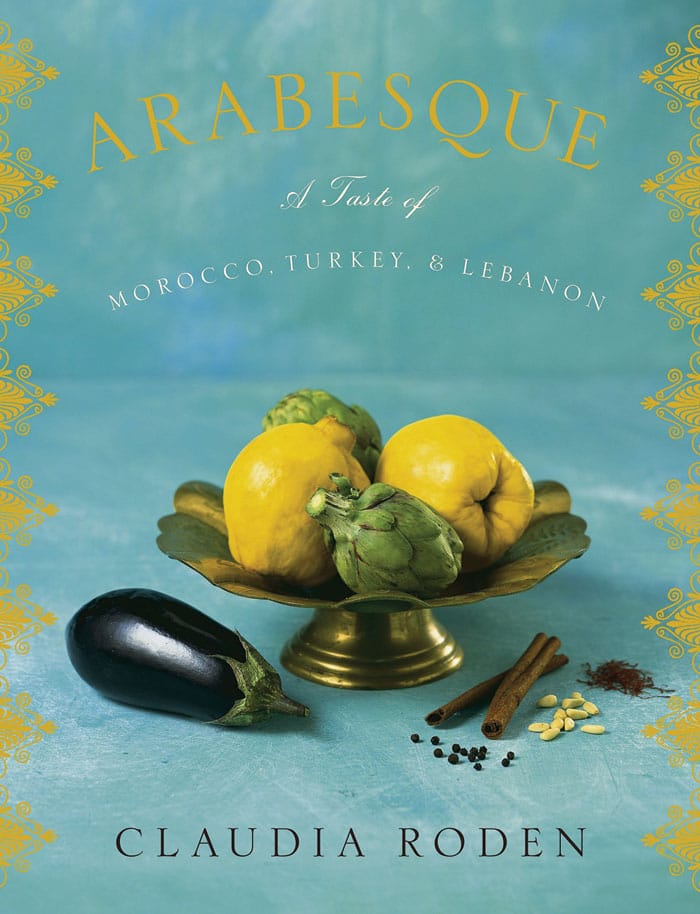
Among the books that will always have a place on my shelves, are those written by Claudia Roden. I have every single one of her books and each is more interesting than the next. They are filled with a wealth of knowledge and fascinating history.
In a twist of fate, Claudia is a first cousin of our beloved Freda Nessim, wife of Jose Nessim, founder of the Sephardic Education Center. Their mothers were sisters and they spent time living together in Columbia. Claudia’s family returned to Egypt, but left for England after the rise of the Arab Socialist Gamal Abdel Nasser.
Claudia Roden is truly one of the most celebrated authors in the cooking world. She was awarded Commander of the Order of the British Empire in Queen Elizabeth’s 2022 New Year’s Honors List in recognition of her services to literature.
In 2005, I bought her cookbook, “Arabesque: A Taste of Morocco, Turkey and Lebanon.” I loved it so much that I bought one for Sharon too.
It’s the kind of soup that I can imagine that my great grandmothers made.
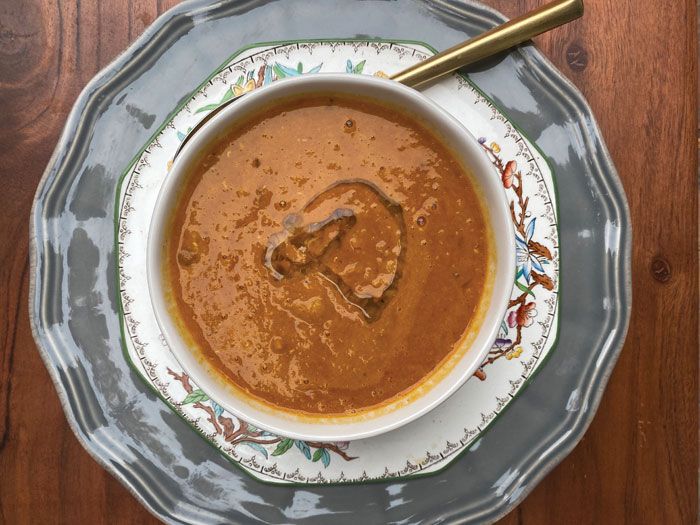
One of the very first recipes in the book that caught my eye was her red lentil soup. I made it and it’s truly remarkable. It’s the kind of soup that I can imagine that my great grandmothers made. It reminds me of the old saying “The type of soup that makes your bones fall into place.”
Over the years, I would make the soup for family dinners on cold winter nights. As my children grew older, they would request this soup whenever their braces were tightened and knew that chewing would be painful. I loved making it for my parents, knowing that it was so full of iron and protein and micro nutrients.
I made it again last week and the whole family enjoyed it. It’s the perfect fall soup. Hearty, nourishing and comforting.
We hope you try my version of this classic soup.
—Rachel
Rachel’s Creamy Red Lentil Soup
2 tablespoons olive oil
2 onions, finely chopped
1 1/2 pounds red lentils, picked and
rinsed
12 cups of boiling water
6 tablespoons tomato paste
2 bay leaves
1 teaspoon turmeric
1 teaspoon ground cumin
Salt and pepper to taste
Place the olive oil in a 6 quart Dutch oven over medium heat.
Add the onions and sauté until the onions are translucent.
Add the lentils, tomato paste, water, bay leaf and spices and stir well.
Increase the heat and bring to a boil.
Reduce the heat to low and cover the pot.
Cook at a low simmer until the lentils are soft, about 30-40 minutes, be sure to stir a few times.
Blend with an immersion blender till puréed. Add salt and pepper to taste.
Can be served with some fresh green baby spinach tossed in and allowed to wilt.
Rachel Sheff and Sharon Gomperts have been friends since high school. They love cooking and sharing recipes. They have collaborated on Sephardic Educational Center projects and community cooking classes. Follow them on Instagram @sephardicspicegirls and on Facebook at Sephardic Spice SEC Food.
One verse, five voices. Edited by Salvador Litvak, the Accidental Talmudist
Now the serpent was cunning, more than all the beasts of the field that the Lord God had made, and it said to the woman, “Did God indeed say, ‘You shall not eat of any of the trees of the garden?’”
– Genesis 3:1
Dr. Sheila Tuller Keiter Judaic Studies Faculty, Shalhevet High School
Believe it or not, just days before I was asked to write on this verse, my son Alon brought the very same verse to me. His Tanakh class had discussed this pasuk, and he had read it differently than this translation. The Hebrew word “kol” can mean “any,” as translated here. But it can also mean “every.”
Alon preferred the latter translation, rendering the snake’s incitement as, “Did God indeed say, ‘You shall not eat from every tree of the garden?’” The difference is profound. In the provided translation, where “kol” means “any,” the snake deliberately lies to the woman: God said not to eat from any of the trees. She is not misled by his falsehood and corrects him; we can eat from all the trees except one.
Yet somehow, the serpent’s lie is enough to knock the woman off guard. In Alon’s translation, the snake tells the truth. God indeed did tell them they could not eat from every tree; they were not to eat from the tree of knowledge. The woman does not correct the snake, but rather confirms his statement. It is precisely his factual accuracy that gives him the credibility that will lead humanity astray. The snake knows what he’s talking about.
The story of the serpent is archetypical. It informs us about the nature of temptation and sin. Lies can mislead, but only when we fail, willingly or otherwise, to recognize their falsehood. Far more pernicious are the truths or half-truths we tell ourselves.
Rabbi Aryeh Markman Executive Director, Aish LA
The snake wanted to have sexual relations with the woman. But any man knows you first have to engage in conversation with the intended. This is not a mythical story but Life before the Fall. The snake originally stood upright on two feet and could communicate and opposed all the good we felt inclined to do. The snake is known as the Evil Inclination, The Angel of Death, the Satan; you get the point.
In order to get the woman’s attention, the snake had to tell her an outrageous lie; “Did God really say that you may not eat from any of the trees?” This sounds like “You can’t do ANYTHING on Shabbos” or “EVERYTHING delicious isn’t kosher.” Is everything off limits and the only way to reach God is being an ascetic? Or is the physical world our opportunity to transform it into an ongoing spiritual party? The Evil Inclination will say anything to make a God-centric life as unattractive as possible. And since this encounter, it resides in you!
Marathon runners call it the Destructive Inner Voice. It redirects our intuitive God drive to fill our spiritual void with a craving for food, drink, drugs, sex, etc. all of which are permitted, but within context. Why did God set life up this way? Because Man wanted to feel challenged to achieve and not be spoon-fed in the Garden.
Be careful about who you rely on for life advice, as they could just be “a snake in the grass.”
Rabbi Elchanan Shoff Rabbi, Beis Knesses of Los Angeles
Picture this. I was sitting on the airplane, in my teens, dressed proudly and conspicuously as an Orthodox Jew with my Yarmulke and tzitzit traveling to or from Yeshiva. (This sort of thing happened any number of times; picture any one!) Invariably, I’d get into pleasant conversation with a stranger traveling alongside me. At some point – this question would come up. “Tell me something – you are an observant Jew – are you not allowed to do anything?!”
There were times that this was asked outright. Other times, it was implied, as stereotypes were silently foisted upon me by strangers who clearly struggled to process the lifestyle that I was following. I always tried to channel the answer given by our ancestress Eve when she was asked a question oh so similar. “We may eat from every single tree in the Garden! There is just one tree that we’re told not to eat from, because we’ll die if we do.”
We may do everything! We eat delicious foods, cherish friendships, celebrate happy times with friends, enjoy sunsets and beaches and love. There are a few things that we don’t do. God, who loves us endlessly has told us they are poison. So we avoid foods that He forbade. And we allow His instructions to guide our passions and ideals. We have everything that this Paradise of a world has to offer. If there is anything we don’t do, it is because we’re fully convinced that it’s not good for us.
Rabbi Lori Shapiro Artistic Director/ Open Temple
The English word “cunning” is charged with the pejorative, whereas “arom” in Hebrew is understood through attributes of “crafty, shrewd” or even “sensible.”
Here, the Nachash of Genesis is also the progenitor of free thought.
However, the implications go beyond the desire for knowledge, rising up into the lust for power.
Rabbi Nachman writes in Tiqeunei Zohar 93b of Moses’ struggles with his own passions through the symbolism of the serpent: “When a person controls his passions, the serpent turns into the staff, and if his passions control him, the staff turns into a serpent.”
A leitmotif of a dangerous wisdom energy throughout Torah, we must pause and ask: What role do such serpentine thoughts have in our lives? The serpent, a creative energy, provides the dynamic tension between wisdom and desire, and is the sweet spot where discernment, desire and wisdom alchemize into actions of either definitively destructive or divine deeds. May we all Slither with Caution.
Benjamin Elterman Screenwriter, Essayist, Speechwriter at Mitzvahspeeches.com
One of the most profound lessons I’ve learned from my Rabbi, Shalom Denbo, came from this very line. When the snake approaches Eve, he doesn’t say, “Doesn’t the fruit from the tree of knowledge look so tasty? Don’t you want to try it?” Instead, he asks her an innocuous question. Surely, the snake knows what God has prohibited. He uses this as a way to engage Eve in a harmless conversation.
But it’s the consequence of this conversation that pulls her attention to the tree and piques her interest. When our evil inclination tries to get us to veer away from our goals, it never starts with its disastrous aims at the forefront. It only looks for an opening.
I never plan to waste hours scrolling through Facebook, Instagram, YouTube, and Reddit, endlessly searching for my dopamine fix. It starts with pulling out my phone to harmlessly check my email (for the 40th time). It’s only once my phone is in my hand and unlocked, that my thumb gravitates to the Chrome app. Before I know it, I’m scrolling, refreshing, and checking stats like a mouse tapping a lever for a pellet.
The best way to beat our temptations is to cut them off before they start. If we’re not planning on drinking, why look at the wine aisle? If we’re trying to stick to a diet, why look at dessert recipes on Instagram? Don’t start the conversation.
The number six million has a singular resonance for Jews and people around the world. It is the number of Jews who were murdered in the Holocaust, a number that forever lives in a past we dare not forget.
Over the past several decades, billions have been invested to build memorials to this unspeakable tragedy. When we enter these memorials, our attention is naturally drawn to Death. How could it not be? We’re confronted with the dizzying notion of six million lives who were extinguished, each with countless stories and sub-stories that will be told and retold for generations.
The Holocaust is, above all, a story of Death. But in the grand picture of Jewish history, it is also a story of a people who refused to wilt away, a people who in the midst of despair doubled down on Life.
So the Holocaust is, above all, a story of Death. But in the grand picture of Jewish history, it is also a story of a people who refused to wilt away, a people who in the midst of despair doubled down on Life.
That’s why it may be time to ask this question: When commemorating the Jewish tragedy of the Holocaust, should we not also commemorate the Jewish miracle of survival?
The Jewish tradition draws connections between the extremities of life and death. The memories of the dead nourish the lives of the present. The lessons and wisdom we gain from the departed help our lives move forward. Death can strengthen our will to live.
When I think of the six million Jews who perished in the Shoah, I can’t help thinking of six million Jews who are thriving today in Israel, or six million Jews who are thriving in America. I can’t separate the millions who died yesterday from the millions who are thriving today. If anything, I see the thriving as our response to the dying.
I can easily visualize Holocaust memorials adding a wing that commemorates Jewish survival. Before leaving these memorials, visitors must be reminded that at our lowest moment, the Jews chose life above all; that from the ashes of our darkest days we chose to move forward with the redeeming light of life.
The universal lesson of the Holocaust is that evil exists and must be eradicated. That will always be true. But a larger, even deeper lesson is that life has the power to transcend and redeem death.
If a motto of the Holocaust is “never forget,” a motto of Judaism is “always forward.” As important as it is to remember, it is even more important to act and move forward. Living with purpose is memory in action.
If a motto of the Holocaust is “never forget,” a motto of Judaism is “always forward.” As important as it is to remember, it is even more important to act and move forward. Living with purpose is memory in action.
It’s astonishing to think that a few short years after the ultimate symbol of death devastated the Jews, the ultimate symbol of Jewish revival, Israel, was born. With its noisy and vibrant society, Israel celebrates life in all of its complicated and myriad ways.
Indeed, Israel may be the most powerful Jewish answer to the Holocaust, a reminder that the best way to honor the dead is to double down on life.
A great example of doubling down on life is the subject of our cover story this week, Sarah Botstein, co-producer of the acclaimed new PBS documentary “The U.S. and the Holocaust.”
Botstein’s extended family has a long, tragic and complicated history with the Holocaust. She tells our writer Brian Fishbach of her surviving paternal grandparents: “They never thought of themselves as victims, but as profoundly lucky to have made it [to the U.S.] and to have created as optimistic a future as they could for their children and their grandchildren.”
Botstein is a recipient of this optimistic future, a living testament to the Jewish will to live and get the most out of life. In fact, another documentary she worked on with Ken Burns has nothing to do with death and everything to do with life: the ten-part miniseries “Jazz” on PBS.
One documentary tells a chapter of a dark story and keeps the memories of the six million alive; another celebrates human creativity through the music of jazz. One honors the dead; the other honors the artists.
When Botstein worked on “The U.S. and the Holocaust,” she was leaning on the hard, primal themes of death and survival. When she worked on “Jazz,” she leaned on the liberating themes of the human imagination, on the human capacity to create art and beauty.
We need both.
The six million we lost in the Holocaust don’t want us to forget them, and we should never forget them. But by responding to their deaths by elevating life, we give meaning to their tragedy.
Ultimately, our best revenge against evil, our best response to those we lost, is to redeem life by creating beautiful memories that will conquer the dark ones.
Goodbye Oaxaca. I wasn’t supposed to be here, even though I’ve always dreamed of visiting. I knew if I came, it would trigger the pain of my failed marriage and everything I lost eight years ago.
But I shouldn’t attach painful memories to places. If I do, I let the shadows of my past keep me from living in the present.
Last Thursday morning was the day after Yom Kippur, the Jewish Day of Atonement. I had a ticket to Barbados to visit a soul sister and attend her conference. At 4:30 am I learned the flights were so delayed and infrequent and I’d miss the event. I’d taken time off from work and now had time and credit to fly anywhere.
So the morning after fasting and cleansing my soul, how did I react?
I thought of the sins I had atoned for and asked G-d for forgiveness. I repented for all the sins listed in the Mahzor (prayer book), and then it got personal.
I repented for something that isn’t recognized as a sin, but plagues me — busyness. Sloth is a sin in most traditions, but it’s not considered a sin to be busy doing, versus simply being. Well maybe it is for Buddhists, but not for Jews.
Beneath the surface, I recognize my busyness — taking care of my kids, clients, friends, community and the Jewish world — is a brilliant ruse to constantly feed my insecurity. I am only as worthy as the last mitzvah I performed or achievement I accomplished.
If I am simply still, or quiet, I cease to exist.
Or worse yet, I am alive, alone with my thoughts and the childhood traumas that excavated my bottomless pit of need to be loved.
Before the sun rose that morning, I made an impetuous decision to slow down and face my shadows in the most colorful, magical, artistic, delicious place in the world: Oaxaca, Mexico.
Miraculously, before the sun rose that morning, I made an impetuous decision to slow down and face my shadows in the most colorful, magical, artistic, delicious place in the world: Oaxaca, Mexico.
For me Oaxaca represents lost dreams. When I was married, my husband and I shared a deep love of folk art. On our honeymoon, we went to San Miguel Allende, Mexico, a world heritage site and international artist colony. We spent time with artists and began our art collection.
I fell in love with Mexico; the quiet dignity of the people, the music and dancing, the rich heritage, the intense intricate colors of the Alebrijes (the wood carved brightly painted spirit animals) and the 34 ingredients in my favorite recipe, mole sauce.
During our marriage we raised three beautiful boys, built careers and gave to the community.
We dreamed of going back to Mexico, especially Oaxaca, to discover the various villages, each famous for its own type of art: wood carvings, ceramics and weaving.
We never made it.
Eighteen years after that first trip south of the border, I walked away from my marriage and a bright, colorful house full of folk art treasures from Mexico. We had a large Brady Bunch-style staircase with a giant bookshelf along the stairs. Every other shelf was filled with Alebrijes. Our sons would sit on the steps and play with the wood carved sculptures, giving them names and narrate imaginary worlds.
When my family fell apart, I physically left with only my grandmother’s Shabbat candlesticks and my clothes. I told myself I only cared about my kids — losing my home and all the art in it, didn’t matter.
But subconsciously I could hear the Alebrijes on the bookshelves screaming, “Don’t forget us!
“We love you! We bring you joy! You’ll need us when you’re alone and sad.”
I never saw them again.
Until this week. When I met their makers.
I arrived in Oaxaca with no plan. No place to stay, no friends there, no list of where to go. I felt free and terrified. Not scared something bad would happen, but scared to let go of control. I trusted in G-d and the magic Oaxaca would reveal.
And it did.
I stumbled upon a beautiful, modest apartment facing an exquisite interior courtyard. It felt like home. I made lifelong friends. moved slowly. visited small villages. had extended times of watching artists make masterpieces. I took the bus. got lost. I lingered. I didn’t look at my phone.
I didn’t accomplish anything. I felt at peace.
Each day I experienced an incredible once-in-a-lifetime moment that pulled me out of my ego and into the beauty of connecting with strangers through music, dance, food and art.
A full symphony orchestra performing for locals in front of a simple church in the center of the Tlacolula market.
A wild parade with a full band, giant spinning balloons, and people in colorful costumes dancing simply to celebrate a couple’s anniversary.
A meal featuring a tasting of five different moles served with a detailed description of the ingredients and stories of the regions they were created.
A young ceramicist in San Bartolo Coyotepec who spent hours using her grandmother’s traditional techniques to make a mind-blowing contemporary art piece.
For the first few days, I felt emboldened — I manifested my Oaxaca dream. But by the fourth day I emotionally crumbled. I went to the village of San Martin Tilcajete to meet the artists who make the Alebrijes animal figures.
At first I was in awe of how each element of the creation process has been preserved for decades. All supplies come from the local region. The wood is from the Copal tree and is hand carved with classic tools. The brightly colored paint is from organic local sources that is mixed fresh every few days. They use and recycle every source. I was honored to chat with the masters and their students. They shared their creative freedom and pride in their work.
Then, when I wandered into their gallery and saw a collection of Alebrijes all together, it took me back to my marital home. I was overwhelmed with sadness, tears streamed down my face. The Alebrijes called out to me, “Don’t cry, we’ve never left you, we still love you, bring us home.”
I sat on a bench lost in time, admiring their whimsical nature while grief washed over me. Could I replace what I lost? Is it better to walk away and never look back?
Maybe I haven’t bought more Alebrijes because they represent the past and I believe I can only look forward. Maybe I haven’t remarried because I believe I had one shot and I blew it.
But ignoring my past and filling my life with busyness doesn’t fill the void. Fortunately I have my sons and my life is full of joy, friends, meaning and purpose.
But busyness has not brought love nor peace.
To stare into the void and believe that love and peace is possible, I choose to bring home one Alebrije. I looked at hundreds waiting for one to speak to me with silence. Finally I was drawn to an owl, flying in a shape I’d never seen. I gently picked it up and immediately felt at peace.
The student who had been my guide quietly appeared next to me.
“Do you know why the owl chose you? The Alebrijes are spirit guides, as they were depicted in the 20-day cycle of the Zapotec calendar. When the owl chooses you it means it’s time to face your shadows. The owl belongs to those who find wisdom in silence. Listen to the owl.”
Thank you Oaxaca and all your magic to gently guide me into my shadows. Now I begin the work to find peace, love and forgiveness in the quiet.
Heading back into my life, it will be hard not to get distracted by the busyness. But I can embrace quiet on the 25 hours of the Sabbath of my tradition. And each day I can sit quietly with my shadows and find wisdom in the silence.
Audrey Jacobs is a financial adviser and has three sons.
When most couples go on their honeymoon, they don’t bring a camera crew to document it.
But when comedian Daniel Lobell got married in 2015, he and his new wife Kylie Ora Lobell (Community Editor at the Journal) traveled to Spain with more than a honeymoon in mind. They went not only to celebrate their marriage; while there, Daniel performed stand-up comedy and retraced the steps of his Jewish ancestors who were murdered and exiled in the Inquisition of 1492.
A documentary film crew followed the couple, and now the footage is part of a new documentary and comedy special called “Reconquistador!” Minneapolis-based Stand Up! Records produced the film, which is going to be screened in theaters and festivals around the world, and available online.
The documentary begins with a brief history of the Jewish population of Spain since the Spanish Inquisition.In 1492, King Ferdinand II and Queen Isabella I issued an edict to exile the entire Jewish population. “Reconquistador!” is equal parts history, hilariousness and jamón (Iberian ham). As Orthodox Jews, the Lobells notice trayf everywhere. But Daniel qualifies the observations with the historical roots of the cuisine, particularly in what was formerly the Jewish quarter of the northeastern Catalonian city of Girona.
“This is the ruins of the people,” Daniel says in the film. “This is the story of how my family was forced into conversion, kicked out and then killed. I like tortillas, but all this jamón? Let’s not kid ourselves. We know why you’re hanging the jamón. It was to get rid of us.”
While walking around the former Jewish quarter, Daniel wastes no time approaching the townspeople to invite them to his comedy show.
“This is what happens when you get rid of all of your Jews,” Daniel says to the camera. “You need to bring in your comedians because there aren’t any left.”
As he approaches what looks to be centuries-old steps, he begins to wonder.
“You can feel the souls of the Jewish people that were here. And you can also feel that they wish they had escalators. They didn’t know what they were but … it’s a lot of stairs.” – Daniel Lobell
“When I see how beautiful this city is, it makes me even madder that all the Jews got kicked out because they had such nice real estate. Look at this place!” Daniel says. “You can feel the souls of the Jewish people that were here. And you can also feel that they wish they had escalators. They didn’t know what they were but … it’s a lot of stairs.”
This is the constant during the documentary. Everywhere Daniel goes, he sees traces of how the Jewish people of Spain were persecuted half a millennium ago. While following his explorations, the documentary is interspersed with clips from his comedy show at the Tinta Roja Theater in Barcelona. The show was recorded for an album on Stand Up! Records, “The Nicest Boy in Barcelona.”
In “Reconquistador!” Daniel is constantly wondering, “Why did Spain do this to the Jewish people?” He addresses the horror with humor and curiosity.
During a visit to the Museum of Jewish History in Girona, he explains how jarring it was to be in a museum about his exiled ancestors in a city from which they were exiled.
“It’s very tough for me. I was asking the people who work here if they’re Jewish and they’re like ‘No! Are you Jewish?’” Lobell lets out an uncomfortable chuckle. “Even in the Jewish Museum I feel a little bit uncomfortable, like yeah I’m Jewish. I almost feel like I’m a target within the museum.”
While signing the guestbook at the museum, he has yet another hilarious interaction.
A museum employee says, “You are important person?” Daniel says, “I think we’re all important people.”
Museum employee: “But you are?” Daniel: “Sure, yes.”
Museum employee: “But who are you?”
Daniel: “You sound like my therapist.”
Museum employee: “I don’t understand you.”
Daniel: “A lot of people don’t.”
Daniel’s excursion stands out for its earnestness. Most comedians use their jokes as a wall to resist vulnerability. Daniel is well aware of it and calls it out.
“It’s painful for me, and a big impulse for me is just to take it seriously and try to accept and live within the pain of it and not walk around this museum making jokes,” Daniel says in the film. “Because that’s kind of how I deal with pain a lot. And I wouldn’t say all my humor comes from that. A lot of it doesn’t. A lot of my humor comes from joy, but it’s the comedian’s way. It’s like, ‘Oh, if it’s painful, I’ll make jokes out of it. And if it’s great, I’ll make jokes out of it too.’”
Daniel’s journey isn’t about elevating himself, just cracking jokes or collecting fleeting moments of being a fish out of water. It’s about connecting with the past while not holding a grudge in the present.
“One part that we didn’t have in the film, because it was Shabbat, was that we went to Chabad in Barcelona, and there’s like armed guards in front of the Chabad with serious guns,” Daniel told the Journal. “And then they grill you to make sure that you’re Jewish before you can get in. And then they walked us to the rabbi’s house like we were fugitives walking through the streets of Spain, because we were coming from a synagogue. I felt like we’d done something wrong. Why do we have these armed escorts for just being ourselves to go to for dinner? It was insane.”
“Reconquistador!” is just over 60 minutes long, but will leave you wishing there were four more episodes in four more countries.
“Reconquistador!” is just over 60 minutes long, but will leave you wishing there were four more episodes in four more countries. It even features a mix of flamenco and Lobell’s jazz, which he plays on his “mouth trumpet.”
Daniel, 39, lives in Los Angeles but hails from Long Beach, New York. In 2004, he started the first podcast to feature interviews with comedians, “Comical Radio,” and among his guests were George Carlin, Larry King, Chris Rock and Jackie Mason.
The comedian founded The Podcast Bus, a mobile recording studio inside of a converted school bus in LA, and he creates comic books about his life called “Fair Enough.”
In the final scene of the film, Daniel discusses his bittersweet feelings about being in Spain. It’s a poignant and memorable moment, and one that’s relatable to so many Jews. Of course, in his signature style, he ends the moment with a joke.
”[Spain] is emotional and fun and it’s beautiful. It brings up a lot of mixed feelings for me,” Daniel says. “It’s the home I got kicked out of in so many ways. Or maybe not that many ways. But at least in one way. I can’t be that deep. I just want to let everyone know, I’m not that deep. I am probably that deep internally but I’m never able to articulate it that well. But I’m probably adequately deep.”
As a producer with Ken Burns’ production company, Florentine Films, Sarah Botstein is one of the three director-producers of the new PBS documentary “The U.S. and the Holocaust,” along with Burns and Lynn Novick. The three have collaborated together since 2001, when they produced the ten-part miniseries “Jazz” on PBS. Botstein, Burns and Novick are to documentaries what “Magic” Johnson, Kareem Abdul-Jabbar and Pat Riley of “Showtime”-era Lakers were to the NBA — the gold standard.
Since “The U.S. and the Holocaust” began production in 2015, Botstein has had a special connection to the content of what would become an acclaimed three-part miniseries.
Long before the team started work on the series, and decades before Botstein started working at Florentine Films, the history of the United States in relation to the Holocaust was an ever-present force in her formative years.
Botstein’s paternal grandparents were Jews living in Eastern Europe during the rise of Nazism in the 1930s. Her paternal grandmother Anne (born Ania Wyszewianska) came from an upper middle class Jewish family along the Russia-Poland border. She relocated to Switzerland while training in pediatrics. Anne also had an older brother named Leon who was one of the organizers of the Warsaw Ghetto uprising in 1943. Leon would tragically be murdered during the uprising. On the other side of that family, Botstein’s great-grandfather’s sister committed suicide when her children were taken away from her to a death camp.
Botstein’s paternal grandfather Charles was born to a poor family in Odessa, Ukraine. Charles served in the medical corps in the Polish Army during the mid-1930s. He and Anne met while in medical school in Zurich and married in 1935. Together, as World War II began to consume Europe, the two would obtain refugee status in neutral Switzerland, but as foreign Jews, they couldn’t obtain Swiss citizenship. Between the rise of Hitler and the end of World War II, it took Botstein’s grandparents Anne and Charles 14 years to immigrate to the United States. They first filed paperwork in 1935 and were continually told that America’s quotas were full until they were finally admitted in 1949, through assistance from the Hebrew Immigrant Aid Society. Even as accomplished doctors, immigrating to the U.S. was a daunting task.
Anne and Charles would go on to have three children, one of which was named after Anne’s late brother Leon.
In the U.S., Leon Botstein would become a revered symphonic conductor. And since 1975, he has served as president of Bard College in New York’s Hudson Valley. With his first wife Jill, they would have two children, Sarah and Abby. Leon’s musical prowess still influences Sarah, as she takes an active role in the music direction in all of the Florentine Films projects she’s worked on.
Sarah, the elder child of Leon and Jill, recalled special memories while growing up with her father’s parents nearby.
Sarah Botstein directing a camera crew
“I was extremely close to my father’s parents; they were like a second set of parents to me,” Botstein told the Journal. “They lived in the Bronx when I was a child. My father was very close and attached to them and he would stop by and see them on our way in and out of the city and on vacations. I often stayed with them. And then my parents divorced in 1979, and my sister [Abby] was killed tragically in a car accident in 1981. After that, I spent even more time with both my grandparents. So they were a very, very active influence on my young life. And then I went to Barnard, and in my senior year in college, my grandfather got quite sick and died. And my aunt and I spent a huge amount of time taking care of him in his last few months of life.”
In “The U.S. and The Holocaust,” family photographs of Botstein’s grandparents as young children are woven into the documentary (but not identified).
“There are some of our family photographs in the series, we [the filmmakers] all decided that if we’re going to find archives of communities around the world and they’re related to some of us, that’s sort of special for those of us who worked on the film. You don’t know who’s in the images. So there are three images of my family in the final cut of the series, and one of them is a picture of my grandmother’s family — she’s a baby in the image.”
Botstein reflected on how the shortened lives of her great uncle Leon and great-great aunt and her children affected her mindset while directing and producing “The U.S. and the Holocaust.”
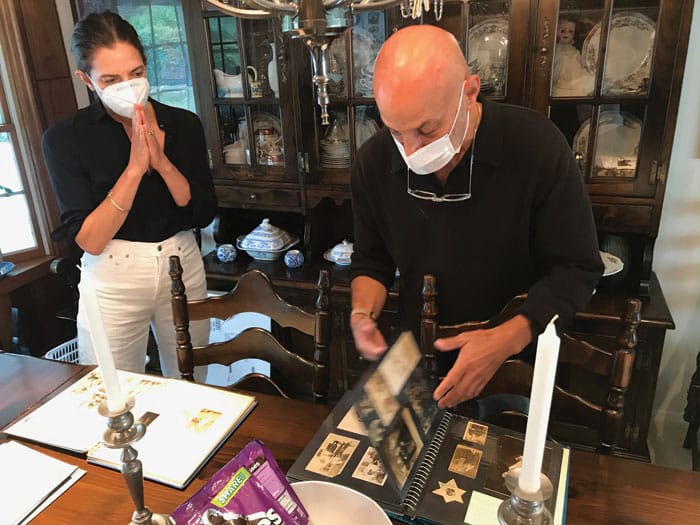
Sarah Botstein and interviewee Daniel Mendelsohn look through family photos.
“Both of those, to me, being a part of the uprising and then taking your own life, and your children having just been sent to their death — are very interesting ways to think about agency, how young Jews thought about what was happening,” Botstein said. “It’s similar for me — one of the more moving scenes in the film, which is one of the last scenes we edited, is the Warsaw uprising scene, because we learned about the Ringelblum Archives while we were recording narration. And that’s the incredible material that the Jews in the [Warsaw] Ghetto buried in these milk cans so that they would be remembered. We have a scene in the film about it. And tied to that in terms of my family, my great-uncle, whom I never knew, but was a legend because he is who my father is named after. And he stood up against the Nazis in just a remarkable way. And then my great-aunt I never knew, and her children — to think about that and why they made the choices they made.”
Though they were refugees greatly affected and displaced by the Holocaust, Botstein’s paternal grandparents were very much aware of how close they were to being victims.
“They never thought of themselves as victims, but as profoundly lucky to have made it [to the U.S.] and to have created as optimistic a future as they could for their children and their grandchildren,” Botstein said. “They’re not survivors in the traditional sense. They’re witnesses to history.” She emphasizes that when presenting history, you have to be very careful with the terms “survivor,” “victim,” and “witness” when describing who got out and why. Her grandparents had friends and extended family who were all three.
“I don’t actually remember a time where I wasn’t surrounded by lots of older Jewish people, some of whom had recently come to America, some of whom had direct relationships to the ghettos, the concentration camps, hiding, survival…” – Sarah Botstein
“I don’t actually remember a time where I wasn’t surrounded by lots of older Jewish people, some of whom had recently come to America, some of whom had direct relationships to the ghettos, the concentration camps, hiding, survival and others who like my father and my grandparents (who were both in medical school in Switzerland during the war) helping to save the relatives that they could and try to get papers,” Botstein said.
Botstein remembers her grandparents as incredible characters who hosted fun and hilarious family dinners. They spoke a combination of Polish, Russian and German — their descendants would call it “Botschtein-ese.” Her grandfather Charles was a “hilarious, larger than life character.” When he passed away at age 83 in 1994, The New York Times described him as “a pioneer in the use of radiotherapy in the treatment of uterine cancer.” Botstein’s grandmother Anne went deaf in her forties but continued practicing medicine. She even sewed a pillow for her granddaughter Sarah on nearly every birthday.
It comes as no surprise that, before becoming a part of one of the most respected documentary teams in television today, Botstein was exposed to powerful historical documentaries and books in her teens.
It comes as no surprise that, before becoming a member of one of the most respected documentary teams in television today, Botstein was exposed to powerful historical documentaries and books in her teens. In particular, she remembers when her father rented the 1985 French nine-hour documentary “Shoah” by Claude Lanzmann that features no archival footage.
“I really remember how profoundly that film affected him and why it was important for him to talk to me about it,” Botstein said. “I definitely remember reading Anne Frank, I remember my father in particular giving me books by Isaac Bashevis Singer — Jewish writers and thinkers, and hearing names — my father knew Hannah Arendt.”
At Columbia University-Barnard College in New York, Botstein majored in American Studies. While there, she became fascinated in how postwar generations were thinking about American Jewish identity, not through history so much as through literature. She wrote about Saul Bellow’s “Seize the Day” and Philip Roth’s “Goodbye, Columbus.”
After college, Botstein wasn’t quite sure what she wanted to do for a career, so she took a job as an account assistant at a public relations firm that had General Motors as a client. It just so happened that General Motors was then one of the primary underwriters for Ken Burns’ PBS documentaries dating back to 1984 with “The Shakers: Hands to Work, Hearts to God.”
She was nine when Burns’ first PBS documentary, “Brooklyn Bridge,” was released in 1981. When “The Civil War” was released in 1990, Botstein remembers everyone in her family and her college watching it.
And then while working for the PR firm representing one of Burns’ primary underwriters, Botstein jumped at the chance to meet him.
“I met Ken and I thought he was just charming and brilliant,” Botstein said. “And I remember ‘The Civil War’ coming out. I was in college and at that point, there was so much written about the use of still photographs to communicate moving images in film. And that was very interesting to me. I thought [Burns] was terrific. I loved whenever he had a film come out.”
While working in the PR firm, Botstein was dabbling in photography, and credits her stepfather Douglas Baz, a photographer, as an influence. Combining that with what she describes as “a visual way of thinking about history,” Botstein eagerly took advantage of the opportunity to join Burns’ team.
While working in the PR firm, Botstein was dabbling in photography, and credits her stepfather Douglas Baz, a photographer, as an influence. Combining that with what she describes as “a visual way of thinking about history,” Botstein eagerly took advantage of the opportunity to join Burns’ team.
“He was working on the ‘Jazz’ film, and they had one associate producer seat to fill, and he described the job to me as being ‘his wing man,’” Botstein said. “And I remember calling my parents and saying I’ve got this opportunity. I was living in New York at the time, and they said, ‘Don’t hesitate. Say yes. Unbelievable opportunity.’ I packed up my Jeep and went to this teeny tiny town in New Hampshire. My friends thought I was totally nuts. I didn’t know anybody. It was a total blizzard. I remember getting there, and the first day in the editing room — it was the first day we were editing ‘Jazz.’” The ten-episode, 19-hour miniseries premiered in January 2001 to rave reviews. And Botstein knew she had landed in the right career path.
“Being in the editing room is really an exceptional experience,” Botstein said. “It’s a very open, very collaborative, very intense, very brilliant place to be. And I thought, ‘I am so lucky. How did I ever end up here? I don’t know enough about film to have anything to contribute.’”
During the production of “Jazz,” the Florentine Films production team was still cutting on actual film rather than digital. Botstein had to fine-tune her talents at splicing pieces of film together to tell a story. She did research on the art and motifs of disco. She recalls a steep learning curve to become immersed in the history and catalogs of jazz pioneers Ella Fitzgerald, Sarah Vaughn and Billie Holiday.
“After ‘Jazz,’ Ken and Lynn [Novick] sat down, and I sort of got hitched to Lynn’s films and worked on ‘The War’ with her,” Botstein said. Over the next 20 years, they would collaborate on “Prohibition,” “Vietnam,” “College Behind Bars” and “Hemingway.”
“College Behind Bars” has a special significance to Botstein, as her husband Max Kenner is the founder of the documentary’s focus: The Bard Prison Initiative (BPI). Kenner founded the BPI as a way to enroll “incarcerated women and men in academic programs that culminate in degrees from Bard College.”
“I have an extraordinary husband,” Botstein said. “Hearing about what he does and being around him is a great joy of my life.” They have two children, ages 11 and five.
Now with her own family, it’s not lost on Botstein for a moment how present-day antisemitism, xenophobia and hatred are a scourge in the U.S. that needs to be called out. “The U.S. and the Holocaust” was originally intended to be released in 2023, but the contentious climate led the filmmakers to release the series this fall.
“Ken really deserves all the credit for that decision,” Botstein said. “I think he was watching what was happening in the world and thought, ‘the sooner this film gets out for our country’s conversation, the better.’”
Burns spoke with the Journal about the urgency to release the film as soon as possible.
“We had a conversation with the head of the ADL, who reported that the level of antisemitic acts are at the level of the 1930s in the United States,” Burns told the Journal. “There is an urgency to almost every aspect of it.”
The team collapsed what normally would take them a year into six months so that “The U.S. and the Holocaust” could be released as soon as possible.
In the pre-pandemic years, Botstein and the Florentine Films team collaborated while sitting in a horseshoe shaped alignment of edit bays and research desks at the Walpole, New Hampshire studio. They have music stands with scripts, and work with pencils and different colored pens and lots of sticky notes. Botstein calls it a “fairly old-fashioned way” for a tiny group to put their heads together. But even when collaborating via Zoom during the pandemic, they made it work. Botstein said that the entire team “just brought their A-game” in a slightly different way than they would normally do.
“Ken and I often talk about this, and Geoff [Geoffrey Ward, lead writer of Burns’ films since 1984] too, treading over the same period in history over and over again through a slightly different lens is really interesting,” Botstein said. “In so many of our films, we’re looking at the ‘20s, the ‘30s and the ‘40s. We’ve done a film on Hemingway, we’ve done a film on Prohibition, we’ve done a film on the Second World War, and here we are again thinking about this period of time. Completely different lens.”
The Journal asked Botstein about the rise in antisemitism in the U.S. today, and in particular, this month—with the release of the “The U.S. and the Holocaust” coinciding with a spike in headlines around antisemitism.
”These are dangerous times and we need to be vigilant.Our film is just one reminder of how precious American democracy is.”
– Sarah Botstein
“The rise of mainstream antisemitic rhetoric from powerful and influential people is frightening,” Botstein said. “America has a long and continuous history of nativism, racism, xenophobia and antisemitism. The current climate shows that this history is not only relevant but instructive, and should be a guide and a warning. These are dangerous times and we need to be vigilant.Our film is just one reminder of how precious American democracy is.”
The Florentine Films team is currently producing several new films. Botstein is working on a six-part series on the American Revolution and a project on President Lyndon B. Johnson’s life and presidency. Currently, “The U.S. and the Holocaust” can be streamed on the PBS website, PBS app and on all streaming devices.
Rabbi Kevin Lefkowitz has had a busy year. In June, he got married to Melissa Carp Lefkowitz, and the next month, he started his first full-time rabbinical position at Adat Shalom in Los Angeles. So far, he’s had more than a warm welcome.
“The first time I came to Adat Shalom and was introduced as the next rabbi, it was the same weekend as my ordination,” Lefkowitz said. “My parents were in town and so were Melissa’s. We all went to shul, and right after services, all six of us were swarmed. We were all in different conversations with people. It was so welcoming and wonderful that they wanted to get to know us. That’s Adat Shalom.”
The rabbi will be working with 170 families at the congregation, which caters to a mix of young families and older people. One of the plans he’s working on is holding a rotating Shabbat program, where once a month, new families host each other. Lefkowitz is also going to be teaching classes on learning the blessings, prayers and Jewish practice, and the shul will host a community Shabbaton in the coming year.
“The way we do programming is that the community leads it, since they know what they want,” he said. “We’re really tapping into the community’s needs and desires before putting on a program, which we think is the best strategy.”
Lefkowitz grew up in Houston, Texas, and attended Congregation Beth Yeshurun as a child. He was raised in a Conservative Jewish home, but attended Orthodox day school through middle school.
“We kept kosher and went to shul every Saturday morning,” he said. “We were observant Conservative.”
The rabbi would go to synagogue with six to eight other kids regularly; three of them were his siblings.
“I loved it,” he said.
Lefkowitz thought he wanted to go into politics when he was older. But in his freshman year of college, with a little help from his parents, he came to the realization that he’d like to serve the Jewish people instead.
“I told my parents I liked helping people and being in the room to make decisions that help people on a greater scale,” he said. “They said I should be a rabbi. It really clicked.”
After graduating from the University of Texas, Lefkowitz went right into rabbinical school at the Ziegler School of Rabbinic Studies at American Jewish University, where he also earned his MA in Education.
“I became a Conservative rabbi because I’m an halachic Jew, and I try to connect as many people as I can to the mitzvot,” he said. “I also recognize that in the 21st century, there is a constant balance between tradition and modernity, and for me, the Conservative movement strikes that balance.”
The rabbi, whose wife is graduating soon from rabbinical school at Hebrew Union College, finds that Adat Shalom is very heimish (homey).
“It’s self-selecting to live in a city with many big shuls, and I chose a small and intimate community,” he said. “It’s the type of community that I knew would welcome my family and I with open arms.”
Lefkowitz’s goal in his work is to figure out ways that he can help his congregants engage with Judaism.
“The ways that Jews have connected to Jewish life in the past aren’t necessarily the ways the next generation of Jews will connect … We need to be highlight Jewish rituals and meet people where they are.”
“The ways that Jews have connected to Jewish life in the past aren’t necessarily the ways the next generation of Jews will connect,” he said. “The Jewish rituals are the same, and they have worked for thousands of years. We need to highlight Jewish rituals and meet people where they are.”
Sometimes, a person is primarily connected to Judaism by living among other Jews. Other times, they feel connected when they say a bracha or take a class.
“Mainly, it’s about living an authentic Jewish life,” Lefkowitz said. “Show people that what we are doing is both fun and heartbreaking and the entire scope of human emotion. It’s living.”
Fast Takes with Kevin Lefkowitz
Jewish Journal: What’s your favorite Jewish food?
Kevin Lefkowitz: It’s not traditionally a Jewish food, but my mom and grandparents made fajitas when I was growing up in Texas.
JJ: So, what’s your favorite Texas BBQ food?
KL: A good smoked brisket.
JJ: Are you taking any fun trips soon?
KL: Mel and I are planning a trip to San Francisco. We’re foodies, so we’re figuring out a way to find the best food there.
JJ: What would you be doing if you weren’t a rabbi?
KL: If you asked me this five or six years ago, I’d say being at the front office in baseball. I’d get some sort of statistics degree and get involved with base operations. But now, I can’t imagine my life outside of the rabbinate.
The prominent American Branch of the International Law Association (ABILA) has apparently been hijacked by the advocates of modern antisemitism. Sadly, illustrious New York law firms, the New York Bar Association, and Fordham Law School are among their unwitting enablers.
From October 20 to October 22, 2022 the ILA’s American Branch will hold its annual meeting in New York City. This year, the program includes a panel dedicated to the demonstrable lie that the Jewish state is racist, guilty of the crime against humanity of apartheid, and therefore deserving of criminal prosecution and economic ruin.
For the past month, the online program described the annual meeting on “Racism and the Crime of Apartheid in International Law” this way: “Today, in contexts across the world, from Myanmar’s abuses of Rohingya Muslims in the Rakhine State, to the Israeli authorities’ systematic oppression of Palestinians, to the Chinese government’s actions in Xinxiang against Uyghurs and other Turkic Muslims, human rights organizations, UN bodies, experts, and scholars have concluded that the crime of apartheid is being committed with impunity.” In just one paragraph, the authors did their very best to casually lump Israel in with some of the worst human rights abusers in the world.
According to the official program, the Opening Plenary and Reception is taking place at the New York City Bar Association. The Centennial Gala is hosted by the law firm of White & Case LLP, the Opening Reception by Debevoise & Plimpton LLP, and the panel itself by Fordham Law School. The panel’s list of participants is a who’s who of Israel-bashing advocates and nobody from the other side. This stands in marked contrast to the promise of the ILA to exemplify a “diverse and inclusive community of individuals working or interested in international law,” the promise of legal practitioners to hear and evaluate all sides fairly, and the promise of the legal academy to ensure students and faculty are educated, not brainwashed.
Brainwashed they will be, however. The panel includes a UN official, E. Tendayi Achiume who charges Israel with vaguely defined international crimes at every chance she gets—sometimes working with an Israeli-designated terrorist organization to do so. Her UN anti-racism mission has a well-documented blind spot when it comes to advocating for racial and ethnic justice for Jews, and in 2021 Achiume herself signed a wildly antisemitic letter expressing outrage that UCLA dared to condemn antisemitic attacks in the United States (during a massive uptick of such incidents) without also condemning “Jewish supremacists” in Israel.
The panel also includes an academic, Victor Kattan, who claims that only the non-existent State of Palestine has sovereign title over Jerusalem, and has encouraged the Palestinians to file claims against the United States at the International Criminal Court for daring to move the U.S. Embassy to Israel’s capital city. But the highlight is probably Omar Shakir, an NGO activist and extremistwho has publicly supported and defended murderous terrorists and antisemites. For years he advocated and worked for the antisemitic Boycott, Divestment and Sanctions (BDS) movement, and then, when Israel revoked his work visa for engaging in boycott activities, lied and claimed that he had not done so. Since then, he has worked hard to mainstream the thoroughly debunked Human Rights Watch report that denied Israel’s legitimacy as a Jewish state, dismissed its security concerns, and accused Israel of apartheid.
Lest you be concerned that a neutral moderator might ask these folks some hard-hitting questions for the benefit of those watching who may not know better, rest assured that the rabid anti-Israel spell will not be broken. The moderator is Mai el Sadany, a human rights attorney who, among other things, has demanded that the NY Bar Association rescind an invitation to Dani Dayan, the former Consul General of Israel in New York, falsely accusing him of racism, apartheid and other criminal activity. She has also accused the United States of collaborating with Israel to cover up human rights violations.
Lest you be concerned that a neutral moderator might ask these folks some hard-hitting questions for the benefit of those watching who may not know better, rest assured that the rabid anti-Israel spell will not be broken.
For the record, because facts matter, apartheid involves an institutionalized regime of systematic oppression and domination by one racial group over any other racial group or groups committed with the intention of maintaining that regime. Israeli Arabs enjoy full equal rights, and hold positions in the highest levels of every branch of government. Israel does distinguish between citizens and non-citizens, as does every country, but that has nothing to do with race, which is why when Amnesty International made the same claim of apartheid a few months back, they had to literally invent a new definition that was not based on race in order to play a game of antisemitic double standard “gotcha” with the Jewish state.
It is dangerous when antisemites use the imprimatur and gravitas of once-respectable institutions to mainstream hate and lies. This is particularly so in a perilous environment of rising antisemitic hated and the inextricable bond between accusing Israel of apartheid and antisemitism. We let these claims go unchallenged at our peril because study after study has shown that this kind of inflammatory, discriminatory, antisemitic, anti-Zionist rhetoric is actually dangerous, and leads directly to the kinds of antisemitic attacks against innocent Jewish people and institutions that we are seeing around the world.
Late last week, the law firms in question and Fordham Law School began to receive inquiries about why they would host and celebrate such a gathering. In response, the ABILA did two things: First, the program description in the online brochure was reworded so it did not explicitly accuse Israel of international crimes. Second, they added an additional speaker, ostensibly to bring balance to the panel. The speaker they added, however, Mia Swart, is an Al Jazeera reporter who has done fawning interviews with Omar Shakir “calling out Israeli apartheid,” and just last week tweeted in support of another event in which the leader of an Israeli-designated terror organization gave a talk on “Apartheid and Israel’s Assault on Palestinian Civil Society.” So much for offering a different perspective.
These changes were clearly made so that the hosts could have plausible deniability. They don’t have it. They know exactly what is going on—at their expense, and at the expense of all the attendees who deserve better.
Dr. Mark Goldfeder, Esq. is an international lawyer and Director of the National Jewish Advocacy Center.


 Los Angeles poet Rick Lupert created the Poetry Super Highway (an online publication and resource for poets), and hosted the Cobalt Cafe weekly poetry reading for almost 21 years. He’s authored 26 collections of poetry, including “God Wrestler: A Poem for Every Torah Portion“, “I’m a Jew, Are You” (Jewish themed poems) and “Feeding Holy Cats” (Poetry written while a staff member on the first Birthright Israel trip), and most recently “I Am Not Writing a Book of Poems in Hawaii” (Poems written in Hawaii – Ain’t Got No Press, August 2022) and edited the anthologies “Ekphrastia Gone Wild”, “A Poet’s Haggadah”, and “The Night Goes on All Night.” He writes the daily web comic “Cat and Banana” with fellow Los Angeles poet Brendan Constantine. He’s widely published and reads his poetry wherever they let him.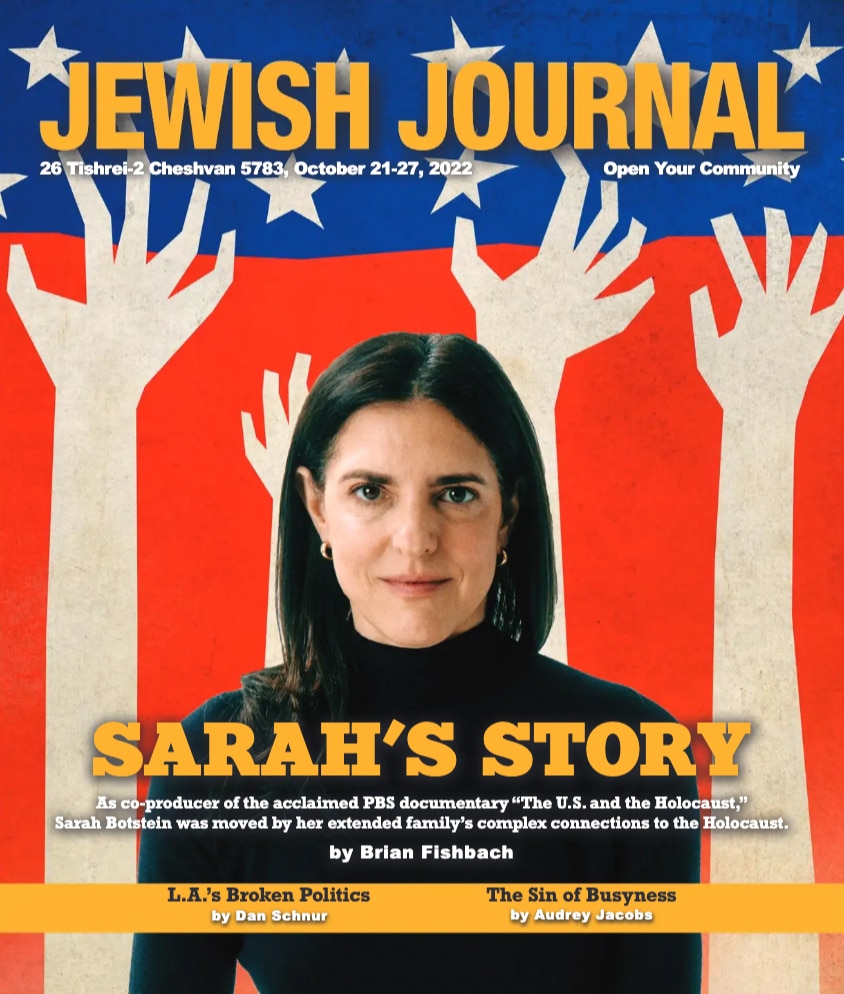
 In a twist of fate, Claudia is a first cousin of our beloved Freda Nessim, wife of Jose Nessim, founder of the Sephardic Education Center. Their mothers were sisters and they spent time living together in Columbia. Claudia’s family returned to Egypt, but left for England after the rise of the Arab Socialist Gamal Abdel Nasser.
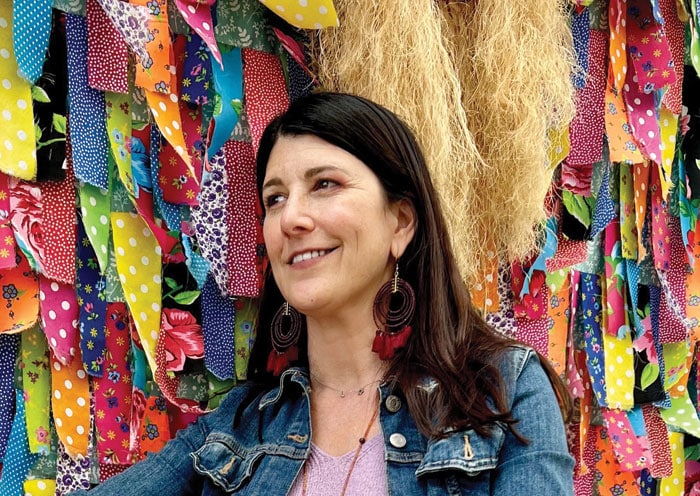

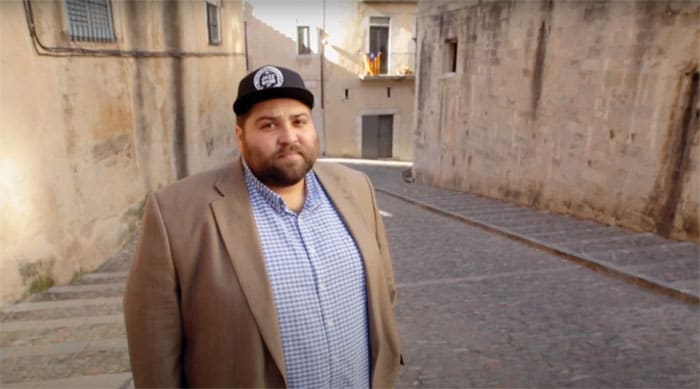
 The documentary begins with a brief history of the Jewish population of Spain since the Spanish Inquisition.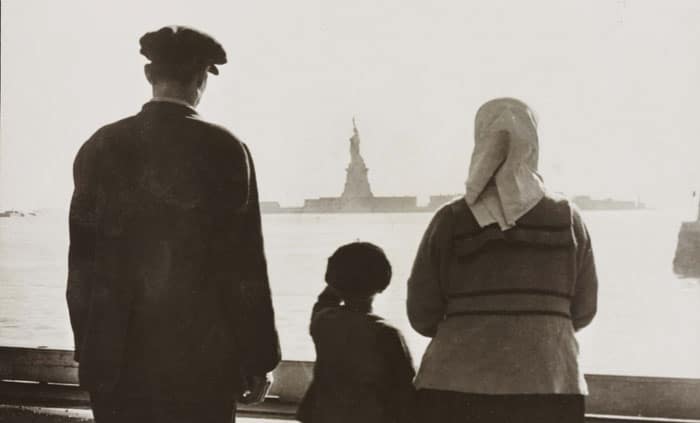
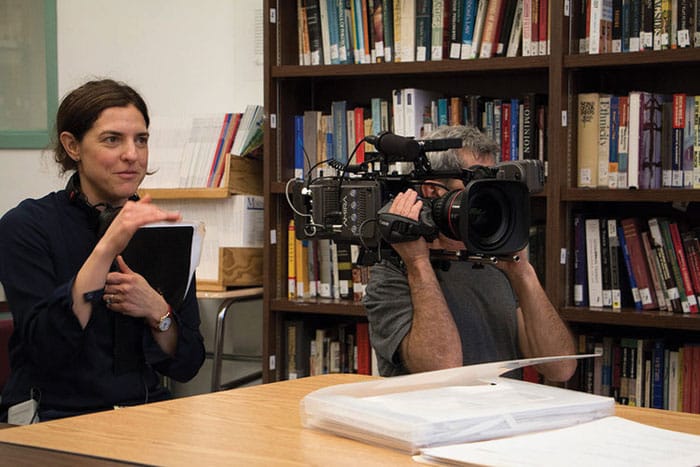
 “I really remember how profoundly that film affected him and why it was important for him to talk to me about it,” Botstein said. “I definitely remember reading Anne Frank, I remember my father in particular giving me books by Isaac Bashevis Singer — Jewish writers and thinkers, and hearing names — my father knew Hannah Arendt.”
