fbpx

August 31, 2022

Fundamentalist Chic

Catholicism is trending. Not only are high-profile New York hipsters becoming church-goers, as detailed in Julia Yost’s New York Times essay, “New York’s Hottest Club Is the Catholic Church,” but now they even have an unofficial celebrity representative in Shia LeBeouf, who converted to Catholicism after preparing for his role as Padre Pio, a Catholic saint and mystic. 

These are both stories about young people discovering something old as if it is something new, but the connection goes a bit deeper than that. It isn’t just that these young people are finding themselves drawn to Catholicism, rather, it’s the fact that the draw seems to be an aesthetic one, which is to say that their interest isn’t primarily in doctrine or faith, but rather in the general vibe of stained glass, gothic cathedrals, incense, chanting, etc. 

One of the ways in which this manifests is in a preference for the Latin Mass, as opposed to a Mass delivered in the vernacular. The Latin Mass is as evocative as it is inscrutable, and this is precisely its appeal. As LeBeouf explains it, the Latin Mass puts him “squarely in the feeling realm.” He can’t argue with the words because he doesn’t “know what they mean,” leaving him feeling “sacred and connected.” 

The New York hipster Catholics also prefer the Latin Mass, sometimes going so far as to espouse the far-right doctrines associated with such a preference, such as “sedevacantism,” a doctrine which views the current pope as illegitimate. According to Yost’s essay, however, this preference for stringency is “mostly aesthetic.” This is not necessarily fundamentalism or extremism. Rather, it is an embrace of fundamentalist chic. 

One could look at this trend as little more than hipster irony. In a world that prizes the glassy, lifeless decor of an Apple Store, cultural contrarians wander into a cathedral. In a world papered with pride flags and BLM signs, renegades don rosaries. 

Indeed, counter-cultural ironic Catholicism is nothing new. Yost herself points out that Catholic conversions were common in the 19th century bohemian “Decadent movement,” led by Oscar Wilde. But I suspect that what’s going on here is a little different than that. Yes, these new Catholics are being deliberately counter-cultural, but I don’t think they are aiming to shock. Yes, they are in it for the aesthetic, but I don’t think that their interest is superficial. 

The word “aesthetic” has acquired new valences in the TikTok era. A TikTok aesthetic is more than just a look. It is a way of being in the world and perhaps also a way of perceiving the world. 

Two of the more famous aesthetics from the TikTok universe are known as “Dark Academia” and “Coastal Grandmother.” The former is all about musty libraries, gothic architecture, school uniforms, leather-bound tomes, and cups of steaming tea. Think Harry Potter and the Dead Poets Society. The latter is all about white linens, capri pants, beach houses, Adirondack chairs, and paperback books with folded-back covers. Think Diane Keaton or Diane Lane in a Nancy Meyers movie. 

It’s possible to write this off as playacting, but it’s also possible that the people who embrace such aesthetics are trying earnestly to tackle the age-old question of the good life—even if this means doing so from the outside in. 

This isn’t really so unusual. Our intuitions about what makes a life good are intimately tied up with images. A rustic cabin is a stand-in for a life of simplicity. A garden is a symbol of connection with nature. A sunny living room recalls the importance of family life. 

Moreover, aesthetics are a crucial way that religions communicate their own visions of the good life. Zen poetry and painting stylistically convey Zen ideas about emptiness and impermanence. The simplicity of a Quaker church communicates Quaker ideals of modesty. The elaborate garments used to adorn a Torah scroll send a message about the centrality of scripture in Jewish life.

I myself am endlessly enchanted with Jewish aesthetics — in ways both earnest and ironic. I love walking past tiny shtibls crowded with holy books and serious swaying men in prayer. 

I myself am endlessly enchanted with Jewish aesthetics—in ways both earnest and ironic. I love walking past tiny shtibls crowded with holy books and serious swaying men in prayer. I love the Ner Tamid with its buzzing light bulb. I love the sight of a Torah scroll adorned in tinkling metal baubles and the look of Hebrew calligraphy penned onto parchment. 

Of course, there is more to Judaism than the way it looks. There is liturgy, philosophy, halacha, history, and music. Those books with the gold-embossed spines are not mere set-dressing—they call out to be read and taken seriously. 

None of this, however, is at odds with a love for the aesthetic. Indeed, the reason that the aesthetic is alluring is because of the ways in which it alludes to those very depths. 

Are the hipster Catholics just striking a pose? Is Shia LeBeouf just method acting? I’ll leave that to their confessors to sort out, but I suspect that the reason the aesthetic of Catholicism appeals to them is because they sense that there is something deeper there for them to explore.

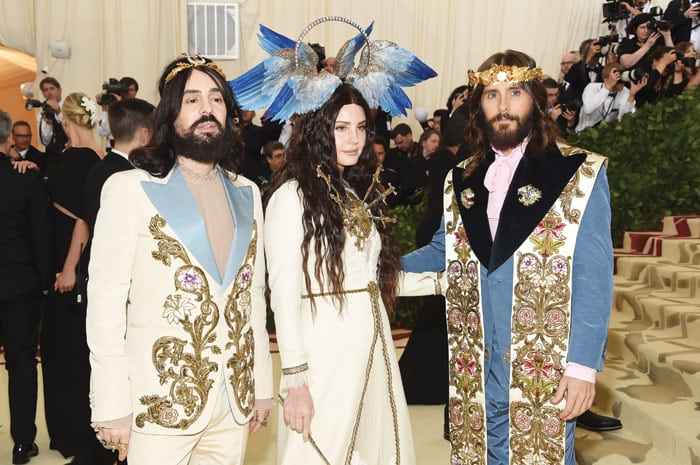
In 2018, the Met Gala’s theme was “Heavenly Bodies,” and paid homage to papal pomp and Vatican-inspired opulence. The New York Times’ resident Catholic columnist, Ross Douthat, responded with a plea to “make Catholicism weird again,” by “[reclaiming] the inheritance on display at the Met” and embracing the Church’s “weirdness and supernaturalism.” 

Since Vatican II, Douthat noted, the church has been on a steady course of aesthetic modernization, one characterized by “modernist and even brutalist church architecture, casual dress, guitar music, [and] a general suburban and Protestant affect” in order to “enter more fully into modern culture.”

Perhaps, then, the story here isn’t—as some have suggested—a story about unserious people approaching Catholicism as an aesthetic. Clearly, the Church itself views aesthetics as a key means of interfacing with society.

What these young people are doing, then, is simply expressing a taste for a different vibe than that embraced by the modernizers—one more decorous and evocative of the ancient, the timeless, the transcendent, and the mysterious.

Isn’t this, after all, what religion is for?

Jewish religious leaders should take note. Young people like sleek, modern design for our consumer electronics, yes, but not for our religion.


Matthew Schultz is the author of the essay collection “What Came Before” (2020). He is a rabbinical student at Hebrew College in Newton, Massachusetts.

Fundamentalist Chic Read More »

My Journey with Jewels

About twenty years ago, I had this realization: Most Jews wait until the High Holy Days to start their annual process of soul searching. The famous “Days of Awe” between Rosh Hashanah and Yom Kippur are traditionally seen as the key time for this personal work of repentance and personal growth.

Ah, yes, but people often forget that there is also the work of … preparation.

For that, we have 29 other “days of awe” that lead up to the High Holy Days — the month of Elul. These are also crucial days.They help us rise gradually  to the sacred Big Days. Each day of Elul offers an opportunity to search our hearts and prepare ourselves for discovery and personal growth.

So, just like that, I decided to create “Jewels of Elul.”

The idea was to reach out to people across the globe who would share short inspirational insights. For each of the 29 days, people would receive a different “jewel” of inspiration.

The idea was to reach out to people across the globe who would share short inspirational insights. For each of the 29 days, people would receive a different “jewel” of inspiration.

The first thing that surprised me is how willing people were to participate.  Over 20 years, we’ve been blessed to attract names like President Barack Obama, Archbishop Desmond Tutu, The Dalai Lama, Rev Cecil ‘Chip’ Murray, and even Lady Gaga.

Voices as diverse as Kirk Douglas, Ruth Messinger, Pastor Rick Warren, Sarah Silverman, Jeffrey Katzenberg, Yossi Klein Halevi, Abby Stein, Frank Luntz, Idan Raichel, Anat Hoffman, Quincy Jones and Norman Lear have offered contributions.

And of course, we’ve had Rabbis! More than 50 of them, too numerous to name without offending anyone.  But here’s the other thing that surprised me: It is often the lesser-known contributors who have the most powerful things to say.

Each year honors a different theme. The theme for this year is “On Their Shoulders.” Twenty-nine contributors are sharing something about people or ideas that helped them grow and evolve. 

Here are a few glimpses from some of this year’s contributors:

1. “I stand on the shoulders of regular people who bring hope to a world that at times can feel hopeless.” Rabbi Sherre Hirsch

2. “Create the pieces of your life as if they — and you — are here for eternity.” Dr. David Elcott

3. “Never underestimate how meaningful a small act can be.” Ophira Eisenberg

4. “My path as a cantor ended quickly, but my connection to Cantor Kliger remains steadfast, and is a powerful reminder of the most precious gift we are given – to always have a beautiful line of support waiting in the wings.” Beanie Feldstein

5. “In my own life, Jewish women imbue my spirit with their merit. Blair, adventuring across the icy wilderness. Shoshanna, of the righteous fight against fundamentalism. The learned women like Rabbanit Michelle, who illuminate Judaism past and present with such wisdom. And to Janet, my mother. The first Eishes Chayil I knew. I see you; I thank you. I’m standing on your shoulders.” Miriam Anzovin

6. “I thank God every day for giving me such ancestors whose gifts are beyond my reach, whose achievements are beyond my grasp, on whose shoulders I stand and glimpse eternity.” Danny Maseng

7. “I always felt I was an ally in the fight for equality, but I’ve learned that’s not enough. It’s not enough to say ‘I am not a racist,’ what we have to say is, ‘I am an anti-racist.’ Marta Kauffman 

May these and other jewels be a spiritual runway to the Holy Days. May it give us a chance to look back, look in, and look forward. 

It is by telling and listening to stories and inspirational gems that we remember how we got here, and who we are. 

These are the jewels that keep us human and prepare us for the humility we need to grow and repair.

To order your copy of Jewels of Elul, visit jewelsofelul.com.


Craig Taubman is the producer of Jewels of Elul, an annual collection of short stories, anecdotes and introspections for the High Holy Days. He is the founder of the Pico Union Project.

My Journey with Jewels Read More »

He’s Dead, So What’s So Funny?

When talent manager George Shapiro died earlier this year, he was 91 years young. He had managed many performers, including Jerry Seinfeld. George and his partner, Howard West, were savvy businessmen that had a keen eye for talent and did very well.  So, a few of his friends, about 500 of them, gathered for his celebration send-off at Paramount Studios. Some of the biggest names in comedy from the past 70 years were there.

Emceeing the night was the very funny Pat Hazell. George’s three children, Danny, Carrie, and Stefanie spoke but not before taking a shot of Don Julio and toasting their dad. They spoke from their hearts and to our hearts and bullseyed it.  Also speaking were Danny DeVito, Kevin Nealon, Sarah Silverman, and Jeff Garland. 

Next were Dick Van Dyke (96 years old), Mel Brooks (96 years old), and Norman Lear (100 years old). Climbing up and down the stage steps by themselves, they did what they do best: they killed.  Following them was Jerry Seinfeld, a mere child at 68. 

About 10 people spoke before Brooks. They all spoke about how George was the sweetest and most generous man they had ever met. Mel then got up and said something like, “To tell you the truth, I didn’t like him that much. He was not nice. When we went out to dinner, he was nasty to all the servers.” Huge laughs. 

Kevin Nealon said that after George died, he was very sad and for weeks, he was depressed. Not so much because George had died but because he realized that if George could die, we are all going to die. He was so funny, I told him he should release his eulogies on Spotify. 

Phil Rosenthal, creator of “Everyone Loves Raymond” and now the star of the Netflix show, “Somebody Feed Phil,” said, “George told me he loved me multiple times each time we met.” Phil then gave a shout-out to his wife, “You hear that, Monica?”  Seinfeld also spoke from the heart about how he wasn’t sad because he knew that George would always be with him. 

Like most send-offs for comedians or people in the comedy business, it was part roast and part celebration.  I’ve been to Rodney Dangerfield’s, Bob Saget’s and Gary Shandling’s celebrations, and all were through-the-roof funny. I mean funny where you are falling off your chair.  But what came through that evening for George was a story about a good man with a big heart. In many ways, a healer. A story about an ex-Bronx kid who was not afraid to tell you that he loved you. A story about a man who mentored many people. A story about a man who loved being in show business. He said show business is two words. Show/Business. Without the business, you don’t have the show.

Listening to all that was said about George was like being at a hesped for a great rabbi. The evening was about the goodness that emanated from this man. 

Listening to all that was said about George was like being at a hesped for a great rabbi. The evening was about the goodness that emanated from this man. During dinner, once everyone had spoken, I told Seinfeld that after hearing all of this about George, I want to be a better person.  In a business that is not necessarily known for decency and kindness, George was an anomaly.  George was an example of what one man can do to change the world and make it a better place for all of us. I know this to be a fact. I knew George well. 

Even in death, George continues to inspire people to become nicer, happier and funnier.  Instead of in-person, he now does it through the people whose souls were touched by him. The people that saw George a day or so before he passed said that George was not unhappy about this part of his journey coming to an end. He said he knew he was just moving on to his next experience.  I can only hope I feel that way when my time comes.

George was a happy man and lived a great life.  Plus, he had the phone numbers of the funniest people that ever lived and could call them anytime he wanted to.  So, what’s so sad?   Nothing.  And I think George would agree that if everyone added just one extra “I love you” each day, it would be a better world for all.


Mark Schiff is a comedian, actor and writer, and host of the ‘You Don’t Know Schiff’ podcast.

He’s Dead, So What’s So Funny? Read More »

Nuclear Iran: Spin and Reality

“Spin” is a term in quantum physics — a property of elementary particles. So the physicists involved in the development of Iran’s nuclear program are required to have a familiarity with spin. Similarly, the leaders working to stop them, in Israel and elsewhere, are also required to have a familiarity with spin. There is the physical spin, and the political spin. And the closer to a nuclear deal Iran gets, the faster the politicians spin their messages (a physical spin does not change its speed).

In physics, every spin has a direction. We often describe it as “right” or “left.” When an electron passes through a magnetic field, it can be pushed in the direction of the field or against the direction of the field. The situation of the 2022 elections in Israel is quite similar. Every spin has a direction. The magnetic field is former Prime Minister Benjamin Netanyahu, and the spin must move either in or against Netanyahu’s direction. This is also true for all political matters, Iran included. 

A short demonstration makes this concept clear.

Spin in Netanyahu’s favor: When he was prime minister, he fought like a tiger against the nuclear agreement, and did not hesitate to confront the American administration on an issue critical to the security and survival of the State of Israel.

Why is it a spin? The reason is simple. Netanyahu indeed fought like a tiger, and also failed like a tiger. His battle did not prevent the signing of an agreement. It may have harmed Israel by spoiling its relations with the Obama administration. 

Spin against Netanyahu: Because of Netanyahu, the nuclear deal was canceled, which brought the Iranians closer to a bomb. It would have been better to accept the agreement and not fight against it.

Why is it a spin? For several reasons. First, because Netanyahu was not the only one against the agreement of 2015. Most party leaders who now criticize Netanyahu opposed the agreement. It’s true that some of them believed Netanyahu erred by going against the US administration. But it’s not because they thought the agreement was good; it’s because they thought there was no choice but to accept it. Alas, on this matter Netanyahu was right: He proved that the agreement is not a fait accompli, but something that can be reversed. Was it good to reverse it? This is another question, which belongs to the next spin.

Spin in Netanyahu’s favor: PM Lapid was so eager to keep the good relations with the Biden administration that he didn’t notice the administration was rushing to sign an agreement behind his back. 

Why is it a spin? Because the same thing happened to Netanyahu, and perhaps worse, because he didn’t even have the good relations as compensation.

Spin against Netanyahu: If the agreement from 2015 had remained intact, Israel’s situation would be much better today.

Why is it a spin? Because there is no way to know what would have happened in that situation. Of course, it is possible to argue that Israel’s strategy of striving to cancel the agreement was wrong, but Netanyahu did not only strive to cancel the agreement. He pushed for the cancellation of the agreement and maximum pressure on Iran. The second part was never materialized to the extent Netanyahu wanted it, and so the first part turned out to be unsatisfactory in retrospect.

Israel should not engage in self-flagellation in the face of a reality that is not the result of its policies but the result of the policies of other parties, over which it has no control, and has only a limited ability to influence them.

You can continue this further, but the principle is clear. Israel tried confrontation: the Netanyahu method. Israel tried playing it nicely: the Bennett-Lapid method. The result is quite similar, with a difference of a few years. The question of whether there is an agreement depends mostly on the Americans and the Iranians. And the truth is that, first, it doesn’t much matter if “it’s Netanyahu’s fault” or “it’s Lapid’s fault.” Sometimes the politics is barely a footnote to reality, and this is one of those cases. What matters is whether Iran will have nuclear weapons. Second, it’s Iran’s fault and the great powers’ fault. Israel should not engage in self-flagellation in the face of a reality that is not the result of its policies but the result of the policies of other parties, over which it has no control, and has only a limited ability to influence them.

Some inescapable conclusions are derived from all this.

The first: Israel should prepare for the possibility of an agreement and its implications. 

The second: Israel should seriously examine whether it has a realistic way to prevent an Iranian nuke when an agreement is in place. The doctrine of prevention has no meaning if it can no longer be implemented, except at an unbearable price.

The third: Israel should reflect on the question of what it will do if Iran has nuclear weapons. This is the case where the first doctrine fails, and a second doctrine is needed — a much needed preparation for a new reality.

Something I wrote in Hebrew

There is a debate in Israel whether the interim government can decide to change the “status quo” and operate a new light rail line on Shabbat. Here’s something I wrote:

Although most of the public has supported the operation of public transportation on Shabbat for quite some time, the move never materialized. Why? This too has a simple factual answer: No, it’s not because of the “ultra-Orthodox.” It is because those who support public transportation on Shabbat have priorities. And every time they must choose between priorities and make compromises, they give up transportation in favor of other things. Even today, most of them would give up on public transportation on Shabbat in order to sit with the ultra-orthodox parties in a coalition that would exclude Netanyahu. 

A week’s numbers

When everything is politicized, concerns about Iran’s nuclear weapons also become politicized.

A reader’s response:

Avi Algazi asks: “Are you the Shmuel Rosner I see on Israeli TV? You have no English accent.” Answer: Yes, me. True, Hebrew accent. 


Shmuel Rosner is senior political editor. For more analysis of Israeli and international politics, visit Rosner’s Domain at jewishjournal.com/rosnersdomain.

Nuclear Iran: Spin and Reality Read More »

#3 Travel Influencer: Niver’s News: Aug 2022

August News 2022 with Lisa Niver & We Said Go Travel:

I hope that this summer you have been able to get outside and recharge. I am grateful for all of the good things that have happened in August. Thank you Afluencer! I am honored to be your #3 Travel Influencer of 2022.

Thank you to the Jewish Journal for including me in print 23 times since Sept 2021–when they started in print again!

Thank you to PennClubLA for three incredible events this summer!

The annual summer PennClubLA and the Wharton Alumni Club of Southern California party was held at the wonderful Mulholland Tennis Club!

The Penn Women Summer Networking 2022 hosted by The Trustees’ Council of Penn Women was SWEET! Thanks to Susan Sarich, Founder and CEO, SusieCakes and Brooke Jaffe, VP of Public Affairs and Strategy Penske Media

AND we touched the FUTURE on a PennClubLA alumni tour at SpaceX!

What is my favorite SUMMER CELEBRATION? The Hollywood Bowl! I went THREE TIMES to see:

Ricky Martin “Livin’ La Vida Loca” with my parents in his Hollywood Bowl debut with Los Angeles Philharmonic and Conductor Gustavo Dudamel.

John Fogerty-who was INCREDIBLE and even performed with his entire family including his dog!

We also saw BACK TO THE FUTURE!

I loved returning to the Pantages Theater for Moulin Rouge! Thank you to Lisa Block for going with me!

I love when Rabbi Naomi Levy and the Nashuva Band celebrate Summer Shabbat at Santa Monica Beach!

WHERE CAN YOU FIND MY TRAVEL VIDEOS?

Here is the link to my video channel on YouTube where I have over 1.6 million views on YouTube! (Exact count: 1,648,000 views)

Thank you for your support! Are you one of my 3,640 subscribers? I hope you will join me and subscribe! For more We Said Go Travel articles, TV segments, videos and social media: CLICK HERE

Find me on social media with over 150,000 followers. Please follow  on TikTok: @LisaNiver, Twitter at @LisaNiver, Instagram @LisaNiver and on FacebookPinterestYouTube, and at LisaNiver.com.

Fortune Cookie SAID:

“Every flower blooms in its own sweet time.”

“Miles are covered one step at a time.”

#3 Travel Influencer: Niver’s News: Aug 2022 Read More »

The Day Diana Died

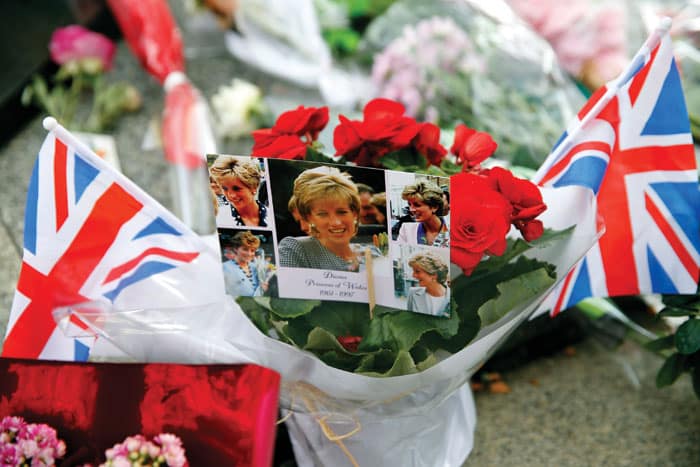
August 31, 1997 was a very dark day. In fact, it can be likened to my generation’s version of asking, “Where were you when President Kennedy was assassinated?” That last day of August was the day that Diana, Princess of Wales, was killed in a horrific car accident in Paris. 

In hindsight, it was amazing that one didn’t need to be British to feel tremendous shock and sadness over the death of a member of the British royal family. There was a reason that Diana was lovingly called “The People’s Princess”; she was beloved by millions worldwide. It’s safe to say she was the most famous woman in the world. And the fact that she died so young, at the age of 36, leaving behind two sons, William (15) and Harry (12), made her death even harder to digest. 

This year marks the 25th anniversary of Diana’s death, and I remember where I was that day: lazily wasting away another long Saturday at home after finishing the eighth grade a few months earlier in June. That summer, I was struggling. I didn’t want to leave my beloved middle school and my graduating class of 80 friends and enter the overwhelming jungle of high school (complete with 2,000 students), so I clung to anyone and anything that offered me a sense of familiarity and comfort. Simply put, I was experiencing too much change in my own life and my tolerance for big changes in the greater world was pathetically low.

But that summer had already been marred by a horrible shock: Legendary Italian fashion designer Gianni Versace was assassinated in July when a gunman named Andrew Cunanan shot him in the head at point-blank range (Cunanan had previously gone on a killing spree, murdering four other men). Over 2,000 people attended his funeral at Milan Cathedral, including Carolyn Bessette-Kennedy, Elton John and Diana, Princess of Wales.

By the time I watched countless hours of television coverage of Diana’s death the following month, I was a different adolescent: marred by anxiety, sadness and a certain resignation to the idea that I had no control over my fate. 

By the time I watched countless hours of television coverage of Diana’s death the following month, I was a different adolescent: marred by anxiety, sadness and a certain resignation to the idea that I had no control over my fate. 

That’s because the deaths of Gianni Versace and Princess Diana were a blow to my entire belief system, however immature and flawed, that famous and powerful people who make an impact on the world are somehow spared from violent death. Or, at the least, that they’re immune to being shot in the head outside their Miami home (Versace) or killed when a Mercedes-Benz, driven at 70 mph in a 30 mph zone, collides miserably with a highway pillar in Paris’s Pont de l’Alma tunnel. Incidentally, Diana was still alive after the crash (her driver, Henri Paul, and her boyfriend, Emad “Dodi” Fayed, were pronounced dead at the scene, and Diane succumbed to internal bleeding a few hours later at a Paris hospital). 

Twenty-two years later, in 2019, a top British forensic pathologist, Dr. Richard Shepherd, claimed that Diana would have survived the crash if she had been wearing a seatbelt, writing in his book, “Unnatural Causes,” that had Diana “been restrained, she would probably have appeared in public two days later with a black eye, perhaps a bit breathless from the fractured ribs and with a broken arm in a sling.” The only person to survive the accident was Trevor Rees-Jones, Diana’s British bodyguard, who had been wearing a seatbelt. 

As a budding teenager who was already prone to fatalistic anxiety, I couldn’t comprehend the close timing of it all — that six weeks after sitting in solemn silence at Versace’s funeral, Diana herself would be dead. And Elton John would honor them at both of their funerals. Poor man.

And then, nearly two years to the day after Versace’s death (July 15), Carolyn Bessette-Kennedy, who had also attended his funeral, perished in a July 16 plane crash off the coast of Martha’s Vineyard, along with her husband John F. Kennedy, Jr. and her sister Lauren. 

It was unbelievable, and I drove myself crazy wondering how it could be possible that, like Diana, Bessette had sat at Versace’s funeral without knowing that she herself would perish soon thereafter. 

The day Diana died was also the day that many in my generation of adolescents first sympathized with a young person who had lost a mother. Still, handsome, strawberry-blonde-haired princes weren’t supposed to walk behind their young mother’s caskets, as William and Harry had done — for all the world to see, no less (2.5 billion people watched Diana’s funeral procession on television). In 2017, Harry told Newsweek, “My mother had just died, and I had to walk a long way behind her coffin, surrounded by thousands of people watching me while millions more did on television. I don’t think any child should be asked to do that, under any circumstances. I don’t think it would happen today.”

No, in 1997, those of us who weren’t yet born in 1963 and hadn’t watched the 1963 televised coverage of President Kennedy’s funeral weren’t ready for the sight of young, handsome princes, now motherless, walking behind a casket of a fallen princess. It was too much. 

And then, there was the collective public disgust over the culpability of the paparazzi, who had chased down that Mercedes-Benz in order to snap a few photos of Diana and Dodi out and about in Paris. While it’s true that the driver, Paul, had been driving under the influence of alcohol (French authorities confirmed this the Monday after the accident), we were all reminded of the inhumane consequences of treating human beings solely as subjects of tabloid photographs.

After Diana’s death, one particular thought haunted me for a long time: I wondered if whether after the Mercedes crashed, there were paparazzi who, instead of rushing to help the victims, immediately flashed photographs of the wreckage. As it turned out, that’s exactly what happened. 

One of those motorcycle-bound paparazzi who chased down Diana that night, Stephane Darmon, confirmed this to The Guardian in 2008. He said, “I did not see the car anymore because the light [of the flashes] was so bright. It was continuous.”

But Prince Harry summed up the inhumanity best in a 2021 Apple TV+ documentary, “The Me You Can’t See,” when he said, “I was so angry with what happened to her — and the fact that there was no justice at all. Nothing came from that. The same people that chased her into the tunnel, photographed her dying on the backseat of that car.”

And sadly, that kind of selective blindness not only remains today, but has almost become the norm. How many times have we read news stories of bystanders, whether in a New York subway tunnel or on a Los Angeles street, who, instead of even attempting to help victims of violence, have pulled out their smartphones and simply begun filming?

Yes, Diana herself became the most famous woman in the world thanks to the power of the lens, and the camera loved her. But the disregard for humanity that added an extra sting to her death was anathema to every ounce of kindness and compassion the woman valued and practiced. 

I watched her September 6, 1997 funeral seated next to my mother, and when she began to sob at the sight of William and Harry walking in solemn procession, I hugged my mother and stroked her hair. After that day, my eyes were irreversibly open wide.


Tabby Refael is an award-winning weekly columnist and an LA-based writer, speaker and civic action activist. Follow her on Twitter @TabbyRefael

The Day Diana Died Read More »

Caruso’s Challenge

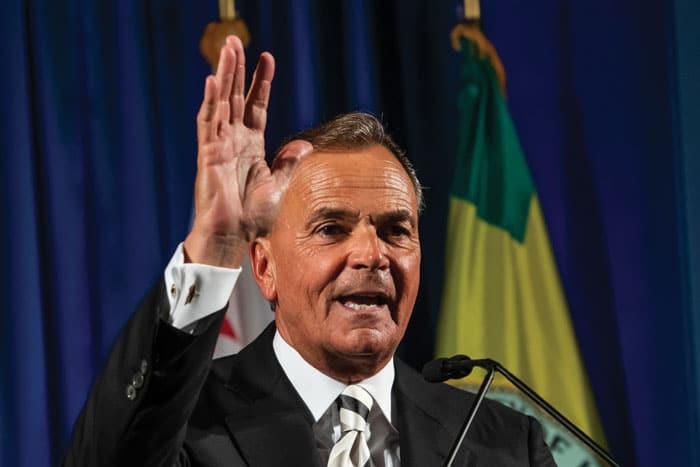
The latest Los Angeles Times/UC-Berkeley poll has some good news and some bad news for mayoral hopeful Rick Caruso. 

There are still roughly two months remaining before Election Day, and Caruso’s team demonstrated convincingly this past spring that is more than enough time for tens of millions of dollars to dramatically change the course of a campaign. More importantly, Angelenos are still fixated on Caruso’s two key issues of crime and homelessness, and the opportunity still exists for the businessman-turned-candidate to use both issues to his advantage in his race against frontrunner Karen Bass in the weeks ahead.

But the poll shows that while a potential path to victory for Caruso is clear, it is also steeply uphill. The first public survey of the general election campaign showed Bass with a formidable 12-point lead over Caruso among registered voters, which is certainly not an insurmountable margin but does put the real estate magnate at a decided disadvantage as the race heats up.

Even more challenging for Caruso are additional results that the Times buried deep inside their story about the poll. While Bass maintains a healthy 43-31 advantage among all voters, the survey also separated out those voters who are most likely to cast ballots. This more reliable indicator shows Bass’ lead expanding to more than twenty points, a daunting margin of 53-32 percent. 

Caruso may still be able to turn the race in his favor through sheer force of unprecedented spending. The billionaire spent more on his primary campaign than any mayoral candidate in the city’s history had done in a primary and general election campaign combined. That cash outlay was enough to catapult him from low single digits in early polling to a second place primary finish and a spot in the general election runoff. But he still finished seven points behind Bass in the primary, and third and fourth place finishers Kevin de Leon and Gina Viola are well to the left of Bass politically so their supporters would be less likely to opt for the centrist Caruso in November. Which means that much of Caruso’s spending will be directed toward convincing the most progressive voters that Bass is not worthy of their support and that they don’t need to bother to vote at all.

The most important voters for Caruso are those who may be able to be persuaded that Bass is not strong enough to successfully thwart the city’s crime and homelessness issues. 

But the most important component of a Caruso comeback will be among voters closer to the political center who may be able to be persuaded that Bass is not strong enough to successfully thwart the city’s crime and homelessness issues. The only top-tier issue on which voters preferred Caruso to Bass is crime and public safety: Caruso’s team will be merciless in their efforts to portray Bass as a career politician who simply doesn’t know how to fight back effectively on these issues. 

From the beginning, Caruso’s gamble is that crime and homelessness have made Los Angeles voters more willing to stray from political orthodoxy to make their city safe again. But Angelenos are not conservative: most are progressives who are frightened by violent crime and exhausted by rampant homelessness. They may be willing to embrace more extreme tactics to confront these challenges, but they must also be reassured that they can be more aggressive while still being essentially good people. That’s a much more nuanced message than a more frontal “tough on crime” approach and will be more challenging for Caruso to deliver than the old-school lock-‘em-up missives that elected Dick Riordan almost thirty years ago. But Caruso’s religious and philanthropic history gives him the credibility to articulate that type of message. The question is when we’ll hear it.

But Caruso’s campaign has been almost silent throughout the summer, perhaps believing that voters would not be paying much attention until after Labor Day. So it’s more than likely that their advertising onslaught will begin in the next several days. Bass’ past political successes have mostly come from behind-the-scenes negotiations rather than high-profile and highly emotional public engagement. We’re about to find out if she can adjust to this type of environment and withstand the barrage that is coming her way.


Dan Schnur is a Professor at the University of California – Berkeley, USC and Pepperdine. Join Dan for his weekly webinar “Politics in the Time of Coronavirus” (www/lawac.org) on Tuesdays at 5 PM.

Caruso’s Challenge Read More »

A Tribute to a Beautiful Mother

Last week, we lost Rachel’s beautiful mother, our original Moroccan Spice inspiration. She was gentle and kind, serene and regal. She leaves an incredible legacy of delicious food, tradition and Jewish ethics.

—Sharon

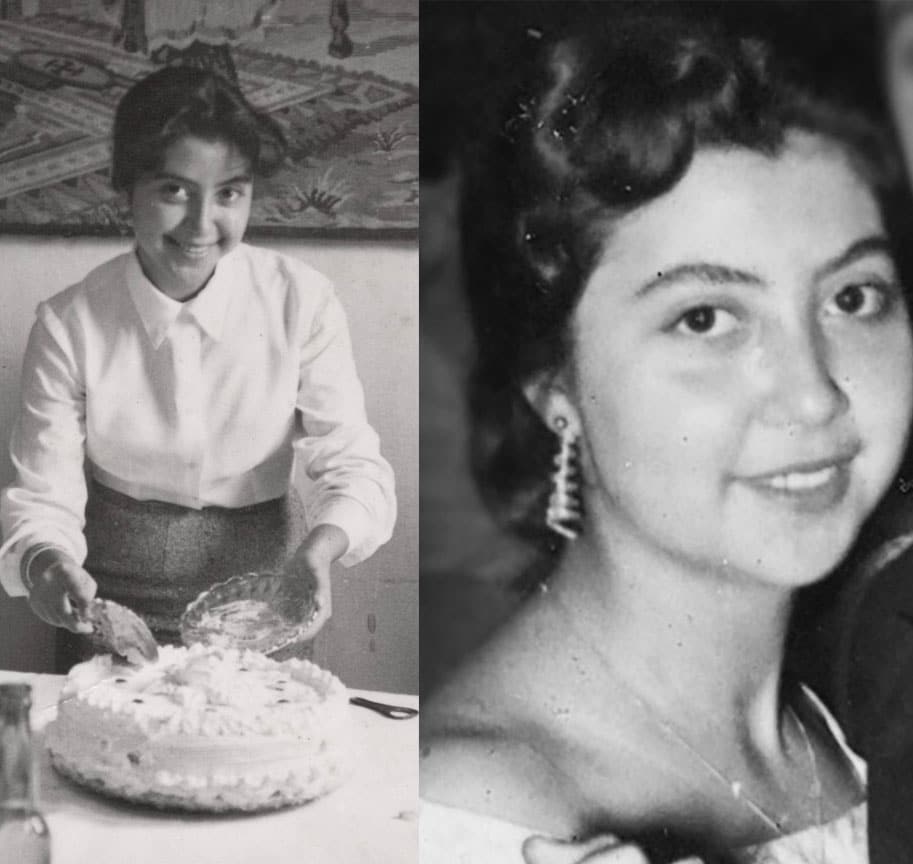
My mother Rica Bensabat was born in Larache, a  port city in Morocco in 1936. Her father Moshe Bensabat, was the Rabbi of the community and the mohel who performed all the circumcisions in Larache, including that of his future son-in-law, my father.

My mother was lucky to have a very happy childhood, surrounded by her siblings, brothers Yosef and Salomon and sisters Messody, Clara, and Sara. She was an excellent student, skipping a few grades of school, and every week she would win the Bon Point contest, with the very exciting prize of free movie tickets!

After high school, she learned to sew and that became her hobby for many years. She would tailor the most exquisite dresses and coats (and knit sweaters) for my cousins and I, not knowing that one day this talent would help support her family.

In the 1950’s, her parents, along with many, many Moroccans, decided to emigrate to Israel. At the time, she was dating her brother’s best friend, Messod. My grandparents presented him with an ultimatum — put a ring on her finger or she comes to Israel with us! (They presented the same scenario to her sister Clara’s suitor, Menasse.)

On February 18, 1956 my beautiful mother Rica married my dashing father Messod. (Followed by the wedding of Clara and Menasse in March.)

Both couples moved to the “big city,” Casablanca. The two sisters were inseparable. Maman taught Tita Clara how to cook. They had their babies at the same time and they raised my cousins, my siblings and I all together. After school, they would feed us freshly baked breads and cookies. We spent our weekends playing together while our fathers were busy with their card games, spent glorious summer days at the beach together and we all vacationed in Spain together.

After the Yom Kippur War in 1973, my parents, like many other Jews living in Arab countries, were afraid of antisemitism. So we left our home and the comforts of Casablanca and moved to Los Angeles. Our lives completely changed. My mother went to work as a seamstress in a men’s shop at Broadway Plaza in downtown Los Angeles. She would take the bus to and from work, then come home and cook us dinner every night. On Friday mornings, she would wake up at 4 o’clock to prepare Shabbat dinner and then leave for work at her usual time.

Although she never had a job before, she had the most incredible work ethic.

Eventually she found a job in Beverly Hills, at an alterations shop called La Petite Maison. Several years later, the French owner decided she wanted to retire, so my parents bought the business. Thus began Maman’s amazing career as the proprietress of an atelier, creating dresses, repairing suits and altering designer clothes. She worked very hard, earning the adoration of all her clients. She never had to use a calculator or a cash register, making all the calculations in her head. She remembered every phone number as if by magic.

She received referrals from all the fancy hotels and high-end stores. Maman was our ATM and La Petite Maison helped put us all through college.

On July 4th 1991, a few months before my wedding, my mother suffered a very serious and complicated brain aneurism. The doctors told us she would not survive. These top neurologists had no idea who they were dealing with. After the surgery, my mother surprised them all when she woke up and spoke in three languages.

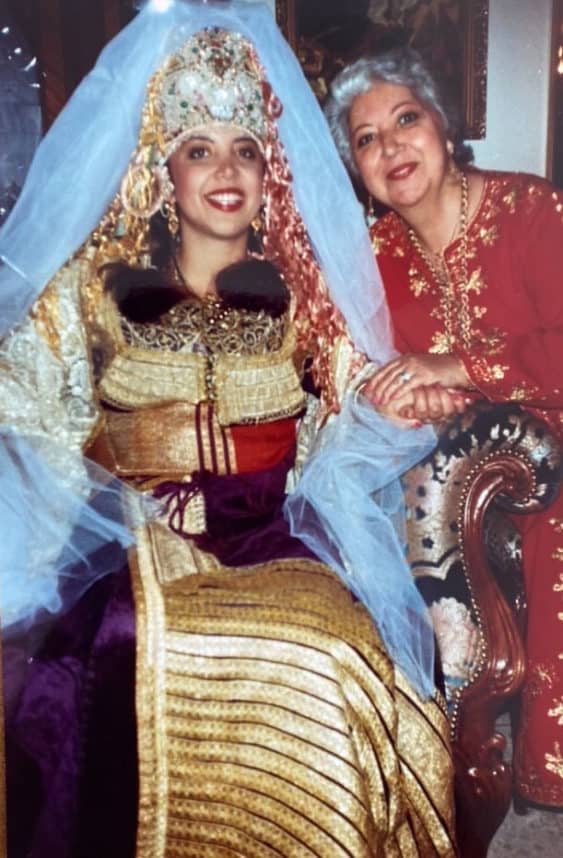
It was such a blessing to have her and my father walk me down the aisle. She loved my husband Neil and for fun, she would always challenge him on rules of Jewish Law. He would check with the Rabbi, who would tell him, “She’s right. That’s how it’s done in Morocco!”

Every July 4th, we celebrated this miraculous second chance at life with a birthday cake.

My mother had such a strong will to live because she loved her husband, her children and grandchildren so much. They were her entire world. She helped my brothers and I raise our children with an abundance of love. No one could possibly imagine one little lady could give such large amounts of love

When the grandchildren grew older, it didn’t matter what was going on in their busy lives, they would never miss Shabbat dinner at Maman and Papi’s. When she no longer had strength, I would host Shabbat dinners at my home. But it was not the same unless Maman and Papi were there. The grandchildren adored them both and always showered kisses on Maman.

My mother loved to tell us a Spanish phrase “da y no mires a quien.” Give and don’t look to who, just give.

One day in Casablanca, a poor man came to my mother’s door asking for towels. He told her they had been robbed and his wife and children needed towels. She went to the linen cupboard and brought back all the towels she could find.

That evening, my father came home with his arms full of the towels a customer had given as a gift.

This is a story I heard throughout the years and every time I heard it, it filled me with faith in HaShem. My mother was extremely spiritual and believed that G-d rewards good deeds.

My mother gave and gave to all of us. Her time, her amazing food, her encouragement, her uplifting words, her love.

She gave and gave to all of us. Her time, her amazing food, her encouragement, her uplifting words, her love.

Recently when I translated a text from Spanish to English on Google, it literally translated Rica into Rich Lady.

She was the richest woman I have every known. Rich with love, kindness, generosity, talent, optimism (and cash!)

—Rachel

In Morocco, we ate pastelitos every Shabbat, but in the United States, my working mother prepared them only as a treat for the holidays and birthday celebrations.  

Recently all the grandchildren were reminiscing about the delicious pastelitos Maman used to make when they were little. Whenever I have made them for holiday meals, they are immediately devoured. 

This is one of those special Maman recipes that will always bring our family together and will bring us joy when we remember our amazing Maman.

Pastelitos de Patata (Photo by Alexandra Gomperts)

Pastelitos de Patata

Potato shell:
6 large russet potatoes
1 egg
1/2 tablespoon turmeric
1/2 teaspoon white pepper
1 teaspoon salt
1/4 teaspoon baking soda
Juice of 1 lemon
All-purpose flour or gluten-free flour
or matzo meal, for rolling patties
4 eggs, beaten
Pinch of salt
Oil for frying

Meat filling:
1 small onion, finely chopped
1/2 tablespoon olive oil
1 1/2 pounds ground beef
2 bay leaves
2 cloves of garlic, crushed
1 teaspoon nutmeg
1 cup water
Juice of 1 lemon
Salt and pepper, to taste

Potato mixture:

  • Boil potatoes in their skins until easily pierced with fork. Mash them while they’re hot.
  • Add egg and turmeric and mix well. Then add pepper, salt, baking soda and lemon juice and mix well.
  • Let mixture cool, then form balls slightly smaller than a tennis ball.
  • Place in refrigerator for 30 minutes.

Meat mixture (“la miga,” Spanish for “crumbs”):

  • Sauté finely chopped onion in oil for 5 minutes, then add ground meat. Using wooden spatula, break meat into small pieces and sauté for 5 more minutes.
  • Add bay leaves, garlic, nutmeg and water, cover and simmer for 30 minutes.
  • Uncover and cook until water has evaporated. Continue to break meat into small pieces. Then let cool.

Forming pastelitos:

  • Moisten hands with water. Flatten potato ball in palm of hand, forming crater.
  • Add tablespoon of meat filling in crater.
  • Keeping hands moist, fold potato mixture over meat and seal.
  • Form ball and flatten into patty.
  • Roll patty in flour to coat thoroughly.
  • Refrigerate until ready to fry.

Frying pastelitos:

  • In medium bowl, beat eggs and add pinch of salt.
  • Heat frying pan with neutral frying oil, about 1 inch deep.
  • Dip flour-coated pastelito into bowl with beaten eggs.
  • Place in hot oil and fry until both sides are golden brown.
  • Place on rack or paper towel to drain.
  • Best served same day, or reheated in 350° F oven.
  • Can be frozen, either raw or fried.
  • Makes 24 medium or 30 small patties.

Sharon Gomperts and Rachel Emquies Sheff have been friends since high school. The Sephardic Spice Girls project has grown from their collaboration on events for the Sephardic Educational Center in Jerusalem. Follow them on Instagram @sephardicspicegirls and on Facebook at Sephardic Spice SEC Food. Website sephardicspicegirls.com/full-recipes

A Tribute to a Beautiful Mother Read More »