fbpx

June 29, 2022

Unilever Ends Ben & Jerry’s Israel Boycott

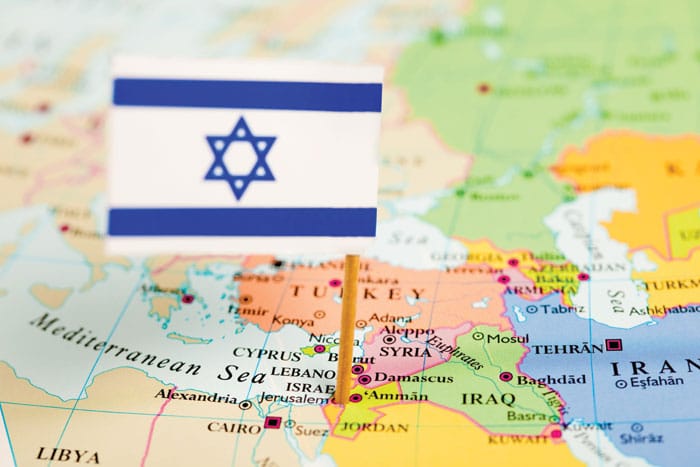
Unilever announced on June 29 that they are ending Ben & Jerry’s decision to terminate business with its licensee in Israel.

Ben & Jerry’s had announced in July 2021 that they were going to stop selling their product in the “Occupied Palestinian Territory” but continue to sell ice cream elsewhere in Israel. Unilever had initially said that their business arrangement with the ice cream giant meant that they couldn’t intervene with Ben & Jerry’s political activism; however, in the June 29 announcement, Unilever said they maintain “primary responsibility for financial and operational decisions and therefore has the right to enter this arrangement.”

“Unilever has used the opportunity of the past year to listen to perspectives on this complex and sensitive matter and believes this is the best outcome for Ben & Jerry’s in Israel,” the statement added. “The review included extensive consultation over several months, including with the Israeli Government. Unilever rejects completely and repudiates unequivocally any form of discrimination or intolerance. Antisemitism has no place in any society. We have never expressed any support for the Boycott Divestment Sanctions (BDS) movement and have no intention of changing that position.”

Unilever concluded their announcement by touting their Israel business. “We look forward to continuing to make a positive contribution to Israel’s economy and society for many decades to come, and hope that Israelis and Palestinians can reach a peaceful resolution of their conflict,” they said.

Avi Zinger, who heads Unilever’s Israel licensee and filed a wrongful termination suit against Unilever in March, said in a statement: “I thank Unilever for resolving this matter and for the strong and principled stand it has taken against the Boycott, Divestment and Sanctions (BDS) movement. There is no place for discrimination in the commercial sale of ice cream. It has always been important to me to ensure that all customers – no matter their identity – are free to enjoy Ben & Jerry’s ice cream. BDS lost.  I now have the right to sell Ben & Jerry’s using its Hebrew and Arabic name to all our Israeli and Arab customers throughout Israel and the West Bank (Judea and Samaria) – forever. This is a victory for those who seek cooperation and coexistence, and a resounding defeat for discrimination. It is particularly significant for those who have stood united against BDS.”

Alyza D. Lewin, President of the Louis D. Brandeis Center’s Human Rights Under Law, hailed Unilever’s announcement as a victory against BDS. The Brandeis Center had been representing Zinger in his lawsuit against Unilever. “The lawsuit the Brandeis Center filed on Avi’s behalf exposed the hypocrisy of the BDS movement and demonstrated how BDS harms the very Palestinians the movement claims to support,” she said. “Today, those who promote cooperation and coexistence vanquished those who endorse bigotry, discrimination and hate. BDS tried to stop Ben & Jerry’s from being sold in Israel. They lost. Now, thanks to Unilever’s principled stand, Ben & Jerry’s will continue to be sold throughout Israel and the West Bank/Judea and Samaria by Avi Zinger. With this settlement, Unilever has ensured that Avi has the right – for eternity – to continue doing what he has done for decades as the exclusive producer and distributor in Israel of Ben & Jerry’s premium ice-cream. This settlement enables Avi to continue providing jobs for refugees, new immigrants and the disabled; economic opportunity for Palestinians; and support for Israeli-Palestinian coexistence programs and other human rights initiatives. Other corporations should take heed: BDS is bad for business. Discrimination never pays. Boycotts are not the answer. Engagement, cooperation, and coexistence are the true corporate avenues for peace.”

Other Jewish groups also celebrated the decision. Anti-Defamation League (ADL) CEO Jonathan Greenblatt tweeted that Unilever’s announcement “is as welcome as a scoop of Cherry Garcia on a hot summer day.” “For the past several months, @ADLhas been in touch with @Unilever, the Government of Israel, and others to correct the misguided move by @benandjerrys independent leadership to pull out of areas in the West Bank,” Greenblatt wrote. “Today is yet another demonstration of the ineffectiveness of trying to boycott and ostracize Israel — and proves that healing can happen when all sides work together.”

The American Jewish Committee thanked Unilever in a tweet for their “strong opposition to the boycott movement, which is deeply rooted in antisemitism.” They also lauded the Brandeis Center’s work in the matter, stating that “without its steadfast support of the Israeli people and pursuit of equality in the face of discrimination, it’s doubtful that @Unilever would have made the right decision.”

Simon Wiesenthal Center Dean and Founder Rabbi Marvin Hier and Associate Dean and Director of Global Social Action Agenda Rabbi Abraham Cooper said in a joint statement that Unilever’s decision was “a stinging rebuke to the BDS movement by one of the world’s leading corporations.” “We were deluged by thousands of our members infuriated that an iconic ice cream company had suddenly become the tipping point for the global anti-Semitic BDS movement,” Cooper said. “Unilever’s about face also sends a signal to other major corporate entities that they should shun BDS, which has never helped a single Palestinian, but has only one goal in mind: Demonize and weaken the democratic State of Israel and actively work for its demise.”

StandWithUs CEO and Co-Founder Roz Rothstein also said in a statement, “After months of work by StandWithUs and other organizations including petitions, states divesting from Unilever based on their anti-BDS laws and several lawsuits including the recent filing of a class action, this outcome is welcome news and a resounding defeat against BDS. This represents a victory for common sense and sends a message that discriminatory BDS campaigns will be vigorously fought through worldwide efforts against hatred towards the only Jewish state.”

Human rights lawyer Arsen Ostrovsky, who heads The International Legal Forum (ILF), said in a statement that the Unilever decision was “the most breathtaking and unequivocal defeat for the global BDS movement.” “The ILF was proud to have been one of the first organizations to initiate legal action against Unilever in the United States over Ben & Jerry’s illegal and racist boycott, which was made on behalf of a Palestinian claimant, who made the case that such boycotts only contribute to hatred and division, while Palestinians are the ones who lose out the most,” Ostrovsky added. “This decision was only made possible after intense legal and financial pressure. A sweet victory indeed against the dark forces of hate, bigotry and antisemitism of the global BDS Movement.”

Unilever Ends Ben & Jerry’s Israel Boycott Read More »

Hamas Releases Footage of Kidnapped Israeli Arab Civilian, Says His Health Is Deteriorating

Hamas released footage of an Israeli Arab civilian they kidnapped several years ago hooked up to an oxygen tank. A spokesperson for the terror group said his health is deteriorating.

The video shows the Bedouin civilian, Hisham al-Sayed, lying in a bed with the oxygen tank with his ID next to him. A television can be seen next to him playing a June 21 Al Jazeera broadcast. Abu Obeida, the spokesperson for Hamas’ military wing, said that al-Sayed’s health has “deteriorated.” Al-Sayed, who entered into the Gaza Strip voluntarily in 2015, has a history of mental health issues, as does the other Israeli civilian that Hamas has held captive, Avera Mengitsu. 

https://twitter.com/Ostrov_A/status/1541792008104189953

Israeli Prime Minister Naftali Bennett’s office said in a statement that the Hamas video is “a heinous and despicable act” and that al-Sayed “is not a soldier, but a mentally ill Israeli citizen who crossed the border into the Gaza Strip several times before,” per The Jerusalem Post. “Hamas is delaying any chance of a deal,” Bennett’s office added. “Hamas’ actions are proof that this is a cynical and criminal terrorist organization.” The office’s statement vowed to continue to work to bring al-Sayed and Mengitsu, as well as the bodies of two Israeli soldiers––Oron Shaul and Hadar Goldin––murdered by Hamas, per The Times of Israel (TOI). Egypt has served as a mediator between Israel and Hamas, though talks have frequently stalled over Hamas’ demand that Palestinian prisoners be released from Israeli prisons in exchange for al-Sayed, Mengitsu and the bodies of Shaul and Goldin.

The father of al-Sayed, Sha’aban al-Sayed, told Channel 12 that the Hamas video was the first time he had seen his son in seven years and called on the terror group to “release him immediately.” “He’s sick and needs medical care at all times,” Sha’aban said, per TOI.

Journalist David Collier tweeted that Hamas has held Mengitsu and al-Sayed hostage for more than seven years, yet it doesn’t receive widespread media coverage because “these days NGOs like Amnesty [International] are too busy promoting Hamas propaganda to care about innocent Israeli civilians.”

Hamas Releases Footage of Kidnapped Israeli Arab Civilian, Says His Health Is Deteriorating Read More »

Russia and Auschwitz: First They Ignored It. Then They De-Judaized It. Now They’re Exploiting It.

Russia’s complicated and disturbing record concerning Auschwitz just got a little more complicated, and a lot more disturbing.

In recent days, the Russian Ministry of Foreign Affairs has been circulating images of anti-Russian stickers that were supposedly plastered around the Auschwitz-Birkenau Museum, which is located at the site of the former death camp, in southwestern Poland. The stickers declare that “Russia and Russians deserve Zyklon B,” a reference to the poison gas used by the Nazis to murder Jews.

Actually, no such stickers were placed at the Auschwitz site; the images were superimposed on photos of the museum grounds through computer manipulation. They were accompanied by anti-Russian comments posted by alleged Ukrainians. The apparent  goal of this little disinformation campaign was to make Ukrainians look bad and make the Russians look like victims of a hate crime.

For Moscow, exploiting Auschwitz to score propaganda points is just the latest manifestation of a pattern of Auschwitz-abuse that dates back to the period when the Nazis were still operating the mass murder facility.

For Moscow, exploiting Auschwitz to score propaganda points is just the latest manifestation of a pattern of Auschwitz-abuse that dates back to the period when the Nazis were still operating the mass murder facility.

In July 1944, as the Germans were gassing thousands of Hungarian (and other) Jews daily in Auschwitz, Eliahu Epstein, a top aide to Jewish Agency chairman David Ben-Gurion, met with the Soviet consul-general in Cairo, Daniil Solod.

Epstein proposed that the Soviets “bomb the centers of Jewish extermination in Poland.” According to Epstein’s report to Ben-Gurion, Solod “replied that…such an idea was out of the question politically, since the government of Russia would not adopt measures which were based on national grounds.” That position was more than a little ironic, given the decades-old Soviet policy of discriminating against Russian Jews on national grounds.

When it suited their purposes, however, the Soviets did attack Auschwitz. On December 23, Soviet bombers supporting advancing Red Army forces in Poland destroyed nearly one-third of the SS barracks at Birkenau, the section of Auschwitz where the mass-murder facilities were situated. Their bombs also severed the rail line connecting Birkenau to the rest of Auschwitz. On January 16 and January 19, 1945, Soviet bombers struck German synthetic oil factories in the slave labor section of Auschwitz, known as Monowitz.

Eight days later, the Russians liberated Auschwitz, although that was not part of their plan; the camp happened to lay in the path of Soviet troops in Poland.

After the war, the Soviet authorities made a concerted effort to obscure the Jewish identity of victims of the Nazis in Auschwitz and elsewhere. Soviet government publications, from official histories of the period to school textbooks, described Nazi atrocities against Jews as “crimes against the Russian people.”

Russian leader Vladimir Putin, himself a former senior KGB official, has helped perpetuate the Soviet-era practice of de-Judaizing the victims of the Holocaust. Addressing a gathering at the Auschwitz site in 2005, Putin spoke movingly of the 600,000 Soviet soldiers who died while liberating Poland from the Nazis, and the 27 million Russians who were killed in World War II—but he made no mention of the Jews who were murdered there.

In 2007, the Auschwitz State Museum refused to host a Russian government exhibit because the text in its panels falsely claimed that nearly three million of the six million Jewish victims of the Holocaust were Russian. In fact, one-third of those “Russian” victims were citizens of Poland, Romania, and various Baltic nations who had the misfortune of residing in territory that the USSR occupied as a result of Stalins infamous deal with Hitler in 1939. But when Moscow decided in 2007 that it needed higher numbers in order to highlight Russia’s sacrifices in the war, it conveniently transformed Jews of other nationalities into “Russians.”

From ignoring Auschwitz when a few bombs could have interrupted the mass murder, to misrepresenting the identity of the Jewish victims, to now attempting to exploit the Auschwitz site with false claims of anti-Russian hate, Moscow continues to see the most notorious Nazi death camp as a tool to serve whichever political purpose the Kremlin happens to be pursuing at the moment.


Dr. Medoff is founding director of The David S. Wyman Institute for Holocaust Studies and author of more than 20 books about Jewish history and the Holocaust. His latest is

America and the Holocaust: A Documentary History, published by the Jewish Publication Society & University of Nebraska Press.

Russia and Auschwitz: First They Ignored It. Then They De-Judaized It. Now They’re Exploiting It. Read More »

Reacting to the End of Roe

On June 24, the Supreme Court delivered its decision in Dobbs v. Jackson Women’s Health Organization; it overturned Roe v. Wade, the landmark 1973 decision that affirmed abortion as a Constitutional right. In a statement, the Anti-Defamation League expressed concern that the ruling “undermines fundamental human rights.” The Jewish Federation of Greater Los Angeles released a statement that included, “We pledge to continue our 100-year history of providing support and resources to our partnering health and human service agencies, and ensure the well-being of all of us.”

The Journal asked several local Jewish leaders and clergy to share their reactions to this historic ruling:

“When engineers and architects change a system, the goal is to improve and make safer that which they build, to specifications focused on serving the greatest good. Roe v. Wade being overturned is like reinstating a bridge design from the dark ages but telling us it’s still safe to cross and the money was well spent. Government needs to serve the greatest and safest good for all Americans but has chosen instead to impose personal religious beliefs on all. It is shameful. Just as activists once fought for my right to choose, we must fight on for this and future generations and build a better bridge less easy to crumble.”

—Adeena Bleich
Civic and Jewish community solutionist

“I am worried sick about the women who will have to risk their lives either by getting unsafe abortions or from being forced to have a child they cannot financially or emotionally support.  I fear for the marginalized children and communities this decision will most impact. 

“As the father of a young daughter, it enrages me that these old paternalistic and theological laws are coming around again and as a California legislator this is why I have taken a leadership role in helping to deliver over $200 million for reproductive services and advocacy in California for our residents and those who come here seeking reproductive health support.  

“The right to privacy has been embedded in Constitutional precedent for nearly a century. It protects every one of us.  

“A woman’s right to choose is as fundamental and as basic to our liberty as the right to read and study and live the life you want.   

“We need to get resources to other States who are not going to protect reproductive rights and we need to take this fight to Congress. 

“I am going to fight like hell to make sure we find a way to overturn this ruling. If you feel the same, please call my office at (818) 901-5588 and let’s demand from Washington that a Woman has the right to choose!”

— State Senator Robert M. Hertzberg (D -Van Nuys)

“I can only begin to imagine the seas of mental anguish and fear caused by this decision. And I pray that as a Jewish community we do our part to alleviate as much of that pain as possible.“ – Rabbi Nicole Guzik

“I’m heartbroken and hopeful. Heartbroken over the countless number of women whose options have been severely limited and will face unthinkable consequences. Hopeful by the response of so many Jewish clergy who are opening their doors and raising their voices, reaching across state lines to offer their support and resources to those in need. Our tradition has grappled with the topic of abortion for thousands of years, insisting that abortion, while a serious and morally-charged decision, is not equivalent to murder. More modern sources acknowledge and uphold mental anguish as one of the reasons to permit abortion. I can only begin to imagine the seas of mental anguish and fear caused by this decision. And I pray that as a Jewish community we do our part to alleviate as much of that pain as possible. For the women of this country. For our daughters. For our sisters. For future generations unable to offer a voice. May they be proud of the actions we take.”

—Rabbi Nicole Guzik
Sinai Temple

“Can I offer a perspective that’s not connected to any political viewpoint, pro or con, whatsoever? I think that it’s interesting that when Roe v. Wade was made into law it was viewed as the actions of a radical court. And now that it is being overturned it is also being viewed as the actions of a radical court. Gertrude Stein quotes a Greek parable. A boy drags his father through a rocky field until the father shouts, “Stop! I didn’t drag my father past this point!” It seems each generation is outraged by the actions of its offspring, who in turn are outraged by the actions of their offspring.”

—David Sacks
Emmy Award-winning writer, producer and host of the weekly podcast, “Spiritual Tools for an Outrageous World,” available at torahonitunes.com

“It’s interesting that when Roe v. Wade was made into law it was viewed as the actions of a radical court. And now that it is being overturned it is also being viewed as the actions of a radical court.“ – David Sacks

“Sometimes the brokenness of our beautiful country overwhelms. So many feel broken-hearted and terrified about last week’s news from SCOTUS. And what that announcement means for women going forward, particularly poor women.

“As I empathize with that pain and fear, I also linger on the broader terribleness in our midst of a country that barely remains ‘one nation, undivided.’

“This moment is a reminder to us all about the vulnerability of powerlessness, which Jews well is an existential concern. An overwhelming majority of the women I know, love and respect feel more vulnerable and powerless in their lives today than ever before.  

 “We all ought to meditate on what is at stake when we are subject to the laws and limitations of powerful people who do not share our understanding of liberty and freedom. And that meditation ought to ignite us to exercise our most powerful weapon: our vote.

“There is much to say about this topic from a Jewish perspective. I firmly believe that nearly none of that Jewish material is actually germane to a national conversation on the issue. Just as we rightly bristle when evangelical Christians aim to direct national law and policy based on their interpretation of Scripture, neither should the Supreme Court take into account this or any rabbi’s halakhic discourses. 

“Jews may not all agree on when the Jewish permissibility of abortion should be invoked.  But an overwhelming majority of non-Haredi Jewish Americans are against the roll-back of an American right that had been, seemingly firmly, in place for nearly half a century.  That is no small thing.  

“The Torah always speaks to us. In last week’s narrative of the scouts sent to assess the land, we read a story of the future of a nation. And a story of division.  We were reminded that members of the same community can peer into a land simultaneously, with some of them seeing monstrosities, and others beauty.  We read that our God pushes us past fear and towards hope, even when it seems lost, and towards creating the future, the land and the nation we deserve and need.”

—Rabbi Adam Kligfeld
Senior Rabbi, Temple Beth Am

“At Open Temple, we believe in Artivism – using creativity as a form of Activism. In December, 2021, Open Temple Co-Creator Julie Cantor and I met to discuss our concerns about the imminent demise of Roe v. Wade. Julie, a lawyer and a physician, is also a law professor at UCLA. Our shared sorrow stemmed from a mutual love of Ruth Bader Ginsburg, her legacy and her practice of dissent. Our meeting was inspired by my desire to create a visual and wearable piece of jewelry for women to wear as a visible reminder, a kind of living mezuzah, of our dissent for when Roe finally fell. 

“This week, Julie launches the national campaign in RBG’s memory of a cuff she conceived – the Dissent Cuff. A leather embossed ‘shackle,’ the Harlen cuff is a visible reminder of what the fall of Roe v. Wade has on every woman – our bodies are no longer our own; indeed, Liberty for all Americans is also under crucible. 50% of proceeds from the selling of the cuff are dedicated to advancing the next generation of advocacy for women’s rights and reproductive justice. To learn more about the Harlen Dissent Cuff, and read Julie’s poetic brief on the matter, go to https://harlencollection.com.”

—Rabbi Lori Shapiro,
Founder and Artistic Director, The Open Temple in Venice

Reacting to the End of Roe Read More »

Jewish Federation Releases Landmark Study of Jewish L.A.

According to a study commissioned by The Jewish Federation of Greater Los Angeles, the Los Angeles Jewish community has grown by 25% over the last 25 years, to 564,700 individuals and nearly 300,000 Jewish households, making it the second largest Jewish community in the United States. The study’s findings were announced at a June 22 launch event at the Skirball Cultural Center.

The initial findings examine the L.A. Jewish community’s demographics, diversity and well-being. Additional sections will be unveiled over the summer and cover Jewish education, Israel, engagement profiles, Jewish life/connections and religious and ritual life.

“While patterns of affiliation continue to decline, emergent forms of Jewish belonging thrive.”
– Rabbi Noah Farkas

“The future of Jewish life is creative and bold,” Rabbi Noah Farkas, federation president and CEO said in a written statement. “While patterns of affiliation continue to decline, emergent forms of Jewish belonging thrive.” 

According to Farkas, Jews under 40 are more engaged than Jews over 50 in almost every category. “They discuss Jewish topics more, consume more types of Jewish culture, wear Jewish symbols more and study Jewish texts more than their elders,” he said. “Interestingly, the celebration of Shabbat in some form – perhaps the hallmark of engaged Jewish life – is celebrated by younger people with much greater frequency than older community members.”

Emphasizing that the report is meant to serve as a roadmap for how the needs of the L.A. Jewish community can best be met, Dr. Shira Rosenblatt, associate chief program officer at Federation said, “The data was collected on behalf of our entire Jewish community to provide critical information, to guide strategy for every organization and community member invested in creating the most vibrant and welcoming Jewish community. Our goal is to inspire collaboration, creativity and strategic thinking to address challenges and to leverage the strengths of our Jewish community.”

The last study by the Federation was conducted in 1997. While the current study has been in the works for several years, the work was postponed until 2021 so the COVID-19 pandemic would not skew the findings. 

“We didn’t want to do a demographic study when things are unstable due to a global pandemic,” Leonard Saxe, professor of contemporary Jewish studies at Brandeis University, who, along with the National Opinion Research Center at the University of Chicago, conducted the study, said. “We couldn’t try to find out how many people went to synagogue last month when nobody goes due to COVID.”

Key funders of the study included the LA Jewish Federations, Cedars-Sinai, Jewish Community Foundation of Los Angeles, The Diane and Guilford Glazer Foundation Fund of the Jewish Community Foundation and The Rosalinde and Arthur Gilbert Foundation.

The 30-page report provides a statistical snapshot of Jewish L.A. and covers multiple regions including the Westside, East Valley, North County Valley, West Valley, Metro and South Bay.

The study shows a Jewish L.A. rich in diversity, with about 50% of Jewish households including an immigrant to the United States or someone whose parent is an immigrant. Jewish regions of origin include Russia/the former Soviet Union, Latin America, Israel, Iran and Europe. Six percent of L.A. Jewish adults identify as persons of color, as do 9% of Jewish children. 

The study places significant emphasis on engagement, to quantify how the L.A. Jewish community expresses their Jewish belonging. The researchers created five categories – Minimally Involved, Holiday, Communal, Ritual and Immersed    to illustrate how members of the community express a religious and cultural connection to their Judaism.  

The highest level of engagement (27%) was among those in the Holiday category, which was defined as participating in a Passover seder, celebrating Hanukkah and observing Shabbat occasionally. The next highest engagement pattern was Minimally Involved (23%), which was defined as participating in few Jewish activities. The Communal category (16%) was described as attending a Passover seder, celebrating Hanukkah, attending High Holiday services, attending Jewish programs and donating to Jewish causes. The Ritual (16%) and Immersed (17%) categories included much of the same, with the addition of synagogue membership.

The study showed a decrease in denomination affiliations, with 50% of L.A. Jews stating no denomination, compared to 32% of U.S. Jews. 

The study showed a decrease in denomination affiliations, with 50% of L.A. Jews stating no denomination, compared to 32% of U.S. Jews. However, the study shows that because someone has no Jewish denomination, that doesn’t necessarily mean they are not “Jewishly engaged” in some manner. It still may include engagement with Jewish organizations, home-based and personal Jewish behaviors and with communal and religious life.

The next highest denomination is Reform with 25% (compared to 37% of U.S. Jews), Conservative at 15% (compared to 17% nationwide), and Orthodox at 7% (compared to 9% nationwide).

When asked what is important about being Jewish, the majority believe leading a moral and ethical life (69%), connecting family and traditions (62%) and working for justice and equality (54%) are essential to being Jewish. These responses are in line with the Jewish population nationally. 

Attitudes and personal experiences with antisemitism were examined, with three quarters of Jewish adults being concerned about antisemitism. Eighteen percent of L.A. Jewish adults indicated they personally experienced antisemitism in the previous year. These involved offenses that could be described as microaggressions, stereotypes, slights or jokes. Many experiences included public or online comments or those overheard in conversation, rather than offenses targeted directly toward them. 

The study also sought to uncover the struggles L.A. Jewry face both financially and in mental health. It shows that one-in-five Jewish households are financially struggling by stating they “cannot make ends meet” or “just managing to make ends meet.”

About one-in-four households include someone with a chronic health issue, mental health issue, special need or disability that limits work, school or activities. Of all L.A. Jewish households, 6% report that there is someone in the household with a severe and persistent mental illness, and 30% report having someone in the household who needs mental health or substance abuse treatment services.

Additional sections will be unveiled over the summer and cover Jewish education, Israel, engagement profiles, Jewish life/connections and religious and ritual life.

While the study will undoubtedly be of use to Jewish service providers, the question lingers what the average member of the Jewish community should make of the study’s findings. 

“The data tell us that we mean something to each other,” Farkas said. “It conforms to [peoples’] picture of who they are and their understanding of what it means to be an Angelino. Someone who is not engaged in the Jewish community can still find themselves inside the Jewish community, and that is something to celebrate.”

The full report can be found at: https://studyofjewishla.org/.

Jewish Federation Releases Landmark Study of Jewish L.A. Read More »

How Roe Decision Impacts Israel

The seismic waves following the U.S. Supreme Court decision to overturn Roe v. Wade reached our shores quickly, and Israelis, traditionally following any trend in America, are now wondering whether this dramatic move might impact them as well.

At first glance, it seems that this is a purely American business, with no ramifications for Israel. We have been watching from afar the American divide widen, especially during the Trump era, so this recent stroke only adds a legal seal to an existing societal malaise. Certainly abortions in Israel would not be affected: Pregnant women here easily get approval from a termination of pregnancy committee, and this, supposedly, doesn’t seem to change.

What should worry Israelis is the way this gigantic move occurred, positioning Americans on the horns of a dilemma, between what they want and what is legal. 

What should worry Israelis, however, is the way this gigantic move occurred, positioning Americans on the horns of a dilemma, between what they freely want and what is legal. According to a Reuters/Ipsos poll conducted before the Supreme Court released its decision, about 71% of Americans — including majorities of Democrats and Republicans — say decisions about terminating a pregnancy should be left to a woman and her doctor, rather than regulated by the government.

There is no need to be an expert of the U.S. Constitution to know that it starts with “We the People,” laying down the principle that the people are the source of all governmental power (later amendments incorporated Afro-Americans, women and young people, not included in the original “We the People”). In my layman opinion, then, the recent decision reversed not only Roe v. Wade, but also the basic democratic idea that it’s the people, not the government, who decide what’s best for them. Our wise Talmudic sages taught us that ”We do not issue a decree [gzera, in Hebrew] on the public, unless a majority of the public can bear it.” One wonders how Americans would accept this gzera. 

How could this revolutionary event happen? Here is another paradox: Former President Trump, who lost to President Biden by a popular margin of some seven million votes, had nevertheless managed to appoint three conservative Justices who turned the balance in the Supreme Court. Thus, the former president, who ranks as one of the most disliked in U.S. history, managed to carve a future the majority of Americans generally oppose.  

Here is why Israelis should take notice and be alarmed. In Israel, at least for the time being, Supreme Court judges have been selected by a committee which has managed to balance the legal and judicial excellence of the candidates with the political inclinations of the existing government. This worked pretty well, and contributed to the high prestige of the Israeli Supreme Court both in Israel and globally.  It’s true that there has been a decline in the trust of the public in the Supreme Court over the years, but according to the 2021 Israeli Democracy Index, “56% of the public agrees that the [Israeli] Supreme Court must have the power to strike down laws passed by the Knesset if they violate the basic principles of democracy. In other words, a substantial share of the public still believes in the court’s constitutional function in Israeli democracy: to defend constitutional principles, even if in opposition to the politicians.”

So, unlike what has just happened in the United States, the Israeli Supreme Court seems to placate the fears of Israelis of being stripped of their democracy, in short, of tyranny. Except that the Israeli Supreme Court and all other law enforcement agencies have been under constant attack, being orchestrated by no other than former – and perhaps future – Prime Minister Benjamin Netanyahu. Unlike his buddy Donald Trump, Netanyahu can’t appoint Justices directly, although only last week he raised his hand in the Knesset for a motion calling for appointing them directly by the government. Luckily, this motion failed.

Netanyahu has a personal interest in weakening the courts and law enforcement agencies: He is being tried these days for corruption charges. Being smarter than Trump, however, he doesn’t do it himself, but leaves the job to his mouthpieces, who vow to fire police investigators, the Attorney General and judges, all in order to rescue Netanyahu from the rule of law.

If, in the United States, the Supreme Court has positioned itself in opposition to what most Americans think and want, in Israel the court is still perceived by most people here as the guardian of their democracy. Israelis, however, shouldn’t take it for granted. This guardian needs to be guarded itself.


Uri Dromi was the spokesman of the Rabin and Peres governments, 1992-1996. 

How Roe Decision Impacts Israel Read More »

What Would RBG Do?

Now that Roe v. Wade has been officially overturned, and as it becomes clear that the pro-choice community doesn’t have any more of a plan on how to protect abortion rights than it did to protect Roe from its critics, it might be a good time for pro-choice believers to look for guidance from the strongest abortion rights advocate and most prominent feminist voice to ever serve on the Supreme Court.

So the question to now ask is this: WWRBGD? (What Would Ruth Bader Ginsburg Do?)

It’s not widely known that Ginsburg argued that the seven justices who voted in favor of Roe back in 1973 had acted imprudently and incorrectly. 

Given Ginsburg’s strong credentials on this issue, it’s not widely known that she had consistently argued for most of her career that the seven justices who voted in favor of Roe back in 1973 had acted imprudently and incorrectly. Ginsburg’s disagreement was certainly not with the substance of their ruling: she strongly believed in the importance of establishing national protections for a woman’s right to choose to have an abortion. She also vehemently opposed the Texas law that would have banned almost all abortions that became the basis for Roe.

But Ginsburg also strongly believed that the Court should have stopped there, and that by not just reversing the Texas ruling but by also using the case to establish a nationwide right to an abortion, the justices dramatically overstepped.  Her concern was that allowing the abortion debate to be resolved more gradually through the legislative process would have created a more durable and sustainable base of support for reproductive rights. And she worried that concluding such a divisive public argument so abruptly would balkanize the political landscape, effectively freezing public opinion on both sides of the issue. 

Ginsburg has been proven correct: that’s exactly what has occurred over the last 49 years, until the smaller but better organized and more committed side of the dispute reversed the Roe decision in terms just as absolute as the original verdict. In the five years before Roe was decided, 16 states, with 41 percent of the nation’s population, liberalized their abortion laws. So the political winds were clearly blowing in that direction. But after the Court acted, the battle lines hardened, and progress that might have continued as politicians who reflected the views of their constituents negotiated further change instead froze in place.

(Ginsburg also believed that the Court should have based its decision not on the right to privacy but rather that it impeded gender equality. By basing the argument on the Equal Protection Clause of the 14th Amendment, the decision would have been better protected from the argument that the conservative justices used last week in overturning it. But that is a discussion for another day.)

Legislative decisions tend to identify middle ground compromise. Judicial fiats – in either direction – are usually much blunter instruments. Instead of both sides accomplishing some of their objectives, both Roe v. Wade and this month’s Dobbs v. Jackson case left the defeated faction angry, resentful and hell-bent on revenge.

So here we are, almost half-a-century later, facing a political landscape on which abortion rights will be debated by elected officials on a state-by-state basis, just as Ginsburg had suggested would be a more productive path forward. Our politics are much more polarized today than back in the 1970’s and abortion has become a much more partisan issue over the last five decades. So resolving these issues legislatively will be much more difficult now than it would have been when the case was originally decided.

But even given the additional challenges of a more divisive political era, the future of abortion rights in this country will now be determined by legislators rather than judges, through protracted and difficult negotiation rather than judicial edict. This will be a long, slow, and often frustrating process. It will be accomplished through hundreds of low-profile elections and thousands of bills in state capitols around the country. But it also means that while neither side will realize absolute victory, neither will suffer complete defeat.

In Ginsburg’s own words:

“You just have to move forward and get to work, step by step, case by case.”


Dan Schnur is a Professor at the University of California – Berkeley, USC and Pepperdine. Join Dan for his weekly webinar “Politics in the Time of Coronavirus” (www/lawac.org) on Tuesdays at 5 PM.

What Would RBG Do? Read More »

The Danger of Nostalgic Zionism

Nostalgia is political suicide. When leaders of a nation long for the past, when they romanticize a version of yesterday to avoid addressing problems facing the nation today, it gives way to regressive policies that promise untold damage for their civilization. 

Nostalgia is an integral part of human nature. Many of us envision our childhoods with a golden glow — a time of innocence, of cohesion, of simplicity — when in reality, there was tumult we either were not aware of, or we were conditioned not to remember. The same can be said about politics. When Trump Republicans chant “Make America Great Again,” it is incumbent upon us to inquire of them in which time period America was “great.” Was it when segregation was legal? Or when women were mostly confined to domestic duties? Or when crack cocaine infested American cities? As justification for the invasion of Ukraine, Vladimir Putin has enshrined the memory of a “united” Soviet Union, which in his mind was glorious, but in the minds of ethnic minorities, was marked by repression and bloodshed. Every fascist campaign of the past has fetishized a previous period of utopia that never existed, such as Benito Mussolini’s belief that the Roman Empire was the height of Italy’s greatness, when in reality the life expectancy of an average Roman was twenty-five years old. 

Nostalgia is the death knell of any political movement. As Tony Kushner writes in his play “Angels in America,” “the world only spins forward,” and only those who keep their eyes forward — on the future, not the past — have the capacity to progress and to succeed. Those who keep their eyes on the past will drag their people down with them.  

Regrettably, given that the Jewish people are just like any other people, we are not immune to the seduction of nostalgia. The most obvious example of this is the deeply ideological movement to settle Israeli Jews in the West Bank, land the settlers call “Judea and Samaria.” Referring to the land between the Jordan River and the 1948 Armistice Line as the biblical Jewish realm reveals a longing to return to the days of David and Joshua, which for thousands of years in the Jewish imagination represented the zenith of political prowess and spiritual strength in The Holy Land. Yet Judaism in these days of old lacked the fundamental tenets of Judaism we recognize today. We had a kingdom, yes, but this kingdom was marred by corruption, war, disease, and fragmented peoples. The Hasmonean Dynasty, the last gasp of Jewish sovereignty before the founding of the modern State of Israel, was not characterized by glistening menorahs and common religious purpose as we understand it today. Instead, the Hasmoneans were power-hungry extremists who bore little good will for common shepherds and Jerusalemites whose beliefs were astronomically different from those of even the most religious Jews today. 

As such, any inclination to return to this period by means of land acquisition should be challenged outright.

Nostalgic Zionism is a breed of Zionism that is not satisfied with a fortified Jewish state in part of our historic homeland, where Jews of all stripes, secular and religious, can practice their God-given right to self-determination.

Nostalgic Zionism is a breed of Zionism that is not satisfied with a fortified Jewish state in part of our historic homeland, where Jews of all stripes, secular and religious, can practice their God-given right to self-determination. Nostalgic Zionism demands possession of the entire biblical land of Israel, if not on both sides of the Jordan River, then at least extending throughout lands where hundreds of thousands of non-Jews live. To achieve this, nostalgic Zionism is willing to sacrifice the democratic nature of Israel, and therefore Israel’s standing in the international arena, along with any future where sovereignty as we understand it today through the means of independent nation states is protected. Nostalgic Zionism lionizes Halacha, Jewish law, over modern jurisprudence. It values the aesthetic of Jewish power rather than the conditions that make Jewish power sustainable, and therefore, like nostalgic movements of the past, nostalgic Zionism works to undo the very project it claims to advance. 

Israeli author Tsvi Bisk captures the severity of this movement in his seminal, and very Zionist, 2015 novel, “The Suicide of the Jews,” in which a fictitious Jew of the future recalls with sorrow the political trends that not only destroyed Israel but also Jewish communities in the Diaspora. As Israel became more fascistic, settling the West Bank and positioning the Rabbinate in charge of most domestic affairs, young secular Israelis began dodging army service as if it were the plague, the number of Jews moving to the land of Israel from their respective countries plunged dramatically, liberal American Jews grew more comfortable in disowning the Jewish state, jeopardizing their own Jewish identities, and moral self-confidence within Israel dropped, leading to a massive flight of the educated, the artistic and the cosmopolitan. The Jewish state, the Third Temple, was no more, a consequence of the entitlement, resentment, and nostalgia of its leadership. 

“(Israel’s) initial successes having gone to its head, it was defeated by its misjudgments,” writes Bisk.  “It came to believe it was capable of doing anything it wished without any negative consequences, it was done in by ignoring the constraints of reality.” 

Fortunately, and obviously, this nightmare is not certain. The opposite of nostalgic Zionism is “futuristic Zionism,” known more commonly as liberal Zionism. It is this variant of the fight for Jewish self-determination that looks forward, not back. Liberal Zionism believes the land of Israel is essential for the existence of a Jewish state, but that the entirety of the land cannot come at the consequence of the state itself. Liberal Zionism worships the people of the land, not the land of the people. Liberal Zionism does not prey upon the nationalist, reactionary impulses of traumatized and hurting people in order to carry out nationalist, reactionary policies that hurt other people. Liberal Zionism will not sacrifice security, or integrity, or autonomy, but will also never sacrifice the Enlightenment-borne, modern principles that led to the very inception of Zionism to begin with.

The belief that territorial maximalism will redeem the Jewish people and prolong the existence of Israel is a farce. It will do the opposite.

The belief that territorial maximalism will redeem the Jewish people and prolong the existence of Israel is a farce. It will do the opposite. Bisk prophesizes that the death of Israel did not come from Iran’s nuclear program, or from the Palestinian “liberation” struggle, or from the nefarious double standards of the United Nations and European Union, but rather, it was “decades of poor life-style choices, of grand-strategic stupidity, overweening arrogance, illogical responses to real threats and provocations, and paranoid responses to perceived threats and provocations.” The root of this tragic twist of fate, Bisk makes clear, was the obsession with an idea of the past that never existed.


Blake Flayton is New Media Director and columnist for the Jewish Journal.

The Danger of Nostalgic Zionism Read More »

Rosner’s Domain: Israel Cannot Thrive on Disagreement Alone

A year and a few weeks ago, Yair Lapid sat in front of his computer screen for a Zoom chat with his political pal, Naftali Bennett. They were in the midst of negotiations. They were in the midst of forming a new government. A book cover protruded from the edge of the computer’s camera. “What’s the book next to you?” One of them asked. “That’s what I read,” said the other. Lapid picked up the book he was reading at the time. “Genius and Anxiety: How the Jews Changed the World 1847-1947”. A Hebrew version. The author is Norman Lebrecht, a British Jew, who speaks fluent Hebrew. 

On the other side of the screen, Bennett reached out and picked up the book he was reading: “Genius and Anxiety: How the Jews Changed the World 1847-1947.” A strange, intriguing coincidence. They both read the same book, without prior arrangement. Lapid told the author, Lebrecht, about it. He told several other acquaintances. As they were trying to change Israel, Lapid and Bennett jointly read a book about Jews trying to change the world. 

Lebrecht quotes many Jews in his book. He cites, for example, the great composer Gustav Mahler. He is an expert on music in general and Mahler in particular. A previous book he wrote is “Why Mahler? How One Man and Ten Symphonies Changed Our World”. In “Genius and Anxiety” Mahler’s beautiful sentence is quoted: “A Jew is like a swimmer with a short arm. He has to swim twice as hard to reach the shore”. As the Knesset decided on a date for a new election, Bennett and Lapid discovered that this is indeed the case with short arms. They did not reach the shore.

In February 1934, France went into political turmoil. The country was torn apart. Governments rose and fell. East of it, Nazi Germany got stronger, but in France it was impossible to reach a consensus on how to respond. The French were busy managing their internal fights, until it was too late. They could not agree on whom sould rule France, so the Germans made that decision for them. 

This is an extreme example of a political fracture and its outcome. An extreme example, which has no purpose in implying that Israel’s enemies are about to take over. Still, before rushing into the horse race of the elections, one should stop and say explicitly that Israel is in a severe, ongoing, and dangerous political crisis.

For the past four years, Israel has not made much progress in solving even one of its main problems. The housing crisis has not changed direction, the challenge of the rise of a non-working uneducated ultra-Orthodox community only intensified, the integration of the Arab sector has stalled, Iran has not been halted, the conflict with the Palestinians has remained the same, traffic jams have multiplied, the education system is close to despair. Regardless of the question of how to properly address these challenges, it is clear that it is appropriate to address them somehow. It is clear that a government is needed to formulate a policy and implement it for a long enough time to bring about change. 

For four years there has been no such government. There has been no government that can look at a problem, decide how to deal with it, and get to work. 

That’s how countries crash. That’s how empires fall. The familiar findings of the historian Edward Gibbon, about the rise and fall of the Roman Empire, echo the power of internal tensions to rattle the foundations of a country. Historian Arnold Toynbee, who received most of Gibbon’s analysis, wrote that civilizations “die from suicide, not by murder”.

Alongside the Jewish spirit of Mahloket (disagreement), Israel must also have a government with a mandate to implement a long-term policy. 

The Jewish people “never excelled in achieving unity”, Dr. Shalom Wald wrote in “Rise and Fall of Civilizations: Lessons for the Jewish People”. This was less problematic when Jewish communities existed in the Diaspora, a network that could tighten or loosen with the tides of discontent. But in Israel, it is more problematic. Israel is a Jewish political actuality to which the Jewish people are not yet accustomed. A Jewish state cannot thrive on disagreement alone. Alongside the Jewish spirit of Mahloket (disagreement), it must also have a government with a mandate to implement a long-term policy. Alongside the Jewish spirit of Mahloket it must also have stability. The Jews of Israel (and the Arabs too) want to have a Mahloket as if they still reside in the Diaspora, as they can still have a debate without consequences – and also want to preserve their state without it falling apart. 

This might not be a possible undertaking. This might not be feasible. 

So, the important question in election number five is whether someone will get a clear mandate that can last for three or four years without too much disruption. How important is this question? Here is a somewhat provocative suggestion: perhaps it is more important than the question of whether it will be Benjamin Netanyahu or Yair Lapid. Perhaps this is more important than the question of whether there will be Arabs in the coalition. Perhaps this is more important than the question of whether the coalition will allow the tenure of a candidate under indictment. 

You may ask: More important to whom? Here’s the problem. It is more important for the maintenance of the state, but probably a little less important for each of the voters. Most Israeli voters today are in the kind of mood that Biblical Samson had when he collapsed the supporting pillars of the roof in Gaza. They’d collapse the ceiling, even if it falls on their own heads.

Something I wrote in Hebrew

Can the Knesset pass a law preventing a candidate under indictment from becoming the PM? Here’s what I wrote:

Currently, there is a political camp, or part of it, that supports the law. Currently, there is a political camp that opposes it. But the debate today is not about the merit of the proposed law. It is about the rules of the game. About when it is appropriate to change the rules of the game. Still, somehow, it turns out that a great many supporters of the law also think it’s okay to pass it even now, very close to a new election, and all opponents of the law think its current passing would be a scandal. 

A week’s numbers

Five media polls in one day projected 59-60 seats for a future Netanyahu coalition. That’s 1-2 seats short of what he needs. 

A reader’s response:

Naomi Hersh asked: “What are the chances of Bibi going to jail before Election Day?” Answer: zero chance.


Shmuel Rosner is senior political editor. For more analysis of Israeli and international politics, visit Rosner’s Domain at jewishjournal.com/rosnersdomain.

Rosner’s Domain: Israel Cannot Thrive on Disagreement Alone Read More »

JNF-USA Reception, New Cantor at Kol Tikvah, JFed’s Real Estate and Construction Network Dinner

On June 7, Jewish National Fund-USA’s (JNF-USA) major donors from Greater Los Angeles enjoyed a memorable evening celebrating their shared passion for the land and people of Israel at a VIP reception hosted by Judy and Bud Levin in Sherman Oaks.

The event featured Judy and Bud’s son, author Max Levin, a staunch Zionist who after graduating from de Toledo High School, then known as New Community Jewish High School, immigrated to Israel and served as a “lone soldier” in the Israel Defense Forces. After Levin was severely wounded during Operation Protective Edge, the 2014 conflict between Israel and Gaza, he wrote about his experience while recovering in the hospital — later turning hundreds of pages into a book titled “Under the Stretcher.”

“It was our great pleasure to host our fellow L.A. Zionists for a beautiful event celebrating our brave son, Max, who left behind everything and everyone he knew to defend Israel,” Judy Levin said. 

Ido Eisikovits, vice president of resource development at JNF-USA affiliate, Green Horizons, also provided remarks about the transformative program for Israeli youth in grades 5-12, who are taken on hiking and camping trips throughout the country, among other outdoor activities, with the goal of building interpersonal and leadership skills and fostering a strong connection to the land of Israel.

“Separated from their smartphones, television, and computers, these children and young adults learn about Israel’s history, geography, and culture while completely immersed in nature. This fosters a deep bond and connection to the land in a very meaningful way,” Lauren Cohen, major gifts director at JNF-USA Greater Los Angeles, said. 

Attendees also played “is it cake?” with a hyper-realistic cake designed to look like the cover of Levin’s book and received a copy of the book as a gift. Guests also received a mezuzah made by a soldier from Levin’s unit who founded Healing Mezuzah after discovering that creating artistic mezuzahs helped him heal from combat-related PTSD.


From left: L.A. Federation Board Chair Albert Praw; General Campaign Chair Lynn Bider; Rexford Industrial Realty Co-CEO Howard Schwimmer; and Jewish Federation of Greater Los Angeles President and CEO Rabbi Noah Farkas. Photo by Howard Pasamanick

After a three-year hiatus, the Jewish Federation of Greater Los Angeles’ Real Estate and Construction (REC) Network Dinner made a sensational return on June 14 at the Beverly Hilton Hotel.

The 2022 REC Dinner honored industrial real estate giant Howard Schwimmer, co-CEO of Rexford Industrial Realty. The honoree gave inspiring remarks about his work with the Federation, as did his family.

 The L.A. Federation also recognized REC Dinner Co-Chairs Fred Leeds and Ken Pressberg, along with REC Network Chair Kamyar Shabani, General Campaign Chair Lynn Bider and Chair of the Board Albert Praw for their work to ensure this year’s REC Dinner was a success. 


Cantor Orly Campbell
Courtesy of Kol Tikvah

Los Angeles native Orly Campbell has been appointed the new cantor at Kol Tikvah, a Reform congregation in Woodland Hills.

Campbell – whose hiring followed an extensive search by the synagogue to find a new cantor – officially joins the congregation on July 1. She leads her first Shabbat service on July 15. In her new role and in partnership with Kol Tikvah Rabbi Jon Hanish, she will be responsible for overseeing the music program, preparing students for b’nai mitzvah and officiating lifecycle events.

“Cantor Orly’s beautiful voice, knowledge of Hebrew and her love for teaching are a perfect match for Kol Tikvah,” Kol Tikvah President Laura Rabney said in a statement. “We look forward to her continuing and growing our music program and connecting more deeply with the communities we serve.”

Kol Tikvah’s new cantor previosuly served at Temple Beth David in Temple City and was ordained at the Academy of Jewish Religion, CA. Originally from Northridge, Campbell currently lives in Encino with her husband and four children. 

JNF-USA Reception, New Cantor at Kol Tikvah, JFed’s Real Estate and Construction Network Dinner Read More »