There was a day 23 years ago when young Jewish children in Los Angeles were the target of a mass shooting. On August 10, 1999 the North Valley Jewish Community Center (JCC) in Granada Hills was the site of a mass shooting that left one dead and five injured — some as young as five years old. The shooter, a white supremacist armed with an Uzi submachine gun, said he did it as a “wakeup call to America to kill Jews.”
The JCC shooting in 1999 happened barely four months after the Columbine High School massacre in which 12 students and one teacher died.
In the wake of the horrific mass shooting at Robb Elementary School at Uvalde, Texas that left 19 schoolchildren and two teachers dead, the mention of any school shooting brings back traumatic memories for survivors. The JCC shooting in 1999 happened barely four months after the Columbine High School massacre in which 12 students and one teacher died.
The increasing prevalence of these mass shootings is making the search for solutions more urgent. “If we can show people how close this violence is in proximity to them, even if they’ve never experienced it, it’s much closer than people realize,” said actress Melanie Brooks, who was an eight-year-old resident of the Valley at the time of the Granada Hills shooting.
Although she was not at the JCC that morning, Brooks is still shaken by the JCC shooting. Her mother was a JCC nursery school teacher. And throughout her childhood, Brooks not only spent much of her leisure time at JCCs, but she also volunteered alongside her mother. She remembers being evacuated from a JCC at age four due to a threat. One day at age ten, Brooks answered the work phone for her mother at the JCC, innocently thinking it was just another work call. It turned out to be a bomb threat.
“They repeated [the threat], and at just ten years old, I had to go to the administrator and just hope that they believed me that this had just happened,” Brooks told the Journal, admitting that she has never shared this story publicly.
“And of course they did [believe me] because it was not new. We all had to evacuate, the police came and they had to make sure that the threat was not real. Another time, they had said that there was a sniper. It’s just this collective trauma, and just to see it become not just a white supremacy issue, which it was rooted in directly in our community, but it’s, it’s grander than that. It’s just, it’s really just devastating.”
There is an entire generation of young adults like Brooks, now 31, who grew up with the threat and fear of gun violence in schools.
There is an entire generation of young adults like the now 31-year-old Brooks, who grew up with the threat and fear of gun violence in schools. And that is why she is one of millions of people who have taken to the streets to demand action from lawmakers to address gun violence in the U.S.
In 2018, she and her family joined the March for Our Lives protest in Los Angeles in support of gun control legislation. That demonstration came on the heels of the Marjory Stoneman Douglas High School Shooting in Florida that left 17 dead.
Brooks and her family members plan to be at the next march in Los Angeles on Saturday, June 11th. Another advocacy group, the Giffords Law Center to Prevent Gun Violence, is taking action directly with Members of Congress. “If not now, when?” Tweeted former Arizona Representative Gabby Giffords. She formed the organization after surviving a gunshot to the head during a constituent event in Tuscon, Arizona.
The Brady Center to Prevent Gun Violence, founded by the late James Brady after being shot during the attempted assassination of President Reagan, is taking action too. The Brady Plan has a twelve-part platform for Congress to address gun control.
Everytown For Gun Safety, formed in the year following the 2012 Sandy Hook Elementary School shooting, is another group that is taking action. Last week, they organized over 200 school walkouts across the country to demand action by lawmakers to pass “common sense gun safety measures.”
The shooting in Uvalde will put increased pressure on politicians to do more than just wait for the issue to fade in the news cycle. After the Granada Hills JCC shooting, Brooks remembers Vice President Al Gore visiting with one of the students at her school and being optimistic that something would be done about gun violence.
“It felt like, ‘okay, we’re not alone in this,’” Brooks said after learning that the Vice President acknowledged the terrifying shooting. “But in reality, we were still alone in this, despite all the good intentions.”
Holocaust memory is criticalto Jewish identity, but Marcell Kenesei wants the Hungarian-Jewish people to transcend the traumas of the Shoah.
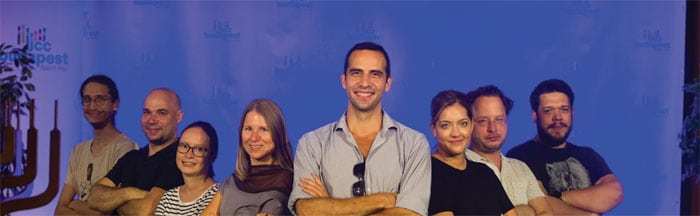
The 38-year-old spoke to the Journal about the future of Hungarian Jewry during a three-day visit to Los Angeles, where he attempted to raise support and awareness for the community-building work of the JCC Budapest — Bálint Ház.
During a wide-ranging conversation at a café in Beverly Hills, the JCC Budapest director highlighted how the JCC in Hungary is fostering a diverse, pluralistic and vibrant Judaism.
“We are redefining what Judaism means in the 21st century,” Kenesei said.
JCC Budapest operates much like the JCCs in the United States, welcoming children, families, singles, adults, seniors and Holocaust survivors. A total of 3,500 monthly visitors enjoy more than 100 in-house programs, including a teen initiative, a Holocaust survivors group, a Jewish film festival, a street festival, young adult professional network, all-night Shavuot learning and Israeli dance activities for people with disabilities.
“No matter what you think of your own Judaism or Judaism in general, you are welcome here,” Kenesei said.
The Judafest Street Festival, JCC Budapest’s signature event, is the largest Jewish festival in Budapest. Courtesy of JCC Budapest
Kenesei’s background exemplifies the challenging and complicated history facing Hungarian Jews. Growing up, he attended the Lauder Javne Jewish Community School in Budapest, which was funded by the Ronald S. Lauder Foundation, but he didn’t learn he was Jewish until he was 13 years old.
“My story is very common,” Kenesei said.
After learning the truth about his identity, he immersed himself in the traditions and history of the Jewish people. Eventually, his newfound passion led to a career as a Jewish professional. In 2000, he became director of JCC Budapest, succeeding longtime director and Hungarian Jewish educator Zsuzsa Fritz.
Today, more than 100,000 Jews live in Hungary, making it the largest Jewish population in Central and Eastern Europe.
In 1994, after the fall of the Iron Curtain, JCC Budapest was established with the goal of bringing Judaism to those who, like Kenesei, were ready to explore their true identity. Today, more than 100,000 Jews live in Hungary, making it the largest Jewish population in Central and Eastern Europe. According to Kenesei, about 20,000 people in this group consider themselves Jewish, and he would like to see that number grow.
While the American Jewish Joint Distribution Committee (JDC) launched JCC Budapest, it became independent in April and is now responsible for its own fundraising.
“JDC is like a good parent,” Kenesei said. “Now, it is taking a step back and making sure we thrive.”
The nonprofit Friends of JCC Budapest helps with procuring financial support for those enrolled in JCC Budapest programs as well as resources for new initiatives.
Kenesei pointed to the JCC Krakow, led by Executive Director Jonathan Ornstein, as an example of an Eastern European Jewish organization that has changed the community’s perception of Eastern Europe. While JCC Krakow has helped Poland reimagine itself as a destination of Jewish life, JCC Budapest has also become an essential part of the European Jewish revival, he said.
The recent work of the Budapest JCC has gone beyond engaging the Hungarian-Jewish community. Since Russia invaded Ukraine in February, Hungary, sharing a border with the besieged country, has welcomed 350,000 Ukrainian refugees. JCC Budapest has helped organize food and supplies drives in support of those who have fled for their lives.
While Kenesei is proud of all his organization has accomplished, there is still plenty of work ahead. For one thing, for all his JCC offers, it still does not match the size and scope of JCCs in the United States. How would he like his community to grow? Adding a swimming pool, which serves as a major revenue earner for JCCs here, would be nice, he said.
“Our JCC is cute,” Kenesei said, “but not as impressive as the JCCs in America.”
One verse, five voices. Edited by Salvador Litvak, the Accidental Talmudist
All the days of his vow of abstinence, no razor shall pass over his head; until the completion of the term that he abstains for the sake of the Lord, it shall be sacred, and he shall allow the growth of the hair of his head to grow wild.
-Num. 6:5
Rabbi Nicole Guzik Sinai Temple
When being disciplined, it is almost impossible to see the merits of a punishment. No child or teenager ever says, “Oh, I understand why you are sending me to my room. Thank you for setting limits. This is important for my development.” If you do find someone that values punishment within the moment, please introduce them to me. That is someone I must meet.
Rather, the advantages of setting and enforcing limits cultivates the character of a person or society, over time. Accepting and obeying rules establishes the values that serve as building blocks for identity. You may refrain from eating particular foods because the separation frames your relationship with animals and the earth. You may reduce the amount of time indulging in particular activities because you allow more time for others. Establishing rules for children offers safety, routine, and room to grow. Adults are not so different. Saying no to one thing gives an opening to say yes to something else. And establishing a discipline around saying no safeguards one’s ideals, principles, and beliefs.
Stephen Covey teaches, “You have to decide what your highest priorities are and have the courage pleasantly, smilingly, and unapologetically – to say “no” to other things. And the way to do that is by having a bigger yes burning inside.” What a difficult and meaningful dance: leading a disciplined life that protects the burning “yes” that shines within. May saying no help define your bright, vibrant, purposeful yes.
Rabbi Shlomo Seidenfeld Freelance Rabbi, Scholar In Residence Aish/JMI
A vow of abstinence! Sounds so Middle Ages. A state that monks in a monastery take upon themselves. A life that is not in step with a contemporary world and a modern society.
The Nazir, in his aspiration to live a holy, priest-like life, vowed to abstain from wine, hair-cutting and contact with a corpse. This cocktail of prohibitions was designed to help the holy-seeking individual detach himself from his unholy impulses.
A vow of abstinence may seem archaic but selfish and destructive impulses aren’t. They are alive and well in every person and are the source of our insecurities, anxieties and disillusionment. We are all intoxicated by vanity, wealth, sexuality and more. Seen through this lens, the Nazir’s decision to detach himself from common practices that embody these impulses, doesn’t seem so evangelical after all. Giving up Chardonnay or Supercuts for a short time seems like a digestible sacrifice considering the reward.
And yet, this transient priest had to bring a sin offering upon completion of his term of detachment. The implication, according to some commentators, is that though the Nazir’s aspirations were holy, a life of abstinence is not fully in consonance with the will of G-d or the well-being of mankind.
You see, the Torah doesn’t glorify a life that abstains from life. Judaism doesn’t trumpet the elimination of impulses. It orchestrates the elevation of impulses. The Nazir was well intentioned but instead of abstaining, let’s vow to dedicate our energies to noble causes and higher consciousness. Shabbat Shalom.
Rabbi Chaim Tureff Rav Beit Sefer, Pressman Academy,
director of STARS Addiction Recovery
“Oh say, can you see my eyes? If you can, then my hair’s too short.” I wonder if this famous line from the musical Hair is how the Nazir felt.
The Talmud tells us that the minimum requirement for a Nazir to not cut their hair was 30 days, but that it could last longer. So what is with this peculiar part of the Nazir’s requirement? Not drinking or coming close to a corpse is understandable but what is with the hair?
According to R’ Shimshon Raphael Hirsch, since hair protects our body, symbolically, by growing hair, there will be spiritual protection from detrimental influences. The Nazir can completely devote themselves to Hashem.
The “Sefer Ha-Chinukh” notes that by growing your hair it pushes one towards more spiritual matters while driving away the physical inclination. So, how do we balance this need to infuse spirituality into the physical world? That is the work that we are tasked with every day: illuminating a physical world fraught with impulsiveness, superficiality, and greed with spirituality.
Whether that is donating your hard-earned money for tzedakah, saying a blessing over food, recycling that box, or showing patience for those around you, there are a myriad of things we can do to elevate this world. We don’t need to let our hair grow to do that, but as I did many years ago and look forward to doing again shortly with Locks of Love, donating your hair for those that need it, isn’t a bad idea!
Rabbi Patricia Fenton American Jewish University
Years ago, I saw the movie “Koyaanisqatsi,” a Hopi word translated as “life out of balance.” That phrase stayed with me. I’ve thought of it in the last few years, years marked by imbalance in our communities, nation, and world.
This week’s Torah portion introduces the nazir, who vows to abstain from grapes in any form, contact with the dead, and from cutting their hair. The rules of the nazir come just before the Priestly Blessing.
The Torah is silent about the nazir’s motivation. The root of the word nazir means to separate or dedicate oneself. What motivates a nazir to separate from the joys and the sorrows of community life, symbolized by wine and mourning?
Does the nazir’s hair signal a life out of balance, in which separation is needed to draw closer to God and/or to the self? Like the person afflicted with tzara’at, who leaves the camp while calling out “ritually impure!” (Lev. 13:45), perhaps the nazir’s long hair silently signals imbalance, a desire to protect others, and a need of help.
In God’s instructions about the priestly blessing, we learn how the priests are to bless Bnei Israel. All the children of Israel receive God’s blessing, those who have been separated from the community, those who have separated themselves, those in balance and those out of balance.
May God bless each of us, our nation, and our world with balance, with the ability to signal imbalance, and the strength to seek and receive help. Shabbat Shalom.
Rabbi Chanan (Antony) Gordon Prominent Inspirational Speaker
We are souls contained by bodies, not bodies with a soul.
One of the Nazirite vows is to refrain from cutting or grooming his hair. Abstaining from any pleasure in this world is a denial of G-d’s goodness. Perforce, the concept of a Nazir is only germane in the case of someone whose drive for licentiousness may cause him to compromise his moral compass in order to teach us one of the most important concepts in Judaism: we are the product of two parts, a body and a soul. Since the latter is a manifestation of Hashem and continues to exist even after our inevitable demise, where there is a conflict between body and soul, the soul takes precedence.
The Torah teaches us in several places that hair symbolizes the essence of beauty and vanity of the body – both for women and men. King David’s son Avshalom was notoriously preoccupied with his mane (see Samuel II, Chapter 18); and in tractate of Nazir, Shimon Hatzaddik praised a Nazir who undertook the commitment specifically to curb his own ego regarding his locks.
It follows that letting one’s hair grow wild, and then ultimately cutting it all off is a remedy for being too full of one’s own appearance. The fact that we are expected to go to such lengths to ensure that we keep our bodily urges in check does not mean Judaism is a religion that promotes self-flagellation, rather it highlights the fact that a Jewish soul is precious and is to be guarded at all costs.
If you’re planning on making a cheesecake for shavuot, do you have acake stand to display it? When you’re in a pinch, it’s easy to make your own cake stand with an inexpensive plate and bowl from the dollar store. (Actually, the plate and bowl were each $1.49 from the 99 Cents Only Store, but there’s inflation for you.)
Even if you’re not planning on making a cheesecake, or any dessert for that matter, a cake stand is a handy thing to have around the house. It’s great for organizing makeup and toiletries in the bathroom, or a place to hold keys, wallet or mail on a dresser or entry table.
What you’ll need:
Ceramic plate
Small ceramic bowl
E6000 permanent adhesive
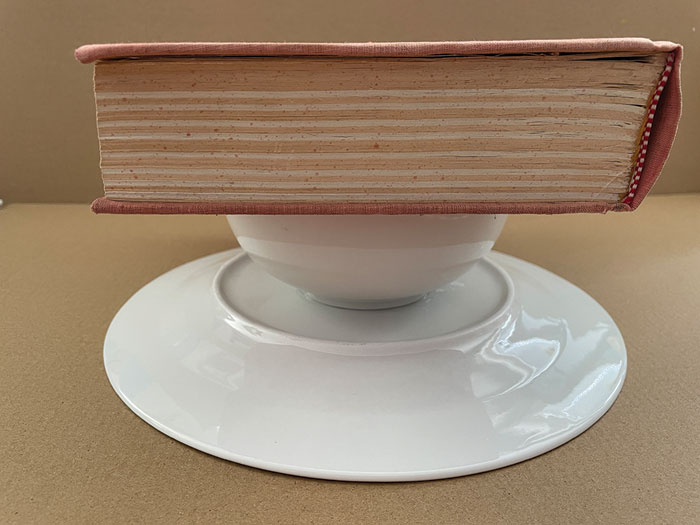
1. Start with a large ceramic platter and a small ceramic bowl.2. Turn the bowl upside down. Apply E6000 adhesive around the base of the bowl.3. Turn the plate upside down. Center the base of the bowl on the bottom of the plate.4. Place a heavy book on top of the bowl to help secure the seal between the bowl and the plate. Allow the adhesive to dry overnight. Handwash the cake stand after using.
Jonathan Fong is the author of “Flowers That Wow” and “Parties That Wow,” and host of “Style With a Smile” on YouTube. You can see more of his do-it-yourself projects at jonathanfongstyle.com.
Whereas Ploni Almoni in the Book of Ruth explains that his objection to
redeeming territory of Naomi that he had the right to gain
was based on fearing that he might destroy his own, Vladimir Putin’s point of view
appears to favor the destruction of the territory he claims, Ukraine.
The Bible stories’ morals never have a sell-by date,
and here’s the moral of the one that’s quoted in the first quatrain:
Redemption is a process that all people with good morals hate,
if it involves destruction that collaterally causes dreadful pain.
Ruth 6:1, 6 states:
א וּבֹעַז עָלָה הַשַּׁעַר, וַיֵּשֶׁב שָׁם, וְהִנֵּה הַגֹּאֵל עֹבֵר אֲשֶׁר דִּבֶּר-בֹּעַז, וַיֹּאמֶר סוּרָה שְׁבָה-פֹּה פְּלֹנִי אַלְמֹנִי; וַיָּסַר, וַיֵּשֵׁב. 1 Now Boaz went up to the gate, and sat him down there; and, behold, the near kinsman of whom Boaz spoke came by; unto whom he said: ‘Ho, Ploni Almoni! turn aside, sit down here.’ And he turned aside, and sat down.
וַיֹּאמֶר הַגֹּאֵל, לֹא אוּכַל לגאול- (לִגְאָל-) לִי–פֶּן-אַשְׁחִית, אֶת-נַחֲלָתִי; גְּאַל-לְךָ אַתָּה אֶת-גְּאֻלָּתִי, כִּי לֹא-אוּכַל לִגְאֹל. 6 And the near kinsman said: ‘I cannot redeem it for myself, lest I destroy mine own inheritance; take thou my right of redemption on thee; for I cannot redeem it.’
Gershon Hepner is a poet who has written over 25,000 poems on subjects ranging from music to literature, politics to Torah. He grew up in England and moved to Los Angeles in 1976. Using his varied interests and experiences, he has authored dozens of papers in medical and academic journals, and authored “Legal Friction: Law, Narrative, and Identity Politics in Biblical Israel.” He can be reached at gershonhepner@gmail.com.
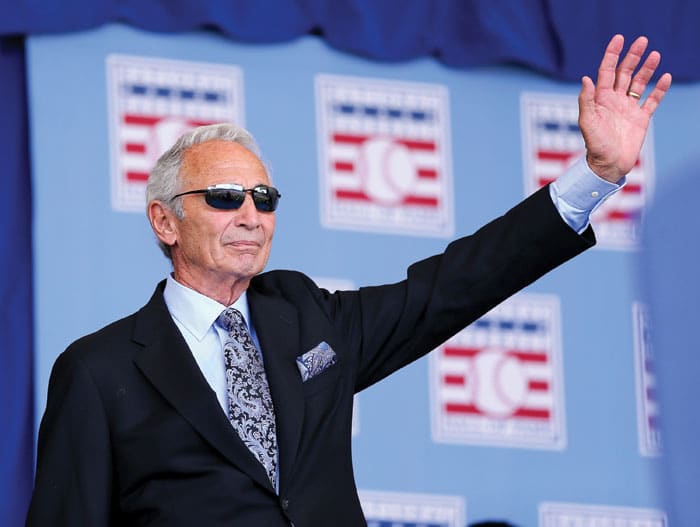
A statue of Sandy Koufax, arguably the most famous Jewish athlete in American sports, is set to be unveiled at Dodger Stadium this month.
The statue’s unveiling will take place before the Dodgers’ home game on June 18 at 4:15 p.m. against the rechristened Cleveland Guardians in an inter-league matchup.
This season also marks 50 years since Koufax became the youngest inductee to the Baseball Hall of Fame at age 36. He began his career with the Dodgers in 1955, when they played their final years in his hometown of Brooklyn, New York.
The left-handed pitcher would go on to play his entire career with the Dodgers, first in Brooklyn, then in Los Angeles from 1958, when the team decamped from Brooklyn’s Ebbets Field to Los Angeles, until he retired in 1966.
Among Jews, Koufax is best-known for sitting out Game 1 of the 1965 World Series because it fell on Yom Kippur, the holiest day of the year.
During his 12-year career, Koufax won 165 games and lost 87, with a lifetime earned run average of 2.76 and 2,396 strikeouts. He played on three World Series champions (and was the Series MVP for two of them), won three Cy Young Awards, won the pitcher’s Triple Crown (wins/ERA/strikes) three times and appeared in seven All Star Games. He pitched four no-hitters, including a perfect game in 1965. But among Jews, Koufax is best-known for sitting out Game 1 of the 1965 World Series because it fell on Yom Kippur, the holiest day of the year.
The Dodgers won the 1965 World Series over the Minnesota Twins in seven games. Koufax started three games and won two, on his way to winning his second World Series MVP. “(A) Man is entitled to his belief and I believe I should not work on Yom Kippur. It’s as simple as all that and I have never had any trouble on that account since I’ve been in baseball,” Koufax told the late journalist Milton Richman of United Press International.
A lesser-known fact is that Koufax sat out a game that fell on Rosh Hashanah during the 1959 World Series, among several others. The National Baseball Hall of Fame and Museum in Cooperstown lists the other days when Koufax chose Judaism over baseball: “In April 1959, Koufax requested to skip his start on April 22 due to it being the first night of Passover. Similarly, in 1961 and 1963, Koufax skipped his turns in the rotation which conflicted with Rosh Hashanah. In 1963, Koufax more than made up for the trouble in rearranging the pitching staff’s schedule by striking out a record 15 Yankees in Game 1 of the World Series.”
The legend of Koufax choosing the High Holidays over the World Series has been seared into the minds of Jewish sports fans for generations.
“Every little Jewish kid in LA heard about [Koufax sitting out a World Series game] because our mothers, mine included, gave us trouble about playing little league on Yom Kippur ever after,” said Richard Lovich, a native Angeleno and Dodger fan since birth, 1957. “Also, my extended family is in St. Paul, Minnesota, where the 1965 World Series was being played and my cousins always repeated the rumor that Sandy went to services at their Temple — Temple of Aaron.”
A lesser-known fact is that Koufax sat out a game that fell on Rosh Hashanah during the 1959 World Series, among several others.
Another life-long Dodger fan, Kim Fischer, described why after more than 60 years of LA Dodger baseball, Koufax is still his favorite player of all time. “He meant a tremendous amount because of his Jewishness and because of his ability and being known,” said Fischer. “Everything about him was good in terms of character and how he was portrayed through the radio by Vin Scully, the work that he would do and the dedication he had to the Dodgers. He helped bring a knowingness and respect not just to the LA community but outside the Jewish community. There weren’t a lot of Jewish public figures out there at the time but here he was — one of the best pitchers in the history of baseball.”
Fischer, his younger brother Jon and their sister grew up in the Fairfax neighborhood. When they weren’t in section 12 at Dodger stadium during a game, they were listening as a family at home, which was walking distance from Canter’s Deli, where a giant Koufax mural could be seen.
“[Koufax] is one of those rare sports individuals where all you do is mention his name and everybody shakes their head and says, ‘yeah,’” said Jon Fischer. “It’s been a family thing since our early childhood and it was very special to our dad, so when we’re watching a Dodger game, we’re showing our respect to our dad, our team and to the city. This is who we are.”
Since retiring in 1966 at age 31, Koufax has continued to be a revered figure in the Jewish community. His story has endured through generations of baseball fans and Jews alike. He was even honored on a national level at the first ever Jewish American Heritage Month reception at the White House in 2010.
Although there are 16 Dodgers in the Hall of Fame, the only Dodger who has been honored with a statue at the stadium is Jackie Robinson, whose statue was dedicated in 2017, the 70th anniversary of his breaking baseball’s color line.
Koufax and Robinson were Brooklyn Dodgers teammates in 1955 and 1956.In a press release, Stan Kasten, the team’s president and CEO, noted they will be rejoined at Dodger Stadium and will greet fans at the centerfield gate for generations to come.
Since his retirement, Koufax has guarded his privacy. Although the 86-year-old pitcher has made sporadic appearances at home games in recent years, the team has not announced if Koufax will attend the unveiling ceremony.
Rabbi Scott Fox didn’t set out to be a rabbi. Instead, he wanted to be a jazz musician. He studied jazz guitar and trained with one of the nation’s best guitarists, John Pisano. Even though he thought he was living his dream, things didn’t add up.
“I have a vivid memory of feeling like something was missing,” Fox said. “I loved playing music but there was too much of a disconnect.”
When Fox did a wedding gig with his band, he realized that he was off to the side and the wedding party was on the other side of the room. “I was feeling like I’m over here and they’re over there and something is missing … I needed something more.”
So, Fox embarked on a journey to discover what his next move should be. He lived on a kibbutz in Israel, where he did organic gardening and environmental work.
“With my hands in the earth and the sun on my back, I thought about what I wanted to do,” he said. “I loved the direct impact I was making doing environmental work. But I needed more of an intellectual piece.”
Fox made his way back to the United States and enrolled at the University of California, Santa Cruz. His professors told him to read different essays, which he found to be inspiring. When he looked into who had written the essays, the authors all had one thing in common: they worked at Hebrew Union College-Jewish Institute of Religion (HUC). He was sold, and after graduating from UC Santa Cruz, he received ordination from HUC.
Looking back, it made sense that Fox became a rabbi; serving the Jewish community is in his blood. His grandfather was president of his synagogue and his grandmother was the religious school director at their temple in Barstow. His mother led a religious school in San Diego, where Fox grew up.
“Not only was I very involved in the synagogue, but we had a very active Jewish life at home,” he said. “Every Friday night, we’d sit together and have a Shabbat meal and do prayers. We had a songbook we put together as a family and would sing various Jewish songs throughout the evening. On Saturday, we’d go to synagogue and come back home and discuss the Torah portion in depth.”
In his current role as the rabbi at Temple Israel Long Beach, Fox finds innovative ways for people to have meaningful relationships with Judaism.
“I love bringing in new ideas and pioneering creativity,” he said. “We have members who are going to do a creative Saturday morning experience where instead of a traditional Shabbat service, we have an open painting studio. After the holidays, we’re kicking off hiking and meditating once a month to get out into our natural world and say prayers.”
When Fox came to Temple Israel in 2020, right from the get-go he hoped to cultivate fulfilling relationships with his congregants. He met with seven families twice a week on Zoom to learn about the synagogue and give them the opportunity to ask him questions.
“It was a beautiful way for me to connect directly with members, and for me to give members an opportunity to see that I’m an open book,” he said.
On a day-to-day basis, Fox does different things like calling congregants to chat, planning programs, writing and attending life cycle events. It is in these everyday tasks that the rabbi can fulfill his mission to bring spirituality to people.
“What I set out to accomplish in the rabbinate is to allow people to have deep and meaningful connections to themselves, our history and to each other.” – Rabbi Scott Fox
“What I set out to accomplish in the rabbinate is to allow people to have deep and meaningful connections to themselves, our history and to each other,” he said. “I want to help members of the community feel connected to each other, and to Judaism.”
Fast Takes with Scott Fox
Jewish Journal: What’s your favorite Jewish food?
Scott Fox: Probably bagels and lox.
JJ: Where’s your favorite place to hang out in Long Beach?
SF: My favorite place is the beach. I like to get a burrito and go down to the water.
JJ: Who is your favorite jazz musician?
SF: Julian Lage. He is a perfect story of a jazz prodigy.
JJ: What’s your perfect Shabbat look like?
SF: I sit around the table with my family and friends and we do a little bit of singing and have a really beautiful conversation. We have a three-year-old, so in my mind, the perfect Shabbat is when she is surrounded by other kids and they all play together and have a good time.
In 2011, one year after Kira Rappaport had her first child, she went to the dentist for a routine cleaning. While she was in the chair, the dental hygienist told her there was something on her tongue.
“The dentist said I should have it looked at,” Rappaport said.
Rappaport went to the doctor and got a biopsy. The results showed that she had mild dysplasia, which was not cancerous. She was relieved.
Every few months, she would get checked. In 2016, she underwent a surgical biopsy and was fine. But then, last fall, right before Hanukkah, the doctor told her something had changed and she was going to need to do another surgery.
“It came back malignant,” Rappaport said. “It was unfortunate.”
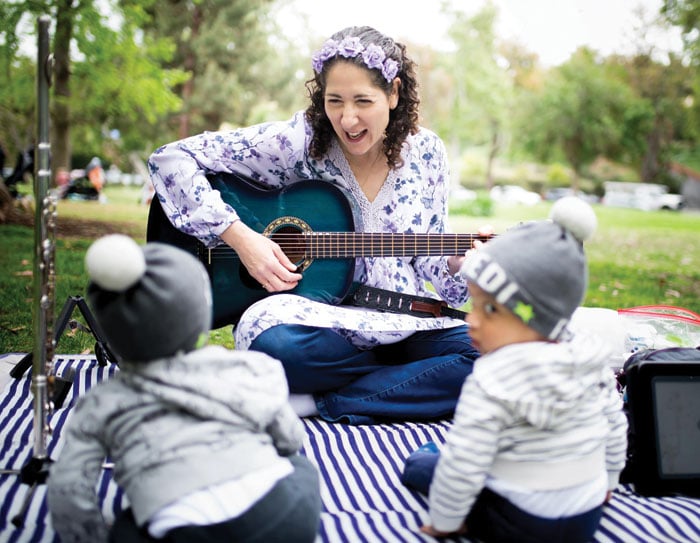
Rappaport was worried about the tongue cancer not only for health reasons, but also because she plays music for a living. Affectionately known as Morah Kira, she’s been playing flute and guitar and singing for parent and me groups for the LA Jewish community for two decades – including a 15-year stint at Temple Beth Am.
“It was very surreal going through Hanukkah every night, singing songs and wondering how this was going to impact me,” she said. “Would I be singing next year? I definitely sang my heart out.”
Thankfully, Rappaport’s surgery went well, and the doctors got all the cancer. Still, they wanted her to do six weeks of radiation just in case. While her first impulse was to keep it private, she decided to post about her journey with radiation on Instagram on Facebook. Since Rappaport was going to be out of work for three months, and her medical costs were high, her sister decided to create a GoFundMe for her.
“My sister set it up on Monday, and by Wednesday, we had $40,000,” said Rappaport. “I got so many messages of love and support and encouragement. It was so touching to have so many families show up and support me. I felt lifted up and carried through the experience.”
Three months after finishing radiation, Rappaport is 75% recovered. She has 50 to 60% of her taste back, and she’s able to play the flute, but not like she used to.
“My flute playing will take time to get back to a pretty good place,” she said.
While Rappaport was based out of Temple Beth Am prior to the pandemic, since COVID hit, she’s been holding classes outdoors.
“During the week, my classes are peace, love and music, and on Friday, we do Shabbat,” she said. “We meet at the park and sing lots of Shabbat songs and have challah and grape juice. It’s a really fun time to come together.”
Rappaport has been playing music since she was a child. Her parents encouraged her and her siblings to play instruments, so she picked up the flute when she was eight. Then, as a teen, she started playing kids’ songs for her nieces and nephews.
“Somehow, those songs became ingrained in me,” she said.
When Rappaport was older, she ended up going to Oberlin College and the University of Southern California for flute performance. She also created an early childhood program, The School for Strings in New York City, got her Masters in early childhood music and recorded two albums of original music as well as covers of “Beautiful Day” and “Sing Together.”
What she loves about music is that it “allows for expression and communication,” she said. “Kids sing before they can talk. They dance before they can walk.”
She especially enjoys working with children because she admires how open they are when listening to music.
”With music, we can connect to our babies and to each other. The kids go home, sing the songs and create their own songs based on what they’d heard in class. If your child is upset, music can shift their mood.”
– Kira Rappaport
“There is no self-consciousness to how they react,” she said. “The littlest babies will immediately turn their head to listen to a sound. With music, we can connect to our babies and to each other. The kids go home, sing the songs and create their own songs based on what they’d heard in class. If your child is upset, music can shift their mood.”
Now that Rappaport, a mother of two, has recovered, she looks forward to releasing a third album and continuing to create music she hopes everyone – children and parents alike – will cherish.
“I consider myself very lucky that we caught it and it was treated and that I can still work,” she said. “Being a music teacher is who I am. I love it so much.” ■
Many Fridays, I have the opportunity to learn the parsha with a couple of my former students from Shalhevet High School in Los Angeles.
A few weeks ago, we were discussing the famous opening words of Parshat Kedoshim, “Kedoshimtihiyu” (“You shall be holy”). What is this demand?
My two former students, who are in their late 20s and both grew up in observant Jewish homes, said to me: “You know, we don’t really do much of anything Jewish.” And then in the blink of an eye, they said, “Of course, we want to run a meaningful Jewish home and send our kids to Jewish schools.” I reminded them of how when they were younger, it was their parents who wanted them to be religious, so when they were younger, they were religious for their parents.
To be fair, these alumni do study the parsha with me regularly, so the suggestion that they don’t engage in many Jewish activities was a bit of an exaggeration. Why am I explaining all of this? I think I’ve discovered a fascinating phenomenon with regard to Jewish behavior that’s important for us in the 21st century to understand.
Robert Nicholas/Getty Images
The latest Pew Research Center report found that the Jewish community is significantly less religious than American adults as a whole. Compared to 41% of U.S. adults who say that religion is very important to them, only 21% of American Jews felt that way. Why is it the case that the “Chosen People,” the “People of the Book,” are less religious than others?
The question got me thinking. Many of us, in varying degrees, are religious only or primarily for our parents when we’re younger. When we’re older, we become more religious for our children. But that doesn’t really account for when we are 20 or 30 years old. What about those years? What about the value Judaism gives to us at any time in our lives? Is the goal of being Jewish really only to please our family and then make sure that the next generation is Jewish? Is that really all we are here to do, or is there a greater purpose?
It has certainly been the focus of countless Pew surveys, and it’s how we have measured success in our community for decades. Through identity and community markers like intermarriage rates, synagogue affiliation and how often people attend services, we have invested tremendous resources into assessing how well we are doing at making sure the next generation is Jewish.
We have had endless conversations about how to solve the vexing problem of Jewish continuity and survival. How will we prevent intermarriage and assimilation and how will we fight antisemitism? How will we increase synagogue affiliation among today’s young generation? How do we get more people to be “pro-Israel”?
Those have been the benchmarks for what Jewish success looks like — and to be clear, the survival of the Jewish people is an important ideal. The issue, however, is that we ought to be aiming significantly higher.
Of course, we don’t hear about the “need for Jewish survival and continuity” as much as we used to. Younger rabbis and Jewish leaders across the religious spectrum do not tend to use this lexicon. As a community, we have learned that our need to survive no longer works as a rationale for inspiring the next generation to engage in Judaism. Moreover, we recognize that it no longer works for us.
We may have learned that survival is not a good enough reason to be Jewish, but we have yet to fill the gap with something compelling.
But what have we replaced this old rationale with? What is the compelling reason we have to offer for why younger generations should be part of the Jewish story? Why should our children and students be Jewish? We may have learned that survival is not a good enough reason to be Jewish, but we have yet to fill the gap with something compelling. While rabbis Harold Schulweis and Ed Feinstein have addressed this issue repeatedly, the question of why we do any of this is the question that still needs to be answered.
There is a famous essay by 20th-century philosopher Simon Rawidowicz called “The Ever-Dying People.” In the essay, he argues that the first Jew who was afraid that Jewish continuity would end was Abraham himself. Before Abraham was granted his son Isaac, Rawidowicz notes, he stood and trembled, saying, “Oh Lord … I shall die childless!” (Bereshit 15:2). Since then, the Jews have lamented that their generation might be the last link in the long chain of tradition.
“Our rabbis, writers, politicians, each on his own platform and in his own language, preach and write almost every few weeks or months on the theme: Is American Jewry doomed? Is there a future for Jewry?” he wrote. That’s ironic, Rawidowicz argues, because we are the ones who have outlived the Greeks and Persians. We are the ones who are still here. So why are we perpetually concerned about whether we are going to fall off the map?
We see a similar phenomenon in the way we approach Israel and Zionism. There has always been a debate within the Zionist movement: Should we focus on Jewish survival or Jewish renewal? Is the purpose of the Jewish state to provide a safe haven for the Jewish people, or is it to renew the Jewish people and be a light unto the nations?
Theodor Herzl and Ahad Ha’am famously engaged in this kind of debate. While Herzl was trying to figure out how to create a Jewish state, Ha’am believed that what the Jewish people really needed was a regeneration of national Jewish culture, and that this had to precede the physical return to the land of Israel.
Meanwhile, Martin Buber argued that there must be Arab-Jewish reconciliation before a state was established. The early kibbutzniks sided with Herzl. Their response to the Ha’ams and Bubers of the world was as if to say, “Enough of your silliness! We cannot delay as the Jewish people suffer. What matters right now is having a state.”
From the vantage point of 2022, I would argue that, yes, focusing on getting a state over regenerating the Jewish people was the correct priority at that time. But now that we have a state, let’s figure out how to enact the ideals espoused by Buber and Ha’am, which is what it means to be Jewish.
Zionism is about more than having a state or being “Pro-Israel.” It is a romantic, aspirational movement; it is an ambition to do something majestic, to contribute something noble to the world.
Zionism is about more than having a state or being “Pro-Israel.” It is a romantic, aspirational movement. Zionism is not just a survival strategy; it is an ambition to do something majestic, to contribute something noble to the world. It is about learning the Hebrew language, understanding the history and connecting with Jewish culture. It is the constant effort to improve Israeli society, to call on the Jewish state to live up to its unfulfilled promises.
What are we working toward? What might we contribute?
As Rawidowicz wrote, “Mere praise [of Israel] brings no blessing. Enthusiasm alone is not enough … The diaspora of Israel cannot be uninterested in problems such as those of minorities in the State of Israel or the relationship between state and religion.” World Jewry cannot become merely cheerleaders for Israel.
Tal Becker, a former fellow at Washington Institute for Near East Policy and the Shalom Hartman Institute, calls us to embrace an aspirational Zionism. He says that the question it seeks to address is not “how do we survive?” Rather, it is “what form and nature should a Jewish sovereign society take?”
To move from survival Judaism to aspirational Judaism, we need to find new benchmarks for Jewish success and a wholly different set of areas on which to focus.
To move from survival Judaism to aspirational Judaism, we need to find new benchmarks for Jewish success and a wholly different set of areas on which to focus. We need to recognize that our communal battle is not intermarriage but illiteracy. The battle is not antipathy but apathy. The battle is not difference of opinions, but indifference.
Why is it so difficult to shift our focus?
Maybe it is hard for us to aim higher than survival because that is the “baseline” mode that we have internalized and to which we have adapted over the centuries. In the field of positive psychology, “hedonic adaptation” suggests that we each have a set point of happiness that we tend to return to despite major positive or negative events we experience. Perhaps this explains why we continue to constitute ourselves as an “ever-dying people” despite the circumstances. If we have somehow habituated to a set point of “survival,” then we ought to be aware of this and remind ourselves of the ways in which the Jewish community has surpassed our basic needs.
We have experienced a lot of trauma throughout Jewish history. We continue to carry the trauma of past generations. But just as when an individual experiences a traumatic event, we must learn to work through the trauma in order to experience a meaningful existence.
Yes, Israel faces real and difficult challenges, but a Jewish state exists. Yes, antisemitism in the U.S. is rising, but Jews are part of American society at the highest levels. We are one of the rare generations in Jewish history for whom all of this is true. To say that 2022 is “the worst it has been” is inaccurate. So while there is certainly much to be concerned about, let’s make sure we are not paying selective attention to the negative aspects of 21st-century Jewish life and ignoring the positive.
As a community, we can afford to lift our gaze above the basic goals of survival and continuity. We ought to find ways to fulfill our potential and rise beyond the self through altruism and spirituality. Even in times of distress, survival need not be the primary focus. There is no value to survival for survival’s sake. Instead, we must strive toward another goal.
Survival is not a mission. The way I see it, this approach has actually cost us as a community. Our pursuit of continuity has not been supportive of continuity — it has had the opposite effect. In other words, survival alone is not a mission because a mission is the purpose for survival. One survives in order that a mission can be undertaken.
In “In Pursuit of Godliness and a Living Judaism,” Rabbi Feinstein writes that “Presenting an ethnic culture empty of meaning but burdened with collective guilt for its imminent demise might be part of the reason young Jews were abandoning Jewish life.” Survival “cannot be pursued as a communal objective. It is a by-product, achieved only when Jews are engaged in Jewish life, when Judaism is lived, celebrated and internalized,” Feinstein adds, reflecting on the leadership of Rabbi Schulweis.
Survival and continuity are the byproducts of success. When we make them our highest objectives, we do so at our own peril. The best way to ensure Judaism survives is not to prevent intermarriage and assimilation, but to make Judaism compelling and interesting. Instead of seeking to prevent intermarriage and preserve Jewish tradition, let’s allow ourselves to create and generate.
For the great Jewish rabbis and thinkers, the central purpose of Judaism was more than preserving Judaism. For the medieval scholar Maimonides (Rambam), the purpose of Judaism was the full actualization of our humanity.
Thinkers such as Rabbi Joseph B. Soloveichik have said that Judaism wasn’t created to fight antisemitism, and Rabbi Arthur Hertzberg lamented the fact that the only thing more dangerous than antisemitism was no antisemitism because he saw that, for too many people, antisemitism became the sole reason and motivation for being Jewish. For the great Jewish rabbis and thinkers, the central purpose of Judaism was more than preserving Judaism. For the medieval scholar Maimonides (Rambam), the purpose of Judaism was the full actualization of our humanity. For Rabbi Israel ben Eliezer (the Baal Shem Tov), it was teaching people how to be fully devoted to God. For Rabbi Abraham Joshua Heschel, it was to repair the world.
For all of them, Judaism was a means to a really important end. Judaism is an aspirational religion and Jews are an aspirational people with an aspirational vision. The provocative philosopher Yeshayahu Leibowitz underscored this. He said, “I believe in Moshiach” and “I believe in the Messiah.” There is a fundamental tenet in Judaism to believe that the Messiah is always going to be arriving, but any Messiah that does arrive is automatically a false messiah.
Leibowitz’s point is didactic. He stresses that in Judaism, there is a yearning that is critical to live by. Even if we know we will not reach the objective, we should still be aspirational. We should still build and strive toward something. It is the yearning, the aspiration and the actions we take toward an objective that matters. As Jews we are expected to do good deeds to make the world a significantly better place. “Lo alecha hamlacha ligmor, v’lo atah ben chorin l’hivatel mimena,” Pirkei Avot 2:21 states. “It is not up to you to finish the work but neither are you free to desist from it.”
Our tradition reminds us that there is no utopia in real life — the utopia is the actual work that we do toward an aspirational vision of improving the world. And this is what has been our legacy as a people over thousands of years. The constant effort to build toward something is what has always set the Jewish people apart.
The historian Paul Johnson, author of “A History of the Jews” describes the legacy of our community this way:
“Certainly, the world without the Jews would have been a radically different place. Humanity might have eventually stumbled upon all the Jewish insights. But we cannot be sure…
“To [the Jews] we owe the idea of equality before the law, both divine and human; of the sanctity of life and the dignity of human person; of the individual conscience and so a personal redemption; of collective conscience and so of social responsibility; of peace as an abstract ideal and love as the foundation of justice, and many other items which constitute the basic moral furniture of the human mind. Without Jews it might have been a much emptier place.”
Without minimizing the achievement of our survival, let’s remember that our legacy is so much more than that. Let’s work backward from Johnson’s statement. If we are not doing enough to fight for the equality and dignity of each person, to promote social responsibility, peace and justice, and to help provide the “moral furniture” of society, then we are not doing what we are here to do.
This has been our legacy and mission as a people ever since the days of the first Jew, Abraham. One of my favorite ideas in the Tanakh is from the story of Sodom. In Bereshit/Genesis 18:19, God says that the reason he has chosen Abraham to be the founder of the Jewish people is so that he will keep the ways of God, bring righteousness and justice into the world, and teach his children and future generations to bring righteousness and justice to the world.
Here’s a thought: What if we took this mission more seriously as a Jewish community? What if, instead of focusing on whether our children marry someone Jewish and whether they stay Jewish, we focused on how well they are doing at bringing tzedakah u’mishpat, righteousness and justice, into the world, or how serious they are about acting in a divine way?
What if instead of rewarding our children for attending synagogue or Sunday school, we rewarded them for reciting a Jewish prayer and meaning it, for demonstrating Jewish knowledge, and for acts of kindness, generosity and compassion?
What if instead of asking how many of our young people are “Pro-Israel,” we wondered more about their knowledge of Zionist history, their connection to the Hebrew language, how much time they’ve spent in different communities throughout Israel, or how they’re thinking about the Israeli-Palestinian conflict?
What if instead of seeking to pass down Judaism, we focused more on passing down Jewish religious character? The Jewish people have survived, but who are we and who are we becoming?
The Jews were not chosen because we are better. We were chosen to do something better for the world and to contribute to the world — to aim higher.
What would aiming higher as a community look like in practice? If we were to reimagine the standard benchmarks that we have used for decades — like intermarriage rates, synagogue affiliation and synagogue attendance — to make them more consistent with our purpose as a community, what could our new benchmarks be? Here are four proposals for how the Jewish people could aim higher.
1. Aim higher by helping students to develop Jewish literacy.
Consider these questions for a moment: How many Jews in America have heard of the Titanic yet never heard of the Altalena? How many of us know the name of the mayor in our home city without knowing the name of the mayor in Israel’s capital?
How many of our students can tell you about all of LeBron James’ statistics but have not heard of the legendary American-Israeli basketball player Tal Brody or Deni Avdija in the NBA today?
We need to help our students be more literate in all topics related to Judaism and Israel. In his book, “The Wondering Jew: Israel and the Search for Jewish Identity,” Micah Goodman underscores why it is so important that our young people gain knowledge and literacy. “One precondition for joining any conversation is a basic familiarity with its context,” he writes. “If we want to engage in a political debate, we must be familiar with the political context. If we want to engage in a scientific debate, we must know something about the science.”
“In order to join the intergenerational conversation about Judaism, Jews need to be familiar with its contents,” Goodman continues. “Atheism does not disqualify someone from participating in the intergenerational Jewish conversation, but ignorance does.”
At Unpacked for Educators, this is one of our cardinal principles. We frequently say, “Facts matter.” Literacy matters. In all of the resources we develop, our goal is to empower teachers to give their students a baseline literacy in the topic so they can speak intelligently about it. It is not the job of most educators to make students experts on any given subject. But it is certainly our job to give students a baseline level of literacy in their knowledge of Judaism and Israel.
2. Aim higher by giving our young people the opportunity to explore Judaism and Israel.
Literacy alone is not enough. We need to give our young people an opportunity to explore issues from multiple viewpoints and angles — not just acquire knowledge or memorize facts.
Psychiatrist and author Rollo May said this best in 1979: “Where in this is the adventure of thinking, the joy of stretching the mind? Indeed, the student’s urge to explore is lost under the compulsion to acquire.”
One simple way to invite students to explore any given topic is to use an approach that we call “diversity of perspectives.” Here’s the strategy: Give students the opportunity to explore a range of perspectives on the issue.
There are rarely only “two sides of a coin” for any given complex issue. Whether teaching about the binding of Isaac, the Spanish Inquisition or the emergence of the state of Israel, present multiple historical and philosophical viewpoints so students can explore the topic’s complexity and consider different perspectives. When we give students more free rein to explore, we are inviting them to stretch their thinking and be active, engaged learners. As they encounter a full range of views on any topic, students will understand new dimensions of the issue and be able to identify where they stand.
3. Aim higher by helping our students pursue their curiosities and become “builders” of Israel and the Jewish people.
Here’s one thing we know is true: There is no one way in which to love or connect with Judaism. As educators or parents, we can play a vital role in guiding our young people through different facets of Jewish life and help them find their unique Jewish path. Let’s help our students identify what they love most about Judaism. Let’s help them discover what they are most passionate about, whether that is prayer, Torah study, Israeli history, Jewish history, Jewish philosophy, observing Shabbat or being active in a social cause.
Helping students identify their passions is an important first step, but it is not enough. Ultimately, the goal is for them to participate and take an active role in constructing the Jewish story. Rather than encouraging them to preserve Judaism by staying Jewish, let’s help them identify opportunities where they can contribute their creativity to our community and the world.
Let’s help our students become “builders” of Israel and the Jewish people, not just “preservers” of Israel and Judaism. Rachel Sharansky Danziger, daughter of the Zionist heroes Natan and Avital Sharansky, expressed this idea: “It is our lot to maintain Israel, it is our ‘shlichut’ [our mission] to improve upon it.”
We are not here to be “docents” of our ancient heritage, to preserve Jewish tradition in the way that a curator preserves artwork or historic items in a museum. We are here to create, innovate and contribute.
4. Aim higher by encouraging good Jewish religious character (holiness).
Instead of focusing on ensuring our students stay Jewish, let’s focus on the kind of Jewish people and future leaders they are becoming. The question we ought to be asking is not, “How can we ensure Jewish continuity?” Rather, it is, “What do we want our continuity to be?”
What if we were to focus more on how well our students are fulfilling the mission of Judaism according to the Torah — to bring righteousness, justice and holiness into the world? What if we were to reward them not only for demonstrating knowledge, but also for demonstrating acts of hesed (compassion and kindness) like Bikur Cholim, derech eretz (civility, respect) with how they speak and debate, and kedusha (holiness), taking seriously the idea of Shabbat, which is a day of rest and gratitude?
As parents, educators and leaders, we have powerful roles to play in shaping the religious and ethical character of our community, and helping each other pursue the holy. Let’s model good religious character for our students and find ways to reward them for demonstrating good religious character.
One of the most powerful ways to inspire our young people to love Judaism is for us to love Judaism.
What is the best way to do all of this, and how can we inspire our children to love learning, explore Judaism and become active participants in the Jewish story? One of the most powerful ways to inspire our young people to love Judaism is for us to love Judaism.
The whole idea of “aiming higher” is not just for our children. We all ought to think about our passions and curiosities in Judaism and what it is that we most connect to in our tradition. Whatever it is, let’s commit to that part of Jewish life and “go all in.” Or, if we embrace many different parts of our tradition, let’s commit to incorporating each of them into our lives in a meaningful way.
The key is to focus on doing. Whether it is learning Torah, observing Shabbat, engaging in Zionism, davening or reciting blessings, choose something that speaks to you and do it consistently. If we are prayerful people, the goal is not to tell our kids why they should daven, but for us to daven, and live a life that is spiritual, mindful, and grateful. This is the power of modeling to inspire our children to love Judaism. If we love and commit to Judaism, and our children see how that adds meaning and beauty to our lives, they will be more likely to love Judaism. They will be more likely to find the ways that Judaism adds meaning and beauty to their lives.
It is time for our community to embrace that new narrative. Let us move beyond survival mode and enter an aspirational mode, which is where the Jewish people are meant to be.
Note: The author would like to thank Sara Himeles for her contribution to this essay
Dr. Noam Weissman is Executive Vice President at OpenDor Media, which is a leading Jewish Education Non-Profit Media Company for the 21st century.