fbpx

June 9, 2022

Milken Congratulates the Class of 2022

This year, Milken celebrated its milestone 30th Anniversary. For three decades, Milken has been a force for transformational change in our community, preparing the next generation of dreamers, doers and leaders who embody Milken’s Portrait of the Graduate: think well, belong to something greater than yourself and take positive action in our world.  We wish our graduates much luck and success on the next step in their journey. The following senior sermon was delivered by senior Talia Emrani ‘22 to Milken’s 11th and 12th grades on Orientation Day in August 2021.  

Milken has several core values which challenge yet strengthen our community in order to fulfill our purpose of being a joyful, welcoming community, connecting to Israel and the Jewish people, and achieving a deeper sense of areivut, or mutual responsibility. These values enable us to embody the larger goal of advancing the Jewish covenant which is an evolving partnership between G-d and Israel. Rabbi Jonathan Sacks wrote, “G-d cannot redeem the world without human participation; humanity cannot redeem the world without recognition of the divine.”

Milken’s 2022 Graduating Class

According to Rabbi Yitz Greenberg, in order to fulfill our covenantal mission of creating a world in which every person is treated B’tzelem Elokim, infinitely valuable, unique, and equal, we must collaborate between generations, with Jews of many different cultures and levels of observance, and with non-Jewish allies who share the goal of the covenant. Rabbi Jonathan Sacks argues that we should recognize “that we are enlarged, not diminished, by difference.” And yet, sometimes, we as a Jewish people undermine our shared covenantal purpose.

According to rabbinic tradition, the destruction of the second temple, Judaism’s holiest site, can be attributed to sinat chinam — baseless hatred. Put simply, it is when you have no reason to hate someone, but you just do. If it caused such devastating disaster to our community thousands of years ago, just imagine what this hatred is doing now. It has been the downfall of the Jewish people, not only destroying our physical temple, but also our hope and our unity.

In Orot HaKodesh vol. III, Rav Kook provides a solution: “If we were destroyed, and the world with us, due to baseless hatred, then we shall rebuild ourselves, and the world with us, with baseless love —ahavat chinam.” You may be wondering what this looks like in practice. For example, if you are talking to another student, and they speak with a peculiar accent, mannerism, or tone, it might bother you. You might gossip to your friends about how you hate the way they talk. But I want you to ask yourself, why does this student deserve my hatred, when I barely even know them? By judging others favorably (Avot 1:6), you can ease your own irritation without assigning harmful descriptions to a person who probably meant no harm.

So, look around you. I challenge you to think about someone you might have feelings of annoyance towards, and really ask yourself why. And if it’s worth it. Then find someone who you don’t have a reason to love, and love them. Compliment something kind they did, help them out with their assignments if they are struggling, or sit with them if they are eating alone.

Milken Beit Midrash Fellowship Students sing a niggun (melody) with Rabbi Bernat-Kunin

The 19th century Mussar movement helps us improve our middot, or moral attributes, by teaching us about simple actions that can refine our character and relationships with others. There is a simple Jewish practice called “Makdim Shalom” which encourages us to be the first to greet every person. Not only does this make the recipient of the greeting feel noticed and important, but it also requires the greeter to treat others with kavod, or honor. An act so simple, yet so incredibly personal proves how baseless love can unite and uplift our community and eternally strengthen our covenant.

Milken Congratulates the Class of 2022 Read More »

Surfing Doctor Rides With Patients

Orthopedic surgeon Adam Sassoon does whatever it takes to aid his patients in their recovery process. In the case of 76-year-old patient Robert Lombard, motivation came in the form of a promise to surf.
“I always try and connect with my patients on whatever that is [they love], and so for Rob, that was surfing” Sassoon, who practices medicine at UCLA Health, told the Journal. 

Lombard, who is 32 years clean and sober, started surfing at age 62. He still recalls the first time he stood up on a surfboard, seeing the snow on the mountains, as he “walked” on water. 

“It was the same feeling I had when I had 30 days of sobriety,” Lombard said. “There was something spiritual about it.”

Lombard loved to surf, but his knees were giving out. It got to a point where surgery was his only option, and he didn’t want just any surgeon to do his knee replacements. Even after he met Sassoon, Lombard was a little nervous, so the doctor offered the surfing as incentive and encouragement.

Sassoon comes by his commitment to healing and healing the world, tikkun olam, rightfully. He is the grandson of Joseph and Kitty Sassoon, prominent Beverly Hills Jews who helped start Congregation Kahal Joseph in 1959, soon after they immigrated  from India and Iraq. Joseph and Kitty passed away in January 2021 within 12 hours of each other from  COVID-19.

“I have a lot of love for my grandparents, and it’s easy for me to transfer those feelings to some of my [elderly] patients when I take care of them,” he said. “I understand the hardships of aging, and I would say it’s also a source of empathy for me when I care for my patients.”

Sassoon, who is committed to fostering more equality and diversity in the joint replacement and orthoedic surgery arena, is involved in the American Association of Hip and Knee Surgeons (AAHKS). He does a lot of work improving the disparities he sees in orthopedic surgery, and is co-chair for the Diversity Advisory Board within AHKAS. 

Sassoon, who serves on the Equity, Diversity and Inclusion committee within the UCLA Department of Orthopaedic Surgery, said,“I also present research on a national and international level looking at care, delivery and disparities as it relates to the surgeries that we do… That is a definite outgrowth of the values that I have been instilled in me by my family and as a Jew.” 

It took a while between Lombard’s successful surgeries and the surfing excursion. Lombard had his right knee operation in July 2021 and the left done in November 2021. Then, he had a bout of COVID on Christmas, and his physical therapy progress backslid. Still, he knew his return to surfing was on the horizon. He had something to work towards, and chronicled his journey via Instagram at @theoldestgrom.

“He would send me videos during his PT session, showing me how he’s doing leg presses and balance exercises and all these things,” Sasson said. 

A week before their spring surf date, Lombard went to literally test the waters. It did not go well. 

“I thought I was going to drown,” he said. “I had no confidence. I couldn’t get up. The water, it was too big.”

Lombard went back to physical therapy. Instead of two days a week, he went every day, so he would be as prepared as possible. 

Then, on an early Sunday morning in April, Lombard and Sassoon took to the water in Huntington Beach. Surfing success. The same emotions washed over Lombard, as they did on that very first surf.

Sassoon said the best part of his job is taking people, who are crippled by pain, arthritis or injury, and getting them moving again and back to the things they love.

Sassoon said the best part of his job is taking people, who are crippled by pain, arthritis or injury, and getting them moving again and back to the things they love, whether it’s dancing, going to the grocery store, bowling, golf or surfing. 

“Orthopedic surgery is one of the branches of medicine where patients come in and you can see a demonstrable improvement in them after their surgical procedure,” he said. “It’s instant gratification and it’s an instant affirmation of the time that you physically put into their body with your hands.”

Like so many of Dr. Sassoon’s patients, Lombard’s life will never be the same.

“He’s more than a mensch, he’s a spiritual being,” Lombard said. “What he did for me and what he does for human beings … he lets people walk again. And I am ever so grateful for that.”

Surfing Doctor Rides With Patients Read More »

Parents Have a Hebrew School Problem

I can recall my sophomore year at UC Berkeley vividly. Many of us participated in interviews and discussions about studying abroad during our junior year. Those thinking about studying in Israel discussed the recent assassination of Israeli Prime Minister Yitzhak Rabin at the hands of another Jewish Israeli. What was striking was the number of young Jewish people on campus who assumed this was the first time that a Jewish Israeli had ever killed another Jewish Israeli. Nobody had heard of such a thing. Israel was supposed to be a utopia for Jews. Sure, Israelis argued with one another, but killing each other? That wasn’t the Israel people had grown up hearing about. While it is true that Israel’s homicide rate is relatively low—there are between 100 and 200 people, on average, murdered every year—utopia it is not.

This episode represents the fundamental problem with Israel education in the Jewish community in North America. Parents talk glowingly of their indigenous homeland that they love. However, most Jewish parents outsource their children’s education about Israel to Hebrew schools and/or Jewish camps. They think it’s taken care of: “I send my kids to Hebrew school; they will be fine!”

There is one major problem, though. They don’t teach about Israel in any significant way at most Hebrew schools or Jewish summer camps; they teach primarily about Judaism. It’s been this way since before I was a child, and it’s still this way now.

I see this with my nephews. Growing up in Los Angeles, both went to Jewish pre-school and kindergarten, then after-school Hebrew school from first grade through their bar mitzvahs. They also attended Jewish summer camp since they could walk, first Jewish day camp and then Jewish sleep away camp. Yet they don’t know a thing about Israel, about its founding, its history, or the Arab-Israeli conflict.

Sure, they can tell you about all the stories in the Bible. About the Maccabees and Hannukah, Queen Esther and Purim, the exodus from Egypt, and Moses. They know the songs and can sing them with gusto. They also, of course, know everything there is to know about the horrors of the Holocaust. They have read Elie Wiesel’s “Night” and “The Diary of a Young Girl” by Anne Frank. My oldest nephew even looks like he could be Frank’s twin brother. I kid you not. So, it’s not like they are too fragile to learn about Israel.

Hebrew schools and the Jewish summer camps don’t teach about Herzl, Jabotinsky, Begin, Golda, Ben-Gurion, and Rabin. They don’t teach about the breakup of the Ottoman Empire or the Balfour Declaration. They don’t teach about the San Remo Conference, the Hebron Massacre, the White Papers, the Irgun, the Peel Commission, and the United Nations’ (UN) vote for partition. They don’t teach about the P.L.O., Black September, Hamas, Gaza, the first intifada, the second intifada, and UNRWA. They don’t teach about 1948, 1967, 1973, and 2000. And they certainly don’t teach about the Boycott, Divestment, and Sanctions (BDS) movement or about Arab-Israelis and the Abraham Accords. Instead, they only are told Israel is a magical land. Utopia.

Jewish kids must understand what the Boycott, Divestment, and Sanctions (BDS) organization is before stepping foot on campus. Young Jews growing up in America tend to be liberal and progressive, like most young people in America today at the universities most Jewish kids will attend. A recent survey of Harvard graduates found that 34% support BDS. In comparison, just 21% oppose it, with the rest not having enough information to decide, while 78% of students also considered themselves “Progressives.”

Jewish kids must understand what the Boycott, Divestment, and Sanctions (BDS) organization is before stepping foot on campus.

The anti-Israel boycott movement rhetoric is salient because it has reinvented itself in the language of progressive causes. Activists suggest that to stand for social justice, environmental change, women’s rights, the LGBTQ+ community, and indigenous communities is to stand with the Palestinians. They have also co-opted all these causes with duplicitous aims.

BDS doesn’t mention that they were created as a political weapon that seeks the demonization, delegitimization, and eventual elimination of the State of Israel. That doesn’t sound as progressive. So instead, the BDS movement presents a black-and-white narrative, insinuating that Israel is uniquely evil.

However, many Boycott activists are also no longer hiding their true aims. For instance, the leading BDS organization at the City University of New York (CUNY), Within Our Lifetime, openly supports Palestinian militant groups and proclaims that “they don’t want two states; they want all of it.” BDS, in general, also explicitly rejects “coexistence” and working with even progressive groups if those groups don’t embrace “co-resistance” to dismantle the State of Israel.

In reality, it is Zionism and Israel that have brought progressive change to the Middle East. As I recently wrote in my piece for Sapir, Israel is the remarkable story of a conquered and colonized people miraculously reestablishing a country in their indigenous homeland—a country that has brought democracy to a region that has known only kings, dictators, and theocracies. It’s a country in which the environment is protected, where there is socialized health care, and where the LGBTQ+ community is flourishing while members of this community are violently persecuted in every other country in the Middle East, including the Palestinian Territories. It’s also a country in which a woman was elected prime minister within 20 years of the founding of the state and where minorities run the country’s biggest bank, sit on the country’s supreme court, and within its governing coalition. This is all unimaginable in any other country in the Middle East.

Your kids also need to understand the interplay between antisemitism and Israel. More than 80% of American Jews say Israel is an essential or important part of what being Jewish means to them. But if Israel is deemed to be a racist, apartheid state on campus, and our children support that state, then they are accused of supporting apartheid and racism. This makes our children complicit, as only those who are truly deplorable would support such hate. This twisted logic allows anti-Israel activists to justifiably condemn our children and ostracize them.

No country has been demonized by the world in such a coordinated and calculated effort, and for such an extended time, as Israel. One need look only at the voting in the United Nations as evidence. In over 65% of instances in which a member state is criticized in a UN General Assembly Resolution, that state is Israel, with no other member state being criticized in more than 10% of resolutions. The Palestinian question also concerns roughly a third of all resolutions voted on at each UN General Assembly session. Since its inception, in the UN Human Rights Council, Israel has been condemned on more than 90 occasions, with Syria a distant second at 35 and North Korea in third at just 13. If Abba Eban, one of the most gifted and articulate speakers to ever walk the halls of the United Nations, cannot change minds in its chambers regarding Israel, what sort of chance do our children stand, especially if they are not prepared?

The anti-Israel activists are trying to rewrite history. If our children don’t understand that history, they will fall victim to the fallacious vitriol spewed in their direction.

Anti-Israel activists have zoomed in and changed the language of discourse. As Dr. Einat Wilf recently noted, there has been a transition from the “Arab-Israeli Conflict” to the “Israeli-Palestinian Conflict” and then from “occupation” to “Apartheid,” which is all designed to gradually erase the memory of the original declared Arab goal in 1948 of eradicating the State of Israel and denying the state any legitimacy. Instead of Israel being an island of a few million Jews surrounded by hundreds of millions of Arabs, Jews are now seen as the majority oppressors. Instead of an occupation that allows for Israel to exist, Israel is now an apartheid state with no right to exist. In the BDS narrative, there is no solution except for the eradication of Israel, and the Palestinians are merely innocent victims of manufactured colonialist oppression.

The Boycott activists also encourage their peers to see Israel through America’s racial lens, over-simplifying the conflict in an effort to make it familiar to Americans. It’s about white supremacy and white people oppressing people of color. The fact that a majority of Jewish-Israelis are from the Middle East, in addition to many from the Ethiopian community, and that Americans couldn’t tell a Palestinian from an Israeli if their life depended on it, does not matter. Palestinian nationalism is celebrated, while Jewish nationalism is villainized.

My nephews almost already resent Israel because their parents talk about the country glowingly. It’s a land they know essentially nothing about beyond that it is the Jewish homeland. But you know who does know all about Israel? Young Palestinian and Arab children growing up in North America. They grow up learning the history of the Nakba, Palestine, and all the talking points that come with this. They have been indoctrinated with their anti-Israel talking points since birth.

When these two groups of children eventually meet on a college campus, the Jewish kids are outmatched. The Arab kids wax poetic while the Jewish kids look on dumbfounded.

The above is precisely what happened to (at least) one of the founders of If Not Now. She talks about this openly—how she showed up at UC Berkeley thinking Israel was a utopia, and then Palestinian students destroyed her, making her think everything she believed about Israel was a lie.

The fact that these anti-Israel students were perpetuating misinformation didn’t matter. She had no retort. She wasn’t prepared; she was let down by all the Jewish parents who relied on the Hebrew schools and the summer camps to do their job. Trust me; your kids aren’t ready for the war zones and hostility awaiting them when they get to college. At best, they will feel defeated; at worst, they will be calling Israel an apartheid state at your next Shabbat dinner: the opposite of your utopia.

She wasn’t prepared; she was let down by all the Jewish parents who relied on the Hebrew schools and the summer camps to do their job.

As the proverb goes, it’s late to begin digging a well when you are already feeling thirsty.

Parents need to stop relying on Hebrew schools to educate their children about Israel, and start teaching them about Israel before they get to college—whether at home, through high school organizations like Club Z and StandWithUs, through sending them on summer month-long ulpans to Israel during high-school, or by taking them to Israel and having them learn about the history with you first hand. They need to know the talking points—the good and the bad. They need to know the narratives and the counter-narratives. And they need to understand both Israeli and Palestinian history, the land’s history. We need to give them a fighting chance. And while we should not rely solely on Hebrew schools, encourage these programs to adopt an Israeli history education program.

As Sun Tzu stated: “If you know the enemy and know yourself, you need not fear the result of a hundred battles. If you know yourself but not the enemy, you will also suffer defeat for every victory gained. If you know neither the enemy nor yourself, you will succumb in every battle.”

Protect your Shabbat table. The ball is in your court, don’t fumble.


Ari Ingel is an attorney and the Director of Creative Community For Peace. You can follow him on Twitter at: https://twitter.com/OGAride

Parents Have a Hebrew School Problem Read More »

Looking for a Balanced Approach to Roe v. Wade

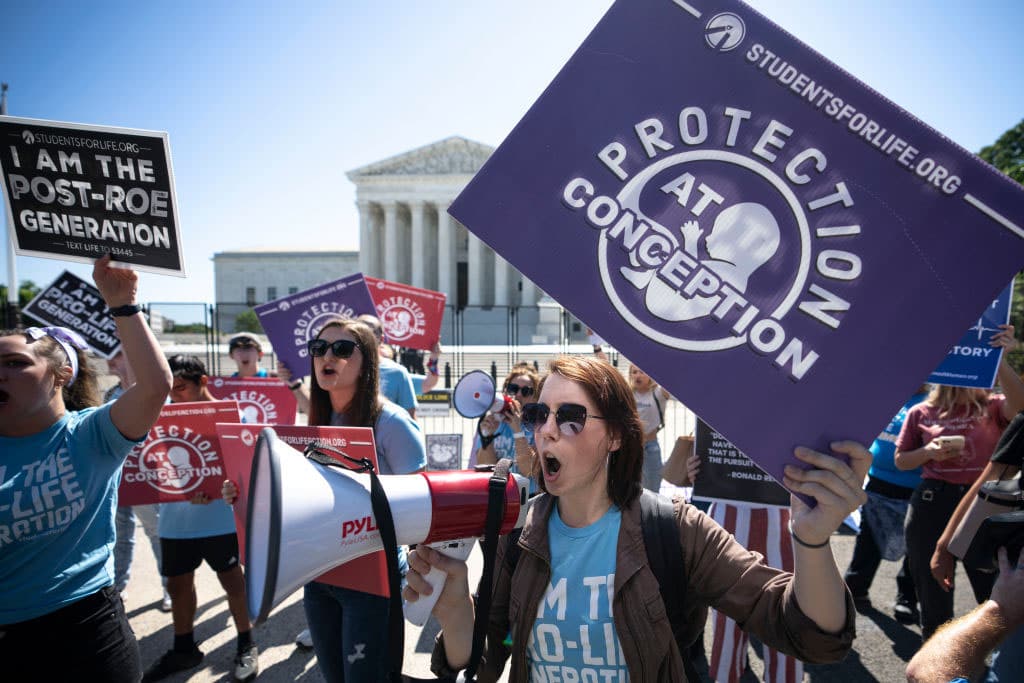
As a physician, I worry about the impending overturn of Roe v. Wade. I remember my older colleagues relating frightening pre-Roe stories of “Septic OB,” the LA  County Hospital ward where physicians treated victims of botched abortions fighting for their lives. The political climate in California will likely prevent a return to those tragic days. However, much of the country may prove different.

On most political issues physicians reflect the diversity of our community. Abortion seems to be an exception. Few abortion opponents wear white coats. Pragmatism born of experience with human frailty and with the suffering of unwanted pregnancies overrides devotion to merely potential lives.

Physicians’ approach to abortion fits well with the legal and medical reasoning of Justice Blackmun’s majority opinion in Roe. Indeed, Blackmun may have been selected to write the opinion due to medical sophistication from years as counsel to the Mayo Clinic prior to joining the Court. As Blackmun noted, the abortion controversy begs the question of when life begins, a matter he admitted the Court could never conclusively resolve.

Therein lies the rub.

Pro-choice advocates deny the government’s right to interfere with women’s private medical decisions while anti-abortion advocates counter with the government’s obligation to protect lives. So, whether an embryo is a life and whether it assumes rights such as government protection poses the ultimate question.

Human development occurs as a continuum from a single fertilized egg to a term baby. For those devoted to the preservation of life, the simplest approach is to protect the entire continuum. Although this desire to protect life is laudable, it’s difficult to accept the contention that a fertilized egg (zygote), still invisible to the naked eye, assumes the rights and protections of a term baby. Between a third to half of zygotes never implant and their loss is not usually considered a loss of life. If it were, anti-abortion protesters would also be protesting intra-uterine contraception (IUDs), which prevents implantation.

So, if legal protection does not begin with fertilization, where should it start? To answer that question, Blackmun focused on various levels of protection afforded by different societies over time. He noted  that “quickening,” the time when a fetus exhibits movement, was often used as a point at which the fetus could be considered an independent life. Prior to that point, many traditions, including Jewish ones, did not grant absolute rights and protections. Blackmun noted that historic penalties for abortion  focused more on protecting the life of the mother, which, in more primitive medical times, could be jeopardized by an abortion. The fact that legal regulation varied with the stage of development demonstrated the traditional acceptance of meaningful distinctions among the stages of the continuum.

From a medical perspective, the outstanding feature of Blackmun’s opinion was his use of trimesters to make meaningful distinctions along the continuum of development. In the first trimester, well before independent viability, the mother’s interests predominate, and her legal autonomy protects her decisions. In the third trimester, when the fetus becomes independently viable, the interest of the state in protecting life transcends the rights of the mother. In the second trimester, the rights of the fetus and the mother must be balanced.

It provided a balanced approach that aligned medical and developmental realities with the law.

Blackmun’s decision did not simply legalize abortion on demand. It provided a balanced approach that aligned medical and developmental realities with the law. The thoughtfulness of the decision was recognized by the votes of seven Justices including five nominated by Republican presidents. In contrast, all five justices reported to support overturning Roe were nominated by Republican presidents. As four are Catholics and the fifth was raised Catholic they can reasonably be suspected of reading their own personal religious views into the law.

Justice Alito and his like-minded opponents of Roe should re-think their draft opinion. They should ask why American women and their physicians should respect the reversal of Roe from a divided Court when a more unified Court ruled differently. Has the Constitution changed? Are today’s Justices more insightful than the seven that supported Roe? The Blackmun opinion represented the middle way, the consensus approach still supported by most Americans and highly defensible under the law. The Justices should respect precedent and step back from their threat to the rights of women.


Daniel Stone is Regional Medical Director of Cedars-Sinai Valley Network and a practicing internist and geriatrician with Cedars Sinai Medical Group. The views expressed in this column do not necessarily reflect those of Cedars-Sinai.

Looking for a Balanced Approach to Roe v. Wade Read More »

A Priestly Blessing – A poem for Parsha Nasso

“May the Lord bless you and watch over you.
May the Lord cause His countenance to shine to you and favor you.
May the Lord raise His countenance toward you and grant you peace.”
-Numbers 6:24-26

May the Lord bless you and watch over you.

That’s all I need
the Lord, the One, the Eternal
the Nameless, or, at least,
the One with the unpronounceable Name
To monitor my comings and goings
To monitor my staying-puts
To sound the appropriate alarms when
something goes astray.
Intervention isn’t necessary.
Just a little beep to say watch out.
A holy collision warning system.
No extra charge.
It just comes with it.

May the Lord cause His countenance
to shine to you and favor you.

I need this like I need mirrors.
To make sure my hair hasn’t gone rogue.
To let me know there’s chocolate or
anything from meals gone by on my face.
Just a little word or two out of the mouths
of my closest confidants telling me
you should take care of this.
They are the light that shines on my face –
That morphs my countenance into
something acceptable.
If I have any favor left
it is from Them.

May the Lord raise His countenance
toward you and grant you peace.

It is interesting that One so high
has to raise anything to me
who exists so close to the bottom
I could write an encyclopedia about
the soles of shoes.
But peace must always be lifted.
It is the hardest work.
Imagine the muscles required
to lift peace, when so much of the world
pushes it down.
I will take peace from wherever it is given.
I see it on the Face of anyone with breath.


God Wrestler: a poem for every Torah Portion by Rick LupertLos Angeles poet Rick Lupert created the Poetry Super Highway (an online publication and resource for poets), and hosted the Cobalt Cafe weekly poetry reading for almost 21 years. He’s authored 25 collections of poetry, including “God Wrestler: A Poem for Every Torah Portion“, “I’m a Jew, Are You” (Jewish themed poems) and “Feeding Holy Cats” (Poetry written while a staff member on the first Birthright Israel trip), and most recently “The Tokyo-Van Nuys Express” (Poems written in Japan – Ain’t Got No Press, August 2020) and edited the anthologies “Ekphrastia Gone Wild”, “A Poet’s Haggadah”, and “The Night Goes on All Night.” He writes the daily web comic “Cat and Banana” with fellow Los Angeles poet Brendan Constantine. He’s widely published and reads his poetry wherever they let him.

A Priestly Blessing – A poem for Parsha Nasso Read More »

Indie Rock Band Cancels Tel Aviv Concert Following BDS Pressure

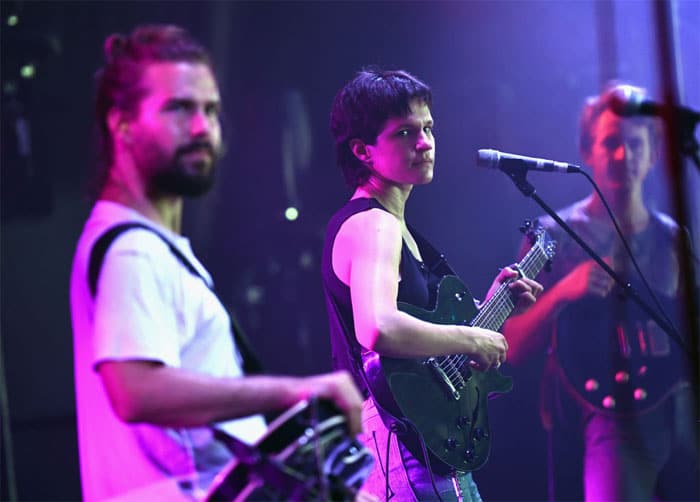
The United States indie rock band Big Thief announced they have canceled their upcoming concerts in Tel Aviv in the midst of pressure from the Boycott, Divestment and Sanctions (BDS) movement.

Prior to the cancellation, Big Thief announced on June 3 that they were going to be playing at the Tel Aviv club Barby on July 6 and 7; in their statement they addressed the BDS movement. “In terms of where we fit into the boycott, we don’t claim to know where the moral high ground lies and we want to remain open to other people’s perspectives and to love beyond disagreement,” they said. “We understand the inherently political nature of playing there as well as the implications. Our intention is not to diminish the values of those who support the boycott or to turn a blind eye to those suffering. We are striving to be in the spirit of learning.” The Instagram post concluded with a pledge to donate the proceeds from the concerts to NGOs providing aid to Palestinian children.


View this post on Instagram


A post shared by Big Thief (@bigthiefmusic)

But on June 9, the band disavowed their prior comments on BDS. “Our intent in wanting to play the shows in Tel Aviv, where Max was born, raised, and currently lives, stemmed from a simple belief that music can heal,” Big Thief said. The band’s bassist, Max Oleartchik is the son of Alon Oleartchik, bassist of the Israeli rock band Kaveret. “We now recognize that the shows we had booked do not honor that statement,” Big Thief’s statement continued. “We are sorry to those we hurt with the recklessness and naivete of our original statement on playing in Israel and we hope those who were planning to attend the shows understand our choice to cancel them.”

Barby responded to Big Thief’s decision to cancel the shows with their own statement excoriating the band, stating that Big Thief first approached the club about performing there. The Tel Aviv club went on to call the band members “pitiful” and “afraid of their own shadow.” “You will become just another band that comes and goes from the world like everyone else,” Barby’s statement read, per The Times of Israel (TOI). “I wish you all the misfortune in the world, just as you did to your fan base in Israel.”

Creative Community for Peace (CCFP) said in a statement that Big Thief caved “to the demands of a boycott movement that openly rejects coexistence and seeks the destruction of Israel, undermining principles of engagement, tolerance, and dialogue.” “As [Australian musician] Nick Cave stated: “The cultural boycott of Israel is cowardly and shameful. Israel is a real, vibrant, functioning democracy – yes, with Arab members of parliament – and so engaging with Israelis, who vote, may be more helpful than scaring off artists or shutting down means of engagement.” “Ultimately, the boycott is an affront to Palestinian and Israeli moderates alike who are seeking to reach peace through compromise, exchange, and mutual recognition,” CCFP said. “Music in Israel brings people together of all backgrounds––Jews, Arabs, Bedouins, Black, White, Muslims, and Christian––and concerts in Israel play a small yet crucial role in hopefully achieving that peace.”

Big Thief’s cancellations were also criticized on social media.

“Shame on you for giving into the antisemitic boycott,” StandWithUs Israel Executive Director Michael Dickson tweeted to the band. “You had the opportunity to play for the free-est, most diverse audience in the [Middle East] and bring people together. Instead you chose to divide. Your naive decision does not advance peace one iota & gives succor to extremists.”

Stop Antisemitism similarly tweeted that Big Thief “gave in to the antisemites – plain and simple. This isn’t helping Palestinians, it’s only furthering Jew hatred.”

Daniel Sugarman, Director of Public Affairs for the Boards of Deputies of British Jews, tweeted: “Never heard of this band before, but *we’re cancelling our shows in Tel Aviv despite the fact that one of our band members was born, raised and currently lives in Tel Aviv* is platinum level doublethink.”

Journalist Eve Barlow tweeted, “For the umpteenth time we see a band pressurised out of playing to civilians in the Jewish nation for fear of how their position on the conflict is portrayed. Let’s see if they have the same energy for other areas caught in constant conflict.”

David Draiman, frontman of the heavy metal band Disturbed, tweeted that he was “disappointed” at Big Thief’s decision and offered “to have a dialogue” with the band “about reconsidering your decision, and using your music to connect people as opposed to disconnecting them.”

Alon Oleartchik told the Kan public broadcasting station that Big Thief “received thousands of threats” after they initially announced the concerts and that Max is “crushed.” “He really wanted it to happen,” he said, per TOI.

Indie Rock Band Cancels Tel Aviv Concert Following BDS Pressure Read More »

Brandeis Center Calls on Education Dept. to Continue Supervision of NYU Following Recent Antisemitism Incidents

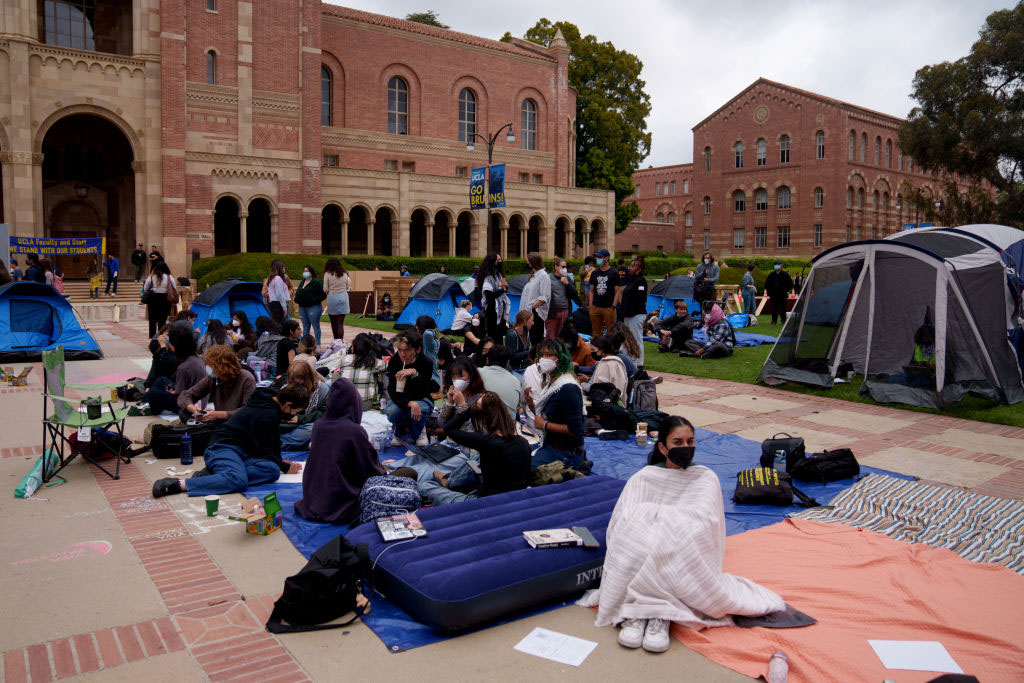
The Louis D. Brandeis Center for Human Rights Under Law called on the Department of Education’s Office of Civil Rights (OCR) to extend their supervision of New York University (NYU) in light of recent antisemitic incidents that have occurred on campus.

In September 2020, NYU had agreed to a settlement with OCR after then-student Adela Cojab filed a complaint the year before alleging the university had improperly handled antisemitism on campus. She had filed the complaint after NYU’s Students for Justice in Palestine (SJP) chapter received the university’s President’s Service Award in April 2019 despite a member from the group being charged in April 2018 for assaulting a pro-Israel student during a Yom HaAtzmaut rave. Part of that agreement included OCR supervising NYU to make sure it complied with the terms of the settlement; that supervision expired on May 31.

Brandeis Center President Alyza D. Lewin and Senior Counsel Arthur Traldi wrote in a May 31 letter to OCR that NYU continues to have an “anti-Semitism problem.” “As widely reported, a dozen student organizations at NYU’s law school signed a letter defending terrorist violence against Israeli civilians and engaging in classical anti-Semitic tropes about the ‘Zionist grip on the media,’” the letter stated. “Jewish students who complained were ridiculed and called ‘babies.’” Additionally, Lewin and Traldi noted that there have been recent instances of antisemitic graffiti––including swastikas––on NYU’s buildings and that NYU Law’s Review of Law and Social Change endorsed “the anti-Semitic BDS [Boycott, Divestment and Sanctions] movement.”


“NYU’s President recently issued a statement denouncing the conduct that prompted the most recent complaints,” Lewin and Traldi wrote. “That statement, however, failed to recognize that for many students at NYU, Zionism is an integral component of their Jewish identity and their ethnic and ancestral heritage and that these students must be able to fully engage in the University’s opportunities while openly expressing identification with Israel. NYU must commit to safeguarding the ability of Jewish students to fully engage in campus life without having to hide this key component of their Jewish identity.” They added that “these continuing expressions of anti-Semitism reflect that until NYU fully complies with the Resolution Agreement, OCR must not abdicate its oversight responsibilities.”

Cojab, who is currently studying at Yeshiva University’s Cardozo School of Law and co-hosts the “American-ish Show: Daughters of the Diaspora,” backed the Brandeis Center’s call for more OCR oversight. “In their own resolution agreement, it says: 1. They will adopt a new policy on antisemitism, 2. That the policy will have examples on even what is not antisemitism, and [the] third part is trainings that have to do with the policy and how to implement it,” she told the Journal in a phone interview. “They implemented a policy only nine months ago; they were supposed to implement it two whole years ago. So they only have nine months of data to work with. They also didn’t really publicize that there’s a new policy so how can people express content or discontent with it? There’s already been students who have been discontent with NYU’s reaction to antisemitism in the last three months and they didn’t even the policy to point to and they didn’t implement any trainings––not a single one––on their new policy. It’s just kind of like OCR ending their observation period now is premature. There is no data to see if NYU complied, let alone if it was effective.”

A Google Forms letter sent to NYU Law School of Law Dean Trevor Morrison from anonymous Jewish students expressing concern that a member of NYU Law Students for Justice in Palestine (LSJP) chapter who recently graduated had used COASES––the student law listserv––to say: “to all the Zionists, we’re keeping receipts” and that this member and other LSJP members “proudly and explicitly justified the targeting of family and friends of members of our law school as ‘the Palestinian right to resist occupation’ and refused to condemn the Tel Aviv terror attack because “Palestinians are not obligated to engage in racialized ‘nonviolence’ theory.” The LSJP member also liked a social media post stating “Long live the Intifada” after the terror attack, per the letter. The letter also noted that LSJP had said in a listserv email that the “Zionist grip on the media is omnipresent.”

“It is our contention that speech that, in any other context and by other speakers, would have been swiftly condemned as the glorification and incitement of violence was instead supported by a number of student groups – each representing a large swath of the student body – in part because the speakers have been institutionally distinguished,” the letter stated. “Absent clarification to the contrary, NYU Law, through its chosen representatives, has made clear to the broader NYU community that it is commendable – or, at the very least, acceptable – to advocate for violent resistance against Israelis.”

According to NYU Local, a student-run blog, Morrison responded to the letter by issuing an email “stating that within the NYU community, debate should be conducted in a respectful manner” and that “phrases like ‘Zionist grip on the media’ was close to the antisemitic trope that Jewish people control the media.” Morrison also acknowledged that “the administration may well choose to consider alternative communications platforms with different functionalities.” NYU President Andrew Hamilton also issued a statement calling the “Zionist grip” comment “profoundly troubling.”

LSJP tweeted in response to the letter at the time, “We are disappointed that some of our classmates, the administration, & media have focused on targeting students who speak out against apartheid, rather than condemning the violent Israeli occupation.” 

An NYU law student told the Journal that he and another student were collecting signatures for the letter when he started receiving harassing messages online that contained “threats” and stated things like “from the river to the sea.” The student claimed he told the administration about it around a month and a half ago but hasn’t heard back from them. “I know other schools in the past have had a situation where a student has been harassed through Google Forms and they were able to find out who it was because it was on their servers, so it just seems clear that NYU isn’t really looking after its Jewish students,” the student said. “If this happened to another group, there’s just no way that an administration would just sit idly by letting students get ran over and harassed.” The student also expressed disappointment that the university’s subsequent investigation into the harassment has been “non-transparent.” When reached for comment, an NYU Law spokesperson pointed to Morrison’s past statements on the matter.

The student added that “a lot of students don’t feel particularly safe” on campus. “People are scared to even say, ‘I stand with Israel.’” 

A recent NYU Law graduate told the Journal that toward the end of his tenure at the school “you could already sense the sentiments shifting away from Jewish support and in other areas, so the fact that Alyza [Lewin] and the Brandeis Center are really taking a lead here––I don’t think people are really grasping the importance of this case because I think everyone’s going to follow NYU’s actions.”

Cojab lamented that “not much has changed” since she graduated from NYU. “Students feel as disconnected from the administration, students feel as unsafe as they did before,” she said, adding that NYU’s antisemitism policy “doesn’t include anti-Zionism in their definition of antisemitism, and that’s very problematic… if what I went through at NYU two years ago wouldn’t have fallen under their new antisemitism policy, then what’s the point of their policy? It’s just a pleasantry.”

NYU spokesman John Beckman defended the university, telling The Algemeiner that the Brandeis Center’s claims are false and that the university “met every mutually-agreed upon deadline; annually submitted reports to OCR about student conduct cases involving discrimination or harassment; and submitted its proposed revisions to its non-discrimination and anti-harassment policy for OCR’s review and approval on time, promptly adopted the approved version, and sent it to everyone on campus a year ago.” Beckman also touted the university as a “leader” in fighting antisemitism on campus, citing an April antisemitism summit held on campus as an example.

This article has been updated.

Brandeis Center Calls on Education Dept. to Continue Supervision of NYU Following Recent Antisemitism Incidents Read More »

A Bisl Torah – Finding Your Words

It is the last week of school in our Sinai Akiba Academy community.

The night before my kindergartner’s graduation, we sat and created a word search. He asked me to write words into a puzzle of letters and afterwards, would look for them. But not just any words. He wanted me to choose words that would describe his year to come.

I tried to explain that I can’t predict what his first-grade year will look like and instead, asked him to describe what he is hoping for. After ten seconds of silence, he found his words. Friends, books, playing, learning, praying. We spoke about when you find your words, he gets to help decide what the year will be. A wonderful, glorious year to come.

Recently, Rabbi Cheryl Peretz taught about the multi-sensory experience of revelation. That when the Torah was given, the moment was fraught with visual and auditory stimulation. The actual giving of Torah was chaotic, perhaps even frightening for a human being to witness. And yet, according to the commentator Kli Yakar, after the tumult, letters of Torah floated through the air. God spoke letter by letter. The Jews quickly learned that to navigate through fear, Torah offers an anchor. We ride through the unknown by using words of Torah as our guide, fettered by faith.

One school year ends and another beckons. For many, graduations offer wonderings about the future. Questioning new beginnings and our place in the journey. In a way, we all wander through the wilderness. But through the anticipation, find your words. Let the letters of Torah hold you steady. You may not be able to predict what will occur, but like my kindergarten graduate, let your words shape the year you want to achieve.

Chosen, holy, steadying words that will lead you towards a Promised Land.

Shabbat Shalom


Rabbi Nicole Guzik is a rabbi at Sinai Temple. She can be reached at her Facebook page at Rabbi Nicole Guzik or on Instagram @rabbiguzik. For more writings, visit Rabbi Guzik’s blog section from Sinai Temple’s website.

A Bisl Torah – Finding Your Words Read More »

A Moment in Time: The Meaningful Path Between Two Points in a Zig-Zag

Dear all,

Peering out my airplane window, I noticed this one ray of sunshine adjacent to a zigzagging highway. It reminded me of a biblical lesson about the Children of Israel when they crossed the desert from Egypt to the Promised Land. Had they gone in a straight path, it would have taken less than a week. But the Bible teaches it took 40 years.

So why did they take this route? The rabbis ask.

Had they gone the easy way, they might have turned back, or they might not have appreciated the milestones, or they might not have gained wisdom that only life journeys can offer.

(In many ways, it’s like the lesson from the film version of The Wizard of Oz…. Dorothy could have clicked her heals right from the start to get back to Kansas, but she would not have learned any valuable lessons).

I’m not suggesting we need to choose the harder path. But I do believe that when we take a moment in time to consider our journey – we realize that it’s often so much more meaningful than the destination.

With love and Shalom,
Rabbi Zach Shapiro

A Moment in Time: The Meaningful Path Between Two Points in a Zig-Zag Read More »

A Love for Nature in ‘A Child’s Prayer of Wonder and Gratitude’

I was already familiar with Karen Guth’s previous book, “Bubie’s in Bidud (Grandma’s in Isolation),” her book that came out in the midst of the COVID-19 Pandemic. It was timely and gave an opportunity to grandchildren to understand why they were not able to see their grandparents when the COVID-19 outbreak spread and what their grandparents might have been experiencing. I enjoyed reading it to my own grandchildren.
Guth has published another book and, while the previous one was whimsically illustrated, this time the same illustrator, Meital Maor, has created a magnificent work of art that would stand on its own. According to Guth, this time Maor said to her, “Let me go with my vision” and she did. Every page could be framed and hung on your child’s wall.

All this comes to complement the main message in the book, one that is – now more than ever – relevant, as Guth points out that she is inspired by Psalm 104, “which is about the protection of nature.” The 23-page book is aimed at ages two-to-six but as with all good books, the secret is finding one that the parents also will not tire of reading. Did someone say “Goodnight Moon”?

Actually, someone did. Guth says that she wanted this book to have a cadence that is similar to Goodnight Moon, recognizing that it is something children everywhere love. But unlike “Goodnight Moon,” “Wow” goes beyond, and the fact that its subtitle is “A Child’s Prayer of Wonder and Gratitude” reflects Guth’s own approach to life, being someone who looks at the world with eyes wide open.

A short excerpt from the book illustrates that cadence:

WOW to the forests!
WOW to the seas!
WOW to the apples growing on trees!
WOW to the lions, the deserts, and fields!
WOW to the eagles, giraffes, and the deer! 

In Psalm 104, the author – King David – writes about the majesty of God and His world, about the seas and the mountains, the cedars of Lebanon, the grapevines and the birds, the sun and the moon and the quaking of the earth, whales and great oceans, the animals and the curtain of heaven. And a warning: to respect the Lord so He will not flood the world or set the mountains ablaze. Concluding “Hallelujah.”

Guth writes in her introduction, “I was inspired by a visit to the Tisch Family Zoological Gardens in Jerusalem with our grandchildren. The children were awed by the live animals, both large and small, as well as the greenery and gardens which provide a natural environment for many of these spectacular creatures. Every other word out of their mouths as we roamed the gardens and encountered its inhabitants was, ‘Wow!’”

“There are so many discussions about protecting Nature, but I think those values must be instilled in children when they are young and they first begin appreciating our environment.”

She adds, in our interview, “I wanted to share with my grandchildren, as well as others, the wonders that we have in our natural world; a gift from the Borah Olam (the Creator, as He is called in the book), but one that requires guarding. There are so many discussions about protecting Nature, but I think those values must be instilled in children when they are young and they first begin appreciating our environment.

“This book has been in my thoughts for many years now. In addition to being inspired by Psalm 104, I was inspired by a course I took with Rabbi Dov Singer, head of the Makor Chaim Yeshiva High school in Gush Etzion and founder of the Beit Midrash Lehitchadshut (spiritual renewal), called ‘Va’Ani Tefilla’ (“Prepare my prayer”). In one of the sessions, he speaks about the ‘Wow’ in our world which God continually creates for us. I decided then to finish writing the book and instead of using King David’s word, “Halleluyah”, I changed it to ‘Wow!’”

Guth, who holds a Doctorate in Education, has been teaching English in Israel for 20 years, and before that she taught in the U.S. “In the states, I taught both English and other general studies as well as Limudei Kodesh (Jewish studies).” In 2000, Guth and her husband, Eric, made aliyah with their two sons Aaron Tzvi and Adam Elan, from Denver, Colorado.

The translator of the book into Hebrew, Michal Yechieli Coppenhagen, was a former student of Guth’s when she was in high school.  In addition to her recent book, “Bubie’s in Bidud,” Guth worked with Meital Maor a number of years ago on books they created for the Gush Etzion Foundation, the first was “Courage, and Hope, Inspirational Writings by Youth in Gush Etzion,” which included short essays by children in Israel who were trying to cope with a bloody intifada. The second was “Courage and Hope, Inspirational writings by Youth of Gush Etzion” in the aftermath of the expulsion from Gaza.

I wondered about the response of Guth’s own six grandchildren, who live a very insular life in Mea Shearim; hence their excitement, she thinks, when she took them to the zoo and they saw animals they had never even imagined existed. “They love the book,” she says, “and I have had some wonderful feedback from other young people, as well as from other parents and grandparents.”

How did it all begin? A few years ago, Guth started a blog called Tell Me a Story Bubie (https://www.tellmeastorybubie.com) in which, she says, “I attempted to explain ideas, dreams, and values to our grandchildren through the art of storytelling. From this evolved several stories that I could read to our grandchildren.  I decided to share those stories with others, both in blog form for older children and in short children’s books for younger children. ‘Wow! A Child’s Prayer of Wonder and Gratitude,’ represents the second of these story books.”

Maor, the illustrator, studied visual communication at Bezalel Academy of Art and Design and has a music degree in cello performance from the Jerusalem Academy for Music and Dance. See more of her work at www.meitalmaor.com.

“Wow! A Child’s Prayer of Wonder and Gratitude” is available in both English and in Hebrew editions and can be purchased at Israel at Pomeranz Bookseller’s in Jerusalem and at Mintzer’s Books in Efrat. Paperpack copies can be purchased on Amazon. It will be in its third printing soon.

King David would be proud.


Toby Klein Greenwald is the award-winning artistic director of Raise Your Spirits Theatre, a recipient of American Jewish Press Association Awards for Excellence in Jewish Journalism, and editor-in-chief of WholeFamily.com.


A Love for Nature in ‘A Child’s Prayer of Wonder and Gratitude’ Read More »