fbpx

April 29, 2022

“Wide Open,” a Show About Vulnerability, Opens at The Braid

The NEXT generation is taking over The Braid for its latest Salon Show, opening May 1.

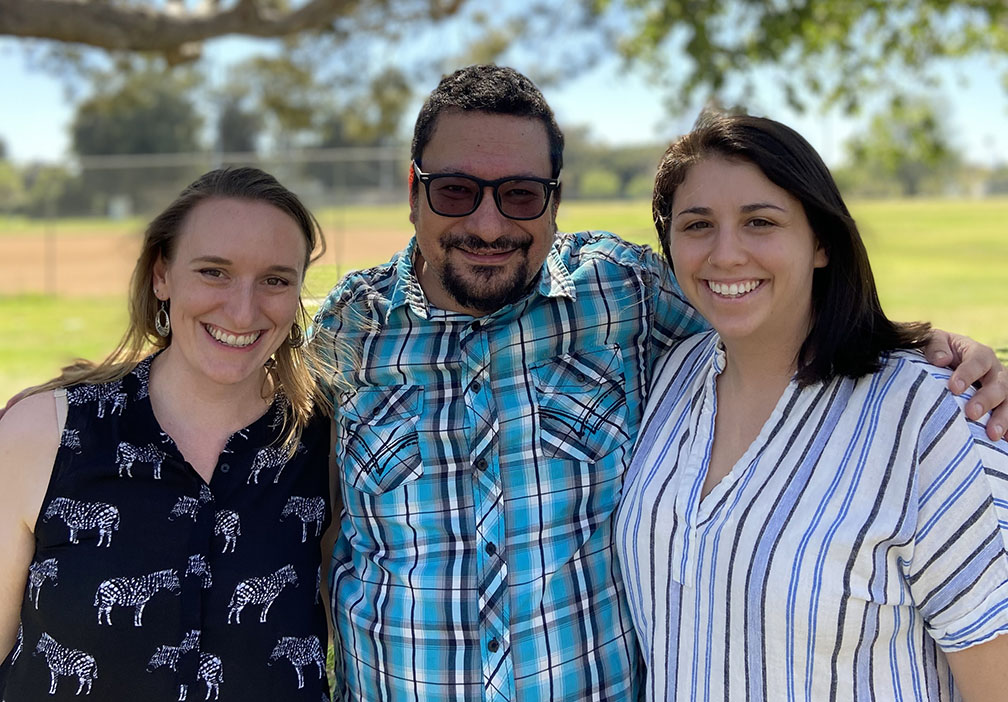
“Wide Open,” curated and adapted by NEXT Fellowship alumni filmmaker Vicki Schairer, screenwriter David Chiu (Braid Marketing & Communications), and photographer Daphna Shull (Braid Creative Producer/ NEXT Literary Manager), highlights true Jewish stories around the theme of opening yourself to the unknown.

“’Wide Open’ is full of authentic, vulnerable stories that strike at the heart of taking risks and connecting to something bigger than ourselves,” Shull said.

Shull first joined the NEXT council, which provides professional development, networking opportunities and a platform to Jewish creatives in their 20s and 30s, as a member of the literary team. She now teaches other young professionals to adapt the written word to the stage.

“I love this theme so much because fear and courage are universal,” she said. “And these stories allow the audience to step into the character’s shoes with real empathy.”

“These stories allow the audience to step into the character’s shoes with real empathy.” – Daphna Shull

A four-person cast – former NEXT fellow Chelsea London Lloyd (also a writer in the show), Natasha McCrea, Jill Remez and Joshua Silverstein – will bring 10 incredible tales to life.

David Chiu, who also wrote one of the stories, is amazed at how this show lives inside of you.

“I never imagined how the theme of ‘Wide Open’ could take our writers and actors to such soulful places,” Chiu told the Journal. “But maybe that’s what being wide open is all about: moments that break apart your outer shell and reveal your deepest self.”

Chiu, whose journey with The Braid began when a story of his was performed in “True Colors,” about the lives of Jews of Color, went on to become a two-time NEXT at The Braid Emerging Artists fellow.

“Wide Open” highlights pivot points explored through a Jewish lens. Diversity is also at the forefront, as is the curatorial team. Schairer and Shull are Jewish women, and Shull is a member of the LGBTQ community. Chiu is an Asian-American Jew of Color.

Chiu, Shull and Schairer first teamed up, guided by The Braid’s Artistic Director Ronda Spinak, in fall 2020, when The Braid decided to do a NEXT Masterclass of alumni from previous fellowships. Together they curated, adapted and edited the material for the show “The Rest is History,” which shared true stories of Jews living through historic times.

The team got along so well, Spinak made an unprecedented decision to invite these NEXT fellow alums to take over one of the main shows.

The Braid’s producing director, Susan Morgenstern, has mentored these and the other NEXT fellows with Spinak. Morgenstern is now set to direct “Wide Open.”

“The theme, wide open, explores the ways in which we respond to opportunity, big or small,” Schairer told the Journal. “Everyone has experienced moments of uncertainty where they need to muster courage. But often we don’t talk about these moments, especially when they don’t go the way we hoped or expected.”

Schairer has felt welcomed into this community since her first meeting with Spinak and Morgenstern. This is her fourth show with The Braid.

“The stories featured in this and other shows from The Braid continue to widen my worldview of what it means to be Jewish,” Schairer said. “Even though I may have different experiences and practices than someone else, these stories make me feel connected on a human and emotional level. [They’re] connecting us all in the vibrant tapestry of Judaism and across faiths, beliefs and circumstances.”

“Wide Open” will be staged in person at various Southern California locations from May 1 to 19, live on Zoom on May 15 and in person in the Bay Area on May 23. For details and tickets, visit the-braid.org/wideopen.

“Wide Open,” a Show About Vulnerability, Opens at The Braid Read More »

And the Winner of the Nobel Prize is…Jewish!

Although Jews comprise 0.2 per cent of the world’s population, they have won approximately 22% of Nobel Prizes. Twenty-six per cent of winners in scientific fields are Jewish. This performance is 112 times or 11,250% above average. To say this is astonishing is an understatement.

Most writers refer to this comparison as disproportionate, which can imply that it is excessive, or undue or inordinate. I prefer to say that it is out of all proportion to our numbers. The range is as impressive as the numbers; Jews demonstrated ability in chemistry (19% of the world total), economics (39%), literature (14%), peace (8%), physics (26%) and physiology or medicine (26%).

The only Jewish country in the world, Israel, was ranked by Times of Higher Education as the fifth-best performer this past century. On the basis of Nobel Prize winners, Israel’s Technion placed higher than Harvard and every British university.

The obvious question is: “Why do Jews achieve at such an extraordinarily high level?” I think the most comprehensive response is historical and begins with the first Jews.

In the Torah, we are told that God chose Abraham so that he would instruct his children and his household after him to keep the way of the Lord by doing what is right and just. Moses, too, was to educate future leaders and is known as “Moshe Rabbeinu,” Moses our teacher. It is worthwhile here to note that the word Torah means “teaching.”

After the Roman destruction of the Temple in 70 CE, Rabbi Yohanan ben Zakkei was granted permission by the Romans to establish an academy in Yavne. That was his one and only request. In the words of the late Rabbi Jonathan Sacks, Rabbi ben Zaakei knew that “to defend a country, you need an army, but to defend an identity, you need a school.”

By the first century, Joshua ben Gamla had established primary schools in Judea, not just for the elite but also a system of universal education.

The great mediaeval sage, Maimonides, ruled that if a city has made no provision for the education of the young, its inhabitants would be placed under a ban until teachers are engaged.

Not only was universal education taken seriously, but also potential and merit were given the highest priority. Maimonides wrote that if the son had better capacity and greater ability than the father, then the son’s education took precedence.

So great was the emphasis on study that Maimonides declared that education of the young must not be interrupted even for the purpose of rebuilding the Temple. That was a remarkable statement given that medieval Jewish life was often uncertain as Jews were expelled from country after country and yearned for the return to Zion and the rebuilding of the Temple.

So great was the emphasis on study that Maimonides declared that education of the young must not be interrupted even for the purpose of rebuilding the Temple.

Maimonides taught that Jewish education did not preclude study of the world at large. He introduced Greek philosophy into Jewish study and was himself a doctor.

Poverty was not to be a barrier to education. The Talmud, in Nedarim, states that society “be careful with regard to the education of sons of the paupers, as it is from them that the Torah will issue forth.” One may well ask why the Torah will issue forth from the children of paupers. I suggest it is rabbinical rhetoric in order to draw attention to the importance of study for everyone lest talent be overlooked. Perhaps it is also an expression of faith in the ability of everyone to learn.

The Talmud, in Horayot, makes the astonishing claim that a bastard scholar takes precedence over an ignorant High Priest. A bastard, in ancient society, was an illegitimate child and was shunned. An illegitimate child is set up in opposition to a High Priest in yet another example of rabbinic poetic license to emphasize the essential nature of education in Judaism. The Cohain was a hereditary position and the High Priest was the highest position in sacred society. The point the rabbis are making is that pedigree yields to scholarship. It is as strong and bold a stand in favour of education as one can imagine. The Shulchan Arukh, or Code of Jewish Law (1563), states that “as for children that have reached the age for education, we are obligated to educate them.”

In his “Nineteen Letters,” published in 1836, the renowned Rabbi Samson Raphael Hirsch, defender of traditional Judaism in a rapidly assimilating Germany, wrote that the three great concepts of Judaism are justice, love and education. I take it from this list that he considers justice (law) and love (compassion) to be the most fundamental priorities of Judaism and that education is the vehicle that will communicate them from generation to generation.

Extraordinary Jewish performance in obtaining Nobel Prizes is the result of a culture profoundly committed to education—universal, secular and religious, for young and old, rich and poor, good times and bad, from its inception to this very day. Even for members of a secular culture, the traditions of the past influence the present day, for the betterment of everyone.

“Genius without education,” wrote Benjamin Franklin, “is like silver in the mine.” Without education, the talent and achievements that we celebrate would be impossible. This core principle of Judaism is yet another legacy to its people and a gift and an example to the world.


Dr. Paul Socken is Distinguished Professor Emeritus and founder of the Jewish Studies program at the University of Waterloo.

And the Winner of the Nobel Prize is…Jewish! Read More »

Is Life’s Lottery in Our Hands?

Two brothers were major power brokers in Boston from the 1970s to the 1990s. William “Billy” Bulger was the President of the Massachusetts State Senate, and later the President of the University of Massachusetts system. His older brother, James “Whitey” Bulger, was the boss of the Irish mob, and the head of the feared Winter Hill Gang. One Bulger brother dominated the political world, the other the underworld. Their contrasting yet overlapping lives are a Shakespearean tale and the subject of multiple books and movies.

Our very fascination with their story betrays an inner uncertainty about free will. It surprises us that the Bulger brothers made such dramatically different choices, because we expect two children with the same home and the same parents to turn out pretty much the same. Most people tend to follow conventional paths and avoid the road less traveled by. For most of us, the Bulger saga is difficult to comprehend: How is it that two brothers could be such opposites?

A similar riddle stands at the center of the Yom Kippur service. Two identical goats are brought to the entrance of the sanctuary, to be dedicated as sacrifices. The Kohen Gadol, the High Priest, draws lots (two wooden plates, one inscribed with the words “to God,” and the other “to Azazel”), to determine the fate of the goats. The one which receives the lot with the words “to God” was sacrificed, and its blood brought into the inner Sanctuary, the Kodesh Kodashim. The one which receives the lot inscribed “to Azazel,” is sent into the barren wilderness and pushed off a stony cliff. The disparity between the fate of the goats is exceptional; one is brought into a place of profound holiness, the other to a place of desolation and godlessness. The goats stand together at the beginning, but end poles apart. For this reason, the Midrash says the two goats represent Jacob and Esau, twin brothers who pursue dramatically different destinies. But the riddle remains: Why do Jacob and Esau end up being so different?

Multiple commentaries explore why the goats are chosen for their tasks in such an unusual way. All other sacrifices are designated explicitly; why is the fortune of these two goats decided by lots? Two very different approaches are offered in response to this question. One view sees the lots as an allegory about the importance of free will; another sees them as a metaphor for the random nature of life.

Don Isaac Abravanel, and later, Rabbi Samson Raphael Hirsch, see the lots as a symbol of free will; which animal is chosen for which task is literally in the hands of the Kohen Gadol. (Abravanel insists that the Hebrew word for lot, goral, is actually a synonym for reward; the lot that is drawn is a reflection of the reward due.) Two identical animals are offered the same destiny at the very same time; what happens next depends on the choices that are made. As Hirsch puts it: “These (two goats) are the symbols of the two paths between which we are to choose…. we are all faced with the decision between God and Azazel. We all stand at the Sanctuary entrance to choose… the choice is not predetermined for any of us…”

According to this perspective, the two lots represent good and evil; the direction we end up taking depends on our own choices. On Yom Kippur, the ceremony of the two goats places free will at the center, a critical reminder that every person can change their own destiny and repent.

One cannot underestimate the psychological and social value of believing in free will. Societies that are optimistic about the possibility of change are the ones in which change occurs. Students who think that they can change are the ones who learn the most. Psychologist Carol Dweck has written extensively about the educational impact of having a growth mindset, the belief that one’s skills can grow through effort and perseverance. Belief in free will is in itself transformative and a powerful motivator.

But there is another interpretation of the lots, one which, considering the importance of free will in Judaism, is rather unconventional. It was first offered by Rabbi Isaac Arama (a study partner of Abravanel’s), as well as Rabbi Joseph B. Soloveitchik. They interpret the drawing of lots as a metaphor for randomness. The Kohen Gadol would put his hands into a basket and blindly choose the lots for Azazel and for God. Where each goat ended up was merely a matter of luck. This interpretation argues that the same is true of life; who we are and what we become is often random. Rav Soloveitchik writes that this randomness is central to God’s forgiveness on Yom Kippur. He says that “man is acquitted by his Maker because man is vulnerable…. He is easily persuaded, indeed brainwashed, and quickly defeated… Man sins because he is a weakling. Some are saints and righteous people because they were born into a home of saintliness and righteousness. Some are sinners because they were born into a house of atheism and agnosticism. Should the wicked be found guilty? Is he not wicked because he is vulnerable to external pressures?”

According to Rabbi Soloveitchik, the central service of Yom Kippur is not about belief in free will, but rather our lack thereof. Who we are is very often determined by random factors, by events that are very much out of our control. Rabbi Soloveitchik articulates an idea which Bernard Williams and Thomas Nagel would later call “moral luck.” As Nagel put it, “Someone who was an officer in a concentration camp might have led a quiet and harmless life if the Nazis had never come to power in Germany. And someone who led a quiet and harmless life in Argentina might have become an officer in a concentration camp if he had not left Germany for business reasons in 1930.” Much of who we are and what we become is attributable to dumb luck.

This view emphasizes that Yom Kippur is not just a day of change, but also a day of forgiveness; and man is forgiven because much of what one does is determined by the luck of the draw.

Psychologically, this second interpretation is very significant as well. Very often failure is beyond our control; but even though we have no choice, we often feel profoundly guilty that we failed. To be able to forgive oneself for an unlucky lot, to recognize that one is forgiven by God when they failed to reach heroic standards, is critical to starting the new year with a fresh slate.

These two interpretations are polar opposites; one champions the role of free will, the other emphasizes the influence of luck. Reality stands somewhere between the two; many choices are made for us, but plenty of choices are made by us. Much of what we do, both good and bad, are the products of our environment and our circumstances; but as Rabbi Eliyahu Dessler put it, there is always a point of choice, a small line in the moral battlefield, where we do exercise free will. Life is both random and intentional at the same time.

This duality may offer us another way to understand the Yom Kippur service. The goats stand as symbols of equal opportunity, while the lots signify chance, because free will and random luck stand side by side every day of our lives. Yom Kippur teaches us that as fragile, vulnerable beings we deserve forgiveness, but as remarkable, heroic beings we must earn it as well. Life is a dual reality of choice and coercion.

People who struggle with addictions recognize this dual reality. Making the right choice is difficult in the face of genetic predispositions and overwhelming cravings. Correct choices are never easy, but they are the only way out; and one isn’t always successful at first. One must choose the right path, but also realize it may still be some distance away. The serenity prayer, which is used in many twelve-step groups, encapsulates this duality. It says:

God, grant me the serenity to accept the things I cannot change,
courage to change the things I can,
and wisdom to know the difference.

Hopefully, we will be able to do the same on Yom Kippur.


Rabbi Chaim Steinmetz is the Senior Rabbi of Congregation Kehilath Jeshurun in New York.

Is Life’s Lottery in Our Hands? Read More »

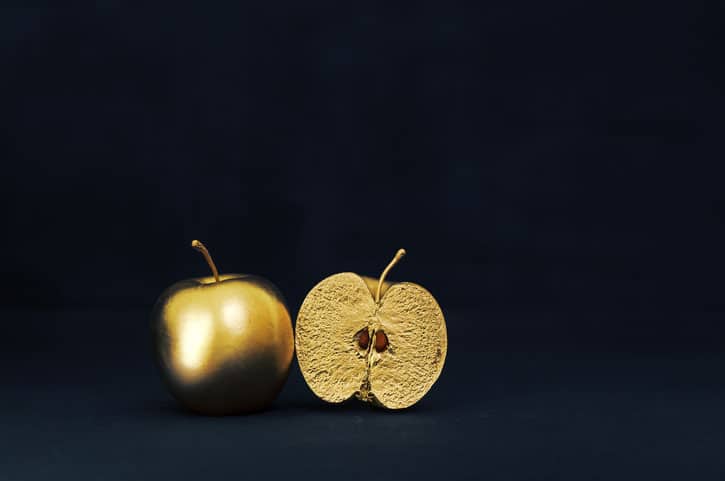
The Golden Apple

Prose can be translated into a quite foreign tongue,
whereas, Auden asserted, poetry can not,
It might be a delicious dish of thoughts that are far flung,
relished when they’re read as if they were red hot.

Translated into prose, poetic thoughts aren’t only cooled
but frozen, only partly understood, and hardly felt,
becoming tips of icebergs by which readers may be fooled,
unaware of depths that prose translations caused to melt.

This phenomenon affects those Bible scholars who
do not appreciate its hidden depths, the golden apple’s core,
and concentrating on its peel, peshat, do not construe
its tasty texts with exegesis midrashim explore.

In Episode 243 of his Bible365 podcasts (“Lincoln’s Proverbs”), Meir Soloveichik recalls Lincoln’s allusion to Prov. 25:11 which states:

יא  תַּפּוּחֵי זָהָב, בְּמַשְׂכִּיּוֹת כָּסֶף–    דָּבָר, דָּבֻר עַל-אָפְנָיו. 11 A word fitly spoken is like apples of gold in settings of silver.

Lincoln decided that the Declaration of Independence was the apple of gold and that Union and Constitution comprised its silver frame (see Tony Williams, “An Apple of Gold in a Picture of Silver,” lawliberty.org).

Rabbi Soloveichik pointed out Malbim’s interpretation of Prov. 25:11, suggesting that the silver to which the verse refers protects the golden apple’s core which protect the secrets of the heart and mind.

Moses Maimonides writes in his introduction to his Guide to the Perplexed:
The Sage has said, “A word fitly spoken is like apples of gold, בְּמַשְׂכִּיּוֹת, in settings (maskiyyot) of silver” (Prov. 25:11). Hear now an elucidation of the thought that he has set forth. The term maskiyyot denotes filigree traceries . . .   When looked at from a distance or with imperfect attention, it is deemed to be an apple of silver; but when a keen-sighted observer looks at it with full attention, its interior becomes clear to him and he knows that it is of gold. The parables of the prophets, peace be on them, are similar.

—Moses Maimonides, Guide of the Perplexed (trans. S. Pines) (11–12)


Gershon Hepner is a poet who has written over 25,000 poems on subjects ranging from music to literature, politics to Torah. He grew up in England and moved to Los Angeles in 1976. Using his varied interests and experiences, he has authored dozens of papers in medical and academic journals, and authored “Legal Friction: Law, Narrative, and Identity Politics in Biblical Israel.” He can be reached at gershonhepner@gmail.com.

The Golden Apple Read More »

Reading the Dregs

I am gaga about coffee. Not in a snobbish way. More in the traditional do not speak to me before my first cup of coffee way. Every morning, I stumble into my kitchen and brew a pot of Peet’s Major Dickason’s in my trusty Cuisinart drip pot. Then I lift my head, look at my phone and plan my day. Sometimes I even meet a friend for breakfast and drink more. It’s hard to agree on a place since where I live, coffee, like air or water, is a renewable resource.

Within walking distance of my Los Feliz home at this moment, seven establishments, not including restaurants, are serving coffee tailored to a specific segment of our hipster, caffeine-addled population. It wasn’t always like this. Back in early ‘90s when we bought our house, the eastside was a coffee desert. When our realtor told us that the donut shop on the corner made a decent cup of cappuccino, we decided to close the deal. The neighborhood was sketchy, but we had an instinct that cappuccino was a harbinger of good things to come.

Gentrification swiftly followed, along with better public schools, a gourmet butcher, and Pilates studios. Recently, I did a caffeine crawl up the nearby commercial strip, Hillhurst Avenue, from Franklin Avenue to Los Feliz Boulevard. Sipping coffee in these parts is never simply about getting a cup of Joe. It’s about having a curated experience with like-minded aficionados. Like high schoolers, us coffee drinkers prefer to gather with our own kind.

Sipping coffee in these parts is never simply about getting a cup of Joe. It’s about having a curated experience with like-minded aficionados.

First up was the Alcove, a renovated bungalow set in a pretty garden with uncomfortable tables and chairs and giant refillable coffee mugs. Great for people-watching, this charming spot made the street a destination, back when times were simpler. These days I go for the cakes, stay for the cocktails, and avoid the coffee. It sits around too long.

Directly across the street, however, is a small pale wooden temple called Maru. A minimalist coffee stand, this place is like Cartier. If you have to ask why everything is so precious, it’s not for you. These days, and every day during the pandemic, men in droopy beanies and cute fashion influencers stand in line with their doodly dogs to order single origin pour overs, a few select espresso drinks, and a secret ingredient iced coffee that is divine. No seats, no tables, no food—just pure caffeine. Drink it in your car and consider yourself lucky to have scored a cup.

Moving north on Hillhurst, recognizable names pop up. Brands like Blue Bottle, Coffee Bean & Tea Leaf, and Starbucks got the data on Los Feliz and invested.

Blue Bottle is a tasteful Bay Area chain that keeps the choices simple and the décor Instagramable. This is the place to go for sitting in Zen-like tranquility while sipping your perfect coffee in a ceramic cup—sans zany add-ins or garish signage. I realized how much I did not belong on my last visit, when I asked for milk and the barista looked lost. “The kind that comes from a cow,” I patiently explained.

Like any respectable neighborhood, we have our Coffee Bean & Tea Leaf, dowdy home of the Original Ice Blended. Situated in the parking lot of an old Albertsons, the Bean is decidedly not chic. But their coffee is still good and it’s a cozy spot for older residents who don’t want to learn another language to get a cup of coffee. Or be self-conscious about their aging bodies.

My favorite chain store, the big Kahuna, Starbucks is last on this coffee tour. On Hillhurst we have one of the urban, indoor-outdoor locations with comfortable leather sofas, modernist wooden tables, a big clean bathroom, and friendly baristas who all wear hats. I have no idea why.

I must admit to brand loyalty where Starbucks is concerned. From the moment it opened in LA, I was thrilled. No more driving to Westwood for a macchiato! The company even promised to “nurture the human spirit, one person, one cup, one neighborhood at a time.” A bit grandiose perhaps, but they give rewards!

Friends who are more politically correct than me may take a stand against Starbucks, but that’s overdoing it. As much as I support small businesses, how can you not love a company that serves the exact same cup of coffee in Los Feliz, Ho Chi Minh City, and Istanbul? Not to mention the joy of finding one in a hotel lobby early in the morning when everything else is closed.

Meanwhile I wonder whether my LA neighborhood has reached a tipping point. In between the coffee shops, stores are popping up selling healing crystals, upscale baby booties, and fringy cushions. Can that be the sound of espresso machines hissing in Echo Park, Highland Park and Eagle Rock? Advice to residents: hold on to your houses.


Los Angeles food writer Helene Siegel is the author of 40 cookbooks, including the “Totally Cookbook” series and “Pure Chocolate.” She runs the Pastry Session blog.

Reading the Dregs Read More »

Rutgers AEPI House Egged, Harassed in Two Separate Instances

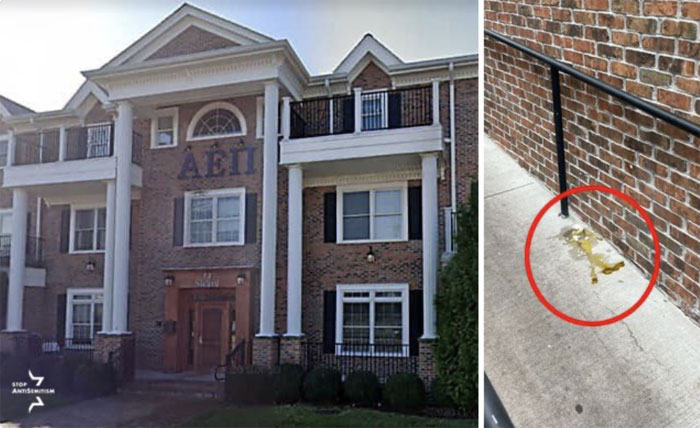
The Alpha Epsilon Pi (AEPi) fraternity house at Rutgers University in New Brunswick was egged and targeted in two separate, recent incidents.

The first incident occurred on April 22, when pro-Palestinian protesters from a nearby Students for Justice in Palestine (SJP) rally drove by the house waving Palestinian flags and reportedly lobbed accusations of Jewish students of being “baby killers” and “terrorists.” Rutgers Hillel alleged that the protesters spat at the house as well.

The other incident, the egging, occurred on either the evening of April 25 or the following morning, just before Yom HaShoah. The house was also egged the year before as students were reading out the names of those who perished during the Holocaust to commemorate Yom HaShoah.

The university announced that they are going to beef up security around the house in light of the recent incidents. “There is no place for this type of targeted hate on our campus, and Rutgers Hillel condemns these anti-Semitic acts in the strongest terms,” the university said in a statemen, per ABC7. “The direct targeting of members of our Jewish community goes against everything our campus community stands for and is unacceptable, especially during a program remembering the horrific impact anti-Jewish hate can have.” University Chancellor-Provost Francine Conway also said in a statement, “We understand and are sensitive to the concerns of those who were targeted, and stand by our Jewish students, faculty and staff,” she wrote. “Harassment based on religious belief, ethnicity, gender, sexual orientation, or for any reason, is antithetical to our values at Rutgers University.”

Rutgers Hillel denounced the incidents and thanked the university in a statement. “There is no place for this type of targeted hate on our campus and Rutgers Hillel condemns these antisemitic acts in the strongest terms,” the organization said, per The Algemeiner. “The direct targeting of members of our Jewish community goes against everything our campus community stands for and is unacceptable, especially during a program remembering the horrific impact anti-Jewish hate can have.” 

They added that they “appreciate the support our community has received from the Chancellor, who released a statement about this incident Monday, reaffirming that targeting students because of their Jewish identity is wrong, and their willingness to address these issues systemically through participating in Hillel International’s Campus Climate Initiative with us. We continue to support our AEPi students, as well as all members of our campus community, as we reaffirm our commitment to ensuring the Rutgers Jewish community feels safe, respected and welcome on campus.”

Adam Kaufman, who heads the AEPi chapter, told MyCentralJersey that the university needs to do more to combat antisemitism. “They sent an announcement but we just feel that we’re being silenced—that they are just putting out announcements to make us feel better. But, there’s not really any change or any plan of action to present to us.”

Representative Josh Gottheimer (D-NJ) tweeted that he was “disgusted” by the incidents. “These recent acts of antisemitism and harassment toward Jewish Rutgers students are appalling,” he wrote. “Antisemitism is reprehensible, and this harassment deserves to be condemned without any equivocation.”

Jewish groups also condemned the recent incidents. “Appalled by the continued vile antisemitism targeting @RutgersAEPi,” Anti-Defamation League New York / New Jersey tweeted. “After being harassed w/ #antisemitic rhetoric, the fraternity home was vandalized w/ eggs during a #YomHaShoah program. [Thank you] @RutgersU for providing additional support to students impacted.”

The American Jewish Committee tweeted, “In the past few days, the @AEPi fraternity chapter at @RutgersU has been targeted with antisemitic insults and egging during a reading of names of Holocaust victims. We thank the university for taking action to protect its Jewish students against this hate.”

SJP’s Rutgers-New Brunswick chapter issued a statement on April 27 saying that the protesters who harassed the AEPi house on April 22 are not students at Rutgers and are not in any way affiliated with SJP. “Our inquiries led to the acquisition of video footage which suggests that it was members of AEPi who approached the individuals who attended our rally with slurs, Islamophobic rhetoric, and attempts to provoke physical altercation,” they said. “The individuals involved passed through Sicard Street due to its close proximity to our rally at Brower Commons, the Rutgers-designated ‘free speech zone’ on the College Avenue campus.” The Commons is where the SJP rally April 22 rally was held. “Our fight for Palestinian liberation is inextricable from efforts for the liberation of all oppressed groups, including the American Jewish community. Individuals who plan to engage in antisemitic or otherwise hateful behavior are not welcome into our organization or at any of our events, rallies and/or protests.”

Kaufman, on the other hand, told MyCentralJersey that AEPi “didn’t start anything” and that “none of us attended the rally.” “Unfortunately, [the pro-Palestinian protesters] decided to do a drive-by with cars full of people raising Palestinian flags, and calling us names and stopping by the house on purpose. And the fact that it also was the second to last day of Passover creates a little bit more of an impactful timing to hurt us on an even more deeper level.”

Jewish News Syndicate (JNS) reported that the AEPi members are currently fundraising to further Holocaust education and provide support for Jewish Ukrainian refugees afflicted by the Russian invasion of Ukraine. The members said they are showing “that we are not intimidated by anti-Semitism and will use this as a way to raise money and awareness for Jewish causes alike.”

Rutgers AEPI House Egged, Harassed in Two Separate Instances Read More »