fbpx

March 4, 2022

ADL Report: White Supremacist Incidents Declined 5%, Propaganda Efforts Increased 27% in 2021

The Anti-Defamation League’s (ADL) Center on Extremism (COE) released a report on March 3 finding that while antisemitic incidents involving white supremacy declined 5% in 2021, their messaging increased 27% the same year.

The report found that there were 352 white supremacist propaganda incidents in 2021. Some examples included a “Hitler was right” flyer taped on a menorah that belonged to a synagogue in the Sacramento area and stickers of a swastika and the words “we are everywhere” found on a Jewish museum in Anchorage, AK. White supremacists also engaged in 183 banner drops in 2021, a 40% increase from the year before, and held 108 events, an increase of more than 50% from 2020. Some banner drops included banners that stated “Death to Israel” and “Black Lives Murder White Children!” and nearly half of the white supremacist events were flash mobs.

The states with the highest numbers of white supremacist propaganda incidents were Pennsylvania (473), Virginia (375), Texas (327), Massachusetts (272), Washington (228), Maryland (217) and New York (212). Thirty-eight white supremacist groups were behind the propaganda efforts, but three groups were behind 91% of the incidents: Patriot Front, New Jersey European Heritage Association and Goyim Defense League (GDL).

The GDL is what received the most attention during an ADL COE webinar discussing the report; ADL COE Vice President Oren Segal explained that the GDL organizes coordinated monthly propaganda campaigns and offers a reward for those who can get on the news. Some of the GDL campaign include live streams of their engaging in antisemitic harassment, such as shouting “Dirty Jew, f— you!” on a platform called Entropy where they can make money during the stream. The GDL also conducts “Nose Tours” to pull off antisemitic stunts throughout the country. The white supremacist group also sells their own merchandise.

Carla Hill, Associate Director of ADL COE, said during the webinar that the “more aggressive they become during these events, these tours, the more these funds roll in.” “It’s really disturbing,” she added, calling it “the monetization of hate and harassment.” Segal also expressed concern that in “selfie culture,” people eventually get bored over what’s in front of their screens, meaning that extremists will likely attempt to “ratchet up their rhetoric.” “I predict we’re going to be dealing with that in multiple ways for some time to come,” he said.

Segal also stressed the importance of contacting websites that host extremist groups and ask if doing so violates their terms of service. “These company platforms may not even be aware,” he said.

Yael Hershfield, Division Director of Incident Response and Law Enforcement Initiatives at the ADL’s Southern Division, encouraged community members during the webinar to report any antisemitic incidents or knowledge of a planned incident to both the ADL and law enforcement. When the ADL learns of a Jewish institution that’s about to be targeted by extremists, they inform the institution ahead of time so “Jewish institutions can be prepared,” Hershfield said.

ADL CEO Jonathan Greenblatt said in a statement via press release. “White supremacists more frequently are resorting to hate propaganda as a tactic to spread their noxious ideas and recruit new membership. It’s particularly disturbing that at a time of when violent antisemitic assaults are on the rise, these groups are dialing-up their hateful rhetoric against Jews and canvassing entire communities with hate literature. This is an alarming trend that needs to be checked, now.”

ADL Los Angeles Regional Director Jeffrey I. Abrams also said in a statement in the same press release, “This conspiratorial and offensive antisemitic propaganda plays into old tropes and hate. But words like these can and do spark bigotry and violence targeting Jews, which we recently saw manifest during the synagogue hostage crisis Colleyville, Texas in January of this year. At a moment when our city needs even greater civility and unity, we urge Angelenos to reject these dangerous, extremist and antisemitic theories and we encourage everyone to report incidents such as these to the ADL.”

ADL Report: White Supremacist Incidents Declined 5%, Propaganda Efforts Increased 27% in 2021 Read More »

A Sephardic Voice for the New Generation: Rabbi Benny Lau

Can an Ashkenazi Jew with a distinctly recognizable Ashkenazi name from a prominent Ashkenazi rabbinical family be considered a voice for young Sephardic Jews? When we hear the name “Lau,” many of us automatically think of Rabbi Israel Meir Lau, the Holocaust survivor and former Ashkenazi Chief Rabbi of Israel. Some might think of his son, Rabbi David Lau, the current Ashkenazi Chief Rabbi of Israel.

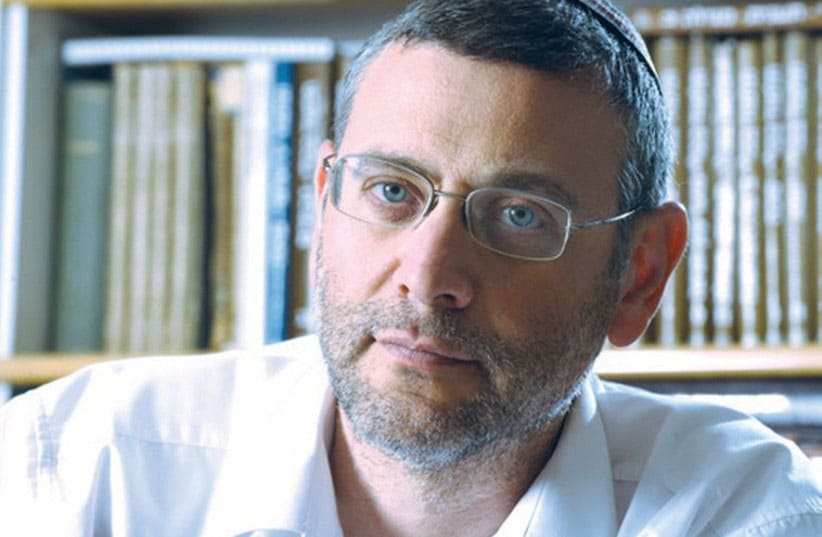
Meet Rabbi Binyamin “Benny” Lau, the nephew of the elder Rabbi Lau and the cousin of the current Chief Rabbi. Benny Lau holds no national “chief rabbi” official position in Israel, but is no less of a public figure. A prominent scholar, educator, teacher and outspoken public intellectual and rabbinic voice, Rabbi Benny Lau has written several bestselling books on a wide variety of Jewish topics, and is one of the most sought after rabbinic figures by Israeli media, government and public institutions.

When Benny Lau was in 9th grade, he went to his synagogue library and pulled a book from the shelf that he had never studied in school. The book reflected a whole new approach to Halakha (Jewish Law) that he had never been exposed to, and the young Benny became intrigued. The book was a collection of Teshuvot (Halakhic Responsa) by Rabbi Ovadia Yosef z”l. Benny immersed himself into the world of Rabbi Ovadia Yosef and of other Sephardic Hakhamim, including Rabbi Uziel z”l.

After his IDF military service, Benny went to university, eventually earning a Phd in Jewish Law. His dissertation topic: “The Halakhic Methodology of Rabbi Ovadia Yosef.” The dissertation was turned into a bestselling book, written with the approval, guidance and blessing of Rabbi Ovadia Yosef, and to date, it is the most important study of Rabbi Ovadia Yosef’s halakhic methodology, as well as an important glimpse into the world of Sephardic Hakhamim. Rabbi Ovadia Yosef praised the book, as did many other Sephardic rabbis and teachers. All the work of someone with the Ashkenazi last name “Lau.”

Rabbi Lau also has brilliant “Sephardic insights” in the weekly Torah portions, including this week’s portion that closes the book of Exodus, Parashat Pekudei.

He brings in the commentary of Nachmanides, the brilliant 13th Century Spanish Rabbi, Talmudist, Kabbalist and Bible Commentator. The topic? The bells at the bottom of the High Priest’s robe:

“The bells were placed inside the pomegranates before they were sewn onto the robe, and once the bells were inside the pomegranates, they were then sewn onto the edges of the robe.”

Rabbi Lau comments on Nachmanides’ description of this seemingly obscure feature of the High Priest’s robe:

“I recently heard a sermon on Nachmanides’ description of the High Priest’s robe. In this sermon, the rabbi described the pomegranate as a symbol of fullness: It is heavy, full of content and does not make any noise. Its fullness is symbolic of the world of wisdom and mitzvot. In fact, when our sages sought a metaphor for being ‘filled with mitzvot,’ they used the pomegranate.

The pomegranate represents the older generation, overflowing with knowledge and filled with content. The bell, on the other hand — a symbol of noise — makes its noise from an empty vessel. The bell is built from an empty space with a tongue in the middle that creates the noise. It is very sensitive to the slightest wind and hastily rings and makes noise.

The rabbi then linked the two — the pomegranate and the bell — to the sounds created by the two on the High Priest’s robe as he enters the sanctuary, of which is said: The sound of it is heard when he comes in the sanctuary before God. 

If the bells are disconnected from the pomegranates, then they can ring and ring endlessly, but they will not be part of the High Priest’s robe, and will therefore not be heard. The true strength of the bells ringing is only realized when they are connected to the pomegranates. When they are incorporated within the pomegranates, then their voice is heard.”

But in a stroke of creativity reflecting the sensitivity and inclusive approach of the Classic Sephardic tradition, Rabbi Lau expands our understanding of the bells:

“Clearly, I think that one can also reverse this metaphoric explanation and say that the pomegranates must also make room for the bells to exist within them. The High Priest cannot enter the sanctuary with the pomegranates alone. Only when the pomegranates give room to the bells can they then enter the sanctuary of God.

The sensitivity of the bells creates the proper musical notes that the High Priest — the representative of the entire community — makes heard in heaven when he enters the sanctuary. The heavy and full pomegranate needs the bell, and together they awaken true hope.

This dual interpretation expresses the generational dispute between the older generation (the pomegranates) and the younger generation (the bells). The wisdom of this lesson lies in seeking to incorporate the voices of one generation within the other.”

Only when the “sounds from the bells” and the “seeds of the pomegranates” listen to each other and seek to coexist within the same community can our voices be heard by God. This spiritual message from Rabbi Benny Lau is not only a creative reading of Torah sources, it’s a real-life challenge to all Jewish communities – Sephardi and Ashkenazi.

On a personal level, I am privileged to call Benny Lau my friend. As a Sephardic rabbi, I am proud to call Rabbi Benny Lau my colleague, and to consider him one of my “Sephardic role models” – even with the Ashkenazi name Lau.


Rabbi Daniel Bouskila is the Director of the Sephardic Educational Center and the rabbi of the Westwood Village Synagogue. 


A Sephardic Voice for the New Generation: Rabbi Benny Lau Read More »

The Voices of Ukraine


It would be so much easier to forget history. In the 1942 short story by Haim Hazaz, “The Sermon,” the central character, an otherwise shy military man named Yudka, gives a lengthy discourse on the future of the Jewish people. At the beginning of the story, Yudka reluctantly comes forward, and begins his speech.  “I wish to announce,” Yudka spoke with an effort, in low, tense tones, “that I am opposed to teaching Jewish history … I would simply forbid teaching our children Jewish history. Why the devil teach them about our ancestors’ shame? I would just say to them: Boys, from the day we were exiled from our land we’ve been a people without a history. Class dismissed. Go out and play football.”

Yosef Haim Yerushalmi quotes this passage at the end of his book “Zakhor: Jewish History and Jewish Memory.” Yudka may be representative of a generation, the founders of the State of Israel, that wanted to move on from the past; but as Yerushalmi demonstrates, the very fabric of Jewish culture is interwoven with collective memory. The rootzakhor, to remember, appears no less than 169 times in the Bible, and Yerushalmi explains that “nowhere else is the injunction to remember felt as a religious imperative to an entire people.” Each year, we imagine as if we were in Egypt during the Exodus and in Jerusalem during the Destruction. For Jews, history is current events.

But I am sympathetic to Yudka. Jewish memory carries with it Jewish pain; it is far happier to forget. There is an entire atlas of Jewish persecution, places filled with haunting memories: York, Seville and Auschwitz, and even entire countries like Spain and Germany. At times it feels like there is nowhere one can go in Europe without confronting an ugly episode in Jewish history.

The area of the Eastern European steppe between Russia, Ukraine and Belarus is truly a “bloodlands,” and soaked with Jewish blood. The mere mention of Ukraine conjures ghosts of the past: Chmielnicki and Petliura, pogroms and the Beilis blood libel. In 1941, at Babi Yar, just outside of Kyiv, nearly 34,000 Jews were murdered by the Nazis and Ukrainian Auxiliary Police; the massacre began on Yom Kippur and continued through the next day. To add insult to injury, the murders at Babi Yar were covered up by the Soviet Union. Because of this, when watching the news this week, some had the reaction that Ukraine is Ukraine, and will always be Ukraine. But children are not judged by their parents’ sins, and a Ukraine with a Jewish president is very different from the Ukraine of 80 years ago.

The Torah’s imperative of remembering history is not in order to relive nightmares. History is a teacher, perhaps even a lesser form of revelation; in this regard, Rabbi Samson Raphael Hirsch emphasized that history must be included in the school curriculum, because it offers a glimpse into God’s will. Unquestionably, Judaism expects us to live our lives in dialogue with history. The purpose of memory is not only to connect with the past, but also to learn its lessons.

Jewish memory carries with it Jewish pain; it is far happier to forget.

To remember is to bring the voices of the past into dialogue with the present. Our ancestors are always speaking to us; and sometimes it sounds like a cacophony. Rav Soloveitchik eloquently described how at every one of his lectures, “visitors” would arrive, from his grandfather to the great rabbinic authors of previous centuries, ready to begin a dialogue with his students. To study the words of the rabbis is to bring them back to life. At seders and Shabbat tables, whenever we grasp hold of memory, we can hear the voices of the past speaking to us—grandparents and great rabbis, heroes and humble Jews, all offering insight and wisdom.

This week, two voices from Ukraine have been calling out to me. Chaim Nachman Bialik had been a student of Volozhin Yeshiva, but left to become a poet, scholar and publisher. In 1903, after the Kishinev pogrom, Bialik wrote what is arguably the most influential poem in the Hebrew language:” B’ir Haharegah, In the City of Slaughter.” It was a furious indictment of Jewish cowardice. Instead of fighting, the Jews of Kishinev hid during the pogrom, while their friends and families were beaten, murdered and raped. Bialik describes it vividly:

Come, now, and I will bring thee to their lairs

The privies, jakes and pigpens where the heirs

Of Hasmoneans lay, with trembling knees,

Concealed and cowering—the sons of the Maccabees!

It was the flight of mice they fled,

The scurrying of roaches was their flight;

They died like dogs, and they were dead!

Bialik is saying “enough”—enough to Jewish cowardice, enough to begging the non-Jewish world to offer a bit of tolerance. Jews must take control of their destiny. It was a clarion call, one answered in the following decades by pioneers who renewed the Jewish spirit and rebuilt the Jewish state.

This week, the call of Bialik was heard. Whatever may happen in the days and weeks to come, the Jews of Ukraine will always have the State of Israel. Robert Frost famously said, “Home is the place where, when you have to go there, they have to take you in.” And Israel is taking in the Ukrainian Jews. From the very beginning of its existence, Israel has rescued Jews in need, in Yemen and Uganda, in the Soviet Union and in Syria. As of now, 3,700 Ukrainian refugees have applied for entry to Israel; undoubtedly there will be tens of thousands more to come. But unlike 80 years ago, there is a place for Jewish refugees to take shelter. Thank God for the State of Israel. Bialik’s call for Jewish self-determination was answered, and the State of Israel has changed the lives of every Jew around the world.

The purpose of memory is not only to connect with the past, but also to learn its lessons.

Calling from even further in the past is Rabbi Yisrael Baal Shem Tov, the founder of the Chasidic movement. He revolutionized the Jewish world, and taught a community that was broken in spirit the importance of faith, perseverance and love. The Baal Shem Tov taught: “One must have total self-sacrifice and dedication for love of one’s fellow, even towards a Jew whom one has never seen.” The Jewish family is our responsibility, and the mitzvah of Ahavat Yisrael, loving one’s fellow Jew, requires dedication and devotion.

This has always been the ideal; but it has not always been the reality. When the Jews of Kyiv were being murdered in Babi Yar, American Jews averted their eyes. Rabbi Haskel Lookstein, in his book “Were We Our Brothers’ Keepers?: The Public Response of American Jews to the Holocaust, 1938-1944,” reviews the halfhearted actions of the American Jewish community during the Holocaust. His final paragraph concludes: “The Final Solution may have been unstoppable by American Jewry, but it should have been unbearable for them. And it wasn’t.”

During the Holocaust, we were not our brother’s keepers.

This past week, we were. Volunteers in Poland are running to the border, doing their utmost to help, and many have taken Ukrainian Jews into their homes. One friend shared with me a picture of a young girl who hid under her host’s dining room table, too traumatized to come out. Another woman in the Krakow community took 20 refugees into her own home. It is all hands on deck, with everyone getting involved. There is a non-stop push to help those displaced with food, shelter and supplies.

During the Holocaust, we were not our brother’s keepers.

And then there are those who have been self-sacrificing in their mission to help others. The 192 Chabad Rabbis and their wives in Ukraine have stayed in place to stand with their communities. The Rabbi of Kharkov, Moshe Moskovitz, stayed behind with his wife, Miriam. In one of its last posts on its Facebook page, the community wrote about a moment this past Shabbat when everyone broke out into tears: “The chairman of our community Alexander Kaganovsky established a wonderful tradition many years ago: after prayer, he congratulates community members on their birthdays and announces our activities. Today he asked everyone for a moment of attention and said, ‘Reb Moshe, on behalf of our entire community, I want to thank all of you, all the Shluchim who stayed here to be with us. You have told us many times throughout the years that you and your family are an integral part of our community. Now we can see that this is true.’ And he hugged Rabbi Moshe tightly.”

Rabbi Refael Kruskal, the CEO of Tikva Odessa, a network of Jewish schools, orphanages, and community-care programs, evacuated over 650 people in a bus caravan last Friday night. It was a harrowing experience that took 33 hours. A moving video recorded the moment when several buses stopped at a gas station, and Rabbi Kruskal made Kiddush; the children in the crowd broke out into tears. There has never been a holier Kiddush. And what these rabbis have done truly defines what “total self-sacrifice and dedication for love of one’s fellow Jew” means.

This Shabbat, as you make Kiddush, listen to the voices of Ukraine. Even though one is not meant to cry on Shabbat, this week it is appropriate to shed a tear for our brothers and sisters in need. And do whatever you can to help; that is what “dedication to love of one’s fellow Jew” means. The voices of our brothers and sisters are calling, from Ukraine past and present, asking us to fulfill our mission.

How can we refuse to listen?

Rabbi Chaim Steinmetz is the Senior Rabbi of Congregation Kehilath Jeshurun in New York.

The Voices of Ukraine Read More »

Israeli Yeshiva Comedy Series “The New Black” Premieres on ChaiFlicks

“The New Black,” an Israeli TV show that depicts Haredi yeshiva boys like you’ve never seen them before, is now playing on the new ChaiFlicks streaming platform.   

The show is about four twentysomething roommates at a yeshiva in Jerusalem:  Avinoam (Daniel Gad), a son of a prominent Israel government figure, Meir (Israel Atias), who is from a working-class family, Dov (Omer Perelman Striks), a cocky and wealthy New Yorker and Gedalia (Ori Laizerouvich), a bookish savant for scripture who often loses his temper — especially when he goes on shidduch dates.  

It’s a Haredi combination of the best characters from “Entourage” set in an institution as proud as the one in “Scent of a Woman.” The stern Rabbi Ashi Spitzer (Rotem Keinan) runs the place with the intensity of The Trunchbull from “Matilda.”

Spitzer is there to clean up the yeshiva at a time when enrollment is falling and student minds seem to be wandering from the texts. He installs a signal jammer to prevent the pupils from using the internet or cell phones and relishes the breaking down of the pupils’ confidence in themselves. 

Whether you are religious or haven’t read the Torah since your bar or bat mitzvah, the show is captivating, with equal parts hilarity and intensity.

The boys contemplate their purpose in life while also just trying to find some enjoyment and agency.

The four main characters each bring their own motivations to the yeshiva, which are revealed throughout the first season. On the surface, they seem rebellious; they’re perpetually quarreling with high-priced matchmakers and constantly smoking cigarettes. They play American football, debate scripture, woo donors and end up in a Golan Heights minefield. The boys contemplate their purpose in life while also just trying to find some enjoyment and agency. As an added bonus, the show features the unforgettable scenery of the homeland in every outdoor shot. 

Although “The New Black” was initially released in 2017 in Israel under the name “Shababnikim,” it only recently hit ChaiFlicks. During its run in Israel, “Shababnikim” became a smash hit, winning four Israeli TV Academy Awards, including Best Comedy, Best Original Script, Best Actor (Ori Laizerouvich as Gedalia) and Best Director for Eliran Malka. 

Malka, who is also the creator of the series, became inspired when he met students in a yeshiva while living in Jerusalem. 

“Like most Israelis, I thought of [the students] as being very secluded,” Malka said in an interview with the Manhattan JCC. “I saw them as people [who] live in two worlds and they are very divided because they don’t want to leave the beit midrash, and they don’t want to be blind to the other side of the world, of the western culture. And this is the basis for every character.”

The music throughout the series bridges the divide between the modern hipness of the main characters and their studies of ancient texts. In one scene you will see a cantor singing and in another you’ll hear “All I Wanna Do” by Sheryl Crow, “Woodstock” by Crosby, Stills, Nash & Young and even an Israeli remix of House of Pain’s “Jump Around.” 

Not only is “The New Black” one of the most popular television shows in Israel right now, but the actors have also gained a following of yeshiva fans. 

“We did an interview for the news and we did it in a restaurant in a religious neighborhood, one of the most religious neighborhoods in Israel, and there were hundreds of yeshiva students waiting for us outside,” actor Perelman Striks said. “And we asked them, ‘Where do you watch? We know you’re not supposed to watch TV.’ And they didn’t tell us, but everybody knew who we were and it’s amazing.” 

ChaiFlicks aims to become the Netflix for Jewish and Israeli films, television series and stage performances. There are over 700 titles in its library, including “The New Black,” and subscriptions are  $5.99 per month, or $60 annually. 

“[‘The New Black’] shows the humanity of these yeshiva boys, [that] they’re just like us [and] they’re no different [from] anybody else,” ChaiFlicks co-founder Neil Friedman said. “They’re human beings. And their wants, desires, questions and sense of fun [are] no different [from] the secular world.”

He continued, “There’s no question that this is something we’ve never seen before—this kind of humor in this context, in a yeshiva.”

Israeli Yeshiva Comedy Series “The New Black” Premieres on ChaiFlicks Read More »

Movers & Shakers: Milken State of School, Longtime Teacher Honored, Temple of the Arts Cantor, Beit T’Shuvah Luncheon

Beverly Hills Temple of the Arts has added Hazzan Nathan Lam to its clergy team.

Lam is joining Temple of the Arts’ Rabbi David Baron, Cantor Ilysia Pierce and Music Director Sharon Farber for the congregation’s monthly Shabbat services as well as on the High Holy Days.

 His first service with Temple of the Arts will be “Gospel Shabbat” on March 25, held both in-person at the temple’s home, the Saban Theatre on Wilshire Boulevard, and livesteamed.

 Lam, who previously served as the cantor at Stephen Wise Temple, will also serve as the chief curator of the congregation, which describes itself as a music and culture center. In that role, he will curate at least three concerts each year, according to Baron.

 “He has a rich history of working with so many people in the music business – we’re going to utilize his resources to bring some special experiences to our Saban theatre stage,” Baron said. “He’s going to curate that. It’s very exciting, the future ahead of us.”

 Temple of the Arts aims to make Judaism accessible through music, art, drama and film.


Sarah Shulkind Courtesy of Milken Community School

More than 800 households tuned in when Milken Community School held its third annual “State of the School” address, on Jan. 31.

Milken Head of School Sarah Shulkind delivered the address, highlighting student programs including L’Dough V’Dough, a challah baking partnership with Holocaust Museum LA. She also spoke of the school’s five strategic priorities.

“It’s our goal to make Milken a model pluralistic Jewish community school that shapes the future of Los Angeles and beyond,” Shulkind said during her remarks, titled “This is Our Moment.”

Participants in the virtual program included Milken Board Chair Lise Applebaum.


Rabbi Gordon Bernat-Kunin
Courtesy of Milken Community School

Milken Community School honored Milken’s Rabbinic Director Rabbi Gordon Bernat-Kunin. Affectionately known as Rabbi BK, Bernat-Kunin is celebrating 30 years of teaching at the school.

During a virtual program, a handful of community leaders expressed words of praise for Bernat-Kunin, including Milken Head of School Sarah Shulkind, Michael Berenbaum, Rabbi Shawn Fields-Meyer, former Head of School Rennie Wrubel, Shomrei Torah Synagogue Rabbi Richard Camras and Carolyn Camras; and Valley Beth Shalom Senior Rabbi Ed Feinstein.

“He is the Jerry Seinfeld of the intellectual and philosophical world,” Camras said. “He takes the obvious things in this world…and presents them in a way that challenges us to think more deeply about whatever it is we need to be thinking about in order to grow our souls, in order to build community, in order to connect more deeply to Torah and to God.” 

“He lives the values that he preaches,” Berenbaum said.

Presenting Bernat-Kunin with his award, Milken’s board member Janine Winkler Lowy likened the classroom environment Rabbi BK creates everyday for his students to a sacred space.

“You have rendered a rabbi almost speechless,” Bernat-Kunin said, accepting his award. 

Rabbi BK’s professional milestone coincides with Milken’s 30th anniversary. Founded in 1991, Milken is holding a gala ceremony on May 1 to commemorate three decades of educating future leaders in the community. The program is taking place at Warner Bros. Studios in Burbank and honoring Wendy and Ken Ruby; Nurit and Rich Robin; and Vivienne Friedman. 

“It promises to be the celebration we’ve all been waiting for,” Applebaum said.

For more information about the upcoming gala celebration, visit milkenschool.org.


Beit T’Shuvah honoree Susan Krevoy (right) and her husband, Leo Spiwak. Courtesy of Beit T’Shuvah

Beit T’Shuvah’s first in-person gathering since the start of the pandemic was held at SLS Hotel’s open-air garden terrace and recognized Susan Krevoy with the Majesty Service Award. 

More than 90 men and women turned out on Feb. 24 to the 15th annual Circle of Majesty Luncheon to celebrate Krevoy, a psychologist, who has served on Beit T’Shuvah’s board of directors since 2000. At the organization, she started a therapy program staffed by volunteers, and she has participated in the Los Angeles Marathon with the Beit T’Shuvah team. 

Over the course of the afternoon, Beit T’Shuvah President Annette Shapiro presented the family of the late Ronnie Stabler, one of the Circle of Majesty’s founders, a plaque that will hang on Beit T’Shuvah’s wall of remembrance; Ronnie’s granddaughter, Jordan Sholem, offered words of remembrance for her grandmother; and Beit T’Shuvah Founder Harriet Rossetto spoke on the theme of Judaism as a path to wholeness.

Beit T’Shuvah leadership expressed gratitude to those who turned out. “As addiction continues to impact our community, now more than ever before, Beit T’Shuvah is immensely grateful for those who support us in providing accessible, integrated care for those who seek recovery.”

From left: Laurie Harbert, Gayle Weiss, Frankie Sholem and Jordan Sholem are among those attending the Circle of Majesty Luncheon. Courtesy of Beit T’Shuvah

Movers & Shakers: Milken State of School, Longtime Teacher Honored, Temple of the Arts Cantor, Beit T’Shuvah Luncheon Read More »

Internet Pioneer Jeff Pulver Talks the Future of the Web

Serial entrepreneur Jeff Pulver is excited about the future of technology. Pulver, who has invested in more than 400 startups (more than 100 of them out of Israel), is dedicated to advancing communication and making connections.

Pulver believes that 2022 is “a transition year for the internet.” The internet we have known, he says, “is once again changing. With change comes brave new opportunities for users, creators, investors and entrepreneurs.”

A futurist, Pulver is perhaps best known for his work as an innovator in the field of Voice over Internet Protocol (VoIP). Pulver is the co-founder of Vonage (a publicly-held cloud communications provider acquired by Ericsson in November 2021) and the VON Coalition, which advocates that internet communications should remain as free from governmental regulations as possible. VON stands for Voice and Video Over the Net.

Pulver held VON conferences around the world from 1997 through 2008. “Hebrew was the unofficial language of the conference,” he said. “The folks who came to the conferences weren’t based in Israel so much as they were Israeli [innovators].”

As the world slowly welcomes a new phase of internet advancement – Web3 – Pulver is again at the forefront. “Web3 represents a new era for the internet,” he said. “Where [and] how we use the internet is becoming decentralized.” 

Most people say Web1 started in the early 1990s and went until around 2006. In those early days, everything was dial-up, and websites were more like brochures. Universities had broadband, but most people didn’t.

“The internet we have known is once again changing. With change comes brave new opportunities for users, creators, investors and entrepreneurs.” – Jeff Pulver

Web1 was the read-only internet, and Web2 was read and write. There was social media, as well as other avenues to get thoughts and ideas out there. 

“With Web3, we are looking at technology differently,” said Pulver. “It’s much more community-focused. In Web2 the publisher makes the money, whereas in Web3 the creator can earn money directly.”

Web2 also saw the transition to broadband and a plethora of new services, in terms of how we connect with data on the internet. 

“Going from Web1 to Web2, we didn’t need anything fancy,” Pulver said. “We just got better connectivity. Our computers got faster [and] our mobile phones evolved, but that happened organically. Right now, there’s a lot of friction because it’s not so obvious how to use these Web3 applications.”

This past January, Pulver returned to his conference roots, producing and hosting “The VON3 Summit: Exploring the Future of Communications in a Web3 World.” More than 40 people from across eight time zones spoke at the event; more than 250 people attended. Day one was all about education including Web3 basics, broadcasting and the creator economy, while days two and three dove into what’s possible in the new world of the web, like data, NFTs, augmented reality and the Metaverse. 

One of Pulver’s main goals of the conference was to debunk the hype associated with Web3 and provide a grounded sense of reality: where we’re at and where we may be going. 

“The creativity combined with the innovation is the beginning of an era where magic will just continue to happen,” said Pulver. “I fully believe we will continue to see innovation from Israel, helping to drive the bleeding edge of technology and transferring knowledge to the next generation.”

Pulver spent nearly two years during the pandemic creating online experiences for people all over the world including international networking, virtual coffeehouse jam sessions and Zoom talk shows. The ability to connect with people globally at any time has always been a source of energy and joy for the entrepreneur.  

A fan of communication since his early days as a ham radio operator, Pulver, who grew up Conservadox on Long Island, obtained his amateur radio license at age 12. One of his early ham radio friends was a teenager named Danny in Israel, who turned out to be Danny Meir, the grandson of Former Prime Minister of Israel Golda Meir. 

Pulver is now looking forward to the next VON conference, which will be held on April 25, as well as what lies ahead for the online world. 

“I feel we are once again at a nexus point for the future,” he said. “Anything is once again possible, and together we can redefine the future of communications.”

Internet Pioneer Jeff Pulver Talks the Future of the Web Read More »

When Wars Start, the Fight is All That Really Matters

How we got to Russia’s invasion of Ukraine is a long and complicated story. For one thing, Russian President Vladimir Putin never got over the loss of global influence that followed the dissolution of the Soviet Union in the early 1990s. I’ve read countless analyses of this period, and they’re replete with mistakes, blunders and missed opportunities from all sides. A few key moves here and there might have prevented the tragic war scenes we’re seeing daily from Ukraine.

The problem is that, right now, none of that really matters. Once a war starts, it’s all about the fighting.

It’s like schoolyard rumbles. At first, there’s plenty of talking, posturing and threatening. A peacemaker might even try to intervene. But when the punches start flying, it’s the fight that matters and nothing else.

This is where we’re at in Ukraine. We can analyze the past all we want, but at this moment, we’re in all-out war. These questions, among many others, are critical:

Will Ukrainian troops receive more Javelin missiles in time to make a dent on the Russian onslaught?

How far will Putin go with his military escalation, which includes an unprecedented attack on a nuclear plant?

How long will the capital city of Kyiv stay out of Russian hands, and will Ukrainian President Volodymyr Zelensky survive?

How many civilian refugees will be able to escape?

This is Putin’s war, the war of a bully who’s done something I never thought I’d see: He has united pretty much the whole world, but especially the West. Western nations, institutions and organizations have been falling all over themselves to sanction and isolate Russia– oil and gas be damned. They’re all in fighting mode, too.

This is Putin’s war, the war of a bully who’s done something I never thought I’d see: He has united pretty much the whole world, but especially the West.

In this fighting mode, both sides try to inflict as much pain as possible on the other, in the hope that they’ll have more leverage when the shooting stops.

A schoolyard bully, regardless of how strong or threatening he is, loses leverage when he gets beat up. He is humbled and humiliated. Putin knows that. For a man obsessed with prestige, the last sentiment he wants to feel is humility. His first week of war has not gone well, which is why he is doubling down. He must avoid a beating at all cost.

His problem is that Ukraine owns the moral high ground, utterly and completely. No one has bought Putin’s propaganda that this is a defensive war. The Western world would not be so united if this wasn’t a naked, unprovoked land grab.

We’re back, then, to the bombs, the tanks and the missiles. Who will prevail on the ground? If Russia prevails but triggers an ongoing Ukrainian insurgency, will that be considered a victory?

“[Putin] simply cannot do what he hoped to do: install a puppet and basically go home,” Thomas Friedman wrote in The New York Times. “If he installs a puppet, he’s going to have troops there forever. So I think Putin basically has four choices: lose early, lose late, lose big or lose small.”

The Russian bully is in a bind: even if he wins, he loses.

As much as there is value to preventing fights, there is also value in teaching the bullies of the world a lesson. With the horrific human toll that this war has already caused, that lesson is the least we can hope for.

When Wars Start, the Fight is All That Really Matters Read More »

The Cloud, the Fire and the Voice – Torah portion Pekudei


The Cloud, the Fire and the Voice

Thoughts on Torah Portion Pekudei

Rabbi Mordecai Finley, Ph. D.


The fire that appeared in the burning bush on Mt. Sinai at the beginning of the book of Exodus never returned to the bush. The angel that spoke out of the heart of the fire in the bush never returned there, either.


The God who appeared to Moses at Mt. Sinai to charge Moses with the redemption of the people did return to Mt. Sinai, in whatever sense God can concentrate the divine presence to appear in one place or another. After the Mishkan was built, however, God no longer spoke from Sinai. The mountain went the way of the bush.  No longer needed.


The end of this week’s Torah portion marks the moment when the fire moves from the bush and the mountain to the Mishkan. The fire hid itself inside the cloud that filled the Ohel Mo’ed, and was only apparent at night. The voice of God moved into the Mishkan, speaking from between the keruvim on top of the ark at the center of the Mishkan, as we see in next week’s Torah portion.


Whatever else the Mishkan was built for, it was built to house the cloud, the fire and the voice.


What was the Miskhan built of?  Essentially, generosity, wisdom, discernment, knowledge, and every fine craft. Weaving, carving, cutting, shaping, and assembling according to a blueprint in the mind of God. All for beauty (tiferet), and to evoke the mystical presence of God (kavod).


We don’t know for sure why these details exactly were assembled to create this version of tiferet and kavod, but we do know how architectural details work, in general. Just search images for “beautiful buildings” (especially religious ones) and be ready to be stunned all over again by the physics and physicality of humanly shaped beauty, music rendered into matter, taking shape in time and space.


The tragedies and particularities of Jewish history and culture have pressed our rendering of the flame, the cloud and the voice mostly into music and words – holy playing and singing, holy texts and holy talks. Our liturgy, rightly sung, creates a cathedral. “Cathedral” is from the Latin word for “chair,” itself from the Greek root “to bring down” – in Jewish imagery, the bringing of the Merkava (the divine throne) and all the heavenly hosts, the singing angels, into the earthly realm. The spoken word captures the divine Word (Aramaic “memra”) and it is rendered into human speech, the “Woerte” as the Hasidic rabbis called it.


The precision of the planks, the curtains, the rods, the menorah, the altars, the tables, the ark, the keruvim are like notes of a song, the words of holy speech.  The sung and spoken words of the Mishkan that we build together are not finished for others to gaze upon and enter. The notes and words must be sung and said continuously, like a Ner Tamid, the eternal flame. Our hearts create the sanctuary into which the cloud, the fire and the voice are housed, into which holy song and holy words are sounded.  Every time we assemble, to sing, to listen, to learn, we are reassembling the Miskhan, from our wisdom, discernment and knowledge, from our generosity of heart, from our weaving of every fine craft that the human spirit can shape.

The Cloud, the Fire and the Voice – Torah portion Pekudei Read More »