fbpx

September 30, 2021

Sarah Stroumsa: Maimonides in His World


Shmuel Rosner and Sarah Stroumsa discuss her book, Maimonides in His World: Portrait of a Mediterranean Thinker (Jews, Christians, and Muslims from the Ancient to the Modern World) out now in Hebrew, by magnes publication.

Sarah Stroumsa is the Alice and Jack Ormut Professor Emerita of Arabic Studies at the Hebrew University of Jerusalem.

Follow Shmuel Rosner on Twitter.

Sarah Stroumsa: Maimonides in His World Read More »

Am I? — A poem for Torah Portion Bereshit

Am I my brother’s keeper?
-Genesis 4:9

Am I supposed to admit what I did?
Am I responsible if no one saw?

Am I really starting this whole book over?
Am I cancelled?

Am I in trouble for reading brother when
sisters hadn’t been invented when this was written?

Am I wearing the right clothes
for wandering the earth forever?

Am I touching the right keys?
Am I singing the right note?

Am I prepared for the forthcoming
crimes of our first family?

Am I the one who has to bear
responsibility for what they did?

Am I wasting electricity? How about water?
Am I too angry when I’m put on hold?

Am I the one with the taste
of the forbidden fruit on my tongue.

Am I making a fruit salad
with forbidden fruit?

Am I responsible for feeding
forbidden fruit salad to others?

Am I keeping my brother
longer than he wants?

Am I supposed to set him free?
Am I doing enough to make sure

everyone is free?
Am I?


God Wrestler: a poem for every Torah Portion by Rick LupertLos Angeles poet Rick Lupert created the Poetry Super Highway (an online publication and resource for poets), and hosted the Cobalt Cafe weekly poetry reading for almost 21 years. He’s authored 25 collections of poetry, including “God Wrestler: A Poem for Every Torah Portion“, “I’m a Jew, Are You” (Jewish themed poems) and “Feeding Holy Cats” (Poetry written while a staff member on the first Birthright Israel trip), and most recently “The Tokyo-Van Nuys Express” (Poems written in Japan – Ain’t Got No Press, August 2020) and edited the anthologies “Ekphrastia Gone Wild”, “A Poet’s Haggadah”, and “The Night Goes on All Night.” He writes the daily web comic “Cat and Banana” with fellow Los Angeles poet Brendan Constantine. He’s widely published and reads his poetry wherever they let him.

Am I? — A poem for Torah Portion Bereshit Read More »

By Failing to Refute Antisemitic Libels VP Harris Failed to Stand Up for Democracy

This past Tuesday, Vice President Kamala Harris spoke at George Mason University in Fairfax, Virginia, to commemorate National Voter Registration Day on Tuesday. After she completed her speech, VP Harris opened the floor to questions.

One student said the following:

“I see that over the summer there have been, like, protests and demonstrations in astronomical numbers” [regarding the Palestinian Arab cause] … just a few days ago there were funds allocated to continue backing Israel, which hurts my heart because it’s ethnic genocide and displacement of people, the same that happened in America, and I’m sure you’re aware of this.”

This student then added:

“I bring this up because Americans are struggling with lack of healthcare, lack of affordable healthcare, and lack of housing, and all this money [the $1 billion Congress just allocated to fund the Iron Dome missile defense system] goes back to funding Israel.”

In the first comment, the student incorporated two antisemitic libels, often weaponized against Israel primarily by the far-left.

The “genocide” accusation is one of the favorite modern day blood libels of the antisemitic far-left when it comes to Israel. This is in spite of the fact that in the entire 85-year history of the Arab-Israeli conflict approximately 26,000 Israelis and 91,000 Arabs have been killed (including approximately 50,000 Arab soldiers in the Egyptian, Syrian and Jordanian armies that fought against Israel in four wars between 1947 and 1973) and the Palestinian Arab population since 1948 has grown (according to the Palestinian Authority itself) from barely over one million to nearly 14 million. By contrast, 76 years after the Holocaust, the worldwide Jewish population is still one and a half million people short of its total before the start of World War II.

The second antisemitic libel, the new favorite talking point of far-left extremists like Cori Bush and Rashida Tlaib, is that among the near $60 billion that the U.S. spends annually in foreign aid, within the $5 trillion that the U.S. federal government spends per year, it is the $3.5 billion per year designated for America’s military aid package with Israel that is somehow to blame for the economic woes of ordinary Americans.

VP Harris could have responded to this student by setting the record straight. She could have shown no tolerance for outright lies that also serve to demonize the world’s only Jewish state and spread Jew-hatred.

VP Harris could have said: “While everyone in this democracy is entitled to their opinions and to voice those opinions, they are not entitled to their own facts. You claim Israel is committing a “genocide.” Do you know what a ‘genocide’ is? Six million Jews killed in four years. One million Armenians killed in two years. 800,000 Tutsi killed in five months. These are actual ‘genocides.’ Approximately 15,000 Palestinian Arabs killed in nearly 100 years of conflict with Israel does not constitute genocide. A conflict that began in 1937 with the Palestinian Arab leadership’s decision to say no to the first independent Arab state west of the Jordan River. And to compare the tragic deaths in the Arab-Israeli conflict caused by nearly 100 years of war to what happened to Native Americans in this country is not only a libel against the Jewish people, but also it is an insult to the suffering and the history of Native Americans.”

“And to compare the tragic deaths in the Arab-Israeli conflict caused by nearly 100 years of war to what happened to Native Americans in this country is not only a libel against the Jewish people, but also it is an insult to the suffering and the history of Native Americans.”

VP Harris could have also said: “While it is perfectly acceptable to make the argument that given its internal needs, the U.S. spends too much money on foreign aid or on military alliances, to focus on military aid to Israel, which is spent almost entirely in America with American employers, and amounts to less than one tenth of one percent of the total US federal budget, is inherently antisemitic.”

But, VP Harris said none of these things. Instead, what VP Harris said, as she nodded approvingly at the student espousing far-left hate speech, was that she “was glad” the student brought up her concerns, and  then added: “[a]nd again, this is about the fact that your voice, your perspective, your experience, your truth, should not be suppressed and it must be heard, right? And one of the things we’re fighting for in a democracy, right?”

Imagine that instead of utilizing two of the mendacious talking points of the far left, this student had engaged a false far-right talking point (for example, the claim that the federal government is manipulating the COVID-19 pandemic to conspire with big pharma to either kill or control U.S. citizens)—the type of misinformation and “fake news” that VP Harris and many others in the Democratic Party have repeatedly and rightly said is dangerous for democracies.

Can anyone imagine VP Harris nodding approvingly throughout such an anti-vaxx conspiracy diatribe, and in the end telling the student that she “was glad” the student had shared “her truth”? Of course not. It’s equally hard to imagine her saying to this student: “Again, this is about the fact that your voice, your perspective, your experience, your truth, should not be suppressed and it must be heard, right?”

VP Harris would have set the record straight on such misleading and dangerous far-right nonsense in a New York minute.

But, when a student shares with a blood libel about the one Jewish state committing “genocide” and then adds to her genocide libel the claim that among the approximate $60 billion per year in foreign aid, it is somehow the $3 billion spent on military programs with Israel that is responsible for Americans not having healthcare or “struggling with housing,” then VP Harris simply nods approvingly, tells the student how much she appreciates this student having a platform to share “her truth,” and never bothers to clarify that this student’s “truths” are actually dangerous lies that promote and exacerbate Jew-hatred.

VP Harris’s failure to stand up for the truth and her decision instead to utter platitudes about freedom of speech and “personal truth” in the face of outright antisemitic libels brings to mind a famous saying: “The only thing necessary for the triumph of evil is for good men to do nothing.”

Here, unfortunately, VP Harris did worse than nothing. By nodding with approval and praising this student for “speaking her truth,” VP Harris, at a minimum, implied that these antisemitic lies are not outside the pale of polite discussion, that they can be part of credible discourse and debate, when in fact they should be treated exactly the same as far-right anti-vaxx, Pizzagate or QAnon conspiracy theories—protected by the First Amendment, but understood to be the ravings of unhinged and sometimes dangerous extremists.

At an event promoting the importance of voting in a democracy, VP Harris had an opportunity to stand up for truth, for the importance of facts, and against the lies and libels that actually undermine democracy. Sadly, she failed to do so.

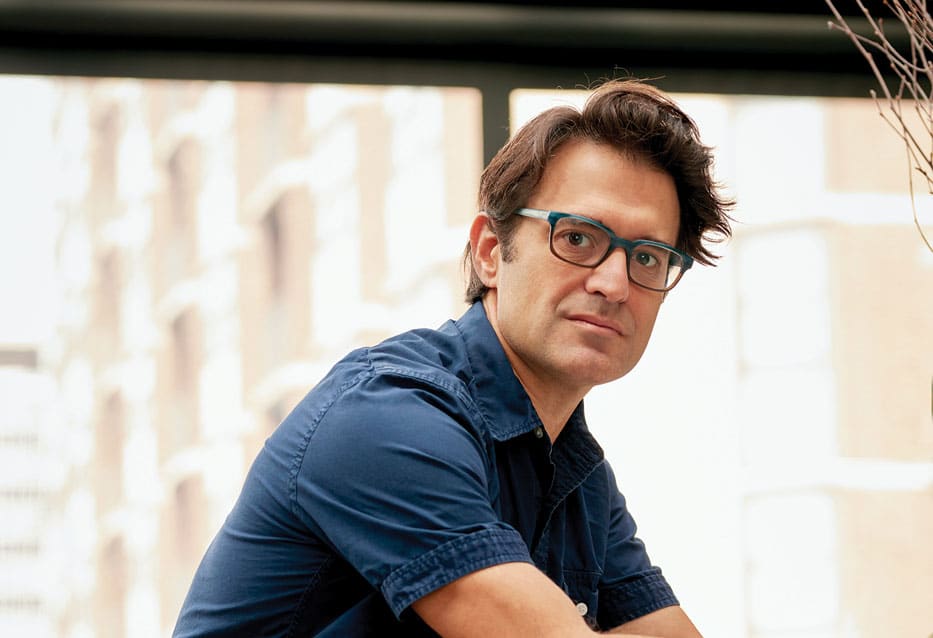
Micha Danzig served in the Israeli Army and is a former police officer with the NYPD. He is currently an attorney and is very active with numerous Jewish and pro-Israel organizations, including Stand With Us and the FIDF, and is a national board member of Herut North America.

By Failing to Refute Antisemitic Libels VP Harris Failed to Stand Up for Democracy Read More »

French and Jewish Psyches

Just like that of the French, the Jewish nation’s psyche
towards all insults are perhaps too supersensitive,
This most distressing fact can’t change just like a pair of Nike shoes,
for most offended Frenchmen as for most offended Jews.

Towards them both one must be honi soit qui mal y pensative,
however much you’re galled by someone who’s a Gaul or Ikey.


In the 9/23/21 NYT Norimitsu Onishi writes (“An Uncomfortable Question in France: Are We Still a Great Power?”):

Beneath France’s angry outbursts about a secretive “knife-in-the-back”  American deal to provide nuclear-powered submarines to Australia lay a single question that, as the French say, put the finger where it hurts.
After much tiptoeing in France around the issue, the newspaper L’Opinion asked at the top of its front page a question familiar to anybody who knows “Snow White.”
“Mirror, mirror on the wall, tell me if I’m still a great power?’’….
All of a sudden, French assumptions about its foreign policy — the West, working alliances, its place in the Pacific — were overturned, said Bertrand Badie, an expert on French international relations at the Sciences Po university.
“And we were viewed as being small,” Mr. Badie said. “That kills a country like France.’’


Gershon Hepner is a poet who has written over 25,000 poems on subjects ranging from music to literature, politics to Torah. He grew up in England and moved to Los Angeles in 1976. Using his varied interests and experiences, he has authored dozens of papers in medical and academic journals, and authored “Legal Friction: Law, Narrative, and Identity Politics in Biblical Israel.” He can be reached at gershonhepner@gmail.com.

French and Jewish Psyches Read More »

What Author Mark Oppenheimer Found When He Went to Squirrel Hill

Mark Oppenheimer, an accomplished journalist and former New York Times religion columnist, reacted promptly when he heard about the Shabbat morning massacre three years ago this month that wiped out 11 Jews and injured six persons at the Tree of Life synagogue.

As host of “Unorthodox” for Tablet Magazine, the No. 1-rated Jewish-themed podcast in English, he dispatched a crew to Squirrel Hill, home of Tree of Life, for direct coverage.

Shortly afterward, Oppenheimer, 47, who is Connecticut-based, launched the first of his 32 trips – 450 miles one way — to the crime scene.

“I wanted to know everything about how the neighborhood was reacting.”
— Mark Oppenheimer

“I wanted to know everything about how the neighborhood was reacting,” he told the Journal. 

Now, Oppenheimer has written “Squirrel Hill: The Tree of Life Synagogue Shooting and the Soul of a Neighborhood,” scheduled to be released October 5. For his book, the author talked to people of all different backgrounds, from religious to secular Jews, non-Jews, witnesses, survivors, shopkeepers, activists, historians and just about anyone in the community. “I wanted a portrait of the whole neighborhood,” he said. 
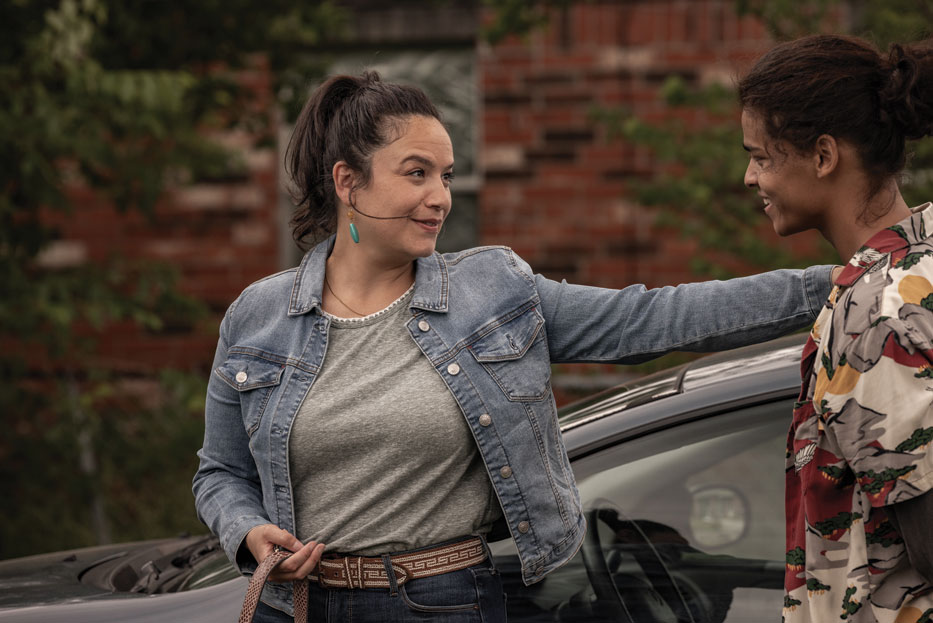
Oppenheimer will be presenting “Squirrel Hill” twice in Los Angeles: first, in an October 5 webinar interview with Rabbi Sherre Hirsch, chief innovation officer of American Jewish University (AJU), and in person on October 12 for an interview with Rabbi David Wolpe of Sinai Temple and journalist Bari Weiss, who was an op-ed staff editor and writer at the New York Times.

“The story of Squirrel Hill compels us to remember that dark hatred knows no boundaries. It can even breach a place of worship, a sanctuary of peace.”
– Rabbi Sherre Hirsch

Hirsch said, “As we approach the third anniversary of this horrific tragedy, we had an opportunity to honor the memory of the 11 Jewish people who were murdered and learn about the resilience of the Squirrel Hill community. The story of Squirrel Hill compels us to remember that dark hatred knows no boundaries. It can even breach a place of worship, a sanctuary of peace.”

Oppenheimer, a lecturer in English at his alma mater, Yale University, writes for The New York Times Magazine and other well-known publications in addition to churning out books.

While Oppenheimer grew up in Massachusetts, his family dates back five generations in the east side Squirrel Hill neighborhood that is home to one-third of Pittsburgh’s almost 50,000 Jews. None of his family, however, was affiliated with Tree of Life. Described as historically Conservative, it has been shuttered, temporarily, since Oct. 27, 2018, the date of the tragedy.

An architect who worked on Ground Zero is developing a recovery plan for Tree of Life. Robert Bowers, the 51-year-old white nationalist charged in the Tree of Life case, remains in prison, awaiting trial.

One discovery that surprised Oppenheimer when he was working on his book was how locals have moved on from the tragedy. “I was taken aback by how quickly some people forget,” Oppenheimer said. 

They apparently have been numbed by the increasing frequency of mass tragedies. “[There have been] so many, so many killings,” he said.

According to the FBI, the killing of four or more at one time qualifies as a mass killing. Research into the number of mass killings in recent years can be a moving target, depending on the source. Reuters reports that at least 2,000 people have been killed or injured in mass shootings since 1999, when 13 students were murdered at Columbine High School in Colorado.

“Very few mass shootings have targeted houses of worship,” Oppenheimer said, adding that killers have aimed at malls and immigrants. 

Oppenheimer’s most unexpected finding, he said, was that Squirrel Hill residents are the second-, third- or even fourth-generations to live there. 

“People come and can’t seem to leave. Or they leave and then come back to raise their families.”

After 32 visits to Squirrel Hill, the journalist-educator found one significant change: “I think people are more cognizant than ever of how important the bonds of neighborhood are.”

What Author Mark Oppenheimer Found When He Went to Squirrel Hill Read More »

“Reservation Dogs” Actress Reflects on Indigenous and Jewish Roots, Humor and Healing

Actress Sarah Podemski sees much kinship between indigenous communities and the Jewish people, particularly when it comes to humor. She would know, after all: she was born in Canada to an Anishinaabe (Ojibwe) mother, and raised by an Israeli-Jewish father. 

These days, she’s a recurring character on the hit Hulu series, “Reservation Dogs.” The show centers around the experiences of indigenous teenagers in Oklahoma struggling to get by. It’s equal parts comedy and tragedy, with characters that can hardly get through more than a few lines of dialogue without ribbing each other. Podemski plays Rita, the mother of one of the main characters, a troubled teenager named Bear.

Podemski, along with her sisters, Tamara and Jennifer (both actresses as well), grew up doing Shabbat dinners with their father and participating in powwows with their mother. They enjoyed challah bread on Friday nights, and ate frybread at the summer powwows. 

But looking back, she reflected on the horrors endured by her grandparents from both sides of her family — both stemming from government-sponsored religious and cultural persecution.

Her grandfather, originally from Poland, survived six concentration camps during the Holocaust.

“He took that trauma and was able to turn it into a celebration of life. I find that that’s very similar in the native community.”
– Sarah Podemski

“Despite everything my grandfather went through with the Holocaust, he was always incredibly positive and had a great sense of humor, showed up with a smile and was always laughing and full of joy,” Podemski told the Journal. “He took that trauma and was able to turn it into a celebration of life. I find that that’s very similar in the native community.”

Unfortunately for Podemski’s mother’s parents, their cultural identity was systematically stripped from them in what was known in Canada as residential schools.

In the U.S. they were called Indian boarding schools, and both of her grandparents were sent to one in Saskatchewan. The chuch ran the “schools,” and they forcefully took indigenous children out of their homes to beat the culture out of them, eliminate their family ties and “assimilate them into society” according to Podemski. 

The actress said she remembered her Jewish grandfather pondering why it has been so difficult for indigenous people to thrive in Canada. 

“He had this experience of coming to Canada and thriving after the Holocaust,” she said. “My grandfather was still allowed to speak Yiddish and Hebrew. They weren’t allowed to but they found ways in the concentration camps to celebrate the holidays and keep their culture, which is what kept a lot of people alive—that hope and that spirit, the spirituality and the tradition.”

For native children, though, that was all taken away from them. 

Still, it is the humor and positivity in both the Jewish and native communities that make all the difference. 

“If we aren’t going to laugh about this or turn this into a positive, the sadness will eat you alive,” Podemski said. “I think there’s something very similar to how we approach our lives from my Jewish background and my Native background.”

Podemski said that in the native community, there is a surplus of humor and laughter. And now on “Reservation Dogs,” many more people get to see just how native comedy manifests itself. 

“Jews have been able to be funny for so long, [and] we know Jews are funny,” Podemski said. “It’s this space where we have always been involved in comedy, and it’s very recognized. I think that it’s a really exciting time that we’re seeing native humor and these incredible native comedians that are coming out and writing these jokes and getting to find some space on TV. That’s the big parallel in terms of [the] approach to life and coping with that intergenerational trauma.”

The last of the residential schools closed as recently as 1997, and the effects are still felt by indigenous people. Podemski said that there have been many times when she and her sisters auditioned for indigenous character roles, only to have been rejected in favor of a white, non-indigenous actress. 

But now, with “Reservation Dogs,” which was just greenlit for a second season, Podemski sees an unprecedented opportunity to have her people’s voices heard. She’s optimistic that viewers will learn about the native plight and empathize with the struggles to exist and keep traditions alive. 

Just last week, she said she was sitting in a sukkah with a relative and reflecting on the power of the arts, food and song to keep their cultures alive. 

“When [I] go to [a] powwow and [I] hear the drum, I automatically have this physical experience where I start to cry,” she said. “Music is such an incredible connection to our culture and I get emotional too when I hear a rabbi sing. There’s this power in the way we hear music. It’s a really moving experience to be so close to that music and tradition. You know that there’s so much history in those songs. And I feel similar [to] the times that I’ve gone to certain ceremonies in the Jewish community and we sing our songs. There’s so much tradition in it, and it’s so comforting.”

“Reservation Dogs” Actress Reflects on Indigenous and Jewish Roots, Humor and Healing Read More »

Actor Stephen Tobolowsky’s “A Good Day At Auschwitz” Is a Tale of Mourning and Friendship

The first response actor Stephen Tobolowsky gets when people learn the name of his new audio theater production, “A Good Day At Auschwitz,” is usually outrage.  

“Then they’d listen to it to feed their outrage, but then, they were devastated,” Tobolowsky said. 

Tobolowsky is no stranger to the screen or stage. He’s acted in about 200 film and TV roles, most recently “The Goldbergs” and “Glee.” He is often best remembered as the irritating Ned Ryerson in the 1992 comedy, “Groundhog Day.”

Tobolowsky’s two-character play is less of a theater piece and more of a dramatic reenactment of conversations he had with Abe, an Auschwitz survivor full of character. Overall, it’s a lesson on giving people a chance.

When Tobolowsky’s mother died in 2007, he was already in rough shape, recovering from a near fatal neck injury from a horseback riding accident. He couldn’t work while he recovered. Upon his mother’s passing, he set out to go to shul for a year to attend morning and evening minyans. It wasn’t something he regularly did until that point in his life, but he saw it as essential to his mourning process. He did not expect to meet such a great new friend at synagogue. 

“How many times do we end up at the right place at the right time and we just don’t know it?” Tobolowsky said. “All of these coincidences led to me being in the morning and evening minyans for a couple years at Adat Ari El. Then, I meet Abe, who is a guy who you wouldn’t give a second look to, except he’s an alte kaker. The pants don’t fit and he’s way past the age to buy a pair of pants that do fit. So he’s just gonna take the pants and cinch [them] up a little bit more,” Tobolowsky laughed, remembering his friend. 

Abe was intuitive. He knew Tobolowsky was mourning his mother just by the way he said her name for the first time during the minyan. Abe then asked Tobolowsky what he does for a living.

“I’m an actor,” Tobolowsky said. 

Abe’s response: “You can make a living at that?”

The dialogue of the play originally was released as two chapters in Tobolowsky’s 2017 book, “My Adventures with God.” 

Now, the story is presented as a two-man play, only in audio form, running 71 minutes and produced by L.A. Theatre Works (LATW). Its production style grew out of the pandemic restrictions, but offers a 360-degree audio setting. When Abe and Tobolowsky are in a deli eating dry salami, it sounds like they’re in a deli, without it being noisy or distracting. Tobolowsky plays himself and actor Alan Mandell (“A Serious Man”) plays Abe. Upon completing the script, Tobolowsky’s wife implored him to cast Mandell, 93, as Abe. 

Tobolowsky describes Abe as a very simple guy who, in his post-Holocaust life, owned a dry cleaners, candy store and liquor store. 

“I was lucky that I ran into him,” Tobolowsky said. “And lucky for me that I was injured and couldn’t just blow it off and say, ‘Abe I gotta do this TV sitcom right now, sorry! I’ll get back to it sometime in the future.’ I was injured [and] couldn’t work. So all we did was play poker for two years, drink Canadian club whiskey and eat the most rotten pastries in the world—Abe almost got them for free, it was ridiculous.”

And as the days and weeks and months went on, and the two of them spent more time together outside of minyan, Abe eventually went from “talking about nothing, to talking about Auschwitz to talking about his family,” said Tobolowsky.

Abe gave Tobolowsky a tour through his most horrific experiences, from the arrival of the Nazis to his town in Poland, to the horrors of Auschwitz. His story of survival is also a story of hope in times of hopelessness. 

At one point, Tobolowsky asks Abe if he ever had a good day at Auschwitz. Without revealing the response, it’s worth pointing out that Tobolowsky described Abe as “just kind of a guy who’s filled with life, great spirit and [a] great sense of humor.”

The play contains many of Abe’s rich parables about life, survival, faith and friendship.

Like any story involving the Holocaust, you get the reflections of a wounded, traumatized human being who wonders how people can do this to each other.

Like any story involving the Holocaust, you get the reflections of a wounded, traumatized human being who wonders how people can do this to each other. 

Tobolowsky could only look back and think what specifically about the minyan brought to him in his time of mourning. 

“It mattered so much that they were strangers,” he said. “It mattered so much. We were right on the number 10 usually. [There were] people who I didn’t know, like Abe, but it mattered that it was strangers, which I still can’t figure out. Instead of my friends. But it mattered and I’m close to all of them still. I’m close to everyone who was sitting in shiva with me.”

Indeed, Abe’s story is a lesson on giving people a chance. 

You can listen to “A Good Day At Auschwitz” by purchasing the digital audio file on the LA Theatre Works website.

Actor Stephen Tobolowsky’s “A Good Day At Auschwitz” Is a Tale of Mourning and Friendship Read More »

Unscrolled: Presence and Absence

Let me tell you two stories about the beginning of the world.

The first, you’ve likely heard before.

In the beginning, there was nothing.

In the original Hebrew, this is expressed with the words “tohu” and “bohu,” which the Stone Chumash translates as “astonishingly empty.” According to King James, it means “without form and void.” In the Septuagint’s parlance, “unsightly and unfurnished.” For Tyndale, “voyde and emptie.” For Robert Alter, “welter and waste.”

And then, God made something. And God saw that it was good. And so, God kept making more things. Light and dark. Land and sea. People and animals. God created and created until the nothingness—the empty, unsightly, weltering void—was all filled up.

The second story is perhaps less familiar.

In the beginning, there was everything, and God, thrumming with potential and pulsing with unfathomable love, desired to create a world so that this potential could be actualized, and this love could be expressed. There was just one problem: there was no space in which to create, only fullness. Everywhere you looked, there was more God, more infinity.

And so, God withdrew Godself to the sides of this primordial fullness, clearing an open space in which creation would be possible.

One of these stories is related by the Book of Genesis in its first portion; the other is related by the Kabbalists and echoed by the Hasidic masters. In one of these stores, creation is an act of filling; in the other, creation is an act of emptying out. One story tells us that creation is a positive act—the fashioning of objects; the other tells us that creation deals first and foremost with negative space.

We can relate these two stories to two modes of perception, discussed by the philosopher Alan Watts. “If I draw a circle, most people, when asked what I have drawn, will say I have drawn a circle or a disc, or a ball. Very few people will say I’ve drawn a hole in the wall, because most people think of the inside first, rather than thinking of the outside.”

Looking at the night sky, we see stars but ignore the space between them. Looking at the forest, we see plants but ignore the soil that connects them. Looking out at a landscape, we see hills, but forget the continent that holds them. Looking at creation, we see an accumulation of stuff but ignore the cleared space from which it emanates.

Looking at creation, we see an accumulation of stuff but ignore the cleared space from which it emanates.

Both of these stories are, in their own ways, true. Rebbe Nachman, in his retelling of our second creation story, refers to this as the paradox of Yesh v’Ein, presence and absence, yes and no, what is and what isn’t. We can see this paradox in many Jewish texts, always appearing in a new form.

According to Isaiah, for instance, the angels in heaven cry out: “Holy, holy, holy! The LORD of Hosts! His presence fills all the earth!” (6:3). This is a vision of a world shot through with divine presence from top to bottom.

According to Ezekiel, however, the angels cry “Blessed is the Presence of the LORD from His place.” (3:12). Here, a vision of a world that God blesses from afar.

Which is it then?

Is God here or not?

Is creation a fullness or a hollow?

Do we live in a realm of yesh or ein?

The answer is yes.

In God’s act of contraction, teaches Rebbe Nachman, the cleared space for creation was cleared also of divinity. It had to be. A sentence later, however, he states: “But of course, there is still divinity here, because nothing can be without God’s lifeforce” (Likutai Mohoran 64:1).

If it seems confusing, that’s because it is. Humans aren’t always great at holding two truths, one in each hand. Not to worry, though. This is to be expected.

“You won’t fully grasp it,” Rebbe Nachman concludes, “until the future to come.”

And so, with Parashat Bereishit, we embark on a new year of reading Torah. As we go, we pray that God will grant us new insights into the familiar stories, allowing us to see the negative space—the white between the black of the letters, the hidden meanings that are left unsaid—which will bring us ever closer to Rebbe Nachman’s “future to come,” when we will at last see that both creation stories are one.


Matthew Schultz is the author of the essay collection “What Came Before” (2020). He is a rabbinical student at Hebrew College in Newton, Massachusetts.

Unscrolled: Presence and Absence Read More »

The Aftermath of the Iron Dome Vote

(Israel Policy Forum) — For predictable reasons, the issue of U.S. security assistance to Israel has overtaken everything else to become the battleground over which U.S. policy toward Israel and the Israeli-Palestinian conflict is fought. Security assistance is the most visible and quantifiable element of U.S. support for Israel, activates the question of whether the IDF commits human rights violations that implicate the U.S., provides powerful and easily graspable talking points on all sides, and perhaps most saliently is the issue within Israeli-Palestinian policy over which the legislative branch has the greatest purview given Congress’s power of the purse. All of this turns votes such as last week’s on $1 billion in supplemental Iron Dome funding into a three ring circus.

In the course of two days, the mood within the pro-Israel community went from histrionic alarm to celebratory glee, whereas the other side traveled the same path in reverse. In both cases, there should have been more equanimity on both ends. The initial blocking of the money for Iron Dome and the final result of the Iron Dome vote may look straightforward, but they are not, and there is a danger of many misreading the underlying dynamics.

When the $1 billion for Iron Dome was put into the emergency spending and debt ceiling bill on Tuesday and then quickly stripped out following threats from progressive Democrats to torpedo the entire bill as a result, the sky-is-falling rhetoric from Israel and the gloating from corners of the progressive world were immediate. Both portrayed this as a fundamental and significant event, demonstrating for Israelis that the U.S. could allegedly no longer be counted on to provide for Israel’s defense due to the virulent anti-Israelism taking over the Democratic Party, and for progressives that the alleged stranglehold of the Israel lobby over U.S. policymakers was slowly being broken. Never mind that the unwillingness of even one House Republican to break ranks and vote for the continuing resolution in order to provide for Israel’s defense should have conceivably been as big a story as a handful of Democrats who were intent on voting the same way, or that this was as much a story about process—inserting the Iron Dome provision into the bill mere hours before the vote—as it was about policy. The breathless pronouncements were in.

When the Iron Dome funding was then introduced two days later as a stand-alone bill and approved in a landslide—420 in favor, 9 opposed, 2 present—it rendered the revolutionary sentiments from two days earlier even more fatuous. It exposed those who complained about a supposed indefinite delay or even an outright refusal to fund Iron Dome as not understanding U.S. politics or policy, and pulled the rug out from under those who viewed Tuesday’s maneuvering as a precursor to withdrawing U.S. support for the IDF entirely. This should have been an opportunity to rethink the wisdom of unsubstantiated categorical conclusions, but there was little evidence of that this time either. So rather than take the New York Times’s mind-bending pronouncement that this demonstrated the Jedi mind trick power of “influential lobbyists and rabbis” over Democrats in Congress, what follows are some actual reasons why the Iron Dome funding and how it went down is indeed significant but in ways that have not been widely considered.

As one-sided and overwhelming as the vote in favor of Iron Dome funding looks, it was actually even more so. The vote was commonly portrayed as a fulfillment of U.S. commitments to Israel and as part and parcel of living up to the Obama-era MOU that provides $3.8 billion in annual security assistance to Israel, but it was no such thing. The Iron Dome request was a supplemental funding request coming on top of the $500 million for missile defense that is part of the annual $3.8 billion, making the vote one to approve a 26% increase in security assistance to Israel. Despite all of the attention that cutting, conditioning, or restricting security assistance to Israel has received, driven by the Democratic presidential primary debate last year and by the enthusiasm for these moves in progressive circles, only eight House Democrats voted against providing even more security assistance to Israel. It is difficult, if not impossible, to look at this vote and still credibly talk about the Democratic Party having been taken over by anti-Zionism or antisemitism, or sound the alarm about Israel being abandoned. The vote also reveals the overreach in trying to portray Israel in the same light as the globe’s worst actors and serial human rights violators; it is not a portrayal that aligns with policymakers or with the sentiments of most Americans.

The vote also reveals the overreach in trying to portray Israel in the same light as the globe’s worst actors and serial human rights violators; it is not a portrayal that aligns with policymakers or with the sentiments of most Americans.

It is also the case, however, that Iron Dome funding is as easy a win as exists in the context of assistance to Israel. Iron Dome has no offensive application or capability, is wielded against rockets shot by U.S.-designated terrorist organizations, indisputably saves Israeli civilian lives, and creates some of the most memorable images of combat anywhere as videos abound of Iron Dome interceptors meeting rockets head on in the skies above Israeli cities. Representative Betty McCollum, well-known for her legislation that would restrict U.S. security assistance to Israel based on Israeli military detentions of Palestinian teens and children, voted in favor of additional Iron Dome funding. The sponsors of new legislation unveiled last week that would create new end-use restrictions on U.S. security assistance to Israel tied to Israeli activities in the West Bank and East Jerusalem voted in favor of additional Iron Dome funding. Representative Alexandria Ocasio-Cortez, the most high profile Squad member and who introduced an amendment to the National Defense Authorization Act earlier this month to block the sale of precision-guided munition kits to Israel, changed her vote at the last minute from no to present, in the clearest sign of how differently Iron Dome funding is viewed compared to other types of security assistance.

The Iron Dome vote should not be read as an indication that business will continue as always, with opposition to security assistance to Israel remaining confined to the margins. The lesson is that there is and will remain wall to wall support for Israeli security when it is unambiguously clear that security is indeed the issue. But fewer and fewer people, whether in Washington or elsewhere, are willing to embrace Israel’s self-definition of what constitutes a security imperative when it involves the West Bank, and supporting obvious and legitimate Israeli security needs such as Iron Dome will also provide the cover and credibility for Members of Congress who take a more skeptical view of Israeli security requests that appear to them more about maintaining permanent control over Palestinians than about keeping Israelis safe. Just because, as my colleague Aaron Weinberg points out, restrictions on security assistance are unlikely to net the result that they are designed to achieve doesn’t mean they won’t continue to gain ground as a way of registering displeasure with Israeli actions and discomfort with the U.S. role in contributing to them. Just as those who want to downgrade the U.S.-Israel relationship will get nowhere with spurious charges and legislative overreach, the Israeli government and the pro-Israel camp must understand that saying “security” as the response to every objection is a tactic that is at a tipping point of failing as often as it works. The Iron Dome saga should not obscure that while Israel’s position in the U.S. is in some ways rock solid, those ways fall into a very specific band of activity.


Michael Koplow is Israel Policy Forum’s policy director, based in Washington, DC. To contact Michael, please email him at mkoplow@ipforum.org.

The Aftermath of the Iron Dome Vote Read More »

Two-Time Finalist: Niver’s News: Sept 2021

Sept News 2021 with Lisa Niver & We Said Go Travel:

Thank you to the Southern California Journalism Awards! I am honored to be a finalist for technology reporting as well as book criticism. The awards ceremony is Oct 16, so please cross your fingers that I win as a present for my birthday (Oct 18!). See all of my nominations and wins, at this link: https://lisaniver.com/awards/

Happy New Year! It is now 5782 in the Jewish calendar. Thank you to Phil and Tamar Koosed for their leadership for THE BIG FILL. Get involved to save Syrian children: Donate here

Thank you to TODAY.com for publishing my article: “Family Fun in the Sun: Puerto Rico.” I loved my trip there this summer!

Learn more about my trip to PUERTO RICO with these four articles and watch my adventures by video here!

Thank you to Jen Billock and Your Tango for including me in the article, “10 Most Helpful Divorce Books — Recommended By Actual Divorced Women” or read just my section at this link.

Thank you Shout Out LA for interviewing me! I am honored to be included in your series.

 My newest videos are from my ALASKA CRUISE on the Majestic Princess. I sailed Aug 29, 2021 out of Seattle:

WHERE CAN YOU FIND MY TRAVEL VIDEOS?

Here is the link to my video channel on YouTube where I have over 1.37 million views on YouTube! (Exact count: 1,374,265 views)

Thank you for your support! Are you one of my 3,200 subscribers? I hope you will join me and subscribe! For more We Said Go Travel articles, TV segments, videos and social media: CLICK HERE

Find me on social media with over 150,000 followers. Please follow  on Twitter at @LisaNiver, Instagram @LisaNiver and on FacebookPinterestYouTube, and at LisaNiver.com.

My fortune cookies said:

“If you wish to see the best in others, show the best in yourself.”

“Happiness isn’t an outside job, it’s an inside job!”

Lisa Niver at Mendenhall Glacier in Juneau, Alaska on Aug 31, 2021 from the Majestic Princess

Two-Time Finalist: Niver’s News: Sept 2021 Read More »