fbpx

July 27, 2021

Unilever Says They Have “No Intention” of Supporting BDS

Unilever CEO Alan Jope wrote in a July 27 letter to Anti-Defamation League (ADL) CEO Jonathan Greenblatt that the company has “no intention” of ever showing support for the Boycott, Divestment and Sanctions (BDS) movement.

Jope acknowledged that Ben & Jerry’s July 19 announcement that they were going to leave the “Occupied Palestinian Territory” caused “disappointment and concern,” but assured the ADL that Unilever has a “strong and longstanding commitment to business in Israel.” He pointed out that “around 85% of the products sold in Israel are made in Israel.”

Jope said that under their agreement with Ben & Jerry’s, their independent board has the jurisdiction “to take decisions in accordance with their social mission” and that Ben & Jerry’s will remain in Israel with a new licensee. “We have welcomed this decision to stay in Israel emphatically, and have been seeking to handle this matter in as respectful and sensitive way as possible.”

He then turned to antisemitism and BDS. “Unilever rejects completely and repudiates unequivocally any form of discrimination or intolerance. Anti-Semitism has no place in any society. We have never expressed any support for the Boycott Divestment and Sanctions (BDS) movement and have no intention of changing that position.”

Greenblatt responded to Jope’s letter with a statement saying they are “heartened” by Unilever’s refusal to endorse BDS and that they are committed to remaining in Israel. “While ADL is a strong supporter of the two-state solution, we believe that it is wrong for any company to single out Israel by refusing to sell its products to Israelis and Palestinians living in the West Bank. We appreciate the unique business relationship between Unilever and its Ben and Jerry’s subsidiary; however, we still urge Unilever to do whatever it can to convince the Ben and Jerry’s board to change its position.”

Jope also sent a similar letter to the Conference of Presidents of Major Jewish American Organizations. William Daroff, the CEO of the organization, tweeted: “While we appreciate Unilever confirming their commitment to continue doing business in Israel, their response does not go nearly far enough. Unilever reportedly has the legal ability to override the recommendation of Ben & Jerry’s board to boycott Israel; we again strongly encourage them to do so, as boycotts of Israel are discriminatory and further inflame tensions.”

The Board of Deputies of British Jews also tweeted that they “welcome” Unilever’s rejection of BDS.

On the other hand, the anonymous Twitter account known as “GnasherJew” that was a major source of the antisemitism allegations against Jeremy Corbyn’s Labour Party, tweeted that Unilever’s statement was a “cop out.” “@Unilever are the major shareholder of @benandjerrys & they are allowing one of their [companies] to get away with antisemitism. Who’s got a list of Unilever products? We’re going to #BoycottUnilever please join us.”

Sussex Friends of Israel similarly tweeted, “The only decision that should be welcomed from Unilever is the one in which they pull up their big boys pants & rescind B&J’s antisemitic boycott of Judea and Samaria and when they tell [Ben & Jerry’s Independent Board Head] Anurahda Mittal to go and take a running jump. Nothing else will do!”

Following the July 19 announcement, Ben & Jerry’s independent board released a statement claiming that the part of the announcement that they were going to remain in Israel was never run by them. Mittal defended herself and Ben & Jerry’s in a July 27 tweet amidst scrutiny of some of her past comments on Israel.

“I am proud of @benandjerrys for taking a stance to end sale of its ice cream in the Occupied Palestinian Territory,” she wrote. “This action is not anti-Semitic. I am not anti-Semitic. The vile hate that has been thrown at me does [not] intimidate me. [Please] work for peace – not hatred!”

Unilever Says They Have “No Intention” of Supporting BDS Read More »
Will Delta Variant Spoil the High Holiday Comeback?

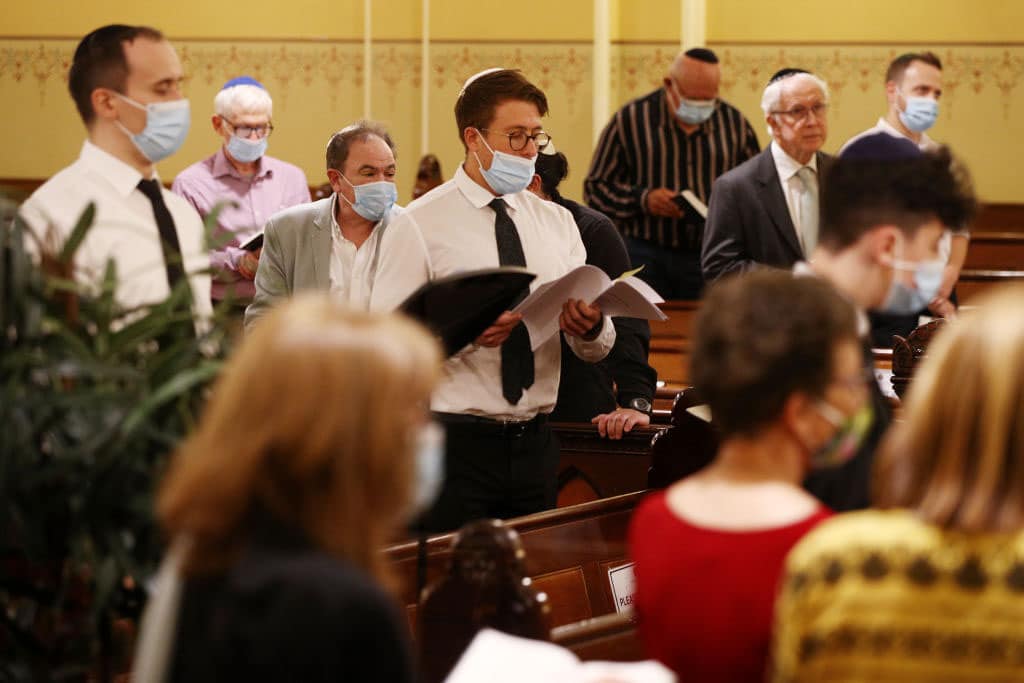
Just as things were returning to normal, and rabbis across America were eagerly anticipating a full reopening for the High Holy Days, the Delta variant showed up.

Oh no, not again.

Need I remind you that nearly every synagogue and Jewish center in America pretty much shut down during last year’s High Holidays because of COVID-19? That the great American Jewish ritual of scoring High Holiday tickets succumbed to a deadly, global virus? That rabbis had to scramble for alternatives, from Zoom services to backyard minyans?

Those days of physical isolation were supposed to be behind us. As Roni Caryn Rabin writes in today’s New York Times, “The country seemed to be exiting the pandemic; barely a month ago, a sense of celebration was palpable.” But now? “Rising case rates are upending plans for school and workplace reopenings, and threatening another wave of infections that may overwhelm hospitals in many communities.”

We thought the vaccine would be our salvation, but according to reports, the Centers for Disease Control and Prevention is expected to recommend this week that even people vaccinated for the coronavirus resume wearing masks indoors in certain parts of the country.

Of the many obstacles to in-person prayer services caused by COVID, one of the toughest is surely the mask mandate.

When more pleasant alternatives are easily available—either via online or in someone’s backyard—how many Jews will brave the unintended indignity of covering one’s face during our holiest days of the year?

How many people will tolerate wearing masks during the long Rosh Hashana and Yom Kippur services? It’s one thing to wear a mask while you go grocery shopping or briefly enter a public space, but when more pleasant alternatives are easily available—either via online or in someone’s backyard—how many Jews will brave the unintended indignity of covering one’s face during our holiest days of the year?

As I write this, the anxiety of uncertainty is building: If the mask mandates continue, how many Jews will grace the pews? How many will renew their memberships? Will new habits formed during the pandemic take over? After two years of unprecedented COVID disruptions, these are worrying questions.

It’s easy to expound on new-age ideas like “creative reimagining” and “creative disruption,” but right now, the hard reality is that many congregations depend on the High Holiday season for significant fundraising. They already took a big hit last year—can they withstand another one?

Online alternatives may be incredibly efficient and comfortable, but when so much is available for free, there’s less incentive to pay or donate. The in-person experience, which has dominated Jewish life since time immemorial, has concrete value. A live appeal from a rabbi, needless to say, is a lot more powerful than an online one.

And yet, this is the new reality in which we find ourselves, for better or worse. Enclosed indoor spaces of all kinds have gone out of fashion. And that includes synagogues. As long as mask mandates are around, and alternatives are available, many people will see these indoor spaces as an inconvenient risk not worth taking.

there’s simply no substitute for gathering in a real space, for hugging your friends, for making eye contact, for feeling the electricity of communal prayer, for hearing a live inspirational sermon.

I hope this doesn’t last. Prolonged physical isolation can be debilitating, especially for communities that are used to mingling and interacting and connecting in person. Regardless of how creative and impactful we’ve been with online programming, there’s simply no substitute for gathering in a real space, for hugging your friends, for making eye contact, for feeling the electricity of communal prayer, for hearing a live inspirational sermon.

I hope community members, and especially major donors, will step up and keep our most vulnerable synagogues afloat until safer days are back.

I hope community members, and especially major donors, will step up and keep our most vulnerable synagogues afloat until safer days are back. Yes, Jews are supposed to be resilient, but sometimes the price of that resiliency can be quite high, in more ways than one.

Will Delta Variant Spoil the High Holiday Comeback? Read More »

Jordan Thwarted Attack on Israeli Soldiers at the Border, Newspaper Reveals

(The Media Line) The Jordanian General Intelligence Directorate arrested an ISIS cell that planned to attack Israeli soldiers just over the countries’ common border earlier this year, the Amman-based Al Ra’i newspaper reported on Tuesday.

Three members of the cell were arrested in February, while a fourth was apprehended at the end of 2020. They were planning to attack Israeli soldiers positioned on the border, close to the southern Dead Sea. Jordanian border police were also to come under fire.

The cell members are being charged with planning to carry out terrorist attacks and promoting the ideology of a terrorist organization.

Since the Islamic State (ISIS) was driven from its territorial holdings in Syria and Iraq, the organization has lost its position at the center of global attention. And yet Yoram Schweitzer, a senior researcher Tel Aviv University’s Institute for National Security Studies and head of the institute’s Program on Terrorism and Low-Intensity Conflict, stresses that the organization has far from disappeared.

“ISIS [in its current form] is the continuation of IS, the core from which IS sprung, and after the IS lost its territory following its military defeat, what remained was ISIS, and ISIS inherited IS’s connections with its partners … who are spread around the world,” he told The Media Line.

ISIS is now active in Africa, South East Asia, Afghanistan and throughout the Arab world, the expert said. Moreover, he stressed, these worldwide operations should not be seen as the actions of disjointed cells. “It’s an organization …, [the different branches] act as organizations …, the activity is centralized, ordered, managed,” Schweitzer said.

What may be notable about this attempted attack is its Israeli target.

Oraib al-Rantawi, the founder and director of the Al Quds Center for Political Studies in Amman, told The Media Line, “In the last 10 years, when ISIS became influential and powerful in this part of the world, and they were very close to the Israeli border with Syria, we never heard of any serious attempts by ISIS to target Israelis. Israel is not … the top priority of this terrorist organization.”

Rantawi suggested instead that those apprehended were loyal to ISIS’s ideology, but this is where their affiliation ended. “ISIS is a big umbrella, and we know that many people connect themselves to ISIS while … they are not seriously connected to the organization and taking their orders, weapons, training, funding from the organization,” he said.

Schweitzer, however, thinks differently. ISIS has a set of enemies, and while it is true that Israel is not a top priority, attacking the country when the opportunity strikes “fits the agenda just fine,” he said. This is not a sign of a change in the organization’s policy, he emphasized. The planned attack would have damaged Jordan and Israel, and possibly sown discord between the security allies – all worthy achievements for the jihadi organization.

The surprising thing about jihadi activity in Jordan, Schweitzer believes, is rather that such attempts have not happened beforehand, to the best of our knowledge. The expert believes that the jihadi-Salafi ideology – to which both al-Qaida and ISIS subscribe – is very likely brewing under the surface, especially with the large number of Syrian refugees present in the country, living in difficult conditions and thus becoming prime recruiting material for the organizations.

According to a March 2021 European Commission report, more than 753,000 refugees are present in Jordan, 663,000 of them from Syria.

The events exposed on Tuesday by the Jordanian paper occurred, as mentioned above, almost six months ago, which leads one to ask: Why has the publication of these arrests waited for so long?

Talk of warming relations between Israel and Jordan has filled the headlines in recent weeks. Schweitzer suggests the publication may be connected to these developments, perhaps a sign of goodwill sent from Jordan to Israel.

Rantawi brings forward a different explanation, one focused on domestic considerations.

“Once in a while, the security [establishment] tries to remind the Jordanians that we are still under threat. We are still in [an] unsecure, unstable region, and terrorist threats still surround Jordan from the north in Syria …, Iraq, and even [from the] south in Sinai,” he said.

Delayed reporting on security matters in the kingdom is nothing out of the ordinary, Rantawi asserted, and the recent release may simply be sending a message to Jordanians that they “should care more about internal politics, internal unity, about our internal stability, [and] about our domestic security as well.”

Jordan Thwarted Attack on Israeli Soldiers at the Border, Newspaper Reveals Read More »

Swastika Carved on State Department Elevator Wall

A swastika was found carved on the wall of an elevator in the State Department on July 26, Axios reported.

Secretary of State Antony Blinken, who is currently traveling to India and Kuwait, sent an email to department staffers denouncing the swastika as “hateful” and saying that it has since been removed and the department will investigate the matter.

“As this painfully reminds us, anti-Semitism isn’t a relic of the past,” Blinken wrote. “It’s still a force in the world, including close to home. And it’s abhorrent. It has no place at the United States, State Department or anywhere else.”

He added that “anti-Semitism often goes hand in hand with racism, sexism, homophobia, xenophobia and other hatreds. None of these ideologies should have a home in our workplace or our nation.

“To our Jewish colleagues: please know how grateful we are for your service and how proud we are to be your colleagues.”

Jewish groups denounced the swastika carving.

“Deeply upsetting to see this #antisemitic vandalism at the @StateDept,” Anti-Defamation League (ADL) CEO Jonathan Greenblatt tweeted. “Glad @SecBlinken spoke out. With rising levels of #antisemitism around the world, we need strong statements like this but also action. @ADL continues to urge @POTUS to nominate [United States Special Envoy to Monitor and Combat Antisemitism] without delay.”

“We were shocked to learn of the antisemitic graffiti within the State Department, and we praise Secretary Blinken’s quick condemnation and promised investigation,” American Jewish Committee U.S. Director for Combating Antisemitism Holly Huffnagle similarly said in a statement to the Journal. “Antisemitism is still an abhorrent force in the world, as the Secretary rightly noted, but sadly, much of the antisemitism we face today isn’t as obvious as a Nazi swastika. The incident, which happened close to the Office of the Special Envoy to Monitor and Combat Antisemitism, serves as another reminder of the need to fill that position.”

Associate Dean and Director of Global Social Action Agenda at the Simon Wiesenthal Center Rabbi Abraham Cooper told the Journal that he was at the State Department on July 22 and that it was like “a ghost town” due to the Biden administration’s COVID-19 measures allowing only 25% capacity in the building.

“It’s really outrageous and although you might say, ‘Well it’s one person,’ look [at] what they did and where they did it,” Cooper said. “That was meant for what it is: an antisemitic act which is now becoming so commonplace that it’s hard to be shocked anymore.”

StandWithUs CEO and co-founder Roz Rothstein also said in a statement to the Journal, “As antisemitism continues to rise both globally and here in the U.S., this is a stark reminder that this infectious societal disease can arise anywhere, even in the halls of our democracy. This means that we must all be vigilant and diligent about identifying, exposing and actively opposing antisemitism, wherever it is found. We appreciate Secretary Blinken’s statement condemning this hateful act and are hopeful that the security measures in place will help in identifying the perpetrator.”

Stop Antisemitism Executive Director Liora Rez said in a statement to the Journal, “At a time when members of Congress such as [Rashida] Tlaib and [Ilhan] Omar fan the flames of antisemitism at every turn, we’re not in the least bit shocked that swastikas are showing up in DC governmental buildings.”

Swastika Carved on State Department Elevator Wall Read More »

Cool, Fruity, Bubbly Gazoz

When we went back to visit Israel in September 1973, everything was different from what I knew of life in Sydney, Australia.

The change from the soft drawn out drawl of Aussie English to the loud excitable singsong of Hebrew.

The existential change from a country with no shared borders to a land filled with young soldiers in khaki uniforms armed with big black Uzi rifles.

A change from wallpapered and carpeted homes with large flowering gardens to apartments with cool tiled floors covered in Persian rugs surrounded by small patches of red dirt yards.

We were amazed by the supermarkets. Supermarkets that greeted your arrival with a cloying sweet melon aroma, then followed up with the intoxicating smell of freshly baked bread. Supermarkets that boasted the slightly jarring sight of unsuspecting fish swimming in a tank, waiting to be chosen for someone’s dinner.

We were amazed by the Shuks, the open air markets with their mounds of Jaffa oranges and bright red pomegranates, the plethora of creamy cheeses and olives and pickles and salted herring and many barrels of brightly colored pungent spices.

My brother Rafi and I quickly adapted to eating Crembo, Bissli, Bamba and sweet pudding cups. We chewed Bazooka like pros. We got used to great aunts serving us sweet tea in little glasses. And in every kitchen that you entered there was a canister with a nozzle, a soda siphon that dispensed a fizzy water.

This fizzy water was often mixed with brightly colored sweet syrups with flavors like grape, orange and ‘petel’ raspberry and was known as Gazoz.

Tel Aviv’s first gazoz kiosk opened in 1911 on Rothschild Boulevard and just grew in popularity from there—it was the perfect drink for Israel’s hot climate.

The current nostalgia for gazoz comes from Benny Briga and Adeena Sussman’s latest book called Gazoz, which takes it’s inspiration from Briga’s wildly successful Cafe Levinksky 41. The shop has walls lined with glass jars of fruits and herbs in various stages of fermentation. The selection of drinks is dictated by the season, with syrups and macerated fruits topped with seltzer and lots of fresh flowers and herbs.

Rachel and I have been inspired to become mixologists and make Gazoz for our social gatherings, only we add a bit of liquor to add to the fun!

With or without alcohol, this fruity drink has all the cool moves.

L’Chaim!

Raspberry Peach Gazoz

1 cup raspberries
1/4 cup sugar
1/3 cup sugar
1/3 cup water
Ice cubes
10 oz raspberries
10 oz strawberries
2 peaches, sliced
1 large apple, sliced
2-inch piece of ginger root, peeled and thinly sliced
1 cup ouzo, white rum, tequila, or vodka
1 liter seltzer
1 bunch mint
Fresh lavender, any beautiful herbs or flowers from your garden

Prep:

Raspberry syrup: In a glass jar or container, add 1 cup raspberries and ¼ cup sugar,

Mix with a wooden spoon until well combined, breaking down most of the berries.

Refrigerate for 1-2 days.

Simple Syrup: In a small saucepan, heat water over medium low heat, then add sugar.

Stir well, until sugar has completely dissolved, then refrigerate for at least one hour.

Assembly:

In a pitcher, pour the raspberry syrup.

Add peaches, apples, raspberries, and ginger.

Add simple syrup and rum(optional) and stir.

Add ice and seltzer and stir.

Pour drink into glasses and garnish with fresh mint and lavender.


Rachel Sheff and Sharon Gomperts have been friends since high school. They love cooking and sharing recipes. They have collaborated on Sephardic Educational Center projects and community cooking classes. Follow them on Instagram @sephardicspicegirls and on Facebook at Sephardic Spice SEC Food.

Cool, Fruity, Bubbly Gazoz Read More »

The Voice of God in ‘The Ten Commandments’

In The Ten Commandments at the Burning Bush when Moses, Charlton Heston,
was addressed by none less than great God Almighty,
Cecil B. DeMille did not know whose voice he should use for God. He wasn’t jestin’,
when he chose Charlton, gunman, not yet righty.

The voice of God he chose to speak to Moses was his Jewish father, Amram;
the fire that melts young Moses’ modest ice is
the sudden flame of insight to his roots, and hearing God explain “I Am Who I Am,”
thus ending his disturbed identity crisis.

‘The Ten Commandments’, the film, was made in 1956, when Charlton Heston was still a liberal Democrat.

Rabbi Meir Soloveichik, in one of his Bible 365 podcasts, points out that Cecil B. DeMille suggested that the voice of God addressing Moses from the Burning Bush should be that of his father, Amram.  He follows Rabbi Lord Jonathan Sacks’s interpretation of Exod. 3:11:

יא  וַיֹּאמֶר מֹשֶׁה, אֶל-הָאֱלֹהִים, מִי אָנֹכִי, כִּי אֵלֵךְ אֶל-פַּרְעֹה; וְכִי אוֹצִיא אֶת-בְּנֵי יִשְׂרָאֵל, מִמִּצְרָיִם. 11 And Moses said unto God: ‘Who am I, that I should go unto Pharaoh, and that I should bring forth the children of Israel out of Egypt?’ God had introduced himself to Moses in Exod. 3:6 as the God of his ancestors:

Moses however still asks מִי אָנֹכִי,  who am I?  This is not a rhetorical question, asked in order to indicate his modesty. He asks this question because he suffers from an identity crisis.

The first word after the first verse of the Shema in Deut. 6:4 is ואהבת, v’ahavta , commanding  all Israelites to love God.  The medieval commentator Ba’al HaTurim explains that this word contains the letters האבות, ha’avot, the forefathers, thereby implying that all Jews who recite the first verse of the Shema should follow the God-loving paradigm followed by Abraham, Isaac and Jacob. This not only foreshadows Rabbi Sacks’s explanation of God telling Moses that He was the God of the patriarchs, but also Cecil B. DeMille’s decision to imply that God, when speaking to Moses, uses the voice of Moses’ own father, Amram.


Gershon Hepner is a poet who has written over 25,000 poems on subjects ranging from music to literature, politics to Torah. He grew up in England and moved to Los Angeles in 1976. Using his varied interests and experiences, he has authored dozens of papers in medical and academic journals, and authored “Legal Friction: Law, Narrative, and Identity Politics in Biblical Israel.” He can be reached at gershonhepner@gmail.com.

The Voice of God in ‘The Ten Commandments’ Read More »

Rest in Peace Jackie Mason, My Friend

Sometimes an epic screw-up can lead to an amazing opportunity. Such is the case with how I met my longtime friend Jackie Mason.

In college, I was running a comedy magazine. I went to Montreal to cover the Just for Laughs comedy festival as part of the job. Jackie was doing a big show and a friend of mine took me backstage to meet him. I asked Jackie if I could interview him for my magazine, and to my surprise, he gave me his number and told me to set it up when I was back in New York.

Cut to the diner in the Wellington Hotel, where a 20-year-old starstruck comedian sat with a microphone and a mini-disc recorder interviewing the legend himself. The interview was great and I couldn’t wait to go type it up. When the time came, however, and I tried to play it back, the mini-disc was skipping and I couldn’t make out Jackie’s answers. He had told me at the end of the interview that if I needed more information, I could call him.

And so began a string of phone calls to Jackie.

In the first one, I asked: “I was just wondering if you could clarify your answer on what made you get started in comedy.”

Then I called him up again. “I was just hoping you could clarify what you meant when I asked you, ‘Do you have any advice for young comedians?’”

I still needed more, so I called him one more time. “I was hoping you could expound upon the answer to my question, ‘Who were your influences?’”

By that third time, he had caught on. “You lost the interview, didn’t you?!” he exclaimed.

I said, “Yeah, pretty much.”

“OK,” he said. “Come by and we’ll do it again.”

That night, I recorded a second and even better interview with Jackie. It went so well that at the end of it, I invited him to be a guest on my new college radio show. With this, he blew up in anger.

“First I give you an interview. Then I give you a second interview. Now you want a third interview? You’ve got some nerve.”

What followed was language not suitable for print. I left kicking myself. I was devastated. I felt so stupid. I had upset one of my comedy heroes.

To my surprise, the next day I got an unexpected phone call from a blocked number. It was Jackie. “I think I was a bit harsh with you last night. Can I make it up and buy you dinner tonight? I will be with my manager Jyll and some friends at an Italian restaurant in Midtown. Want to join?”

That night I wound up doing some impressions at the table. Jackie loved them, and the next day I got another phone call. “I have some friends coming by tonight. I want them to hear your impressions. Are you available?”

From there we began hanging out every day. When the Jackie Mason issue of my comedy magazine came out, he was blown away. He kept repeating, “I can’t believe how beautiful and glossy this looks. It’s so colorful, and the pages are so well laid out.” In fact, he was so impressed that he agreed to write a column for me called “Jackie Mason’s True Hollywood Stories.” It featured his incredible stories and ran in every subsequent issue for the life of the magazine.

And then when Jackie’s Broadway show “Freshly Squeezed” opened at the Helen Hayes Theater, he offered me a job selling his merchandise. Every night after the show, we would go to Sardi’s, and he’d introduce me to all kinds of people.

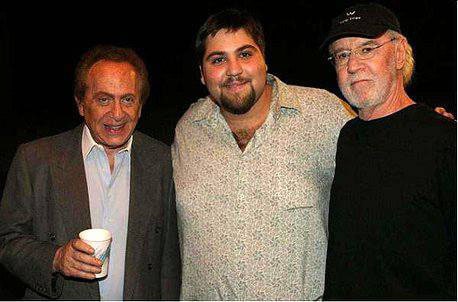
On one of my days off, he called me and invited me to come see the show and meet his friend who would be there: George Carlin. He introduced me to George as a brilliant, young comedian and after the show we all hung out and laughed together. Both of them talked comedy with me like I was one of them. It was a huge gift, and one that led to a close friendship with George as well in the years that followed.

The morning that the news of George Carlin’s death was announced, Jackie called me to talk about him. He described him to me as “more than a comedian. He was a modern day philosopher,” which I used as the name of my podcast on which I interviewed comedians about philosophy for several years. I called it “Modern Day Philosophers.” I even got to have Jackie on my show.

I thought it then and I’ll say it now: Jackie was also a Modern Day Philosopher, and a great one at that.

I thought it then and I’ll say it now: Jackie was also a Modern Day Philosopher, and a great one at that. He was a complex person who would say and do controversial things. He was truly, politically incorrect, at times offensive and provocative, someone who loved to push buttons and piss people off on occasion. Someone who loved getting pastries at Au Bon Pain after 2 p.m. when they would sell the ones from that morning for 25 cents. Someone who loved people. But maybe, more than anything, someone who loved the absurdity of life and life itself.

He was, to me, an inspiration, a mentor, a teacher, an employer, a co-conspirator, a contrarian and provocateur. And above all, a friend.

He will forever be missed and the world will never be as funny without him.


Daniel Lobell is a comedian and podcaster living in Los Angeles. He is the author of the Fair Enough comic book series and hosts the Doctorpedia podcast.

Rest in Peace Jackie Mason, My Friend Read More »

Asking Who is a Jew is Asking Who We Are (So Come, Tell Us!)

Who is a Jew? Since the Jewish people did not start their long journey just yesterday, this is seemingly a question that should have been answered a long time ago. In fact, the Jews have been around for several thousand years without even asking who they are. So why now? Why is it suddenly not clear “who is a Jew”?

This is a complex question. We will try to answer it briefly, for a reason that will make itself clear in a few paragraphs.

Join in and tell us: Who is a Jew?

Once upon a time, Jews had a common faith and a common lifestyle that defined them. Today, there is no longer such thing. Following are a few examples. Not every Jew believes in God, and even if they do, not every Jew draws identical practical conclusions from their faith. We do not have a common belief. Another example: What do we eat? It used to be clear that Jews eat certain things, and avoid others. Today they eat falafel and Chinese food, cholent and shrimp, pepperoni and cheese among many others. Some eat kosher, most others don’t. Or maybe they do sometimes, but not always. Or perhaps they do only on Passover—if they even celebrate Passover (most do, but quite a few don’t). And another example: What Jews do in the morning (put on Tefillin), and in the evening (say the Shema), and on Saturday (stay close to a home and a shul) used to be clear. Can we agree that this is no longer the case?

In short—the common denominator that allows Jews to be defined as a distinct group is unclear. What differentiates the group of Jews from the many groups of non-Jews is not apparent. You may ask: Why is the search for such understanding essential? We have an answer: If we do not know who’s Jewish, then we do not know who we are.

And who will decide? There is no agreement on who the Jews are, and there is no agreement on who decides who the Jews are. Should the rabbis decide? The Israeli Knesset? Heads of Jewish organizations? Intellectuals? We want to suggest that you and we decide. Or at least attempt to decide. Or at least attempt to have a civil discussion about this question.

Who do you think is Jewish?

Who is a Jew by your definitions?

Some of you may say: It is not even important for us to know. Some of you may say: This is a question that we find offensive. Some of you may say: What the rabbis decide is the only answer. Or you may say: What the Jewish Agency decides is the final word. Or you may say: Jews in Israel and Jews in America need different rules for who is a Jew. That’s fine. This is what we want to know. The Jewish people are a big enterprise and we are the shareholders. All Jews (you, me, we) are the shareholders. Each stock may not be worth much, but it is worth something. If you have a share in the Jewish people, you have the right to vote with the Jewish people. You may be with the majority, or with the minority. You may think that a common ground can be found. Or maybe it’s impossible to find common ground. Either way, you own the stock, so why not use it to participate and express an opinion?

The implication of our proposal is ambitious and complex. In fact, what we assume is the following: “A Jewish person is who you think is a Jewish person.”

Of course, this is not about a specific single “you,” but rather about a plural “you”: the multi-generational and multi-voiced you. The Jews decide who they consider to be a member of their tribe and people, who shares their culture and values, and who doesn’t. Thus, the venture we are launching here (details below) is designed to allow all of us to participate in this conversation, to let us vote with our stock, express a position, and compare it to the positions of others.

We are not looking for a quarrel. We are not looking to set a boundary. We are looking for a conversation—for a joint clarification of a question of deep meaning about our collective identity.

We are looking for a conversation—for a joint clarification of a question of deep meaning about our collective identity.

If you are Jewish—or interested in the Jewish people—the question “Who is a Jew?” is also the question “Who are you?”

So come and tell us who you are.

To join in and share you views with us – please click here.

A Short Guide to the Project

The “Who is a Jew?” project is a research venture launched by TheMadad.com, an Israeli research and data-journalism website.

The statistical work of TheMadad.com is supervised by Professor Camil Fuchs of Tel Aviv University, a co-owner of the website (together with Shmuel Rosner and Noah Slepkov).

The Hebrew version of the project is a collaboration of TheMadad.com and Kan News, the news division of Israel’s public TV channel. Experts of The Jewish People Policy Institute contribute advice and insight.

The collected data will be shared with the public in a series of published analyses and reports. Come back to visit The Jewish Journal to learn more about our findings in the coming weeks.


Shmuel Rosner is an Israeli columnist, editor, and researcher. He is the editor of the research and data-journalism website themadad.com, and is the political editor of the Jewish Journal.

Asking Who is a Jew is Asking Who We Are (So Come, Tell Us!) Read More »

Women’s International Zionist Organization Receives $1 Million Naming Gift from Younes and Soraya Nazarian Family Foundation

Women’s International Zionist Organization (WIZO) announced today that it received a $1 million gift from the Los Angeles-based Younes and Soraya Nazarian Family Foundation to open a new state-of-the-art day care center in Tel Aviv.

The facility, which was dedicated last week in Tel Aviv, is named the Younes and Soraya Nazarian Day Care and Early Childhood Education Center. The ceremony was attended by Soraya Nazarian and her daughter Dr. Sharon Nazarian, WIZO President Esther Mor and Chairperson Anita Friedman among dozens of others.

“Research has shown that the investment in children between birth and five years old is critical, and that if you start that young, the rest of their lives will be a path to success,” said Dr. Sharon Nazarian in her remarks at the ceremony. “This facility, and the staff and teachers who are so loving, are the insurance policy of the future of the State of Israel.”

Anita Friedman, WIZO Chairperson, added: “The partnership between the Nazarian family and WIZO, born of a love for Israel, its children, and a deep concern for its future, has given birth to this magnificent act of generosity, in support of this new center, which is all about our love for Israel, its children, and its future.”

WIZO operates 183 day care centers throughout Israel, caring for 14,000 children ages 3 months to 3 years. The new Nazarian Center will have four classes, with a total of more than 100 children.


Women’s International Zionist Organization Receives $1 Million Naming Gift from Younes and Soraya Nazarian Family Foundation Read More »