fbpx

March 10, 2021

Immersive Experiences

Though having an experience of the artist that’s immersive
is now regarded de rigueur by lovers of Van Gogh,
in such experiences I do not wish to be submersive,
their highs just as elusive as the monster of the loch,

although the Talmud tells us that at Sinai, Jews, when urged
to accept the Ten Commandments, did so only when God threatened
to cover them with a mountain peak by which they’d be submerged
unless they would agree to be by all Commandments wettened,

all Ten Commandments constituting sources of the fountain
from which God poured the laws down from the smoky, fiery mountain.

Gershon Hepner
March 2021

Time Out Magazine tells us the ‘Immersive Van Gogh’ exhibition is coming to LA: ‘the popular exhibit turns ‘The Starry Night’ and other pieces into swirling, room-filling projections.’


Gershon Hepner is a poet who has written over 25,000 poems on subjects ranging from music to literature, politics to Torah. He grew up in England and moved to Los Angeles in 1976.  Using his varied interests and experiences, he has authored dozens of papers in medical and academic journals, and authored “Legal Friction: Law, Narrative, and Identity Politics in Biblical Israel.” He can be reached at gershonhepner@gmail.com.

Immersive Experiences Read More »

A Bisl Torah — Hide n’ Seek

My daughter insisted that our family play hide n’ seek. I’m not a big fan of the game. Kids stealthily waiting to jump out at you, closets in shambles by the end of the game, and each child wanting multiple turns. When Annie requested hide n’ seek, I countered with Bananagrams. Unsurprisingly, 30 seconds later, I began to hide.

After the game, I asked the kids what about the game is hard and easy. The answers were poignant: Easy: choosing a fun spot to hide. Hard: waiting to be found. Our youngest added, “Sometimes, you wait so long, and nobody finds you.”

How many of us are hiding, waiting to be found? In a way, it seems like everyone is hiding…something. We wonder if we are good enough, smart enough, pretty enough, equipped to act out the part we think we are meant to play. The script sounds right, but we can’t seem to believe our characterization of the role. We are scared someone might discover our secret. Insecurities and self-doubt that inhibit us from finding ourselves.

But perhaps the game of hide n’ seek relies on an assumption that all that is hidden will eventually be revealed. That even if someone else doesn’t see us, we have to leave the hiding place. Showing the world that we are meant to be found. And having faith that God endowed each of us with something to show.

Rabbi Caryn Broitman teaches that the Biblical words, “haster astir panai”, are usually translated as “I am surely hiding.” The subject in hiding is God. However, she points out that commentators jump on the double construction of the words—haster astir. Instead, the words should be translated as, “I will hide the fact that I am hiding.” We can easily relate to God’s concealment. We hide our truths so well, we have trouble discerning between what’s real and false.

Deep truths in a simple game. But it is clear something hides in each of our souls. The question remains: Are we ready to be found?

Shabbat Shalom


Rabbi Nicole Guzik is a rabbi at Sinai Temple. She can be reached at her Facebook page at Rabbi Nicole Guzik. For more writings, visit Rabbi Guzik’s blog section from Sinai Temple’s website.

A Bisl Torah — Hide n’ Seek Read More »

Instead of Cancelling Meyers Leonard, Let’s Invite Him for Shabbat Dinner

The process of cancelling NBA player Meyers Leonard for using an anti-Semitic slur has begun in earnest. The social media condemnation machine is in full swing. The key players are taking their positions. His team, the Miami Heat, suspended him, releasing a statement disavowing Leonard’s behavior and “vehemently” condemning “the use of any form of hate speech.” The league has begun an investigation. Sponsors have dropped him. Who knows if he’ll ever be hired again? We’ve seen this movie before.

Or have we?

Well, maybe not.

Leonard, who was captured on the video app Twitch using the anti-Semitic k*** slur, issued a prompt apology, saying he was “deeply sorry” for his action.

“While I didn’t know what the word meant at the time, my ignorance about its history and how offensive it is to the Jewish community is absolutely not an excuse and I was just wrong,” his note read. “I am now more aware of its meaning and I am committed to properly seeking out people who can help educate me about this type of hate and how we can fight it.”

What should the Jewish world do with such an apology? Should we pile on and highlight this incident as yet another example of the rise in anti-Semitism?

Or should we embrace Leonard’s stated commitment to seek out people “who can help educate me about this type of hate and how we can fight it.”

Here’s what I think we should do: Let’s invite him for Shabbat dinner.

This is not my idea. It’s Julian Edelman’s idea. Edelman, a Jew who plays for the New England Patriots, posted an open letter on Twitter inviting Leonard to a Shabbat dinner so they could talk.

Edelman’s approach is the very opposite of cancel culture and a great demonstration of “tikkun olam” (repair the world). Only here, we’re helping an individual repair his offensive action.

The letter reads, in part: “I get the sense that you didn’t use that word out of hate, more out of ignorance. Most likely, you weren’t trying to hurt anyone or even profile Jews in your comment. That’s what makes it so destructive. When someone intends to be hateful, it’s usually met with great resistance. Casual ignorance is harder to combat and has greater reach, especially when you command great influence. Hate is like a virus. Even accidentally, it can rapidly spread.”

I love Edelman’s idea on so many levels. First, when someone expresses contrition, it’s very Jewish to create a path to forgiveness. Second, Leonard can become a major ally in the fight against anti-Semitism and hate of all kinds.

And third, he may even take to my favorite Jewish ritual: Friday night Shabbat dinner. In fact, next time Leonard is in L.A., I will gladly invite him to my own Shabbat table and have him taste some serious Sephardic cuisine.

Edelman’s approach is the very opposite of cancel culture and a great demonstration of “tikkun olam”(repair the world).  Only here, we’re helping an individual repair his offensive action.

We’ll live in a better world when instead of working to cancel, we’ll work to repair.

Instead of Cancelling Meyers Leonard, Let’s Invite Him for Shabbat Dinner Read More »

Jewish Women Building Bridges for a Brighter Future

March is International Women’s History Month, a global recognition of female leaders paving new paths for generations to come. In the last several years alone, the number of women in senior leadership positions in business has grown by 30% globally, with more women running Fortune 500 companies and leading IPOs than ever before.

These great strides didn’t happen overnight. Female leaders have been at the forefront of innovation for decades, changing the status quo on inclusion and persevering amid a pandemic to advance the companies and communities they serve.

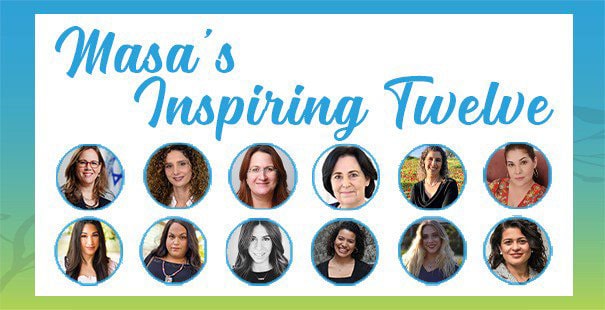
Jewish women are at the center of this innovation through their community-building, advocacy and leadership. On International Women’s Day, Masa, Israel’s leading provider of long-term educational and career programs, honored these trailblazers by documenting their achievements on a list of “Masa’s Inspiring 12: Jewish Women Working to Make a Difference.” These powerful leaders have united Jewish communities worldwide with Israel by creating new programs and opportunities that empower the next generation.

On International Women’s Day, Masa honored 12 inspiring female trailblazers.

Dr. Maria Nadakka, who was born in Russia and made Aliyah at age 8, developed a unique formula that kills bacteria and destroys viruses like COVID-19. She and her colleagues at medical device maker Sonovia, created a cutting-edge reusable anti-pathogen mask that neutralizes 99% of bacteria and viruses. At Dr. Nadakka’s direction, hundreds of thousands of SonoMasks have been distributed worldwide during the pandemic.

Before receiving her B.A. and M.A. in Chemistry from Bar Ilan University, Nadakka served as a commander in the IDF’s Communications Forces. She then participated in multiple postdocs in Italy, Germany and the United Kingdom. Dr. Nadakka is now a leading voice in the scientific community, where she inspires a new generation of female leaders in STEM.

Amira Ahronoviz is another Jewish woman who has made a significant impact during the pandemic. As CEO and director-general of the world’s largest Jewish nonprofit, The Jewish Agency for Israel, Ahronoviz welcomed 20,000 immigrants to Israel from 70 countries in 2020. She also helped at-risk communities secure loans during this time of economic uncertainty and helped launch JReady.org, a resource for Jewish communities to share best practices for safely reopening schools and promoting safe learning environments.

Building a safer world is also a passion of Marjorie Tolsdorf’s. The Columbia University alumna has devoted her life to gender-based violence prevention. As an undergraduate, she was honored for creating a system to prevent child abuse and gender-based violence through elementary education. As a Fulbright Scholar, Tolsdorf was horrified by the stark gender inequity and rampant femicide in the Bedouin community where she volunteered. This led her to complete a nine-month Yahel Social Change Fellowship with Masa, where she continued her dedication to violence prevention.

Alex Sanchez is yet another powerful Jewish woman who is making the world a better place. As the first-ever openly trans teacher in Israel, Sanchez has been featured across Israeli news for her commitment to LGBTQ+ rights and gender equity. In addition to her work teaching English at the Israeli Ministry of Education and the College of Management Academic Studies in Rishon LeZion, Sanchez’s advocacy led her to speak out against LGBTQ+ conversion therapy at a Knesset hearing. The former Masa Israel Teaching Fellow is also passionate about supporting the LGBTQ+ Olim community, of which she is a proud member. Sanchez’s favorite part about being in Israel is building a classroom environment where her students get excited about learning.

During a time when much of the world has been stuck inside their homes quarantining, storytelling has never been more important, and Nikki Schreiber is a master storyteller. The well-known Jewish influencer has attracted a captive following for her ability to showcase the human side of Judaism. Schreiber’s stories connect Jews of all ages and walks of life in their shared humanity and Judaism. She is the founder of Humans of Judaism, an online Jewish storytelling platform with more than 200,000 followers. Schreiber’s reach bridges contemporary Jewish lives with stories from the past and hopes for the future. Her stories continue a longstanding Jewish tradition of honoring one’s ancestors and Jewish history while simultaneously striving to create a better world for generations to come.

To read Masa’s full list, click here.


Benjamin Raziel is an Israeli journalist and novelist, based in Tel Aviv.

Jewish Women Building Bridges for a Brighter Future Read More »

Switching Sides Inevitable in Israel’s Rowdy Political Landscape

(The Media Line) Israel’s general elections are only 13 days away, but with the electoral picture getting hazier by the day and no clear victor emerging, many analysts and operatives are already gearing for a potential fifth election cycle in two years.

The seemingly irresolvable deadlock gripping Israel’s parliament has led to endless campaigning, with some strategists and tacticians finding themselves on one side of the aisle after only just advising the opposing side the previous round.

“Just like in business, you can advise one firm and then the next day advise its fierce competitor,” Roni Rimon, one of Israel’s most seasoned campaign managers, told The Media Line.

“In Israel, unlike in the United States, you almost have to switch parties, because there aren’t that many political campaigns. It’s a limited business. We don’t have sheriffs and D.A. races, only parliamentary elections.”

Rimon, who in the past handled Prime Minister Binyamin Netanyahu’s successful run for office, among others, remembers having to attack rival candidates with whom he had recently worked and was close.

“As long as it’s not under the belt, there shouldn’t be a problem,” he says. “You can point to someone’s shortcomings regarding the issues at hand, without telling the whole world his inner secrets. It’s all about integrity.”

Tami Sheinkman, a top political and media strategist, believes some ideological identification with a candidate is essential for an adviser to be effective.

“Like any profession, you have to bring your professional, not personal, agenda. Having said that, I tried over the years to remain loyal to my values.”

Sheinkman, who in past years led the campaigns of Isaac Herzog, Tzipi Livni and, most recently, Moshe Ya’alon, stresses that connecting with a client’s personality is more important than supporting their agenda.

“In the past, Israel had a clear ideological divide; parties represented substantial differences. These days, strategists aren’t managing parties but rather the person heading them and his own persona,” she says. “You have to believe in that person, give them your all! Of course, all the while remaining critical and professional.”

Added Rimon: “I can work with someone whom I like personally, but I have to take a step back to maintain my professional integrity. You actually need some mental distancing from the campaign.”

“Totally identifying with your client may harm your professional judgment. If you become a fan, you’re not an adviser. You have to detach yourself emotionally and identify his shortcomings, not be starry-eyed.”

“You have to remember what your job is,” the strategist told The Media Line. “Of course you wouldn’t do something that totally goes against your beliefs, but within that framework, your job is always to help your client’s goals, not yours.”

Both Rimon and Sheinkman told The Media Line they had refused to work with some clients because of ideological differences.

“The people themselves were great; we could have easily become friends. But I can’t represent an organization whose activity is totally against my values,” Rimon says.

The turnover rate of the past year, thanks to Israel’s three consecutive election cycles, has led some consultants to publicly criticize their former employers within weeks of switching gigs.

“It embarrasses me,” an outraged Sheinkman explains. “I can’t understand this disloyalty. I think it disgraces the profession. They have to realize they’re just the advisers, not the candidate. Don’t get confused, your job is behind the scenes.”

“Whatever the level of intimacy advisers and candidates reach during their work together, campaigners should never disparage their clients once the work is done,” Rimon agrees. “It’s ugly. It’s not done. If someone lets you enter their inner circle, treats you like family, gives you full access – revealing all that is nothing short of betrayal.”

As for the current race, entering the homestretch with 13 days to go, the veteran campaigners advised caution.

“Netanyahu’s strategy is extremely smart, ignoring his challengers from within the right wing and focusing his attacks on [Opposition Leader Yair] Lapid,” Rimon identifies. “That will drive right-wing voters to Netanyahu.”

Adds Sheinkman: “The public is tired, from the coronavirus, from the politicians and all the lies. There’s an indifference. Fifth elections are definitely an option, the way things look now. But that’s not to say things won’t change in the remaining days.”

Switching Sides Inevitable in Israel’s Rowdy Political Landscape Read More »

Table for Five: Vayakhel-Pekudei

One verse, five voices. Edited by Salvador Litvak, the Accidental Talmudist

They also made bells of pure gold, and attached the bells between the pomegranates, all around the hem of the robe, between the pomegranates: a bell and a pomegranate, a bell and a pomegranate, all around the hem of the robe for officiating in—as the LORD had commanded Moses. Ex. 39:25-6


Rabbi Avraham Greenstein
AJRCA Professor of Hebrew

The Ramban sees special significance in the bells attached to the high priest’s garments. He notes that the bells seemingly exist at counter-purposes with the prestige of these garments. Bells are not a typical adornment, and they in fact tend to signal subservience rather than nobility. Only royals and nobles can come and go as they please unheard and unexpected, whereas servants and subjects must be announced and may never intrude suddenly and unexpectedly. The bells announce the high priest so that ‘his sound will be heard when he enters the sanctuary” (Ex. 28:35). The bells on the high priest’s garment serve as a reminder that the loftiest positions in Jewish communal life are fundamentally ones of service, service to the Divine through service to the community.

The Zohar (1:50b) notes that the sound of the high priest’s bells (in Hebrew, their “kol”) evokes other appearances of the word “kol” in scripture, notably the “sound of the shofar” and the “voice of Jacob.” The sound of the shofar is loud and imposing, but the voice of Jacob is soft and meek. Nevertheless, they both give voice to the soul’s silent and inexpressible acknowledgement of the Divine and yearning for It. The high priest too is an expression of Israel’s collective longing to commune with the Divine, and he acts as their intermediary in this regard. Like his garments, he embodies the grandeur that Israel knows to attribute to God, yet also the humility and dedication it takes to serve Him.


Rabbi Elchanan Shoff
Rabbi, Beis Knesses of Los Angeles

MAKE SOME NOISE! Not just something projected to encourage sports fans to support their teams, this line is defining of another human imperative. We want to fill this life with noise! We want to do things, stand for things, and say things. Cemeteries are very quiet places, while cities filled with people seem to never sleep. Leaders must make noise, they ought to be talking about issues and directing others with their guidance. They need to share with us their leadership somehow –how are they to do that if they stay quiet?

Rabbi Nosson Nota Segel-Landau of Auschwitz in Kmo Hashacher (Podgorze, 1094) suggests that these verses, of the Priest’s garments being fashioned with bells and pomegranates, teach us how leaders are to make themselves heard. The Talmud famously says (Bava Metzia 85b) “A coin in an empty vessel rattles the loudest!” Often, we find noise coming from those who have the least content. The vessel that is packed with coins is simply not as noisy.

So what sort of bells should our leaders ring? What noise should accompany them? The pomegranate is packed with seeds. In rabbinic literature, the seeds that overflow from the pomegranate represent one’s good deeds, one’s mitzvos. To truly influence others, a leader needs to make noise primarily by being filled to the brim with noble deeds, and virtues. We are all leaders. We reach the world when we, like the pomegranate, truly embody the message that our bell rings.


Rabbi/Cantor Eva Robbins
Co-Spiritual Leader, N’vay Shalom

Repeated phrases in Torah alert the reader of something emphatic and important. The message is the necessary balance of bells and pomegranates, one after another, sight and sound, together, impacting whoever was present. Unlike the Sinai experience, flooding and overwhelming the people when God came ablaze in fire and lightning, blasting shofar and thunder, the Priest approached his work with the delicate sound of bells and the beautiful vision of scarlet.

With each step the High Priest communicated with the people, with God, and even with himself. The bells and pomegranates were reminders of the impending connection with the Holy One; of entering into an intimate setting for t’shuvah and healing. The preciousness of gold reflected light and optimism and the passionate color, scarlet, was a reminder of blood and its life-fulfilling properties. The bell created a sense of presence and the pomegranate, filled with hundreds of seeds, some even say 613, one for each mitzvah, represented the future and potential for change and growth.

This was also a reminder for each person, then and now, to think about how we walk through the world. Is it with power and arrogance or humility and subtlety? Like the High Priest, the sound and appearance we reflect has an impact. It can demean others or it can be for Divine purpose, bringing a gentle balance of presence, attention, care, compassion, and even healing. Each one of us is reminded, “You shall be, to Me, a Kingdom of Priests…a holy people.”


Rivkah Slonim
Rohr Chabad Center at Binghampton University

The Ramban challenges Rashi’s interpretation on this verse: If the pomegranates were hollow, as Rashi asserts, what is the imperative to say it was a pomegranate? Why not an apple?

In turn, R’ Elazar Mizrachi asks of the Ramban, why an apple? Indeed. Why the fuss over the precise shape of this decorative accessory? Because, explains the Rebbe, the Jews are compared to both apples and pomegranates. The apple is a metaphor for the Jews as they are righteous and fit. The pomegranate alludes to those not quite as pious. Yet, says the Talmud, even those Jews who are “empty” are as full of mitzvos as a pomegranate is filled with seeds.

When the High Priest did his service, he did so as a messenger of the Jews. He brought allJews with him into the inner sanctum. And that is why, asserts the Rebbe, Rashi underscores that it was indeed gold pomegranates that hemmed the robe of the high priest. Every single Jew, even those likened to pomegranates, came with the high priest before God, as an integral part of the Jewish people.

“Rebbe,” said a Chassidic rabbi one Sunday on the iconic dollar-line, “I am troubled by the Talmudic teaching that even the sinners among Israel are as filled with good deeds as a pomegranate. How can that be?” “I am bothered by that passage, as well” replied the Rebbe. “How can people so filled with good deeds be called sinners?!”


Judy Gruen
Author of “The Skeptic and the Rabbi: Falling in Love with Faith.”

The robe of the Kohen Gadol, or High Priest, atoned for the sin of lashon harah—damaging speech, such as gossip. Lashon harah takes many forms— from lies and insinuations to accusations, casting aspersions, baseless conjectures, and veiled insults. A moment of casual or careless gossip can have devastating impact, ruining reputations, marriages, businesses, and self-esteem. “Loose lips sink ships” was a famous WWII public service reminder. “Loose lips sink lives” should be a timeless public service reminder now.

Wherever the Kohen Gadol went, the gentle sounds of the tiny bells would announce his arrival. As the public representative of all of Israel, the Kohen Gadol also sought to inspire the people to come closer to God and His mitzvot. How appropriate and beautiful that the sounds that announced him were mellow and calm. The Prophets’ role, in contrast, was often to warn us in stark terms against our wayward behavior. One might imagine a Prophet’s arrival being announced with clashing cymbals or high-pitched violins.

The silent pomegranates interspersed between the bells emphasized that the Kohen Gadol’s arrival need not be ostentatious, loud, or self-important. It’s a wonderful metaphor for our own speech and how careful we must be with its power. Do we use our speech to tear down or build up? Do our words land with a gut-punching thud, or with uplifting grace notes? With every sentence we speak, we make this choice.

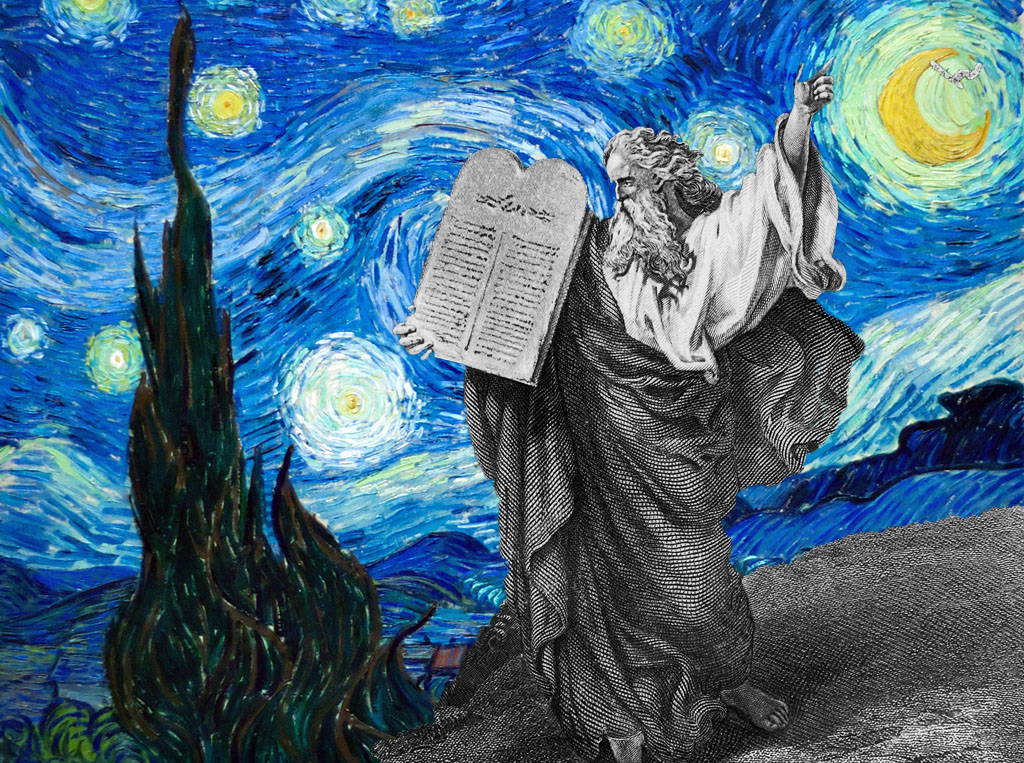
Table for Five: Vayakhel-Pekudei Read More »

Miami Heat Player Placed on Indefinite Leave After Saying “K—”

Miami Heat forward Meyers Leonard has been placed on indefinite leave after a clip of him saying an anti-Semitic slur went viral. Leonard was streaming himself playing “Call of Duty: Warzone” March 9 when he said: “F—ing cowards. Don’t f—ing snipe me, you f—ing k— b—-.”

Leonard subsequently issued an apology. “While I didn’t know what the word meant at the time, my ignorance about its history and what it means to the Jewish community is absolutely not an excuse and I was wrong,” he said. “I am now more aware of its meaning and I am committed to properly seeking out people who can educate me about this type of hate and how we can fight it. I acknowledge and own my mistake and there’s no running from something like this that is so hurtful to someone else.”

The Miami Heat announced in a statement that Leonard will be away from the team indefinitely while the team and league investigate the matter. “The words used by Meyers Leonard were wrong and we will not tolerate hateful language from anyone associated with our franchise,” the statement read. “To hear it from a Miami Heat player is especially disappointing and hurtful to all those who work here, as well as the larger South Florida, Miami Heat and NBA communities.”

New England Patriots wide receiver Julian Edelman tweeted an open letter to Leonard inviting him to a Shabbat dinner. “I get the sense that you didn’t use that word out of hate, more out of ignorance,” Edelman wrote. “Most likely, you weren’t trying to hurt anyone or even profile Jews in your comment. That’s what makes it so destructive. When someone intends to be hateful, it’s usually met with great resistance. Casual ignorance is harder to combat and has greater reach, especially when you have influence… Hate is like a virus. Even accidentally, it can rapidly spread.”

Actor Michael Rapaport, on the other hand, tweeted out a video blasting Leonard, saying that the “k—” slur is “like a gold antique” that “stabs you in the heart” when used. “F— your written explanation, I want an apology on video, motherf—er, explaining yourself, the same way you explained yourself about standing for the national anthem, which I think was very heartfelt and made sense to me.”

Rapaport also called for the Heat to cut Leonard and for the NBA to suspend him and that Leonard needs to “reeducate and reprogram” himself.

Jewish groups also denounced Leonard’s use of the anti-Semitic slur. “.@MeyersLeonard”s use of an antisemitic slur while playing Call of Duty is unacceptable,” American Jewish Committee Director for Combating Anti-Semitism Holly Huffnagle said in a statement. “As antisemitism is rising in our country, we ask the players of the @MiamiHEAT and the rest of the @NBA to speak out against all forms of hatred and bigotry.” She also thanked the Heat for “taking antisemitism seriously” by placing Leonard on indefinite leave.


The Stop Antisemitism.org watchdog similarly tweeted, “We’re not sure what to be more horrified about — @NBA’s Meyers Leonard dropping a horrific antisemitic slur so casually or the people trying to excuse it as ‘just gaming language.’ THIS is how normalized antisemitism has become.”

Miami Heat Player Placed on Indefinite Leave After Saying “K—” Read More »

The Women of the Exodus Story

The Exodus is so central to our tradition that we remember it multiple times a day in our liturgy. The main characters, Moses, God and even Pharaoh, seem to generate male energy as the main focus of the story. But deeper look reveals that women are truly the heroes of the story. Their courage, acts of civil disobedience and abounding love assure our survival and bring our redemption.

Who are these women? Shifra and Puah, the midwives, Miriam, Moses’s sister, Yocheved, Moses’s mother, and Bityah, Pharaoh’s daughter (rabbis call her Batyah, daughter of God). Each woman faces the Egyptian leader and his heartless edict to kill Israelite baby boys. Through the text and Midrash, we learn of their impact on the Exodus story, particularly on the men who withdraw in the face of power. These women lead, refusing to succumb to defeat and demoralization. Let’s celebrate their legacy this month — from International Women’s Day to Passover.

Let’s celebrate their legacy this month — from International Women’s Day to Passover.

Midrash teaches that Amram, Miriam’s father, divorces his wife to prevent creating babies for Pharaoh to kill. The Israelite men follow his lead with the fate of Judaism diminished. But Miriam confronts her father by saying, “Pharaoh wants to kill all the male babies, but you are killing female babies as well.” Miriam’s confrontation shakes Amram to his core. He remarries his wife, and so do the rest of the men, restoring once again intimate relationships of these couples.

In another Midrash, the Jewish women, rejected by their husbands, go to the fields, bring food and beverage to feed their spouses, and in seductive fashion, use their mirrors to capture their glowing images to taunt their husbands into sexual pleasure. Pregnancies abound, and life is renewed.

As we read on, we discover two midwives, who are tasked with killing the baby boys upon their birth. The Torah identifies them as Shifrah and Puah (although the Talmud conjectures it could actually beYocheved and Miryam). We learn that Shifrah and Puah’s allegiance is not to Pharaoh but instead, as the Torah describes, “they feared God and did not do the deed.” In fact, they let the babies live and give them water and food so they will thrive.

Next, we meet Yocheved, the woman who is three months pregnant when the edict is given. When Moses is born, Yocheved hides him for three months and then creates a container described as an “ark,” puts Moses in it and sets him afloat down the Yam Suf, the very same river the Israelites will walk through on their way out of Egypt years later. Miryam follows the ark as Moses’s protector.

At this point, we meet the next woman who defies the King of Egypt and ensures Moses’s safety. Princess Bityah, daughter of Pharaoh, is standing by the river and cleansing herself when she notices the basket and asks to see what is inside. A baby boy, circumcised and covered in a Hebrew blanket, lays before her. Well aware of her father’s words, Bityah nonetheless is filled with compassion and embraces this little stranger as her own. Miryam comes forward, offering to find a wet-nurse for Moses. Bityah allows Moses to go home until he is weaned and then brings him back to the palace to be raised as a prince.

Each woman displays incredible courage, strength, fortitude and virtue. Their overwhelming love, compassion and commitment to life ensure our people’s future. The power of Shechinah, the feminine presence in the story, is matched only by the Song of Songs, the complementary reading for Passover that celebrates the love between man and women and, more symbolically, between God and the people.

In a time of such stress, anxiety and fear, we must embrace the courage and hope these women expressed and let our love and compassion guide the future.


Eva Robbins is a rabbi, cantor, artist and the author of “Spiritual Surgery: A Journey of Healing Mind, Body and Spirit.”

The Women of the Exodus Story Read More »

This Women’s History Month, We’re Writing a Bleak History

Cue the shiny graphics, virtual high fives, and emojis: March is all about women!

We’re honoring Women’s History Month & International Women’s Day this March, but there is hardly cause for celebration. As we mark our first trip around the sun in our pandemic lives, we find ourselves in the throes of a she-cession and an unprecedented crisis for women in the workplace — one that threatens the livelihoods of millions of American families, the innovation and operations of countless American organizations and a century’s worth of progress of women’s earnings and leadership in the workplace.

As I first predicted in March 2020 and then again in August 2020, we are hemorrhaging women and moms in the workplace a year into this pandemic.

As the CEO of a women’s leadership coaching and advisory firm, I follow these issues daily, not just on March 8 (International Women’s Day). In fact, on my computer I actually keep a file called “sad data.”

So as we spotlight women this month, let’s shine the light on the crisis we find ourselves in and look at the data:

  • 6%: the percentage of women leading the country’s top 3,000 companies, according to the Wall Street Journal
  • 2,500,000: the estimated number of working moms who have left the workforce during COVID-19, according to the U.S. Bureau of Labor Statistics
  • 42%: the number of moms surveyed by LinkedIn who have considered quitting their job in the last year
  • 2%: the number of Fortune 500 companies with Black female CEOs, according to LinkedIn
  • 82 cents: what women earn for every dollar earned by a man (all pay gaps widen for women of color), according to the U.S. Department of Labor
  • 69 cents: what working moms earn for every dollar earned by working dads, according to the National Women’s Law Center
  • 78 cents: what women entrepreneurs earn for every dollar earned by their male counterparts, according to Inc. Magazine

The numbers don’t lie: We’re doing a terrible job.

The numbers don’t lie: We’re doing a terrible job.

A few years ago, the World Economic Forum put out a report that, at current course and speed, we could close the gender wage gap in … wait for it … 202 years. That was if nothing else changed.

While many experts have predicted that it could take a generation or two for women to recover from this she-cession, the compounding effect of the pandemic could be with us for centuries. We were 202 years away in the best of times and don’t yet know the full implication of the worst of times. We do know enough, however, to understand that the prognosis is bleak.

The pandemic has illuminated that our support structures for working women — and working mothers in particular — were nothing more than a flimsy house of cards. The infrastructure supporting us, from the worst parental leave policies in the developed world, to the sky-high cost of childcare, to the lack of flexibility — and often invisible punishments of being “mommy-tracked” for using flexibility, was barely good enough in The Before Times. In our pandemic lives, what little we have has completely collapsed, taking the aspirations and earnings of millions of women down with it.

Perhaps most troubling is the way women are internalizing the systemic failures that have caused us so much anguish over the past year. According to newly released research from LinkedIn, 60% of working women feel like they’re “underperforming” in different areas of their life as a result of the pandemic.

Working moms aren’t just stressed out, they’re scared and they’re staying silent about it for “fear of retribution.” The same LinkedIn research found that a whopping 62% of working moms have “Lied about or downplayed their stress around balancing kids and work during the pandemic. And more than a third say they have experienced backlash, negativity or reprimanding at work as a result of interruptions or conflicts due to parenting responsibilities.”

Perhaps the moniker of Women’s History Month is accurate this year: We’re writing history. A particularly bleak and awful chapter, but history nonetheless.


Randi Braun is an executive coach, consultant, speaker and the founder of Something Major

This Women’s History Month, We’re Writing a Bleak History Read More »

Book Review: The American Jewish Philanthropic Complex

In the face of a devastating global pandemic, the approximately half-trillion dollar American philanthropic sector has stepped up. As of November 2020, foundations and corporations awarded close to $20B globally for COVID-19 research and relief. The Jewish community, responsible typically for $25-50B in annual giving, continues to play a prominent role: a group of Jewish foundations allocated $80M in grants and interest-free loans for pandemic relief last April, and has now increased their pledge. Thankfully, the engine driving American — and Jewish — philanthropy is humming vigorously.

But to say that the sector is “alive and well” would be considered only half-correct, at least by its most strident critics. How wealth is amassed, the purposes of gifts and grants and, perhaps most importantly, the arrangements allowing charitable organizations and individuals to reduce their tax liability dominate headline news. Lila Corwin-Berman’s new book, “The American Jewish Philanthropic Complex: The History of a Multibillion-Dollar Institution,” is a worthwhile, if difficult, contribution to the debate.

The author knows that drawing attention to “Jewish wealth” can trigger nasty stereotypes, but she takes the chance, arguing that “early twentieth-century antisemitic writing about Jewish economic behavior has warded off precisely [this] sort of study.” Whether Jewish philanthropy can be distinguished from its American context is one of the book’s central questions — a difficult assignment only partly fulfilled. Ultimately, “The American Jewish Philanthropic Complex” argues that the whole system, and perhaps especially the Jewish part, needs reform. In somewhat more dulcet tones, Corwin-Berman joins the chorus of critique against the wealthy and their complicity in unsavory outcomes of capitalism.

Corwin-Berman does admit that “not a single day in my life passes untouched by philanthropy,” but she also expresses considerable discomfort with the capitalist economy in which that philanthropy thrives. I come down on the more optimistic side: Its imperfections notwithstanding, without private philanthropy would the airlift of Ethiopian Jews have been as successful? Would we have the Museum of the History of Polish Jews? Who would have provided billions to support Jewish day schools and summer camps, major seminaries and programs to enhance Jewish life and communal engagement? How many American kids would experience Israel without Birthright?

A key element in Corwin-Berman’s critique of the “philanthropic complex” is the “charitable deduction.” Simply put, through the tax deduction, the government supports private funding for activities that it may not care about or consider high priority or even abhor. Other than the requirement that individuals and companies disburse at least five percent of their holdings in programs for the public good and not engage in overtly partisan advocacy, donors can keep much of their accumulated wealth pretty much tax-free. The government offers a choice: send in x percent of your income or donate it to a good cause, and we’ll reduce your taxable base (an implicit payment).

Reasonable people might differ on the optimal size of the deduction, definitions of “the public good” and how to hold donors and grantees accountable. But Corwin-Berman’s generally suspicious stance towards the deduction is based in part on an interpretation that ascribes personal self-interest, if not greed, to philanthropic efforts that are often coated in a veneer of altruism. Further, she argues that “as soon as [Jewish] charitable donations and institutions received special tax treatment, charity became an instrument of the American state,” which seems to contradict her thesis that Jewish and American philanthropy are, in fact, separable.

Corwin-Berman contextualizes her critiques of the charitable deduction within the history of the federal income tax, first used during peacetime in 1894, then struck down by the Supreme Court, and finally codified in 1913 with passage of the 16th amendment. But she skips a vital fact: the first foundations were established before the charitable deduction was enacted in 1917. (The Russell Sage Foundation was established in 1907 “for the improvement of social and living conditions in the United States”; Andrew Carnegie bequeathed the equivalent of $2 billion (in today’s dollars) in 1911). Corwin-Berman’s omission of that piece in the timeline bolsters a nagging subtext in much of the hostile skepticism about wealth and philanthropy: Is observed generosity really just a response to financial incentives?

Even today, although some philanthropists surely benefit from tax law, is that the dominant impulse for their charitable giving? Students of Maimonides — and modern social psychology — know that altruism is complicated. As I have argued in my book “The Rising Price of Objectivity,” Bill and Melinda Gates could spend their time on a private yacht, sipping champagne and observing the worldwide ravages of environmental degradation, poverty and disease from a safe distance. Instead, they work tirelessly toward eradication of polio, access to sanitation and education in the developing world, curbing climate change and, most recently, funding research toward a COVID-19 vaccine. The same applies to the scions of American Jewish philanthropy — people like Mort Mandel (z”l), Shimon Ben Joseph (z”l), Zalman Bernstein (z”l), Bernie Marcus and many others. Is their largesse — in terms of the dollars they donate and time they devote — fueled mainly by a personal self-interest in receiving a tax deduction?

I believe that the tax code encourages and rewards existing impulses for generosity, which is different from saying that incentives cause such behavior. Social scientists have long pondered if instincts to help others are attenuated, not amplified, by extrinsic monetary rewards; maybe by giving people a tax break we send a friendly nudge about civic responsibility. But as someone who has been inspired by and supported by philanthropic stewards in the Jewish (and secular) world, I find it unseemly to assert that self-interest is the main driver.

The tax code encourages and rewards existing impulses for generosity, which is different from saying that incentives cause such behavior.

Corwin-Berman’s anxiety about philanthropic wealth, shared by other critics, stems in part from disdain for where it is spent. Do we love everything that foundations, family funds and individual donors support? Certainly not. But would shifting the funds back to state control be preferable? I asked a friend known for her critiques of big foundations how she would feel if the recouped losses from the untaxed wealth of Eli Broad, for example, had been available to Trump’s Secretary of Education Betsy DeVos, with her love of vouchers and hatred of teacher unions. I’m waiting for an answer.

In her historical sweep of American Jewish philanthropy and communal organization, Corwin-Berman zeroes in on key players with mixed reviews. She praises Norman Sugarman for his advocacy that “fairly and evenly” applied tax law “served the interests of American democracy and capitalism equally,” and commends him for resisting politicians’ efforts to declare certain activities “un-American.” But she blames Sugarman and friends for dubious public-private entanglements: “Jewish leaders invoked a Jewish consensus… to justify plunging into deeply political waters … in concert with state transformations.” But should Jewish philanthropists have been barred from engaging with the political elites running America? Without more balanced evidence, Corwin-Berman’s dismissive undertone about Sugarman and his allies seems unwarranted.

Corwin-Berman also takes issue with the fact that prominent figures (Max Fisher, Sheldon Adelson and others) were or are friendly to Republicans and the Israeli right wing. But her sharpest sword is drawn against the most morally bankrupt, and for good reason: Who will argue that Bernard Madoff was not a monstrous scoundrel who deserved his 150-year prison sentence for destroying thousands of lives and institutions through his gargantuan greed? Who would defend Jeffrey Epstein if allegations of sexual abuse withstand evidentiary scrutiny?

As awful as those violators of decency are, though, Corwin-Berman’s claim that they and others are “byproducts of the philanthropic complex” is disturbing. I share the author’s sense of revulsion, but to assert that misogyny of certain Jewish philanthropists “implicates the central ideology of Jewish identity and continuity in a broad pattern of gender inequality and oppression” is a surprising claim from an accomplished scholar. Extrapolating from a small sample of funders and researchers, with no evidence of their representativeness of the general Jewish population, violates standards of scientific inquiry and fuels spurious inferences. (For all of its alleged complicity in this “pattern,” the community acted swiftly, if imperfectly, in its denunciations and ostracism of some of the more well-known perps.)

My reticence with Corwin-Berman’s book, a thoroughly-referenced scholarly accomplishment, stems from her neglect of counterfactuals. With what should we replace the system of donor advised funds, endowments, tax breaks, and other tools? Corwin-Berman showcases some potentially interesting innovations, but she requires a more dispassionate analytical framework to make her case. Evidence should precede advocacy.

Of course, the philanthropic sector needs to close loopholes that compromise transparency and address the question of accountability for how private wealth is distributed. Donors, grantees, trustees, program directors, fund managers, evaluators, lawyers and legislators should continue debating these issues and make them part of professional development. But bringing data, coherence and possibly consensus to this topic might require, well, philanthropic support.

I hope that our most enlightened funders rise to the occasion, which I’m sure Professor Corwin-Berman would welcome too. Although her book is not the last word on the subject, it’s worth studying — critically — if we are serious about getting into therapy to treat our “complex.”


Michael Feuer is dean and professor of education policy at the George Washington University, immediate past president of the National Academy of Education, nonresident senior fellow of the Brookings Institution and past co-chair of the Collaborative for Applied Studies in Jewish Education. His latest book, “The Rising Price of Objectivity: Philanthropy, Government, and the Future of Education Research,” was published by Harvard Education Press in 2016.

Book Review: The American Jewish Philanthropic Complex Read More »