fbpx

February 17, 2021

Too Persian

I’ll let you in on a little secret: In an Orwellian twist on an immigrant community, all Persians are equal, but some Persians are more Persian than others.

In America, we callously refer to these fellow Persians as “F.O.B.,” or “Fresh Off the Boat.” It doesn’t matter if they’ve been in the United States three or 30 years; there’s something about their demeanor, hobbies and values that sets them apart from other, more “Americanized” Persians.

Maybe they’re young, but they prefer to play cards at the park when they should be sitting on a couch, downloading new apps. They cringe at the thought of sushi and ask whether their date would be interested in going to a Persian restaurant instead. And they’re too modest to make out in a car parked outside their parents’ home. They’re small fish in a huge American pond, and they want to ensure they’re not swallowed by any overly-assimilated sharks.

And then there’s their accent. It gives them away faster than anything else.

I’ve been guilty of using this pejorative label (“F.O.B.”), but I should have known better. For decades after I came to America, I was called an “F.O.B.” by Persians who had been here longer. As if their ghormeh sabzi had sat in the pot on the stove longer than mine and they were “fully cooked” in this country.

I still hear the term “F.O.B.” from friends attempting to describe the personality of an eligible man or woman.

“Do you know anyone for my brother?” a friend will ask. “He’s a really good guy, but he’s just a little F.O.B.” They use the word less as a description and more as a warning.

Maybe this kind of stigmatization happens in other cultures, too. There must be some Israelis in the valley who are called “too Israeli” or Armenians in Glendale who are “too Armenian.” One thing’s for sure: these generalizations all point to not being Americanized enough, as if being completely assimilated is a guarantee that someone will be happier, more refined or make a lovely spouse.

Something happened to Persians after we arrived in the West en masse after the 1979 Islamic Revolution in Iran: In a desperate attempt to assimilate as fast as possible, we hid our accents, changed our names and swapped “One Thousand and One Nights” for “50 Shades of Grey.”

The only problem was that some (though not all) of us abandoned the best of our culture, including its literature, classical music and humanistic values, in exchange for fabulous pool parties, idle chatter about anything (and everyone) and Saturday brunches at trendy cafes.

What does it mean to be “too Persian,” anyway? It’s an insult that’s hurled frequently and irresponsibly.

It’s an insult that’s hurled frequently and irresponsibly.
To really understand it, we have to look back in time. In the 1980s, Persians in the United States were in unknown territory. Finding a good, “more Persian” partner to marry was comforting and safe. It was also a generational insurance policy against the corruptive erosion of America on one’s soul (and body). No Persian wanted to marry someone who was too Americanized because such a person was a dangerously liberal, unpredictable wild card.

But in the 1990s, fewer Persian Jews were coming from Iran. At that time, our community still treated those who had newly-arrived in the United States as precious gold, especially the young women, who were deemed family-oriented virgins who never bothered to ask what kind of car a man drove in Los Angeles. She should just be happy that she’s not in Iran anymore, we all thought, so she better not set her bar for dating too high.

Two decades ago, my mother would tell a single man at the market, “I have a good girl for you. She just came from Tehran!” The man’s eyes would light up like coals beneath a hookah. He knew he would be getting family, fidelity, sexual inexperience (considered a good thing back then) and, above all, someone who would treat him like a hero, rather than a financial failure in a Subaru.

Twenty years later, many young Persian Jews in America shiver at the thought of dating someone “too Persian,” fearing a person who just doesn’t “get them” and who would blow apart every effort they and their family have made to be more Americanized.

There’s something to be said for this. No one wants to marry someone who is culturally worlds apart from them. Ironically, just because two Persians marry doesn’t mean they share the same culture, especially if only one of them was born and raised in the United States.

But I won’t paint those who are “too Persian” with angelic brushstrokes. Yes, they’re generally more family-oriented and perhaps even kinder and more gentle because they’ve only known the collective culture of Iran (as opposed to America’s eat-or-be-eaten individualistic jungle). Living with them is not for everyone. That said, their struggle to find their place in the constantly-changing world of friendship and dating in this country breaks my heart.

The Los Angeles neighborhood nicknamed “Tehrangeles” (Photo by Zereshk/Wikimedia Commons)

Before the pandemic, I would see newly-arrived French Jews in Los Angeles almost every week. I never heard anyone call them “too French.” That’s probably because they came from one liberal democracy to another. Their views on everything from sex to success might be the same as many Americans.

But if you’re coming from a country like Iran to America, it’s a whole different story. As one young man who arrived from Iran six years ago recently told me, “I don’t understand why Persian girls in America waste their lives posting half-naked selfies on Instagram.” If you give him the benefit of the doubt that he’s not a misogynist, there’s a certain wisdom in his observation. In our social media-governed world, young women dofeel the pressure to pose like models just to even fall under a man’s radar. Still, setting up this man with one of my Americanized Persian girlfriends is a recipe for disaster.

There are many single men and women in this city. Some are in their late thirties while others are in their early fifties. They’re often described as being “too Persian.” They may not be able to commiserate over the latest episode of “The Bachelor,” but they can recite ancient Persian poets like Rumi and Hafez with an ease that conveys an educated, curious mind. They can’t relate to most things that excite Los Angeles Persian Jews, which renders them among the last breed of a species that was ubiquitous 30 years ago, but is now quickly becoming extinct in this city.

Once the pandemic subsides and President Biden’s reverse of the Trump administration’s “Muslim ban” takes effect, more single Persians will come to the United States. If you think they’ll want to be set up with people who, like them, are really Persian and more down to earth, think again. This is no longer the 1980s or 1990s. Most of those young people step off the plane already holding a list of unrealistic demands for dating and marriage.

It’s a Catch-22 for those who’ve been in America a while but still are “too Persian.” Cursed with emitting too much of their own inescapable cultural values, they can either be single in the United States or go back to Iran, where they would be prized bachelors and bachelorettes (the number of young, eligible Jews in Iran has completely dwindled). They would almost be guaranteed to marry quickly. They’d have acceptance, cultural mastery, and a family of their own.

There’s only one problem: They’d be back in Iran.

To those touting the “too Persian” ideology, just remember that at the end of the day, personality trumps everything, including culture. Ultimately, it’s your humanity that counts. And if you have a bad personality, you can bet that that will translate in any language and across every continent — “too Persian” or not.


Tabby Refael (on Twitter @RefaelTabby) is a Los Angeles based writer, speaker and activist.

Too Persian Read More »

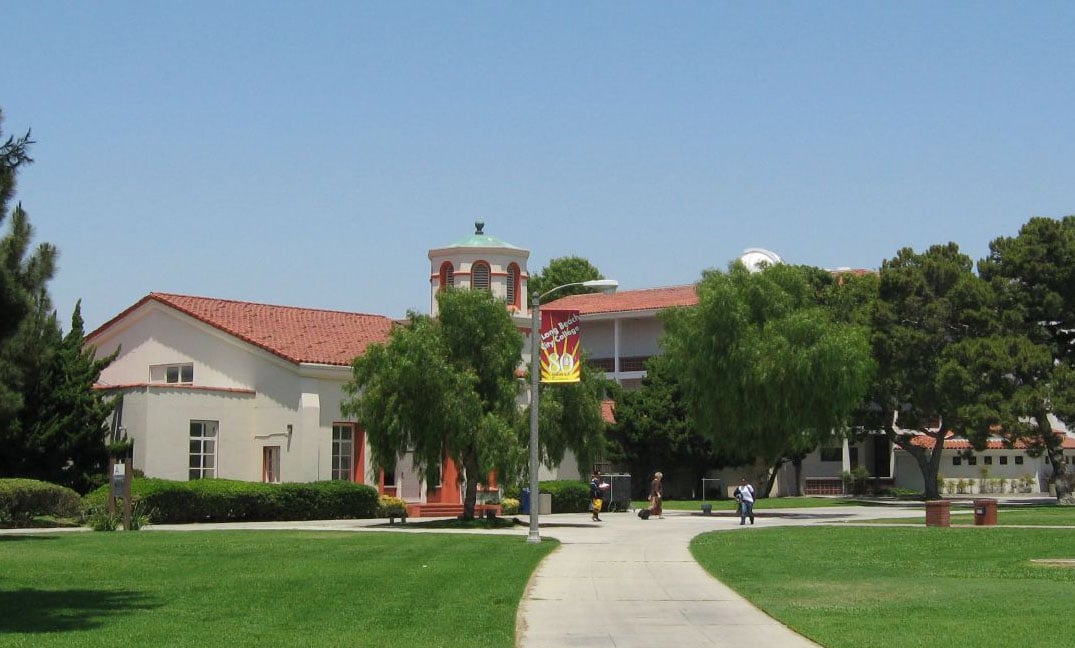
Long Beach City College Board of Trustees Criticized for Not Voting on IHRA Resolution

Jewish groups are criticizing the Long Beach City College Board of Trustees for not voting on a resolution adopting the International Holocaust Remembrance Alliance (IHRA) definition of anti-Semitism during their January 27 meeting.

During the meeting, which was the same day as International Holocaust Remembrance Day, Trustee Sunny Zia alleged that the nonbinding resolution was pulled from the meeting agenda at the last second to have the board’s legal team and the college’s Academic Senate review it; Zia claimed that past resolutions haven’t been subjected to the same level of scrutiny.

Zia added that past resolution discussions have waived the 20-minute limit on public comment, but that limit remained intact for public comments about adopting the IHRA definition. “When it comes to my [Jewish] community, things are different,” Zia said. “Just feels that way.”

Trustee Vivian Malauulu later told Zia that the treatment of the resolution has nothing to do with her community; it had to do with “respect for the time and it has to do with the authenticity of the comments being made.” Zia then accused Maluulu of questioning the authenticity of the public comments, which she said was “quite distasteful.” Zia also asked the board’s president, Uduak-Joe Ntuk, when the resolution would be brought up for the vote and he didn’t give a specific date, but he did assure her that it would be back at some point.

Jewish groups criticized the board’s actions.

“With the U.S. State Department on record embracing the IHRA Working Definition of Antisemitism, and more than 200 Mayors across America signing on to [American Jewish Committee]’s ‘Mayors United Against Antisemitism’ Campaign, it seems incredulous that the Long Beach Community College District (CCD) would descend into partisan bickering and recrimination over the authenticity of this proposed measure as well as impugn the credibility of its proponents,” American Jewish Committee Los Angeles Regional Director Richard S. Hirschhaut said in a statement to the Journal. “This is a shameful and regrettable blot on the integrity of the CCD that can best be erased by adoption of the IHRA definition. It is a useful resource and tool for understanding antisemitism and, in this instance, can be a ‘teachable moment’ for the CCD as well.”

The Progressive Zionists of California similarly said in a statement to the Journal, “The IHRA definition of antisemitism is a non-legally binding working definition that does not preclude criticism of Israel. However, we are gravely concerned with how the process was abused to shut down crucial conversations around why the IHRA definition would benefit Long Beach Community College’s Jewish students. In a time of rising antisemitism around the country, if it is sufficient to guide policy preferences in the Biden administration’s State Department, it should be good enough for Long Beach as well.”

Carly Gammill, director of the StandWithUs Center for Combating Antisemitism, also said in a statement to the Journal, “Preventing this resolution from coming to a vote, focused as it is on adopting a tool for addressing the bigotry of antisemitism, raises serious concerns about the Board’s commitment to fighting all forms of hate. Further, questioning the authenticity of those citizens who spoke in support of the resolution is manipulative and adds insult to injury. We sincerely hope that the Board corrects this error and ensures that this resolution comes to a vote at its next meeting.”

Anti-Defamation League (ADL) Orange County and Long Beach Regional Director Peter Levi said in a statement to the Journal, “ADL supports the adoption of the International Holocaust Remembrance Alliance (IHRA) definition of antisemitism for the Long Beach Community College District. We are hopeful that board of trustees understands and appreciates the value of the IHRA definition has as well as its wide spread support.”

He added: “This legally non-binding working definition provides valuable guidance for elected officials, university administrators, educational professionals and community leaders on what exactly is antisemitism and the many different forms it can take. This includes when criticism of Israel crosses the line from fair critique of the policies of the Israeli government into the delegitimization of the Jewish State.”

A spokesperson from Long Beach City College said in a statement to the Journal, “Long Beach City College has a shared governance process. This is how all California Community Colleges guarantee faculty and other input in the decision-making process. All resolutions go through some level of review before they are placed on a Board of Trustees meeting agenda. The IHRA resolution was sent to the LBCC Academic Senate as it contains language regarding areas that the Academic Senate has oversight and purview.” The spokesperson claimed that because the resolution mentioned academic freedom, it fell under the Academic Senate’s purview. The spokesperson added that an October resolution endorsing AB 1460, a bill requiring California State University students to take an ethnic studies class as a graduation, went through a similar process.

Maluulu did not respond to the Journal’s requests for comment.

Long Beach City College Board of Trustees Criticized for Not Voting on IHRA Resolution Read More »

Jews, Beware of Double Standards for Political Points

For the approximately 90% of the Jews in the world who support and love the state of Israel, it is no mystery that Israel, the Jewish people’s nation-state, is always under a media and political microscope and likely subject to more attention and criticism per capita than any other country on earth.

In large part, this extra attention and criticism is a product, as noted by journalist and author Matti Friedman in his excellent 2014 articles in Tablet and The Atlantic, of the incredible number of reporters devoted to covering (and manufacturing) stories about Israel and the Arab-Israeli conflict. As just one example, Friedman noted how the Associated Press had more staff covering Israel and the territories controlled by the Palestinian Authority and Hamas (around 12 million people) in 2011 than the AP had in either China, India or Russia.

But for a people who have been subject to centuries of extraordinary persecution grounded in raw-Jew-hatred, many have no doubt that the extra attention and criticism heaped on Israel is grounded in anti-Semitism.

To distinguish between ordinary criticism — to which every country and government should be subject — and the type of criticism of Israel grounded in anti-Semitism, human rights activist, Soviet dissident and all-around hero, Natan Sharansky, developed his famous “3-D test” (Demonization, Delegitimization and Double Standards).

Although one could fill up the Library of Congress with examples of all three Ds applied to Israel, three recent examples demonstrate how double standards related to anti-Semitism are used to cynically score cheap political points.

A Monstrous Double Standard – Israel and the ICC

According to its own president, the “core mandate” of the International Criminal Court (ICC) is to “act as a court of last resort with the capacity to prosecute individuals for genocide, crimes against humanity and war crimes when national jurisdictions for any reason are unable or unwilling to do so.”

Given its “core mandate,” one would think that over the last 10 years that the ICC would be very busy dealing with the Chinese Communist Party’s campaign to obliterate its Muslim Uighur population, the use of chemical weapons by the Assad government and its Iranian proxies and Iran’s repeated mass murder and wholesale incarceration of civilian protestors. These monstrous crimes against humanity warrant the attention of the ICC, particularly given that China, Syria and Iran have no due process, no credible independent court system and are certainly “unable or unwilling” to investigate or prosecute any of the many heinous crimes committed by their respective governments, militaries and militias.

International Criminal Court, The Hague, Netherlands. Source: United Nations.

But the reality is that no such ICC investigations or prosecutions have ever occurred. Instead, the ICC recently announced that even though Israel, like the United States, is not a signatory to the Rome Statute (which confers upon the ICC its jurisdiction), the ICC somehow has the jurisdiction to investigate and potentially prosecute Israel (and its citizens) for actions it has taken to defend itself from rocket attacks and riots caused by Hamas. The ICC ignored the fact that Israel is a democracy with a robust and independent judiciary, which regularly investigates and prosecutes officials for potential war crimes and excessive force.

Meanwhile, Hamas’s crimes against humanity — and the reason for Israel’s defense against Hamas — certainly warrant investigation and prosecution. Take for example, its use of child soldiers, the children it has killed digging terror tunnels, its placement of rocket and missile launchers in civilian apartments and mosques, its indiscriminate firing of rockets and missiles from within civilian residential areas at exclusively civilian targets, its execution without trial of alleged “collaborators” in Gaza and its imprisonment and execution of people for being gay. Hamas and its leaders should be prosecuted, particularly since there is no “national jurisdiction” willing or able to prosecute anyone for these crimes within Gaza.

The cynical double standard employed here for political purposes is glaring and monstrous. In fact, the United States refused to sign the Rome Statute because it was evident even in 2002 that the ICC lacked prudent safeguards against political manipulation. Nowhere is that more evident than in the ICC’s campaign against Israel.

“Rothschild Space Lasers” Gets You Sanctioned — “All About the Benjamin’s” Gets You Promoted

There is no doubt that before she became a member of the House of Representatives, Marjorie Taylor-Greene posted some truly heinous comments and claims. One of them was the crazy and anti-Semitic claim that the perennial Jewish boogeymen, “the Rothschilds,” were using a “space laser” to cause forest fires in California as part of an evil money-making scheme. The anti-Semitism, as well as the use of a classic anti-Semitic trope about rich, powerful Jewish bankers nefariously using their money, should be obvious to everyone not intentionally trying to ignore or excuse Greene’s misconduct.

For her use of a plain anti-Semitic trope and promotion of anti-Semitic conspiracy theories, Greene was appropriately sanctioned by the House of Representatives and stripped of her committee assignments.

Barely a few days after Greene was sanctioned, Congresswoman Ilhan Omar, was promoted to the position of vice chair of the House Foreign Affairs subcommittee on Africa, Global Health, and Global Human Rights. Unlike Greene, Omar was already a member of the Foreign Affairs Committee when she made many of her anti-Semitic comments — such as her infamous “all about the Benjamins” tweet, which she followed up with multiple comments about members of Congress being required to “swear allegiance” to a “foreign country [Israel].”

U.S. Representative Ilhan Omar (D-MN) participates in a news conference to call on Congress to cut funding for ICE (Immigration and Customs Enforcement), at the U.S. Capitol in Washington, U.S. February 7, 2019. REUTERS/Jonathan Ernst

Omar not only refused to apologize for her use of the trope about rich Jews buying congressional support for Israel, but she also twice repeated the plainly anti-Semitic “dual loyalty” trope about how supporting an American ally like Israel is somehow equivalent to “swearing allegiance to a foreign power.” As with Greene, Omar’s use of classic anti-Semitic tropes should be obvious.

The lesson from the double standard in Congress’s sanctioning of Marjorie Taylor Greene and its refusal to sanction Ilhan Omar and, even worse, promote her? Jew-hatred and the promotion of plain anti-Semitic canards by our political leaders does not matter. It is which party is in charge of Congress that matters. It is scoring cheap political points that matter. Not standing up to anti-Semitism or anti-Semites.

Nazi Comparisons are Bad & Plainly Anti-Semitic … When Made by a Conservative.

Last week, Disney’s Mandalorian star Gina Carano, who is a conservative, made a very stupid and offensive comparison. Specifically, she wrote:

“Jews were beaten in the streets, not by Nazi soldiers but by their neighbors…even by children. Because history is edited, most people today don’t realize that to get to the point where Nazi soldiers could easily round up thousands of Jews, the government first made their own neighbors hate them simply for being Jews. How is that any different from hating someone for their political views?”

There is a huge difference between hating someone for their ethnicity or race and hating someone for their political views. Carano effectively trivialized the Holocaust and its horrors by comparing 1930s Nazi Germany to the United States in 2021. For making this insulting statement, Disney promptly fired Carano because her social media posts denigrating people based on their cultural and religious identities are abhorrent and unacceptable.”

Actor Gina Carano of Lucasfilm’s “The Mandalorian” at the Disney+ Global Press Day on October 19, 2019 in Los Angeles, California. (Photo by Alberto E. Rodriguez/Getty Images for Disney)

Setting aside that Disney’s statement mischaracterizes the Nazis’ race-based Jew-hatred, the far bigger problem is that almost no one, including Disney, actually cares about Holocaust comparisons that denigrate and cynically appropriate Jewish history and suffering.  Thousands of people make such comparisons regularly with no cognizable consequences. For instance, Trump has been compared to Hitler by dozens of media and movie stars; so were Presidents George W. Bush, Barack Obama and Ronald Reagan. Representative Alexandria Ocasio Cortez even compared ICE migrant detention facilities to concentration camps, and many people compared ICE agents to the Gestapo.

So trivialized and universalized are Holocaust comparisons that while many were posting #FireGinaCarano, they may also have been opposing the adoption of the International Holocaust Remembrance Alliance (IHRA) definition of anti-Semitism, which states that comparing Israel and its policies to the actions of the Nazis and Nazi Germany is anti-Semitic.

At the same time that the ICC employs clear double standards to politically attack Israel, Jews and anti-Semitism are being used as a political football in America. We shouldn’t stand for it. Political affiliation should never matter. Jew-hatred is Jew-hatred. Anti-Semitic tropes are Anti-Semitic tropes. We need to have zero-tolerance for all of it, no matter whether the person is red state or blue state, Democrat or Republican, right or left. By tolerating any anti-Semitism, we create excuses for all anti-Semitism.

Tolerating or excusing Jew-hatred or the use of anti-Semitic tropes based on whether we agree with the political views of the anti-Semite is not nuanced; it is hypocrisy. And it is a recipe for more anti-Semitism.

Jews, Beware of Double Standards for Political Points Read More »

Nine Reasons Why Biden May Not Have Called Bibi Until Now

President Biden spoke to Israeli Prime Minister Netanyahu yesterday, ending the first manufactured crisis in U.S.-Israel relations, as the Israeli and Jewish press were abuzz with the question “why hasn’t Biden called?” I have no idea why President Biden waited to call  Prime Minister Benjamin Netanyahu until the 28th day of his administration. But I can think of nine good reasons why he may have taken his time. Readers of this piece are likely to think of a few more.

  1. The prime minister is in the middle of an election campaign. Anything that is said by Biden will be used by the prime minister to advance his own campaign and not necessarily to advance the interests of Israel. In previous campaigns, for example, Bibi has used his relationship with then President Trump to advance the notion that he was indispensable to the U.S.-Israel relationship.
  2. The prime minister has hired a Steve Bannon protégé, Aaron Klein of Breitbart News, to run his campaign. Anything said by President Biden on that call may be spun to undercut the president.
  3. Netanyahu is on trial for corruption. The call could be interpreted as the president’s personal support for Netanyahu and not only as a call between a U.S. president and Israeli prime minister.
  4. Prime Minister Netanyahu took his time in calling President-elect Biden to congratulate him on his victory at a November 17 news conference. That is to say, for two weeks after the election, Bibi deliberately avoided calling Biden as president-elect.
  5. The prime minister supported President Trump for reelection, openly and directly, unequivocally. Netanyahu also allied himself with a Republican Congress to undermine then President Barack Obama, addressing a Joint Session of Congress attacking the Iran deal and agreeing to come to the United States at the initiative of the Republican speaker of the House and his own ambassador, a former Republican operative, without first informing the president. These actions alienated Democrats in Congress, the president and then Vice President Biden, making support for Israel a partisan issue.
  6. The first time Biden visited Jerusalem as vice president in 2010, he had a long and friendly dinner with “his old friend” Netanyahu, only to find out when he got back to his hotel that Israel’s Interior Minister had announced a new building program in East Jerusalem, a deliberate and politically embarrassing culmination to a long and leisurely dinner.
  7. Nothing is wrong with the U.S.-Israel relationship now. There are no crises and no difficulties. Foreign aid is going forward, military and intelligence cooperation is ongoing, the embassy will not leave Jerusalem and the Abraham Accords are going forward — albeit with less support for quid pro quos. Biden well knows of Netanyahu’s reservations about the Iran deal, and he factored that into his support for reentering the agreement.
  8. The President’s domestic agenda is full — COVID-19 Relief, vaccine distribution, economic recovery, social justice, climate change, immigration, infrastructure initiatives. Foreign policy is not his primary or even secondary concern at this point in time.
  9. Despite the prime minister’s support for President Trump’s reelection, between 70 and 75% of American Jews voted for Biden. That percentage may have increased if the election was held after the January 6 storming of the Capitol, Trump’s support for Marjorie Taylor Green and the Republicans’ refusal to ban her from serving on committees. Since Biden is naturally pro-Israel in orientation, he is unlikely to lose Jewish support at home if he takes his time in calling the prime minister.

It is remarkable to see how insecure our Israeli brethren are that the delay of a call has become an issue at home. One wonders if it makes them feel abandoned, neglected, unappreciated. We all can recall the fuss that was made when President Obama visited Egypt but not Israel on his first trip to the Middle East. According to Obama’s memoir, he did so at the request of the Israeli government, who then interpreted it as a snub. After all, Biden only called China last week. The U.S.-Israel relationship is on solid ground. I sleep far less comfortably worrying about the domestic issues dividing Israelis from another — four elections in two years is not reassuring — and the polarization of the American populace.

Michael Berenbaum is director of the Sigi Ziering Institute and a professor of Jewish Studies at American Jewish University.

Editor’s note: Shortly after this piece was published, Biden called Bibi. The piece has been changed to reflect that event.

Nine Reasons Why Biden May Not Have Called Bibi Until Now Read More »

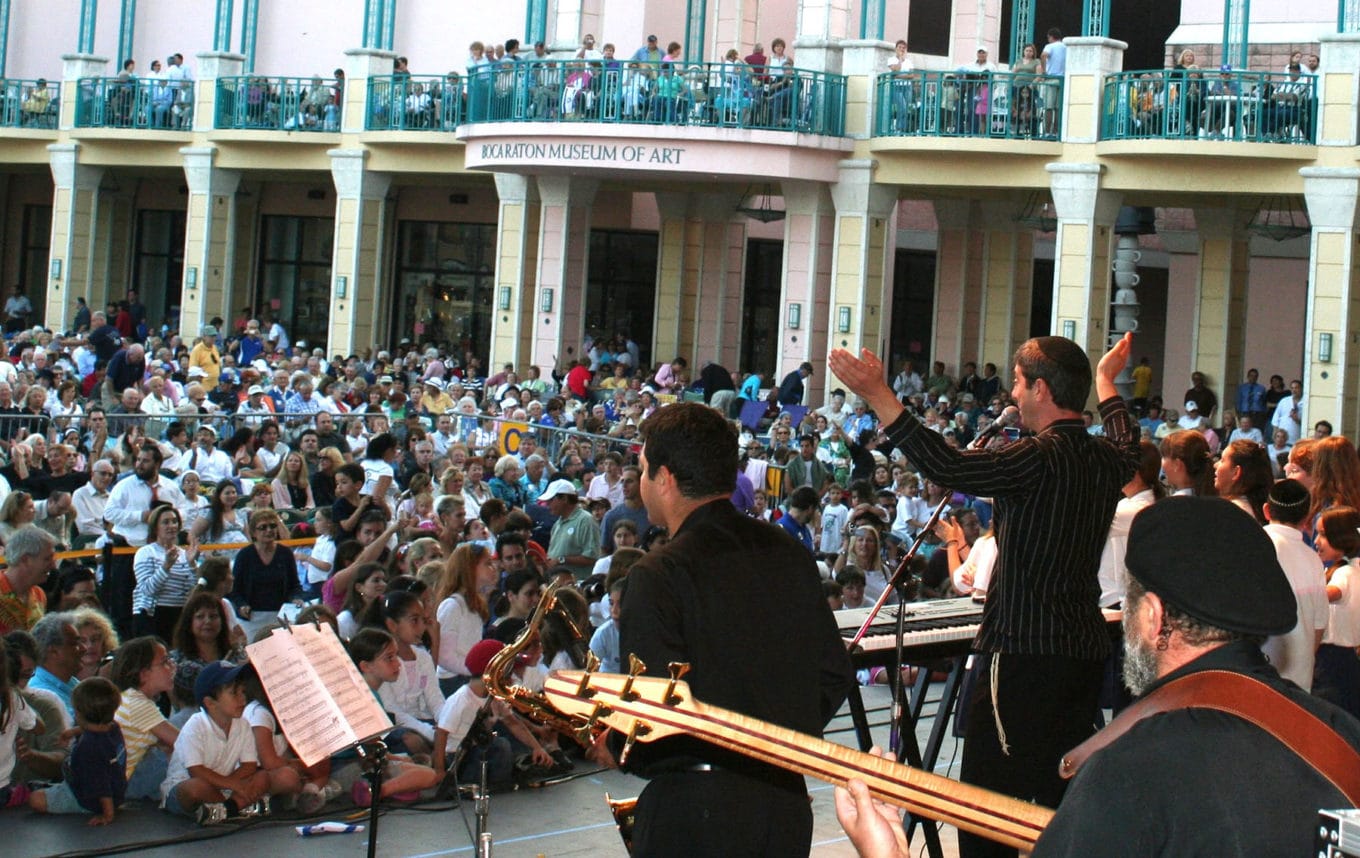
Music in Judaism: In Search of the Tenth Song

I spent a decade composing the music for the Warner Brothers TV Network. Here in Los Angeles, that means every time you watched a Channel 5 sports broadcast, a TV show promo or the Rose Parade, you heard my music in the background. But as great an experience as this was for a composer just out of college, I realized my heart was elsewhere.

Since the age of seven, I have heard music in my head — new music, fully formed songs and lyrics. My passion is getting those songs developed, arranged, recorded and marketed. But in my mid-twenties, I started flirting with a new passion: Shabbat.

Many of my Westside friends had moved to Pico-Robertson, and I started getting Friday night invites. I was tapping into the deepest well of inspiration: God, Torah and community. Like many of my peers, my Jewish education ended shortly after reaching bar mitzvah age. But now I recognized I had a lot of catching up to do in my spirituality. My music, always the spokesperson for my subconscious mind, reflected this inner turmoil and bore fruit in the form of my first Jewish albums: “Hineni,” “A Day in the Life” and “Across the River.” I started touring synagogues instead of rock clubs, brushed up on my Hebrew and tried on those tefillin I hadn’t worn since I was thirteen.

Soon, I was performing in over fifty cities a year. I became poignantly aware of the power of music in connecting audiences of various denominations and ages. And I learned that, for the Jewish People, religious life without music is unthinkable.

Jews see music as the catalyst of Creation. The Big Bang is summed up in the first line of Genesis, beginning with the word B’reishit. According to the Dzikover Rebbe (Rabbi Yidele Horowitz, 1905-1989), B’reishit can be rearranged to spell Shirat Aleph Beit, the song of the alphabet. In other words, every aspect of the universe is continuously sung into being.

Our Tanach (Bible) is replete with epic songs punctuating the narrative. Jubal, the inventor of the first instruments, is one of the key characters mentioned in the first ten generations of humankind. The patriarchs composed while in the fields with their livestock; Jewish tradition maintains King David was “hearing” songs as he composed his Psalms; our prophets required music to enter a transcendent realm and hear God’s voice; vast orchestras accompanied the service in the Temple.

When we sing our prayers, we transform our worship from lethargy to ecstasy, from stasis to action and commitment. The nusach (traditional melody) of prayer is so beautifully detailed that one could conceivably travel by time machine to any service in history and know if it’s a weekday, Shabbat or a holiday, if it’s morning, afternoon or evening and whether the congregation is Sephardic or Ashkenaz. Specific tropes even accompany the public reading of our Torah and prophetic writings, adding color and even commentary to the black and white text.

As I explored the origins of music in Judaism, I wondered about the origin of the music in me. How does my subconscious create a soundtrack for my dreams? Is it an amalgam of all the melodies I processed that day? Am I hearing remnants of biblical melodies in the ether? Maybe it is a combination of all of those things. For me, the new Jewish music I create from my head offers clarity of God’s loving presence: after all, King David is the source for engaging in “shir chadash l’Adonai” (singing a new song for God). New music communicates vitality and excitement and keeps ritual from becoming stagnant.

the new Jewish music I create from my head offers clarity of God’s loving presence.

The Midrash describes ten primary songs featured in Tanach. Nine have already been sung — such as “Az Yashir,” the spontaneous outpouring of prophetic music sung by the masses at the splitting of the Red Sea. We also have Moshe Rabbeinu’s final song, “Ha’azinu,” as well as songs by Devorah, Hannah and Kings David and Shlomo. One song has yet to be written, awaiting a future date “when the redeemed ones leave exile.” This is the Tenth Song for which we are yearning. I have a feeling it’s ready for download — can you hear it yet?

It is a tremendous privilege to channel God’s music and share it. May God bless all of us with a holy life filled with sweetness and harmony. And may we soon merit singing the Tenth Song of Creation together in Jerusalem.


Sam Glaser is a performer, composer, producer and author in Los Angeles. He has released 25 albums of his music, he produces music for various media in his Glaser Musicworks recording studio and his book The Joy of Judaism is an Amazon bestseller. Visit him online at www.samglaser.com. Join Sam for a weekly uplifting hour of study every Wednesday night (7:30 pm PST, Zoom Meeting ID: 71646005392) for learners of all ages and levels of knowledge.

Music in Judaism: In Search of the Tenth Song Read More »

The Scientific Controversies Around COVID-19

Like much else in life these days, the medical science surrounding the coronavirus pandemic has been controversial and disputed.

COVID-19 is caused by severe acute respiratory syndrome (SARS-CoV-2), a highly contagious virus that has infected almost 110 million people worldwide in some 220 countries.

The good news is that while the infection rate is high, the death rate is relatively low compared to other past untreated epidemics like smallpox, plague, malaria, tuberculosis, cholera and Ebola.

However, several factors from the start have led to an unusual amount of polarization surrounding this disease, including China’s lack of transparency regarding the origin and nature of the virus, which was first detected in Wuhan. We still don’t know if the zoonotic virus jumped from animals to humans or was a biodisease that escaped the Wuhan Institute of Virology, as claimed by scientist Dr. Li-Meng Yan and disputed by the World Health Organization.

It’s true that we wish to follow “good” science. But when it comes to COVID-19, we don’t seem to have a shared understanding of what “good” science is. Here are a few areas of controversy and disagreement.

Uneven Advice

Dr. Tedros Adhanom Ghebreyesus, director-general of the World Health Organization and public health expert, got the fight against COVID-19 off to a poor start. In the critical early weeks of the virus’s spread, Tedros promoted Chinese propaganda, advising a complacent world that there was not human transmission outside of China. He also opposed travel bans.

Dr. Ezekiel Emanuel, an oncologist who advocated for the Obama administration’s Affordable Care Act and has advised President Joe Biden, suggested in 2014 that he would reject curative medical care as a 75-year-old, a statement that may disturb the elderly today who are the most vulnerable to COVID-19.

And Dr. Anthony Fauci, longtime director of the National Institute of Allergy and Infectious Diseases, initially provided admittedly conflicting advice on the use of masks, quarantining and the methods of viral transmission.

Although these doctors have received much media attention, they have generally avoided severe critique. This was not the case for Dr. Scott Atlas, a Stanford neuroradiologist, analyst of government health policy and former special coronavirus adviser to President Trump, who was critiqued for arguing that those under the age of 65 rarely die from COVID-19 and that children rarely exhibit serious illness and should return to school. He also suggested that Americans re-enter the workforce to avoid the quarantine-related development of rising mental illness, substance abuse and child abuse from lost jobs.

Many of these policies were crafted before officials fully understood the virus and its transmission. But the fact remains that pandemics are nothing new, and the consequences for learning on the fly are significant. History and hindsight will be better judges of our performance.

Pandemics are nothing new, and the consequences for learning on the fly are significant.
Disputed cause of death

The Centers for Disease Control and Prevention, along with the COVID Tracking Project and Johns Hopkins University, gathers data on deaths from state-generated reports. Most rely on death certificates, which list the cause of death and, often, other contributing factors.

The key question is which mortalities are actually a result of COVID-19: who died with COVID-19 and who died due to COVID-19. Pre-and-post mortem classification of cases varies among local hospitals and coroners.

Dr. Susan Bailey, the president of the American Medical Association, addressed the debate on under-counting vs. over-counting pandemic deaths, asserting, “The suggestion that doctors — in the midst of a public health crisis — are overcounting COVID-19 patients or lying to line their pockets is a malicious, outrageous and completely misguided charge.”

It is true that hospitals are paid the same for COVID-19 treatment as for any other care, although the more serious the problem, the more hospitals are paid. So, treating a ventilator patient does result in a higher payment to a hospital. However, Medicare, the government health program for the elderly and disabled, pays 20% on top of its ordinary reimbursement for COVID-19 patients — a result of the CARES Act, the federal stimulus bill that passed in spring 2020.

Social distancing 

The World Health Organization has called for the separation of people by at least one meter (just over three feet). The Centers for Disease Control and Prevention has recommended six feet.

When you cough or sneeze, or even sing or speak, droplets are released and quickly fall within a few feet due to gravity. But smaller aerosols may float in the air for fairly long distances and remain there for longer periods of time. Some scientists have warned that aerosols can travel up to some 27 feet. Definitive studies of living patients for viral transmission have encountered ethical challenges due to the lethality of the virus.

Social distancing, people keep distance in public to protect from COVID-19 Coronavirus outbreak spreading concept, couple man and woman keep distance away on tandem bicycle with Coronavirus pathogens.

This lack of clarity on appropriate social distancing has resulted in confusion about school and business closures and the safety of shopping, religious services, athletic events and even walking around the neighborhood. It is sobering to note the studies that indicate that many COVID-19 infections result from in-home exposure to infected friends and family. 

Mask wearing 

Surgeons wear properly fitted and specialized medical masks to protect patients. And health experts claim that masks are a key factor, along with social distancing and hand washing, in reducing viral community spread. In fact, the CDC recently announced that wearing two masks or a tightly-fitted mask can reduce transmission of COVID-19 by 96.4%. As recommended and often mandated at work and in public, mask-wearing by the American public has generally been highly observed.

But how much a thin or poorly fitting mask alters its efficacy is still being researched. Pathogenic microbes are very small and can enter through or around the side of masks. Furthermore, mask-wearing may provide a false sense of security and even have its own potential health risks, such as touching the face with contaminated hands.

Contact tracing

The emergent epidemic of COVID-19 inspired a new generation of digital systems to identify, track and monitor the movement of individuals by government authorities. There are almost four billion smartphones around the globe, and apps that track our movements risk expanded surveillance, lockdowns and a potential violation of individual rights.

There are reports that in Syria, the government has disguised malware as a contact-tracing app. Several countries in Africa have been accused of brutal lockdowns. In Israel, citizens have complained about the involvement of the Shin Bet security service in case tracing. In Australia, authorities have promised that health data collected after the pandemic won’t be retained.

After the initial lockdowns, Chile was considering — and rejected — a “release certificate” identifying those who have been infected and recovered. South Korea tested electronic trackers on individuals violating quarantine, and Germany promoted a smartphone-based tracker.

Closures and economic costs   

In the spring of 2020, the Trump administration desired that public schools re-open by the fall. It is now a year later, and the Biden administration has disappointed many by announcing it hopes to have more than 50% of American schools open for teaching “at least one day a week” by April 30, 2021.

The costs to children from school closures are incalculable, ranging from learning loss and socialization effects to mental illness. Families have been impacted, and parents have struggled.

Sinai Akiba Academy classrooms have been reconfigured for when the state and county say in-person learning can resume. Photo courtesy of Sinai Akiba Academy.

Schools are not the only institutions to have suffered from closures. While the stock market has soared as large public companies have reaped the benefits of reduced competition, soaring numbers of small businesses and individuals face bankruptcy from COVID-19 related closures.

Federal relief spending during the crisis has pushed the already-rising national debt toward $30 trillion. Our debt-to-GDP ratio has now risen well past 100%, which some economists assert risks severe future economic slowdown and inflation.

Debates Over Treatments

One debate over treatment focused on the virological cure effects of hydroxychloroquine (with Zinc), especially in combination with the antibiotic azithromycin. In June 2020, The FDA withdrew authorized emergency use of hydroxychloroquine as unlikely to be effective and a heart risk. When physicians representing a group called “America’s Frontline Doctors” touted HCQ on the front steps of the U.S. Capitol in July 2020, they were met with fierce denunciation from public health officials arguing that personal observations have not been matched by scientific studies.

The FDA has approved the antiviral drug Remdesivir, and some doctors are also using anti-inflammatory corticosteroids like dexamethasone to treat COVID-19 pneumonia. The FDA has issued and updated emergency use authorization of an immune-based therapy called convalescent plasma for hospitalized COVID-19 patients.

Fortunately, the rapid development of several vaccines, with more to come, offers hope for an ailing world. Monitoring of any adverse events is advised by former New York Times reporter Alex Berenson, author of “Unreported Truths About COVID-19 and Lockdown,” who has clarified that the mRNA vaccine differs from the vaccines we have used in the past. Other public health experts claim that mRNA vaccines have been used in studies for decades and have been tweaked for COVID-19.

Clinical trials have strongly indicated vaccines may reduce the risk of infection. We await studies on the efficacy of the vaccine for the most vulnerable populations, who were not a statistically significant part of the vaccine development testing protocols. It also remains to be seen for how long one may be immune once vaccinated and how well vaccines will protect against the spread of recent variants of the coronavirus from the United Kingdom, South Africa, and Brazil.

A year into this pandemic, it is startling how much confusion remains about the elusive virus. The science, it seems, is not at all yet settled.


Larry Greenfield is a Fellow of The Claremont Institute for the Study of Statesmanship & Political Philosophy.

The Scientific Controversies Around COVID-19 Read More »

Moses

I was there when the man Moses mounted
a defense of himself: that he needed no dreams,
was never taught to talk out of a trance
and refused all drugs, all fumes; he threw no
bones, inspected no innards, watched no birds.
God spoke to him inside his normal mind
and it was brutal, ceaseless, and it broke him.
The bush, Sinai, the tent he came from glowing,
the parted sea and the whole Torah
poured in its entirety into his heart –
these were needed, but were all that he could bear.
The people were jealous and suspicious
of what they could never take in or contain,
his brother and sister were bitter towards him
and the shape and sound of his wife was lost
beneath the words and the stone and the light.
Some prophets are incapacitated,
some could drool on the ground for days and chant,
or amaze by their feats of starvation –
but he was a leader, naked before them,
and there was no rest, no sleep, for forty years,
until God buried him in an unknown rock
where he could not be bothered anymore.

Tim Miller‘s poetry and essays have appeared in Parabola, The Wisdom Daily, Jewish Literary Journal, Crannog, Southword, Londongrip, Poethead, and others across the US and UK. Two recent books include Bone Antler Stone (poetry, The High Window Press) and the long narrative poem To the House of the Sun (S4N Books). 

Moses Read More »

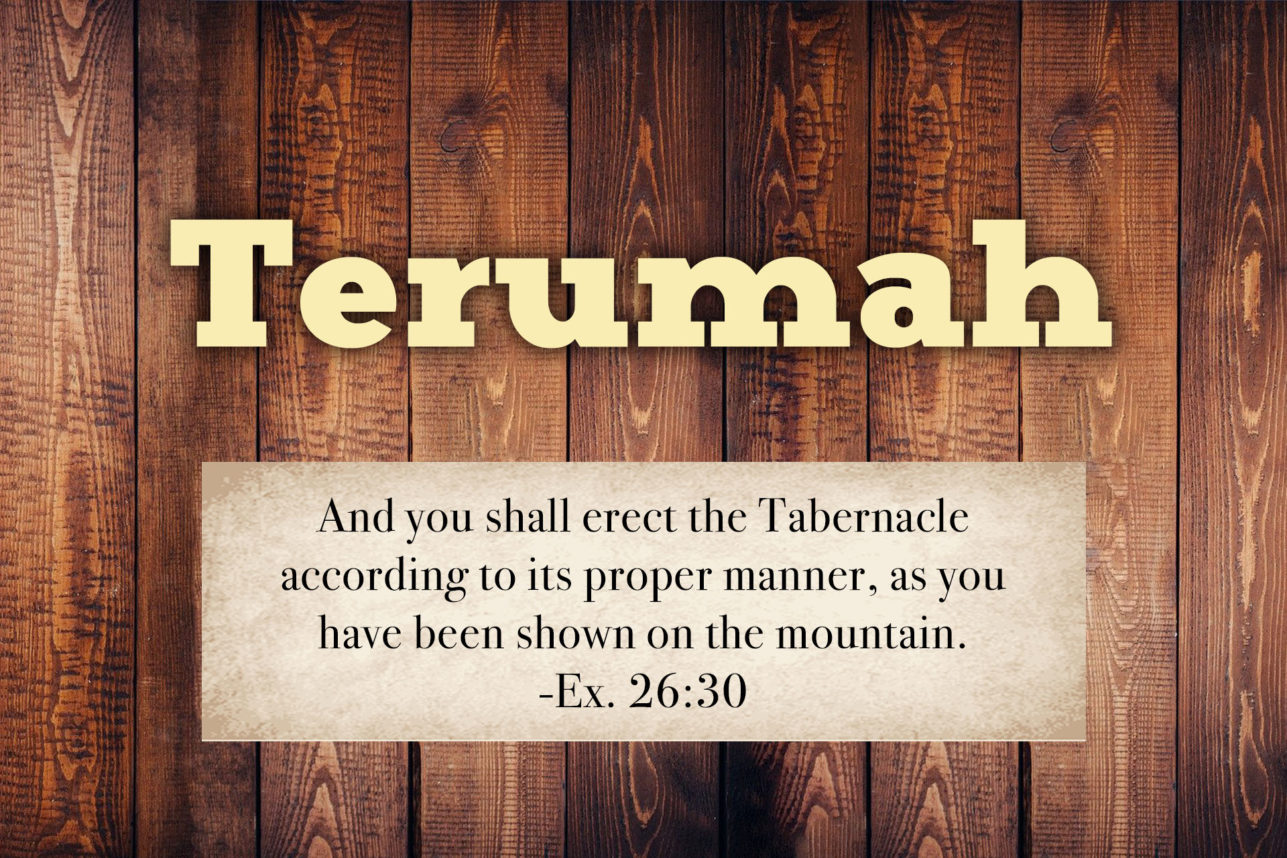
Table for Five: Terumah

One verse, five voices. Edited by Salvador Litvak, the Accidental Talmudist

And you shall erect the Tabernacle according to its proper manner, as you have been shown on the mountain. -Ex. 26:30


Rabbi Nicole Guzik
Sinai Temple

It is often hard to accept that we learn in different ways. Sometimes, we immediately grasp material and on other occasions, we struggle. We find ourselves envious of someone else’s talents, neglecting the merit of our own gifts, placing spotlight on what seems to be missing, concentrating on our shortfalls and deficiencies.

Earlier in Parashat Terumah, God articulates to Moses the same phrase used in Shemot 26:30: “as you have been shown on the mountain.” Bamidbar Rabbah offers a beautiful anecdote in which God shows Moses the exact plans to build the menorah. Moses descends from the mountain and forgets the instructions. Again, Moses ascends, God repeats the instructions, Moses descends, and Moses forgets. Finally, God tells Moses to ask Betzalel to make the menorah. Within seconds, Betzalel understands the job and proceeds to complete the task. In the midrash, God does not remark on Moses’ intellect or inabilities. God merely suggests that perhaps, this task is meant for someone else. Moses continues to serve as the leader of our people. Being everything to everyone and effortlessly gleaning information are apparently not required to serve as God’s most esteemed messenger and prophet.

May we breathe a sigh of relief with this poignant lesson. As we are “shown on the mountain,” our lives are not defined through perfection. Sometimes, our own inabilities lead to the opening of someone else’s opportunity. And when we choose to focus on our abilities, that is when our true purpose can come to fruition.


Rabbi David Stein
Director of Judaic Studies, Shalhevet High School

“Tell me and I will forget, show me and I will learn.” It’s almost as if our Torah portion anticipated this famous quote (commonly attributed to Ben Franklin) about education. In order for the mishkan to be built “properly,” it’s not enough for God to tell Moshe the plan – it must be shown to him as well. As an educator, I spend my time thinking about how to teach ideas and facilitate learning, and it turns out that the pedagogical lesson behind this verse has made deep inroads into the world of social emotional learning: if we want our students to deeply understand and internalize Jewish texts and values, it’s not enough to simply preach them – we must live and model those ideals as well.

Yet I think there is also another lesson contained in this verse: “proper” education is inherently about “building the Tabernacle.” Learning requires active construction of ideas. To be sure, the educational debate continues to rage about the value of direct instruction (picture a college lecture hall) versus student centered approaches (perhaps best represented by “Montessori” style schools). Yet it seems that the Torah makes room here for both approaches: an emphasis on guided instruction paired with an insistence upon personal construction. In this reading, then, Jewish education isn’t just about what students know – it’s about how they use knowledge to build their own tabernacles – constructing a personal identity to guide decisions and articulate values as they interact with and encounter the world around them.


Rabbi Miriam Hamrell,
ahavattorahla.org

Rashi, the medieval French commentator on the Bible and Talmud, tells us that God taught and showed Moses at Mount Sinai the seder (the order) in which to erect the Mishkan. If you ever were involved in building a synagogue you know that one goes through an emotional, spiritual, and physical process to build one.

We first dream and visualize it. What will it look like? Who will it serve? How best would it serve its users? Which architect will attend to all the details? Who will be the builder to finally fulfill our dream?

The Talmud (Sanhedrin 16b) tells us that God was the architect who held the blueprint to construct the Mishkan. The purpose was to build it not only for the generation in the desert but also for all future generations of the People of Israel. Ebn Ezra (Middle Ages-Spain) tells us that Chachmey Lev, those with a Wise Heart (not mind), would erect the Mishkan. The Wise-hearted knew they could not do it themselves, but rather needed the support of the community.

The Gemara (Menahot 29a:13) tells us that Moses followed “God’s exact pattern” in the building of the Mishkan. This holy blueprint was shared with him for the benefit of all generations. May we be blessed to build a community of Wise Hearts who follow the blueprint of the Torah and whose center is a Mishkan. Amen.


Kylie Lobell
Contributing Writer, Jewish Journal

Parsha Terumah details how the Jews need to build the Mishkan, the place where they would worship HaShem. It has to be portable so that it can be carried in the desert, showing that we can feel G-d everywhere and take Him with us wherever we go.

This past year, we’ve had to build tabernacles within our homes. It’s easy to feel spiritual in a nice clean synagogue, surrounded by other worshippers and in the presence of the holy Torah scrolls. It isn’t so easy to feel spiritual when you’ve got a pile of dirty dishes in the sink and children screaming in the background and dogs barking at every passerby. We’re also davening outside so we can meet in a minyan. When I go to outdoor minyans, I hear the sounds of helicopters flying overhead, loud lawnmowers in the next yard over and fireworks going off in the distance. It’s not exactly conducive to concentration, but I’ve survived. We’ve survived.

We’ve proven throughout the pandemic that G-d truly is with us no matter where we are. We may have previously thought that holiness only exists in the synagogue, but that’s just not true. It’s all around us. We may be in the desert now and waiting for the Holy Land – the time when the pandemic is over and we can get back to normal – but it will happen soon. In the meantime, we just need to keep building.


Gershon Schusterman
Rabbi, mashpia, writer, businessman

G-d appointed Moshe Rabbeinu to build the tabernacle, G-d’s home in the desert. Though G-d was the architect, Moshe was the fundraiser and general contractor. He delegated and supervised the myriad of individual projects to the artisans and craftsmen, an endeavor which took 3 months. As rabbi and teacher of the community, he did not have a task in the actual construction. So when the construction was completed, G-d told Moshe “You—Moshe—shall erect the tabernacle.”

Moshe Rabbeinu was the intermediary between the Jewish people and G-d (Deut. 5:5). At times he served as marriage counselor, at times protector and at times provider; he was more than G-d’s emissary, he also nurtured the Jewish people’s faithfulness and inspired their relationship. Thus, G-d needed Moshe to do the ultimate task of erecting the tabernacle, symbolically throwing the circuit breaker to electrify it with G-d’s spirit (Exodus 40: 18:34).

Moshe said, “It is too much for me to erect;” the walls of the tabernacle were made of boards of acacia wood, 15′ tall, 2 ¼’ wide and 1′ thick, each one too heavy for one person to raise up, let alone all 48. G-d said, “You do your part and I will raise it with you,” miraculously.

This Friday, the seventh of Adar (2/19/21) is Moshe Rabeinu’s birthday and yahrzeit, 3,293 years ago. He passed away on his 120th birthday. This Torah portion is always read in the week of Moshe Rabeinu’s Yahrzeit. What a fitting commemoration and tribute!

Table for Five: Terumah Read More »