fbpx

January 21, 2021

“Fragilience”: When Temples are Desecrated — and Rededicated

Within a week, two temples precious to me — and millions of others — were desecrated. As everyone knows, on Wednesday, January 6, “Fake-triots” (unpatriotic patriots) invaded America’s fabled Capitol building, spewing hatred while taking selfies in front of iconic statues and paintings. Less well known is that one week later, my Montreal synagogue, Westmount’s historic Shaar Hashomayim, was graffitied. A 28-year-old Jew-hater, carrying a gasoline canister, tried entering the building to burn it down. Instead, he spray-painted four swastikas, one on each of the congregations’ double-doors at its main entrance.

It’s been fascinating to watch an increasingly secular America use such powerful religious language to describe the traumatic events that resulted in President Donald Trump’s second impeachment. Words like “desecrated” and “defiled,” as well as phrases like “the temple of democracy,” reveal the fervor with which genuine American patriots revere their governmental system, its institutions and its symbols.

As meaning-making creatures, humans are addicted to symbols. We convey emotions, stories and values through all kinds of inanimate objects. Our ability to turn things into props that help us stretch to the stars is a particularly human ability that animals lack. Similarly, our ability to turn government office buildings into props symbolizing our faith in representative institutions is a particularly democratic phenomenon, which dictatorships lack.

The power we impute to our synagogues, to our parliament buildings, lures haters, too. One mob of hundreds traumatized democracy-lovers worldwide by violating Capitol Hill. And one little broken person unsettled Jews — and all haters of bigotry — worldwide by putting the hated Nazi symbol on eight synagogue doors.

One of the most unnerving things about the Capitol attack was that it was unprecedented. Never before had so many Americans done such damage with such venom to their Congressional headquarters. The offense was compounded by the fact that the rioters attempted to disrupt an electoral process that has proceeded smoothly, with remarkably little violence, for two-and-a-half centuries.

Another unsettling thing about the synagogue attack was just how familiar it was. For millennia, the weak and the strong, the far left and the far right, believers and pagans, capitalists and Marxists, have targeted Jews — and their places of worship. That is why such an admittedly minor incident (the doors can easily be cleaned or replaced) generated such upset and outrage.

For millennia, the weak and the strong, the far left and the far right, believers and pagans, capitalists and Marxists, have targeted Jews — and their places of worship.

Although these incidents highlight our emotional vulnerability to the bullies in our midst, they also demonstrate our two democracies’ resilience. The Capitol Hill rioters failed. In fact, their efforts backfired. America’s institutions functioned, as the American people showed their instinctive decency. The constitutional process of certifying Joe Biden’s election continued that night — after an unwelcome interruption. The marauders are being hunted down by police and shunned by neighbors. The demagogue-in-chief, Donald Trump, has been impeached.

Similarly, the vandalism in Montreal infuriated Canadians from coast to coast, resulting in bursts of Jew-loving instead of waves of Jew-hatred. Prime Minister Justin Trudeau led the chorus of condemnation, tweeting: “We must always denounce anti-Semitic hate, no matter when or where it arises.”

Jews know not to take such a protective, popular backlash and such moral leadership for granted. Traditionally, the Jew-haters reflected the mainstream and were often riled-up by their leaders, while many non-Jews who didn’t hate Jews cowered silently.

Moreover, on the third Wednesday of 2021, January 20, America had what the Maccabees of yore had — a Chanukkah HaBayit, a rededication. True, Washington was in lockdown, and 25,000 troops ringed the restored Capitol. But there was a powerful, transcendent, tear-inducing, lump-in-the-throat creating bipartisan display of support for the peaceful transition of power that no mob, no demagogue, no two-and-a-half month temper tantrum over losing could derail. President Joe Biden’s call for “unity” and his promise “to fight as hard for those who did not support me as for those who did” offered a tikkun — a healing, a cleansing, after five years of division and demagoguery — which, intentionally or not, unleashed the Jew-haters among us.

Even more profound, however, were the words of Senator Roy Blunt, a Missouri Republican who flirted with Trump and even with the election-doubters. Nevertheless, Blunt helped preside over the ceremony magnificently, saying, “The assault at our Capitol, at this very place just two weeks ago, reminds us that a government designed to balance and check itself is both fragile and resilient.”

Our temples, be they religious or patriotic, must be “fragilient.” The fragility comes because they rest on a foundation of quicksand — words, ideas, values. But both the Jewish people and the American people have shown tremendous resilience historically because words matter, ideas count and good values can defeat the greatest of villains.

Here, then, is the real test every society constantly faces: Humans are flawed. There will always be victimizers, victims and those who can stand by. While victims should fight back, bystanders should “do right” back. Victims often have no choice when they are targeted; bystanders have the choice to get involved or not. Their involvement is constructively contagious. The more bystanders stand up, the less likely it is for anyone to be targeted in the future. That is why the legendary Holocaust historian, Hebrew University’s Yehuda Bauer, proposes Three New Commandments: “Thou shall not be a perpetrator, thou shall not be a victim, and thou shall never, but never, be a bystander.”

Just as psychologists teach us not to judge ourselves — or one another — by the worst things we ever did, historians know better than to judge any society by the worst things the worst people in that society ever did. Every act of violence, especially public acts targeting highly symbolic spaces, poses a moral test, even when they don’t pose mortal threats. I am proud — but not at all surprised — that so many Americans and Canadians proved that we judge a society by its delicious fragilience, not its occasional violence, by the mainstream majority, not the malignant minority and by those who remember that the opposite of bystander is not a victim… it’s a citizen.


Recently designated one of Algemeiner’s J-100, one of the top 100 people “positively influencing Jewish life,” Gil Troy is a Distinguished Scholar of North American History at McGill University, and the author of nine books on American History and three books on Zionism. His book, “Never Alone: Prison, Politics and My People,” co-authored with Natan Sharansky, was just published by PublicAffairs of Hachette.

“Fragilience”: When Temples are Desecrated — and Rededicated Read More »

Reflections on a COVID-19 Year

My struggles this COVID-19 year were bracketed by an email on February 26 and a shot in the arm on New Year’s Eve. The February email from my health system blandly reported the extensive spread of a novel virus abroad. That message still brings my imagination to the first moments after the RMS Titanic hit an iceberg. Nothing had changed. Yet, a warning bell had sounded on an irreversible cascade of unimaginable events.

My own struggles in the COVID-19 year pale in comparison to many of my patients, three of whom lost their lives. Another was pulled from the brink by Cedars-Sinai’s heroic ICU team during a two-week stint on a ventilator. One of the year’s rare mercies was my patient’s amnesia for the trauma of that time. Others suffered fevers, coughs and, even worse, intense anxiety about their future. Parents faced unresolvable conflicts between children stranded at home and the demands of their work and livelihoods. Nearly all of us struggled with daily decisions about which activities were safe versus those that were “safe enough.”

These collective struggles now link us with survivors of other epidemics. The most recent plague, the 1918 Spanish flu, evolved in ways oddly similar to COVID-19. Sweeping the nation in a series of waves, it killed about 700,000 people, equivalent to two million in a nation of our current size. Although the 1918 flu was not well understood, public health agencies recognized the benefit of masking and social distancing. They met similar resistance. Most cities eased restrictions too early and experienced a second wave; in some, notably St. Louis, the second peak was deadlier than the first. Unfortunately, a century proved insufficient to teach us its lessons.

Some say that rather than developing character, personal struggle reveals it. In that vein, the struggles this year revealed the enormous courage of my colleagues taking meticulous care of COVID-19 patients despite personal risk. It also revealed the inspiring strength of families in protecting and caring for their most vulnerable.

the struggles this year revealed the enormous courage of my colleagues taking meticulous care of COVID-19 patients despite personal risk.

But the collective struggles of 2020, including the shocking death of George Floyd, have also held a mirror to our nation, reflecting persistent racial discrimination in every facet of American life. That included our pandemic. African Americans and Hispanic Americans are 2.8 times more likely to die from COVID-19 than Americans at large, a number that reflects the disproportionate levels of poverty they experience compared to white Americans. With poverty comes lower educational attainment, lower rates of insurance, higher drug and alcohol abuse and poor nutrition. Given these startling inequalities, no one should be surprised that when white America catches a cold, Americans of color develop pneumonia. This week, when a middle-aged minority patient of mine with borderline diabetes was admitted to Cedars-Sinai with COVID pneumonia, I watched as the very hand of racial and ethnic disparity reached into my medical office.

In Genesis, after wrestling the entire night with the spirit of the Almighty, Jacob was renamed Israel, “he who struggles with God.” As we collectively struggle with God, ourselves, the pandemic and the freshly-exposed ills of society, we become more truly the children of Israel. In these struggles, we might consider that a virus that spreads from a few individuals to tens of millions within a single year shows us how our fate intertwines with others. During the dark days of the Great Depression and World War II, our oldest seniors learned and lived the lesson that they were “all in it together.” If the pandemic reveals our collective consciousness and appreciation of the universality of our human vulnerabilities, we will all have gained. While some in this wealthy nation remain poorly nourished, financially handicapped, underinsured and subject to unequal justice, none can be safe nor free.

On December 31, I visited one of the fifteen vaccination stations at Cedars-Sinai. A cheerful nurse asked the usual questions about allergies and then injected my left arm. Once I complete the two-shot series on January 21, I will start to move on from the many trials and limitations of the COVID-19 year. Yes, I’ll continue to mask and socially distance — I am in it together with each and every person who is still waiting for that reassurance. But I won’t worry that a mild sore throat is “it.” I won’t feel the same tug of anxiety when a patient reveals a COVID-like symptom.

With time we can all be vaccinated and start to move on. Hopefully, we will remember the friends, family members and others whose absences change our lives forever. We should appreciate that — with or without an epidemic — our time is limited. If we learn from the past year’s struggles, we can use that time both to recover, grow personally, and address the pre-existing social ills laid bare by its ravages. That is togetherness.


Daniel Stone is Regional Medical Director of Cedars-Sinai Valley Network and a practicing internist and geriatrician with Cedars Sinai Medical Group. The views expressed in this column do not necessarily reflect those of Cedars-Sinai.

Reflections on a COVID-19 Year Read More »

Radio Host Creates Broadcast Camp and Book for Young Adults

When COVID-19 caused camps to close this past summer, nationally syndicated radio show host Sam Alex knew he had to set up his own virtual camp.

“I was just so heartbroken because I loved being a camper and a counselor when I was young,” Alex said, in a phone interview with the Journal. “I can’t imagine where I’d be in the world and achieve what I have without it.”

So Alex set up Camp Broadcast, where young adults of all ages – from middle schoolers to college students – could tune in and learn radio hosting and reporting skills, find out how to get started in the industry and even interview celebrities like former football quarterback Donovan McNabb and Nickelodeon actress Siena Nicole Agudong.

Campers got to make a 90-second reel of them interviewing a celebrity so they have it when they apply for an internship for a job, and they learned from celebrity guest instructors like ESPN play-by-play announcer Jordan Bernfield and “Inside Edition” correspondent Megan Alexander.

“The campers learned how to be confident in themselves,” said Alex, who was interviewed about his camp on The Today Show. “It’s not just for people who want to be a host or broadcaster but it’s for people who want to try something different. They learn how to a host or producer of their own program like a YouTube channel or podcast. The coolest thing is they get to interview a celebrity on their own, one on one.”

“It’s not just for people who want to be a host or broadcaster but it’s for people who want to try something different.”

While Alex lives in Nashville, his campers are from all over the U.S. Some reside in the same cities like Nashville and Orlando and are now partnering up. “They’re collaborating with each other by hosting YouTube shows and podcasts and being guests on each other’s programs,” said Alex.

Some campers have even snagged coveted career opportunities. One is now working at a Fox affiliate and another got accepted into an NBC fellowship. “I’m so proud of them,” said Alex. “They are further along in their career than I was at their age.”

Campers are also coming out of their shells thanks to Alex’s teachings. One camper, Nia, was scared to participate at first but quickly flourished. “She told me at the end of camp she was ready to take over Camp Broadcast and be the director,” Alex said.

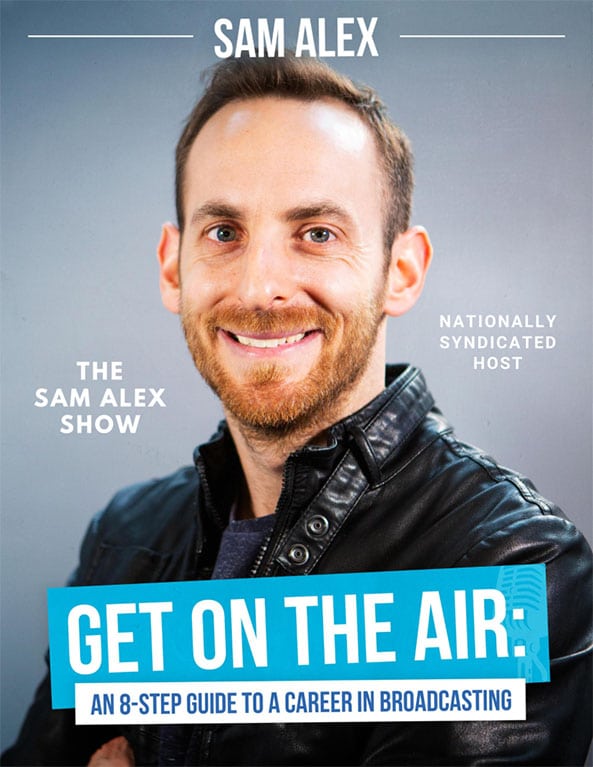
For aspiring radio show hosts who want additional resources, Alex provides mentorships, and he’s written a professional guidebook called, “Get on the Air: An 8-Step Guide to a Career in Broadcasting.” It’s a step-by-step manual that shows readers how to design their own education plan and pursue internships, build a reel or aircheck, put together a website and network successfully. He’s also hosting weekend sessions and plans to bring his weeklong sessions back this summer.

Alex knows how important it is to build relationships, take internships and gain career experience. In his 18 years in the radio industry, he’s worked for iHeartMedia, Cumulus Media, and Townsquare Media, where he interviewed country music stars like Keith Urban, Carrie Underwood and Garth Brooks.

But the one who stood out to him the most was Dolly Parton. How she presented herself at a red carpet event had a big impact on Alex – and now he’s passing what he learned from her along to his students.

“When Dolly was on the red carpet, she talked to every single news outlet, giving everyone equal time with her, looking them in the eye and listening to their questions,” Alex said. “She didn’t need to do any of that. She’s Dolly Parton. What I teach my campers is that no matter whom you’re interviewing – whether it’s a major celebrity or a musician who may not have any followers – treat them the same. That’s a good life lesson too.”


Kylie Ora Lobell is a writer for the Jewish Journal of Los Angeles, The Forward, Tablet Magazine, Aish, and Chabad.org and the author of the first children’s book for the children of Jewish converts, “Jewish Just Like You.”

Radio Host Creates Broadcast Camp and Book for Young Adults Read More »

Easing Lockdown Should Depend on Vaccination Rate, Israeli Epidemiologist Says

The Media Line — Lifting local lockdown restrictions on the basis of vaccination rates could be an effective way to keep the number of Israel’s COVID-19 cases from steep increases, an epidemiologist said.

Ronit Calderon-Margalit, a professor of epidemiology at the Hebrew University of Jerusalem – Hadassah Braun School of Public Health, told The Media Line that a differential approach to restriction policies could be a solution to Israel’s skyrocketing cases.

“One thing that could work is having differential lockdowns according to the proportion of people getting vaccinated,” Calderon-Margalit said. “Where you would see higher proportions of people vaccinated, you could maybe open schools.”

Israel’s two previous nationwide lockdowns were more effective than the current one because of public compliance, according to Calderon-Margalit. The loss of public trust in the authorities’ directives has now become a major problem, she said.

“I think that people are tired, exhausted and some feel that there are political reasons for this lockdown,” she said. “On top of that, people see what happens with part of the ultra-Orthodox population that doesn’t adhere” to lockdown restrictions.

In the midst of its third and deadliest wave, Israel has broken records – both good ones and bad ones – in the fight against COVID-19.

Israel is leading the world in vaccinations per capita. Roughly one-in-four Israelis already has received the first dose of the vaccine, with a record 205,000 Israelis inoculated on Wednesday alone, according to the Health Ministry.

Despite this impressive mass vaccination campaign, Israel’s Cabinet on Tuesday voted to extend the nationwide lockdown until the end of January due to record numbers of confirmed cases. In fact, an Israel Defense Forces Military Intelligence Directorate report released Tuesday said that Israel has the highest number of COVID-19 cases per million inhabitants worldwide.

Towns and cities with high ultra-Orthodox populations continue to lead the way in terms of morbidity: Bnei Brak, Elad and Beitar Ilit have infection rates of 21%, 26% and 28%, respectively. By contrast, the city of Tel Aviv-Yafo stands at 5%, Health Ministry figures show.

The new virus mutations might be partly to blame for the drastic increase in cases in recent weeks; however, further research is needed. Earlier this week Prof. Nachman Ash, Israel’s coronavirus czar, told government officials that the British mutation already accounts for 30%-40% of all new cases in the country.

“I think that the situation is catastrophic. It’s not Italy in March or New York City; we’re not there. But the situation in hospitals is pretty bad because they’re overloaded and exhausted.”

Nevertheless, there is a sliver of hope on the horizon.

A report from Hebrew University released on Monday said that the current lockdown, which has been in place since the end of December, is beginning to bear fruit, though it needs to remain in effect longer in order to significantly reduce morbidity.

The study – co-authored by Calderon-Margalit, and Profs. Yinon Ashkenazy, Doron Gazit, Nadav Katz and Ran Nir-Paz – warned that hospitals across the country likely will continue to experience overcrowding over the coming two weeks.

Like Calderon-Margalit, other public health experts also pointed to compliance as a significant factor in lowering morbidity rates.

Dr. Yoav Yehezkelli, a lecturer at Tel Aviv University who specializes in emergency and disaster management, and who is a member of Israel’s Coronavirus Crisis Emergency Council, said Israel has a rising infection rate due to problems with compliance.

“The infections are due to low compliance with the restrictions in certain sectors of the public, for example ultra-Orthodox Jews who don’t comply with lockdown restrictions,” Yehezkelli told The Media Line. “The other reason is connected to the very high number of tests being done; When you test a lot you also find a lot” of cases.

Yehezkelli does not believe that the current situation in Israel is as severe as the numbers seem to imply and argued that lockdowns are not an effective measure.

“In my opinion the situation is not that extreme and the lockdowns are not justified,” Yehezkelli said. “We are in a pandemic but we have to keep things in proportion. COVID-19 is not a very severe disease and once you can manage the number of severe cases in the health care system, I think that is the main thing that allows us to ease restrictions” and avoid lockdowns.

Instead, Yehezkelli believes that all sectors of the Israeli population should follow basic directives, such as avoiding crowding, wearing masks indoors and maintaining social distancing.

Yehezkelli says that though the lockdown is countrywide, the government is not enforcing its restrictions equally on all sectors, for example, the ultra-Orthodox community.

And, he says, the government has done a poor job of communicating the virus’ risk to the general public, swinging from “getting the public to panic too much on the one hand and on the other celebrating” the end of the pandemic.

“It’s a bad way of communicating a real risk to the public, which is a very important factor in managing a crisis,” he concluded.

Easing Lockdown Should Depend on Vaccination Rate, Israeli Epidemiologist Says Read More »

The Common Challenge Facing the U.S. and Israel

(Israel Policy Forum) — The Trump era is officially over and the Biden presidency has begun, and with it will come a raft of different policies. But in watching President Biden’s inaugural speech yesterday, what ran through my head were not the public policy challenges he outlined, or the different approach he will take to Israel and the region than what existed over the past four years, but the differing fundamental precepts that President Trump and Biden respectively elevated. In some ways, what Biden must overcome is the same challenge that Israel faces, and it is one not of politics but of philosophy.

There is a long running political science debate about the merits of a presidential system of government. One school maintains that having a president is beneficial for democracy and for national stability. The argument is that a president stands above the rest of the political system and represents everyone, rather than just the political faction from which he or she comes as is the case with a prime minister, and thus a president has the ability to overcome and heal societal divisions. Presidential systems also give voters more choices, since they elect both a president and a legislature, and can be viewed as even more democratic because people vote directly for the president, whereas in many non-U.S. cases including Israel, voting for the legislature involves voting for a party rather than for the person who will hold the specific office in question. The key point though is that a president is a figure who is uniquely placed to represent the collective, taking into account the concerns of all citizens and not just the concerns of a narrow few, since he or she is elected by all, accountable to all, and stands alone within a system of government above the fray as a symbol of the nation.

The other school maintains that having a president is destructive to democracy and to national stability. The argument is that a president comes from a particular party or group and will work to prioritize the wishes and policies of his or her camp, thus serving not as a unifying figure but as a divisive one. In a society that is already polarized, a president will worsen that polarization not only through his or her own actions but because it can create a dual legitimacy problem, where some citizens will view the president as the more legitimate actor and others will view the legislature as the more legitimate actor. Furthermore, a president who is supposed to stand above the country and represent everyone but makes it clear that he or she is picking and choosing sides will tear a country apart at the seams and throw the legitimacy of the entire enterprise into question. One of the scholars who argues against presidentialism points out that the U.S. stands as an outlier among democracies as the only longstanding and continuous one with a presidential system.

The overwhelming preponderance of U.S. presidents have provided evidence to bolster the first view. Trump provided evidence to bolster the latter one. Whatever you think of his policies, he chose sides among Americans in a nearly unprecedented way, never even nodding in a genuine way to be the president of all but constantly making clear that he viewed himself as the president of his MAGA supporters. While one of his speechwriters would sometimes insert some platitudes about American unity into remarks for ceremonies or occasions that warranted it, there is no reasonable argument that Trump acted as a force for overcoming societal divisions or saw himself as someone who represented and was accountable to all. As was clear down to his last day in office, when he pardoned a raft of his political supporters and their friends, Trump prioritized his camp at others’ expense to an extreme degree.

Biden’s inaugural speech presented a wholly different vision. The central theme was one of unity, and he used his new presidential pulpit to argue that this was a cause he would embrace. He emphasized the American people as a collective engaged in a common project, explicitly pledged to be a president for all Americans, and described himself as motivated not by power or personal interest but by the common good. Whether Biden can actually serve as a force for unity is an open question with an answer that cannot yet be known, but the stark difference in rhetoric with his predecessor is undeniable. He views uniting the country as his mission, and getting people to buy into a collective sense of identity and purpose even if there is raging disagreement on policy. Beginning his presidency at a time when the U.S. is riven by divisions that appear deeper than any time since the Civil War, he has his work cut out for him, and while he did not even obliquely reference Trump in his speech, Biden clearly places much of the blame for this at Trump’s feet.

Whether Biden can actually serve as a force for unity is an open question with an answer that cannot yet be known, but the stark difference in rhetoric with his predecessor is undeniable.

This is a situation not unfamiliar to Israelis, despite the fact that the debate about presidential systems does not apply to Israel. Most of Prime Minister Netanyahu’s leading challengers are not lining up against him for policy reasons; Gideon Sa’ar and Naftali Bennett come from the same political camp as Netanyahu, and both worked directly under him as ministers (and in Bennett’s case, as a political aide). When Benny Gantz first challenged Netanyahu two years ago, it was not about Netanyahu’s politics, even if Gantz does not share Netanyahu’s overwhelmingly right-wing worldview. Gantz ran on a banner of “Israel Before All” and Sa’ar has picked up that mantle to challenge Netanyahu on his governing philosophy.

The unifying thread is that Netanyahu does not work to represent the country’s interests but his own, that he does not feign to represent all Israelis but only those who are represented by his “natural coalition” of Likud and the Haredi parties, and that he has exacerbated Israeli societal divisions in dangerous ways rather than seek to heal them. While Trump and Netanyahu are very different people and politicians, despite comparisons that seek to paint them with the same brush, the widespread perception that they place narrow self-serving interests front and center is an element that they share. In both the U.S. and Israel, there are signs of things coming apart at the seams, whether it is the sedition that took place at the U.S. Capitol on January 6 or the violence in Israel that has been threatened and directed at Netanyahu’s actual and perceived opponents.

The U.S.-Israel relationship is about to be reset with a new administration, and everyone will be looking to see how Biden and Netanyahu will navigate each other. But we should also be keeping an eye on how each addresses the badly frayed sense of national and societal unity that currently reigns in their countries, and whether the U.S. and Israel – which have marched in lockstep in this regard for years – now begin to diverge.


Michael Koplow is Israel Policy Forum’s policy director, based in Washington, DC. To contact Michael, please email him at mkoplow@ipforum.org.

The Common Challenge Facing the U.S. and Israel Read More »

Relationships, Mentoring and the Path to Success

Since starting this workplace column for the Jewish Journal, I have shared my advice with you about how to work better. Today, I’m getting personal and sharing my secret weapon with you: my relationships.

In my career, as in my life, relationships are my everything — and I’m not alone. There’s no question that mentoring is vital to women’s success: Mentoring can help women develop critical leadership and professional skills, establish their place in the leadership pipeline, negotiate more effectively and open the door to career-defining opportunities.

That’s why as we celebrate National Mentoring Month this January, I sat down with four important women in my life to ask what mentoring has meant to them. Each one of them has been a trusted mentor in my life and an incredible female leader in her own right across their distinct fields.

I couldn’t be more excited to introduce you to friends like Imani Greene, who has shown me the ropes as a woman entrepreneur, and Carolina Lopez Herz, whose peer-mentoring is an indispensable part of my professional life. Some of these women became my mentors through chance encounters, such as Jenny Bilfield, who sat next to me at a Washington, D.C. nail salon a decade ago (take that golf bros!). And one mentor I even have the distinct pleasure of calling my family — my aunt, Dr. Lynn Gordon.

Each of these women makes me more successful, and their relationships bring fun and friendship into my life. From the power of peer mentoring to the courage to seize opportunities, I’m thrilled to share four valuable lessons from four invaluable women in my life.

Never Close a Door Before It’s Opened” — Jenny Bilfield, CEO of Washington Performing Arts.

“Years ago, living in NYC, I was contacted by a friend who’d spoken with an executive recruiter about a position on the West Coast. He’d passed along my name and called to give me a heads-up. As I equivocated — questioning whether I should take this opportunity seriously — he told me, ‘never close a door until it’s open.’

This stopped me in my tracks. I hadn’t been offered the job — but I was already questioning if I should even speak with the recruiter. He reminded me that a conversation is neither a commitment nor was it a betrayal to my then-employer. I followed his advice, applied, was offered and accepted the job. If we seek to hear with open ears, mind and heart, we remain open to new opportunities — open to real growth and self-discovery. We also persist in other ways… in relationships, collaborations. I am so grateful for this enduring advice and have shared it liberally!”

“The Power of Peer Mentoring” — Dr. Lynn Gordon, MD, Ph.D., Professor Emeritus of Ophthalmology and Former Senior Associate Dean of Diversity, Equity and Inclusion at The David Geffen School of Medicine at UCLA.

“The concept of mentoring, both as a mentor and as a mentee, is prominent over the course of my 30+ year career in academia. Perhaps the most surprising, fulfilling and long-lasting mentoring relationship developed through a peer group of eight women.

We met as strangers as we embarked, after a competitive application and selection process, on a year-long national leadership program that included in-person sessions as well as long-distance interactions by phone in the pre-Zoom era. During the in-person meetings, we worked together for at least eight hours per day for an entire week at a remote conference center. However, we really bonded in the evenings at the end of intense days over wine and “death by chocolate” homemade cake, which was carefully brought through airport security. Now, more than 10 years after our formal sessions ended, we continue to talk monthly, plan weekend retreats and meet for dinner at national meetings.

We became a community in which we receive and give advice about careers, share family losses, celebrate new accomplishments and speak the truth (when asked) with each other. The great impact of these women on my life and on my career has been invaluable.”

“Letting the Mistakes Go” — Carolina Lopez Herz, Vice President/Director, North America, at BCW.

“I spent the early years of my career terrified of making mistakes. I was good at what I did, but, driven by fear, I rarely deviated from an invisible playbook. As you can imagine, as I stepped into my first management roles, some of my colleagues found that ‘play it safe’ mentality frustrating. I wasn’t stretching myself or our team.

Being brave enough to make mistakes is critical to innovation — and that’s the best lesson I’ve learned from some of the incredible bosses and mentors in my life. They pushed me to think differently and then supported me when it didn’t work out. It’s important to be cautious when money or relationships are on the line. Mistakes born of carelessness should not be quickly dismissed, but we must be open to mistakes that happen when you’re attempting something new. Critical feedback should come with the message that innovation is worth pursuing, even if mistakes are part of the process.

“Being brave enough to make mistakes is critical to innovation.”

I try to be the type of manager and colleague who fosters an environment of creativity, entrepreneurship and scrappiness — which is easier on some days than on others at one of the largest public relations firms in the world. My team has had some incredible successes by not being afraid of mistakes. When we do make mistakes, we allow ourselves to evaluate what went wrong, learn from it and, in the end, let them go.”

“Trailblazing and Never Assigning Blame” — Imani Greene, Founder and Principal Consultant of GreeneGroup.

“Mentorship can be more pivotal to development than formal education or even functional training. It offers something that neither of these [opportunities] provide — a road forward on a path that has already been blazed. Those who have learned the lessons — and survived to tell the tales — are gifted with the obligation of showing others how it was done and what it looks like on the other side.

This is true in business as in life, and, in my case, mentorship has been most necessary where business and life collide. The Something Major community knows, lives and breathes that intersection.

Of the many lessons I’ve learned from my mentor, Lisa Osborne Ross (Chief Operating Officer of the Public Affairs firm, Edelman) … is one that consistently impacts the intersection of my business — and my life. Never assign blame. And never give the responsibility of identifying solutions to someone else. Fault does not lie with a boss, client, colleague — and especially not [with] an organization (since it is an ‘it’ and not a ‘who’). You alone must decide how to face your challenges and what you want the world to see as you surmount and overcome them. Accept the responsibility of doing so with dignity and pride.”


Randi Braun is an executive coach, consultant, speaker and the founder of Something Major

Relationships, Mentoring and the Path to Success Read More »

Rosner’s Torah Talk: Parshat Bo with Malka Rappaport

Malka Rappaort is a student. as the Ziegler school.

This week’s Torah portion- Parashat Bo (Exodus 10:1-13:16)- features the final three plagues of Egypt, the People of Israel’s departure from Egypt, and the first Passover celebration. Our discussion focuses on the relations between the two brothers, Moses and Aharon, and mostly on Aharon’s role in leading the people.

Previous Torah Talks on Bo

Rabbi Joel Zeff

Rabbi Zvi Grumet

Rabbi Adam Zeff

Rabbi Nissan Antine

Rabbi Amy Joy Small 

Rabbi Moishe Steigman


Rosner’s Torah Talk: Parshat Bo with Malka Rappaport Read More »

I’m Losing My Eyesight and Gaining a New Vision

At the age of five, I was diagnosed with Retinitis Pigmentosa (RP), a genetic disorder that leads to vision loss and for which there currently is no cure. And by age 15, I was legally blind.

Even without my sight, I still had on blindfolds. I refused to use a blind cane. I didn’t want to be the “blind musician” the “blind spiritual leader.” I wanted to be “normal.” I was choosing to hide from the reality of my blindness.

I’ll never forget the day my sister told me I couldn’t drive. I had been putting off getting my license out of pure teenage laziness. Both my sister and my mom have RP as well, but they both drove until their twenties. So, driving felt like a shoo-in for me, as did living my life without needing a blind cane on a daily basis. I was living my life believing that anything that was true for my mom and my older sister would be true for me.

Boy, was I wrong.

Instead of owning my unique truth, I hid behind my curtain, hoping that no one would notice me bumping into poles or missing people reaching out for a handshake. I wasn’t just hiding my blindness — I was hiding the true Charlie from the world and from myself.

My reality is undeniable: I am a blind musician. I am a blind spiritual leader. And I am a non-driving, cane-using man who loves every inch of who I am. But it wasn’t until I began to gather groups together, with blindfolds on, singing our hearts out, that I realized we are all hiding from something.

I have always known that there is deep, magical healing in group singing. It has been at the core of every great civilization, culture and tradition, and that is no accident. I began leading Jewish music and working as a songleader when I was 13, and I’ve never worked another job in my life. Each day, I wake up, and my sole purpose is to sing with people, connect communities together through song and lead people into joy, discovery and healing.

In December 2018, after denying my blindness for 24 years, something in me shifted. I realized that my blindness was not a curse or something to hide but a deep blessing in my life. My blindness even began to bring me joy because it was a way of deepening my connection to myself and to the light of the creator. In this shift, I became aware of three truths: One, it was time for me to start using my blind cane on a daily basis. Two, my blindness was not a burden but a beautiful part of who I am. And three, I was finally ready to pull back my curtain and open up about my eyesight, own it and share my story as a source of inspiration in my music and work.

Shortly after, Singing in the Dark was born.

Singing in the Dark is a blindfolded singing and healing experience. From the moment you enter the room, you are without your sight, surrounded by music. Once seated, you don’t know where you are or whom you are next to. No one can see you, and you can’t see them. Within the first five minutes, you feel simultaneously alone in your emotions and deeply connected to a loving, collective community. It’s a sensory experience unlike one you’ve ever felt before.

Singing in the Dark is a blindfolded singing and healing experience. From the moment you enter the room, you are without your sight, surrounded by music.

There is something so liberating about singing without the judgment of your eyes. Miss a note? No worries. No one has any idea it was you. As I often say, “Loud and proud, strong and wrong. If you sing a wrong note, sing it louder.” At Singing in the Dark, failure is not only accepted but encouraged.

And yet, Singing in the Dark is much more than an opportunity to sing and meditate with a blindfold on. It is an opportunity to face the things we are hiding from, greet them with kindness and transform them into our greatest gifts.

When I set out on this journey, I never once imagined that I would lead from my living room studio through a computer screen. However, to continue this experience through the pandemic, we had to change some of the ways it operates. Of course, Singing in the Dark is different virtually. But, just like my blindness, being different also holds gems of hidden beauty waiting to be uncovered. Our first journey into the Zoom-osphere is on Saturday, January 23, at 5:30 pm PDT. And thanks to our partnership with Wilshire Boulevard Temple, our virtual Singing in the Dark gatherings are free and open to the public.

Here is my question for you: What are you hiding from? Sometimes, all it takes is a blindfold to uncover the beauty within those things we are too afraid to look at. 


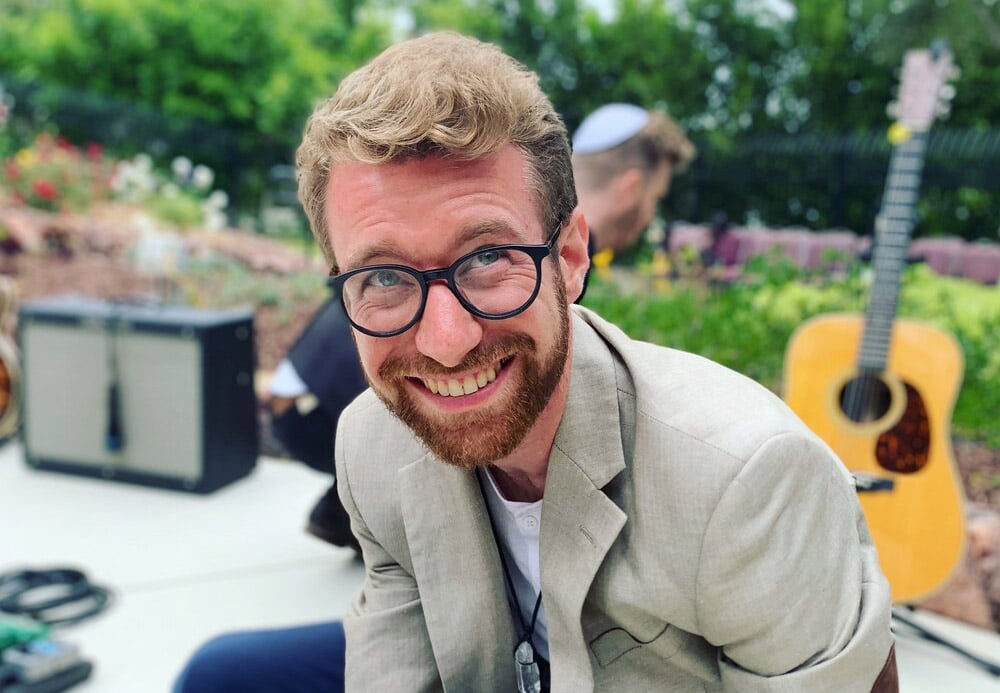
Legally blind and with an acoustic guitar, Charlie Kramer unites, magnetizes and elevates the communities around him. A touring songleader, artist, spiritual leader and communal healer, Charlie has sung with communities throughout North America, Israel and Australia.

I’m Losing My Eyesight and Gaining a New Vision Read More »

Advocating for Disability Rights & Inclusion: It Takes a Community

Kehillah. Community. It’s a core Jewish value, one that teaches we have a commitment to care for the health and welfare of each of our community members. It’s that commitment that fuels our Jewish communal organizations, institutions, social services and thousands of volunteers, all across the continent, who often work together across agencies, to advocate for and better the lives of children and adults with special needs and their families. Below are stories from three of families who have been helped by this work. Join us, The Jewish Federations of North America, the Network of Jewish Human Service Agencies and more than 100 partners, virtually, for a month of programming that begins with a special event at 7:00 PM ET on February 3 with renowned violinist Itzhak Perlman and some of our top DC advocates. For more information about Jewish Disability advocacy month visit www.jewishtogether.org/jdam

Families like Mike’s, in Boston.                             

At age 36, Mike, who is on the autism spectrum and has extreme anxiety, relied on his parents to help him meet his daily living needs. Mike’s greatest wish was to be able to live more independently, but neither he nor his parents had the knowledge or skills to help him along that pathway – until a caseworker from Jewish Family and Children’s’ Service of Greater Boston (JF&CS) reached out to them.

That was five years ago. Within that first year, JF&CS case management enabled Mike to move into a group living situation with some of his peers – Mike’s first goal. Since then, due to perseverance, ongoing dedication and Mike’s own determination, he’s continued to learn the skills he needs to live a more independent life. With the help of a JF&CS case manager, who referred Mike to a vocational skills program, he completed an internship, another milestone that helped him reach his next goal – employment in a local retail store.

Today, through his case manager’s advocacy, Mike has received the funding to learn computer skills and other proficiencies to help him fulfill his new ambition, to become a file clerk. What’s more, he self-advocated for reasonable accommodations in his computer class, something he would never have had the confidence to do before.

Mike’s mother was thrilled to report: “Mike is able to be more independent than we ever thought possible.” She then added, “his father and I are so grateful for JF&CS case management. Now that we’re at an age where we can’t give him the same support we used to, knowing that JF&CS will continue to help him develop and get the services he needs ­­– means more to us than I can possibly say.”

It’s a core Jewish value, one that teaches we have a commitment to care for the health and welfare of each of our community members.

Rami in Columbus

Rami first sought entry into JFS Columbus’s MAX program because, as he put it: “I needed a job and knew that the job market would be tough, especially for a recent grad with a disability. I’d heard the MAX program was good at helping students and grads like me find jobs and gave them a social outlet as well.”

Throughout Rami’s eight-month job search, MAX was an essential resource. MAX Interpersonal Career Coaching serves adults, ages 20s–30s, with college degrees or in degree pursuit, who need assistance overcoming social cognitive barriers, connecting with peers, and exploring career opportunities to achieve self-sufficiency.

“There were specialists there whom I could talk to about my job search and help me practice my interview skills. I also attended events, especially the weekly meetups at coffee shops. Those meetings were invaluable. I could talk to others struggling with finding work, making the grade, or just living with the normal insanity of life. Knowing I wasn’t alone kept my mood elevated. And that’s the big thing. My job hunt was a difficult time for me. I don’t know where I might’ve been mentally without MAX.”

Today, Rami works for the federal government as an EEO (Equal Employment Opportunity) Specialist. “My job,” he says, “involves making the federal workforce not just more diverse, but welcoming and accepting. I also write horror fiction on the side and even have a few books out. I have a great car, and I’m saving up for a home. And I know, in part, the MAX program helped me make it this far. And for that, I’ll always be grateful.”

Rami. Mike. Their stories are just two examples of the many thousands of Jewish lives impacted by disabilities that have been uplifted and forever changed by the power of Kehillah – the commitment of our Jewish community to care for the welfare of each of its members.

The month of February marks the annual Jewish Disability Awareness and Inclusion Month.

In February, Jewish organizations and communities worldwide join in a unified effort to raise awareness and champion the civil rights of people with disabilities. As part of this effort, the Jewish Federations of North America along with more than 180 partner organizations like the Network of Jewish Human Service Agencies (NJHSA) will be hosting Jewish Disability Advocacy Month (JDAM), a month-long virtual educational and solidarity building experience with education, empowerment, and advocacy on Capitol Hill as the central themes. This event builds on the success of the annual Jewish Disability Advocacy Day that Jewish Federations launched in 2010 in partnership with the Religious Action Center of Reform Judaism.

JDAM is the latest in Federations’ long history of disability advocacy – in fact, Jewish Federations support the work of the aforementioned NJHSA member agencies. Our vital work and unwavering commitment will never stop. Because Kehillah – Community never stops. It is not confined to a single month or year. So, our community will continue to work together for Jewish disability awareness and inclusion – and never stop advocating for the laws and practices that will enable those with disabilities to lead their best lives.


*Pseudonyms used in some cases to protect client confidentiality.


David Golder is Chair of the Jewish Federation of North America’s Domestic Policy and Government Affairs Council. 

Judy Halper is Board Chair of the Network of Jewish Human Service Agencies.

Advocating for Disability Rights & Inclusion: It Takes a Community Read More »